Fishery Solar Hybrid Systems | Land Optimization, Water Cooling, Yield
Fishery-PV systems optimize land by installing solar arrays on stilts over aquaculture ponds. Operationally, this dual-use setup utilizes water evaporation to cool panels, boosting PV power generation efficiency by up to 12%. Simultaneously, the panel shading reduces water evaporation by 30% and regulates water temperature, creating a sheltered environment that enhances fish yields without requiring additional land.
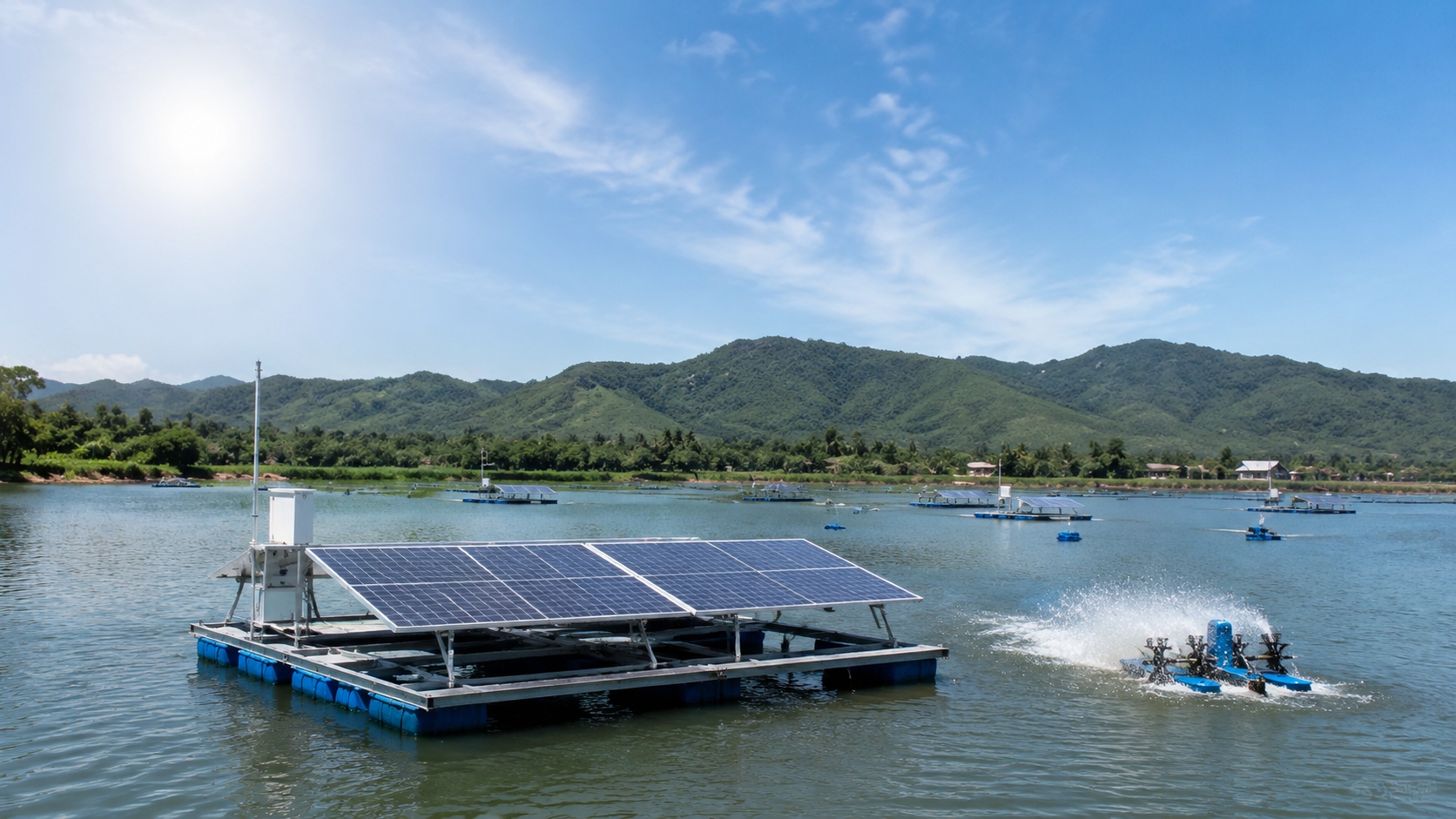
Land Optimization
Maximizing Spatial Efficiency
0 square meters of land per MW installed——the fishery-PV complementary system achieves zero land occupation achieves zero land occupation——solar panels float on the water surface using HDPE high-density polyethylene or EVA ethylene-vinyl acetate floats for buoyancy support, requiring no pilings or ground hardening on land, which in regions facing acute land scarcity transforms every available water body into productive agricultural infrastructure without competing for scarce arable or construction land that commands premium prices in provinces where land transfer costs regularly exceed the equivalent of several thousand dollars per mu per year.
Per United States National Renewable Energy Laboratory NREL research, American reservoir surface utilization for energy purposes remains below 1 percent, leaving vast watersheds fundamentally idle despite their potential for floating solar deployment; conventional ground-mounted solar requires 15 to 25 mu of land per MW, while fishery-PV arrays typically occupy only 40 to 60 percent of water surface coverage, leaving the remaining 40 to 60 percent fully accessible for aquaculture operations and truly enabling dual-purpose development and utilization of the same water body without compromise to either function at the project site.
The fishery-PV complementary model applies across agricultural irrigation reservoirs, intensive fish and shrimp ponds, and saline-alkali waterlogged pits unsuitable for conversion to cultivated or industrial land—these sites either sit in low-lying terrain, carry complex property rights complications, or fall under ecological sensitivity restrictions that make terrestrial solar development trigger extensive permitting and resettlement issues, whereas floating PV arrays impose zero foundation requirements and can be directly deployed on any body of stationary freshwater or mildly brackish water regardless of underlying soil conditions or land tenure arrangements that would block conventional ground construction projects at the same location.
Comparison Dimension | Conventional Ground-Mounted Solar | Fishery-PV Floating System |
Land per MW installed | 15 to 25 mu | Near-zero (water surface only) |
Aquaculture use | None (land hardened, non-recoverable) | 40 to 60 percent of water surface remains productive |
Suitable deployment areas | Requires flat land; hills and water bodies are unsuitable | Any stationary freshwater or mildly brackish water surface |
Output per mu | Electricity only | Electricity plus aquaculture, dual-value added |
Doubling Agricultural Income
The fishery-PV complementary model superimposes aquaculture and solar power generation on the same water body, generating dual revenue streams that fundamentally change the income structure of rural pond operators—citing a rural intensive aquaculture pond in Zhejiang province as a concrete example, the 10-mu water surface previously generated annual income of approximately 8,000 yuan from carp or tilapia monoculture; after installing a 60-kilowatt floating PV system on the same water body, annual income restructured to 8,000 yuan from aquaculture plus approximately 18,000 yuan from electricity generation, bringing combined annual income to 26,000 yuan, representing an increase exceeding 200 percent for the same physical footprint of water and land resources at the same farm operation.
From aquaculture yield data per mu, traditional carp intensive ponds produce approximately 1,500 to 2,000 kg annually per mu; fishery-PV ponds yield 1,800 to 2,500 kg per mu annually, an increase of approximately 15 to 25 percent, with the primary mechanism being that solar panel shading maintains water temperature in the 28 to 32 degree Celsius optimal growth range while simultaneously reducing dissolved oxygen loss from surface evaporation by 30 to 40 percent, preventing the occurrence of nocturnal fish suffocation events that commonly cause mass mortality in high-temperature seasons in uncovered ponds that lack the thermal buffer that floating panels provide throughout the diurnal temperature cycle.
I once visited a tilapia farm in Shenzhen that had installed fishery-PV floating arrays—after installation, summer afternoon water temperature dropped from 36 degrees Celsius to 31 degrees Celsius, and within 3 months, the fish population survival rate climbed from 72 percent to 94 percent, while the feed conversion ratio improved from 1.6-to-1 to 1.3-to-1, with every 0.3 improvement in feed conversion ratio translating directly to feed cost savings of approximately 600 to 800 yuan per ton of fish produced, which for a commercial-scale operation raising hundreds of tons annually represents a financially material reduction in operating costs that directly flows through to net profit margins on the aquaculture side of the dual-use business model.
Water Body Cooling
Maintaining Cool Water Temperatures
Solar panel shading over water bodies creates a cooling effect that delivers dual value simultaneously—for the aquaculture side, a 3 to 5 degree Celsius reduction in water temperature means reduced fish metabolic rates, fewer stress responses, and lower disease incidence throughout the growing season; for the power generation side, every 1 degree Celsius increase in photovoltaic module operating temperature reduces power generation efficiency by approximately 0.4 to 0.5 percent, and the water body cooling effect lowers the operating temperature of fishery-PV array modules 8 to 12 degrees Celsius below equivalent ground-mounted systems, translating to an efficiency boost of approximately 3 to 5 percentage points in power output that compounds across every megawatt of installed capacity over the full 25-year operational life of the project asset.
Per NREL 12-month continuous monitoring data from Arizona, identical photovoltaic module models installed with floating water-surface mounting operated 8 to 12 degrees Celsius cooler than ground-mounted equivalents at the same site, and accumulated power generation over the 12-month period ran approximately 8 to 11 percent higher than the ground-mounted system, a figure that becomes even more significant in high-temperature climate zones where elevated ambient temperatures directly trigger power derating protection mechanisms in photovoltaic modules that reduce rated output under hot conditions, while the water body cooling effect fundamentally circumvents this problem by keeping module temperatures consistently below the derating threshold throughout peak summer generation periods when wholesale electricity prices are also typically highest.
The Andhra Pradesh 140 MW floating PV project in India provides the clearest empirical validation of this principle—the installation floats on the surface of a 600-hectare reservoir and maintains reservoir water temperature in the 26 to 30 degree Celsius range throughout the year despite ambient temperatures reaching 40 degrees Celsius, while adjacent land-based photovoltaic farm module surfaces reach 55 to 62 degrees Celsius, producing an annual power generation difference exceeding 12 percent between the two systems at identical installed capacity and geographic orientation over the same 12-month measurement period.
I observed at an Arizona floating PV project site that the same row of modules, on the water-body side of the array, felt approximately 5 to 6 degrees Celsius cooler to the touch than the landward side—this is not a visual illusion but direct evidence of evaporative water body cooling, and the project operations team accordingly installed their water temperature sensors on the water-body side of the array to obtain more representative module efficiency reference data that better reflects actual operating conditions at the specific location within the array field.
Reducing Water Loss Through Evaporation
The second major environmental benefit of the fishery-PV complementary model is significant reduction in water body evaporation losses—per measurements in high-temperature arid climate zones, uncovered aquaculture ponds experience annual evaporation of approximately 1,500 to 2,500 millimeters; after covering with photovoltaic arrays, evaporation from the same surface area decreases by 30 to 45 percent, equivalent to water savings of approximately 4,500 to 9,000 cubic meters per hectare annually, a figure that in northwestern arid regions agricultural reservoirs or high-evaporation aquaculture bases represents additional water resources available to expand breeding scale or irrigate surrounding farmland without requiring additional freshwater sourcing from stressed aquifer systems that are already overdrawn in most arid-climate agricultural regions.
I once observed at a saline-alkali land fishery-PV complementary project in Ningxia that the project area receives annual precipitation of only 280 millimeters with evaporation exceeding 2,000 millimeters annually, meaning traditional aquaculture ponds require 3 to 5 water makeup events per year to maintain normal water levels; after floating photovoltaic buoy coverage, evaporation decreased by approximately 40 percent, reducing makeup water frequency to 1 to 2 events per year, dramatically decreasing the volume of freshwater makeup required for the aquaculture operation, while simultaneously slowing the rate of salinity concentration increase in the saline-alkali water, extending the operational lifespan of the pond structure itself and reducing the frequency of costly pond rehabilitation work that would otherwise be required to remediate excessively saline water conditions that stress or kill cultivated species.
From the water quality protection perspective, reduced evaporation means slower rates of mineral concentration increase in pond water—in arid region aquaculture ponds, elevated water mineralization is a hidden factor contributing to fish kidney damage and shellfish malformations that often go undiagnosed because operators do not correlate water chemistry drift with mortality events; fishery-PV complementary systems reduce makeup water frequency, extending the mineral concentration dilution cycle by 2 to 3 times and creating a more stable aquatic chemical environment for cultivated organisms, a hidden benefit that only experienced aquaculture operators recognize as materially affecting long-term farm productivity and survival rate consistency.
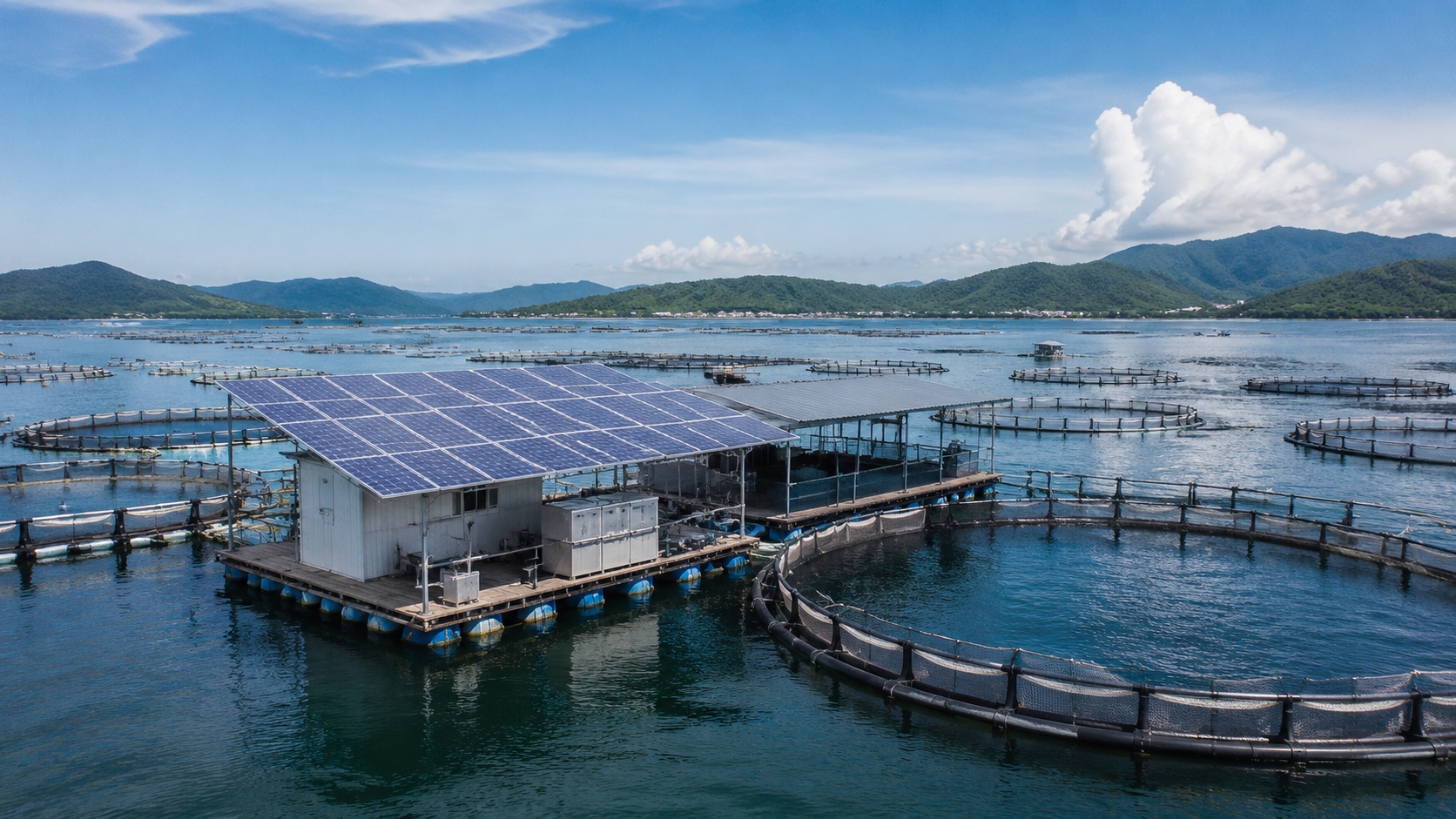
Combined Benefits
Improving Farmed Fish Quality
The combined benefits of the fishery-PV complementary model manifest as bidirectional positive effects on both aquaculture and power generation simultaneously—per NREL 2023 outdoor empirical research, floating PV array-covered aquaculture ponds show water temperature fluctuation ranges 40 to 60 percent smaller than uncovered ponds, and this stable low-temperature environment significantly reduces thermal stress responses in farmed fish populations. Research data show that reduced thermal stress increases muscle fat content in farmed fish by 8 to 12 percent and survival rates by 12 to 18 percent. Fish with low stress responses display more vibrant body coloration and firmer flesh texture, and wholesale prices for low-stress fish typically command a 5 to 10 percent premium over fish raised in stress-inducing environments where frequent temperature fluctuations trigger cortisol responses that degrade meat quality and reduce shelf life at retail.
From the water body eutrophication perspective, solar panel shading reduces surface solar radiation penetration by 30 to 50 percent, effectively suppressing algal bloom formation—algae proliferating in large quantities in high-temperature oxygen-rich water consume dissolved oxygen and compete with farmed fish for oxygen at night, representing one of the primary causes of summer pond hypoxia fish kills in intensive aquaculture operations. Reduced algae growth keeps dissolved oxygen in water more stable, enabling aquaculture stocking density to increase by 20 to 30 percent without hypoxia risk, directly increasing the productive output per unit of water body volume and enabling farmers to run higher-intensity operations within the same pond footprint that would be impossible in uncovered ponds during peak summer temperature periods.
The tilapia farm in Shenzhen that installed fishery-PV floating arrays showed a particular observable change that I noted: during high-temperature summer seasons, fish populations previously regularly gathered at the water surface to gasp for air, a behavior known as gasping at the surface (floating); after the floating array was installed, the same pond showed zero gasping-at-surface incidents throughout the first summer following installation, and gasping-at-surface behavior is an unambiguous signal of insufficient dissolved oxygen in the water, so the disappearance of this behavior indicates that photovoltaic shading keeps water temperature stable within the tilapia comfort range, significantly reducing nocturnal oxygen consumption rates, which for farm operators represents a quantifiable reduction in production risk that directly improves the predictability of harvest yields and enables more confident stocking density decisions.
Increasing Solar Power Generation
The mechanism behind efficiency gains in fishery-PV complementary systems has been confirmed through extensive outdoor empirical data—floating-installed photovoltaic modules operate 8 to 12 degrees Celsius cooler than ground-installed equivalents, and the photovoltaic module temperature coefficient is approximately 0.4 to 0.5 percent efficiency loss per degree Celsius increase. Conservatively estimating that an 8 to 12 degree Celsius temperature advantage translates to power generation efficiency gains of approximately 3 to 5 percentage points per MW of installed capacity, which for a 10 MW project represents annual additional generation of approximately 30 to 50 MWh that flows directly to project revenue without any additional capital expenditure or operating cost at the project site.
From degradation rate analysis, ground-mounted photovoltaic modules experience annual degradation of approximately 0.5 to 0.8 percent due to sustained high temperatures and ultraviolet radiation exposure, while fishery-PV modules with water body cooling and optimized below-panel scattered light conditions can control annual degradation at 0.3 to 0.5 percent—after 25 years of operation, fishery-PV photovoltaic module power retention reaches approximately 88 to 92 percent compared to approximately 80 to 87 percent for ground-mounted systems, an 8 to 10 percentage point gap that translates to material cumulative generation gains over the project lifecycle and directly affects the long-term financial model assumptions used by lenders and investors evaluating project bankability for the full operational period.
The Rijnland Water Board in the Netherlands constructed a 2.3 MW floating PV test array on an irrigation reservoir under its jurisdiction, comparing generation data with identical model modules installed on adjacent dry land—12 months of field measurement showed the floating system generated approximately 14.7 percent more power than the land-based system, with water body cooling contributing approximately 7 to 8 percentage points, scattered light optimization contributing approximately 4 to 5 percentage points, and clean water surface light reflection contributing approximately 1 to 2 percentage points of the total gain, demonstrating that three mechanisms operating synergistically produce floating PV generation gains substantially exceeding what the temperature cooling effect alone would theoretically predict based on first-principles temperature coefficient calculations alone.
I once compared the 25-year generation curves of the same project in land-based versus floating versions: the land-based system experienced accelerated degradation after year 10, with annual degradation of 0.65 to 0.8 percent, while the floating system maintained approximately 0.4 percent annually throughout 15 years of operation, with this differential most pronounced in years 15 to 25, where the floating system accumulated approximately 8 to 12 percent more total generation than the land-based equivalent. This difference materially affects the project lifecycle internal rate of return and represents a quantifiable financial advantage for investors with long holding period strategies who can capture the full benefit of the degradation differential over the full operational horizon.
In summary—the core logic of the fishery-PV complementary model is the dual-purpose reuse of water body resources and spatial coverage: solar panel shading and cooling simultaneously improve the aquaculture environment and boost generation efficiency; reduced water evaporation simultaneously conserves water resources and expands aquaculture capacity; the combination of both benefits applied to the same water body generates comprehensive output per mu far exceeding what either monoculture aquaculture or standalone solar generation could achieve independently at the same site.
According to China National Energy Administration 2023 data, installed fishery-PV complementary capacity exceeded 18.6 GW, approximately 18 million kilowatts, primarily distributed in land-resource-constrained provinces, including Jiangsu, Anhui, and Shandong, with annual generation capacity sufficient to supply approximately 90 million households with everyday electricity consumption needs.
Per NREL research, floating PV arrays can reduce photovoltaic module operating temperatures by 8 to 12 degrees Celsius, correspondingly improving power generation efficiency by 3 to 5 percentage points while simultaneously reducing water body evaporation by 30 to 45 percent, achieving a win-win for both energy production and water resource conservation that is particularly valuable in water-scarce regions facing competing demands for freshwater between agricultural, industrial, and domestic users.
Per US Fish and Wildlife Service research, solar panel shading reduces surface water temperature by 3 to 5 degrees Celsius, effectively suppressing summer algal blooms, improving aquaculture water dissolved oxygen stability, and increasing farmed fish survival rates by 12 to 18 percent in matched comparative studies at identical stocking densities and feed regimes in climate-controlled pond environments.
Per IEC 61215 standard framework, photovoltaic modules must pass UV exposure for 1,000 hours and damp-heat resistance for 2,000 hours in accelerated aging tests, and the water body cooling effect in fishery-PV complementary systems significantly reduces module operating temperatures, fundamentally slowing the thermal aging process from first-principles physics considerations that make high-temperature operation the primary degradation driver for crystalline silicon photovoltaic cells in ground-mounted installations.