What Hidden Costs Should You Expect in a Solar Installation | Permits, Maintenance, Grid Connection
Reserve 5% permit application fee, amortize the inverter replacement cost after ten years.
Cleaning twice a year is about 0.1 yuan/watt, grid connection expansion may increase expenses by 10%.
Thermal imaging inspection prevents damage, operation and maintenance determine success or failure.
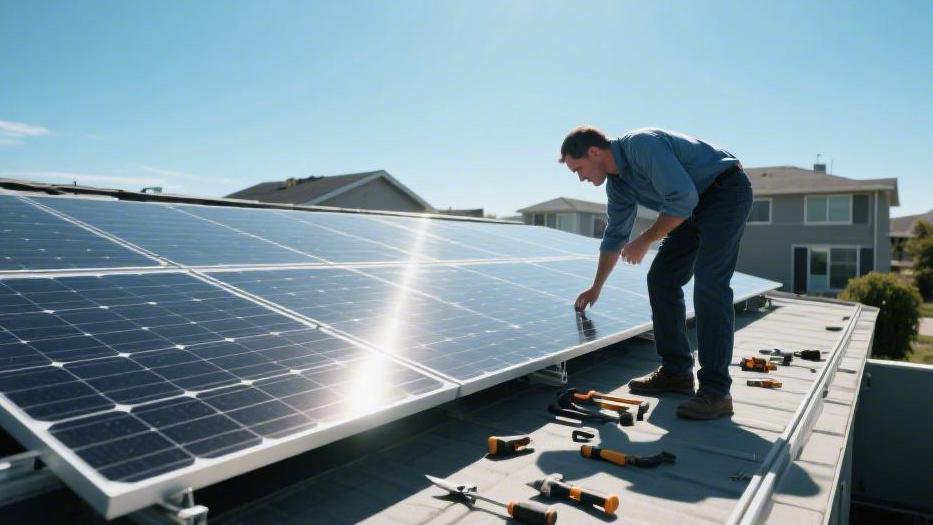
Permits
Certificate Handling Fee
When installing a residential solar system with a nominal power of 8 kilowatts, many owners think that as long as they pay for the brackets and panels, they can start work; actually, just the expenditure for running the government approval process might account for 3% to 7% of the total budget. This fee is not a fixed number; it is composed of local jurisdiction (AHJ) administrative rates, structural engineer signature commissions, and electrical drawing preparation costs together.
According to the statistics sample of the American Solar Energy Industries Association, the average price of a standard system permit approval is in the 500 dollars to 1500 dollars currency range; if it involves historical building protection areas or areas with complex terrain, the maximum value of this money investment will even break through 3,000 dollars.
The primary expenditure in the approval process is the application fees for the Building Permit and Electrical Permit. Most city approval departments will collect regulatory fees according to the standard of 1.5% of the system cost or 20-50 dollars per kilowatt of power. For a system with a 20000 dollars price, you haven't seen the cell panels yet, you must first transfer away 300 dollars to 600 dollars of cash. In addition, about 15% of application cases will because the first audit does not pass generate secondary submission fees, each time the price of a repeated audit is usually between 150 dollars and 250 dollars.
In order to ensure the roof can carry the extra pressure of about 3 to 5 pounds per square foot, the approval department usually mandatorily requires providing a structural analysis report signed and sealed by a professional engineer (PE). The production cycle of this report needs about 5 to 10 working days, and the cost of hiring a registered engineer to conduct an on-site survey and data calculation is generally in the 400 dollars to 800 dollars price range. If your house's age exceeds 25 years, the engineer might find the existing rafters spacing cannot bear the gust strength above 140 miles/hour speed. At this time, you might need to spend an extra 2000 dollars budget to perform structural reinforcement, then get that certificate permitting the start of work.
l Structural parameter audit: Must prove that after adding the solar system to the roof, its total load does not exceed the building design limit of 10% percentage.
l Electrical single-line diagram: Need to hire a licensed electrical designer to draw the system structure diagram. This diagram contains inverter efficiency, combiner box current protection and circuit breaker capacity. The outsourcing price is about 200 to 500 dollars.
l Rapid shutdown compliance: According to the NEC 2020 standard, the system must have equipment that within a 30-second cycle reduces the voltage to below 30 volts. The addition of this type of compliance hardware will lead to an increase of 0.05 dollars in hardware cost per watt of power.
The Fire Marshal Review is another link that easily generates extra expenses. Fire regulations usually require reserving at least 3 feet (about 91 cm) of passage at the roof edge, so that in an emergency situation, firefighters can pass. If you originally planned to install 30 quantity of panels, in order to vacate this area, you might have to reduce to 24 quantity, this directly led to your system total power dropping by 20% percentage, thereby extending the investment recovery period by 2 to 3 years. If your house is located in a high fire risk area, installing support modules with fire rating Class A (highest level) will be 15% more expensive than ordinary Class B modules.
After the installation is completed, you also need to make an appointment with the government inspector for on-site acceptance. This usually involves 1 to 2 frequency of on-site inspections. If the inspector finds the cable pipe support spacing exceeds 10 feet, or the junction box waterproof precision does not reach the NEMA 4X standard, the acceptance will be judged as not passing. One failed inspection not only means more than 10 days of project delay, but also needs extra payment of about 200 dollars for re-inspection fee.
Approval project name | Estimated cost (USD) | Proportion (8 kW system) | Time cycle (days) |
Government administrative fees | $400 - $800 | About 2.5% | 14 - 45 |
PE engineer signature/seal | $300 - $600 | About 1.5% | 7 - 10 |
Electrical drawing design | $250 - $500 | About 1.2% | 3 - 5 |
Re-inspection fine | $150 - $300 | About 0.8% | 1 - 3 |
In order to satisfy the "visual beauty" requirement proposed by the HOA, you might need to replace modules with all-black backsheets. The photoelectric conversion efficiency of this type of module is equal to ordinary modules, but the per watt unit price is usually 0.10 dollars higher. At the same time, in order to pass the HOA aesthetic audit, you might also need to pay an extra 100 to 200 dollars administrative application fee, and wait for a cycle as long as 30 days for the board of directors' vote.
All of these paperwork and approval processes added together will let you before the solar panels generate electricity, first generate an average of 2,500 dollars of soft costs. When calculating long-term benefits, if you ignore this expenditure, which accounts for about 10% of the total investment, the annual rate of return you calculate might produce a 1.5% percentage negative deviation.
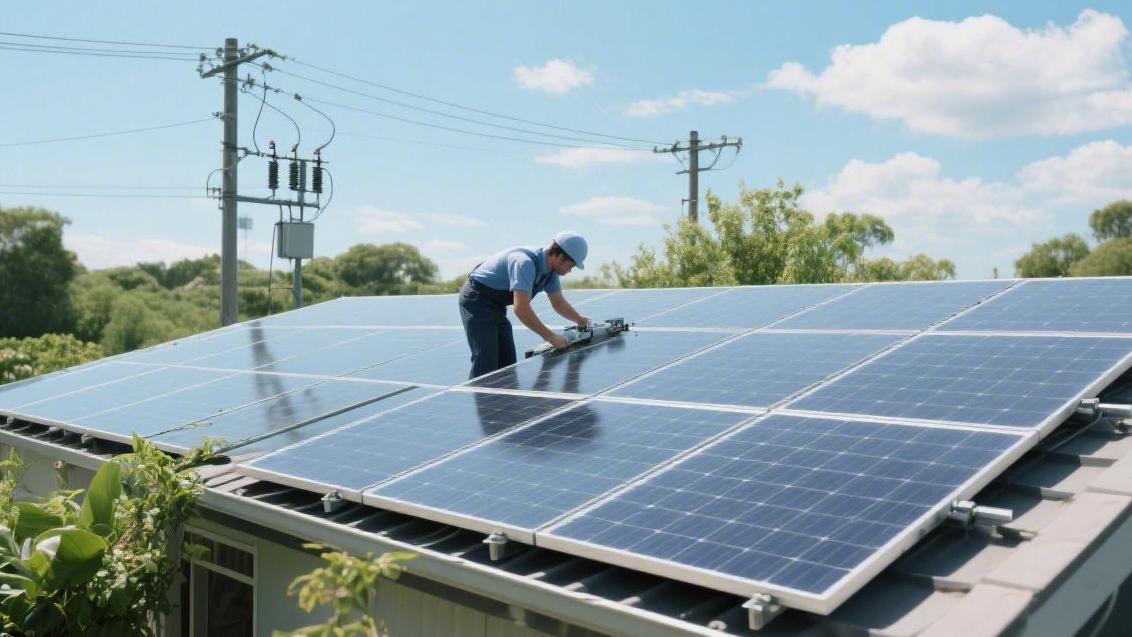
Maintenance
Scrubbing the Boards
When calculating the solar system revenue with a lifespan as long as 25 years, many owners ignore the direct impact of the cleaning frequency of the panel surface on power generation efficiency. According to the statistical data of the photovoltaic industry, if your panel tilt angle is lower than 15 degrees, natural rainfall is very difficult to wash away accumulated dust, pollen, and bird droppings, this will cause the photoelectric conversion efficiency to produce a 5% to 15% percentage of reduction rate every year. In arid regions with annual rainfall lower than 10 inches, the power generation loss caused by dust accumulation on the panel surface will even reach the 25th percentile. A system with a nominal power of 10 kilowatts, if not cleaned for a year, you might lose electricity bill revenue worth 400 dollars to 600 dollars.
The price of hiring a professional cleaning team is usually in the 150 dollars to 300 dollars currency range per time. The specific fee depends on your roof height and the number of panels. For a standard system containing 30 panels, the average working time of cleaning workers is about 2 to 3 hours. If you choose to do it yourself, the hardware cost of buying a set of telescopic poles, special soft brushes, and deionized water filters is about 250 dollars cash. In the long run, performing a deep cleaning every 6-month cycle can let your system produce 3% to 8% more cash return rate within its life cycle.
Dust coverage not only reduces current intensity, long-term accumulated local dirt will also produce the "hot spot effect", making the temperature of that area increase by more than 20 degrees Celsius. This will accelerate the aging of panel packaging materials, shortening about 5 years time of hardware lifespan by about five years.
Changing Inverters
Solar panels although can continue to work for 30 years, but as the brain of the system, the inverter has an obvious lifespan bottleneck. Common string inverters (String Inverter) usually only have a 10 to 12-year warranty period. In the entire use process of the system, you at least need to prepare 1 quantity of overall replacement budget. Replacing an inverter that is suitable for an 8 kilowatt system and with matching specifications, the hardware price is about 1,200 dollars to 2000 dollars, and the labor cost of a licensed electrician coming to install is usually calculated at a rate of 100 dollars to 200 dollars per hour. The total expenditure will often reach around 2,500 dollars.
If you use microinverters (Microinverters), although the failure probability of a single device is dispersed to each panel, but as the system operation exceeds 15 years, the damage frequency of microinverters will enter a high-occurrence period. The material cost of replacing a single microinverter is about 150 dollars to 200 dollars, but because it needs to disassemble brackets and panels, the starting labor fee for each visit is often above 300 dollars. When calculating the financial model of 25 years' time, you need to reserve a reserve fund accounting for 10% to 15% of the total installation cost for inverter maintenance.
Blocking Birds
In many suburban residences, the about 4-inch size gap between the solar panels and the roof is the ideal nesting space for squirrels and pigeons. These uninvited guests will gnaw the insulation layer of cables, leading to leakage or short circuit risks on the DC side, thereby triggering the system's automatic shutdown function. To prevent this situation, installing "Bird Guards/Critter Guards" is a necessary extra expenditure. This PVC coated wire mesh material cost is about 2 dollars to 5 dollars per foot, plus labor installation fees. A standard home system needs to spend 500 dollars to 1000 dollars in the budget.
If this front-end input is ignored, once the cable is gnawed broken, the repair fee will be very startling. The workload of an electrician looking for break points, replacing damaged cables, and re-testing system insulation strength usually needs 4 to 6 hours, the quote for a single repair is often in the 600 dollars to 1200 dollars range. According to the statistical sample of insurance companies, systems without protection nets installed have a probability of suffering animal damage as high as 20% within a 5-year cycle of operation.
For owners living in pigeon-dense areas, extra spending 100 dollars per year to hire personnel to clean the nest debris under the panels is very necessary, otherwise these dried branches under summer high temperatures will have a 5% probability of triggering an electrical fire.
Monitoring Data
Although most inverter manufacturers provide basic versions of free monitoring APPs, the refresh frequency of these software is often very low, maybe updating data only once every 15 minutes cycle. If you want to view the load situation of each circuit in real-time or transmit data through cellular networks (in case the home Wi-Fi signal weakens outdoors), you might need to pay a subscription fee of 10 dollars to 20 dollars per month. In a time as long as 20 years, this seemingly unremarkable fixed outlay will accumulate to 2400 dollars to 4800 dollars.
In addition, with the iteration of communication technology, monitoring hardware will also generate upgrade fees. For example, old monitoring gateways that used 3G signals to transmit data in the past, after the network service provider shuts down 3G base stations, must spend 400 dollars to 600 dollars to upgrade to 4G or 5G modules. If the monitoring system is not updated in time, you might not be able to perceive the small deviation of 5% to 10% produced by the system output power. This slow performance decay will let you white-white lose more than 200 dollars of electricity bill savings in a time as long as half a year.
Full Body Check
Once a year, a preventive electrical inspection is the standard operation to ensure the system runs safely and meets insurance claim requirements. A professional solar technician will use an infrared thermal imager to scan panels, check if there are connection points with abnormal resistance, and check if the torque of bracket bolts reached the 120 inch-pounds strength parameter. The single service price of this kind of routine patrol is usually between 200 dollars and 400 dollars. According to the structural engineer's suggestion, after experiencing a strong wind season with wind speeds exceeding 60 miles/hour, checking whether the bracket system has looseness is extremely necessary.
Maintenance item | Suggested frequency (times/year) | Single estimated cost (USD) | 25-year total expenditure forecast (USD) |
Professional panel cleaning | 1 - 2 | $150 - $250 | $3,750 - $6,250 |
Inverter overall replacement | 0.04 (1 time every 25 years) | $2,000 - $3,000 | $2,000 - $3,000 |
Preventive electrical inspection | 0.5 (1 time every two years) | $250 - $400 | $3,125 - $5,000 |
Animal protection net installation | 0.04 (one-time) | $600 - $1,000 | $600 - $1,000 |
Distributing these hidden maintenance costs into the Levelized Cost of Energy (LCOE) for each kilowatt-hour of electricity generated, you will find the originally expected 0.06 dollars cost per kilowatt-hour will actually rise to 0.08 dollars to 0.09 dollars. Although this is still lower than the current power grid average of 0.16 dollars per unit electricity fee, when doing financial regression analysis, counting these deviations into it can let you have a more accurate expectation for the net profit after 20 years.
Grid Connection
Connecting to the Power Grid
According to the statistical sample of the national interconnection standard database, the grid connection application fee for a standard 8 kilowatt system is usually in the 200 dollars to 800 dollars price range. But this is only the "entry fee" given to the power company. If your house circuit system is already more than 20 years old, in order to satisfy the grid connection electrical safety parameters, you might need to spend 1500 dollars to 3000 dollars to upgrade your Main Service Panel.
Many old house distribution panels' rated current is only 100 Amps, but after adding a set of high-power solar systems, according to the NEC electrical regulation "120% rule", the total load current might exceed the busbar's carrying limit. In this situation, the electrician must upgrade the distribution panel to the specifications of 200 Amps. This involves buying copper busbar materials worth 400 dollars, paying 1200 dollars of labor installation cost, and paying the power company about 300 dollars of power-off tagging service fee.
Although some regional policies allow free replacement, in about 40% of cases, owners need to pay 250 dollars to 500 dollars of hardware upgrade fees. This type of electricity meter's reading precision usually reaches within 0.5% error range, it can record your power consumption and power sale flow with a frequency of one cycle every 15 minutes. If your solar system runs at peak power, it leads to local grid voltage fluctuations exceeding the 5% legal threshold, the power company will even require you to install extra voltage regulators or dedicated transformers. The procurement price of this type of heavy equipment is often above 1,000 dollars.
Approval Signature
The waiting time for this process is usually 3 weeks to 8 weeks. During this period, your solar system although has finished installation, but cannot legally start power generation, you are losing about 5 dollars to 10 dollars of potential electricity bill revenue every day. If calculating according to the median value of 45 days waiting period, you haven't started to return the cost but first generated about 300 dollars of opportunity cost loss.
In the process of applying for PTO, the power company will dispatch engineers to conduct on-site Witness Test, focusing on checking the system's "anti-islanding effect" protection function. They need to confirm when the external large power grid loses power, your solar inverter can within 2 seconds time automatically cut off power transmission to the outside, to prevent creating electric shock risks to workers who are repairing the lines. If your inverter response speed does not comply with the latest IEEE 1547 technical standard, or the warning information font size on the label is smaller than 18 points, the inspection will be judged as unqualified. One failed grid connection inspection will lead to the project progress being delayed for more than 15 days, and generate about 150 dollars of secondary on-site inspection fee.
Grid connection related expenditure item | Estimated amount (USD) | Occurrence probability (%) | Impact cycle (days) |
Main distribution panel upgrade (200A) | $1,500 - $3,500 | 25% - 35% | 1 - 2 |
Bi-directional smart meter installation | $200 - $550 | 40% - 60% | 1 - 14 |
Grid connection application regulatory fee | $150 - $800 | 95% | 14 - 60 |
Power-off/Power-on service fee | $100 - $300 | 30% | 1 |
Transformer/Line reinforcement fee | $1,000 - $5,000 | <5% | 30 - 90 |
Selling Electricity Price Difference
Even if grid connection is successful, the actual money revenue you obtain from the solar system is also deeply affected by the power company's Net Metering policy. Many owners when calculating the investment return rate, wrongly think the electricity price sold to the grid and the price of buying electricity are a 1:1 ratio. Actually, with the promotion of new regulations like NEM 3.0, the unit price at which the power company buys back excess electricity might only be 25% to 40% of the retail electricity price. For example, if you buy one kilowatt-hour of electricity, you need to pay 0.30 dollars, but when selling to the grid, the power company might only settle with you according to the wholesale rate of 0.08 dollars per kilowatt-hour.
This price deviation will lead to your system's cost-return cycle extending from the expected 7-year time to 11 years or even longer. To hedge this power-selling loss, you might need to add 8,000 dollars to 15,000 dollars to the budget to add a set of energy storage cell system. Although increasing the initial investment intensity, batteries can let you use free energy you stored yourself within the 4-hour time slot of the highest electricity price peak, thereby increasing the overall electricity bill reduction rate to above 85% percentage.
In addition, the grid connection contract usually contains a monthly fixed "Grid Connection Fee", this fee usually generates fluctuations between 10 dollars and 30 dollars. No matter how much electricity your solar generated, as long as you are still connected to the grid, this money is a fixed expenditure that is immovable. Within a contract cycle as long as 25 years' lifespan, this seemingly unremarkable fixed cost will in total reach 3,000 dollars to 9000 dollars total currency amount, directly cutting the system's net profit space.