How Can You Customize Solar Solutions for Corporate Campuses | Energy Demand, Roof Space, Usage Goals
Customized according to the load curve, recheck the roof load to install high-efficiency modules at a 15-degree inclination angle, equipped with 20% energy storage.
Intelligent scheduling makes the self-use rate exceed 85%, helping carbon neutrality.
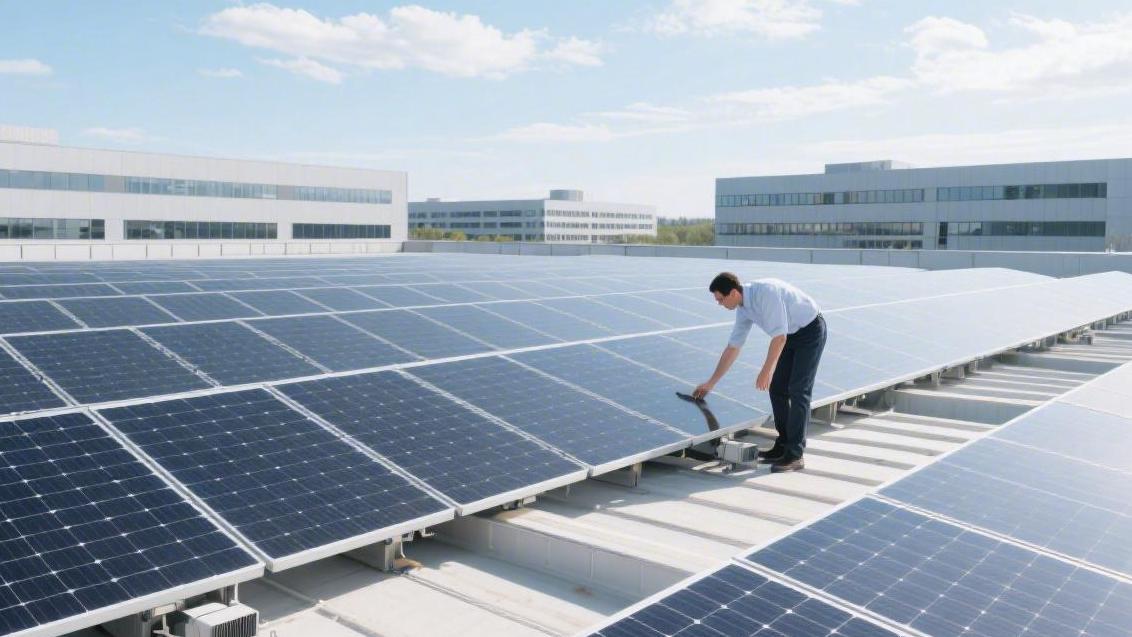
Energy Demand
Check previous years' bills
Before customizing any solar solution, it is necessary to retrieve the complete electricity bills of the park for the past 12 to 24 months. This is not just about seeing how much money is paid each month, but more importantly, obtaining the original load data at 15-minute or 30-minute intervals. Through these high-frequency data, the "bottom noise load" of the park can be clearly identified, which are the devices that run even late at night or on weekends, such as data centers, monitoring systems, and necessary ventilation facilities. Analyzing these data can reveal seasonal electricity consumption fluctuations, such as the gap between the summer air conditioning peak load and the winter heating load. If a park's annual electricity consumption is above 5 million kWh, then every cent of unit price fluctuation will have a huge impact on the return on investment.
l Collect at least two years of historical electricity consumption curves, identifying monthly power peaks and valleys.
l Statistically analyze the electricity usage differences between working days and non-working days; the electricity consumption of non-working days usually determines whether the system needs to operate with power limits.
l Confirm the current transformer capacity; usually, it is not recommended for the solar system's access capacity to exceed 30% to 50% of the total transformer capacity to avoid impact on the internal power grid.
l Record the billing structure of the local utility company, including the time segment division of tiered electricity prices and peak-valley-flat electricity prices.
Find out peak periods
The electricity consumption peaks of corporate parks are usually concentrated between 10 AM and 4 PM, which happens to highly overlap with the best period for solar power generation. However, different types of parks have completely different electricity consumption characteristics. The load curve of office-type parks usually presents a "double peak" shape, reaching peaks during morning entry and afternoon office hours respectively; while R&D or light industrial parks may show a stable high load. By installing intelligent power monitoring meters, the real-time power of lighting, HVAC (Heating, Ventilation, and Air Conditioning), elevators, and production equipment can be accurately measured. If the instantaneous output of the solar system exceeds the real-time demand of the park, and local policies do not allow or do not suggest sending excess electricity back to the grid, then the system must undergo power reduction treatment, which will significantly reduce investment efficiency.
l Use sensors to monitor the surge current when large equipment starts, ensuring the solar inverter has sufficient response speed.
l Compare solar radiation data with office hours to calculate the power matching degree under natural conditions; the ideal matching degree should be above 70%.
l Analyze the extreme peak of air conditioning load in the summer afternoon, which is often the financial balance point that decides the upper limit of the installation scale.
Estimate future use
Current electricity demand does not represent the demand five years later. When designing a plan, the future expansion plans of the park must be considered. If the company plans to increase server rooms, laboratory equipment, or expand production lines, these will all lead to a jump in the base load. At this time, it is necessary not only to reserve space in the inverter selection but also to consider future expansion capability in the busbar design of the distribution cabinet and cable laying. If the cost of one-time installation in place is too high, a modular design can be adopted, building the first-phase project first and reserving access points in the system so that solar panels and inverter groups can be directly added when demand increases in the future without dismantling and rebuilding existing electrical infrastructure.
l Review the park's long-term development plan, including the completion time of new buildings and the power parameters of major electrical equipment.
l Evaluate the existing distribution room space to confirm if there is sufficient physical location to place future expansion cabinets.
l Calculate the efficiency decline caused by equipment aging; usually, photovoltaic modules will have a decay of about 0.5% per year, and the initial design should leave corresponding margins.
Keep an eye on charging piles
With the popularization of electric vehicles in the park, the electricity demand of charging piles is becoming a non-negligible variable. A parking lot with 20 7 kW slow charging piles or 2 60 kW fast charging piles will instantly generate huge electricity pulses when employees concentrate on charging during work hours. Without intelligent scheduling, this random electricity consumption peak may cause the total load of the park to exceed the limit of the transformer. When customizing the plan, consideration should be given to integrating the charging pile system with the solar system to achieve "solar-storage-charging" integration, prioritizing the use of electricity generated from the roof to charge vehicles. This can not only reduce charging costs but also alleviate the pressure on the park's main transformer.
l Statistically analyze the electric vehicle ownership of park employees and visitors to estimate daily total charging demand.
l Plan the installation location of charging piles, trying to be close to solar inverters or distribution rooms to reduce line loss during DC transmission processes.
l Consider introducing dynamic load balancing technology to automatically lower the output power of charging piles when solar output drops or park office electricity consumption surges.
Calculate self-use proportion
In most commercial environments, the revenue from solar power generation mainly comes from the cost saved by "self-generation and self-consumption" instead of buying grid power. Every kWh generated, if consumed inside the park, has a value equal to the local retail electricity price; if sold to the grid, its price is usually much lower than the retail price. Therefore, the core goal of the design is to maximize the Self-Consumption Ratio. If calculations find that the park is almost at a standstill during weekends or holidays while the solar system is still working at full load, then an energy storage system (cell) must be considered. By storing electricity in batteries during weekends and releasing it during peak electricity hours on Monday morning, the payback period of the entire project can be effectively shortened.
l Calculate the flow of electricity generated by the system in different time segments, setting the target self-use rate usually not lower than 85%.
l Compare the Return on Investment (ROI) before and after installing the energy storage system; only when the cell cost can still profit through peak-valley price differences after amortization is it recommended to add energy storage.
l Evaluate the buy-back electricity price and quota limits of the local grid company for surplus electricity going online to ensure compliant operation.
Select power configuration
Selecting the power specifications of inverters and modules should not just look at the maximum value, but at the system efficiency (PR value). Aiming at the energy demand of the park, the DC/AC ratio of the inverter (the ratio of PV module power to inverter rated power) is usually set between 1.1 and 1.3, so that high output power can be maintained even in the early morning and evening when light intensity is average. At the same time, the access point should be selected according to the power supply voltage level of the park (usually 380 V or 10 kV). Large and medium-sized parks are usually suggested to be connected to the grid on the high-voltage side, which can reduce line losses and better cooperate with the original large-scale distribution equipment.
l According to the measured effective area of the roof and lighting conditions, calculate the most scientific total installed power (kWp).
l Choose inverters with remote monitoring functions, capable of viewing the voltage and current of each string of solar panels in real-time to quickly troubleshoot faults.
l Ensure all electrical modules comply with local lightning protection, grounding, and arc extinguishing safety standards to prevent work stoppage losses caused by electrical fires.
Roof Space
See how much space
When evaluating the roof space of a corporate park, the primary task is to distinguish between the total construction area and the effective installation area. Usually, the total area of the roof is not equal to the area where solar panels can be laid. Engineers need to subtract the space occupied by parapet walls (roof fences), stairwells, cable trays, and huge ventilation and air conditioning units (HVAC). In addition, to comply with fire safety regulations and daily maintenance needs, walkways of at least 1 meter to 1.5 meters must be left around the edges of the building and equipment. If the total area of the top floor of an office building is 2000 square meters, after removing the aforementioned obstacles and safety passages, the actual usable net area often only remains 60% to 70%. In the initial planning stage, each usable coordinate point must be accurately calculated through high-resolution drone mapping or building blueprints to ensure the estimated deviation of installation capacity is controlled within 5%.
l Utilize LiDAR technology to obtain an accurate 3D model of the roof, identifying all tiny protrusions.
l According to local building codes, reserve statutory fire rescue passages and open space around smoke vents.
l Analyze the direction of the roof drainage system to ensure that installing brackets will not block rainwater discharge, avoiding long-term water accumulation's erosion of the roof's waterproof layer.
l For roof surfaces with different orientations, calculate their effective light-receiving area; the northern hemisphere usually prioritizes the use of south-facing roof surfaces, while east-west facing roof surfaces need to adjust the layout density.
Pick roof material
The construction material of the roof directly determines the installation method of the solar brackets and the total cost of the system. Concrete flat roofs usually adopt a counterweight ballast system, which does not require drilling and can effectively protect the building's waterproof layer, but has higher requirements for the roof's load-bearing capacity. In contrast, color steel tile roofs common in industrial parks are much lighter, usually using specialized aluminum alloy fixtures directly fixed to the metal seams. However, for metal roofs that have been used for more than 10 years, the degree of rust and corrosion must be evaluated before installation. If the roof material is TPO or PVC single-layer waterproof membrane, heat welding technology is needed to fuse the bracket base with the original waterproof layer. Choosing mismatched fixing technology will lead to leakage risks in the later stage, and even bracket displacement in extreme weather.
l Concrete roof: It is suggested to use precast concrete block ballast; the static load added per square meter is about 20 to 40 kilograms.
l Metal roof: Need to confirm the matching degree between the fixture and the roof peak to ensure it remains stable at wind speeds above 120 km/h.
l Membrane structure roof: Must be supervised by the original waterproof supplier during construction to avoid damaging warranty terms.
l Evaluate the anti-corrosion grade of the bracket material; in coastal or high-humidity environments, high aluminum-magnesium-zinc coated steel or stainless steel connectors must be used.
How much weight can it carry
Structural load-bearing is the most critical technical bottleneck of rooftop solar projects. The solar system itself includes solar panels, brackets, ballasts, and cables, which belong to the added "dead load." In addition to these physical weights, engineers must also calculate "live loads," which are snow accumulation, upward suction generated by wind, and instantaneous pressure from maintenance personnel walking. The design live load of most modern commercial buildings is around 50 to 100 kilograms per square meter. If the total weight of the photovoltaic system (including ballast) is close to 25 kilograms per square meter, then the redundancy of the roof structure will be challenged when encountering extreme blizzards or strong typhoons. During the plan customization stage, a structural engineer with qualifications must issue reinforcement suggestions or load-bearing certification to ensure that the building's main body will not produce structural deformation during the 25-year life cycle of the system operation.
l Calculate PV module self-weight: The weight of standard monocrystalline silicon modules is about 12 to 15 kilograms per square meter.
l Calculate dynamic load: Consider the 50-year maximum wind pressure and maximum snow depth locally, converting them into pressure values per unit area.
l Evaluate beam and column structures: For steel structure factories, it is necessary to focus on checking the span and wall thickness of purlins to confirm whether they can support additional point loads.
l If load-bearing is insufficient, lightweight flexible modules can be considered; this type of module weighs only 3 to 5 kilograms per square meter, but the cost is relatively high.
Avoid shadows
Shadow is the natural enemy of solar systems; even if only a small piece of shadow blocks a corner of a solar panel, it may cause the power generation of the entire string of cell panels to drop significantly. In corporate parks, shadows mainly come from higher elevator machine rooms, parapet walls, nearby signal towers, or tall trees. More hidden shadows come from the "self-shading" inside the photovoltaic array. To cram more panels onto a limited roof, the spacing between front and back rows is often reduced, but when the solar altitude angle is low in winter, the front row panels will cast long shadows on the back row. Professional customized plans will use software to simulate shadow trajectories for 8,760 hours a year, setting a reasonable tilt angle to find a balance between maximizing yield per unit area and avoiding blocking.
l Set row spacing: According to the standard of no shadow being generated from 10 AM to 2 PM on the winter solstice day, calculate the minimum row spacing.
l Optimize tilt angle: In higher latitude regions, increasing the tilt angle can improve winter output, but will increase wind resistance and row spacing.
l Introduce optimizers: In areas where shadows are unavoidable (such as near water towers), install Module-Level Power Electronics (MLPE) so that blocked solar panels do not affect the efficiency of other panels.
l Regularly clean surrounding plants to ensure that landscape trees that originally posed no threat will not block light due to growth.
Leave out walkways
A professional rooftop power station layout must consider long-term operations and maintenance (O&M). If solar panels are laid too densely without any standing points, later cleaning and troubleshooting will become extremely difficult. The plan design should include clear maintenance walkways, usually leaving a pedestrian passage at least 50 cm wide every two rows of modules. In addition, considering fire rescue in emergency situations, the roof must reserve direct paths to the roof edges and fire-extinguishing facilities. In large parks, a permanent fall protection guardrail or lifeline system must also be installed at the roof edge to protect the safety of O&M workers during high-altitude operations.
l Plan horizontal and vertical channels to ensure cleaning robots or manual cleaning tools can cover every solar panel.
l Install walkway boards with anti-slip patterns to avoid O&M personnel directly stepping on the roof waterproof layer.
l Leave enough heat dissipation space and operation platforms around electrical equipment such as inverters and combiner boxes.
l Set up clear warning signs and escape path diagrams to ensure all personnel entering the roof understand safety regulations.
Parking the car is also fine
If building roof space is indeed limited, the parking lot of the corporate park is an excellent supplementary space. Solar carports not only generate clean electricity but also provide shade and rain protection for employees' vehicles, lowering the temperature inside the car in summer. The structural design of the carport is more complex than that of the roof because it involves deep-buried foundations, wind-resistant and earthquake-proof steel structure brackets, and the clearance height for vehicle entry and exit. Usually, the height of the carport needs to ensure that large SUVs or small trucks pass smoothly, generally set between 2.5 meters and 3.5 meters. The solar panels on top of the carport can adopt bifacial power generation technology, utilizing reflected light from the ground to further increase power generation, while guiding rainwater to the green belt through an integrated drainage system.
l Design carport span: According to the arrangement of parking spaces (single row or double row), design single-column or double-column support structures to optimize space utilization.
l Integrate charging facilities: Reserve charging pile interfaces on the columns, using the DC electricity generated by photovoltaics to charge vehicles directly.
l Consider night lighting: Integrate LED induction lamps inside the carport to improve night parking safety.
l Evaluate foundation construction: There are usually complex water supply, drainage, and power pipelines buried under the parking lot surface; geophysical exploration must be performed before excavating the foundation.
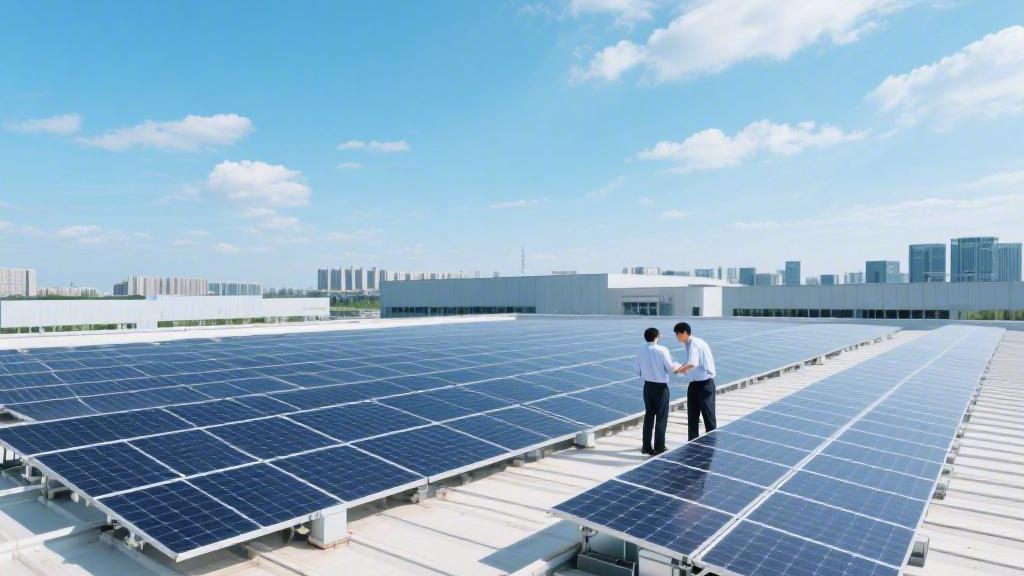
Usage Goals
How much exactly to save
The most direct motivation for a corporate park to install a solar system is usually to reduce operating costs. When customizing a plan, the expected electricity bill reduction proportion must be clarified. If the goal is to offset high peak electricity bills generated during daytime office hours, then the system design should focus on maximizing instantaneous output power to make it highly matched with the power consumption curves of air conditioning, lighting, and office equipment. In many commercial areas, daytime commercial electricity prices are two to three times higher than those at night; every kWh emitted by solar power creates extremely high substitution value. By installing high-efficiency monocrystalline silicon modules, the park can reduce total annual electricity bills by 30% to 50%. To achieve this goal, the Payback Period (PBP) and Net Present Value (NPV) need to be calculated in detail. Usually, for a reasonably designed commercial rooftop project, its payback period should be controlled between 5 and 8 years, while the design life of the system usually exceeds 25 years, with nearly free power supply in the later ten-plus years.
Evaluation indicator | Explanation | Target value reference |
Electricity bill deduction rate | The proportion of solar power replacing grid power | 30% - 60% |
Self-use ratio | The proportion of electricity generated consumed inside the park | > 85% |
Investment recovery period | Time required for the cost to be covered by saved electricity bills | 5 - 8 years |
Cost per watt | Total system cost divided by installed capacity | Depends on local market price |
When calculating saving goals, maintenance expenditures cannot be ignored. Although solar systems have no moving parts, annual cleaning costs, insurance costs, and the reserve fund for inverter replacement in 10 to 15 years should all be included in the financial model. If the park is located near areas with more dust or bird habitats, the cleaning frequency may need to be increased from once every half year to once every quarter; otherwise, accumulated dirt will cause power generation to drop by more than 5% per year.
Get green certificates
In addition to direct economic benefits, many international enterprises or listed companies need to meet the requirements of ESG (Environmental, Social, and Governance) reports through the use of clean energy. If the goal is to obtain LEED (Leadership in Energy and Environmental Design) green building certification or similar international green factory ratings, then plan customization is not just as simple as laying a few panels. Certification bodies usually require detailed real-time monitoring data to prove that the electricity used by the park indeed comes from renewable resources. At this time, the system must be equipped with high-precision energy management software capable of automatically generating carbon emission reduction reports that meet international standards. Every 1,000 kWh generated can reduce approximately 0.6 to 0.8 tons of carbon dioxide emissions; these data are crucial for enhancing the corporate brand image and meeting the environmental audits of supply chain customers.
Green goal | Key actions | Output results |
Carbon neutrality path | Gradually increase the proportion of renewable energy | Annual emission reduction report |
Green building certification | Integrate solar into building design | LEED / BREEAM points |
Supply chain compliance | Meet brand requirements for clean energy | Green Electricity Certificates (RECs) |
Brand image | Display power generation billboards in prominent positions in the park | Enhance social responsibility |
For enterprises with export business, using solar power can also help deal with potential carbon tariff pressures. By introducing clean electricity into the production process, enterprises can lower the carbon footprint of their products, thereby maintaining competitiveness in the international market. Driven by this demand, system design often pursues higher installed capacity, and even considers using building-integrated photovoltaics (BIPV) or translucent photovoltaic windows when roof space is insufficient, to squeeze out every bit of green credit as much as possible.
Not afraid even of power outages
For parks with data centers, precision laboratories, or cold chain warehouses, the continuity of energy supply is far more important than saving money. If the goal is to improve the energy resilience of the park and prevent losses caused by grid fluctuations or temporary power outages, then the plan must include powerful Cell Energy Storage Systems (BESS) and microgrid control technology. In this configuration, solar is not just a power generation device; it becomes a backup power center. When the external grid fails, the system can switch to "off-grid mode" in a few milliseconds, using the electricity stored in batteries to maintain the operation of critical loads. The focus of such plan customization lies in identifying "critical loads" and "non-critical loads," ensuring that under limited cell capacity, priority is given to guaranteeing the power supply of servers and core production lines.
Backup plan | Technical requirements | Applicable scenarios |
Off-grid switching | Millisecond-level Automatic Transfer Switch (ATS) | Data centers, laboratories |
Peak shaving and valley filling | Large capacity lithium cell pack | Areas with extremely high peak electricity prices |
Load grading | Intelligent distribution cabinet control | Prioritize protection of core equipment |
Black start capability | System self-start function | Long-term power outage caused by extreme weather |
Adding energy storage, although it will significantly increase initial investment costs (usually doubling or even more the total project price), brings a sense of security that cannot be measured by simple electricity bills. The loss from a production line restart and raw material scrapping caused by an accidental power outage is often enough to cover the construction cost of a set of energy storage systems. Therefore, high-tech parks usually require at least 4 to 8 hours of backup power capability to support core loads when customizing plans.
Helping the grid work
Some leading corporate parks have begun to explore turning their own solar systems into a revenue center, obtaining extra subsidies by participating in the grid's "demand response" or "Virtual Power Plant (VPP)" projects. If the goal is to interact deeply with the local power company, then the system needs to have high flexibility. When the grid load is too high, the park can proactively reduce power intake from the grid, turning to use self-generated electricity or cell power; even when the grid frequency is unstable, using the reactive power compensation function of the inverter to help stabilize the voltage. In this mode, the park is not only a consumer of energy but has also become a provider of energy.
l Connect to third-party scheduling platforms, accepting real-time instructions from the grid for charging and discharging operations.
l Install bidirectional metering meters to accurately record every kWh sent back to the grid.
l Evaluate the local frequency regulation market and capacity compensation policies to calculate potential revenue from participating in peak regulation.
l Use AI algorithms to predict the next day's power generation and electricity consumption, declaring electricity use plans to the grid in advance.
The realization of such high-level goals depends on extremely advanced inverters and controllers; they must support open communication protocols to interface with the external energy internet. Although the technical threshold is high, it represents the highest form of future enterprise energy management, which is moving from simple "energy saving" to complex "value creation."
Easy to expand later
When formulating usage goals, the growth potential of the company in the next 10 years must be considered. If the current plan is only to cover part of the electricity use of the administration building, but the company has plans to expand factories or add large production equipment within three years, then the current system architecture must reserve enough "soft interfaces" and "hard interfaces." Extra air switch positions should be reserved in the distribution room, spare sleeves should be reserved in the cable trenches, and seamless access for newly added inverter nodes should be supported on the software platform.
l Hardware reservation: The installation locations of inverters and combiner boxes should leave at least 30% redundant space.
l Software expansion: The energy monitoring system should have a cloud architecture, supporting centralized management across parks and multiple sites.
l Structural preparation: When performing roof waterproofing treatment or reinforcement, large-area construction can be completed all at once, even if only half of the solar panels are installed initially.