How Does Solar Panel Efficiency Affect Home Energy Use | Power Output, Roof Space, Savings
High-efficiency panel conversion rate reaches 22%, under the same area power generation amount is larger.
If you consume 20 degrees (kWh) electricity daily, assemble a 400W high-efficiency panel only needs 15 pieces, compared to ordinary panels, save 30% roof area.
If roof space is limited, must prioritize investing in high-efficiency panels to maximize long-term electricity bill savings.
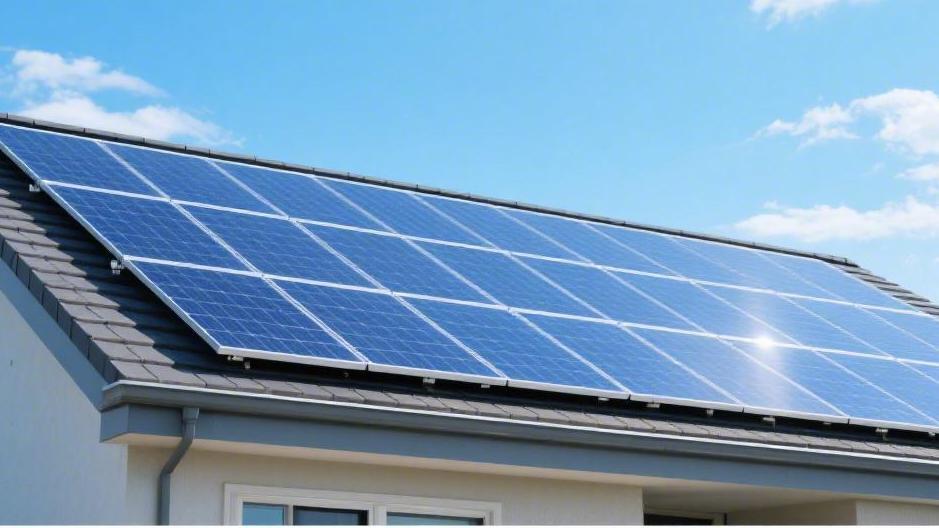
Power Output
In the laboratory
A piece of factory calibrated as a 400-watt solar panel, is under irradiance reaching per square meter 1000 watts, air mass parameter AM 1.5, cell sheet physical temperature precisely controlled at 25 degrees Celsius's STC standard environment measured out's peak power. When this piece of board is fixed on California's state Los Angeles's residential roof, afternoon 2 o'clock being by sun directly radiated time, surface temperature usually will rapidly soar to between 45 degrees Celsius and 55 degrees Celsius.
Under the more close to natural environment's NOCT test standard, irradiance drops to per square meter 800 watts, environmental temperature set at 20 degrees Celsius, wind speed maintained at per second 1 meter, at this time, that piece of nominal 400-watt module, its actual maximum output power will shrink to around 290 watts to 310 watts. From the product manual's theoretical parameters to the roof's real physical environment, the overall DC side output's book value will produce an about 22% to 25% drop magnitude.
Afraid of high temperatures
The module's back parameter nameplate printed with Pmax temperature coefficient, currently the market's mainstream P-type monocrystalline silicon panel's temperature coefficient generally fluctuates between -0.35%/°C and -0.40%/°C. When the working temperature crosses the 25 degrees Celsius's test watershed, the surface temperature rises 1 degree Celsius. This piece of rated power 400 watts board will lose 1.4 watts to 1.6 watts's power generation capacity.
In the summer afternoon when the air temperature is high, reaching 38 degrees Celsius, the surface heated to 65 degrees Celsius photovoltaic panel, its instantaneous power generation power will compared to the nominal parameter suddenly drop 14% to 16%, a single piece 400 watts board's actual output is only 336 watts to 344 watts. Adopting N-type TOPCon or heterojunction technology's modules, its temperature coefficient is optimized to -0.25%/°C to -0.28%/°C's range inside, under 65 degrees Celsius's high temperature load, single piece 400 watts board's power can more retain about 15 watts to 20 watts's output margin.
Afraid of tree shade
Residence surrounding 15 meters range inside growing an oak tree whose height reaches 10 meters, if its tree crown at morning 9 o'clock to 11 o'clock between shaded roof array inside one piece module area's 15%, for traditional string type system speaking, overall current output will immediately plummet 50% to 80%. A piece of conventional 144 half-cell module inside integrated 3 bypass diodes, dividing the board longitudinally into 3 parallel 133 watts sub-string flow channels.
When one piece, even half a cell (area accounts for whole board's 0.5%), is covered by bird droppings or by chimney shadow swept across time, the corresponding 1 bypass diode will within 0.1 seconds conduct, sacrificing away this channel's 33.3% voltage output, letting this piece of 400-watt board's actual power instantly fall to 260 watts to 266 watts interval, in order to preserve the remaining 66.7% region's 10 amperes normal current. If installed, every unit costs 60 to 80 dollars's microinverters, shadow caused power penalty will be 100% limited to the being shaded's single piece module inside, system remaining 19 pieces not receiving shading boards still can maintain full speed operation.
Front and back side power generation
Bifacial power generation module's back glass can absorb ground reflected diffuse scattered light, when installed on a reflectivity reaching 70% to 80% white crushed stone or painted with titanium dioxide's flat roof on, back side extra contributed gain ratio is between 10% to 15%. Assuming the front side receives per square meter 1000 watts's irradiance outputting 400 watts, the back side after absorbing per square meter 150 watts's reflected light, can extra provide 40 watts to 60 watts's superimposed power, making the whole piece module's comprehensive output cross 440 watts to 460 watts's interval.
If it is installed on a reflectivity of only 15% to 20% dark color asphalt shingle roof, and the module distance from the roof physical gap is only 10 centimeters to 15 centimeters, the back side absorbed reflection flux sharply decreases to per square meter 20 watts below, bifacial gain rate falls to 1.5% to 2.0%, whole piece board at afternoon 1 o'clock's peak output merely increases 6 watts to 8 watts.
Various losses
From direct current converted to alternating current's whole physical transmission chain inside, exists 10% to 14% inherent system loss rate.
l Length reaching 20 meters's 10 AWG specification photovoltaic DC cable, when transmitting 15 amperes's high voltage current, will produce about 1.5% to 2.0% voltage drop and thermal impedance attenuation.
l A unit rated output as 6000 watts's string inverter, its weighted conversion efficiency standard is usually calibrated as 97.5% to 98.2%, everyday operation needs to deduct 0.5 degrees to 1.0 degrees electricity's self-heating dissipation.
l Inverter's DC/AC ratio is usually designed at 1.2 to 1.25 between, 8000 watts's photovoltaic panels paired with 6000 watts's inverter, during spring noon illumination peak high reaching per square meter 1100 watts's 2 hours inside, the inverter will actively peak-shave, forcefully discard exceeded's 500 watts to 800 watts instantaneous power.
l Roof tilt angle if set at 15 degrees instead of the local optimal's 30 degrees, every year winter months' monthly power generation cumulative value will appear 15% to 20% negative deviation.
l Module surface's dust and pollen accumulation will cause every year 2% to 5% light transmittance decrease, if continuous 3 months rainfall is below 50 millimeters, surface dirt accumulation caused system monthly average output power decline might reach 7% to 10%.
Aging indicators
Newly factory-left installed's monocrystalline silicon photovoltaic modules exposed to ultraviolet irradiation and temperature cycling's first 12 months inside, will happen light-induced degradation phenomenon, causing rated power permanently downward adjusted 1.5% to 2.0%. From operation's 24th month to 300th month, due to silicon wafer inside crystal lattice slowly aging and EVA encapsulant film light transmittance's physical decrease, P-type module's linear annual average degradation rate is fixed at 0.45% to 0.55% between.
A piece of first-year actual maximum output power is 390 watts's module, and it operates 8 hours every day. By the 10th year, its peak power will drop to 368 watts to 372 watts. To the 25th year factory warranty period expires, the remaining power generation capacity stays at the initial calibrated power's 80% to 84%, single piece board's output value falls back to 320 watts to 336 watts. N-type cell's annual degradation rate data is further compressed to 0.3% to 0.4%, 25 years later's absolute power output compared to the same parameter's P-type board is high by about 15 watts to 25 watts, in the entire life cycle, every piece of board extra outputted 250 degrees to 300 degrees's available electricity.
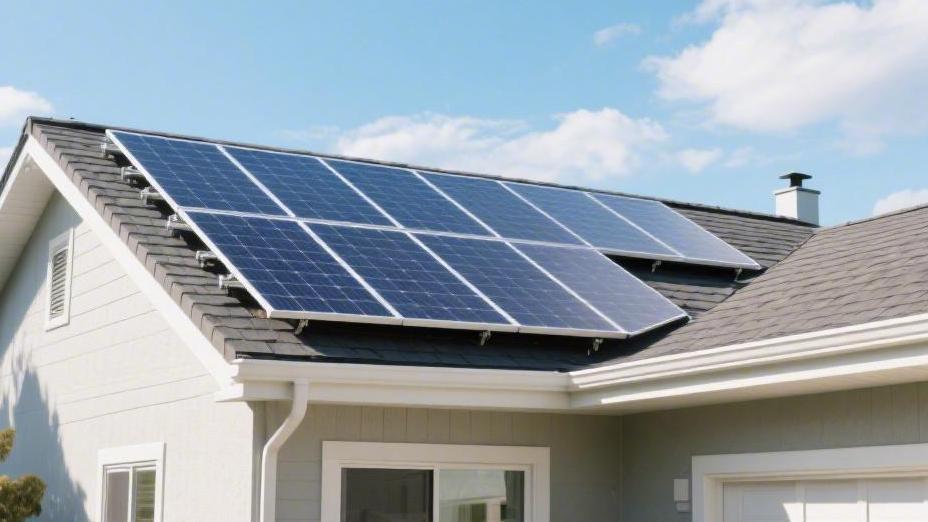
Roof Space
Measure measure sizes
The market adopts 108 half-cell sheets' residential grade solar panels, standard physical dimensions are generally set at length 1.72 meters, width 1.13 meters, single piece occupies a roof 1.94 square meters' planar projection area.
Module frame's aluminum alloy thickness from past's 40 millimeters reduced to current's 30 millimeters, single piece glass plus frame's overall net weight is kept at 21.5 kilograms around.
When production line on smeared's silver paste thickness is controlled at 15 micrometers within, and P-type silicon wafer's thickness is lowered to 130 micrometers, this piece of 1.94 square meters' board can output 410 watts' rated DC power, its photoelectric conversion efficiency reached 21.1%.
If you select a length of 2.27 meters, width of 1.13 meters, and area high reaching 2.56 square meters, the 72 format large module, single piece weight will soar to 28.6 kilograms, installation time needs 2 workers to bear per square meter 11.1 kilograms' static load to perform slope's lifting operation.
Under the same materials, efficiency is only 18.5% of the old model polycrystalline silicon module, outputting 320 watts of power, similarly needs to consume 1.67 square meters of physical space.
Every 1% increase in conversion efficiency, under the premise of outputting 1000 watts, can reduce about 0.4 square meters' tempered glass and aluminum alloy frame material consumption.
Occupy how big land
For an annual electricity consumption of 12,000 degrees (kWh), designing an independent townhouse with a set of 8 kW installed capacity's grid-tied system, the roof's physical load-bearing space allocation will appear 35% data deviation.
Select using single piece power is 400 watts, efficiency is 21% monocrystalline silicon module, to complete 8000 watts' total output needs to accurately configure 20 pieces boards, with 2 rows 10 columns' matrix arrangement, hardware itself's physical coverage area totals to 38.8 square meters.
If the procurement budget is downward adjusted by 15%, select using a single piece 320 watts, efficiency 18.5% module, to achieve the same 8000 watts power, then needs to install 25 pieces of boards, hardware occupied's absolute area climbs to 48.5 square meters.
This extra comes out to 9.7 square meters, and corresponds to the roof needs to additionally lay 11.4 meters long aluminum alloy installation main guide rail.
Per meter standard installation guide rail's manufacturing cost is about 12 dollars, plus extra needed to be driven into roof wooden truss's 10 stainless steel fixing hooks. Every installing one hook's material and labor amortized cost is at 25 dollars to 30 dollars.
Efficiency difference brought not only is area's expansion, but also pushed up 380 dollars to 450 dollars's metal auxiliary materials and labor installation rigid expenditures.
Module parameter specifications | Conversion efficiency ratio | Achieve 8kW required quantity | Hardware physical footprint area | Aluminum alloy guide rail total length | Static load-bearing total mass |
400W 108 half-cells | 21.0% | 20 pieces | 38.8 square meters | 45.6 meters | 430 kilograms |
370W 120 half-cells | 19.5% | 22 pieces | 40.4 square meters | 50.1 meters | 462 kilograms |
320W 60 full-cells | 18.5% | 25 pieces | 48.5 square meters | 57.0 meters | 525 kilograms |
Leave out aisle
According to the American National Fire Protection Association's NEC code, residential roof installing photovoltaic arrays must at the roof ridge highest point keep 0.91 meters (3 feet) obstacle-free fire aisle.
At the roof's both sides edges and eaves gutter above, similarly, are compulsorily required to reserve 0.45 meters to 0.91 meters varying physical setback distances.
A length of 12 meters, width of 6 meters's single-sided facing south slope roof, its nominal total area is 72 square meters.
Deducting the top 0.91 meters wide times 12 meters long's 10.9 square meters aisle, and both sides each 0.91 meters wide's edge setback areas, again subtracting bottom 0.45 meters wide's fall prevention buffer zone, the actual usable area for laying solar panels' legal net area sharply decreases to 44.6 square meters.
In this legal space inside, two pieces of solar panels are adjacent in order to cope with summer high temperatures reaching 65°C, thermal expansion and contraction, physical deformation, must keep a gap of 15 millimeters to 20 millimeters.
20 pieces boards composed's array, crisscrossing's crevices will extra eat away about 0.8 square meters to 1.2 square meters's installation quota.
When the legal net area is only 44 square meters, select using a single piece occupying 1.94 square meters's 400 watts high efficiency module, exactly can take 20 pieces of boards stuffed into this piece region and maintain 0.5 meters's compliance dimension redundancy.
If swapped to needing 48.5 square meters' footprint area's 320 watts low efficiency module, this set of 8kW's system will face 4.5 square meters' area overload, unable to pass municipal drawing review stage's 100% compliance indicator.
Calculate calculate weight
Laid on asphalt shingle roof's photovoltaic system, per square meter will add 11 kilograms to 15 kilograms's constant static load.
Single piece weight reaching 21.5 kilograms's module, plus per square meter weighing about 2.5 kilograms's aluminum alloy brackets and stainless steel fasteners, 20 pieces high efficiency modules array to roof truss applied's total static downward pressing gravity is 480 kilograms.
In winter, snowfall amounts reaching 300 millimeters's region, snow accumulation density at per cubic meter 200 kilograms around, 40 square meters's photovoltaic panel surface will bear 2400 kilograms's temporary snow load pressure.
According to ASCE 7-16 building load standard, when wind speed reaches per hour 180 kilometers, the fixed tilt angle is 20 degrees, and the roof's every piece 2 square meters module, its back side will bear a high reaching 1300 Newtons (about equal to 132 kilograms)'s upward wind uplift force intensity.
Adopting 25 pieces low efficiency modules to lay a 48.5 square meters' array, the system's total static load climbs to 600 kilograms, its under extreme storm weather borne's total wind uplift force will from 2600 kilograms jump to 3250 kilograms.
Extra out's 650 kilograms structural tearing stress, requires installation workers to drive in 15 roots length is 80 millimeters's galvanized lag bolts, in order to meet per square foot 30 pounds's anti-pullout strength lower limit parameter.
Avoid obstacles
A cross-section dimension is 0.4 meters by 0.4 meters's roof bathroom exhaust ventilation pipe, will scrap away surrounding 2.2 square meters's photovoltaic installation quota.
Installation code requires module frame distance from ventilation pipe edge at least maintains 0.3 meters' physical gap, a 0.16 square meters' protruding object volume, will cut off a length 1.72 meters, width 1.13 meters' complete module installation grid.
A seat height is 1.2 meters's red brick chimney, in the north latitude 40 degrees region December 21st Winter Solstice day afternoon 3 o'clock, sunlight with a 15-degree low elevation angle irradiates time, will on the roof surface project out a long reaching 4.5 meters's diagonal physical shadow area.
In order to avoid this piece in winter, the long-reaching 4-hour 30% shading rate region, the installation team must take the whole photovoltaic array towards east or towards west, translating 2.5 meters to 3 meters.
Translation trajectory touches the roof edge's fire protection setback red line, original designated 8kW design plan reduces 10% to 15% installed capacity.
On by chimney and ventilation pipe cut distributed's effective roof on, able to piece together out 30 square meters's no shadow absolute clear zone.
Select using per square meter energy density high reaching 220 watts, single piece output at 420 watts above, conversion efficiency reaching 22.5% N-type monocrystalline silicon module, in this 30 square meters inside can accommodate 16 pieces boards, achieving 6.7kW's system total capacity and every year 9,500 degrees electricity's yield bottom line value.
Savings
Purchasing a set of 8000 watts installed capacity's residential grade photovoltaic system, select using photoelectric conversion efficiency high reaching 22.5% N-type monocrystalline silicon module, hardware and labor's comprehensive quote usually falls in the per watt 2.90 dollars to 3.20 dollars's interval. The whole set system's contract initial bill total amount will reach 23,200 dollars to 25,600 dollars. Compared to this, if the conversion efficiency stays at 19% of the conventional P-type module, the market average price usually dips down to per watt 2.40 dollars to 2.60 dollars, the same 8000 watts power total manufacturing cost only needs 19,200 dollars to 20,800 dollars.
High-end high efficiency board materials often carry a per watt 0.15 dollars to 0.25 dollars's manufacturing premium, plus 0.10 dollars's brand added value. Even though 20 pieces of high efficiency 400-watt boards compared to 25 pieces of low efficiency 320-watt boards consumed about 4.5 square meters's aluminum alloy brackets and 5 hours's roof climbing operation time, but every piece board extra out's 75 dollars to 90 dollars silicon wafer price difference, still pushed up 18% around's upfront hardware budget absolute value.
In the whole long-reaching 25-year life cycle inside, levelized cost of energy (LCOE) is the only mathematical benchmark to measure financial bills. A set of manufacturing costs 25,000 dollars, generates 12,000 degrees of electricity's high efficiency system, assuming 25 years of total operation and maintenance expenses are 3,500 dollars, its converted to every degree electricity's production cost is about locked at 0.095 dollars to 0.105 dollars's extremely low interval.
Deduction calculated into account
Facing a high reaching 2.5 thousand dollars's system initial installation quote, the US federal government promulgated's Investment Tax Credit (ITC) policy allows homeowners to take equipment total amount's 30% used to offset that year's personal income tax liability. Taking a set of 24,000 dollars' high efficiency 8 kW system as an example, in completing grid connection acceptance and entering the grid's following year April tax reporting season, system owner can legally obtain 7,200 dollars' federal tax credit, that sum of numbers instantly takes the upfront net expenditure pulled down to 16,800 dollars.
If installed is a 19,600-dollar conventional system, a 30% deduction quota correspondingly reduces to 5,880 dollars, the final actual amount paid from your own pocket is 13,720 dollars. Under superimposed federal tax leverage after, high-reaching 22% conversion efficiency's high-end system and 19% efficiency's basic system between, originally differed's 4,400 dollars initial price chasm, was forcefully compressed to 3,080 dollars.
If the family located state also provides a per watt 0.20 dollars to 0.30 dollars's local cash rebate, or allows selling every 1,000 degrees electricity (1 MWh) corresponding value 50 dollars to 150 dollars's SREC Solar Renewable Energy Certificate, a high efficiency system in a 25-year service period still can extra produce 3,000 dollars to 4,500 dollars's secondary cash inflow.
Surplus electricity sold to grid
A set nominal 8,000 watts's array in summer, June to August's peak period, every day, the average can output 40 degrees to 45 degrees DC electricity, passing through a string inverter 98% efficiency's AC-DC conversion after, injected into the home main electrical panel's usable AC electricity is about 39 degrees to 44 degrees. Assuming the homeowner at those three months' daytime only consumed 15 degrees of electricity to maintain air conditioning operation and refrigerator refrigeration, the remaining 24 degrees to 29 degrees of electricity will be through a bi-directional meter reverse poured into the municipal public power grid.
In executing full net energy metering (NEM 2.0) policy's billing cycle inside, the power grid company will according to per degree electricity 0.25 dollars's highest tiered retail electricity price, for 24 degrees reverse poured electricity record on a 6 dollars's bill debit balance. In autumn and winter, daytime shortens, power generation sharply decreases, and every day only has 15 degrees to 20 degrees. Homeowners can deduct previously stored digital credit points without loss from the bill balance.
Along with some regions' power grid billing rules towards NEM 3.0 mode switching, daytime sold electricity to the power grid's excess electricity no longer according to the 0.25 dollars' retail price settled, but is pressed down to per degree electricity 0.05 dollars to 0.08 dollars' wholesale power grid price. A set of high efficiency systems can even generate 5 degrees of electricity every day, if they cannot coordinate, the unit capacity is 13.5 degrees electricity's home energy storage cell to take it intercepted left in local physical equipment inside, that part originally book value 1.25 dollars's extra production capacity, its cash realization value will massively shrink to 0.25 dollars to 0.40 dollars interval.
Combat rising electricity prices
Assuming the public utility company's benchmark electricity price is set at 0.22 dollars per degree, and the past 15 years' inflation statistical model shows, residential power grid bill's annual average compound growth rate stabilizes at 3.5% to 4.5% between fluctuating. In grid-tied operation's first year, a set every year outputs 11,000 degrees of electricity's high efficiency photovoltaic matrix, is able to one to one offset away 2,420 dollars's external bill expenditure. According to 4%'s compound interest growth curve, to photovoltaic panel serving's 10th year, power grid selling price will climb to per degree 0.32 dollars. At this time, even though that set 22.5% efficiency's N-type module because of every year's 0.4% aging degradation rate, making actual annual output slightly drop to 10,600 degrees electricity, but its every year saved electricity bill value instead against the trend surged to 3,392 dollars.
When the timeline stretches to the 25th year of the factory warranty period's last day, per degree electricity's fair retail price has already broken through the 0.58 dollars' high position. That set remaining power generation equipment even if the whole year's power generation amount slid down to 9,400 degrees, still is able to at that year from family financial report on forcefully cut off 5,452 dollars's electricity purchase expenditure.
Recoup capital calculate calculate account
Take 25 years totally offset away's electricity bill numbers conduct summing up, a set actually invested 16,800 dollars's 8kW high efficiency system, at 25 years later, it is totally able to save about 95,000 dollars to 105,000 dollars's power grid electricity purchase expenses. Deducting the initial period hardware procurement bill, and halfway, possibly needed to spend 2,000 dollars to replace it once the usage lifespan upper limit is 15 years's string inverter's budget, absolute net profit usually maintains at 76,000 dollars above. If adopting a total cost only needs 13,720 dollars's 19% conventional efficiency system, the first year's electricity bill saving quota is 2,200 dollars, its static investment return cycle falls between 6.2 years and 6.5 years, compared to high-end high efficiency system, faster about 12 months to 16 months recoup capital.
Conventional P-type module every year high reaching 0.55% linear physical degradation rate, makes it at 15th year after power generation capacity appeared 10% to 12% landslide. In total, 25 years' financial calculation model inside, its cumulative saved electricity bill total amount finally stays at 85,000 dollars, long-term net return amount hovers at 69,000 dollars. If the roof's legally usable net physical area is only 30 square meters, in limited space inside, laying low efficiency modules only can piece together out 6000 watts' total output power, that set system's lifetime return total amount will further shrink to 55,000 dollars' bottom line.