How Can We Utilize Solar Energy | 3 Steps
First is Collection: Absorbing sunlight through rooftop silicon-based photovoltaic panels and directly converting it into DC electricity with an industry mainstream conversion rate of approximately 15%-22%.
Second is Conversion: Utilizing an inverter to convert DC electricity into standard 220V AC electricity that can be used by household appliances.
Finally, there is Storage and Distribution: This electrical energy can be directly supplied for the family's daily use, while excess electricity can be stored in a household lithium cell with a capacity of 5-10 kWh to be kept for nighttime consumption, or directly integrated into the national grid to earn revenue.
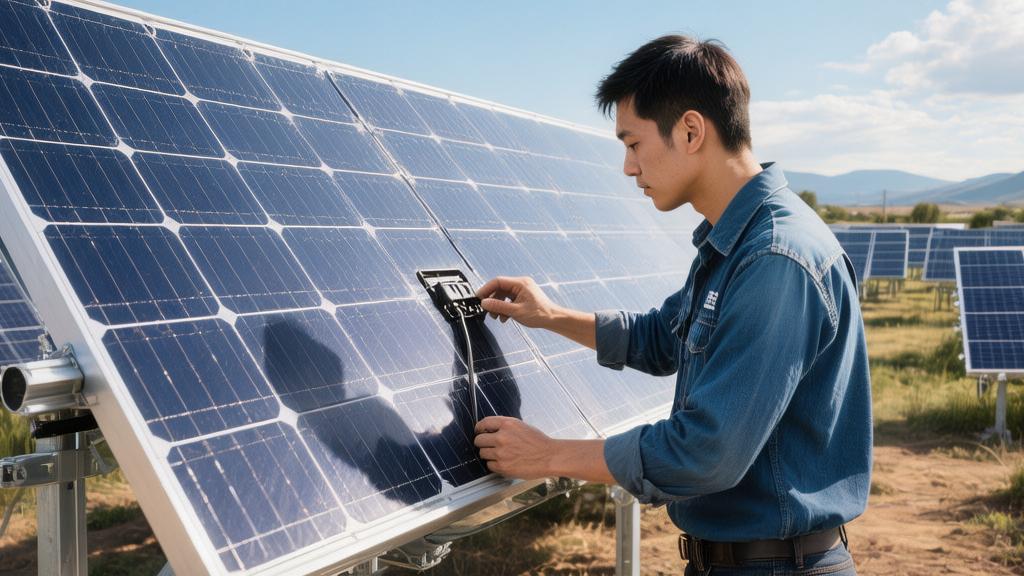
Assess Suitability and Sun Exposure
The first step in assessing the physical roof is to retrieve the Global Horizontal Irradiance (GHI) database of the location within the past 20 years, comparing whether the annual average global horizontal radiation amount is stable within the numerical range of 1,200 kWh to 2000 kWh per square meter.
In temperate climate sites located within the geographical latitude range of 30 degrees to 45 degrees, the daily Peak Sun Hours (PSH) exhibit a normal distribution with a standard deviation of 0.8 hours within 3.5 hours to 5.5 hours.
· If the historically statistical sunshine days are less than 180 days, or if cloudy and snowy weather with radiation flux continuously lower than 200 watts/square meter occurs for 40 days in winter, the annual average total output electricity of the power generation equipment will produce a cliff-like decrease of 25% to 35%.
· Using a thermopile pyranometer to collect minute-level shortwave radiation flux for 72 consecutive hours on-site can narrow the power generation regression deviation rate of 3D photovoltaic estimation software to within an error margin of 5%.
· When the atmospheric aerosol optical depth index increases by 0.1, the direct solar radiation flux density reaching the surface of the glass panel will absolutely decrease by 150 watts/square meter.
Identify the Correct Angle
In regions north of the equator, the physical receiving azimuth falls on the 180-degree due south coordinate; a physical azimuth offset of 15 degrees east or west will cause the overall annual power generation to experience a negative correlation decline of 3% to 5%.
The tilt slope value supporting the modules must be locked within a geometric angle of plus or minus 5 degrees of the local geographical latitude, thereby capturing the highest cumulative integrated radiation amount in the total operating cycle of 8,760 hours throughout the year.
· For flat roof surfaces where the original tilt is only 5 degrees to 10 degrees, the system must connect to aluminum alloy triangular brackets with an elevation angle of 15 degrees to 20 degrees, breaking the 15-degree critical flow velocity limit required for rainwater gravity flushing.
· Under the geographical positioning of 40 degrees North latitude, the maximum solar incident angle on the winter solstice is only 26.5 degrees; compared to the peak elevation angle of 73.5 degrees on the summer solstice, the absolute density difference of photon flux received per square meter breaks through 40%.
· The physical spacing between the north and south rows of the array is usually set to 1.5 times to 2.5 times the product of the vertical height of the front bracket's highest point above the ground, ensuring the physical shading rate of the rear panels is constantly lower than 1% during the 360 minutes from 9 AM to 3 PM on the winter solstice.
Inspect the Roof
Once the actual factory service age of asphalt composite shingles or concrete floor slabs exceeds 15 years, the median ultimate tensile strength of their waterproof membranes usually declines by more than 40%; before laying a photovoltaic array with a total self-weight exceeding 500 kg, reinforcement and renovation with 100% area coverage must be executed.
Each single standard 60-cell specification module mounted on aluminum rails will exert a long-term constant static load of 15 kg to 20 kg for every square meter of stressed area.
· If testing the local historical peak wind load reaches a gust velocity of 35 meters per second, the mechanical pull-out test data for fixing metal brackets must mandatorily reach a minimum physical pull-out resistance of 500 Newtons for a single expansion bolt.
· If the internal moisture content of the wooden truss material supporting the top is measured to be higher than 18%, its compressive yield strength will slide down at a correlation coefficient of 0.8, and every 100 square centimeters of load-bearing cross-section will be unable to carry a sustained physical pressure above 150 kg.
· The spacing data of wooden rafters at the bottom of standard pitched roofs is generally 40 cm or 60 cm; when installing fixing clips, it is necessary to ensure that more than 90% of the self-tapping stainless steel screws penetrate the wooden layer to a depth of no less than 65 mm.
Check for Obstructions
In the airspace within a 10-meter radius of the physical edge of the modules, any tree trunk or exhaust chimney higher than 2 meters above the roof reference plane will project moving physical shadows with a length of 4 meters to 8 meters to the north when the winter sunshine offset angle is greater than 60 degrees.
If 10% of the physical area of modules in a single series string is subjected to opaque physical shading by fallen leaves for 120 minutes, the DC power output at the input end of the entire string inverter will demonstrate a non-linear plunge of 30% to 50%.
· Operating a drone equipped with a LiDAR probe to implement 3D point cloud dense scan mapping can construct a roof obstruction model within a maximum accuracy error allowance of 2 cm, calculating the hourly shadow shading probability distribution for 365 days of the year.
· To deal with non-removable fixed shadow sources with a surface area greater than 0.5 square meters, it is necessary to install micro-inverters with independent MPPT voltage tracking algorithms for each module within the shaded range; the additional hardware procurement price for a single unit fluctuates in the 100 dollars to 150 dollars range.
· If 80 degrees Celsius high-temperature oil fume gas ejected from the exhaust vent adheres to the surface of the photovoltaic transparent glass for a long time, when the attached solid particulate matter concentration index cumulatively reaches 50 micrograms per cubic centimeter, the optical transmittance of that local area will accelerate its decrease by 12% within 30 days.
Understand Incentives
Net Metering
The peak solar radiation flux of the day appears in the range of 12 PM to 2 PM; a grid-tied inverter with a rated AC output power of 6 kW can send back a maximum of 5.8 kWh per hour to the grid at an ambient temperature of 25 degrees Celsius.
A power supply network adopting a 1:1 retail electricity price metering agreement will use a bidirectional smart meter to record bidirectional current data every 15 minutes.
When your household's real-time load is only 500 watts (such as a refrigerator and wireless router running), while the instantaneous output power of the rooftop matrix reaches 5500 watts, the excess 5000 watts of power will surge into the public transmission and distribution lines at a standard AC voltage of 240 volts.
If the standard residential tiered electricity price of the local power supply company is set at 0.15 dollars per kWh, and you export 1,000 kWh during the day, a credit balance of 150 dollars will be immediately added to the account.
When the shortwave solar radiation drops to 0 W/m² at night, and the household turns on an air conditioning system with a total power reaching 3000 watts and draws back 1,000 kWh from the grid, the 150 dollars credit balance on the account will be deducted proportionally, completely flattening this month's electricity bill figure.
On the annual settlement day, if the data accumulated by the bidirectional meter shows that the electricity sent into the grid throughout the year is greater than the total electricity drawn, the extra net surplus kWh will usually only be converted into a cash check according to the wholesale-end acquisition guidance price of 0.03 dollars to 0.05 dollars per kWh; the unit price difference ratio between the two is as high as 70% to 80%.
Green Electricity Trading
Whenever the inverter screen on the roof cumulatively displays and records the production of 1,000 kWh (i.e., 1 MWh) of AC power, after data certification by an independent third-party metering agency, the system will automatically generate 1 tradable Solar Renewable Energy Certificate in the holder's digital account.
A standard household photovoltaic product line with a rated power of 10 kW, in a climate zone with an annual average effective sunshine of 1,300 hours, can produce 13 complete digital certificates when running at full load throughout the year.
The secondary market trading price of certificates is subject to the renewable energy portfolio standard completion ratio mandatorily regulated by local legislatures for large fossil fuel power plants; the price exhibits extremely strong cyclical fluctuation characteristics.
When the quota gap expands in a certain quarter, the spot transaction price of a single certificate can climb from 80 dollars to a high peak of 250 dollars within 30 days.
Choosing to sign a 5-year forward acquisition contract with an energy brokerage company, the average acquisition price of a single certificate is usually anchored in the median range of 120 dollars to 150 dollars; the first 5 years of the system's 25-year design life can increase quantitative fiat income by about 7,800 dollars, shortening the static investment recovery period of the initial equipment by 1.5 to 2 years.
Policy Name | Return Channel | Quantification Standard | Average Effective Cycle | Return Volatility |
Federal Tax Credit | Annual Income Tax Deduction | 30% of total initial cost | 12 to 15 months | 0% (fixed ratio) |
Net Metering | Bill Credit Offset | 1:1 retail price ratio | Settlement every 30 days | 5% to 10% |
Green Electricity Trading | Spot Market Sale | 1 certificate / 1,000 kWh | Quarterly or Annual | 15% to 40% |
Consumption Tax Exemption | Initial Invoice Deduction | 4% to 7% of purchase amount | Date of purchase | 0% (fixed tax rate) |
Property Tax Exemption | Property Tax Deduction | 100% of assessed premium | 1 to 20 years span | 2% to 5% |
Calculate Tax Exemptions
Purchasing a set of photovoltaic equipment weighing 800 kg and containing 30 silicon-based panels, in an administrative jurisdiction with a state-level sales tax rate of 7%, the sales tax exemption regulation can make a 25000-dollar equipment invoice amount exempt from 1750 dollars of fiat expenditure out of thin air.
Through measurement by a certified appraiser using a multivariate linear regression model, for every 1 kW increase in solar installed capacity on a residential roof, the listed appraisal value of the house in the secondary housing market increases by an average of 4,000 dollars.
An independent wood-structure villa equipped with an 8 kW array will see its book property value generate a positive premium increase of 32,000 dollars.
According to an average property tax rate of 1.5% per year, the 100% photovoltaic property tax exemption policy can ensure that in the subsequent 20-year residential cycle, you avoid an additional holding cost of 480 dollars per year, totaling up to 9600 dollars.
System Design and Permitting
Pick the Right Inverter
For a single-phase grid-tied inverter with a rated output power of 7.6 kW, the rated conversion efficiency of its internal IGBT power modules in processing the transition from DC to AC usually slides within a narrow interval of 97.5% to 98.2%.
The weight of the physical chassis is mostly between 20 kg and 28 kg; the bottom is equipped with heat dissipation fins, requiring an absolute physical clearance with a radius of 40 cm around it to maintain a thermal convection airflow of 30 cubic meters per minute.
Connecting a total of 9.5 kW DC photovoltaic modules into this 7.6 kW device will form a DC to AC oversizing ratio of 1.25 times.
Oversizing parameters exceeding the inverter's maximum processing quota by 25% will cause the system to experience a clipping power truncation of approximately 1.5% to 2.5% during periods when the noon radiation flux reaches 1000 watts/square meter, but it allows the inverter startup time in the low-sunlight periods of morning and evening to be advanced and delayed by 45 minutes each.
When the physical environment temperature of the system exceeds 45 degrees Celsius, the built-in thermistor will trigger a derating protection mechanism to reduce the AC-end output amperage at a rate of 1.5% per degree Celsius, preventing the internal capacitors from life degradation due to experiencing physical high temperatures exceeding 85 degrees Celsius.
Submit Design Drawings
A 15-page standard PDF engineering design package with electronic signatures must be submitted through the municipal planning bureau's online building permit portal, along with payment of drawing review and filing fees ranging from 250 dollars to 450 dollars.
The structural engineering reviewer within the planning bureau will, within 14 to 21 standard working days after receiving the application, review whether the rooftop wooden truss can withstand a constant static load of 18 kg per square meter.
If the original construction year of the building is earlier than 2005, there is a 35% probability that it will be required to supplementarily submit a load-bearing compression test report issued by an independent third-party certified structural engineer; this additional service will occupy an extra 800-dollar single-point expenditure in the total budget details.
Every electrical symbol on the digital drawings, including the routing path of metal conduits with a thickness of 19 mm and the location of AC lightning protection circuit breakers with a rated disconnect current of 60 amperes, if there is a labeling error contrary to the 2020 edition of the National Electrical Code (NEC) provisions, the physical waiting cycle for being returned for modification and re-review will extend by 10 to 15 days.
Set Aside Fire Lanes
To comply with the physical disconnection specifications for emergency fire rescue, every photovoltaic panel in the array must have a Rapid Shutdown Device (RSD) weighing approximately 400 grams connected in series on its back.
When the physical power supply at the system's AC end is cut off, the micro-controller of the device must, within a time span of 30 seconds, instantaneously reduce the voltage at both ends of the DC conductors one meter outside the array from several hundred volts to below the safe human contact threshold of 30 volts.
Within the geometric vertical distance from the highest point of the ridge downward, it is mandatory to reserve a solid unobstructed passage with a width of 91 cm, used to exhaust toxic thick smoke that might be as high as 600 degrees Celsius inside.
The standard for firefighters' anti-slip load-bearing capacity while walking on the roof is set at 113 kg at a single foot landing point; the aluminum alloy frame of the photovoltaic module must leave a physical blank area of at least 90 cm around the four edges of the roof surface, occupying 18% to 22% of the entire usable laying area.