Why Are Efficient Solar Panels Better Solar Performance | Higher Yield, Lower Bills, Long-Term Value
High efficiency board annual degradation rate only about 0.25%, 25 years inside total power generation amount compared to ordinary board extra out 15% above, can massively slash long-term electricity bill.
Select purchasing time suggests directly comparing each brand's 25-year power warranty data, in order to lock the highest investment return rate.
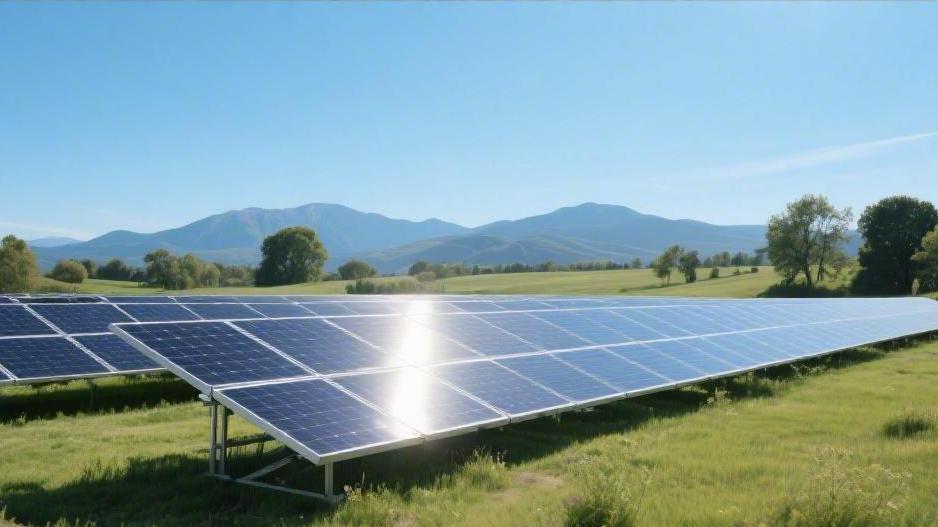
Higher Yield
Install a set of photovoltaic system, target set at maximizing every 1 square meter roof's kilowatt-hour (kWh) output rate. Compare 2026 year market on 18% conversion rate's conventional P-type PERC module, adopt 23% conversion rate's N-type TOPCon panel can under same physical size (usually is 1.95 square meters, about 2.13 meters multiply 1.04 meters) under, take single piece module's rated peak power from 400 watts (W) pull up to 430 watts above.
Take a set of 24 pieces of residential system modules as an example. The conventional configuration's system total capacity is 9.6 kilowatts (kW), and the high efficiency configuration can reach 10.32 kilowatts. In a standard test condition (STC, irradiance 1000 W/m², cell temperature 25℃)'s sunny working day, assume effective sunlight duration is 5.5 hours, 9.6 kilowatts system's theoretical daily highest value power generation amount is 52.8 degrees electricity, 10.32 kilowatts system then has 56.76 degrees electricity's output.
Single day 3.96 degrees electricity's deviation, according to local power grid, 0.18 dollars/degree's retail price calculate, one day differs 0.71 dollars's bill budget. Take time axis pull long to 365 days's complete natural year cycle, plus seasonal fluctuation, high efficiency system can extra provide at least 1445 degrees electricity's increment sample, equivalent to 260 dollars's extra revenue.
Weak light also outputs electricity
High efficiency solar cell boards at early morning, evening, or cloud layer shaded's low irradiance (below 200 W/m²) time period, demonstrate extremely low current dispersion degree and higher relative conversion efficiency. When solar radiation intensity drops to 400 W/m², 18% efficiency's old model polycrystalline silicon panel's actual output power will show parabolic style degradation, conversion rate often will fall to 15% below. Carrying passivated contact technology's 23% high efficiency monocrystalline silicon module, in the same 400W/m²'s weak light environment, can still maintain 21.5% around's stable operation ratio.
· Morning 7 o'clock to 9 o'clock as well as afternoon 4 o'clock to 6 o'clock, these 4 hours' interval, the high efficiency panel's internal series resistance (Rs) is lower, and the startup voltage threshold compared to ordinary panel is lowered by about 2.5 volts (V).
· Early 15 minutes reach inverter's startup working voltage (usually at 60V to 90V between), system every day can extra capture 0.2 to 0.3 degrees electricity's low peak traffic.
· In annual precipitation exceeds 1,000 millimeters, overcast rainy weather accounts for 35% in Seattle etc. regions, 3 months' winter time inside can take monthly average power generation amount from 350 degrees forcefully pull up to 410 degrees, taking overall seasonal error narrowed 14%.
Afraid of high temperatures?
Silicon-based semiconductor materials in working temperature crosses 25℃'s baseline after, every elevating 1℃ will face output power drop's physical law, statistically called temperature coefficient. Conventional 18% efficiency module's power temperature coefficient median is usually -0.35%/℃. In an environment temperature 35℃, the roof surface temperature reaches 65℃'s scorching summer afternoon. The actual working temperature of the panel compared to the standard test value is higher by 40℃.
40℃ multiplied by -0.35%/℃, derives at this time panel's peak power will produce -14% severe degradation, originally 400W's panel in noon strongest illumination under's actual power will drop to 344W. N-type high efficiency module's temperature coefficient is optimized to -0.29%/℃ even lower's parameter level, in same's 65℃ limit operation temperature under, power reduction rate only is -11.6%.
· Take single piece 430W's high efficiency panel as an example. Summer high temperature load under's degraded after power is about 380W, compared to conventional panels, it is higher by 36W's absolute difference value.
· In Arizona, the annual average temperature is higher, and the summer reaches 4 months' statistical sample region, -0.06% temperature coefficient difference value can salvage about 8% system electricity loss in the June to September period.
· High temperature under's performance retention rate massively intervened air conditioning load highest time period's self-generate self-use ratio, take monthly operating 200 hours, power is 3,000W's central air conditioning calculate, can in hottest's month inside offset away about 45 dollars's extra tiered electricity price fee.
Endure how long
Talking about overall revenue return rate cannot depart from system 25 years life cycle's linear degradation model to conduct variance calculation. Initial rated power again high's equipment, if 1st year's light-induced degradation (LID) rate exceeds 2.5%, or from 2nd year on every year with a 0.55% fixed ratio drops, long-term levelized cost of energy (LCOE) calculation still faces extremely low return numbers.
High efficiency HJT (heterojunction) or TOPCon modules utilize N-type silicon wafer's material advantage, take 1st year's peak power degradation strictly controlled at 1% highest limit value inside. In the subsequent 240 months to 300 months' service time inside, annual natural aging's decline amplitude is compressed to 0.25% to 0.3% 's extremely narrow interval.
· Arrived at the 25th year's end of period, a set initial rated power is 10 kilowatts' high efficiency system, still possesses not lower than 89.5% healthy capacity, namely 8.95 kilowatts' effective operation power.
· Compared to ordinary's 10 kilowatt system, in experienced 25 years cumulatively 14% around's reduction rate after, end period power median value merely stays at 8.48 kilowatts.
· Take 0.47 kilowatts's end period installed capacity difference value brought into whole life cycle's integral operation, 25 years inside high efficiency system compared to ordinary system extra generated almost 18500 degrees electricity, according to 0.20 dollars/degree's estimated future average electricity price, totally produced 3,700 dollars's pure monetary revenue increment.
Bifacial earn
Currently, the market exceeds 60% conversion rate greater than 22% photovoltaic products standardly equipped with bifacial power generation (Bifacial) glass backplate physical specification. Ordinary single-sided panel's back side is a layer of opaque polymer backplate, unable to absorb any environment reflected photons, back side gain's probability is 0%. Bifacial high efficiency modules allow wavelengths at 300 nanometers to 1100 nanometers between sunlight, from ground or roof surface, to reflect entering panel back side and produce extra photocurrent.
· Installed on reflectivity (Albedo) only is a 15% dark color asphalt shingle roof, paired with a 0.15 meters's installation bracket gap height, bifacial module can capture about 2% to 3% of the back side compensated electricity amount.
· If applied on reflectivity high reaching 70%'s light color commercial TPO flat roof or is winter snow accumulation coverage thickness exceeds 10 centimeters's ground on, back side power generation amount can bring 15% to 25%'s revenue surge.
· A set rated total scale is 15 kilowatts's bifacial high efficiency ground power station, in snowed after's 5 days statistical cycle inside, daily average total output from single-sided's 65 degrees electricity surged to 81.2 degrees electricity, standard deviation's fluctuation completely depends on ground material towards 380W/m² environment scattered light's reflection frequency and intensity.
Lower Bills
Tier how to calculate
Absolute majority of North American public utility power grid companies charge tiered electricity bills, electricity usage amount larger's interval, per degree electricity's unit price presents a nonlinear sharp rise. Assume basic electricity usage quota (Tier 1) is set as monthly first 400 degrees, price is 0.14 dollars/degree; exceeds 400 degrees to 1000 degrees's interval (Tier 2) unit price jumps to 0.26 dollars/degree; any exceeds 1,000 degrees upper limit's electricity amount (Tier 3) will be charged 0.42 dollars/degree's punitive high price. In a monthly average, consumes 1,300 degrees of electricity's statistical sample inside, not installed solar energy's family needs for the top layer's 300 degrees electricity pay 126 dollars.
A set rated power is 440 watts (W)'s high efficiency panels composed total amount is 7.5 kilowatts's system, in daily average 5 hours peak illumination intensity's frequency under, monthly fixedly outputs about 1,125 degrees electricity. High density's electricity output takes family from power grid purchased's net electricity amount from 1300 degrees forcefully pressed down to 175 degrees, letting bill billing completely fall into 0.14 dollars/degree's Tier 1 lowest interval range.
If retreat and seek the next best, on the same roof size, the rated power is 350 watts' low efficiency panel, the system total capacity will shrink to 5.9 kilowatts. Monthly's power generation amount median about falls on 885 degrees's average value. Family still needs towards power grid purchase 415 degrees electricity, among them 15 degrees electricity will overflow to 0.26 dollars/degree's Tier 2 interval. In summer and winter, seasonal fluctuation cycles inside, air conditioning or electric heating equipment's load extremely fast pulled high, low efficiency system unable to provide enough power redundancy, causing bills to be extremely easily frequently touch high-priced Tier 3 price line.
Stagger peak period
Time-of-use (TOU) mode takes one day divided into different rate time periods, afternoon 4 o'clock to night 9 o'clock's electricity usage peak period, power grid bears's pressure and traffic reaches peak value, at this time's electricity price usually high reaches 0.48 dollars/degree. In non-peak periods, deep night or early morning, the price is low to 0.12 dollars/degree. Photovoltaic system's power generation curve and TOU's high price interval exist certain degree's dispersion, due to solar elevation angle's return change, afternoon 5 o'clock time's sunlight penetrating atmosphere layer's distance increases, illumination intensity sharply drops to 400W/m² below.
Conversion efficiency reaches 23% Monocrystalline silicon module possesses more excellent weak light response parameters, in the afternoon 4 o'clock to 6 o'clock's golden cost-reduction window period, still can maintain rated power 35% above's output ratio. A set of 10 kilowatts' high efficiency system in this time period inside can continuously provide about 3.5 kilowatts' alternating current (AC) power, perfectly covers a unit 2000 watts central air conditioning and a unit 800 watts electric oven's real-time load requirement.
Traditional panel in same light intensity under's conversion efficiency will fall to nominal value's 20% around, output power sharply decreases to 2 kilowatts below. When the home appliance's instantaneous load exceeds the panel's output traffic time, the inverter will automatically extract high-price electricity from the power grid to make up the gap. Every day in the peak period, towards the power grid, extra buy 1.5 degrees electricity. One year 365 days cumulatively will produce 262.8 dollars's extra fee. High efficiency panel through evening time period maintaining weak but continuous current output, takes high price time period's power grid reliance degree dropped to single digit's probability.
Specification parameter comparison (10 kW system capacity) | Afternoon 5 o'clock output power (W) | Peak period power grid extraction amount (kWh/month) | Monthly average peak period electricity bill expenditure ($) | 25 years peak period cumulative cost difference ($) |
23% high efficiency N-type bifacial panel | 3580 | 12.5 | 6.00 | 1800 |
17% ordinary P-type single-sided panel | 1950 | 58.4 | 28.03 | 8409 |
Statistical absolute difference value | 1630 | -45.9 | -22.03 | -6609 |
Sell electricity earn price difference
Net energy metering (NEM) policy allows homeowners to take daytime unused solar electricity and reversely transmit it back to the power grid, in exchange for bill credits. Assume the local power grid's electricity buyback commission ratio is retail electricity price's 75%, according to 0.20 dollars/degree's unit price, every towards power grid transmitting 1 degree electricity, bill on will deduct 0.15 dollars. High efficiency module through maximizing every square meter's kilowatt-hour output, in daytime low load time period creates extremely large export traffic.
Noon 12 o'clock to afternoon 2 o'clock, the house's basic appliance load is only 400 watts. A set of 8 kilowatts' high efficiency system in this time period can maintain 6.5 kilowatts above' continuous peak power, every hour has exceeded 6 degrees' remaining electricity amount being pushed into the power grid. The entire noon's 3 hours inside, the system can accumulate about 18 degrees of electricity's credit quota, worth 2.7 dollars.
One month according to 22 sunny days's probability distribution, a high efficiency system can hoard high reaching 59.4 dollars's power grid deduction money. Deduction money will be at night or winter power generation amount insufficient's months automatically offset electricity bill. Due to high efficiency panel in whole life cycle, inside's power degradation rate is controlled at every year 0.25% extremely low amplitude, 15th year's module still can maintain 95% above's conversion efficiency, ensuring transmitted to power grid's electricity amount volume will not appear cliff-style drop.
Bill breakdown items
Analyze a typical public utility bill. The total fee is usually composed of a fixed power grid connection fee (about 10 to 15 dollars) and a floating energy usage fee. Installing high efficiency solar panel's financial target is through 100% even 110% energy offset rate, taking floating energy usage fee thoroughly return to zero.
When the system's total power generation amount reaches 12,000 degrees, and the family's total electricity usage amount is only 11,000 degrees, extra 1,000 degrees of electricity will be converted into a check by the power grid company issued. Even if according to 0.04 dollars/degree's wholesale buyback lowest value calculate, also can produce 40 dollars's cash income. High efficiency panels because single piece size more compact, limited by skylights, chimneys etc. obstacles's complex roof on, can arrange down more effective power generation area.
If the roof can only accommodate 18 pieces of panels, select a 450-watt high efficiency specification to realize 8.1 kilowatts' total capacity, exactly flattening every year 11,000 degrees' electricity usage requirement. If select using 360 watts's ordinary specification, total capacity is limited at 6.48 kilowatts, every year's power generation gap high reaches 2,200 degrees, homeowners still want to self-pocket out pay at least 35 dollars's electricity bill difference. System investment's expected return rate will because of this part continuous cash outflow and receive severe negative interference, pulled long recovering initial cost's time axis.
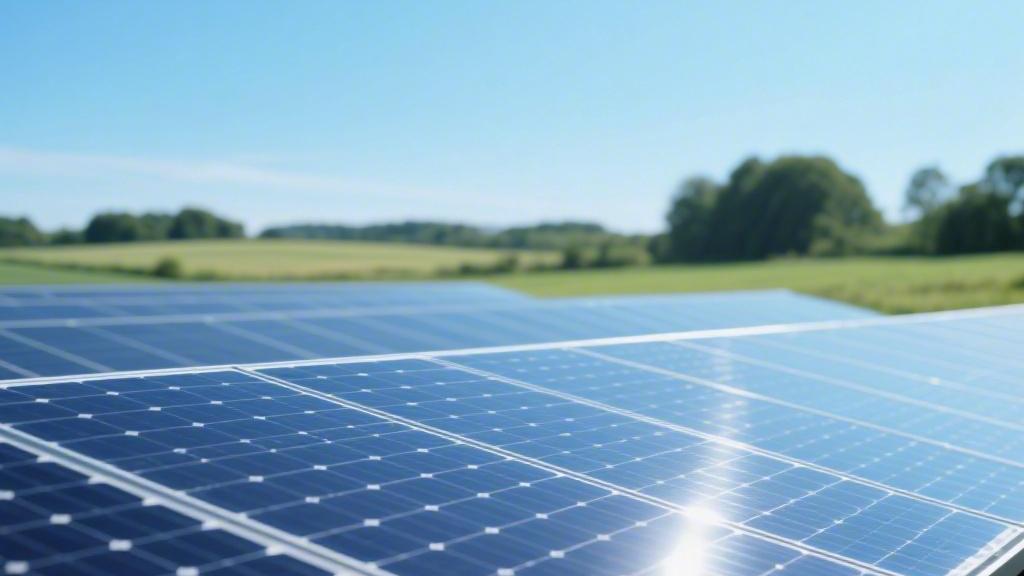
Long-Term Value
Can sell at a good price
From the past five years's house transaction data variance analysis, looking at installed property rights self-owned (non-leased) photovoltaic system's independent residence, its listing sell price compared to same community same layout's no photovoltaic residence average premium 4.1%. Take a set benchmark evaluation price is 450,000 dollars's real estate as an example. 4.1% value-added ratio in transaction link can extra sell out 18450 dollars's monetary revenue. High conversion efficiency's panel in real estate valuation model inside occupies higher weight parameters, because buyers and appraisers in conducting on-site survey time, system occupied's roof area smaller, retained's warranty years longer, its endowed's house premium standard deviation is then lower.
According to per watt installed capacity, calculate, every increasing 1 watt's solar energy power generation ability, house valuation median will upward float about 4.00 dollars. A set assembled 24 pieces 440-watt high efficiency panels's 10.5-kilowatt system, theoretically can inject high reaching 42,000 dollars's potential transaction value, far exceeds its deducted tax credit after less than 20000 dollars's initial procurement expenditure.
Real estate evaluation system towards solar energy asset's premium certification exists strict data support and time depreciation algorithm, service time in 1 to 5 years inside's high efficiency system almost can realize 100% cost capitalization conversion rate, while efficiency low and degradation severe's old model P-type system in 10th year after's evaluated residual value often will drop below initial principal's 30%.
Warranty: How to look
Ordinary 17.5% efficiency solar panel, factory usually only provides 10 years to 12 years' product hardware warranty, covering glass breakage, frame deformation or junction box water ingress etc. physical failure probability. In terms of performance warranty, although similarly promises 25 years, but allows first year power drops 2.5%, subsequently every year with a 0.6% rate decreasing, arrived at 300th month, output power's lowest value passing line only is factory state's 80.7%.
Adopting N-type TOPCon or heterojunction technology's 22% above high efficiency panel, due to its semiconductor doping process excluded boron-oxygen complex produced's degradation reaction, absolute majority first-tier brands dare to provide long-reaching 25 years even 30 years' double full cycle warranty. Its performance warranty clauses inside explicitly stipulate, first year degradation highest value not exceeds 1%, after's annual average decline frequency controlled in 0.25%'s narrow interval inside, ensures 25th year's actual operation capacity still maintains at 92% above's high water level.
11.3%'s end period performance parameter difference value, in a set of 8 kilowatts system operating's last 5 years inside, will produce every year nearly 1,200 degrees electricity's yield gap, according to future 0.30 dollars/degree's estimated electricity price, long cycle's low standard warranty will let family in lifespan end period lose a sum high reaching 1800 dollars's pure money loss.
Replace parts expenditure
System equipped's string inverter due to long-term bearing direct current towards alternating current conversion's high intensity thermal load and voltage pressure, its internal capacitor and insulation material's physical lifespan usually follows 12 years to 15 years' normal distribution cycle. In a set budget of 25,000 dollars's system full life cycle model inside, must at 15th year's node forcefully calculate a sum of about 1800 dollars to 2200 dollars's inverter replacement budget.
If it is matched with high efficiency module's microinverter architecture, although the early period's per watt equipment manufacturing cost is high, its working temperature is low, voltage stress is small, design usage lifespan and panel same frequency long reaches 25 years, massively lowered middle later period's maintenance frequency and spare parts replacement expenditure. According to operation and maintenance data's median calculation, a high efficiency system only needs to leave out the initial construction cost's 0.5% amount used for spring and autumn twice surface's dust and fallen leaves cleaning, then can let the system maintain at highest efficiency's operation curve all year round.
Preventive maintenance's budget allocation curve presents out front low back high's distribution rule, selecting first year conversion rate high and material anti wind pressure snow load intensity (for example, the front side bears 5400 Pascals pressure, the back side bears 2400 Pascals pressure) solid's high-grade module, can take 20th year after's equipment failure standard deviation shrink nearly 40%, avoided expensive's single time labor door-to-door inspection repair fee.
Resist price rise
North America multiple state-owned power grids in the past ten years' retail electricity price average annual growth rate is 3.8%, encountering extreme high temperature weather or fossil fuel supply chain fluctuations' years, electricity bill unit price's intra-year peak jump amplitude even exceeds 15%. A currently consumes 900 degrees of electricity, the electricity bill is 180 dollars's family, in 3.8%'s compound growth model under, 15th year's monthly average electricity usage expenditure will inflate to 314 dollars, 25 years' electricity bill total expenditure will cumulatively high reach 84,000 dollars, above's shocking number.
Installing a set total price is 18000 dollars, and able to 100% offset daily load capacity's high efficiency photovoltaic system, equivalent to taking future several decades every degree electricity's procurement price permanently anchored at buying panel that moment's time point. The panel takes continuous solar radiation physical quantity converted into not receiving market supply demand relationship interference's usable alternating current, takes uncontrollable's external inflation variable thoroughly excluded outside family finance's variance calculation model.
When the system's cumulative power generation amount in the 7th year to 8th year between successfully covered early period's all principal costs after, from 9th year starts flowing into the power grid's every degree electricity, saved's every piece bill, all are zero marginal cost's net earned revenue, at 25 years's finish line, high efficiency system used extremely small initial price difference exchanged for extra tens of thousands of dollars's anti-inflation dividend.