Portable Solar Modules Buyers Guide | Portability vs. Efficiency
Prioritize portability with lightweight, flexible thin-film panels (1kg) for hiking, but accept ~10% efficiency. For higher output, choose rigid monocrystalline panels (8kg, 20%+ efficiency) for RVs; assess your need for lightweight convenience versus maximum power generation per trip.
Portability
Portability is defined by three quantifiable metrics: weight, packed dimensions, and protection rating.
An ideal portable solar panel should weigh less than 2.5 kilograms, have a folded thickness not exceeding 40 millimeters, and possess at least an IP65 rating for dust and water resistance to handle variable outdoor conditions.
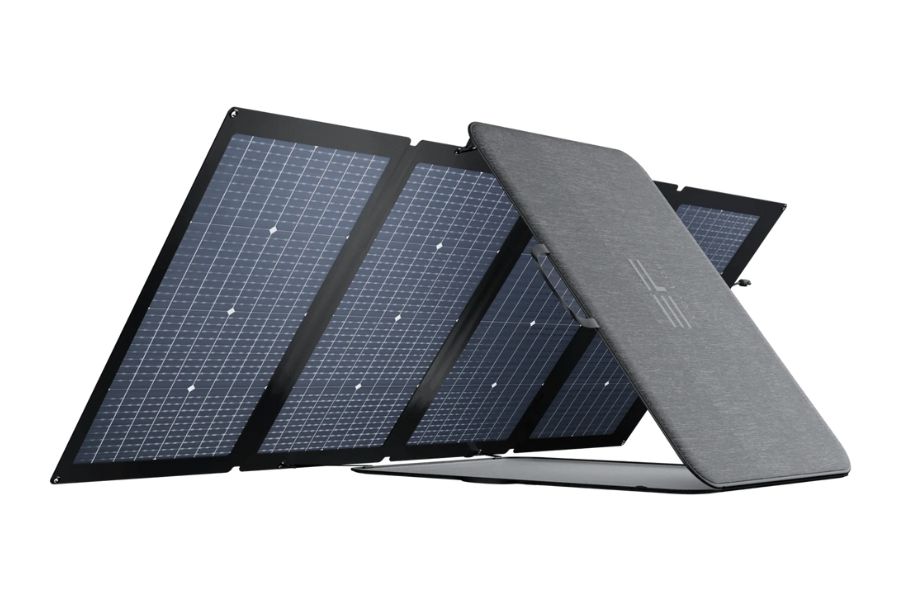
Dimensions
Weight:
Weight is the most intuitive metric, but looking at total weight alone can be misleading.
A more scientific evaluation method is to calculate the "weight per watt" (grams per watt, g/W), which is the panel's weight divided by its nominal power rating.
A lower value indicates higher energy conversion efficiency of the materials and better portability.
Calculation Example: A 100W solar panel weighing 2.2 kilograms (2200 grams) has a weight per watt of 2200g / 100W = 22 g/W.
Typical Market Ranges:
l High-Efficiency Tier (15g/W): Typically uses the latest monocrystalline silicon and lightweight composite materials, often found in premium brands. For example, a 120W panel at 18g/W can weigh around 2.16 kilograms.
l Mainstream Tier (15-25g/W): Most foldable solar panels fall into this range, balancing cost, durability, and weight. A 200W panel at 20g/W weighs approximately 4 kilograms.
l Basic Tier (25g/W): Heavier, possibly using heavier encapsulation materials or structural modules, more suitable for vehicle-based scenarios where weight is less critical.
Volume and Form Factor:
l Deployed Dimensions Determine Charging Efficiency Baseline: A larger surface area is needed to receive more sunlight. A 200W solar panel typically has a deployed area between 1.1 and 1.3 square meters.
l Folded Dimensions Determine Carrying Feasibility: This is key to answering "can it fit in a backpack?". Common tri-fold or quad-fold designs can reduce a large panel to roughly the size of a laptop. For example:
l 100W Panel folded dimensions approximately: 40cm x 25cm x 4cm.
l 200W Panel folded dimensions approximately: 50cm x 30cm x 5cm.
l Form Factor Influences Packing Method: Foldable panels are like rigid notebooks, less prone to deformation when packed but have a fixed shape. Rollable panels can be stuffed into more irregular spaces but may require additional fixtures when deployed, and repeated rolling/unrolling might cause long-term wear on internal wiring.
Ruggedness:
Outdoor environments demand physical toughness from equipment, defined by the IP (Ingress Protection) rating and build quality.
Understanding IP Ratings: The IP code consists of "IP" followed by two digits. The first digit indicates protection against solid objects (like dust), the second indicates protection against water.
l Dust Protection (First Digit): 6 is the highest, meaning "dust-tight," complete protection against dust ingress.
l Water Protection (Second Digit): For solar panels, common ratings are 5, 7, 8.
l IP65: Protected against low-pressure water jets from a nozzle. This means it can withstand moderate rain or water splashing during cleaning.
l IP67: Can be immersed in water temporarily between 15cm and 1 meter depth. This means the panel can still function safely if accidentally dropped in a puddle or briefly submerged.
l IP68: Suitable for continuous immersion under conditions specified by the manufacturer.
l Mechanical Strength: This includes the scratch resistance of the panel surface material (e.g., ETFE coating is more durable than PET), the lifespan of hinges (should withstand thousands of open/close cycles), and the frame material (aluminum frames are more resistant to bending than all-plastic frames).
Scenario Matching
If you need to carry all your gear on your back while walking
This includes multi-day hiking, mountaineering, bicycle touring - any activity requiring you to carry all equipment. In this scenario, every gram directly impacts your physical exertion and travel distance.
l Weight is the primary constraint: The combined weight of the solar panel and power bank should not exceed 10%-15% of your total backpack weight. For example, for a 20kg backpack, the energy system budget is best kept under 2-3 kg. Therefore, the panel's own weight should ideally be under 1 kg, and certainly no more than 1.5 kg.
l Realistic assessment of power needs: While hiking, your main needs are charging a phone (navigation), GPS device, headlamp, and possibly multimedia devices. Total daily energy demand is typically under 50 watt-hours. A 40W to 60W solar panel can generally meet the charging needs for these devices on a sunny day. Pursuing high power above 100W is less meaningful here and adds burden due to weight and volume.
l Form Factor and Packing Method:
l Best Choice: Flexible or ultra-lightweight foldable panels. Flexible panels can attach directly to the outside or top of the backpack, charging while you walk, without needing to stop and deploy.
l Packing Details: The folded panel size should easily fit into a backpack's side pocket or top lid for quick access. Check if the panel has built-in attachment points.
l Protection Rating: At least IP65 rating is needed to handle sudden changes in mountain weather, like showers or damp fog.
If you use a vehicle as a base
This covers activities from weekend camping and road trips to fishing and hunting. The vehicle solves the transport for most supplies, giving you a wider selection.
Power becomes the priority: The main goal is charging a high-capacity portable power station to run power-hungry devices like drones, cameras, laptops, and small appliances. Aim for 150W to 400W solar panels. Higher power means faster charging of the power station, an advantage that's more pronounced on cloudy days.
Weight and Volume Trade-off: Since you're not carrying it long distances, panel weight between 3 kg and 8 kg is acceptable.
Specific Usage:
l Deployed Area: A 200W foldable panel deploys to about 1.2 square meters. Ensure your campsite has enough flat, sunny ground.
l Kickstand System: Integrated, adjustable kickstands are crucial for easily tilting the panel towards the sun, boosting efficiency. Check the stability of the kickstand at different angles.
l Cable Length: Ensure the included cables are long enough (e.g., over 5 meters) to place the panel in the sun while keeping the power station in a shady tent or vehicle.
If you use it on an RV or boat
In this scenario, the portable solar panel often serves as a flexible supplement to a fixed system or provides off-grid power when docked.
l High Power and Semi-Permanent Installation: Prioritize high-power flexible solar panels. The flexible design can conform to the curvature of the roof or deck, temporarily secured with specialized adhesive or straps, reducing wind resistance. Power selection is typically 200W and above.
l Durability is a Long-Term Investment: Panels are exposed to the elements for long periods, demanding high UV resistance and weatherability. Panels with ETFE coating usually have a longer lifespan than those with PET coating.
l Electrical Connection: Pay attention to the panel's wiring; it might need to connect via longer cables to the RV or boat's cell management system, rather than plugging directly into a portable power station.
For Emergency Preparedness
A home-stored emergency power system needs quick deployment during outages to power communication devices and essential lighting.
l Reliability First: Choose products with robust construction and stable performance; brand reputation and after-sales service matter. A protection rating of IP67 or higher is best.
l Balancing Power and Storage: A 100W to 200W foldable panel, paired with a medium-capacity power station (e.g., 1000Wh), can power phones, radios, LED lights, and small medical devices for several days.
l Ease of Use: Check if the panel design is intuitive, allowing for quick setup and connection under pressure.
Efficiency
A nominal 23% efficient 200-watt panel can produce 200 watt-hours of electricity per hour under standard test conditions, enough to fully charge a typical smartphone (approx. 5000mAh cell) about 12 times in 2.5 hours.
A 16% efficient 200-watt panel, due to its lower actual output power, might take over 30% longer to complete the same charging task.
The essence of efficiency is power density per unit area. Higher efficiency allows for a panel size reduction of about 20-30% for the same power, significantly impacting backpack space and portability.
Efficiency Conversion
1. Real-World Discounts Beyond the Theoretical Value
The wattage (W) and efficiency (%) on the label are like a car's advertised "combined fuel consumption"—a reference benchmark. In actual use, power generation is almost always lower than the theoretical value. Major discounts come from the following aspects:
Power Degradation Due to Temperature
l Standard P-type Monocrystalline Panels: Temperature coefficient is approximately -0.35%/°C to -0.45%/°C.
l Advanced N-type Panels (e.g., HJT): Temperature coefficient can be optimized to -0.25%/°C to -0.30%/°C.
l Practical Impact: Assume a 100W P-type panel operating at 45°C (20°C above standard temperature). Its power loss is approximately 100W × (-0.40%/°C) × 20°C = 8 watts. Actual output power might only be 92W. Under the same conditions, an N-type panel might only lose 5-6 watts. In hot regions during summer, power loss due to high temperatures can accumulate to 10%-15% of the daily total energy generation.
Unavoidable Loss from Light Angle
l Data: Compared to the optimal angle, a 30-degree deviation can cause about a 10%-15% drop in power output. If the panel lies flat on the ground at noon, the deviation from the ideal angle might be 40-50 degrees, and output power might only be 60%-70% of the potential.
l Solution: Simply propping the panel up with a backpack or rocks to roughly face the sun can increase daily energy yield by 15%-25%. For a fixed long-term campsite, adjusting the angle 2-3 times a day yields even greater benefits.
The "Bucket Effect" of Partial Shading
l Modern Design: To mitigate this, panels integrate "bypass diodes." When a string of cells is shaded, the diode conducts, bypassing the failed string, allowing the other strings to continue working. A typical 100W portable panel might have 3-4 built-in bypass diodes.
l Practical Performance: If one corner is shaded, a panel with diodes might only lose one-third or one-quarter of its power. Without this design, output could drop by over 80%.
2. Degradation Differences Across Technology Paths
Efficiency conversion isn't just about the present; it's also about the long term. Two panels with an initial efficiency of 22% might have different outputs after one year.
l P-type Monocrystalline Silicon (PERC): Current market mainstream. First-year degradation is higher, around 2-3%, followed by an annual degradation of about 0.45-0.55%.
l N-type Technologies (e.g., TOPCon, HJT): More advanced technologies. Due to higher material purity and insensitivity to impurities, first-year degradation can be as low as 1%, with subsequent annual degradation around only 0.25-0.40%.
This means that over its lifecycle, an N-type panel will generate significantly more total energy than a comparable P-type panel.
For users planning long-term, high-frequency use, the initial investment difference may be offset by the extra energy generated.
3. System Matching
The solar panel is just the start of power generation. The electricity generated needs to pass through a solar charge controller to be safely stored in the cell.
The controller's own efficiency and quality directly determine how much energy is ultimately stored.
PWM (Pulse Width Modulation) Controllers: Simple operation, essentially connecting the panel directly to the cell, regulating charge by rapid switching. In this process, the panel's operating voltage is pulled down close to the cell voltage, preventing it from operating at its most efficient maximum power point. Overall system efficiency might only be 70%-80%.
MPPT (Maximum Power Point Tracking) Controllers: Contain intelligent circuitry that constantly calculates the panel's maximum power point (Vmp × Imp), then converts the voltage at the highest efficiency to charge the cell. MPPT controllers can increase system efficiency to 93%-97%.
Example: A 100W panel with an 18V voltage charging a 12V cell. Using a PWM controller, the panel voltage is forced down to around 14V, actual output power might be only 14V × Imp ≈ 75-80W. An MPPT controller lets the panel output stably at 18V, then efficiently steps down the voltage, ultimately delivering over 90W to the cell.
Environmental Factors
High Temperatures Can Cause Solar Panels to "Overheat"
Most people think stronger sunlight means more power, but high temperature is actually an "invisible killer" of generation efficiency.
Solar panels perform best at 25°C. When the surface temperature rises, their output voltage decreases significantly.
l Specific Data on Power Degradation: The temperature coefficient for standard monocrystalline panels is about -0.4%/°C. This means when the panel surface reaches 45°C (a common summer temperature), its output power drops about 8% compared to standard conditions.
l Differences Between Technologies: Panels using N-type technology (e.g., HJT) can have a temperature coefficient optimized to -0.25%/°C. In the same 45°C environment, their power loss is only 5%, demonstrating more stable performance in high temperatures.
l Practical Impact Example: A nominal 100W standard panel might only output 92W on a hot afternoon; a high-quality N-type panel might maintain 95W output under the same conditions.
The Impact of Sun Angle is Larger Than You Think
The sun's position is constantly changing. Unless your panel can track the sun like a sunflower, sunlight will rarely hit it perpendicularly.
Loss from Angle Deviation: When sunlight hits the panel at a 30-degree angle, the received light intensity is about 87% of perpendicular irradiation; at a 60-degree angle, intensity drops to about 50%.
Practical Advice: Simply propping the panel up with a stick or rocks to roughly face the sun can increase daily energy yield by 15-25%. For a fixed campsite, adjusting the angle 2-3 times a day (morning, noon, evening) yields even higher generation benefits.
Partial Shading Causes a Cliff-Like Drop in Power
A leaf, a branch's shadow, or even the shadow of a wire on the panel can cause a disproportionate power loss.
l How it Works: Panels are typically made of dozens of cells connected in series. The current is limited by the weakest cell. When a cell is shaded, it becomes a resistor, consuming energy and heating up, dragging down the output of the entire string.
l Role of Bypass Diodes: Modern panels have built-in bypass diodes to mitigate this. When a string of cells is shaded, the diode shorts it out. A typical portable panel might have 3-4 diodes, dividing the panel into corresponding sections.
l Practical Performance: If one corner is shaded, a panel with diodes might only lose one-third or one-quarter of its power; without this design, output could drop over 80%.
Spectral Changes Under Different Weather Conditions
Solar panels are sensitive not only to light intensity but also to the wavelength of light. A cloudy day doesn't mean zero generation, just that the nature of generation changes.
l Performance on Cloudy Days: Under overcast conditions, direct light decreases, but diffuse light increases. Although total output power may drop to 10%-30% of a sunny day, efficient monocrystalline panels can still operate under diffuse light.
l Technology Differences: Advanced technology panels like HJT perform better than traditional PERC panels under low-light conditions, generating power for longer in the early morning and evening, and may produce 5-10% more energy on cloudy days.
Special Effects at High Altitudes
When hiking in mountainous areas, high altitude brings a dual effect.
l Positive Effect: Thinner air means less atmospheric filtering of sunlight, higher UV intensity, and better light conditions than at low altitudes, theoretically increasing generation potential.
l Negative Effect: High altitude often accompanies low temperatures, which benefits generation; but the cold environment might reduce the cell's own performance, requiring a comprehensive assessment of the entire power system.
Technology Determines Efficiency
Basic Technology:
PERC technology adds a dielectric passivation layer to the rear of traditional cells, boosting efficiency by about 1% in absolute terms.
l How it Works: The rear passivation layer reflects unabsorbed photons back for secondary generation while reducing electron recombination.
l Efficiency Range: Commercial PERC monocrystalline panel efficiency concentrates between 21.0%-22.5%. The power output per standard-size cell is about 5.3-5.7 watts.
l Market Position: Due to mature processes and highly competitive costs, it's the mainstream choice for 100-300W products in the portable solar market.
N-type Technology:
N-type silicon wafers, with their higher purity, lay the foundation for high efficiency. Main paths include TOPCon and HJT.
l Material Advantage: N-type silicon has higher tolerance to metallic impurities and exhibits almost no Light-Induced Degradation.
l TOPCon Technology: Can be seen as an upgrade to PERC, forming an ultra-thin tunnel oxide layer on the rear. Mass production efficiency can reach 22.5%-23.5%, with a better temperature coefficient than PERC, but low-light performance improvement is limited.
l HJT Technology: Uses a heterojunction structure of amorphous silicon/crystalline silicon. Higher open-circuit voltage, high bifaciality, and the best temperature coefficient. Lab efficiency exceeds 26%, mass production efficiency is in the 23.5%-24.5% range.
Cutting-Edge Technology:
l Structural Feature: No front metal busbars, maximizing the light-receiving area, resulting in an all-black appearance. Requires more complex interdigitated back contact design on the rear.
l Performance Data: Mass production efficiency easily reaches 24%-25%. Due to its structure, it offers more stable performance under low irradiance and has a lower degradation rate.
l Cost Constraint: Complex manufacturing process, with many more steps than PERC, leading to a price typically 1.5-2 times that of comparable PERC products.
Half-Cut Cells are the Standard for Current Modules
l Working Mechanism: The current path in the subdivided half-cells is halved, reducing internal resistive losses to a quarter.
l Practical Benefit: Half-cut technology can increase module output power by 5-10 watts and significantly reduce power loss when partially shaded.
Degradation Differences Between Technology Paths Affect Long-Term Yield
l P-type PERC: First-year degradation ~2%, subsequent annual degradation 0.45%-0.55%.
l N-type TOPCon/HJT: First-year degradation ~1%, subsequent annual degradation below 0.4%.
Calculated over a ten-year period, the cumulative energy yield of N-type technology is about 3%-5% higher than P-type technology.
Outdoor Activity Patterns
Day Hiking or Weekend Camping
These activities are short-duration, primarily needing to top up charge for a few critical devices.
Typical Power Needs: Smartphone, headlamp, or action camera. Total daily consumption is typically between 20-40 watt-hours.
Solar Panel Configuration:
l Power Range: 15-30W. A 20W panel under 4 hours of effective sun can generate about 60-70Wh, meeting basic needs.
l Weight & Volume: Weight should be controlled at 300-500 grams, folded volume similar to a standard water bottle.
l Technology Choice: Lightweight foldable or rollable panels are preferred, easy to attach to a backpack for charging while walking.
Usage Pattern: Deploy the panel on the outside of the backpack while hiking to charge devices or a small power bank directly. Efficiency is less critical than lightness and ease of use.
Multi-Day Backpacking
Wilderness trips lasting over three days require multiple charge cycles for various devices, significantly increasing power demand.
Typical Power Needs: Smartphone, GPS, satellite communicator, headlamp, and charging a high-capacity power bank. Daily consumption can rise to 40-80 Wh.
l Solar Panel Configuration:
l Power Range: 40-80W. Need to account for buffer on cloudy/rainy days. Aim for daily generation of 100-150 Wh.
l Weight & Volume: Acceptable weight range 800g to 1.5 kg. Panels need to be rugged to withstand scrapes and jostling on complex terrain.
l Technology Choice: High-efficiency monocrystalline panels are ideal, providing sufficient power with a relatively small area. Panels should have multiple output ports for charging several devices simultaneously.
l Usage Pattern: During long breaks or after setting camp, fully deploy the panel facing the sun, prioritizing charging the large power bank, then distributing power to devices.
Road Tripping & RV Camping
Transport solves weight and space constraints. Power demand shifts to high-power devices and comfort appliances.
Typical Power Needs: Charging large power stations, portable fridge/freezer, drone, laptop, camp lights, even small electric blankets. Daily consumption can reach 500-2000 Wh.
Solar Panel Configuration:
l Power Range: 100-400W. Often uses multiple panels in parallel. A 200W panel under ideal sun can generate 800-1,000 Wh daily.
l Weight & Volume: Weight is less critical, but easy deployment/storage is key. Rigid panels or large foldable panels are common.
l Technology Choice: Cost-effective standard-efficiency panels are sufficient, achieving high total yield via large area. Must be paired with an MPPT controller.
Usage Pattern: After parking, deploy one or multiple panels on the vehicle roof or nearby open ground, connecting to the power station or vehicle cell system to create an off-grid microgrid.
Kayaking & Long-Distance Sailing
Marine environments pose extreme demands for durability and reliability: high humidity, salt spray, constant motion.
Typical Power Needs: Marine navigation, VHF radio, water pump, crew personal electronics.
Solar Panel Configuration:
· Key Requirement: Highest waterproof/corrosion resistance rating. Panel edges need reinforced encapsulation.
· Installation: Often rigid panels designed for permanent mounting on cabin tops or rails, withstands waves.
· Technology Choice: Flexible, lightweight panels conforming to curved surfaces are popular for kayaks/sailboats.
Usage Pattern: Continuously trickle-charge the vessel's batteries, ensuring navigation/safety devices never lose power. Consider shading from masts/sails.
Long-Term Field Research & Off-Grid Stations
These applications demand the highest reliability and energy autonomy, requiring systems to run flawlessly for extended periods.
Typical Power Needs: Scientific instruments, communication relays, basic station living needs.
Solar Panel Configuration:
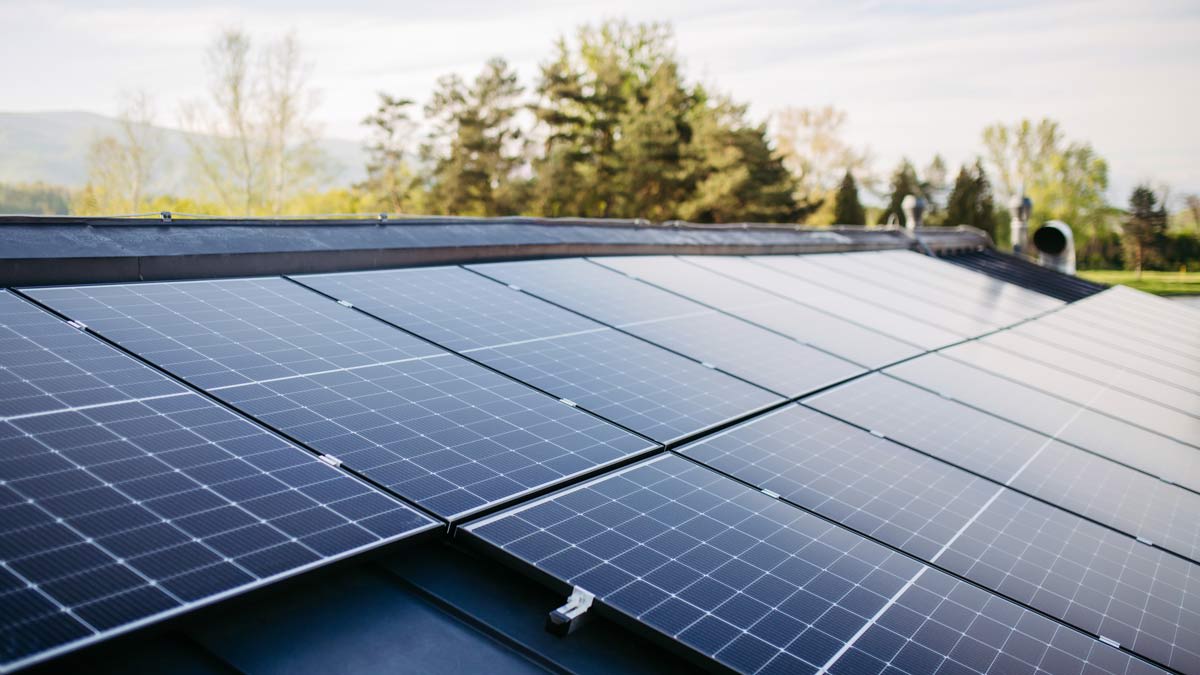
· System Design: Often part of a hybrid system. Solar array power can reach kilowatt-scale.
· Product Choice: Use commercial or even industrial-grade PV modules, with far superior durability and long-term degradation specs.
· Technology Choice: Prioritize N-type panels for stable energy yield over the project lifecycle.
Usage Pattern: Fixed array installation paired with large cell storage and smart charge controllers for year-round uninterrupted power.