How Much Solar Panels Can Save You in a Year
Installing a 5 kW home solar system generates about 6,000 kWh of electricity annually.
Calculated at 0.6 RMB per kWh, it can save about 3,600 RMB a year.
The actual amount saved is affected by details such as local sunlight hours, system conversion rates, and tiered electricity pricing policies. It takes about seven years to break even.
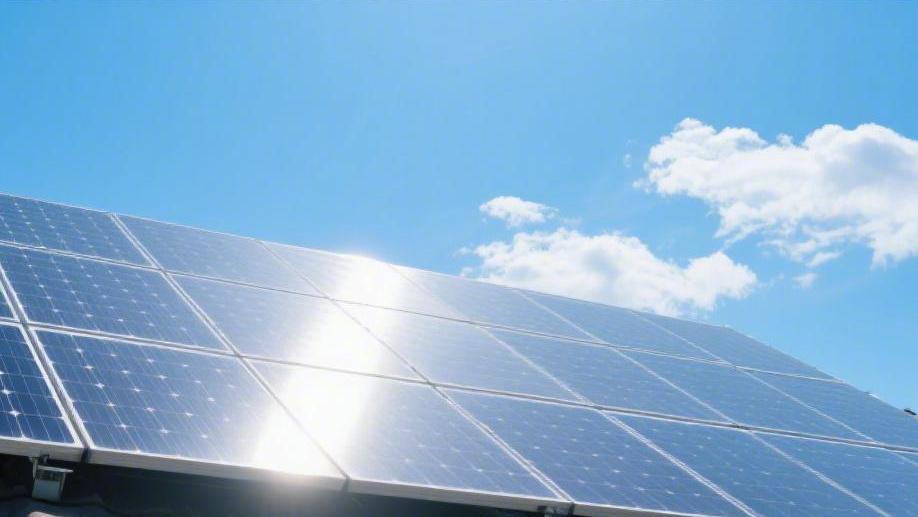
Slashing Your Monthly Electricity Bill
In California, the average power consumption load for air conditioning equipment and pool pumps in a single-family detached home during the cooling season from July to September usually fluctuates between 1,400 kilowatt-hours (kWh) and 1,800 kWh per month.
Taking Pacific Gas and Electric Company's (PG&E) tiered electricity rate structure in the fourth quarter of 2023 as an example, when the cumulative electricity consumption for the month exceeds 400% of the baseline quota, the billing unit price per kWh for the excess portion will climb from the base rate of $0.32 to a high-tier rate of $0.49. If 22 N-type bifacial modules with a nominal power of 425 watts (W) each are laid out on a 500-square-foot south-facing roof area, the total installed capacity of the entire system will reach 9.35 kilowatts (kW).
Under a sunlight incidence angle with the tilt set at 25 degrees and the azimuth facing due south at 180 degrees, the peak monthly power generation of this hardware array in August can reach 1,650 kWh. Calculated as a reverse offset using the grid billing system's high-tier rate of $0.49, the panels on the roof can offset up to $808.50 in household bill expenses in this single 30-day calendar month cycle alone.
Assuming that in November, when the temperature drops to 50 degrees Fahrenheit (°F), the house's electricity demand for the heating season shrinks to 600 kWh per month. The 850 kWh generated by the system that month can not only 100% cover the energy consumption of lighting and appliances but also produce a net surplus of 250 kWh to be sent to the distribution grid. By superimposing and comparing the 12-month electricity load variance with the PV output curve, this 9.35 kW capacity equipment can slash the original expected annual electricity bill of $5,200 by about 82.6% over a 365-day operation cycle.
l A central air conditioning compressor with a cooling capacity of 36,000 BTU (3-ton nominal cooling load) running continuously for 4 hours at an outdoor ambient temperature of 95°F will consume about 14.4 kWh of electricity. Meanwhile, the 9.35 kW PV system can stably output a maximum instantaneous AC power of 6.8 kW during the high irradiance period from 12 PM to 4 PM, fully covering the electricity throughput generated by the compressor's operation.
l A single electric resistance water heater with a 50-gallon capacity needs to consume about 12 kWh of electricity daily to maintain a water output temperature standard of 120°F. In a home local area network equipped with an energy monitoring gateway, a timer can be set to start the heating resistance wire during the rising phase of the PV generation curve between 10 AM and 2 PM, abruptly driving the power purchase cost from $0.38 per kWh down to $0.
l For a long-range electric vehicle equipped with an 82 kWh ternary lithium cell pack, if an 11.5 kW Level 2 home charger is installed on the garage wall, conducting two deep charge-discharge cycles from 20% to 80% per week will add an extra electricity increment of about 3,100 kWh per year. Based on the U.S. average residential electricity price of $0.16/kWh, using the extra capacity of the solar panels to cover these added kWh readings can save about $496 in commuting energy expenses annually.
Understanding Time-of-Use Pricing
The Time-of-Use (TOU) electricity rate structure system uses price leverage to divide the load distribution over 24 hours a day into 3 to 4 different unit price intervals. The electricity price during the peak demand period from 4 PM to 9 PM in the evening is usually 2.5 to 3 times the super off-peak rate from 12 AM to 6 AM the next morning.
In electricity service areas with a peak-to-valley price difference as high as $0.28 per kWh, relying solely on solar panels will result in a 30% to 40% time mismatch between power generation and electricity consumption. This is because the sunset period, when panel generation drops below 10%, coincides perfectly with the peak period when multiple high-energy-consuming household appliances are started simultaneously, causing instantaneous power to surge to 5 kW.
Equipping a set of lithium iron phosphate home energy storage batteries with a usable capacity of 13.5 kWh and a rated continuous charge/discharge power of 5 kW can absorb excess solar power reserves worth only $0.10 per kWh during the day. When the distribution grid's billing meter switches to the high billing tier of $0.45 per kWh right at 4 PM, the smart inverter will cut off the current input from the external grid with a response time of less than 100 milliseconds (ms) and deliver 240-volt (V) AC power from the cell to the house's breaker box at a maximum discharge rate of 5,000 watts (W).
During the entire 5-hour evening peak period, the cell pack can continuously and stably release 10 kWh of stored electricity, dodging a peak period premium charge of up to $4.50 per day. According to statistics of an operating frequency of 350 charge-discharge cycles a year, the load-shifting strategy brought by this energy storage equipment can generate an additional bill reduction of $1,575 per year through the peak-valley price difference matching behavior.
Calculating the Loss Rate
The photoelectric conversion efficiency of PV silicon wafers in actual rooftop working environments does not constantly stay at the 21.5% nominal value measured in the laboratory. Its output power is limited by the physical property of a temperature coefficient of roughly -0.25% to -0.35% per degree Celsius (°C).
When the measured temperature on the surface of black asphalt roof shingles climbs to 140°F (about 60°C) in July, the temperature of the panel backsheet will be 35°C higher than the factory standard test temperature of 25°C. This will cause a linear degradation of 8.75% to 12.25% in the module's instantaneous output power.
To compensate for this DC voltage drop caused by high temperatures, the DC-to-AC ratio (the total rated power of the solar panels on the DC side to the maximum output power of the inverter on the AC side) is forcibly set in the range of 1.2 to 1.25 during the system design phase.
A string inverter with a nominal AC output limited to 7.6 kW can safely connect to a DC module array input port totaling 9.5 kW. Even if it loses 10% of its peak efficiency under the scorching heat of 100°F, the DC power input to the inverter still remains at a generous level of 8.55 kW.
During the topological conversion process from DC to AC, the internal heat loss and leakage current loss of a new type of inverter using silicon carbide modules will consume about 2% to 3% of the input power. The final AC conversion efficiency output to the household's main electrical panel can be stably maintained at a baseline value of 97.5%.
l If the orientation of the rooftop module array shifts from 180 degrees due south to 270 degrees due west, the cumulative solar radiation received by the panels in a day will decrease by 15% to 20%, causing the expected annual power generation of this 9.35 kW system to drop from 14,500 kWh to 11,800 kWh.
l For copper DC wiring with a cross-sectional area specification of 10 AWG laid over a 50-foot distance from the roof to the garage wall, every 10 amps (A) of DC current flowing through will generate a voltage drop of about 0.1 volts (V). The power transmission loss caused by this part of the line's internal resistance usually accounts for 1% to 1.5% of the system's total power generation.
l When the area shaded by nearby trees reaches 10% of the panel surface, if the series array does not have microinverters or power optimizers installed at the bottom, the current output of the entire string of 12 panels will be strictly limited to the lowest operating current value of the shaded panel, triggering a systemic power drop of up to 30% to 40%.
Looking at the Depreciation Value
With the slow aging of the P-N junctions inside the semiconductor materials, the annual power generation of a PV system does not show a horizontal straight line but decreases year by year at a fixed percentage averaging 0.4% to 0.5% annually.
At the milestone of the system running for a full 10 years (120 months), the measured output power of the panels can still be maintained at over 95% of the factory rated nominal power. At this time, the system that could save $2,500 in electricity bills in the first year theoretically has its deduction amount reduced by 4.5% as power generation decreases. However, because the residential retail electricity price of the U.S. utility grid has maintained a compound annual growth rate (CAGR) of 3.2% over the past 15 years, the compounding figures brought by rising electricity prices directly overshadow the physical degradation ratio of the equipment.
When the lifespan advances to the 15th year (180th month), the power purchase cost per kWh has climbed from the initial $0.16 to $0.25. Even if the power generation efficiency of these panels at that time has dropped by 7.5% compared to the first year, the actual converted bill savings amount for that year will still rise to about $3,400.
Based on a model cumulative estimation over a full life cycle span of 25 years (300 months), a total of about 345,000 kWh of green electricity output is enough to offset more than $78,000 in external power purchase expenses, while the initially invested hardware procurement and labor installation costs only account for about 32% of this figure.
When Do You Break Even
Let's calculate a detailed account using a 2,500-square-foot single-story house in Phoenix, Arizona. If the homeowner installs a 10.4 kW grid-tied solar system on a south-facing roof with an 18-degree tilt angle, the equipment list will generally feature 26 N-type monocrystalline silicon panels with a peak power of 400 W each, plus a centralized inverter with an AC output power of 8.2 kW.
According to local labor and material quotes in the fourth quarter of 2023, factoring in municipal approval fees, engineer stamping fees, and grid-tie testing fees, the comprehensive average installation price per watt is about $2.85. After paying the total gross installation fee of $29,640, and obtaining the Permission to Operate (PTO) issued by the grid company after project acceptance, the homeowner can claim the 30% federal Investment Tax Credit (ITC) when filing taxes in April of the following year. Subtracting this $8,892 tax refund, the net cost of the entire set of hardware and labor is pushed down to $20,748.
Phoenix boasts an average of 3,872 annual sunshine hours. This 10.4 kW array is expected to deliver 17,680 kWh of AC power to the home's main electrical panel in the first 12 months. Assuming the local utility company's median residential tiered electricity rate is set at $0.145 per kWh, the green electricity generated by the system in the first year equals a savings of $2,563.60 in hard expenses for you.
Dividing the net construction cost of $20,748 by the first-year financial savings amount of $2,563.60, the static capital payback period calculated for this physical asset is 8.09 years, which translates into a specific time scale of 97 months and 3 days.
Loan or Cash
Choosing a different way to pay will drastically change the 97-month payback schedule calculated earlier. If the buyer takes out $20,748 in full from a Certificate of Deposit (CD) with an annualized yield of 4.2% to buy it outright, they actually bear an opportunity cost of about $871 in lost interest every year. If the buyer chooses to sign a 144-month (12-year) zero-down solar loan contract with a fixed Annual Percentage Rate (APR) set at 6.99%, the on-paper mathematical regression model completely changes its calculation logic.
To allow you to enter with zero down payment, financial institutions often forcibly add a Dealer Fee ranging from 18% to 22% to the loan principal. Adding a 20% financing financial service fee to the original gross cost of $29,640, the total contract principal will inflate to $35,568. Even if the buyer can still claim the 30% federal tax refund (i.e., $10,670) based on the new base of $35,568, and punctually returns the tax refund amount to the lender as principal in the 18th month to keep the original monthly payment amount, after 144 equal principal and interest amortizations on the remaining net loan of $24,898, the cumulative total interest paid by the buyer will still reach $11,350.
Adding the interest expenses, commissions, and net hardware costs together, the absolute acquisition cost over the system's life cycle becomes $36,248. Putting this massive expense figure into the division formula, for the same 10.4 kW array under a loan-purchase model, the on-paper breakeven point will be pushed back to 14.1 years (169 months).
"Tracking the Sun," a statistical report compiled by the U.S. Department of Energy's Lawrence Berkeley National Laboratory (LBNL) covering all 50 U.S. states and containing over 2.5 million independent samples, provides a precise dataset: For PV households using a 20-year Home Equity Line of Credit (HELOC) paid in installments at a 7.5% variable interest rate, the median distribution of their system's Internal Rate of Return (IRR) typically falls between 5.8% and 6.4%.
Factoring in the Inflation Rate
Dry static division fails to account for the cold reality that electricity prices rise annually with compound interest. A data model released by the MIT Energy Initiative points out that over a 240-month observation cycle from 2004 to 2024, the average retail unit price per kWh on the residential grid-tied side in the New England region has maintained a fluctuating upward trend, with a measured Compound Annual Growth Rate (CAGR) of 3.85%.
If the annual 3.85% price increase rate is applied to the Arizona example, the electricity bill savings in the first year is confirmed at $2,563.60. By the 5th year (the 60th month), the billing price for a single kWh will monotonically increase from $0.145 to $0.175.
By then, even though the 10.4 kW panels have lost 2.5% of their power generation efficiency due to Light-Induced Degradation (LID), the 17,238 kWh of electricity produced that year can still intercept up to $3,016 in cash outflow. Pushing the timeline further to the 10th year (the 120th month), under the high pressure of the electricity unit price breaking through $0.21, the system's electricity bill deduction for that year will soar to $3,534.
By introducing a dynamic Discounted Cash Flow (DCF) model that includes inflation variables, the exact timestamp where the curve of cumulative money saved intersects with the $20,748 net construction cost curve will be significantly advanced from the statically estimated 97th month to the 85th month. Calculated out, about 28.3% of the early part of the entire system's lifespan is used to fill the initial purchase budget. For the remaining 71.7% (equivalent to 215 months) of its operational cycle, every time the inverter fan buzzes into action, it unilaterally injects tax-free pure profit into the family balance sheet.
Home Value Appreciation
The National Association of Realtors (NAR) 2023 statistical sample shows that single-family detached homes change hands on average every 12.5 years. When a house is listed on the secondary trading market, solar panels that have not yet reached their financial breakeven point will immediately transform into a tangible asset premium.
Zillow's quantitative regression analysis indicates that in a data pool of conventional neighborhood listings with a median valuation of $450,000, homes with fully paid-off PV installations have an average final transaction price 4.1% higher than a reference group of homes on the same block without panels installed. Moreover, their average listing wait time on the Multiple Listing Service (MLS) is shortened by 18.4%. Taking the aforementioned 10.4 kW array with an acquisition cost of $20,748 as an example, if a transfer of home ownership is triggered in the 60th month (end of the 5th year), the system has cumulatively generated about $14,200 in bill savings over the first 5 years, leaving only $6,548 in unrecovered costs.
Calculated using a conservative algorithm of an average national residual appraisal value increase of $3.15 per installed watt, a 10.4 kW system can force a buyer to pay an extra $32,760 for the house. Subtracting the $6,548 unrecovered on-paper residual value from the $32,760 property appreciation realization gain, the seller can still complete a positive arbitrage of $26,212 the moment they sign the transfer papers.
Only under the extreme commercial game where the equipment carries a lien and the new buyer refuses to assume the remaining monthly loan amortization of $182 will the seller be forced to take a loss from the net home sale proceeds to clear the remaining debt. At that point, the massive and highly volatile liquidated damages and early settlement penalty interests will substantially pull down the expected return rate of the entire set of physical hardware.
Maximizing Savings
On the roof of a 3,200-square-foot, two-story single-family villa built in 2015 in Orlando, Florida, a monocrystalline silicon PV system with a rated power of 12.6 kW is installed. The system contains 36 half-cut cell modules with physical dimensions of 65 inches by 39 inches, a single weight of 42 pounds, and a peak output of 350 W.
To compress the annual electricity bill to the absolute lowest point, merely relying on hardware basking in the sun on the roof is far from enough. The homeowner forcibly aligned the running trajectories of power-hungry appliances to the peak parabola of the PV inverter's output power by adjusting the internal 24-hour electricity usage topology of the household.
According to the summer Time-of-Use (TOU) schedule of the local utility company, the Orlando Utilities Commission (OUC), for 2023, 1 PM to 6 PM is designated as the absolute peak period at $0.24 per kWh. At this time, due to the change in the solar incidence angle, the instantaneous output power of the rooftop PV array slowly falls back from 10.5 kW at 12 PM to 6.2 kW at 4 PM.
If the homeowner is accustomed to maxing out two 3-ton central air conditioning compressors, each with a power of 4,500 W, immediately upon returning home from work at 5 PM, and starting a 5,000 W electric oven to prepare dinner at the same time, the instantaneous whole-house load will momentarily break through 14,000 W.
At this time, the PV panels can only provide about 4,000 W of physical support, and the remaining 10,000 W gap must be purchased in real-time from the external distribution grid at an expensive unit price of $0.24 per kWh. During the 90-day summer billing cycle, this short 3-hour grid reliance every evening will accumulate over 1,300 kWh of high-priced surface-level bills, costing about $312.
Household Appliance | Rated Power Parameter | Traditional Runtime (Unit Price) | Optimized Runtime (Unit Price) | Monthly Power Consumption | Amount Saved |
Single-Speed Pool Pump | 1,500 W | 8 PM - 4 AM ($0.11) | 10 AM - 6 PM ($0.00) | 360 kWh | $39.60 |
Energy Star Dishwasher | 1,200 W | 7 PM - 9 PM ($0.24) | 1 PM - 3 PM ($0.00) | 72 kWh | $17.20 |
80-Gallon Electric Water Heater | 4,500 W | 6 AM - 8 AM ($0.11) | 12 PM - 2 PM ($0.00) | 270 kWh | $29.70 |
Level 2 AC Charger | 9,600 W | 6 PM - 11 PM ($0.24) | 11 AM - 4 PM ($0.00) | 480 kWh | $115.20 |
Staggering Electricity Usage Times
By installing a smart electrical panel with a Wi-Fi module, the equipment scheduling program within the home local area network can be set. The daily 8-hour water circulation cycle of the 1.5-horsepower single-speed water pump for the 15,000-gallon backyard pool is precisely shifted to between 10 AM and 6 PM. During this time frame, the 12.6 kW PV array can output an average of 8.5 kWh of AC power per hour, completely covering the pump's fixed consumption of 1.5 kWh per hour.
For a Ford F-150 Lightning all-electric pickup truck with a timer function, if its built-in liquid-cooled cell pack with a capacity of up to 131 kWh is plugged in, the vehicle's On-Board Charger (OBC) will be forcibly locked by the owner into a mode that only accepts excess solar power. At noon on sunny weekends, the charger pours zero-cost electricity into the vehicle at a rate of 7.6 kW with a current of 32 amps (A).
Just by aligning the EV's charging frequency with the peaks of sunlight, over 90% of grid purchase behavior can be intercepted for the 5,500 kWh of annual commuting power consumption. Calculated at a weighted average of $0.15 per kWh, the net benefit added to the ledger reaches $742.
Installing Storage Batteries
In California, where grid policies are extremely harsh on PV users, the NEM 3.0 net billing agreement implemented in April 2023 slashed the compensation ratio for PV power fed back into the grid by over 75%. At noon in the spring month of April, you sell 6 kWh of surplus electricity on the cheap to the PG&E grid at a super-low purchase price of $0.05 per kWh. Come 8 PM, you are forced to buy it back at $0.42 per kWh to power the living room TV and the bedroom AC. Between the back and forth, the price scissors gap per kWh is a whopping $0.37.
Mounting two groups of NMC (Nickel Manganese Cobalt) home chemical energy storage blocks on the wall, with a total weight of 500 pounds and physical dimensions of 45 inches by 29 inches by 6 inches, a single unit's usable capacity is set at 13.5 kWh, providing a physical capacity base of 27 kWh in parallel. They absorb the cheap DC power spilled over from the panels during the day, and their internal round-trip efficiency is rated at 89%—meaning if you store 10 kWh, you can discharge 8.9 kWh at night. The inverter firmware precisely pins the discharge threshold to the first second of the countdown to the electricity price spike at 4 PM, taking over the entire load of the whole house's 32 independent circuits with a maximum continuous output power of 10 kW.
Calculated at 300 cycles per year, even factoring in an annual cell capacity degradation rate of 0.8%, the 27 kWh energy storage matrix can convert up to 88,000 kWh of expensive grid reliance into internal consumption over the 120-month hardware warranty period, yielding a converted financial hedging amount exceeding $26,000.
Washing Solar Panels Regularly
Located in an extremely arid desert climate zone like Las Vegas, Nevada, where the annual rainfall is only 4.1 inches, dust and airborne PM10 particulate matter will deposit on the tempered glass surface at a thickness of 0.1 millimeters per week. A gently sloped roof with a tilt angle of only 15 degrees cannot rely on gravity to let faint morning dew carry away the mud and dirt. After a dry spell of 150 consecutive days without effective rainfall, this layer of gray dust will reduce the light transmittance on the module surface, causing the overall photoelectric conversion efficiency to plummet from the factory-rated 20.5% to 16.2%.
A 10 kW system that should have produced a peak power of 1,800 kWh in June will see its actual meter reading drop sharply to 1,440 kWh due to the shading effect caused by dust accumulation, evaporating 360 kWh of green power output in a single month. Hiring a cleaning crew with high-altitude work licenses, carrying deionized water filtration equipment and long-handled soft brushes, to physically clean them twice a year in March and September costs about $180 per service.
Investing this $360 maintenance budget can recover about 1,500 kWh of electricity the system loses annually due to soiling. Monetized at a retail rate of $0.18 per kWh, it generates an additional $270 in income. Furthermore, coupled with the slowed aging rate due to the long-term local hot spot effect on the modules, the panels' output power in the 20th year can be a full 4.5 percentage points higher than a control group that is never cleaned.
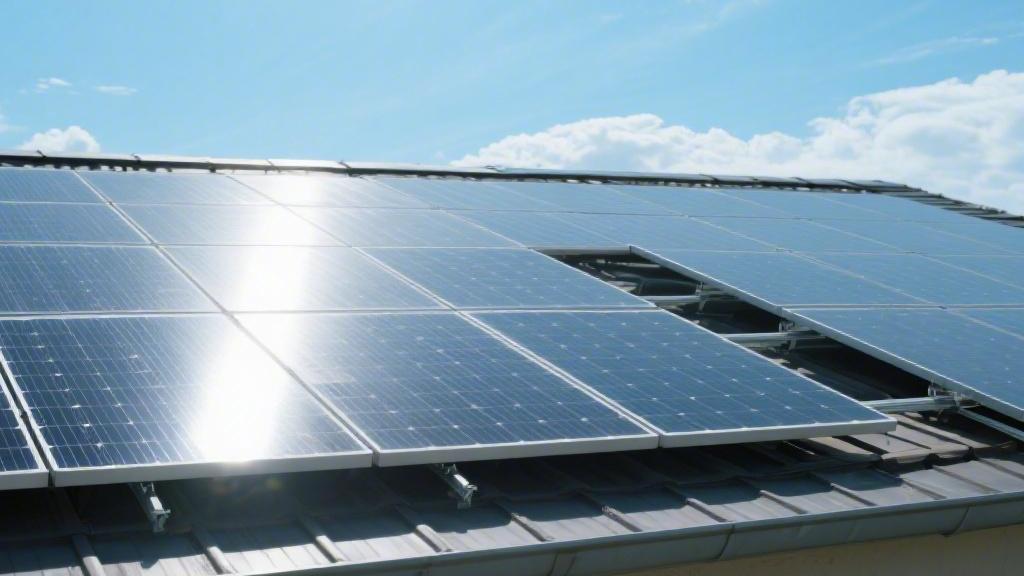
Checking Grid Agreements
Different power supply jurisdictions harbor completely unequal mathematical clauses in the text of their Interconnection Agreements. In the Customer Grid-Supply (CGS) tariff structure enforced by Hawaiian Electric Company (HECO), aside from charging a fixed monthly base service fee of $25 (which you have to pay whether you buy electricity from the grid or not), power sent back to the grid can only be exchanged for a fixed bill credit of $0.10 per kWh, and it cannot be redeemed for fiat cash.
For users installed in the Houston, Texas area and connected to the CenterPoint Energy transmission grid, by choosing a 100% renewable energy buyback plan like the one offered by Rhythm Energy, they can lock in a 36-month symmetric contract where the buy price and sell price are anchored 1:1 at $0.135 per kWh. Over the 31 calendar days in the autumn month of October, this system produced a total of 1,250 kWh, while the whole house's actual consumption was only 800 kWh.
The excess 450 kWh generated will be credited to the user's rolling ledger as an exactly equivalent $60.75. Come the following August, during the peak summer dog days with temperatures hitting 100°F, when air conditioners running at full load cause the monthly household electricity consumption to surge to 2,100 kWh and the system's output is only 1,400 kWh, the hundreds of dollars in credits hoarded during the spring and autumn will automatically trigger the deduction process, instantly clearing the $94.50 grid debt that would otherwise need to be paid.