How Do Innovative Coatings Improve Photovoltaic Efficiency | Light Absorption, Heat Control
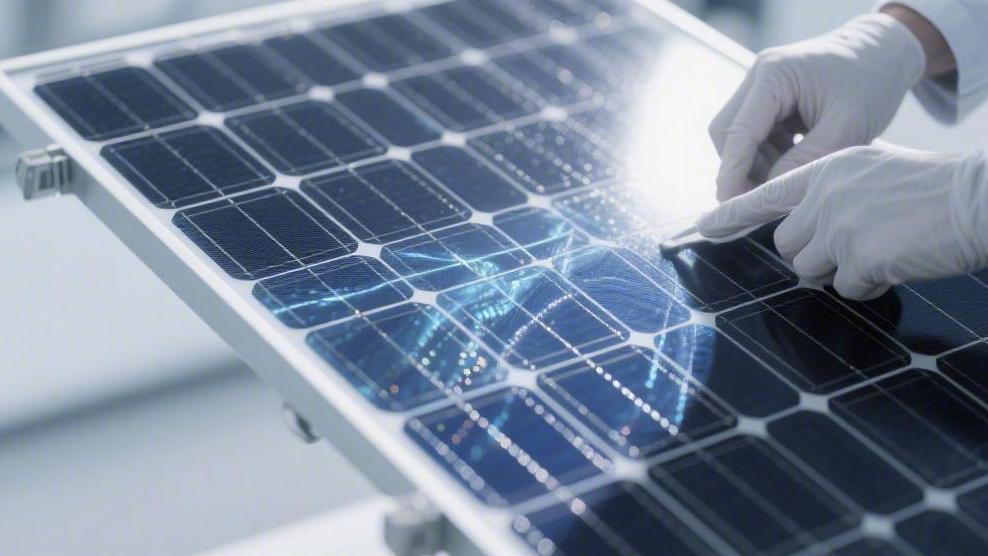
Nano light-trapping coating reduces reflectivity to below 3% to lift absorption, matching with radiative cooling technology can reduce temperature 10℃.
Because for every 1℃ panel temperature rises efficiency drops about 0.4%, this move can make power gain lift 4%.
Need to utilize Physical Vapor Deposition process, ensuring film layer reaches micron-level uniform distribution.

Light Absorption
Catch the light
Ordinary solar encapsulation glass thickness is around 3.2 millimeters, although looking quite transparent, but once light enters glass from air, because the refractive index directly jumps from 1.0 to 1.52, there will be about 4.2% of energy being stiffly bounced back. This reflection loss occurs during early morning or evening when the sun's deflection angle is large, even soaring to above 10%. Now in laboratories, they toss out this 100 nanometers to 150 nanometers thickness ultra-thin coating, the main module is silicon dioxide small particles with a diameter of only 10 to 20 nanometers. These small particles, after spreading on the glass surface, formed a layer of sponge-like porous network structure, inside probably stuffed 50% air. This makes coating's comprehensive refractive index drop to around 1.25, exactly sandwiched in the middle of air and glass, like a buffer pad making light smoothly crawl in. Through this refractive index physical matching, originally lost that 4.2% reflection light can be chased back about 3%, making glass overall light transmittance from around 91% directly topped to above 94.5%.
l Coating internal porosity usually is controlled between 45% to 55%, using this to adjust refractive index to precisely align with the 1.25 to 1.28 target interval.
l Within the full waveband range from 380 nanometers to 1100 nanometers, average reflectivity dropped from original 4.5% to below 1.2%.
l This light transmittance lift directly reflects on cell cells' short-circuit current (Isc), actual measured per square centimeter current density can lift from 38.5 milliamperes to around 39.7 milliamperes.
l If calculating by single module 550 Watts power, just the light input increase from this layer of coating can make power output solidly more by 15 Watts to 18 Watts.
Fill in the gaps
At the microscopic level, this innovative coating is not a rigid single layer film, it is stacked out of countless nano-level small spheres. These gaps between small spheres' size are strictly limited within 20 nanometers, this size is far smaller than visible light's wavelength, so light when passing through will not produce messy scattering. When constructing, the factory will put these coating liquids with solid content only around 3%, through roller coating equipment with rotation speed as high as 1500 turns per minute, uniformly smeared on glass. Subsequently, in a 700 degrees Celsius high temperature furnace, baking for a few minutes, silicon dioxide particles will have hydroxyl groups on the glass surface and happen a chemical reaction, like welded on as solid. This physical structure not only increased light input, but also pressed light absorption depth down several microns, making the cell's bottom layer silicon material also able to share more high-energy photons.
l Coating surface roughness $R_a$ is controlled below 10 nanometers, ensuring phase consistency when light enters.
l After 3000 hours damp heat test (85 degrees Celsius, 85% humidity), light transmittance degradation is less than 0.5%, showing extremely high physical stability.
l Coating liquid viscosity is precisely controlled at 1.8 to 2.2 centipoise, guaranteeing thickness error smeared on a 15-meter per minute production line does not exceed 5 nanometers.
l This production process per square meter electricity consumption is only 0.2 degrees, but in a 25-year life cycle, it can help the module generate about 800 extra degrees of electricity.
Lock the energy
Innovative coating through interference principle, lets light waves reflected back enter coating and incident light waves mutually cancel, thereby realizing "zero reflection". According to the quarter wavelength theory, when the coating thickness is exactly one fourth of the target light wave wavelength, the anti-reflection effect is strongest. Now, mainstream process sets thickness at around 110 nanometers, this exactly targets the 550 nanometers green light band where solar spectrum energy is most concentrated. This design not only lets visible light go in, but can also block part of infrared light outside, preventing cells from internal because of absorbing too much long-wave thermal energy leading to voltage drop.
l At 550 nanometers peak waveband, single-sided coated glass highest transmittance can reach 98% theoretical limit.
l Because of reflection decrease, module internal Internal Quantum Efficiency (IQE) in the short waveband lifted about 5% to 8%.
l Comparison experiments show, modules with coating under cloudy day weak light environment (light intensity 200 W/m²) have power generation efficiency that is above 4% higher than those without coating.
l This weak light response improvement makes power station daily effective power generation duration average extend 15 to 20 minutes, especially during the winter and summer, the effect is more obvious.
Thickness is particular
If the coating thickness is biased 10 nanometers, power generation efficiency will then appear obvious fluctuations. So now all use automated film thickness meters performing online monitoring, every 0.5 seconds scanning data once. Once the thickness is found to be 120 nanometers, drifted to 130 nanometers, the background algorithm will immediately adjust the roller coating machine's pressure and feeding speed. This precision control can guarantee a whole two-square-meter large glass, film layer's thickness difference is controlled within plus or minus 3%. This strict parameter is to guarantee color consistency, preventing the appearance of eye-sore rainbow patterns. More importantly, uniform thickness can guarantee light on the whole board distributed uniformly, avoiding local current overload caused by ribbon heating.
l Film thickness deviation if exceeding 15 nanometers, will lead to specific wavelength reflectivity rising above 1%, losing about 2 Watts of output power.
l Through controlling curing temperature in the 680 to 720 degrees Celsius interval, coating hardness can reach above 6H, sufficient to resist field sand-dust perennial wear.
l Single time coating material cost converted, per Watt power cost increase is less than 0.01 RMB, cost-performance ratio is extremely high.
l In large-scale ground power stations, application of this coating technology can let the whole project Internal Rate of Return (IRR) directly pull up 0.5 to 0.8 percentage points.
Particle arrangement
When the coating liquid dries out, they will according to preset geometric rules lean together, forming a kind of prototype similar to a "photonic crystal". This structure is especially friendly toward sunshine obliquely shining in, when sunlight with a 60-degree large oblique angle enters, glass with coating still can maintain above 85% light transmittance, while ordinary glass at this time already like a mirror reflecting most sunshine out.
l Oblique incident angle at 60 degrees, anti-reflection coating brought power gain is even about 1.5% higher than during vertical incidence.
l Capillary pore diameter between particles distributed at 5 to 15 nanometers, this size can exactly block large molecule organic pollutants from infiltrating.
l After 500 times laboratory cycle friction, coating adhesion still maintains at the highest level (Level 0), will not easily fall off.
l Every 100 kilograms of coating liquid can cover about 2,500 to 3,000 square meters of photovoltaic glass, industrialized production scale effect is very significant.
On-book return
Calculating a real account, a 100 MW scale power plant, if all adopt this high-performance anti-reflection coating module, one year's power generation can usually be about 3.5 million to 4.5 million degrees more electricity than using ordinary modules. Calculating by 0.4 RMB per degree desulfurized coal benchmark grid price, this one item in one year can sell 1.4 million to 1.8 million extra money. While for module factory, plating this layer of film for glass extra cost shared to every piece of board is probably about 5 to 8 RMB. This investment in the first year of power plant operation can earn back all principal and interest. The remaining 24 years of operation period, every degree of extra electricity is pure profit.
l After 100MW power station adopts this technology, 25-year full life cycle cumulative extra generated electricity can reach above 100 million degrees.
l Estimating by the current carbon trading market price, this extra green electricity still can be converted into a not small amount of carbon emission reduction benefit.
l Coating module per Watt selling price although is about 0.01 RMB more expensive than ordinary modules, but because its system efficiency PR value is lifted 2%, it is extremely competitive in the bidding market.
l Comprehensive maintenance cost looking, because power generation gain brought by coating far exceeds its depreciation speed, this technology's static investment recovery period usually will not exceed 1.5 years.
Heat Control
Afraid of getting hot
Photovoltaic modules when exposed to the sun, only about 20% to 23% of sunlight can be transformed into electrical energy, with the remaining close to 80% energy basically all becoming heat piling up in silicon wafers. When the ambient air temperature is 30 degrees Celsius, the deep blue cell panel surface temperature often will rush to above 65 degrees Celsius. For mainstream P-type or N-type monocrystalline silicon batteries, every temperature rise 1 degree Celsius, its output power will fall about 0.3% to 0.45%. In the hottest noon of summer, one unit labeled 550 Watts module, might because of this extra 40 degrees Celsius temperature difference, lead to power directly shrinking to below 480 Watts, while white-white lost 70 Watts of power generation potential. If enlarging perspective to a 100 megawatt large-scale power plant, this heat loss caused direct economic loss every year might be as high as millions of yuan.
This thermal-induced degradation not only affects instantaneous power, but also leads to a large drop in Open Circuit Voltage (Voc). Actual measurement data shows, when the temperature rises from 25 degrees Celsius to 65 degrees Celsius, the module voltage usually falls about 10% to 12%. This is also a huge challenge for the inverter's Maximum Power Point Tracking (MPPT).
Vomit heat to the sky
Within this specific wavelength range, Earth's atmosphere almost does not absorb heat, just like opening a "heat dissipation window" leading to outer space. Through smearing a layer of material containing specific nano-structures on the glass surface, can let modules actively "throw" internal thermal energy in the form of mid-infrared rays directly into outer space, which is close to absolute zero. This heat dissipation process does not need to consume any electrical energy, completely is physical energy carrying. High-performance radiative cooling coating can lift mid-infrared emissivity to above 0.95, while ordinary glass in this band emissivity is usually only around 0.8.
This 0.15 emissivity difference, in actual operation, can produce about 100 Watts per square meter radiation cooling power. Under the same light conditions, modules with this film coated have back temperatures 3 to 6 degrees Celsius lower than ordinary modules. For regions with high temperature year-round, these few degree temperature difference can directly transform into 2% to 3% annual power generation gain.
Microscopic structure
This coating's internal usually is filled with microspheres with a diameter between 5 microns and 10 microns. These spheres are generally made of silicon dioxide or functional ceramic materials. These particles' sizes are after precise calculation, and can exactly produce resonance with mid-infrared rays' wavelength, thereby greatly enhancing heat radiation efficiency. Meanwhile, these particles toward sunlight with wavelengths between 300 nanometers and 2500 nanometers maintain high transparency, ensuring that light does not block the light for cells to "eat". Coating construction thickness is usually controlled between 50 microns to 100 microns, cured film layer hardness can reach above 5H, capable of withstanding sandstorm impact under 20 meters per second wind speed.
Laboratory data shows, this coating's transmittance loss toward visible light is controlled within 0.2%, almost can be ignored. But its management capability toward heat is very powerful, capable of pressing internal EVA encapsulation film working temperature down more than 4 degrees Celsius, thereby slowing down encapsulation material's oxidation browning speed under high temperature, letting module's actual effective life potentially extend from 25 years to above 28 years.
Power generation more stable
When the cell temperature is maintained at 55 degrees Celsius rather than 70 degrees Celsius, silicon material internal carrier recombination speed will slow down, diffusion length increases, this can significantly improve module's Fill Factor (FF). In a one-year comparison test, in a 1 Megawatt experimental array installed in arid regions, areas using heat control coating, its system performance ratio (PR value) lifted from 81% to 83.5%. This 2.5 percentage point lift, under the same land area and bracket investment, power plant boss can sell about 120 extra degrees of electricity every day.
Temperature decrease still can effectively mitigate the "Hot Spot Effect". When modules are locally shaded, panels with coating because of good overall heat dissipation background, local high temperature points' peak temperature will be about 10 degrees Celsius lower than ordinary panels. This decreased risk of backsheet burning through or glass exploding due to local overheating equals buying an invisible "insurance" for the power station.
Durable and cost-effective
From a ledger-looking, this heat control coating's every square meter material and construction cost is roughly between 12 and 18 RMB. Although a bit more expensive than simple anti-reflection coating, the benefit it brings is doubled. Taking a distributed industrial and commercial rooftop project for example, if because of coating making per Watt power generation lift 2.5%, per Watt investment recovery period shortened by about 5 months. In a 25-year life cycle, the extra generated electricity because of heat loss reduction is worth 15 times the coating's initial investment. In addition, because temperature reduction decreased material thermal expansion and contraction fatigue, the module annual power degradation rate can be optimized from 0.5% to around 0.4%.
This coating's performance under extreme weather is also very stable. After 200 times repeated thermal cycle tests from minus 40 degrees Celsius to 85 degrees Celsius, the film layer and glass adhesion still maintains at Level 1, no peeling or cracking appeared. This high reliability maintenance cost almost is zero, later stage no need like mechanical cooling systems to replace parts or add water for cooling, very suitable for installation in deserts with no people or rooftops with high difficulty maintenance.
Calculate revenue clearly
For a 100-megawatt project with an investment amount of around 400 million yuan, after using this technology, the extra net profit every year can be about 2 million yuan more. Considering now the photovoltaic industry's profit is getting thinner and thinner, this 2.5% efficiency lift often is the key to project break-even. This solution solving heat issue from material bottom layer, is gradually becoming standard configuration for newly built high efficiency power plants, because it not only improved current revenue, but more guaranteed asset's value preservation capability in future twenty years.
With the popularity of N-type TOPCon batteries and HJT batteries, these new type batteries are more sensitive to temperature, and heat control coating's value will further amplify. Actual measurement indicates that, using this coating on HJT modules, its power generation gain can even reach above 4%, because HJT cell's open circuit voltage is higher, and the temperature influence on voltage is also more sensitive.