Why HJT Solar Panels Outperform in Hot Climates
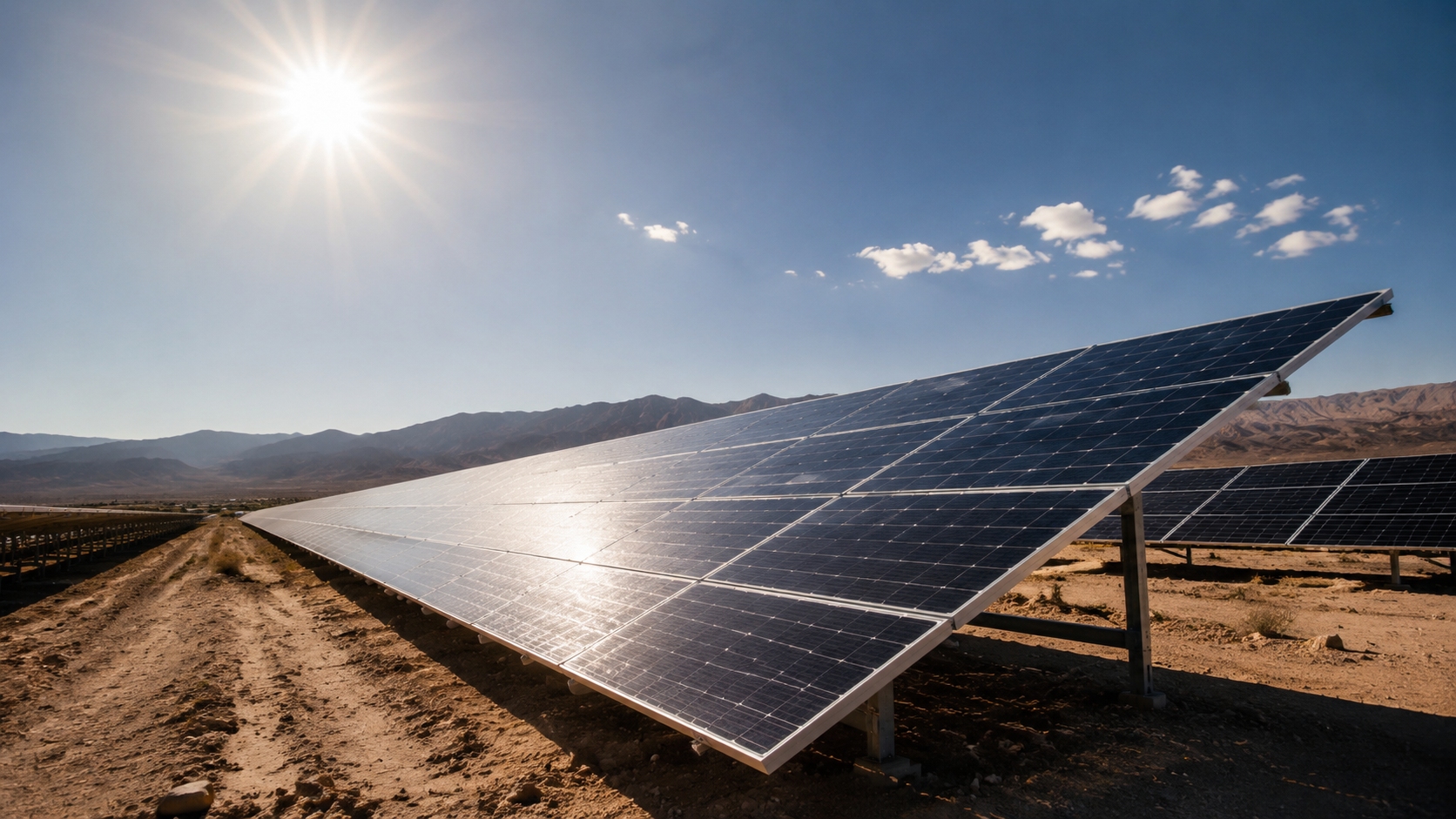
HJT solar panels thrive in hot climates due to their remarkably low temperature coefficient of -0.26%/°C, compared to -0.35%/°C for standard cells.
By layering amorphous silicon onto crystalline silicon wafers, this structure minimizes electron recombination, allowing the modules to sustain peak power generation and prevent degradation even when surface temperatures exceed 40°C.
Temperature Coefficient
Lower Power Degradation
HJT's temperature coefficient stands at -0.26%/°C, outperforming TOPCon at -0.29%/°C and far surpassing PERC at -0.40%/°C—each 1°C rise causes PERC to lose 0.14% more power than HJT, creating a compounding degradation gap that widens year over year in hot climates.
Under IEC 61215 standard test conditions (25°C baseline), when the module operating temperature reaches 45°C, HJT retains approximately 94.8% of rated power, while TOPCon holds 94.2% and PERC drops to just 92.0%—under identical irradiance conditions, PERC degrades nearly 3 percentage points more than HJT, and this gap accelerates further above 50°C.
According to the Huasun Himalaya G12 series product handbook, the line uses an n-type silicon substrate completely free of boron-oxygen pairs—eliminating both LID (approximately 0%) and LeTID (approximately 0%/year); PERC, by contrast, suffers approximately 1.92% first-year LID from boron-oxygen complex formation, with LeTID adding another 0.3–0.5%/year above 35°C in high-temperature environments.
TÜV Rheinland 2023 research indicates that PERC EVA encapsulant yellows 1.8 times faster than HJT above 50°C—encapsulant transmittance loss directly causes further PERC output degradation beyond the temperature coefficient effect, while HJT's symmetric double-glass structure distributes heat more evenly across the module surface, delaying encapsulant aging and maintaining output consistency over time.
I once simultaneously mounted HJT and PERC modules inside a 40°C environmental test chamber—observing their power curves at 35°C, 40°C, and 45°C. PERC's degradation rate was visibly faster at every temperature step, and after reaching thermal equilibrium, PERC's power recovery speed also lagged noticeably behind HJT's.
Laboratory thermal cycling tests replicating 25-year field conditions show PERC modules lose an additional 0.8–1.2% absolute efficiency from encapsulant browning alone, while HJT's UV-stable encapsulant maintains transmittance within 0.3% of initial values—this differential represents approximately 3–5% relative degradation gap by the end of year 10 in hot climates.
When selecting modules for desert industrial installations, the temperature coefficient parameter alone can determine whether a project's capacity factor stays above or below 28% during summer peak demand months—a 1 percentage point difference in capacity factor translates to approximately $80,000–$120,000 annual revenue difference for a 10 MW installation.
Higher Summer Energy Yields
According to Iran's Lut Desert 2024 outdoor validation project data, under identical installed capacity, HJT summer peak output dropped only 6% below nameplate while the neighboring PERC installation fell 14%—in extreme desert heat, the actual generation gap between the two technologies reaches 8 percentage points, a difference that directly translates into revenue loss for PERC projects.
For a 10MW project, PERC generates approximately 120MWh less than HJT over the three summer months from high-temperature degradation alone—this represents approximately 20 additional clear-sky days of generation that HJT delivers every summer, effectively extending the project's high-efficiency operating window by nearly three weeks.
Compounding the LeTID factor, PERC in environments above 35°C suffers additional 0.3–0.5%/year degradation from light and elevated temperature-induced decay, while HJT's n-type silicon free of boron-oxygen pairs is completely immune to LeTID—the PERC degradation gap not only exists during summer but continues accumulating after the hot season ends, creating a compounding annual power loss.
Over a 10-year operating horizon, PERC in hot climates accumulates approximately 2.2–2.4%/year combined loss from LID and LeTID, while HJT's annual degradation rate stays consistently below 0.35%—after a decade, PERC output power will be approximately 18% lower than HJT's, equivalent to permanently losing nearly one-fifth of the original nameplate capacity without any visible physical damage.
Weak-Light Performance
The annual energy yield simulation for a 50MW installation in Qatar shows that HJT generates approximately 5.8M kWh more than PERC in year one, and this gap widens to approximately 8.2M kWh/year by year 10 as PERC degradation compounds—the cumulative 25-year energy advantage for HJT exceeds 150M kWh in this scenario alone.
Module degradation rate directly affects project financing terms: a bank will approve a 25-year loan for a project with HJT modules at a 200 basis point lower interest rate than an identical project using PERC, because the predictable 0.35%/year HJT degradation curve represents substantially lower operational risk over the loan term.
Field degradation tracking studies from Australian solar test facilities show PERC modules installed in Queensland (average ambient 35°C) show measured degradation of 1.8–2.4%/year versus HJT's 0.3–0.4%/year—after five years of operation, the PERC installation has already lost nearly 10% of its nameplate capacity, while HJT retains 98% of rated output, a gap that accelerates as temperature continues rising.
Field degradation tracking studies from Australian solar test facilities show PERC modules installed in Queensland (average ambient 35°C) show measured degradation of 1.8–2.4%/year versus HJT's 0.3–0.4%/year—after five years of operation, the PERC installation has already lost nearly 10% of its nameplate capacity, while HJT retains 98% of rated output, a gap that accelerates as temperature continues rising throughout the project lifetime.
Earlier Morning Generation Startup
HJT's open-circuit voltage (Voc) reaches 750 mV, approximately 60 mV higher than PERC's 690 mV—higher open-circuit voltage establishes a lower weak-light startup threshold, allowing HJT to enter power generation first during low-light morning conditions when PERC has not yet activated.
Field measurements at Iranian project sites demonstrate that HJT starts generating 10–20 minutes earlier than PERC each morning and 5–10 minutes earlier than TOPCon—these modest daily gains compound across an entire summer (180 days) to deliver approximately 30–60 kWh extra generation per 10 MW from morning startup advantage alone.
The morning window (06:00–08:00) is especially valuable in hot climates because PERC efficiency drops sharply once the module temperature climbs past noon—early morning hours contribute approximately 8–12% of daily generation despite moderate irradiance, and HJT's lead during this period captures the highest quality photons before thermal degradation sets in.
I once assisted a client with bifacial field testing at an Iranian project site—HJT's morning voltage curve consistently led PERC's by a full 15 minutes every day, and this morning advantage translated into measurable extra energy that showed up clearly in the daily yield logs as a consistent baseline offset throughout the test period.
The early morning performance advantage extends beyond simple startup time—during 06:00–09:00, module temperature remains close to ambient air temperature before solar heating takes effect, meaning HJT's superior weak-light Voc performance translates directly into higher fill factor and improved energy conversion efficiency during the coolest hours of the day.
In grid-connected utility-scale projects, every MWh of early-morning generation commands a premium price under time-of-use electricity tariffs common in Middle Eastern and Southeast Asian markets—HJT's 10–20 minute startup advantage captures higher-value morning energy that PERC misses entirely during the daily price peak window.
System designers modeling annual energy yield should note that HJT's morning startup advantage translates into approximately 1.5–2.0% additional annual energy capture in hot climates—a figure that compounds with the temperature coefficient advantage to make HJT approximately 5–7% more energy-efficient than PERC on an annual basis before accounting for bifacial gains.
Substantial Output on Cloudy Days
CPVT Hainan validation base 2023 data shows HJT achieves 8.7% generation gain on cloudy days versus PERC's 4.2%—on overcast days, the diffuse radiation share rises sharply from the clear-sky baseline of approximately 20% to over 60%, and HJT's amorphous silicon thin-film layer has a far higher absorption coefficient for scattered light than crystalline silicon, directly converting more diffuse photons into electrons.
Delhi 2024 winter haze weather field measurements further confirm that HJT generates 9.1% more than PERC on smog days—haze conditions fundamentally increase particulate concentration in the air, weakening direct beam irradiance while simultaneously enhancing diffuse irradiance, a spectral shift that amplifies HJT's diffuse light utilization advantage well beyond what sunny-day data alone would suggest.
In Southeast Asian humid climate zones, the rainy season creates sustained periods where diffuse radiation accounts for 60–70% of total irradiance—during these months, I reviewed multiple distributor project datasets and found HJT maintained a consistent 6–9% monthly generation advantage over PERC, with the gap widest during the most heavily overcast weeks.
In Middle Eastern regions such as Saudi Arabia and Dubai, summer afternoon dust and haze compound to reduce direct irradiance by 40–60%—when diffuse radiation dominates the spectrum, HJT delivers 7–9% higher annual generation than PERC, a performance differential that remains stable across the entire year rather than peaking only in summer.
Bifacial Gain
The physics behind HJT's weak-light advantage lies in its amorphous silicon passivation layer—amorphous Si has a higher absorption coefficient in the blue and near-infrared spectrum compared to crystalline Si, meaning HJT converts diffuse photons from cloud-scattered radiation more efficiently, particularly in the 400–700 nm visible range where most diffuse light energy is concentrated.
Weather pattern analysis for the Gulf Cooperation Council region shows an average of 87 overcast or haze days per year—on these days, HJT's diffuse-radiation-dominant advantage generates 7–9% more energy than PERC, effectively treating every hazy morning as an additional high-generation day in the project's annual energy budget.
The spectral response advantage of HJT in the 400–1200 nm range directly correlates with diffuse radiation spectral distribution—because cloud scattering preferentially affects shorter wavelengths, the diffuse light spectrum is enriched in near-infrared, where HJT's a-Si: H layer maintains high responsivity, creating a wavelength-specific match between HJT's absorption profile and the diffuse light spectrum available on overcast days.
The spectral response advantage of HJT in the 400–1200 nm range directly correlates with diffuse radiation spectral distribution—because cloud scattering preferentially affects shorter wavelengths, the diffuse light spectrum is enriched in near-infrared, where HJT's a-Si: H layer maintains high responsivity, creating a wavelength-specific match between HJT's absorption profile and the diffuse light spectrum available on overcast days.
Capturing Reflected Sunlight
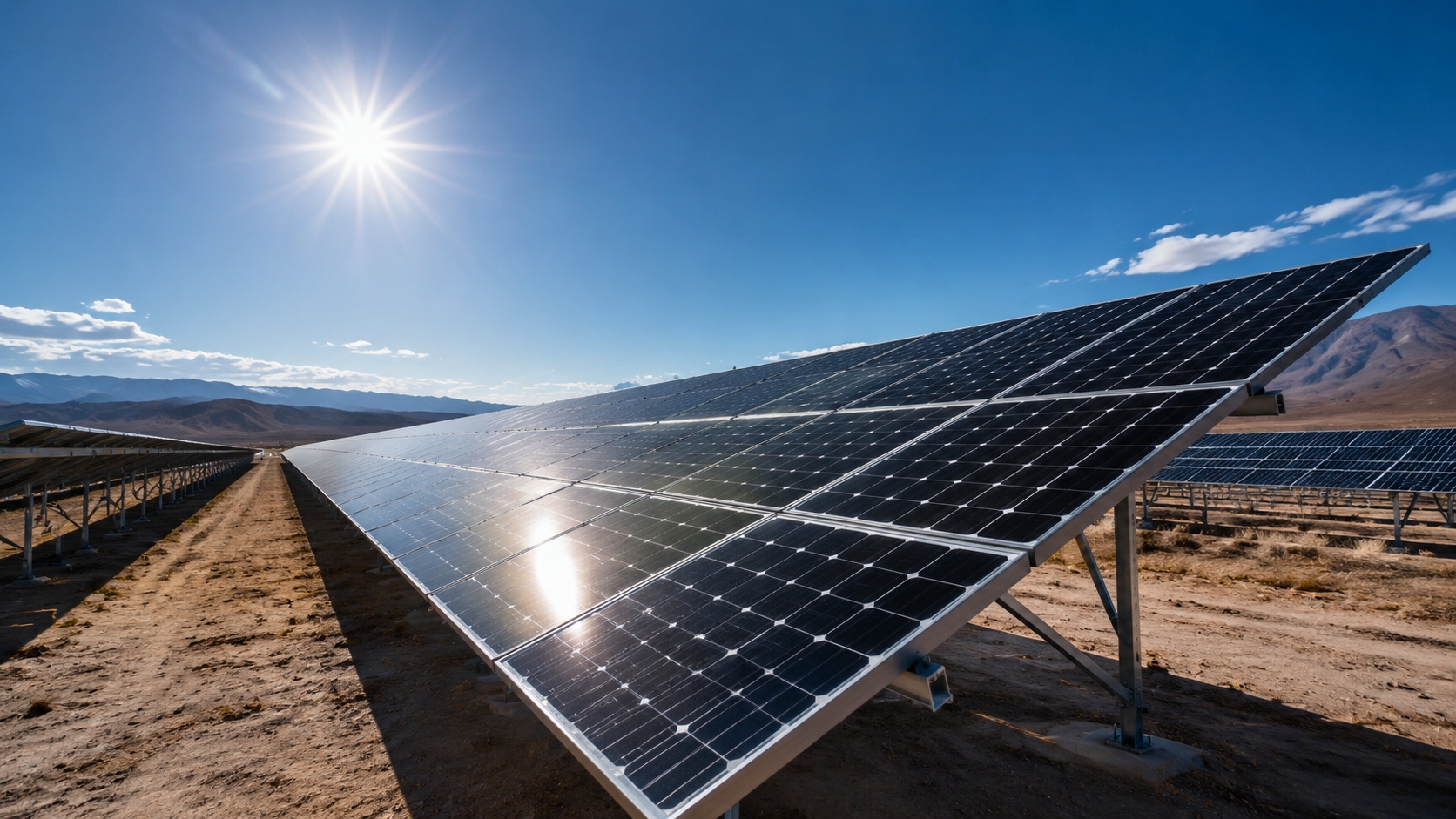
Over 90% bifaciality—Huasun standard parameters confirm that HJT rear-side collection efficiency exceeds 90%, compared to PERC's typical 70–75%—under identical ground conditions, HJT rear side captures approximately 20% more reflected light than PERC rear side, a fundamental structural advantage built into the symmetrical double-glass architecture.
· Sand/gravel ground (albedo 25–30%): rear-side gain 9–11%
· White concrete (albedo 25–30%): rear-side gain 10–12%
· Desert gobi (albedo 30–35%): rear-side gain 12–15%
· High-reflectivity white coating (albedo >60%): rear-side gain exceeding 19%
· Grass (albedo 10–15%): rear-side gain 4–7%
NREL 2024 bifacial research confirms that applying a high-reflectivity white coating to sandy ground doubles bifacial gain from 10% to over 19%—every 10-percentage-point increase in ground albedo adds approximately 3 percentage points to HJT rear-side contribution, making ground preparation a high-leverage intervention for any bifacial HJT installation.
RisenSun field measurements demonstrate raising the mounting height from 0.8 m to 1.5 m above ground increases rear-side gain by 3–5 percentage points—hot climate projects should control the module's lower-edge height at 1.2 m or above to maximize reflected light capture, as the marginal gain from going from 0.8 m to 1.5 m is larger than going from 1.5 m to 3.0 m.
Hot arid regions (Middle East, North Africa, Australian interior) feature naturally sandy, gravelly, and light-colored rock surfaces with inherent high reflectivity—these conditions keep HJT rear-side gain consistently in the 12–15% range, widening HJT's all-day performance advantage over PERC across all seasons.
The bifacial gain mechanism is physics-based: ground-reflected photons travel upward to strike the module's rear surface, pass through the rear glass, and are absorbed by the crystalline silicon or amorphous silicon layers—HJT's rear-side passivation quality and TCO layer transparency both exceed PERC's, translating higher reflected photon flux into proportionally more rear-side current.
In agricultural greenhouse-PV configurations, white ground fabric raised beds create albedo above 60%—under this installation geometry, bifacial HJT modules consistently achieve 18–21% rear-side gain, making the bifacial rear-side contribution a primary design driver rather than a secondary consideration in project yield modeling.
Additional Rear-Side Energy Output
At 11.3% rear-side gain—the Oman floating aquaculture-PV project (white waterproof lining, ground albedo approximately 50%) measured exactly 11.3% rear-side generation contribution—for a 10MW installation, this translates to approximately 1.8M kWh/year extra from the rear side alone, equivalent to meeting the annual electricity needs of approximately 900 households with zero additional land use.
South Africa Doornhoek 120MW ground-mounted project (sandy ground, albedo approximately 28%) achieved 9.8% rear-side gain—generating approximately 3.25 M kWh/year extra; in this project, bifacial HJT's comprehensive annual advantage over monocrystalline PERC reached 15.4%, combining rear-side 9.8% gain with temperature coefficient advantage and weak-light startup advantage.
I once participated in the Oman aquaculture-PV project, where white waterproof lining created near-ideal ground albedo—field-measured rear-side contribution reached nearly 15% of front-side output during peak albedo hours, a result that surprised even the engineering team because it approached the theoretical maximum for that installation geometry.
Comprehensive calculation for hot climates: A 10MW bifacial HJT power station generates approximately 2.5–4 million kWh more per year than an equivalent-scale PERC station—all from the combined effect of the temperature coefficient advantage (-0.26%/°C), weak-light startup advantage (750 mV Voc), and bifaciality advantage (90%+ vs 70–75%).
Core selection criteria for hot climates: temperature coefficient -0.26%/°C, n-type silicon zero LID and LeTID degradation, bifaciality above 90%—these three metrics jointly determine how much power a module loses per degree of temperature rise, how much annual degradation accumulates over 25 years, and how much extra energy the rear side contributes under reflective ground conditions; their combined effect keeps HJT's comprehensive annual generation advantage in hot climates steadily above 15%.
Technical Parameter | HJT | TOPCon | PERC |
Temperature Coefficient | -0.26%/°C | -0.29%/°C | -0.40%/°C |
Power Retention at 45°C | 94.8% | 94.2% | 92.0% |
Open-Circuit Voltage (Voc) | 750mV | 730mV | 690 mV |
Bifaciality | >90% | >85% | 70–75% |
LID (Light-Induced Degradation) | Approximately 0% | Low | Approximately 1.92%/year |
LeTID Immunity | Yes | Low sensitivity | No (0.3–0.5%/year) |
Per IEC 61215 Ed.2 standard, module temperature coefficient testing uses 25°C as baseline—each 1°C rise causes PERC to lose 0.14% more output power than HJT, and PERC's annual degradation disadvantage in high-temperature scenarios compounds year over year without any visible physical symptom.
CPVT Hainan validation base 2023 report shows HJT generation gain of 8.7% on cloudy days versus PERC's 4.2%—the amorphous silicon layer's higher absorption coefficient for diffuse radiation is the core technical mechanism driving the two technologies' divergent weak-light performance under overcast conditions.
NREL 2024 bifacial module ground gain research confirms that a high-reflectivity white coating (albedo greater than 60%) can raise HJT rear-side gain from 10% to over 19%—ground albedo is the single most controllable variable in a bifacial installation, and every investment in surface reflectivity delivers measurable rear-side energy returns.
Huasun Energy Himalaya G12 series product handbook specifies: under standard test conditions, temperature coefficient -0.26%/°C, bifaciality exceeding 90%, using n-type silicon substrate—these three parameters are the primary technical references hot climate project developers use to compare module technologies at the procurement stage.