Shingled Mono Cells vs. photovoltaic cell | How to Choose
Shingled monocrystalline cells eliminate traditional ribbon shading through precision laser cutting and conductive adhesive (ECA) stacking encapsulation technology.
This effectively reduces internal resistance loss by approximately 15%, boosting module conversion efficiency by more than 1% compared to conventional monocrystalline PV cells.
Connection Method
Shingling technology eliminates the traditional 2 to 3 mm physical gaps between cells.
Using laser cutting, the cells are divided into small strips and overlapped in a roof-tile pattern, utilizing electrically conductive adhesive (ECA) instead of high-temperature ribbon connections.
This zero-gap design increases the module's light-receiving area by approximately 13% and reduces the connection temperature from over 200°C to around 150°C.
Due to the lower current density, internal losses are reduced by nearly 50%, significantly enhancing power generation performance under low-light conditions.
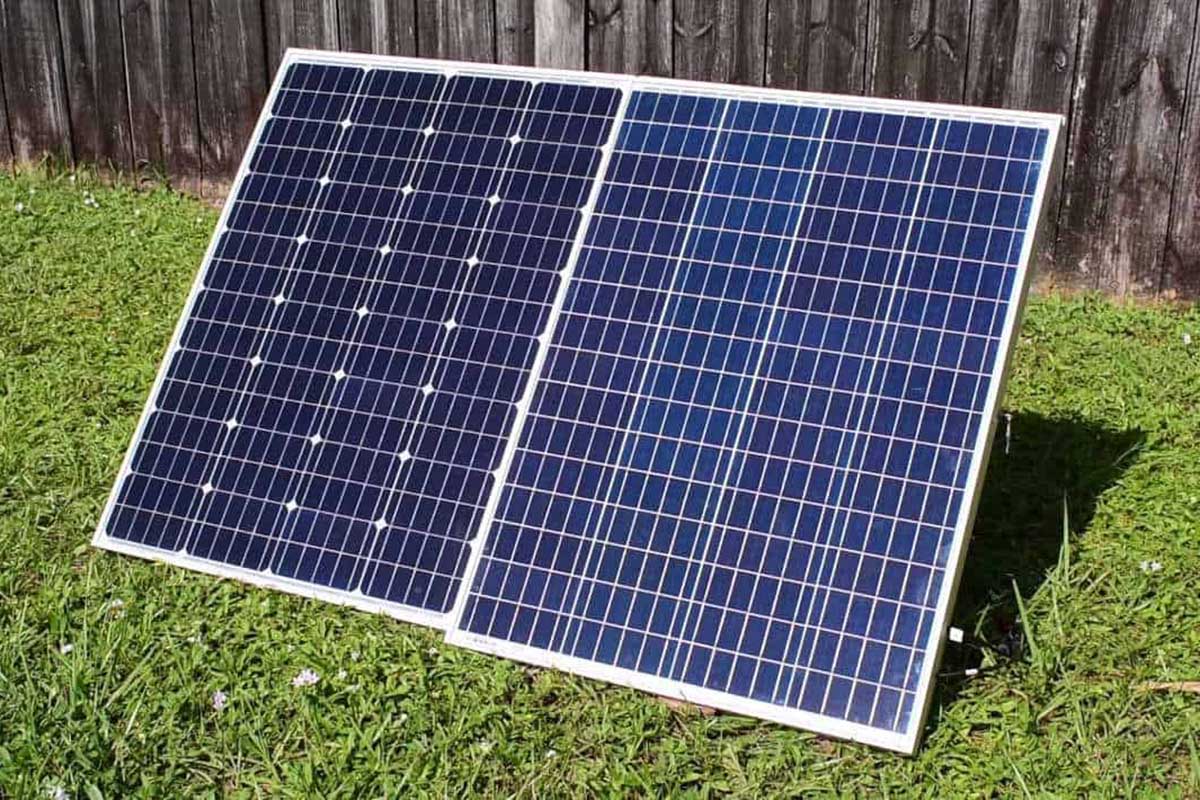
Space Utilization Level
In a standard module approximately 1.7 meters long, arranging 10 rows of cells with traditional gaps would result in an accumulated gap width of 20 mm to 30 mm.
Shingling technology changes this layout logic by laser-cutting monocrystalline silicon wafers into 5 or 6 slender strip cells.
These strips are no longer placed with intervals during assembly; instead, they overlap by 1 mm to 2 mm at the edges, much like shingles on a roof.
This overlapping method removes all horizontal and vertical invalid gaps, significantly increasing the packing density of the silicon wafers inside the module.
For the same frame size, the proportion of the effective power generation area in shingled modules increases by about 13%.
Whether using 5BB, 9BB, or 12BB technology, these metal lines block a portion of sunlight. The area covered by busbars typically accounts for 2% to 3% of the total cell area.
Although some technologies use circular ribbons to increase reflected light, the physical obstruction of light by metal remains.
Shingling technology removes the metal busbars from the light-receiving surface, transferring current through the conductive adhesive in the overlapping area on the back or edges.
This design allows the front of the cell to achieve nearly 100% light-receiving efficiency.
When sunlight hits the module surface, there is no energy loss caused by metal reflection; every blue or black silicon area within view is performing photoelectric conversion.
Space Utilization Parameter | Traditional 60-cell Module | Shingled Module (Same Size) | Difference Quantification |
Cell Spacing | 2.0 mm - 3.0 mm | 0 mm | 100% reduction in gap loss |
Front Shading Area | ~2.5% (Busbars) | 0% | 2.5% increase in effective light intake |
Wafer Packing Density | ~90.6% | ~98.8% | ~8.2% increase in coverage |
Power per Unit Area | 195 W/m² | 215 W/m² | ~10% increase in power density |
Take a common 1.6 square meter small residential module as an example: a traditional structure's rated power might be between 330W and 340W.
A shingled module of the same specification can reach 390W to 400W.
The extra 60W of power comes entirely from the efficient filling of space.
This technology does not rely on increasing the conversion efficiency of the individual silicon wafer but rather increases the total power output by reducing invalid "white edges" and "gaps."
This high output per unit area is particularly evident in area-constrained scenarios like residential rooftops, as more generation capacity can be installed on the same mounting structure.
In traditional cells, current must travel across the entire wafer to converge on the busbars, involving a longer path and generating more resistive heat loss.
Shingling technology cuts large cells into smaller ones, reducing the current intensity on each strip to one-fifth of the original.
Joule's Law states that heat loss is proportional to the square of the current. When the current is reduced to one-fifth, the theoretical heat loss is reduced to one-twenty-fifth.
Although the overlapping connection adds a tiny amount of contact resistance, the overall internal resistance loss is still reduced by about 50%.
Loss Type | Traditional Connection | Shingled Connection | Efficiency Comparison |
Internal Resistance Power Loss | High (Long path, high current) | Extremely Low (Short path, low current) | Loss reduced by ~50% |
Shading Current Loss | Linear series; high shading impact | Multiple parallel circuits; low shading impact | ~10% increase in low-light generation |
Temperature-induced Degradation | Higher (Greater heat generation) | Lower (Lower operating temperature) | Higher stability |
Traditional modules are usually divided into three vertical zones by three protection diodes.
If one zone is shaded, the 20 cells in that zone stop working.
Shingled modules utilize an internal circuit layout with multiple parallel groups, typically dividing cell strips into several independently operating parallel circuits.
When shading covers a small part of the module's bottom, it only affects that specific strip area, while other parallel parts can still output full power.
Regarding durability, the overlapping cells are connected by electrically conductive adhesive (ECA), which occupies less than 0.1 mm in height.
The flexible nature of ECA allows the cells to undergo microscopic displacement during thermal cycling.
In traditional welding, the copper ribbons used are rigid; when temperatures rise from -20°C to 60°C, the difference in expansion coefficients between copper and silicon causes massive tension at connection points, often leading to invisible micro-cracks in the silicon.
Material Connection Process
The traditional process requires heating the welding head to 220°C–250°C so that the solder flows on the metal surface and forms an alloy layer.
Silicon wafers, being thin sheets of only 160 to 180 microns, are very sensitive to thermal changes.
Because the thermal expansion coefficient of copper differs significantly from silicon, the metal ribbon exerts continuous pull on the silicon wafer after cooling.
Shingled monocrystalline cells completely abandon metal ribbons in their material selection, using ECA as the carrier for both conductivity and bonding.
ECA mainly consists of a high-performance epoxy resin base and high-purity silver particles, with silver usually accounting for about 80% of the mass.
This material cures at around 150°C, much lower than the melting point of traditional solder.
The epoxy resin in the ECA provides long-lasting mechanical adhesion.
This polymer forms a strong mesh structure after curing, locking two overlapping cells firmly together.
The silver particles filled inside establish the current path through physical contact.
In the shingle process, cells are cut into strips, and edges overlap by 1 mm to 2 mm, with the ECA distributed within this long rectangular area.
While traditional solder points are discrete dots or thin lines, the shingled connection is a continuous strip covering the entire length of the cell edge.
According to laboratory measurements, the contact resistance of this strip connection is only a fraction of that of traditional solder points, thereby cutting power transmission losses.
The silver particles are distributed extremely uniformly within the adhesive, ensuring no local current crowding when the current crosses cell boundaries.
Material Property | Traditional Tinned Copper Ribbon | Shingled Conductive Adhesive (ECA) |
Main Conductive Material | Copper wire with surface tin plating | Silver particles with epoxy resin |
Peak Processing Temp | 220°C to 260°C | 140°C to 160°C |
Connection Morphology | Intermittent dot or line welding | Continuous long-strip surface contact |
Elastic Modulus | ~110 to 120 GPa (Rigid) | ~1 to 5 GPa (Flexible) |
Conductive Surface Width | 1 mm to 2 mm (Limited by ribbon) | Full edge length (>150 mm) |
During outdoor operation, modules frequently experience thermal expansion and contraction due to diurnal temperature differences and seasonal changes.
Traditional copper ribbons have an extremely high elastic modulus, acting as a rigid connection that does not deform with the silicon, instead generating cyclic stress at solder points. After hundreds of cycles, metal fatigue causes contact resistance to rise.
In contrast, ECA is flexible; its lower elastic modulus allows it to absorb micro-displacements like a gasket.
When temperatures drop and materials contract, the polymer chains within the ECA can stretch moderately without breaking, maintaining electrical stability.
This flexible connection also offers clear advantages in resisting mechanical loads from hail or strong winds, as vibration energy is absorbed and dissipated by the adhesive layer rather than being borne solely by the fragile silicon.
Shingled cells require a large silicon wafer to be segmented, and lasers form extremely smooth fracture surfaces during the cutting process.
The glue dispenser requires high precision, with adhesive thickness typically controlled at the tens-of-microns level to ensure sufficient silver particle density while preventing overflow onto the light-receiving surface.
Through this precision control, the overlapping parts not only complete the electrical connection but also act as structural supports.
Once encapsulated, the module has no loose ribbons inside; the cells mesh tightly to form a solid, honeycomb-like unit.
Thermal Expansion and Contraction Performance
Photovoltaic modules face severe temperature fluctuations outdoors, with diurnal differences exceeding 60°C in some desert or high-altitude regions.
In these environments, the expansion and contraction characteristics of different materials within the module vary greatly.
The linear expansion coefficient of monocrystalline silicon is approximately 2.6 μm/m·°C, while the tinned copper ribbon used in traditional modules is as high as 17 μm/m·°C.
This 6-fold difference in physical parameters is the root cause of internal stress.
In traditional soldered structures, the rigid copper ribbon is fixed to the brittle silicon via high-temperature solder points.
When temperatures rise, the expansion of the copper ribbon is much greater than that of the silicon, creating outward pull at the solder points; when temperatures drop, the copper contracts sharply, squeezing the silicon.
Over a 25-year lifecycle involving approximately 9,000 diurnal cycles, this alternating mechanical stress can cause the metallization areas of the silicon to peel or create subtle micro-cracks.
The elastic modulus of ECA is typically between 1 to 5 GPa, compared to approximately 110 GPa for copper.
When expansion or contraction occurs, the polymer chains in the ECA undergo micro-displacements and deformations, absorbing the vast majority of the stress caused by the mismatched expansion coefficients.
Because this connection is distributed across the entire long-edge overlap of the cell, the force is spread evenly over a continuous surface of over 150 mm, rather than concentrated on discrete solder points.
· Thermal Cycling Performance: In the IEC 61,215 standard 200-cycle thermal test (switching between -40°C and 85°C), shingled module power degradation typically remains within 1%.
· Fatigue Resistance Data: After 400 cycles, the micro-crack increase rate at ribbon-busbar connections in traditional modules is ~5% to 8%, whereas shingled structures show no significant crack expansion under identical conditions.
· Stress Distribution Characteristics: Peak stress at the load points of shingled cells is reduced by approximately 60% compared to traditional soldered cells, greatly reducing the risk of edge chipping.
· Low-Temperature Stability: In extremely cold regions, ECA remains flexible and does not become brittle like solder alloys, avoiding contact resistance jumps caused by material brittleness.
Effective management of thermal stress also manifests in the suppression of the hotspot effect.
In actual use, partial shading can cause local temperatures to rise rapidly, even exceeding 100°C.
Traditional modules have currents exceeding 10A; according to energy loss formulas, higher current results in more concentrated Joule heat.
Shingling technology cuts the full cell into 5 or 6 narrow strips, reducing the current of each strip to one-fifth, approximately 2A.
The lower current significantly reduces heat density, ensuring that the module does not suffer additional thermal damage due to local overheating while undergoing expansion and contraction.
The advantages of the shingled structure are even more prominent under the combined action of mechanical loads and thermal stress.
When a module bears a 5400 Pa snow load or 2400 Pa wind pressure, the cells undergo slight bending.
Traditional ribbons, lacking elasticity, force the silicon to crack to release the pressure.
The shingle structure's overlap allows for micron-scale sliding space between cells, functioning like fish scales to maintain circuit continuity during deformation.
After dynamic mechanical load tests simulating strong winds, the cell fracture rate in shingled modules is far lower than in traditional multi-busbar (MBB) modules, ensuring long-term stability.
· Mechanical Load Power Retention: After 5400 Pa pressure testing, shingled modules typically lose less than 0.5% power, whereas traditional modules can lose 1.5% to 3%.
· Circuit Redundancy Design: Shingling uses a multi-path parallel structure; even if one section of the connection fails due to extreme thermal stress, the remaining parallel paths ensure current transmission, preventing total string failure.
· Lower Operating Temperature: Due to reduced internal resistance loss, shingled modules run approximately 2°C lower than traditional modules under standard light.
· Material Aging Rate: The epoxy resin in ECA is chemically inert; in High Temperature and High Humidity tests (DH1000), adhesion strength degradation is less than 10%.
In the long run, the impact of expansion and contraction on electrical performance is mainly seen in changes to contact resistance.
Traditional solder points are prone to oxidation or delamination over years of thermal cycling, causing internal resistance to rise.
The ECA used in shingling establishes a path through physical compression between silver particles and is tightly wrapped by resin, isolating it from moisture and oxygen.
Effective Light Area
Shingling technology eliminates the 2 mm to 3 mm spacing of traditional modules.
Through 0.5 mm overlapping connections and using ECA instead of metal ribbons, it removes the busbar shading that typically occupies 3% to 5% of the cell surface.
This design increases the effective light-receiving area by more than 13.5%.
Within the same installation space, a single module's output power increases by 35W to 45W, significantly improving the power density per unit area.
Eliminating Cell Gaps
In traditional PV module manufacturing, physical gaps of 2.0 mm to 3.0 mm must be reserved between cells.
This design primarily accommodates the metal ribbons connecting the cells and provides a buffer for expansion and contraction.
If gaps are too narrow, thermal stress on the ribbons could cause edge cracks or breakage.
However, these white or black lines across the module surface are invalid areas that generate no electricity.
For a standard 72-cell module, the total invalid area from these gaps can reach 0.04 m² to 0.06 m².
This waste limits power output per unit area, keeping the physical coverage of traditional modules at 91% to 93%.
Shingling takes a different geometric approach. It uses precision lasers to cut M10 (182 mm) or G12 (210 mm) wafers into 5 or 6 strips.
These strips are not laid flat but are connected with 0.5 mm to 1.0 mm of micro-overlap.
This "seamless" layout completely removes traditional gaps, ensuring the light-receiving surface is almost entirely covered by active silicon.
In the overlapping zone, the front electrode of one strip connects directly to the back electrode of the next via ECA, omitting heavy metal ribbons.
Laser cutting utilizes Non-Destructive Cutting (NDC) technology.
This process uses laser-guided controlled crack propagation to ensure edge smoothness within a deviation of 0.1 mm.
Unlike mechanical sawing, NDC leaves no micro-chipping or thermal damage at the edges, supporting mechanical strength for tight stacking.
High-precision robotic arms then perform the stacking with micron-level accuracy.
Due to the lack of gaps, pressure distribution during lamination is more uniform.
Experimental data shows Cell-to-Module (CTM) power loss in shingled modules is typically 0% to -2% (sometimes achieving gain), contrasting sharply with the 2% to 4% CTM loss in traditional modules.
The effect of eliminating gaps on power density is direct.
On a 1.7 m² residential module, a traditional layout typically achieves 400 W to 415 W.
A seamless shingled layout on the same size module can easily reach 445W to 460W.
This increase from 205 W/m² to over 225 W/m² is highly economical for roof projects with limited space, providing over 10% more total capacity on the same roof area.
Structurally, overlapping connections enhance string rigidity.
Traditional ribbon connections can suffer from a "hinge effect" under wind or snow loads, leading to transverse micro-cracks from local stress.
The shingle structure's layered design and flexible ECA give the cell string spring-like displacement absorption.
When deformed under pressure, the ECA in the overlap can absorb micron-scale displacement, preventing rigid fractures.
Load tests show shingled module degradation is far below the industry average after 5400 Pa static and 2400 Pa dynamic pressure.
No-gap design also impacts electrical performance.
In traditional modules, current travels long distances through ribbons between cells, increasing resistance.
Shingling shortens this distance by using parallel strips. Since the strip width is only one-fifth of a full wafer, the current intensity is lower.
According to the resistance loss formula, internal power consumption is proportional to the square of the current.
An 80% reduction in current leads to a massive drop in Joule heat loss, explaining why shingled modules typically run 2°C to 3°C cooler than standard ones.
Hidden Busbar Connection
Mainstream half-cut modules often use 9BB to 16BB designs.
While more busbars shorten the lateral path on fine fingers and reduce resistive loss, metal busbars are opaque.
On standard M10 cells, busbars typically occupy 3.2% to 4.8% of the total area.
Because silver lines have high reflectivity, this area cannot participate in conversion, causing optical intercept loss.
For a 2 m² module, the shading area from busbars is roughly 60 to 90 cm².
After laser cutting for shingling, the main busbars are no longer in the center of the light-receiving surface but are printed on the very edges of the strips.
During assembly, the edge of the next strip covers the electrode of the previous one, with overlap thickness controlled at 0.5 mm to 1.2 mm.
The electrical connection via ECA is completely hidden within the overlapping structure.
Performance Metric | Traditional 12BB Module | Shingled Hidden Busbar Module |
Visible Busbar Width | 0.1 mm to 0.35 mm | 0 mm |
Front Metal Shading Rate | 3.5% to 5.2% | Below 0.6% |
Physical Utilization | 94% to 96% | Over 99% |
Typical Current Path Length | 18 mm to 26 mm | 3 mm to 6 mm |
Ribbon Reflection Loss | 1.5% to 2.5% | Almost 0 |
Hidden busbar connections provide optical gain and optimize internal resistance distribution.
Traditional modules rely on metal ribbons for series connection, which generate Joule heat.
Because shingled strips have ~1/5th the current density of full cells, the transmission distance before reaching the hidden electrode is greatly shortened.
Since resistance loss is proportional to the square of current, the lower current intensity combined with large hidden contact electrodes reduces internal power consumption by 15% to 20%.
In outdoor tests, traditional ribbon areas often show hotspot risks 5°C to 8°C higher than the cell center due to current concentration. Hidden busbar design uses surface contact in the overlap instead of dot or line contact, ensuring uniform current distribution and high consistency in thermal infrared images.
From a materials science perspective, hidden connections omit tinned copper ribbons.
Mismatched expansion coefficients (Copper ~17, Silicon ~2.5) cause traditional busbars to suffer fatigue under diurnal cycles, increasing contact resistance.
The ECA used in shingling has a good elastic modulus to absorb micro-displacements.
Connections hidden within layers avoid direct exposure to UV and moisture, enhancing long-term resistance to salt spray or high humidity.
Visually, white ribbons on dark wafers in traditional modules create high contrast, which can be hard to integrate into high-end architecture.
The hidden design gives the module a texture similar to dark building materials.
Without specular reflection from busbars, more diffused light is captured, especially during low-irradiance periods at dawn and dusk.
Records show that under oblique light, hidden busbar module output is ~2.5% higher than standard modules.
For M10 wafers, using hidden busbars improves Voc and Isc. With over 12 cm² of extra effective light area, carrier concentration is higher, aiding micro-crack tolerance as current is not forced through narrow ribbons.
As wafer sizes increase from 166 mm to 210 mm, ribbon length and quantity grow, increasing weight and complexity.
Hidden busbars achieve higher energy density without more metal.
In a 1.9 m² commercial module, shingling provides 30 W to 40 W more than 10 BB modules.
Increasing Power Output
Traditional modules are limited by physical gaps and ribbon shading, with area utilization between 90% and 92%.
Shingling technology, by overlapping strips, eliminates non-generating areas, pushing the effective area to over 99%.
Within a standard 1.7 m² residential roof area, where half-cut modules output 400W–415W, shingled monocrystalline modules can push output to 445W–460W.
This 10%+ power increase is due to the large increase in physical light-receiving area.
· Power Density Comparison: Traditional ~205 W/m², Shingled can exceed 225 W/m².
· Silicon Loading: Shingling increases silicon coverage by 10% to 13% for the same frame size.
· Module Conversion Efficiency: Optimized light area improves efficiency by 1.5% to 2.1%.
· Shading Loss: Unique parallel structures maintain >80% output during partial shading, better than the 50% loss in traditional modules.
Current in full cells is ~10A to 13A, creating significant resistive heat in ribbons.
Shingling cuts cells into 5-6 strips, dropping current to 1/5th (2A to 2.6A).
Joule's Law ($I^2R$) means theoretical internal resistance loss drops to 1/25th.
This boosts the Fill Factor (FF) from ~78% to over 80%.
Even in summer heat, shingled modules run 2°C–3°C cooler due to low internal heat generation.
· Current Intensity: Strip current is only 2.2A, far below the 11A of full cells.
· Heat Loss Reduction: Internal Joule heat loss is reduced by over 90% vs. traditional series.
· Fill Factor: Module FF is stable around 80.5%, with higher conversion quality.
· Operating Temp: 2°C reduction under NOCT slows performance thermal degradation.
Higher power output concerns not just single module specs but total lifecycle energy yield (kWh).
Shingling excels in low light because hidden connections reduce reflection at large incidence angles.
Between 7 AM–9 AM and 4 PM–6 PM, when sunlight is oblique, traditional ribbons create tiny shadows, but shingled flat structures capture more diffused light.
Data shows shingled modules generate 3% to 4% more energy per kW in low-irradiance regions.
· Low Irradiance Response: Relative efficiency remains >98% at 200 W/m².
· Spectral Absorption: Ribbonless design increases absorption of 400nm to 1100nm wavelengths.
· Generation Duration: Daily effective work time is 15–20 minutes longer than traditional modules.
· Annual Degradation: First-year <1.5%, then 0.4%–0.5% linear annual degradation.
Because single module power is up by over 40 W, constructing a station of the same capacity requires ~10% fewer modules.
This saves mounting rails, clamps, connectors, and junction boxes.
For commercial roofs, this energy density allows for larger capacity on limited load-bearing areas, diluting upfront labor and design costs.
Over 25 years, higher power density means a lower LCOE (Levelized Cost of Electricity).
Flexibility
Compared to traditional ribbon connections, shingled cells have a micro-crack rate ~80% lower when subjected to 5400 Pa pressure tests.
The structure allows for a 3 to 5-degree physical bend for applications like RVs or yachts without affecting conductivity, greatly enhancing adaptation to special scenarios.
Structural Connection Method
In production, soldering machines use 200°C–300°C heat to fix ribbons to the silver paste busbars.
Since copper's expansion coefficient is ~17.0 and silicon's is only 2.6, cooling creates permanent tensile stress inside the cell.
Outdoor cycling (up to 60°C difference) then leads to fatigue.
Shingling uses Laser Abscission to divide cells into 5-6 strips. Edges are overlapped with ECA.
Curing below 150°C significantly reduces thermal damage.
Metric | Ribbon Soldering | Shingled ECA Bonding |
Max Process Temp | 220°C to 300°C | 120°C to 150°C |
Interface Material | Tin-Lead Alloy (SnPb) | Silver-filled Epoxy (Ag-Epoxy) |
CTE Matching | Poor (Rigid mismatch) | Good (Resin flexibility) |
Cell Spacing | 2.0 mm to 3.0 mm | -1.0 mm to -2.0 mm (Overlap) |
Resistivity | Low (Bulk metal) | Extremely Low (Interface optimized) |
Fatigue Life | Lower (Brittle joints) | Higher (Colloid absorbs stress) |
In the overlap, ECA is laid at ~1 mm width.
While traditional current must cross the whole cell to reach the ribbon, shingled current enters the next cell directly through the overlap.
Joule heat loss is 10% to 15% lower.
Silver particles form a complex network with volume resistivity below 0.0001 Ω·cm.
Under 5400 Pa positive or 2400 Pa negative pressure, traditional solder points become stress centers, creating cracks.
Shingled ECA layers undergo micron-level deformation, spreading pressure and keeping crack rates below 20% of traditional levels.
Load Experiment Data | Conventional Module | Shingled Module |
Power Drop after 5400 Pa | 1.5% to 2.5% | 0.2% to 0.5% |
200 Thermal Cycles (-40 to 85°C) | ~2.1% Drop | ~0.8% Drop |
Critical Bending Radius | ~2000 mm | ~1,200 mm |
Damp Heat (85/85/1000h) | Ribbon edge corrosion | Strict encapsulation, antioxidant |
Traditional 2mm gaps waste 3%–5% area.
Shingling achieves nearly 100% effective area. Laser cutting ensures no micro-cracks at edges by using thermal expansion to snap the silicon naturally.
Each strip's current is 1/5th to 1/6th of a full cell, making the operating temperature 2°C–3°C lower, slowing the aging of EVA or POE materials over 25 years.
The epoxy chains in the ECA provide shear strength >10 MPa, keeping connections stable even after hail impact.
Extreme Load Performance
In standard IEC 61215 tests, modules must withstand 5400 Pa positive and 2400 Pa negative pressure.
5400 Pa is like stacking 550 kg per square meter. Rigid metal ribbons in traditional cells create stress concentration.
Under pressure, silicon (160–180 microns thick) easily develops cracks starting from lattice defects under the ribbons.
Traditional crack expansion is 10%–15% after such loads. Shingled modules use narrow strips (~30 mm wide) which handle this better.
· Static Load Limit: Shingled modules can withstand >8000 Pa without significant power drop, 30% more stable than standard modules under 2.4 m snow simulations.
· Dynamic Load Performance: DML tests simulate wind chatter (1000 cycles at ±1000 Pa). Traditional ribbons suffer metal fatigue/failure; shingled surface contact provides high redundancy, keeping degradation <0.5% after 2000 cycles.
· Hail Resistance: Tested with 25 mm ice balls at 23 m/s. Small strip areas and double-layered overlaps provide local reinforcement, dissipating energy through the ECA.
· Micro-crack Resistance: PVEL tests show shingle crack increase at ~0.2%, vs. 2%–5% for MBB modules.
At -40°C, materials become brittle. Traditional solder ribbons harden and thermal stress accumulates.
Combined with wind, this leads to massive cracking. Shingled ECA remains flexible at -40°C, with polymer chains sliding to balance displacement.
After 200 cycles from -40°C to 85°C, shingled series resistance increase is negligible.
Extreme Simulation Metric | Ribbon Type Module | Shingled Type Module |
Max Static Load (Pa) | 5400 to 6000 | 8000 to 10000 |
DML 1000-cycle Retention | 94% to 96% | Over 98.5% |
Residual Thermal Stress (MPa) | 50 to 80 | 5 to 10 |
25mm Hail Damage Rate | ~0.8% | ~0.1% |
Low-Temp Connection Ductility | Brittle, easy to break | Maintains elasticity |
Without ribbon fatigue, power at 25 years remains at ~85%–88% of initial values (vs. 80%–83% for traditional).
Shingled layout forms a fish-scale network to handle non-uniform loads like gusts.

Size Customization Freedom
Laser cutting splits large wafers into 30mm–40mm strips.
Traditional modules are restricted by square cell sizes and 2mm–3mm gaps, meaning dimensions increase in ~160mm steps.
Shingling uses negative spacing (overlap), allowing micro-adjustment by strip width.
Traditional ribbons require 5mm–10mm inactive edge areas for 10A current transmission.
Shingled overlap distributes current density uniformly, allowing cells to sit flush against the frame for nearly 100% Glass Coverage Ratio (GCR).
For BIPV, architects can order high-aspect-ratio strip modules for glass curtain wall gaps.
Even at 2 m long and 0.2 m wide, electrical efficiency remains >20% because strip current is only 1/5th the original, reducing internal loss.
Traditional gaps waste 3% area; shingling reduces this to <0.5%.
Shingling adds ~15W in a 2 m² space.
Internal resistance loss is reduced by >10%.
In mobile energy (cold-chain or campers), roof space is limited by fans or racks.
Standard panels often miss fitment by a few centimeters. Shingling allows precise matching by adding/removing strips.
One can customize a 550 mm width without redesigning cells, just by changing overlap counts.
For off-grid users, this means matching 12V or 24V cell needs without heavy controllers wasting excess voltage.
A 40 cm gap by an RV skylight can be perfectly filled by 12 horizontal shingled strips.
Omitting excess backsheet and glass white space makes shingled modules 5%–8% lighter for the same power.
Smaller strips receive more uniform pressure in 140°C vacuum laminators, reducing bubbles or delamination risks.
Shingled black seamless appearance integrates with dark building materials without white busbar interference, capturing more diffused light at dawn/dusk.
Records show 2.5% higher instantaneous output under oblique light.
For M10 wafers, shingling boosts Voc and Isc by adding >12 cm² effective area, aiding crack tolerance.
A 1.9 m² commercial module with shingling offers 30W–40W more than 10BB units, reducing brackets, wiring, and per-watt BOM costs.