Why Choose Monocrystalline Solar Panels | Efficiency, Lifespan, Performance
The reason for choosing monocrystalline silicon solar panels lies in their higher efficiency and long lifespan. The efficiency of monocrystalline silicon panels is usually between 18%-22%, which is more than 10% higher than polycrystalline silicon. The service life can reach 25-30 years, and they perform better under low light conditions, making them suitable for homes or commercial applications with high efficiency needs.
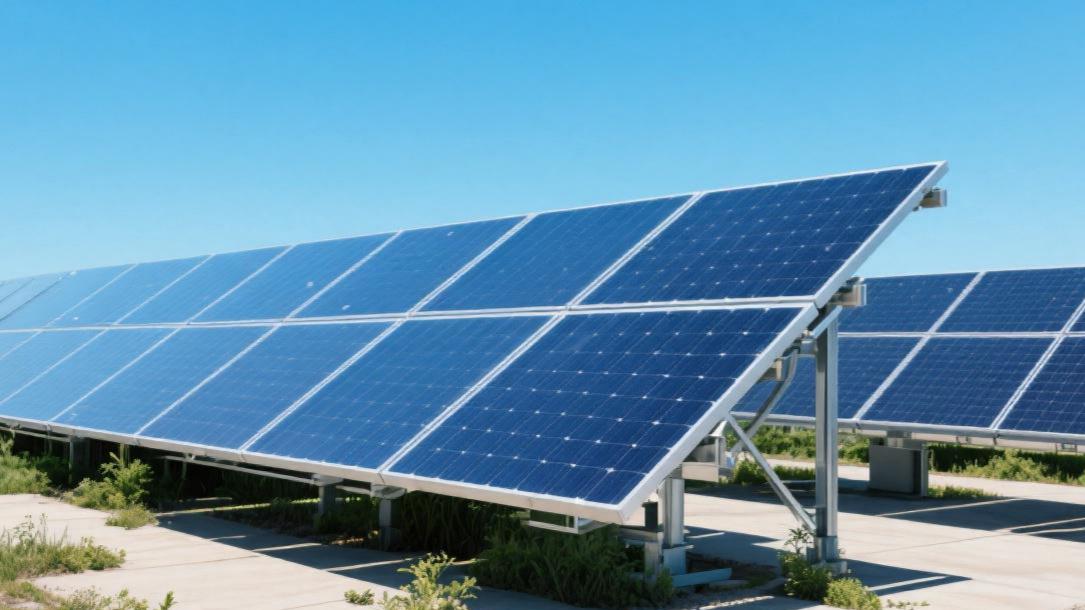
Efficiency
Can produce more electricity
The high efficiency of monocrystalline silicon batteries stems from the single crystal lattice arrangement manufactured by its crystal pulling process. The atomic spacing of this silicon wafer is fixed at 0.543 nanometers. When electrons pass through the 160 micron to 180 micron thick silicon wafer, the collision probability is extremely low, and the mobility is maintained at a high level. In contrast, polycrystalline silicon, due to the existence of a large number of grain boundaries inside, has a high electron recombination rate, leading to an internal resistance increase of about 15% to 20%.
The minority carrier lifetime of monocrystalline batteries can usually reach more than 1000 microseconds, while polycrystalline silicon is often less than 100 microseconds. This physical characteristic determines that the current mainstream monocrystalline batteries' conversion efficiency limit in the laboratory can touch 29.4%, while the commercial mass production level N-type TOPCon module efficiency has generally been maintained between 22.3% and 23.8%. For every 0.1% increase in conversion efficiency, under the standard light intensity of 1000 watts per square meter, each square meter of area can increase the actual electrical energy output by 1 watt.
Cutting a 182 mm or 210 mm whole cell into two halves, the working current will correspondingly decrease by 50%. According to Joule's law, the internal resistance loss can be reduced to one-fourth of the original. At the same time, using 16 or 18 round solder ribbons with a diameter of only 0.25 mm to replace the traditional 5 or 9 flat solder ribbons can reduce the shading area by about 2.5% and shorten the transmission distance of current on the fine grid lines. This precise structural optimization makes the fill factor (Fill Factor) of the module stable above 80.5% under the standard test environment of 25 degrees Celsius.
The table below compares the parameter performance of modules with different efficiency levels in actual installations:
Performance Indicators | Ordinary Monocrystalline (PERC) | High-efficiency Monocrystalline (TOPCon) | Top-tier Monocrystalline (HJT/BC) |
Cell conversion efficiency | 23.2% - 23.5% | 24.5% - 25.5% | 26.0% - 27.5% |
Module mass production efficiency | 21.3% - 21.6% | 22.5% - 22.9% | 23.2% - 24.0% |
Single piece power (54 version) | 400W - 415W | 430W - 445W | 450W - 460W |
Temperature coefficient (Pmax) | -0.34/°C | -0.30/°C | -0.26/°C |
Bifacial rate (Bifacial) | 70% ± 5% | 80% ± 5% | 85% ± 5% |
Assuming a 1 megawatt photovoltaic project, using 22.5% efficiency monocrystalline modules only needs a net area of about 4440 square meters, while using 19.5% efficiency modules needs about 5120 square meters. This 680 square meter area difference in bracket tracks will consume about 3.2 tons more aluminum alloy profiles, and the DC cable length will increase by about 850 meters, thereby leading to a voltage drop increase of 0.4% to 0.6% on the line.
In terms of lifecycle returns, because the land rental cost per watt, steel usage, and manual installation labor cost decrease as efficiency increases, although high-efficiency modules have a per-watt purchase price 0.05 to 0.1 yuan higher, the overall balance of system (BOS) cost per watt can instead be reduced by about 10%.
Current mainstream N-type monocrystalline technology, by adding a tunneling oxide layer and a doped polycrystalline silicon layer with a thickness of only 1.5 nanometers on the back of the silicon wafer, solves the initial light-induced degradation (LID) problem that easily occurs in traditional P-type modules. This technology lets the degradation rate of the module be strictly controlled within 1% in the first 1 year of operation.
In the statistics of sunlight data from actual photovoltaic power plants, because high-efficiency monocrystalline has a higher absorption rate for the spectrum between 400 nanometers and 1100 nanometers, its effective power generation duration in early morning and late evening low-light periods is about 20 minutes longer than ordinary modules. In regions with equal sunlight resources, each kilowatt of installed capacity can contribute about 0.2 units of electricity more per day.
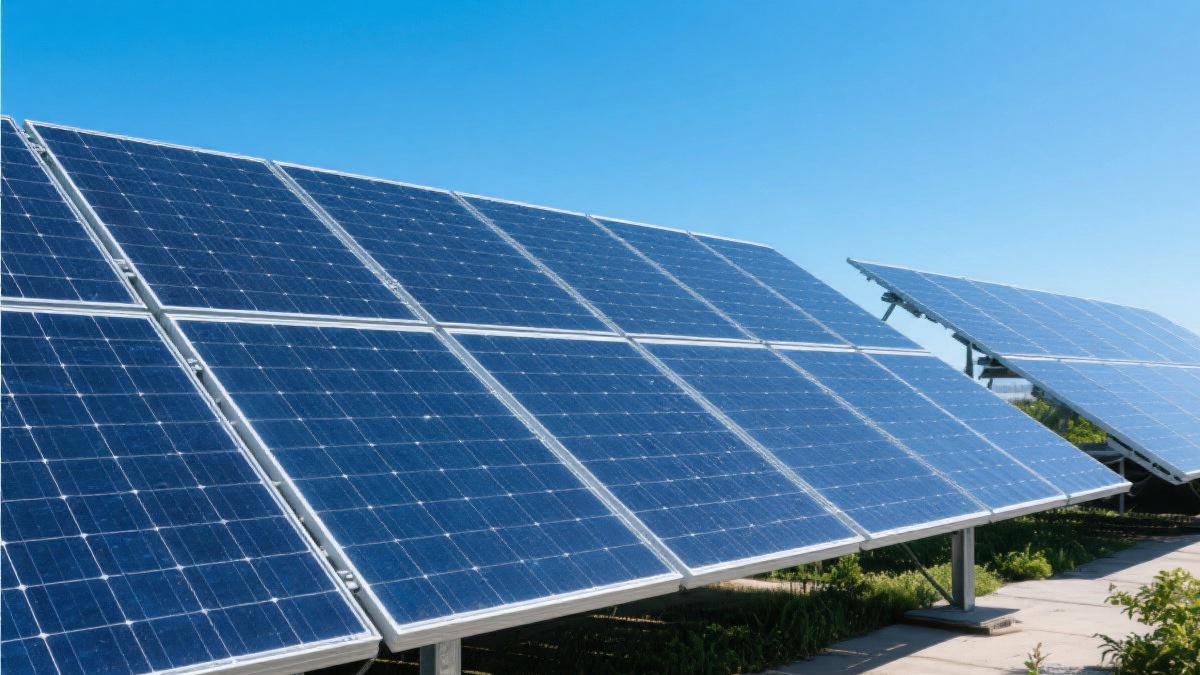
Lifespan
Used long enough
The long life of monocrystalline silicon modules mainly benefits from their uniform crystal structure. This structure makes the arrangement of atoms inside the silicon wafer very neat, and there are no disordered grain boundaries like in polycrystalline silicon. In the production of crystal pulling links, the purity of the silicon material is required to reach 11 nines, which is 99.999999999%. This extremely high purity ensures that the solar cell remains stable in the electrochemical reactions over the subsequent decades.
The thickness of monocrystalline silicon wafers is generally maintained at around 150 microns. After undergoing long-term outdoor exposure, rain, and extreme temperature cycles from -40 degrees Celsius to 85 degrees Celsius for as long as 25 years or even 30 years, the degradation speed of its physical performance is extremely slow. Statistical data shows that the failure probability of high-quality monocrystalline modules within the full lifecycle is lower than 0.01%. In ten thousand panels, there might be only one that has a quality problem affecting output.
Taking current mainstream N-type monocrystalline batteries as an example, the first-year power degradation can usually be controlled within 1.0%, and in the subsequent 29 years, the annual degradation rate is only about 0.4%.
When this panel works for its 30th year, which is a cumulative operation of about 262,800 hours, it can still maintain more than 87.4% of the initial nominal power. If it is early P-type monocrystalline technology, the remaining power in the 25th year can usually be maintained at around 84.8%. This long-term stable power output capability lets the Levelized Cost of Energy (LCOE) of the photovoltaic system be diluted to a very low level over a span of more than 20 years.
To guarantee such a long usage time, the encapsulation materials play a decisive protective role. The following are some specific parameters and designs of monocrystalline modules in terms of structural durability:
· Reinforced glass protection: The front generally adopts 3.2 mm thick ultra-white patterned tempered glass, the light transmittance exceeds 93.5%, able to resist direct impacts from ice balls with a diameter of 25 mm and a speed of 23 meters per second.
· Frame mechanical load: Adopting 30 mm or 35 mm thick anodized aluminum alloy frames, the surface oxide film thickness is above 15 microns, able to withstand a front static snow load of 5400 pascals and a back wind load of 2400 pascals.
· Sealing reliability: Using high cross-linking EVA or POE film for encapsulation, the peel strength requirement is greater than 60 Newtons per centimeter, ensuring water vapor cannot penetrate into the cell area within 25 years.
· Electrical connection stability: The protection level of the junction box is usually IP68, with 3 bypass diodes integrated inside, able to withstand a high system voltage of 1500 volts, and ensuring the circuit is protected by instantly cutting off the current when local shading generates hot spots.
The resistance of monocrystalline silicon wafers to light-induced degradation (LID) and potential induced degradation (PID) is also a manifestation of their longevity. In a standard laboratory environment, placing a monocrystalline module in a "Double 85" test box at 85 degrees Celsius and 85% relative humidity for 1000 hours continuously, its power loss is usually less than 3%.
In contrast, some thin-film materials or low-end encapsulation processes under the same test may have power loss exceeding 10%. In particular, the current N-type monocrystalline technology, because the silicon wafer does not contain boron, completely solves the light degradation problem caused by the boron-oxygen complex. This makes the module generate about 2% extra revenue in power generation during the first few thousand hours of operation compared to old technology.
If the installation budget for a system is 50,000 yuan, after recovering the principal through saved electricity bills in the 5th to 6th year, in the remaining 19 to 24 years, all electricity generated by the system is almost pure profit. Considering the probability of inflation and rising electricity prices, an asset that can serve stably for more than 300 months has very strong financial attributes. Even in coastal areas with high salt spray or tropical environments with high humidity, specially anti-corrosion treated monocrystalline modules can still maintain extremely high reliability.
Performance
In low-light environments where solar radiation intensity is only 200 watts per square meter, such as early morning, evening, or drizzly weather, monocrystalline silicon batteries can still maintain more than 95% of their rated conversion efficiency. This characteristic is determined by the uniqueness of its crystal structure, where electron movement between lattice points suffers extremely little scattering.
In contrast, ordinary modules' efficiency often appears to crash precipitously when the light intensity is below 400 watts per square meter, even falling below 80% of the rated value. Data monitoring shows that in higher latitude regions or rainy seasons, the average daily effective power generation time of monocrystalline modules can usually be 30 to 50 minutes longer than other types. When other panels still cannot reach the inverter's startup voltage threshold of 120 volts to 150 volts due to insufficient light, monocrystalline panels have already started supplying power to household appliances.
In the actual operation data of photovoltaic power plants, fluctuations in light intensity are the norm, and the 1000 watts per square meter standard light usually accounts for less than 15% of the year.
Although photovoltaic panels need sunlight, they are very afraid of heat. For ordinary cells, when the temperature rises by 1 degree Celsius, the output power will decrease by about 0.4% to 0.45%. While current high-quality monocrystalline batteries, especially modules using N-type technology, their temperature coefficient has been optimized to about minus 0.29%/°C.
When the roof surface temperature soars to 70 degrees Celsius under the scorching sun, the power loss of monocrystalline modules will be about 5% to 7% less than that of ordinary modules. Assuming a 500-watt panel, the actual output difference in a high-temperature environment can reach around 35 watts. This insensitivity to heat ensures that during the electricity peak of a summer afternoon, the power plant can still maintain operation in the high power range. Through precision thinning treatment of 182 mm large-sized silicon wafers, the heat dissipation efficiency of monocrystalline modules has also been improved, and the internal hot spot temperature is usually 3 to 5 degrees Celsius lower than ordinary products, further reducing the system risk caused by local overheating.
Monocrystalline silicon has a wider spectrum absorption range, especially in the long-wavelength infrared band. Sunlight contains not only visible light but also a large amount of infrared light; this part of energy accounts for about half of the total solar radiation energy. Monocrystalline silicon batteries, due to internal carrier mobility as high as 1450 square centimeters per volt-second, can capture near-infrared photons with wavelengths between 1000 nanometers and 1100 nanometers and convert them into electrical energy.
In dusty weather or environments with high air humidity, short-wavelength blue-violet light is easily scattered, while long-wavelength light has stronger penetration. Monocrystalline modules take advantage of this spectral advantage; on haze days when the air quality index AQI exceeds 150, they can still output about 20% of rated power by absorbing light in long-wave bands.
Statistical energy gain analysis shows that monocrystalline modules, due to their wide spectral response and low temperature coefficient, have an annual electricity generation per kilowatt of installed capacity about 3% to 5% higher than polycrystalline modules.
A module with a size of 2278 mm by 1134 mm is usually divided into two symmetric upper and lower parts. When the lower half of the module is blocked by the shadow of nearby buildings or falling leaves, the 3 integrated bypass diodes will act quickly, letting the upper half continue to output at 100% current, without causing the whole panel to directly stop working. This design reduces the power loss caused by shading from the original 100% directly to below 50%.
At the same time, 16 or more fine grid lines reduce the lateral transmission distance of electrons on the cell surface, controlling the ohmic loss of a single cell at an extremely low level, ensuring that in the process of current flowing to the junction box, the energy loss proportion due to internal resistance heating is lower than 2%.
For monocrystalline modules that support bifacial power generation, their back can also contribute 10% to 25% extra electricity. This bifacial rate can usually reach a high level of 80% to 85%. If the monocrystalline module is installed on a cement roof with good reflection or a surface coated with a white waterproof coating, the scattered light from the back illuminates the back of the cell, which can increase the comprehensive output power of the entire panel from the original 550 watts to more than 600 watts.
In actual calculation, this bifacial gain, in environments with high ground reflectivity, can shorten the investment recovery period of the power plant by about 0.5 years. The high transparency and consistency of monocrystalline silicon wafers make the photons captured on the back similarly capable of being efficiently converted into current without generating too many impurity recombination losses.