What Are Modular Solar Panels | Flexibility, Installation, Scalability
Modular solar panels are a type of detachable and flexible solar power generation system. Each solar panel can be independently installed, making it convenient for expansion. It can be configured according to needs, suitable for home, commercial, and industrial applications. For example, a 300-watt solar panel can be combined according to installation space to provide customized power generation solutions.
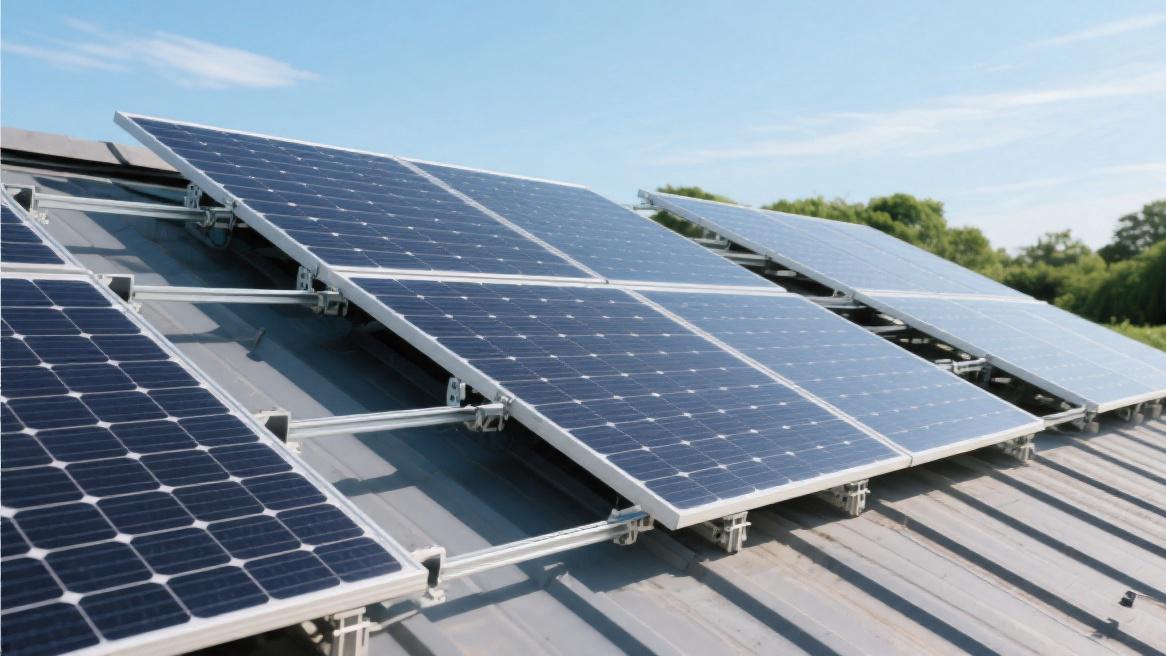
Flexibility
Bending has no pressure
In practical applications, this physical characteristic directly solves the power generation puzzle of irregular surfaces. Taking the common B-type or C-type RVs on the market as an example, the roof is usually covered with exhaust fans, antennas, and outdoor air conditioning units, and the remaining available area is often fragmented and curved. Traditional rigid panels require additional welding of a 15-centimeter-high bracket to level them, which increases driving wind resistance by about 10% and raises fuel consumption.
Modular flexible panels can be directly attached to the roof, fixed using 3M VHB industrial-grade adhesive tape on the surface; at a high speed of 120 kilometers per hour, the vertical pulling force they bear is only 150 Newtons per square meter, completely within the safe redundancy range. For yachts or camping tents with arc-shaped roofs, this lightweight and bendable characteristic makes energy acquisition no longer limited to flat ground.
Even with shadows, they can generate
Traditional solar systems, once a corner is blocked by tree shade or a chimney, the current of the entire series circuit will instantly drop by 70% or even more. Modular panels solve this problem by embedding more bypass diodes (Bypass Diodes) inside. In a 100-watt modular panel, the cell cells are usually divided into 2 to 3 independent sub-areas. When 15% of the area is covered by shadows, the diode will automatically conduct and skip the affected area, allowing the entire panel to still maintain 65% to 80% of the power output, rather than completely "going on strike."
According to statistics, the balconies of urban high-rise buildings experience irregular shadow blocking 3 to 5 times a day on average (from clothes racks, neighbors' air conditioner positions, or guardrail blocking). Modular systems are usually paired with micro-inverters or controllers with multi-channel MPPT (Maximum Power Point Tracking) functions, and their tracking efficiency is as high as 99.5%. Even if you install 4 panels at different angles of the balcony—1 facing due south, 2 facing southeast, 1 hanging vertically outside the guardrail—the system can independently optimize the output voltage of each panel (usually between 18V and 22V), ensuring the total power generation is increased by more than 25% compared to traditional systems without independent optimization functions.
Tear off then can go
For hundreds of millions of renters around the world, spending $5,000 to drill holes in a landlord's roof to install a fixed system is unrealistic. Modular panels provide "asset mobility." The back of these panels usually has 4 to 8 brass eyelets with a diameter of 10 mm reserved, and users can use nylon cable ties with a rated pulling force of 50 kg to fix the panels to balcony anti-theft windows. The entire installation process does not involve drilling, and one person can complete it in only 10 minutes.
If it is a panel attached to an RV or a simple roof using self-adhesive, just use a heat gun adjusted to 60 degrees Celsius to heat it slightly, and the panel can be completely removed without damaging the original paint surface. According to second-hand residual value statistics, for brand modular panels after 2 years of use, their resale price on second-hand platforms can still maintain 60% to 70% of the original price, while those traditional panels that are already fixed on the roof and cannot be removed have almost zero residual value.
Even narrow gaps can be stuffed
The essence of modular design lies in the diversity of sizes. The mainstream specifications on the market include long strip panels with a length of 1050 mm and a width of 540 mm, as well as square panels of 500 mm square. For those narrow balconies or windowsills with a width of less than 1 meter, this size flexibility allows users to arrange panels like a jigsaw puzzle according to the actually measured physical space.
Suppose you have a narrow terrace 1.2 meters wide and 2.5 meters long. You can choose to arrange 2 pieces of 200-watt panels horizontally, or stack 4 pieces of 100-watt panels vertically. Since the thickness of a single panel is less than a coin, they can even be placed in the interlayer of double-layer glass or hung as sunshade curtains.
In the sun-drenched summer, this arrangement method can generate electricity while also blocking about 60% of infrared heat from entering the room, thereby reducing the power load of indoor air conditioning by about 15%. One 100-watt modular panel in an area with an average sunshine duration of 4.5 hours can produce 0.45 kWh of electricity per day, enough to support a 60-watt electric fan running continuously for 7 hours, or let a 150-watt laptop work for 3 hours.
Hanging then can use
Before the appearance of modular systems, the bracket cost and labor cost of photovoltaic installation often accounted for 40% of the total budget. Because modular panels are extremely light (about 2.5 kg per square meter), they no longer require expensive aluminum alloy rails and carbon steel bases. In many temporary scenarios, such as outdoor photography, emergency communication, or work shed electricity, users can directly lay the panels on the grass, hang them on tree branches, or lay them flat under the car windshield to start charging.
A mobile system composed of four 100-watt panels has a folded volume usually only 50 cm wide, 40 cm high, and less than 10 cm thick, which can be easily stuffed into the trunk of a private car. In extreme environments from minus 20 degrees Celsius to high temperatures of 85 degrees Celsius, the mechanical strength decay rate of ETFE material is less than 5%, ensuring reliability in different latitude regions.
For remote areas without power grid coverage, buying 2 pieces of 200-watt modular panels plus 1 energy storage device of 1000 watt-hours, the total budget can be controlled at around $800, yet it can solve 90% of basic electricity needs in outdoor environments; this low-cost, high-flexibility deployment method is incomparable to traditional photovoltaic solutions.
Installation
Hand placement is enough
In the traditional solar installation process, it usually requires 3 to 5 professional construction personnel using heavy-duty electric drills to drill deep holes with a diameter of over 12 mm on the roof, and embedding expansion bolts to fix aluminum alloy brackets weighing more than 50 kg. This operation for ordinary homeowners not only carries the risk of damaging the house's waterproof layer but also requires paying labor costs ranging from $120 to $200 per hour.
Modular solar panels have completely changed this heavy construction mode; the weight of a single 100-watt panel is controlled between 2.1 kg and 3.8 kg, which is only equivalent to the weight of two large-capacity colas. This lightweight design allows one non-professional person to complete basic deployment within 20 minutes without any power tools.
When installing, users only need to prepare several industrial nylon cable ties with extremely strong weather resistance, whose single tensile strength can usually reach 50 kg. When facing scenarios such as apartment balconies, fences, or temporary tents, physical binding can be done through the 10 mm diameter brass eyelets that come with the panel. This non-intrusive installation method allows the structural integrity rate of walls or railings to remain at 100% when the equipment is removed 15 years later.
Installation Indicator Comparison | Traditional Fixed System | Modular System |
Single module weight | 18 - 25 kg | 2.1 - 4 kg |
Required installation persons | 2 - 4 persons | 1 person |
Typical installation time | 1 - 2 days | 15 - 30 minutes |
Bracket system cost | 500 - 1500 USD | 10 - 50 USD |
Wall damage after disassembly | Serious (needs hole patching) | No damage |
Relocation reuse rate | Extremely low (high disassembly difficulty) | 100% |
Plug in and connect
Every panel has MC4 positive and negative wiring with a standard length of 0.9 meters to 1.2 meters reserved on the back, its wire specification is usually 12 AWG (American Wire Gauge), capable of safely carrying continuous currents up to 30 amperes.
For ordinary users, the wiring process does not require wire strippers or multimeters, only needs to connect the male head and female head, hearing a clear "click" sound represents that the sealing ring has been completely locked. The protection level of this interface reaches IP67, even if soaked in 1 meter deep water for 30 minutes, the insulation resistance of the internal wires can still maintain above 500 megohms, completely eliminating the hidden danger of leakage on rainy days.
When users need to increase the power generation, due to the modular design, expansion can be easily done through series or parallel cables. For example, connecting two pieces of 18-volt, 100-watt panels in series, the total voltage of the system will increase to 36 volts, while the total current remains around 5.5 amperes. This low-voltage DC transmission greatly improves safety, because voltages below 60 volts are usually considered human safety voltages.
According to laboratory test data, after 1000 times of plugging and unplugging this quick connector, the growth rate of its contact resistance is less than 0.1 milliohm, ensuring that during the 20-year usage cycle, the heat loss generated by connector aging is minimized.
No need to drill holes
For surfaces that cannot be drilled, such as RVs or flat roofs, modular panels provide industrial-grade bonding solutions. This type of system is often used with 3M VHB (Ultra High Bonding) acrylic foam tape with a thickness of only 1.1 mm.
In a standard environment of 25 degrees Celsius, this tape can reach more than 90% of the final strength after 24 hours of sticking, and its peel strength can reach 25 pounds per inch. This installation method achieves seamless fitting between the panel and the object surface, and the aerodynamic advantages it brings are significant: when the vehicle travels at a speed of 110 kilometers per hour, because there is no gap between the panel and the roof, the generated lift is almost zero, which not only reduces driving noise by about 5% but also avoids the additional wind resistance generated by traditional elevated installation.
In terms of structural stability, modular panels can withstand a frontal wind pressure of 2400 Pa and a static snow load of 5400 Pa. Even in extreme winters with snow thickness reaching 30 cm, or in storm weather with wind speeds as high as 30 meters per second, panels supported only by industrial adhesive and lightweight brackets will not undergo physical deformation. For those users living in old wooden buildings, this installation logic without drilling avoids the risk of rainwater seeping into wooden beams and columns causing rot, and the later maintenance frequency is reduced by about 60% compared to traditional systems.
Plug provides electricity
A micro-inverter with a power of 600 watts has a volume of only 250 mm by 160 mm, usually hung directly on the inside of the balcony or below the panel. Its output end is equipped with an AC connection line with a length of 3 to 5 meters, at the end is a standard household 3-pin plug. You only need to insert this plug into any idle socket in your home, and the electricity generated by the sun will be automatically synchronized through the grid, prioritized for use by the refrigerator, router, or electric fan in the home.
The system's built-in anti-islanding effect protection device will automatically cut off output within 1.5 seconds after a power grid outage to ensure the safety of maintenance personnel. From a cost perspective, this installation logic saves the expensive central inverter and complex distribution box modification costs.
For a small modular system with a total capacity of 400 watts, its purchasing budget for the whole set of equipment is usually around $600; since manual installation fees are completely eliminated, its return on investment (ROI) period is shortened by about 18 months compared to traditional systems, and hardware costs can be recovered through saved electricity bills in an average of only 3 to 4 years.
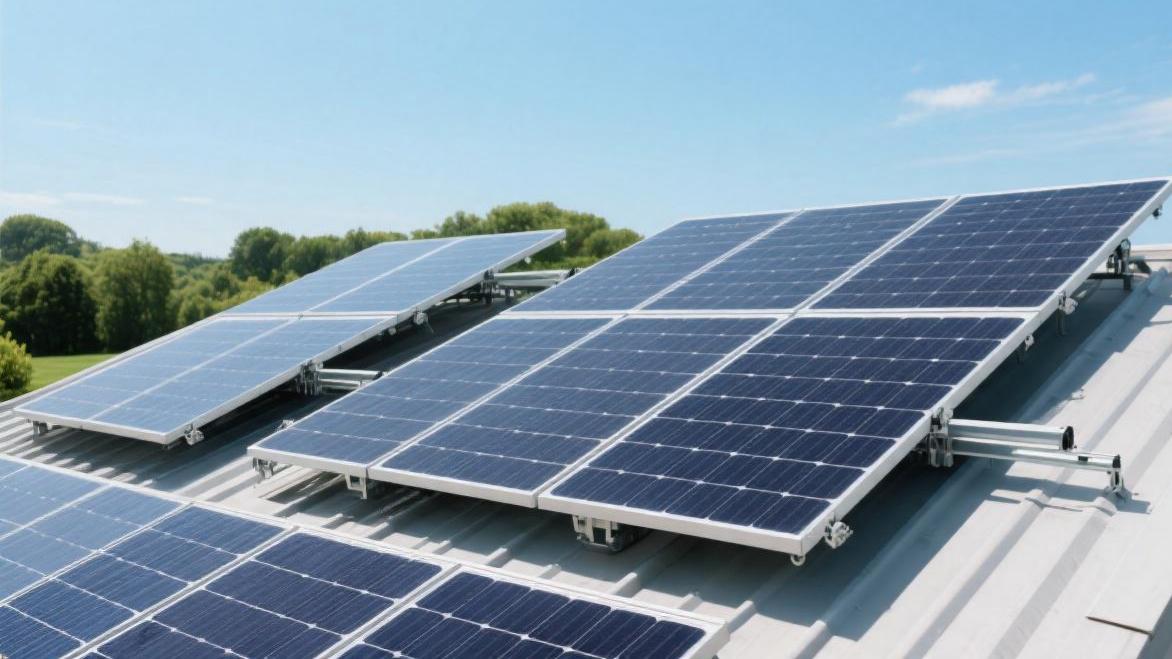
Scalability
Buy two pieces first to try
For most beginners, the first budget can be controlled between $250 and $400, which usually includes two 100-watt monocrystalline silicon flexible panels and a basic power converter. The risk of this initial attempt is extremely low because you do not need to pay a bill of $8,000 at once like a traditional rooftop photovoltaic system.
In the first month of test operation, these panels with a total power of 200 watts can produce about 0.9 kWh of electricity within 4.5 hours of sufficient sunshine. If calculated at a price of $0.15 per kWh, this micro-system can help you save about $0.13 per day; although the number looks small, it can completely cover the power consumption of household routers, optical modems, and two long-term open surveillance cameras, the annual power consumption of these appliances being about 330 kWh.
The data collection of this "trial and error" stage is very important; it allows you to measure the real sunshine efficiency of the balcony or yard before investing more funds. In practical operation, the size of a 100-watt modular panel is usually 1050 mm by 540 mm, and the weight is only 2.1 kg; you can move its position at any time according to the changes in the sunshine angle. According to 2025 market statistics, about 65% of modular users will choose to buy additional equipment in the 6th month after use, because this buy-as-needed model increases capital utilization by more than 45%, avoiding hardware idling caused by overcapacity or shadow blocking from early design errors.
Typical entry configuration parameters: total power 200W, daily power generation 0.8 - 1.0 kWh, equipment unit price about $1.3/Watt, system total weight about 4.5 kg, estimated payback period 3.8 years (based on US average household electricity price).
Add power as you please
When your electricity demand increases from simple mobile phone charging to supporting a 50-liter small freezer (power about 60 watts, 24-hour power consumption about 0.6 kWh), the expansion logic of modular systems shows its superiority. You don't need to replace the entire circuit; you only need to buy extra panels.
Currently, mainstream micro-inverters on the market usually reserve multiple sets of series or parallel interfaces, and the maximum DC input current supported is generally between 12.5 amperes and 15 amperes. If you originally have a 200-watt panel and now want to add two more, just buy two MC4 three-way connection lines (unit price about $15), and physical paralleling can be completed within 30 seconds.
Even if the brand of the panels you buy later is inconsistent with the first batch, as long as the error of its working voltage (Vmp) is within 10%, the overall power loss of the system usually does not exceed 3%. This flexibility allows users to gradually replace old modules as cell conversion efficiency increases from the current 22% to 24% or higher over the next 3 to 5 years, without having to dismantle the entire support system.
For renters or RV players, this "progressive" expansion allows you to accurately increase power reserves in units of 100 watts according to vehicle load or the remaining 1.5 square meters of space on the apartment balcony, ensuring every penny is transformed into actual current.
Inverter is very saving
Unlike traditional systems that must be equipped with a central inverter starting at 3000 watts and costing over $800, modular inverters' power is usually divided into several levels: 300 watts, 600 watts, 800 watts, and 1200 watts. An entry-level 300-watt inverter unit price is only about $120; it allows you to connect a maximum of two 150-watt panels. When you decide to upgrade the system to 600 watts, you don't need to throw away the old equipment; you only need to buy another 300-watt unit or jump directly to a 600-watt model. Current modular designs support multiple inverters directly paralleling at the AC end through standard plugs.
This distributed expansion scheme reduces the system failure rate by more than 80%. In traditional series systems, if one of the panels has a drop in current due to tree shade, the power generation of the entire string of 10 panels will shrink to the level of that one piece. But in modular systems, each group of inverters is independently performing maximum power point tracking (MPPT), with a sampling frequency usually as high as 5 times per second.
Even if the panel on your right is covered 50% by drying clothes, the panel on the left that is fully exposed to light can still maintain 100% output efficiency. This electrical independence allows users to invest funds in stages: invest $500 in the first year for basic electricity, invest $800 in the second year to add storage batteries, and invest $400 in the third year to expand panels; every step of investment can generate immediate feedback in electricity bill reduction that month.
For every additional 400 W of panels, annual power generation increases by about 580 - 650 kWh. In high-price areas where electricity is $0.25/kWh, the annual extra income from a single expansion is about $150; this part of the hardware investment can usually be recovered within 28 months.
Payback is calculated fast
Traditional photovoltaic projects often take 7 to 10 years to recover costs through electricity bills because the early stage includes heavy installation labor fees, approval fees, and expensive bracket fees. While the per-watt cost of modular systems is slightly higher than bulk panels, because average manual installation expenses of $1500 are saved, more than 90% of every dollar of initial investment is spent on the power generation equipment itself.
For a typical home system expanding from 200 watts to 800 watts, its total budget is usually distributed over three years, and the annual cash flow pressure is less than $500; this low-intensity financial expenditure is very suitable for middle-income families.
When you have a panel scale of 800 watts, the 3.6 kWh produced daily has exceeded instant daytime consumption (such as refrigerators and standby appliances); at this time, connecting a lithium iron phosphate cell pack with a capacity of 2000 watt-hours (2 kWh) (unit price about $800) becomes very meaningful.
The cycle life of this type of cell is usually above 3500 times; in the next 10 years, the cost of electricity you use every night will be locked at an extremely low level. According to calculations, the levelized cost of energy (LCOE) for this scale of modular system over a 10-year cycle is about $0.06 per kWh, which is only one-third of the retail electricity price of the public grid. This long-term, predictable financial saving is exactly the core driving force for the modular solar market's annual growth rates staying above 25%.
Space utilization is sufficient
Traditional 400-watt large panels are nearly 1.8 meters long and more than 1 meter wide, which is uninstallable in the vast majority of urban residences. The modular solution allows you to use irregular spaces, such as the 0.8-meter width under windowsills or the 0.5-meter narrow gap on the side of air conditioner outdoor units.
For example, hanging two 100-watt flexible panels on the railing of a south-facing balcony and pasting a 150-watt lightweight panel on the vertical wall surface, this multi-angle layout can effectively extend the effective daily power generation time by about 1.2 hours. Because when the sun's elevation angle is low in the early morning and evening, vertically hung panels have a better angle of incidence than traditional panels laid flat on the roof, and the power output can increase by 15% to 20%.