What Misconceptions Do People Have About Solar Panels | Efficiency, Maintenance
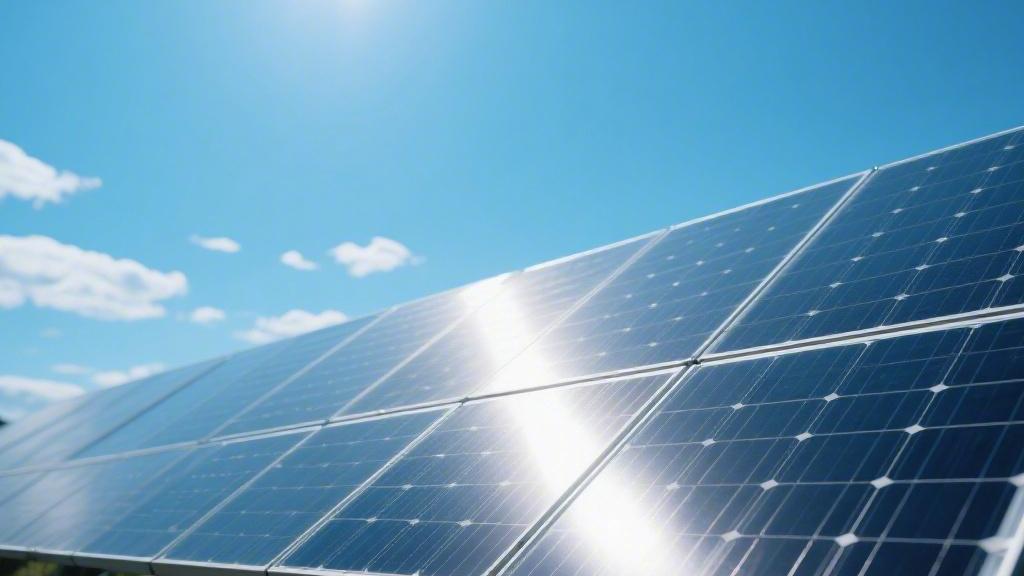
Many people mistakenly think solar panel efficiency is extremely low. Actually, commercial monocrystalline silicon module efficiency has reached above 22%.
Another misconception is that its late-stage needs no maintenance, actually dust accumulation will cause power generation to drop about 10%, suggest every quarter using a soft cloth matching with clean water to wipe.
In addition, cloudy days although they can generate electricity, only produce about 25% of the power on sunny days, not completely stopping work.
Efficiency
By 2026, the global residential rooftop photovoltaic system average installed capacity has already lifted from ten years ago to 5 kilowatts to current 8.5 kilowatts. Single piece panel rated power generally is between 400 Watts to 450 Watts, while laboratory environment highest conversion efficiency has broken through 24%. In actual application, the efficiency issue users care about most often is covered by various parameter manuals and marketing rhetoric, leading to cognitive bias toward system's true performance under extreme weather, high temperature environments, and long-term operation. A set of systems costing 18,000 USD, its total power generation within a 25-year life cycle is constrained by multiple technical parameters like physical degradation, inverter conversion rate and spectral response.
Cloudy days also have electricity
Many people think without direct sunlight, solar panel current output will completely interrupt. Actually, monocrystalline silicon cells have an induction toward both visible light and near-infrared light with wavelengths between 400 nanometers and 1100 nanometers.
l Even on cloudy and rainy days with a thick cloud layer blocking the environment and brightness only 20,000 Lux, a set of 8 kilowatts system can still maintain 500 Watts to 1200 Watts instantaneous power output.
l According to actual measurements in high latitude regions like Seattle, although its annual average sunshine hours are only 3.5 hours, through capturing scattered light occupying over 50% of the total radiation amount, system annual power generation still can reach above 75% of design peak.
l Current PERC cell technology relative efficiency loss under low irradiance (200 W/m²) environment has been controlled within 3%, at 6 AM morning and 6 PM evening, panels are still working.
Afraid of being too hot
This is a counter-intuitive fact: the higher the air temperature, the lower the panel power generation efficiency instead. Panel working temperature under Standard Test Conditions (STC) is set at 25 degrees Celsius, while roof surface actual temperature in summer often will soar to 65 to 70 degrees Celsius.
l The "Power temperature coefficient" labeled on panel specification sheets usually is between -0.3%/℃ to -0.35%/℃.
l When the panel's actual temperature is 40 degrees Celsius higher than the standard value, because the silicon material's internal carrier mobility is disturbed by thermal motion, its conversion efficiency will directly fall away 12% to 14%.
l A piece of 400-watt panel, under 38 degrees Celsius high temperature at noon, its actual maximum output power might shrink to around 340 Watts.
l To hedge this thermal loss, installers will reserve 5 to 10 centimeters air convection gap on the panel back, through natural ventilation, reducing working temperature by 5 to 10 degrees Celsius, thereby winning back about 3% efficiency loss.
Look at cell cells
The market is experiencing large-scale switching from P-type cells to N-type cells (especially TOPCon technology), this directly decides whether the panels you buy are previous generation products or mainstream level products.
l The mainstream P-type PERC cell mass production efficiency upper limit is about 21.5%, while the new N-type TOPCon cell mass production average efficiency has stabilized between 22.8% and 23.5%.
l Under the same roof area (about 45 square meters), the system total power using N-type cells can be 400 Watts to 600 Watts more than old models.
l More important data is "First-year degradation": N-type cell first-year power loss is only 1%, while traditional P-type cell then is between 2% to 2.5%.
l At the end of the 25-year warranty period, N-type modules usually can guarantee outputting above 87.4% of initial power, 3 to 5 percentage points higher than traditional modules, this produces about 8,000 degrees of extra electricity benefit in the system's full life cycle.
Where is the loss
The process of direct current (DC) produced by solar energy becoming alternating current (AC) usable for home appliances, there exists non-negligible link loss, this is called "System Derate Factor".
l String inverter conversion efficiency is usually between 97% to 98.5%, 1.5% energy dissipates in the form of thermal energy during DC-AC conversion process.
l Cable line loss on the DC side and AC side usually occupies 1% to 2%, this depends on cable wire diameter (for example, using 10 AWG or 12 AWG specification) as well as transmission distance.
l To let the inverter stay in the full load high efficiency zone during most sunshine time, installers usually set the DC/AC ratio (capacity ratio) between 1.2 and 1.3.
l If a system's AC end rated power is 6 kilowatts, installing 8 kilowatts DC panels is reasonable, although in summer noon might appear brief "Clipping" phenomenon, but can lift system utilization rate during morning and evening weak light periods.
Orientation is important
In the Northern Hemisphere, facing true South (azimuth 180 degrees) is the ideal state for obtaining maximum annual power generation, but actually, as long as the deviation is within 30 degrees, efficiency loss can almost be ignored.
l If panels face true East or true West, compared to true South orientation, their annual total power generation will decrease about 15% to 20%.
l Roof tilt (Tilt) influence on efficiency is equally significant: in regions around latitude 30 degrees, when installation tilt is set at 25 to 30 degrees, panels can vertically receive noon light, obtaining 100% rated radiation intensity.
l If the roof is too flat (tilt less than 10 degrees), in addition to decreasing about 3% power generation efficiency, it will also lead to rainwater accumulation and dust pile-up. The efficiency loss caused by this "self-cleaning failure" might reach above 5% within three months.
l Current estimation models show, every increase 1 degree tilt error, in extremely low or extremely high latitude regions, annual benefit fluctuation range is around 0.5%.
How long is the life
Solar panels do not suddenly break on the day 25 years expire, but a slow power downward process. The current physical structure and encapsulation materials are sufficient to support panels running for over 30 years.
l Light-induced degradation (LID) is a physical phenomenon happening within the first few hours after panel installation, which will cause efficiency to instantly fall 0.5% to 1.5%. This has been somewhat estimated in factory testing.
l Glass backsheet light transmittance every year because of ultraviolet radiation will drop about 0.1%, this is caused by yellowing of encapsulation film (EVA or POE).
l Even running for 30th year, first-tier brand panels can still maintain around 80% to 83% of initial efficiency.
l If your system is equipped with microinverters with power monitoring, you can real-time observe every single panel's efficiency difference. Statistics show, in operation as long as 25 years, the probability of a single panel appearing faulty needing replacement is lower than 0.05%, the true maintenance focus is actually the inverter with a service life of about 12 to 15 years.
Maintenance
A residential solar system with an installed capacity of 8.5 kilowatts, within 25-year expected life, its maintenance logic is completely different from fuel vehicles, it is more like a static precision equipment without moving parts. Although hardware itself claims maintenance-free, according to Solar Energy Industries Association (SEIA) statistics, due to neglecting monitoring or environmental interference, annually about 3% to 7% of potential power generation is wasted away because of subtle hardware loss or shading. For systems with average cost between 18,000 USD and 22,000 USD, a reasonable maintenance budget should be controlled within 5% of annual power generation benefit. This is mainly used to cover inverter depreciation and extremely few manual inspection fees.
No need to always wash
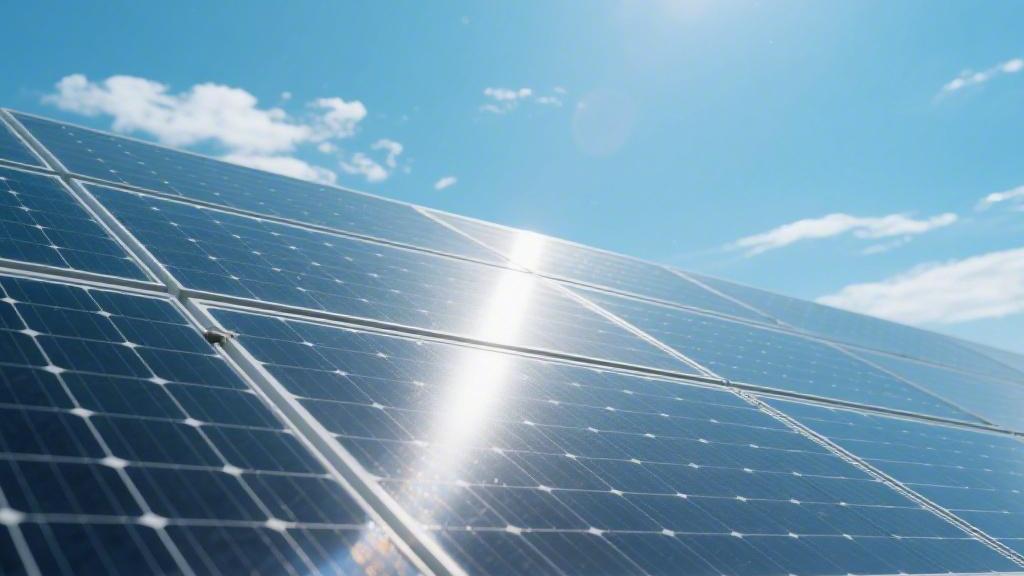
Many people mistakenly think they must like wiping windows weekly wash panels, but in regions with annual rainfall exceeding 800 mm, natural precipitation can solve over 95% of cleaning problems.
Experimental data shows, in the condition of not performing manual cleaning for as long as 6 months, dust accumulation on the panel surface will only lead to power generation efficiency drop 1.5% to 4.5%, while one professional door-to-door cleaning service fee is usually between 150 USD and 300 USD.
If for winning back this less than 5% electricity bill loss but paying 200 USD cleaning fee, from Return on Investment (ROI) perspective it is not cost-effective. For systems with installation tilt greater than 15 degrees, dust will automatically flow toward edges under rainwater flushing, unless you are located in arid zones with annual rainfall lower than 300 mm, or the house is located less than 500 meters from the construction site, otherwise every 12 to 18 months using a low-pressure water gun to flush once by yourself is enough. When flushing, avoid the high temperature period from 12 noon to 3 PM afternoon, because at this time, the panel surface temperature can reach above 65 degrees Celsius. The huge temperature difference produced by cold water sudden flushing will lead to tempered glass with a thickness of only 3.2 mm appearing micro-cracks invisible to the naked eye. These cracks, after 3 to 5 years, will evolve into obvious power drops.
Snow pressure won't break
For homeowners living in high latitude regions, snow accumulation is the most common winter worry, but current monocrystalline silicon modules in structural design are sufficient to bear extreme static loads.
Standard panels passed 5400 Pascal (Pa) positive pressure test, per square meter can support about 550 kg of snow accumulation, this equals 7 to 8 adults standing on the panel.
Since panels generally maintain a 25-degree to 40-degree tilt angle when installed, when air temperature rises above 0 degrees Celsius, the weak heat produced by panels absorbing light energy will make the snow accumulation bottom layer liquefy, forming a layer of water film with a thickness less than 1 mm. Under gravity effect, snow accumulation will slide down in sheets at a speed of 10 to 30 centimeters per second. Statistics indicate, even in regions with annual snowfall exceeding 120 cm, annual power generation loss caused by snow blocking also only maintains at around 3%. Do not ever use hard metal shovels to clear snow accumulation, because that will destroy the anti-reflective coating (ARC) on the glass surface. This coating thickness is only around 100 nanometers. Once scratched, the panel's capture capability toward oblique light will drop above 2%.
Change converter
Solar panels themselves can be used for 30 years, but the "brain" in the system, namely the inverter (Inverter), is the module with the shortest life, and also the largest maintenance expenditure.
The inverter design life is usually between 12 and 15 years, within 25-year system cycle, you must reserve a budget of about 1500 USD to 2500 USD for mid-term replacement.
Currently, about 40% of new systems in the market choose microinverters, although the single micro-inverter warranty period is as long as 25 years, but it is installed under panels, facing higher environmental temperature pressure. If one of them occurs, the manual cost of replacement might be as high as 300 to 500 USD, because construction personnel need to dismantle brackets and move panels weighing 20 kg. Monitoring data shows, if inverter conversion efficiency drops from 98% to below 95%, usually internal electrolytic capacitors have already aged and dried up. Timely replacement not only can find back 3% electricity loss, but also can avoid the risk of fire caused by DC arc, leakage protection device action current is usually set within 30 milliamperes (mA).
Does the roof leak
When installing panels, you need to drill into the roof about 3.5 inches deep Lag Bolts, this makes many people worry about house structure damage or water leakage.
Formal craftsmanship will require every drilling point to install an extra set of aluminum or galvanized steel flashing with a thickness of 1.2 mm, and matching use at least 2 mm thick industrial grade high viscosity silicone sealant.
This double-layer protection mechanism reduces roof leakage probability to below 0.2%. Actually, because panels physically block 100% of direct ultraviolet rays and most rainwater, Asphalt Shingles aging speed in areas covered by panels will slow down. Actual measurements show that the roof surface temperature under the panels is more than 20 degrees Celsius lower than the direct sun area, which can extend the roof material service life by 5 to 8 years. Every 3 to 5 years, you can check the roof internally through an infrared thermal imager. If finding local temperature abnormally rising, usually it is overheating caused by Bypass Diode aging near the Junction Box, rather than roof leakage.
Stop bird nests
In suburban or wood-lush regions, squirrels and birds are the most hidden saboteurs of photovoltaic systems. They like to build nests in the about 10 cm gap between panels and roof.
Strong acidity corrosion of bird droppings toward glass surface will cause irreversible permanent light spots, while squirrel biting AC cables leading to shutdown accidents occupies above 15% of system non-natural loss.
Installing a set of stainless steel material Bird Guards or Critter Guards fee is about between 300 to 600 USD. This expenditure can effectively prevent the "Hot Spot Effect" triggered by fallen leaves pile-up. When the local area is completely blocked by bird nests, cell resistance in that area will surge, and instantaneous produced heat might make local temperature soar to above 100 degrees Celsius, directly burning out encapsulation materials. By adding these physical barriers, you can shorten system unplanned downtime caused by environmental interference to less than 4 hours annually.
Mobile phone watch electricity
Modern photovoltaic system maintenance has already been highly digitized. You don't have to climb onto the roof. Through a mobile phone APP, you can master every module's real-time working status.
A set of monitoring software with power optimization annually might charge 15 to 25 USD cloud subscription fee, but it can provide power generation statistics with accuracy reaching 0.1 kWh and instant fault diagnosis push.
If the system finds one day's power generation curve deviation with local weather data exceeds 20%, it will automatically send a warning email. This kind of data-based preventive maintenance can identify problems such as fuse blowing, circuit breaker tripping, or local shadow issues caused by trees growing tall. According to statistics, homeowners equipped with refined monitoring, their system average operation efficiency is about 6% higher than systems running blindly. In second-hand house transactions, a complete data record for 5 consecutive years or more can lift about 3.5% to 4.1% premium for whole house valuation, because it proves this asset worth twenty thousand USD has been in a healthy operation state.