How Can You Identify Quality Solar Panels Before Buying | Efficiency Rating, Warranty Terms, Certifications
To start, aim for a conversion efficiency above 20%–22% to ensure strong energy yield within a limited installation area.
Next, prioritize warranty terms that include both a 25-year product warranty and a 25-year performance warranty, with a commitment that power degradation after 25 years will not exceed 15%.
Finally, verify recognized certifications. Look for brands that comply with IEC 61215 or are widely recognized as Tier 1 manufacturers.
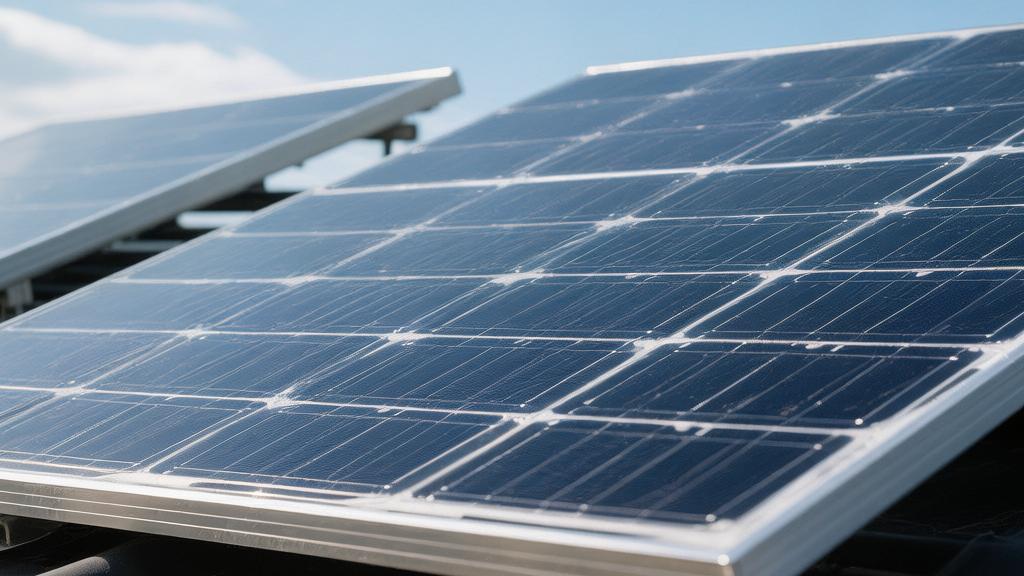
Efficiency Rating
Check the Cell Type
By 2025, the conversion efficiency of mass-produced N-type TOPCon silicon cells has reached a range of 24.5% to 25.2%.
By comparison, traditional P-type PERC cells have peaked at 22.8% to 23.3%.
For an N-type module with an area of 1.95 m², the front-side rated output under Standard Test Conditions can consistently reach 430 W to 440 W.
A P-type module of the same 1.95 m² size typically delivers only 400 W to 410 W.
Within the first 30 days of sunlight exposure, P-type cells can experience light-induced degradation (LID) of 1.5% to 2.0%.
Because N-type silicon is doped with phosphorus, its first-year LID is kept below 1.0%.
Over a full 25-year service life, N-type modules typically degrade at an annual rate of 0.40%, while P-type modules average 0.45% to 0.55% per year.
Under weak-light conditions of 200 W/m², N-type modules deliver a relative generation efficiency that is 3.2% higher than P-type modules.
Calculate Temperature Loss
Once the ambient temperature rises above the Standard Test Condition threshold of 25°C, every 1°C increase in module surface temperature causes a fixed percentage drop in maximum output power (Pmax).
Modules built with HJT technology generally maintain a power temperature coefficient in the low range of -0.24%/°C to -0.26%/°C.
Conventional PERC modules, which still account for more than 60% of the market, typically fall in the -0.34%/C to -0.38%/C range.
When the rooftop operating temperature reaches 65°C in summer, the actual output of a PERC module can drop by 13.6% to 15.2%.
Under the same 65°C thermal load, HJT modules limit power loss to 9.6% to 10.4%.
That 4% to 5% performance gap, spread across as many as 120 hot days per year, can reduce annual production from a 10 kW system by roughly 300 kWh to 450 kWh.
When tested at a 45°C NOCT rating, voltage fluctuation in a high-efficiency module should remain below a standard deviation of 0.8%.
Calculate Reflective Gain
In bifacial dual-glass modules, the rear glass is typically set at 2.0 mm thick, allowing the module to capture scattered light reflected from the ground.
On bright white snow with an albedo of 80%, rear-side diffuse light can add 15% to 25% extra energy generation.
On a dark asphalt roof with reflectivity of only 15%, rear-side gain usually drops to just 3% to 5%.
The rear-side cell conversion capability is expressed as the bifaciality factor. For N-type bifacial modules, measured bifaciality currently reaches 80% to 85%.
If the front-side rated output of a module is 500 W, a rear-side gain of 15% raises its combined effective output to 575 W.
This bifacial light-harvesting advantage can reduce long-term system LCOE by 2.5% to 4.3%.
In fixed-tilt systems with module clearance of 1.2 m to 1.5 m above ground, reflected irradiance reaching the rear side typically averages 100 W to 150 W per square meter.
Warranty Terms
Calculate the Product Warranty Period
Among mainstream Tier 1 manufacturers, product workmanship and materials coverage has generally expanded from the traditional 10 years to between 15 and 25 years.
This warranty typically covers the structural integrity of the aluminum frame, the compressive strength of the glass panel, and the waterproof reliability of the junction box.
Within the first 60 months after shipment, the probability of spontaneous glass breakage caused by manufacturing defects is usually limited to a very low tolerance range of 0.01% to 0.03%.
If the rear IP68-rated junction box leaks after a continuous 24-hour immersion test at 1 meter underwater, causing the internal bypass diode to fail under a working current of 15 A, the manufacturer should provide a replacement module of the same specification at no cost.
High-quality brands also extend material coverage to the aging resistance of the junction-box potting compound, ensuring a delamination rate below 1.0% through thermal cycling from -40°C to +85°C.
When a replacement 400 W module is supplied, its open-circuit voltage (Voc) should not differ from the original array by more than ±0.5 V, helping avoid mismatch loss above 2% in a string system.
Check the Degradation Guarantee
A linear performance warranty clearly defines the minimum power output a module must retain over a 25- to 30-year service life.
For modules using N-type silicon technology, the combined first-year loss from LID and LeTID is generally required to remain below 1.0% during the first full calendar year of grid-connected operation.
From year 2 through year 30, annual linear degradation is typically capped at 0.40%.
By the end of year 30, actual output can still remain at 87.4% to 89.4% of the module's original nameplate rating.
Older-generation P-type PERC modules usually lose about 2.0% in the first year, followed by annual degradation of 0.45% to 0.55%.
By year 25, the remaining rated output of a P-type module may fall to 80.0% to 84.8%.
For an 8 kW system, a first-year degradation gap of just 1% can translate into roughly 1,200 kWh to 1,800 kWh of cumulative lost generation over the following 24 years, equal to about $350 to $550 in lost electricity value.
Break Down the Labor Cost
Many 25-year warranty contracts only promise to replace the faulty module itself and do not cover the labor cost of removal and reinstallation.
In the U.S. market, a single service call involving two licensed electricians typically starts with a truck roll fee of $150 to $250.
Roof work is commonly billed at $85 to $150 per hour.
Removing a damaged module weighing 22 kg and reinstalling a new one usually takes about 1.5 to 2.5 hours.
That means the labor cost for replacing just one panel can reach $300 to $600, which may exceed the purchase price of a new 400 W module, typically around $200 to $250.
A warranty that includes labor coverage may provide a fixed reimbursement of $200 to $250 per claim during the first 10 years or even the full 25 years, offsetting roughly 70% to 85% of the repair labor bill.
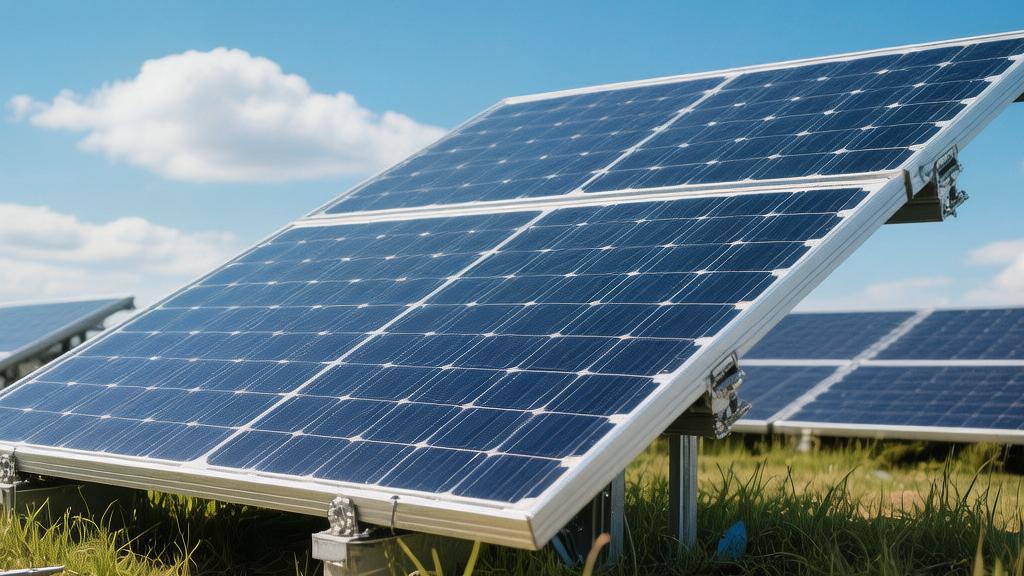
Certifications
Check the Fire Rating
A quality solar panel should come with certification to UL 1703 or the updated UL 61730, proving that its electrical insulation system can safely withstand a maximum system voltage of 1000 V or 1500 V over the long term.
In leakage-current testing, when subjected to a surge pulse as high as 6000 V, the insulation resistance must remain above the safety threshold of 400 MΩ, ensuring the module does not suffer reverse breakdown during lightning strikes or grid surges.
The internal bypass diodes must also pass fuse-protection testing at rated levels of 20 A or 30 A. If more than 25% of a cell is shaded by debris such as fallen leaves and the local temperature climbs to 120°C, the diode must interrupt the circuit within 0.5 seconds to prevent hotspot ignition.
A panel certified as Type 1 or Type 2 under UL 61730 fire classification means that under continuous gas-flame exposure at 760°C, flame spread across the panel surface is restricted to within 1.82 meters (6 feet), and during a 10-minute Class A fire-spread test, no burning debris may fall through the roofing substrate below, typically 12 mm to 15 mm thick.
Check the Mechanical Load Rating
The most direct way to assess frame and glass strength is to verify that the module has passed the IEC 61,215 mechanical load test.
In static compression testing for high-snowfall regions, the front side of the module must withstand a total load of 550 kg/m² for 24 hours, simulating an extreme snow pressure of 5400 Pa.
After testing, the maximum center deflection of 3.2 mm tempered glass must not exceed 1.5% of the panel's short-edge length, and after unloading, rebound recovery within 1 hour must exceed 99.8%.
For installations in hurricane-prone coastal areas, the rear side of the panel must resist not only 2400 Pa of static wind uplift, but also cyclic wind-fatigue testing.
After 1,000 consecutive cycles of positive and negative dynamic wind pressure, each reaching 1000 Pa, the expansion of microcrack area under high-magnification inspection must remain within a variance limit of 0.2%. In EL imaging, the luminance discontinuity must stay below 3.5%, and output power loss must remain within a strict tolerance of 5.0%.
Watch the Aging Tests
Only modules certified under IEC 62804 for resistance to PID can better preserve generation revenue over a 25-year payback horizon.
Standard PID testing places the panel in an environmental chamber held at 85°C and 85% relative humidity, while continuously applying a negative bias voltage of 1500 V.
Conventional products often undergo only 96 hours of baseline testing, while Tier 1 manufacturers may provide extreme-duration reports for 1,000 hours or even 3,000 hours.
For UV durability, the panel must withstand cumulative UVA and UVB exposure of 15 kWh/m² to 60 kWh/m².
After completing 1000 hours of combined high-temperature and high-humidity testing at 85°C and 85% RH, a qualified module must maintain an encapsulant peel strength above 40 N/cm, and the absolute loss in photoelectric output must be kept within a strict threshold of 2.5%.