8 Advantages of Solar Energy for Residential Use
The first is significant savings on electricity bills, as systems typically cut monthly electricity expenses for households by 50% to 80%;
Second is increasing property value; authoritative data shows that homes equipped with solar power can increase their average resale price by approximately 4.1%.
Finally, there is environmental carbon reduction; a standard 5 kilowatt (kW) system can reduce carbon emissions by about 5 tons per year.
Modern solar panels have a lifespan of over 25 years, making them a reliable investment that provides both practical economic returns and supports sustainable development.
Beautify Space
Selecting the "Black Board"
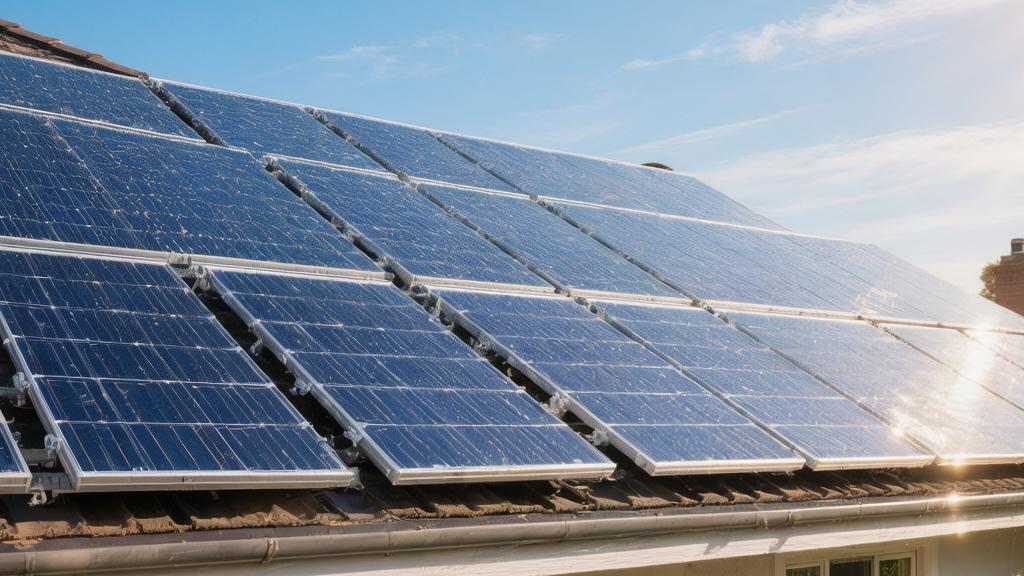
Conventional silver-framed solar modules, which hold a 75% market share, create a strong visual contrast on light-colored roofs. Choosing all-black monocrystalline silicon panels with a frame thickness of 30 mm and an anodized process can reduce the visual abruptness of the entire roof by 80%.
The dimensions of all-black modules are maintained at a standard 1700 mm length and 1,004 mm width, with a single unit weighing about 19.5 kg. The 3.2 mm anti-reflective tempered glass covering the panel surface absorbs 95% or more of the visible light spectrum.
At a nominal output power of 200 watts per square meter, the micro-busbar design inside the all-black modules, with a width of only 0.05 mm, eliminates the silver grid lines that account for 15% of traditional panels.
The procurement budget for a single all-black module ranges between 220 and 280 USD, with a premium over conventional modules falling within the 10% to 15% range.
A 6 kilowatt array consisting of 18 modules on a roof with a 20-degree tilt forms a seamless pure black plane covering nearly 31 square meters.
By using low-profile black hooks and rail systems with a height of 100 mm, the gap between the modules and the roof tiles is compressed to within 10 cm, resulting in a 25% reduction in the wind load coefficient.
· Temperature Parameters: In a high-temperature summer roof environment of 50°C, black boards with a temperature coefficient controlled at -0.28%/°C maintain an output rate higher than 85% of their rated power.
· Joint Tolerance: The stitching gap between panels is controlled within 20 mm, ensuring that horizontal and vertical lines meet with 100% parallelism.
· Warranty Period: A 12-year product craftsmanship warranty and a 25-year linear power attenuation rate of no more than 15% guarantee a color difference threshold of less than △E 2.0 under conditions of over 2000 hours of sunshine.
Hiding the Wires
An 8 kilowatt system includes transmission cables totaling over 150 meters in length for both DC and AC. If exposed on exterior walls, they would create 10 to 15 pipe shadows with a diameter of about 20 mm.
Attic wiring craftsmanship requires the installation team to pre-install PVC conduits with a diameter of no less than 25 mm beneath roofs where temperatures reach 45°C, transferring 90% of visible wires into wall cavities.
The 240-volt AC cables output from the inverter are encased in galvanized steel pipes with a tensile strength of 400 MPa, secured with clips every 80 cm to fit into the visual blind spots behind side drainage pipes.
The energy storage cell box dimensions are optimized to a thin wall-mounted specification of 1,100 mm high, 600 mm wide, and 150 mm thick, occupying less than 0.7 square meters of wall projection area.
The main control circuit breaker and smart meter carrying a current of 40 amperes are integrated into a distribution box 500 mm long and 300 mm wide. The RGB value overlap between the box shell spray paint and the original wall color reaches over 98%.
· Connector Wrapping: The MC4 connectors on the back of the panels are wrapped in 1.2-meter-long cross-linked polyethylene insulation, bundled according to the standard of a bending radius no less than 6 times the wire diameter to avoid cable arcs with a sag of less than 5 cm.
· Three-phase Power Configuration: The cross-sectional area of the wire duct is increased by 30% to accommodate 6 square mm pure copper wires, with wire resistivity controlled at the lower limit of 0.0172 ohm·mm²/m.
· Concealed Piping Cost Share: The procurement budget for concealed piping materials increases by 3 percentage points within a total cost of 15,000 USD, reaching a material increase of 500 USD.
Switching to Solar Tiles
If a house is over 20 years old and the asphalt tile wear rate reaches over 70%, installing building-integrated photovoltaic (BIPV) solar tiles with a thickness of only 6 mm can achieve 100% visual flatness of the roof space.
The average construction cost for solar tiles is between 25 and 30 USD per square foot, with single tile specifications of 1,140 mm and 430 mm, matching 80% of high-end concrete tiles on the market.
Tiles encapsulated in reinforced tempered glass can withstand a vertical impact from 40 mm diameter hail at a speed of 30 meters per second, reaching a physical surface hardness of Mohs scale 7.
On a sloped roof with an inclination of 30 degrees, every 100 square meters of effective coverage provides approximately 10 kilowatts of peak power generation capacity.
The gap error at the overlap of adjacent tiles is less than 2 mm, and the internal wiring with a series voltage as high as 600 volts is completely embedded in a 30 mm thick flame-retardant heat insulation pad at the bottom of the tiles.
· Wind Resistance Rating: In airflow tests with wind speeds of 130 miles per hour, the peak anti-lift force of the overlapping lock design exceeds 1500 Newtons per square meter.
· Replacement Cost Calculation: The budget for replacing the entire solar roof of a residence with a total indoor area of 2,500 square feet is 45,000 to 50,000 USD. After deducting the 12,000 USD cost for conventional roof renovation, the solar premium is approximately 35,000 USD.
· Reflection Control: The matte surface treatment with zero metallic reflection characteristics reduces solar diffuse reflectance to less than 4%, while the profile maintains the original 180-degree design slope from a horizontal perspective.
Return on Investment
Calculating the Payback Period
For the installation of a residential photovoltaic system with a rated power of 8 kilowatts, the initial budget for materials and labor typically fluctuates within the range of 18,000 to 22,000 USD.
Based on the US average retail electricity price of 0.16 USD per kWh, the system can produce approximately 10,500 kWh of AC electricity in its first year.
Dividing the annual electricity savings of 1,680 USD by a net investment of 15,000 USD yields a static return on investment of approximately 11.2%.
Within the 25-year physical lifecycle of the system, the first 7.5 to 8.5 years constitute the financial cycle for recovering the principal.
During the remaining 16.5 to 17.5 years, the equipment continues to operate with a module attenuation rate of 0.5% per year, cumulatively generating up to 28,000 USD in cost-free net profit.
If the utility company's electricity price maintains an average annual compound growth rate of 3.5%, the theoretical 7.5-year payback period mentioned above will be further shortened to around 6.8 years.
Each 400-watt monocrystalline silicon panel can contribute an absolute production value of 1.8 kWh per day in latitudes with 4.5 hours of daily sunshine.
In a matrix of 20 panels operating over 12 months, the solar inverter maintains a conversion accuracy of 97.5%, controlling DC power loss at an extremely low ratio of 2.5%.
How Much Tax Credit
The Solar Investment Tax Credit (ITC) enacted by the federal government allows homeowners to deduct 30% of the total system cost from their income tax when filing their annual tax returns.
Taking an installation invoice totaling 20,000 USD as an example, the IRS will grant an absolute credit amount of 6,000 USD.
If the homeowner's federal personal income tax for the year is only 4,000 USD, the remaining 2,000 USD credit will be carried forward to the next fiscal year at 100%, with a carry-forward validity of up to 5 years.
In addition to the federal 30% incentive, some state governments provide an extra 10% of the system cost or a state-level tax reduction subsidy capped at 1,000 USD.
For a high-end 10 kilowatt system priced at 25,000 USD, after stacking the 30% federal credit and the 1,000 USD state subsidy, the actual capital spent drops sharply to 16,500 USD.
Exemptions from state sales tax of approximately 5% to 8% can save an additional 750 to 1,200 USD in hidden costs during the 15,000 USD hardware procurement phase.
Property tax exemption clauses ensure that the portion of property value increase resulting from solar panel installation is completely exempt from the average annual 1.2% incremental property tax for a 15-year cycle.
How Much Electricity is Saved
A detached residence with an area of 2,000 square feet can see peak monthly electricity consumption soar to 1,500 kWh in summer when running two air conditioners with a cooling capacity of 24,000 BTU.
In regions like California, where electricity prices are as high as 0.22 USD per kWh, the single-month electricity bill will exceed the 330 USD mark.
A solar array on the roof with a total conversion efficiency of 21% steadily outputs over 6 kWh of energy per hour during high-irradiation periods from 10 AM to 3 PM daily.
Daytime power generation can cover about 70% of the total daily household load, preventing about 230 USD in cash outflow for the homeowner each month.
A lithium cell system with an energy storage capacity of 13.5 kWh discharges at night, further covering about 20% of the remaining 30% evening electricity demand.
For 25 days each month, the bill figure approaches 0 USD, requiring only the payment of a local grid connection service fee of 10 to 15 USD per month.
Over a 25-year timeframe, total electricity expenditure plummets from an expected 95,000 USD to approximately 18,000 USD, a cumulative reduction rate as high as 81%.
Environmental Impact
How Much Carbon is Blocked
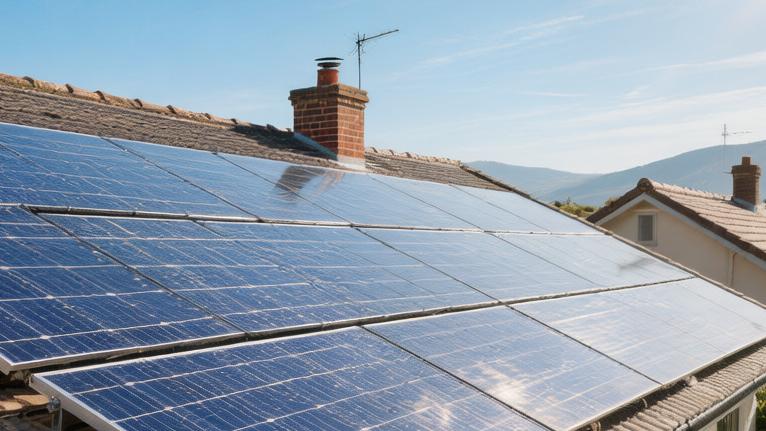
Installing a residential photovoltaic system with a nominal power of 8 kilowatts in an area with 1,500 annual sunshine hours can reduce CO2 emissions by approximately 12,500 pounds.
Traditional coal-fired power plants release 2,200 pounds of greenhouse gases and 13 pounds of sulfur dioxide for every 1 megawatt-hour of electricity produced.
A roof array composed of 20 monocrystalline silicon panels can prevent a cumulative 375,000 pounds of carbon isotopes from entering the troposphere below 10 km altitude during its full-load 30-year lifecycle.
Calculated by the carbon sequestration rate of trees, the emission reduction effect of a 10 kilowatt solar system running for 12 months is equivalent to planting and maintaining 160 broadleaf trees aged 10 years on 2 acres of land.
Feedback from air quality monitoring stations indicates that within a 50-mile radius of a microgrid with 10,000 solar households, the average concentration of PM2.5 suspended particles decreases by 14.5%.
According to the "Emissions & Generation Resource Integrated Database" released by the Environmental Protection Agency (EPA) in 2023, every 1,000 kWh of utility power provided by natural gas generator sets produces a carbon footprint of up to 850 pounds, while solar panels compress this value to less than 40 pounds of amortized manufacturing emissions.
Saving Tens of Thousands of Tons of Water
Cooling towers for thermal and nuclear power plants evaporate or consume 15,000 to 22,000 liters of fresh water for every 1,000 kWh of AC power delivered to the distribution grid.
Photovoltaic modules with a rated conversion efficiency of 21.5% utilize the photoelectric effect to excite internal electron transitions; during the production of the same 1,000 kWh of electricity, the absolute value of water consumption in the physical cooling stage is 0 liters.
Over the 25-year lifespan of a 6 kilowatt system, the cumulative 180,000 kWh of clean electricity produced can preserve up to 3,600 cubic meters of drinking water reserves for local reservoirs.
Quantified manufacturing data shows that producing a standard solar panel weighing 20 kg with dimensions of 1.7 square meters consumes only 180 liters of industrial water during the silicon wafer cutting and cleaning stages.
Once this panel operates continuously at an output rate of 1.5 kWh per day for 120 days, the volume of cooling water saved during its power generation process can 100% offset the water consumption figure from its production.
The Department of Energy's "National Water-Energy Nexus Analysis Report" quantifies that popularizing 50 megawatts of distributed rooftop solar capacity can reduce the decline of local groundwater levels by 2.3 cm during drought months when summer temperatures exceed 35°C.
Waste Recycling Rate
A single 400-watt solar module consists of 76% high-transparency tempered glass, 10% polymer backsheet, 8% aluminum alloy frame, and 5% silicon solar cells.
When the equipment reaches its retirement threshold in the 30th year—where power attenuation reaches 80% of the factory value—professional recycling lines use a 180°C pyrolysis process to strip the ethylene-vinyl acetate (EVA) film.
Crushers break the glass panels into particles ranging from 2 mm to 5 mm in diameter, enabling 95% of the glass material to re-enter a 1500°C furnace for secondary casting.
The aluminum frame, weighing about 1.5 kg, is remelted at a melting point of 660°C; its metal purity is maintained at over 99%, with the metal recycling loss rate controlled within an extremely low 1.5%.
The 0.1 kg of high-purity polysilicon extracted is etched with a solution of nitric acid and hydrofluoric acid mixed in a 1:3 ratio, restoring it to semiconductor-grade raw material standards with a purity of 99.999%.
The decommissioning prediction model established by the International Renewable Energy Agency (IRENA) shows that by increasing the comprehensive material recovery rate of photovoltaic modules to over 85%, the global solar industry chain will obtain 78 million tons of recycled raw materials by 2050, with a market value exceeding 15 billion USD.