How Much Does a Monocrystalline Solar Panel Cost to Purchase in 2026
In 2026, the unit price for purchasing high-efficiency monocrystalline silicon panels is approximately 0.25 to 0.38 USD per watt.
Taking the mainstream 500W household panel as an example, the single-unit purchase cost is usually between 125 to 190 USD.
With the popularization of N-type TOPCon and HJT technologies, panel conversion efficiency has generally exceeded 23%, significantly reducing the unit cost of power generation.
When purchasing, it is recommended that users prioritize Tier 1 brands offering power guarantees of 25 years or more and verify the annual degradation rate to ensure long-term power output and return on investment.
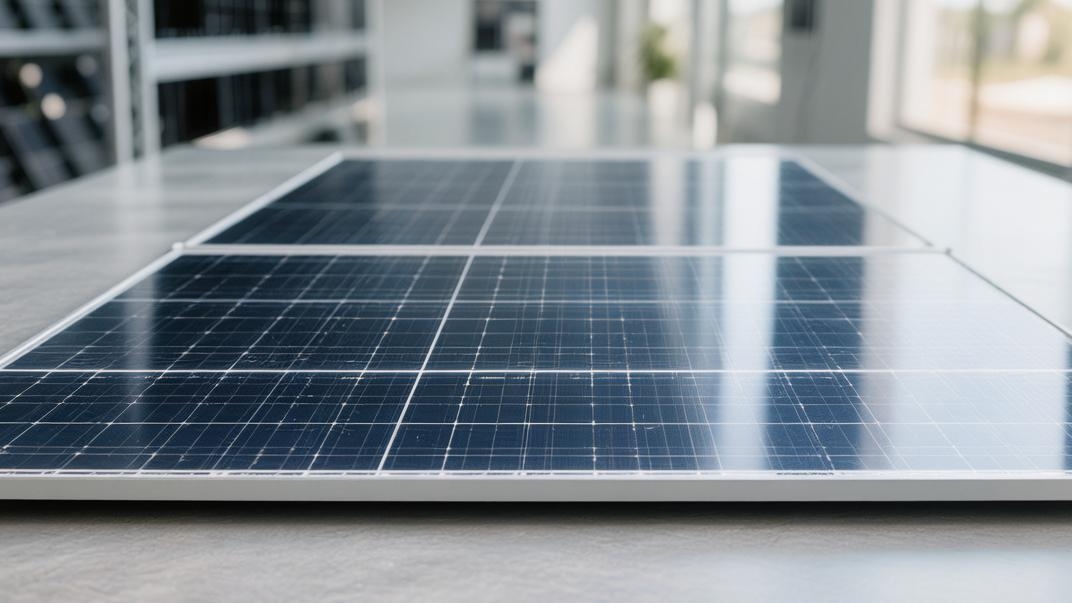
Estimated Purchase Costs
Hardware Unit Price
When purchasing monocrystalline silicon solar panels in 2026, you will mainly face the overall premium of N-type TOPCon technology.
Current standard modules on the market from 450W to 580W have retail unit prices ranging from 0.12 USD to 0.15 USD per watt.
If you are purchasing the latest generation of HJT (Heterojunction) panels with a conversion efficiency of 24.8%, the cost per watt will rise to around 0.18 USD.
This means that for a standard 8 kW household rooftop system, your expenditure on solar panel hardware alone is roughly between 960 USD and 1,440 USD.
Due to more than 30% overcapacity of global polysilicon between 2024 and 2025, material costs in 2026 have dropped to historic lows.
For every 550W monocrystalline panel, the silver paste consumption is 15% lower than two years ago, and the glass thickness has generally decreased from 3.2 mm to a 2.0 mm double-glass structure.
This not only reduces the single-panel weight by 12% but also lowers the logistics cost share of the total price from 8% to about 5%.
If you are making a one-time commercial purchase of more than 20 kW, suppliers usually offer a volume discount of 5% to 7%, bringing the price per watt down to 0.11 USD.
Accessory Expenses
In 2026, as Rapid Shutdown (RSD) regulations became mandatory in most regions, the market share of microinverters increased to 45%.
For a 10 kW system with microinverters, the purchase cost is approximately 2,200 USD to 2,800 USD, or 0.25 USD per watt.
In contrast, traditional string inverters are cheaper at only 0.09 USD to 0.12 USD per watt (totaling about 1,100 USD), but you need to pay an additional 45 USD per panel for DC optimizers.
Prices for miscellaneous items like mounting brackets and cables are also quite transparent in 2026.
The purchase cost for aluminum alloy brackets is about 0.06 USD per watt, while 4mm² dedicated solar DC cable is priced at around 0.85 USD per meter.
For an average-sized installation project, the total budget for these mechanical fixings and electrical accessories is usually set between 800 USD and 1,200 USD.
Considering a copper price volatility of 4.5% in 2026, locking in material contracts 30 days in advance can help you avoid a temporary premium risk of about 3%.
Cell Costs
In 2026, more than 65% of monocrystalline silicon system buyers will simultaneously purchase Lithium Iron Phosphate (LFP) energy storage batteries.
The current 10kWh household energy storage cell packs have factory prices pushed down to 280 USD to 350 USD per kWh, with the total unit purchase cost around 3,200 USD.
The charge-discharge cycle life of these batteries generally reaches 8,000 times, which means if you perform one full charge-discharge cycle per day, the cell's service life can easily exceed 20 years, with the amortized storage cost per kWh being only about 0.04 USD.
Highly integrated "all-in-one" solutions are very popular in 2026.
A hybrid system integrating the inverter, distribution box, and 15kWh cell has a total purchase cost of approximately 6,500 USD.
Compared to separate purchases, this integrated solution can save about 15% on wiring material costs, and because of the unified BMS (Cell Management System) protocol, the overall energy conversion efficiency is 1.5% to 2.2% higher than that of loosely assembled products.
If you are pursuing an energy self-sufficiency rate of more than 95%, this additional budget of over 6,000 USD is unavoidable.
Labor Costs
Labor costs account for a large portion of the total bill in 2026, usually reaching 55% to 60% of total project expenditures.
The hourly wage for certified electricians in developed regions has risen to 95 USD to 130 USD.
Completing the installation of a standard rooftop system takes about 24 to 32 total man-hours, meaning direct labor costs you pay are between 2,500 USD and 4,000 USD.
If your roof pitch exceeds 35 degrees or requires special fall protection brackets, the contractor will charge an extra 15% high-altitude work fee.
In 2026, a professional design plan including CAD drawings, load calculation reports, and electrical single-line diagrams has a market price between 450 USD and 700 USD.
Although many processes are now digitized, grid connection inspection and bidirectional meter replacement fees charged by local power companies remain stable at around 300 USD.
If you plan to DIY to save money, although you can save 3,000 USD in labor, any efficiency loss of 5% due to non-standard installation will result in a loss of up to 8,500 USD in electricity bills over the 25-year lifespan.
Miscellaneous Expenses
Before the final settlement, you will encounter about 5% to 8% in unforeseen miscellaneous fees.
This includes module breakage insurance during transportation (usually 0.5% of the goods' value), building permit fees charged by local governments (ranging from 200 to 500 USD), and the carbon footprint tracking label fee prevalent in 2026 (about 2 USD per panel).
In a project with a total investment of 20,000 USD, these small expenses together will consume about 1,200 USD of your budget.
Additionally, consider the extended warranty costs in 2026.
The standard 25-year power warranty provided by the manufacturer is free, but if you want to extend the warranty for wear-and-tear items like inverters from 10 to 25 years, you usually need to pay 10% of the original hardware price as a premium.
For a 10 kW system, this expenditure is about 200 USD.
Considering that inverters have a 40% failure probability between Year 12 and Year 15, this small budget can help you avoid a single replacement/repair cost of about 1,500 USD in the long run.
Total System Purchase Estimates
How Much for the Full Set
Purchasing a complete monocrystalline silicon photovoltaic system in 2026 is no longer a simple pile of parts, but an integrated project including high-efficiency modules, smart inverters, energy feedback systems, and structural brackets.
Currently, the wholesale price for a 10 kW grid-tied system without storage batteries on the market is roughly between 11,000 USD and 14,000 USD.
If you choose to add a 15 kWh Lithium Iron Phosphate cell storage unit, the total purchase budget will immediately climb to 18,500 USD to 23,000 USD.
System Scale | Module Quantity (550 W) | Inverter Power | Estimated Total Price (Including Labor) | Unit Price Per Watt |
5 kW Economy Type | 9 - 10 units | 5kW | $7,500 - $9,500 | $1.5 - $1.9 |
10 kW Standard Type | 18 - 20 units | 10kW | $14,000 - $18,000 | $1.4 - $1.8 |
15kW Advanced Type | 27 - 30 units | 15kW | $20,000 - $25,000 | $1.3 - $1.7 |
In the 2026 budget list, the ratio of hardware to software has been adjusted to 4:6. This means for every 100 USD you pay, only 40 USD goes toward visible panels and iron brackets, while the remaining 60 USD flows into system design software, grid protocol processing, and construction services with 25-year qualification guarantees.
Entry-Level Configuration
For users with limited budgets or rooftop areas under 40 square meters, the 5 kW system is the mainstream entry choice in 2026.
This configuration usually uses 10 pieces of 500W N-type monocrystalline silicon modules; each panel's dimensions are approximately 1.95m x 1.13m, occupying an area of about 22 square meters.
The DC-side rated output of this system is 5,000 W. Considering the 98.2% conversion efficiency of inverters in 2026, the actual AC-side peak power can reach about 4.9 kW.
5kW System Detailed Data:
· Module Purchase: $1,250 (Approx. $0.25/W retail)
· Single-phase String Inverter: $950 (Equipped with 2 MPPT trackers)
· Aluminum Alloy Bracket System: $450 (Wind speed resistance 60 m/s)
· Electrical Accessories (Cables + Switches): $300 (Incl. 50m of 6mm² DC cable)
· Average Annual Power Generation: 6,500 - 7,800 kWh (Depending on sunlight intensity 1,300-1,560 hours/year)
Although the unit purchase cost per watt for a 5 kW system is 15% higher than that of larger systems, it has a lower investment threshold, with an average static payback period of about 5.5 years in 2026.
If your daily electricity consumption is between 15 and 25 kWh, this investment of around 9,000 USD can solve more than 85% of your annual electricity needs.
Mainstream Model Expenditure
The 10 kW system is the "sweet spot" for household purchases in 2026 because it perfectly matches a 10 kWh to 15 kWh storage system, achieving 24-hour power self-sufficiency.
This system requires 18 to 20 pieces of 550W high-efficiency monocrystalline modules, with a total installation area of about 45 square meters.
Hybrid inverters in 2026 are 40% more expensive than pure grid-tied inverters, but they integrate cell management systems, saving about 600 USD in additional equipment installation costs.
10 kW + 15 kWh Storage Bill Details:
· Photovoltaic Modules (TOPCon): $2,600 (18 units x $144.5/unit)
· Hybrid Inverter: $2,800 (Supports 10 kW charge/discharge power)
· 15kWh Storage Cell: $4,800 (LFP, 10,000 cycle life)
· Construction and Filing Fees: $6,500 (3 people / 3 days standard period)
· 25-Year Expected Benefit: Saving approx. $52,000 in electricity (Based on $0.20/kWh starting rate)
Since the fixed costs (such as design fees and grid application fees) of a 10 kW system are diluted by more power generation, its comprehensive cost per watt is 0.2 USD lower than that of a 5 kW system.
For families with electric vehicles (cell capacity usually 60-100 kWh), the 40-55 kWh generated daily by a 10 kW system can not only cover household appliances but also add about 150 km of range to the EV every day.
Luxury Model Bill
When the system scale exceeds 20 kW into small commercial or large villa territory, the purchase logic changes significantly.
In 2026, systems over 20 kW generally use ultra-high-power modules of 600 W+, with a single panel area close to 2.6 square meters.
Hardware purchases for such projects can usually get wholesale prices, which are 10% to 12% cheaper than household retail prices.
Due to the use of three-phase power access, the price per unit power of the inverter also drops from 0.2 USD to 0.14 USD per watt.
25kW Commercial Grade System Budget Reference:
· Total Hardware: $14,500 (Excluding cell, $0.58 per watt)
· Large-scale Bracket System: $1,800 (Steel-aluminum hybrid, includes ballast blocks)
· Professional Hoisting Fee: $1,200 (Systems over 20 kW usually require a small crane)
· Commercial Insurance: $350/year (Covers lightning, fire, and power output compensation)
· System ROI: 18% - 22% (Combining commercial electricity price tiers)
A 25 kW system can produce more than 130 kWh daily during peak summer days.
In 2026, buyers of such systems value the purchase of "Energy Management Systems (EMS)" more. This software algorithm, worth 1,500 USD, can automatically decide whether to sell electricity to the grid or store it in the cell based on real-time prices.
Through this dynamic scheduling, annual additional income can be increased by 8% to 12%, shortening the total payback period to within four years.
Miscellaneous Fees
First is the "Load and Structural Audit Fee." For roofs over 15 years old, an engineer must issue a structural reinforcement report worth 400 USD.
Second is the "Electrical Panel Upgrade." If your old distribution box does not support 200A current input, you need to pay 1,800 USD to 2,500 USD for a mandatory upgrade, otherwise you cannot pass the grid connection inspection of the power company.
Commonly Overlooked Expenses:
· Roof Cleaning and Repair: $300 - $800 (Must ensure roof does not leak for 20 years before installation)
· Remote Monitoring Service: $150 (One-time activation fee, includes 4G/5G data traffic)
· Local Taxes (Sales Tax): 6% - 9% (Depending on region, some areas exempt solar hardware)
· Emergency Reserve: Reserve 5% of the total budget (For damaged tiles or extra cable length during installation)
If you live in a remote area more than 100 kilometers away from the distribution center, the shipping cost per panel will increase by 15 USD, and the shipping premium for a 10 kW system could be as high as 300 USD.
In addition, as the qualification requirements for installers are stricter in 2026, mandatory Workman's Comp insurance usually takes up about 3% of your installation contract amount.
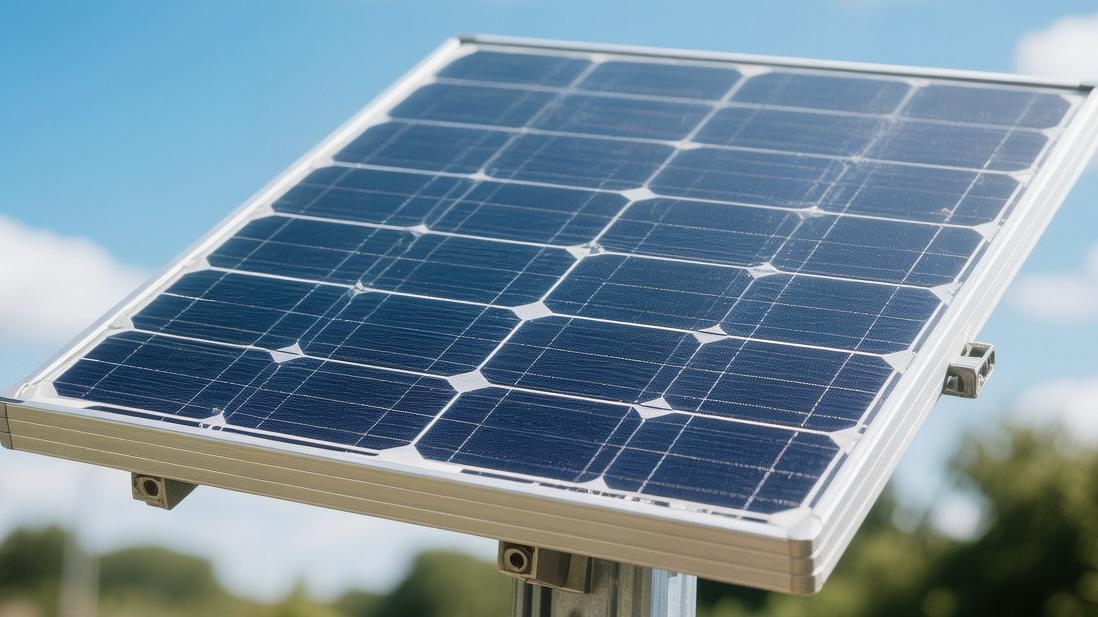
Key Factors Influencing
Panel Technology
In 2026, the underlying technology path of monocrystalline silicon panels directly determines a purchase premium of more than 35%.
N-type TOPCon cells have now become the absolute market mainstream, with average mass production conversion efficiency stable between 24.5% and 25.2%.
If you choose this kind of panel, the purchase price per watt is about 0.13 USD.
In contrast, panels using HJT (Heterojunction) technology have a 20% higher unit price (around 0.16 USD), but their bifaciality can usually reach over 85% and the temperature coefficient is as low as -0.26%/℃.
This means in areas where summer temperatures reach 40℃, the actual power generation of HJT modules will be 3.8% to 5.2% higher than ordinary monocrystalline silicon.
Furthermore, the first-year degradation rate of N-type cells in 2026 has been controlled within 1.0%, with subsequent annual linear degradation of only 0.35% to 0.4%.
Compared with P-type modules from five years ago, this technological advancement has increased the total power production of the system over a 30-year lifespan by about 11%, thereby offsetting the extra 0.03 USD per watt purchase cost at the start.
Technology Type | 2026 Conversion Efficiency | Temperature Coefficient | First-year Degradation | Purchase Unit Price (USD/W) |
TOPCon | 24.8% | -0.29%/℃ | 1.0% | $0.13 |
HJT | 25.5% | -0.26%/℃ | 1.0% | $0.16 |
PERC (Old model) | 23.1% | -0.35%/℃ | 2.0% | $0.10 |
Brand Size
In 2026, the financial health and Tier 1 ranking of module manufacturers affect the price by about 8% to 12%.
The product premium of top-tier factories is mainly reflected in "bankability" and "long-term warranty security."
Data shows that behind the 30-year power warranties provided by the world's top five brands, there is a reinsurance pool of up to 500 million USD.
This means even if the manufacturer goes bankrupt in 15 years, your module performance claim is still valid.
Choosing a second- or third-tier brand might save about 400 USD on a 10 kW system, but their products' PID (Potential Induced Degradation) failure rate in extreme environments is usually 650 PPM higher than those of top-tier factories.
On the production lines of top-tier brands, every monocrystalline panel undergoes two 100% EL (Electroluminescence) tests before leaving the factory to eliminate micro-crack risks.
These invisible technical investments increase the cost by about 0.01 USD per watt, but ensure that the output power of the system remains above 87.4% of the initial rating in its 20th year of operation.
Installation Difficulty
Physical conditions of the roof are the most uncontrollable variable in the 2026 installation budget, with a fluctuation range of up to 15% of the total cost.
If your roof pitch exceeds 35 degrees, the construction party will add a "steep slope surcharge" of 10% to 18%, as this requires extra fall protection scaffolding and special safety ropes.
In addition, roof material directly affects the bracket purchase cost. Installation on standard asphalt shingle roofs costs about 0.05 USD per watt for brackets;
If it's on corrugated metal or ceramic tile roofs, bracket costs rise to 0.09 USD per watt due to the need for custom waterproof hooks and rail guides.
Buildings with more than two floors usually need to rent a small crane to transport 22 kg monocrystalline modules to the roof, incurring an extra daily rent of 500 to 800 USD.
In the 2026 labor cost environment, a skilled installer charges 95 USD per hour.
If the wiring length exceeds 40 meters due to building structure, besides the 150 USD increase in cable material cost, it will also lead to a permanent 0.8% system efficiency loss due to DC voltage drop, which is equivalent to losing 1,200 kWh of revenue over 25 years.
Roof Type | Bracket Unit Price (USD/W) | Installation Difficulty Coefficient | Estimated Extra Labor Fee |
Flat Roof (Concrete) | $0.07 | 1.0 | $0 |
Sloped Roof (Composite Shingle) | $0.05 | 1.2 | $400 |
Sloped Roof (Slate/Tile) | $0.09 | 1.5 | $900 |
High-rise Building (3 floors) | $0.07 | 1.8 | $1,500+ (Incl. hoisting) |
Purchase Volume
When purchasing small systems below 5 kW through retail channels, the unit price quote from module suppliers usually remains around 0.16 USD.
However, once your installed capacity crosses the 20 kW commercial threshold, you can enter "pallet-level" purchase pricing, and the cost per watt will immediately drop to 0.12 USD, a 25% decrease.
This is because the starting truck fee for transporting a 20kW system (about 36 panels) is exactly the same as for a 5kW system (about 9 panels).
For a standard 10 kW household project, the 2026 purchase strategy usually suggests "bundled ordering."
By purchasing panels, inverters, and 15kWh storage systems together, you can usually get a 5% system integrator discount on total hardware prices.
In the current supply chain environment, shipping costs in 2026 account for about 4.5% to 6% of total hardware expenditure.
If you can participate in a community group purchase to combine orders from 10 households into a 100 kW bulk order, each household can save about 350 USD in logistics and customs clearance fees alone.
Logistics and Misc
Inland freight from distribution centers to installation sites is currently billed at 2.5 USD per mile.
For projects in remote areas, shipping costs may account for 10% of the total module price.
In addition, due to the tightening of environmental regulations in 2026, each panel requires an EPR (Extended Producer Responsibility) fee of about 1.5 USD at the time of purchase, which is used to support the recycling of the system after 25 years.
Administrative permits and grid connection fees are also non-reducible miscellaneous items. In 2026, the building permit fee for a 10 kW system is approximately between 250 and 450 USD.
If the distribution transformer capacity of the local power company is full, you may also need to share an extra 1,000 USD or so for transformer upgrade fees to get approval for grid connection.
These non-hardware expenditures together will take up 6% to 9% of your total budget, and they do not decrease with the drop in module prices.
Considering an annual inflation rate of 3%, the later you install, the higher the absolute value of these fixed administrative fees will be.