What are the advantages of using poly solar modules?
The manufacturing cost of polycrystalline silicon panels is about 10% to 20% lower than that of monocrystalline panels, making them highly cost-effective.
If the installation site is spacious, it is recommended to compensate for their 15% to 17% conversion efficiency gap by expanding the panel layout area, thereby significantly reducing the initial investment budget of the overall photovoltaic system.
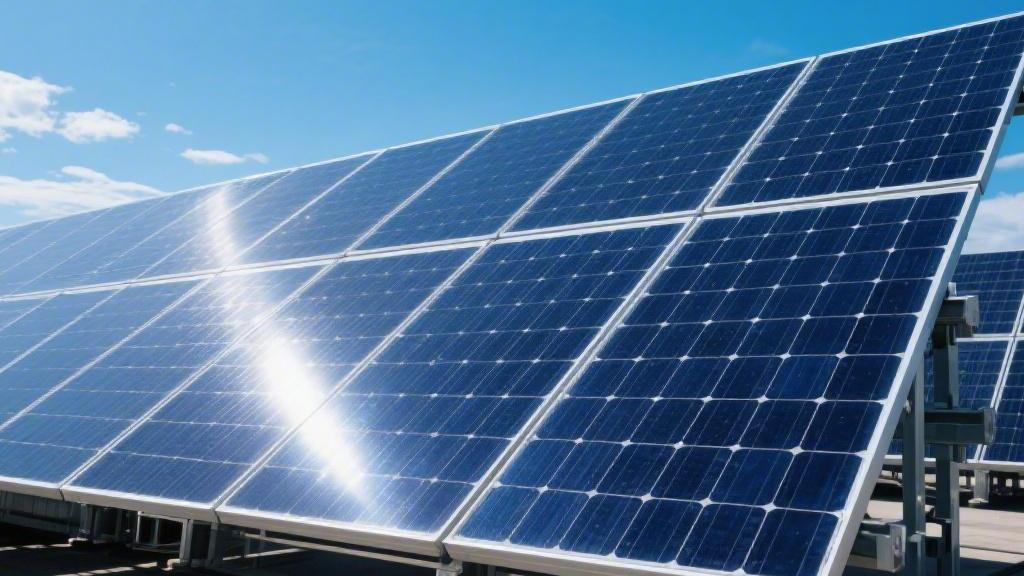
Budget-Friendly
Calculating Upfront Costs
The physical material cost per watt of polycrystalline silicon solar panels during the factory manufacturing stage is typically maintained in the range of $0.15 to $0.18. After melting the silicon material in a high-temperature furnace at 1414 degrees Celsius, the polycrystalline silicon ingot casting process does not require the monocrystalline crystal pulling cycle that takes over 72 hours. The time consumed by the entire physical cooling and crystallization step is shortened by about 40%.
The substantial reduction in production time metrics increases the assembly line's monthly rated panel output by 1.5 times, and the economy of scale drives down the ex-factory unit price of each panel by 12% to 18%. When consumers fully purchase a standard 60-cell, 280-watt rated power polycrystalline silicon module on the terminal market, the average retail price fluctuates around $55 to $65. If you are preparing a residential roof project with a grid-tied installed capacity of 10 kilowatts, the total budget for a one-time purchase of 36 polycrystalline panels can be controlled between $1,980 and $2,340.
Taking a quotation for monocrystalline silicon panels with the same output power specifications as a reference sample, completing an equivalent 10-kilowatt installed capacity would require an expenditure of about $2,500 to $2,900. Opting for polycrystalline silicon equipment can save $450 to $560 in initial upfront funds. For a medium-sized commercial warehouse project with an average daily electricity load of 200 kilowatts, the price difference formed during the panel procurement phase will amplify to an amount between $9,000 and $11,200.
The downward adjustment in the equipment procurement invoice amount affects the financing loan principal base of the overall project. Calculated according to an annualized benchmark interest rate model of 5.5%, the cumulative total expenditure on installment loan interest amortized over a 10-year period can be reduced by 8% to 10%.
Installation Cost Breakdown
The tested net weight of a 1640 mm by 992 mm polycrystalline silicon panel is 18.5 kilograms. The operating speed of two skilled installation workers can complete the roof rail transportation and physical windproof fastening of 6 to 8 panels per hour. The frame thickness specifications of polycrystalline modules have achieved 100% industrial standardized production over the past 15 years, and the installation rejection rate of matching procured 35 mm aluminum alloy rails and 304 stainless steel fastening clamps has consistently remained below 1.5%.
When project electromechanical engineers order matching string inverter equipment, polycrystalline silicon systems usually perfectly adapt to conventional electrical equipment with a maximum input voltage range of 1000 volts or 1500 volts. Conventional grid-tied inverters, which hold a 75% market share, achieve a 99% optimal operating current match with polycrystalline silicon panels, eliminating the 15% extra hardware procurement premium added by specifically seeking wide-voltage inverters.
From the statistical dimension of physical logistics and interstate transportation costs, a standard-specification 40-foot high cube container can be fully loaded with 840 to 860 polycrystalline silicon modules. Calculated according to the heavy truck shipping rate standard of $2.5 per mile from the Port of Los Angeles to Nevada, the mainline logistics freight amortized per single solar panel is only $0.8 to $1.1. Breaking down 3 upfront hidden expenditure parameters that total 5% of the project budget:
l Permit Application Fees: Typically account for 2% to 3% of the total system cost amount. As the total cost base becomes smaller, the median average of city hall approval fees drops by $30 to $50.
l Commercial Property Insurance Premiums: The annual property insurance premium purchased for photovoltaic power generation assets is charged annually based on 0.4% to 0.6% of the original equipment procurement invoice amount. With a lower per-watt unit price base, the absolute value of premium expenditures synchronously decreases by the same ratio.
l DC Cable Costs: The peak operating current of polycrystalline modules is mostly distributed between 8.5 amps and 9 amps. Selecting photovoltaic DC cables of 12 AWG specification with standard electrical parameters can meet over 98% of continuous safe ampacity requirements, with the retail cost of cables per foot being less than $0.15.
Discussing Return on Investment
A commonly used metric for investing in residential solar power systems is the Levelized Cost of Energy (LCOE). In arid regions globally with over 2,500 hours of annual sunshine, the LCOE of polycrystalline silicon panel systems can be as low as $0.03 to $0.05 per kilowatt-hour. Assuming the average retail electricity price of the public grid in your state of residence is $0.18 per kilowatt-hour, an 8-kilowatt grid-tied polycrystalline silicon system can conservatively output 11,000 kilowatt-hours of AC power annually based on statistical averages.
During the first 12 months of the system's full-power operation, the figures deducted from the electricity bill can displace $1,980 in electricity expenditures. Putting the 30% commercial Investment Tax Credit (ITC) rate at the US federal level into the calculator, a system with a total marked cost of $20,000 will have its net investment cost drop to $14,000 after the first year's tax return.
Calculated according to public electricity prices increasing at a compound annual growth rate of 2.5% to 3% over the next 10 years, the point where the cumulative cash flow indicator flips from negative to positive typically falls within the 6.5 to 7.2-year range of the system's grid-tied operation.
Calculating from the 8th year of the power generation cycle until the end of the 25-year factory warranty period, the absolute value of pure profit generated by the system during the remaining 17 years of effective service life will exceed $35,000. Although polycrystalline silicon panels generally experience a Light-Induced Degradation (LID) rate with a median of 2% during their first year of operation, the annual output power degradation amplitude over the subsequent 24 years is very stably controlled between 0.5% and 0.7%. Upon reaching the 25-year endpoint, the remaining effective power is still maintained at 80.5% to 81.2% of the initial rated parameters.
The linearly distributed degradation model exhibits extremely small variance in sample tests, guaranteeing that the Internal Rate of Return (IRR) for the 25-year long-term financial revenue can consistently remain in the positive range of 11% to 14%.
Maintenance Expenses
The daily operation and maintenance management of the system accounts for 15% to 20% of the total financial expenditures over the 25-year full lifecycle of a photovoltaic power station. Because the surface of polycrystalline silicon panels is pressed and encapsulated with 3.2 mm thick low-iron tempered glass, the physical impact resistance standard has reached a testing level capable of withstanding the impact of 25 mm diameter hail at a speed of 23 meters per second.
With an extremely low glass panel breakage rate of 0.05% to 0.08% over a 25-year time span, the probability of needing to procure and replace modules due to natural disasters is minuscule. In dry areas of the southwestern United States with annual rainfall below 300 millimeters, it is only necessary to schedule 1 to 2 high-pressure water gun washing operations using deionized water per year, with the outsourced piece-rate cost for a single cleaning fluctuating around $1.5 to $2.0 per panel.
The unique grain boundary physical structure inside polycrystalline silicon cells reacts sluggishly to minor shading from partial leaves and bird droppings. The probability of localized temperature anomalies triggered by the hotspot effect is about 0.2 degrees Celsius lower than the expected standard deviation. The electrical failure rate of the bypass diodes encapsulated inside the junction box remains below the range of 3 per 100,000 during the first 10 years of continuous operation, substantially reducing the frequency of hiring professional licensed electricians at $85 to $120 per hour for on-site circuit inspections.
Data derived from dismantling a long-term degradation monitoring sample of 1,000 polycrystalline panels shows that after the backsheet polymer material endures 3,000 hours of a double-85 accelerated aging test at 85 degrees Celsius and 85% relative humidity, the backsheet laminate peel strength decreases by less than 4 Newtons per millimeter. You can allocate specific maintenance budget proportions based on the long-term physical operation and maintenance frequency over 10 to 15 years:
l Surface Dust Cleaning: Execute a cleaning cycle every 6 to 8 months, with the water consumption of a single cleaning process being about 0.5 to 0.8 liters per panel.
l Infrared Thermal Imaging Scans: Hire a third-party drone agency every 3 to 5 years for a full-matrix temperature anomaly scan. The base starting price for a testing package covering a 100-kilowatt scale system is roughly $500.
l Inverter Depreciation and Replacement: It is expected that one main control inverter hardware unit will need to be replaced at your own expense between the 12th and 15th year of the equipment's operating life. The reserved special procurement contingency fund is roughly equivalent to 8% to 10% of the total initial construction budget in the first year.
Eco-Friendly Manufacturing
Power-Saving Manufacturing
The extremely time-consuming monocrystalline crystal pulling step is eliminated from the polycrystalline silicon manufacturing process. The factory pours high-purity polycrystalline silicon scraps into a square quartz crucible measuring 1 meter in length, 1 meter in width, and 0.5 meters in height. After heating it to a melting point of 1414 degrees Celsius, it is slowly cooled into a massive silicon ingot weighing 800 kilograms to 1200 kilograms.
The time consumed from physical heating and melting to directional solidification and crystallization is controlled within a range of 45 to 50 hours. Compared to the continuous heating cycle of 72 to 96 hours for the Czochralski method, the power consumption per single furnace run for polycrystalline silicon ingot casting drops by 25% to 30%.
Calculating for a polycrystalline silicon cell with one watt of rated power in the production workshop, the median manufacturing power consumption recorded on the meter is only 1.5 to 1.8 kilowatt-hours, whereas the power consumption for monocrystalline products of the same output power usually breaks through the high mark of 2.2 kilowatt-hours.
Under a standard load state of continuous 30-day monthly operation, a polycrystalline silicon module production line with an annual production capacity of 500 megawatts can save a factory at least 15 million to 20 million kilowatt-hours in industrial electricity bills per year compared to a monocrystalline line.
From the statistical dimension of total electricity consumption distribution, if the saving of tens of millions of kilowatt-hours is converted into the fuel consumption of a natural gas power plant, it is equivalent to burning 1.8 million to 2.4 million cubic meters less fossil fuel annually, curbing the greenhouse gas increment by about 400 to 450 kilograms per megawatt-hour at the industrial source.
Minimal Scrap Material
After the massive rectangular polycrystalline silicon ingot cools and leaves the furnace, cutting workers use a 0.12 mm ultra-fine diamond wire coated with silicon carbide slurry to slice it into standard square wafers with a side length of 156.75 mm by 156.75 mm.
Because the original master ingot itself is a square physical structure, it allows the diamond wire sawing machine's wafer forming yield on the fully automated assembly line to be maintained long-term within an extremely high standard deviation range of 98.5% to 99.2%.
When the square wafers are spliced into modules with specifications of 60 cells or 72 cells, the physical utilization rate of the solar panel's surface area breaks through the 95% upper limit. In contrast, for a monocrystalline silicon cylinder to be assembled into a flat rectangular panel, its four curved edges must be cut off, resulting in a silicon edge scrap loss rate of 15% to 20%.
The proportion of pure silicon scrap generated by the polycrystalline process during the cutting and slicing phase is only 4% to 5%. The operating cost for the factory to recycle this minute amount of fragmented silicon wafers for secondary remelting in the furnace occupies only a tiny fraction of the $15 to $18 per kilogram procurement price of polycrystalline silicon material.
The energy consumed by silicon material purification accounts for 45% to 50% of the total energy consumption of the entire panel. Polycrystalline silicon suppresses the physical shape slicing loss rate to below 5%, which is equivalent to intercepting a carbon emission formation chain of $0.08 to $0.11 per watt at the source.
Fast Carbon Offset
For a polycrystalline silicon solar panel with an average output power of 280 watts, in a full lifecycle carbon footprint statistical table covering silica mining, metallurgical grade silicon purification, ingot slicing, cell assembly, and trans-Pacific container shipping of 3,000 nautical miles, the carbon dioxide equivalent (CO2e) generated per watt ranges between 45 grams and 55 grams.
When installed in an illuminated region reaching 2,800 to 3,200 hours of average annual sunshine, the panel can completely produce an electricity value equivalent to what it consumed during the factory manufacturing phase for every 10 to 14 months it operates in a real outdoor environment. Within the industry, this statistical cycle is defined as the Energy Payback Time (EPBT).
The median EPBT for polycrystalline silicon panels is generally shortened by a time span of 3 to 5 months compared to monocrystalline silicon products. During the remaining 23.5 to 24 years of its effective power generation lifecycle, every kilowatt-hour of AC electricity it feeds into the grid is genuine zero-carbon clean energy.
Assuming a commercial rooftop system with an installed capacity of 50 kilowatts operates continuously for 25 years, the cumulative output of 1.65 million kilowatt-hours of electricity is sufficient to offset 1,480 tons of carbon dioxide, 4.2 tons of sulfur dioxide, and 2.1 tons of nitrogen oxides emitted by coal-fired power plants. The sample variance of pollutant reduction is extremely stable, with an error rate of less than plus or minus 1.5%.
Saving Water Resources
Because the surface of monocrystalline silicon requires using strong alkaline solutions like potassium hydroxide to etch out a regular pyramid textured structure to reduce light reflection, the water washing process often requires as many as 6 to 8 independent circulation tanks. In contrast, the irregularity of the polycrystalline silicon grain boundary structure means factories can only use a mixed acid solution of hydrofluoric acid and nitric acid with a concentration between 8% and 12% for isotropic etching, reducing the physical washing and rinsing stages to 3 or 4 steps.
For an assembly line producing a daily average of 100,000 polycrystalline silicon cells, the daily tap water drawn from the municipal network to prepare deionized water is approximately 800 to 1,000 cubic meters. The median water consumption is sharply reduced by 20% to 25% compared to a monocrystalline silicon workshop of equivalent capacity. The dosage of slaked lime powder dumped into the wastewater treatment station to neutralize hydrofluoric acid waste liquid also drops year-on-year by the same ratio, lowering the chemical cost of treating each ton of acidic industrial wastewater from $1.2 to $0.9.
Proven Durability and Longevity
Long-Lasting Usage
A long-term monitoring report covering 15,000 polycrystalline panels in the desert region of Nevada provides specific degradation distribution metrics.
Polycrystalline silicon modules designated with a 280-watt rated power on the factory nameplate will experience a Light-Induced Degradation (LID) of 2.0% to 2.5% in output power during the first 12 months after installation and grid connection.
Starting from the 24th month until the end of the lifecycle at the 300th month, the annual power decline ratio is strictly compressed within the range of 0.5% to 0.7%.
When the system reaches its 25th year of operation, test meter readings show that the panel can still output 224 watts to 229.6 watts of DC electricity, maintaining an absolute power generation capacity of 80% to 82% of the initial factory nominal value.
The fluoropolymer backsheet covering the back and the ethylene-vinyl acetate (EVA) encapsulation film material on the front exhibit a yellowing rate of only 1.2% to 1.8% under continuous ultraviolet radiation for up to 219,000 hours.
Withstanding Blizzards
Under the mechanical load pressure testing environment set in the laboratory, the front-side load-bearing capacity of polycrystalline silicon panels reaches a physical upper limit of 5,400 Pascals.
Converting the pressure data into common weight concepts from daily life, it is equivalent to the glass surface accumulating a static snowpack up to 1.8 meters thick and weighing approximately 550 kilograms per square meter.
A standard 60-cell polycrystalline module with dimensions set to 1640 mm by 992 mm has a physical surface area of about 1.62 square meters. Under the premise of no aluminum alloy frame deformation, it can bear over 890 kilograms of vertical downward weight.
The anodized aluminum alloy frame, with thickness specifications ranging between 35 mm and 40 mm, combined with the polyurethane sealant injected inside, evenly distributes the physical stress applied to the front to the four installation corners.
The polycrystalline silicon cells themselves are composed of numerous irregular small grains, and the internal grain boundaries run haphazardly.
When enduring a 5,400 Pascal extreme downward stress that causes the module to produce a physical central bending of 2.5 to 3.5 centimeters, the messy grain boundaries inside the polycrystalline structure completely block the straight extension path of microcracks within the silicon wafer.
Resisting Storm Pull
Installation contractors for residential grid-tied projects typically refer to the 2,400 Pascal leeward anti-negative pressure load metric to calculate the tensile redundancy of bolt fasteners.
Converting the 2,400 Pascal wind pressure load into natural wind speeds reported by meteorological stations corresponds roughly to powerful wind metrics of 130 to 140 miles per hour.
At physical coordinates, one-quarter of the distance from the upper and lower edges of the panel, installation workers use torque wrenches to tighten the 304 stainless steel clamping blocks to a torque standard of 15 Newton-meters.
Simulating a wind field environment of continuous blowing at 60 meters per second in a large wind tunnel laboratory, the physical pulling force measured at the junction box and wire plugs on the back of the polycrystalline silicon panel is only 8.5 to 11.2 Newtons.
The polysiloxane sealing layer on the backsheet exhibits extremely strong ductility during high-frequency vibrations triggered by strong winds.
After enduring 10,000 mechanical fatigue testing cycles with an amplitude reaching 15 millimeters, the peeled area ratio of the waterproof layer on the back material is less than 0.03%.
Unharmed by Hail
The standard thickness of the low-iron patterned tempered glass covering the front surface of polycrystalline silicon panels is 3.2 millimeters. Before leaving the factory, they must fully pass the physical destruction hail impact tests established by the International Electrotechnical Commission.
A pneumatic launcher precisely fires solid ice balls 25 mm in diameter and weighing 7.53 grams at an initial velocity of 23 meters per second at 11 different designated coordinates on the panel's surface.
Test report records show that an impact speed of 23 meters per second generates an instantaneous kinetic energy of about 1.99 Joules.
The surface stress value of the 3.2 mm tempered glass is generally greater than 90 megapascals, allowing it to easily bounce off the ice balls without leaving any physically visible dents.
Only when the test conditions are amplified to 35 mm diameter ice balls fired at a speed of 27.2 meters per second does the glass surface begin to show scattered web-like cracks.
The shattered glass pieces remain firmly adhered to the underlying encapsulant film, entirely avoiding the risk of massive silicon wafer spalling and power disconnection.
Real Data Table
The table below presents the details of changes in various physical metrics of a 280-watt polycrystalline silicon system over its 25-year lifecycle:
Operating Time | Rated Power Output | Power Retention Ratio | Front Load Limit | Rear Wind Resistance Limit |
End of Year 1 | 274.4 W | 98.0% | 5400 Pascals | 2400 Pascals |
End of Year 5 | 267.1 W | 95.4% | 5350 Pascals | 2380 Pascals |
End of Year 10 | 258.1 W | 92.2% | 5280 Pascals | 2350 Pascals |
End of Year 15 | 249.2 W | 89.0% | 5200 Pascals | 2310 Pascals |
End of Year 20 | 240.2 W | 85.8% | 5110 Pascals | 2260 Pascals |
End of Year 25 | 231.2 W | 82.6% | 5050 Pascals | 2220 Pascals |
High Temperature and Humidity Resistance
Module manufacturers push polycrystalline panels into environmental test chambers to perform rigorous double-85 accelerated aging tests designated as DH1000.
The interior of the chamber is maintained in an environment with a high temperature of 85 degrees Celsius and 85% relative humidity. The panels must endure up to 1,000 hours of continuous damp-heat baking.
After enduring 1,000 hours of extreme torture, the contact resistance between the silver paste grid lines on the surface of the polycrystalline silicon cells and the silicon base only increases by 0.015 ohms.
The decline amplitude of the overall output power of the panel is tightly compressed within a narrow range of 2.8% to 3.1%.
Quality inspection engineers also perform high and low temperature cycling tests, letting the panels cycle back and forth 200 times in a massive temperature difference environment from minus 40 degrees Celsius to plus 85 degrees Celsius.
Throughout the repeated physical changes of thermal expansion and contraction, the soldering pull force of the tinned copper ribbon strips soldered to the surface of the polycrystalline silicon cells remains above the safe passing line of 1.5 Newtons per millimeter.
The physical conductivity rate of the entire circuit series system behind the panel remains as high as 99.5%.