What is the Value of Monocrystalline Silicon Solar Panels
Monocrystalline solar panels offer high value due to their high efficiency and long lifespan.
Their photoelectric conversion efficiency is usually between 20%–24%, which is higher than polycrystalline silicon (about 15%–18%), allowing for more electricity generation within the same area.
They generally have a 25–30-year lifespan, with an annual power degradation of about 0.5%.
For example, a 400W monocrystalline module in an area with sufficient sunlight can generate approximately 500–650 kWh per year.
Although the initial price is about 10%–20% higher than polycrystalline, they are widely used in residential rooftop and commercial photovoltaic projects due to higher long-term power generation returns and lower maintenance costs.
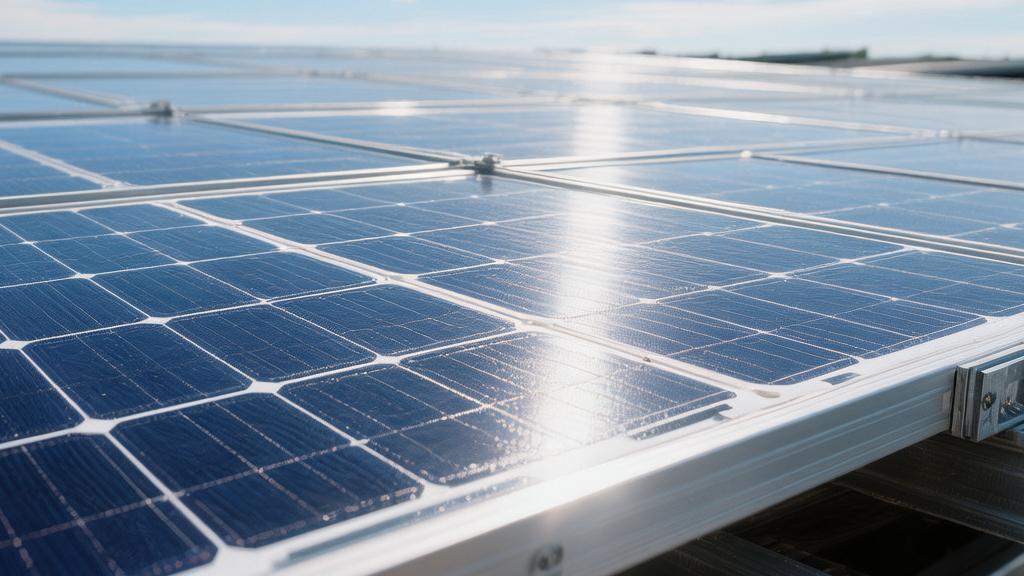
Doing More with Less Space
The common power density of monocrystalline modules is approximately 210–230 W/m².
A module with a rated power of 550 W usually has dimensions of 2,279 mm × 1,134 mm, with an area of about 2.58 m².
Based on these dimensions, each square meter provides about 213 W of output power. If the available rooftop area is 30 m², the theoretical maximum installed capacity is about 6.3 kW.
Using polycrystalline modules with 17% efficiency in the same area, the power density is usually only 170–180 W/m², resulting in a system capacity of about 5.1 kW for a 30 m² rooftop. This represents a capacity gap of about 1.2 kW and a capacity improvement ratio of approximately 23%.
Urban residential rooftops usually have an area of 20–40 m². Taking a 25 m² rooftop as an example, a monocrystalline system can accommodate 9 pieces of 550W modules, with a system capacity of about 4.95 kW.
If modules with 18% efficiency are used, usually only 8 pieces of 450W modules can be installed, with a system capacity of about 3.6 kW. The capacity gap is approximately 1.35 kW.
In regions with an average sunlight of 4.5 hours/day, the daily power generation difference is about 6 kWh, totaling approximately 2,190 kWh per year.
If the electricity price is 0.15 USD/kWh, the annual electricity bill difference is about 328 USD.
For a small rooftop with an area of 15 m², if 5 pieces of 550W modules are installed, the system capacity is about 2.75 kW.
If 400W modules are used in the same area, a maximum of five pieces can be installed, resulting in a system capacity of about 2 kW.
The capacity gap is 750 W. Under 4.5 hours/day of sunshine, the annual power generation difference is about 1,230 kWh.
Calculated at an electricity price of 0.12 USD/kWh, the annual savings difference is about 148 USD.
The mainstream module width is about 1.13 m; a rooftop with a width of 6 m can accommodate 5 pieces side-by-side.
If the rooftop height is 4.5 m, three rows can be arranged. This brings the total number of installations to about 15 pieces, with a system capacity of about 8.25 kW.
If the module power is only 450 W, the system capacity for the same arrangement is about 6.75 kW, a gap of 1.5 kW.
In regions with an annual average generation level of 1500 kWh/kW, the annual power difference is about 2,250 kWh.
When light intensity drops to 200 W/m², monocrystalline modules can usually still maintain about 20%–25% of their rated output.
For example, a 550W module can still output 110–140W under weak light conditions. If the system has 10 modules installed, the total output is about 1.1–1.4 kW.
Weak light output capability allows for approximately 1.5–2.5 kWh of electricity to be generated during the 1–2 hours of low light in the morning and evening. This accumulates to about 550–900 kWh annually.
Rooftop orientation also affects space utilization efficiency. When the ideal orientation deviation is within ±15°, the power generation loss is usually less than 3%.
If the rooftop deviates East or West by about 60°, power generation typically drops by 12%–18%.
In such cases, increasing module efficiency can reduce the loss associated with area limitations.
For instance, a 5 kW system in the standard orientation generates about 9,000 kWh annually; if the orientation deviation causes a 15% loss, the generation drops to about 7650 kWh.
If the system capacity is increased by 15% (to about 5.75 kW), the annual generation can be restored to around 8800 kWh.
When the rooftop tilt is 20–30 degrees, a spacing of 10–20 cm is usually required between modules to avoid shadows.
Assuming a rooftop length of 8m, each row of modules occupies about 2.3m in length. Adding a 0.15m gap, each row occupies about 2.45m.
The rooftop can accommodate three rows of modules, occupying a total of 7.35 m.
If the module size increases by 10 cm, each row occupies about 2.55 m, and the total length for three rows is 7.65 m, which still allows for a complete installation layout.
Layout planning can reduce area waste by 3%–5%.
Rooftop load-bearing capacity is usually between 20–30 kg/m².
The weight of a monocrystalline module is about 27–30 kg, with an average weight density of about 11–12 kg/m².
The weight of the mounting brackets is about 3–5 kg/m². The total weight of the entire system is about 14–17 kg/m², which is lower than the load-bearing limit of most residential rooftops, which is 25 kg/m².
On a 30 m² rooftop, the total system weight is about 420–510 kg.
Inverter capacity is also related to the module area. If 10 pieces of 550 W modules are installed, the system capacity is 5.5 kW.
This is usually paired with a 5 kW inverter. The DC to AC capacity ratio is about 1.1.
This configuration can maintain an output of 4.8–5 kW during peak sunlight hours. Under 5 hours of daily sunlight, the daily output is about 24–25 kWh.
If module efficiency is lower, the system capacity for the same area might only be 4 kW, with a daily generation of about 18–20 kWh.
Long-term accumulated power differences are also very significant. Assume two systems are 5.5 kW and 4 kW respectively.
In an area with a generation level of 1500 kWh/kW/year:
· A 5.5 kW system generates about 8,250 kWh per year
· A 4 kW system generates about 6,000 kWh per year
The annual gap is 2,250 kWh. If the electricity price is 0.15 USD/kWh, the annual bill difference is about 337 USD.
Over a 25-year system lifespan, the total electricity bill difference is approximately 8425 USD.
Longevity and "Slow" Aging
The usage time of monocrystalline solar panels is usually calculated based on a 25–30 year design cycle, with most manufacturers providing a 25-year power guarantee.
The rated power of modules at the factory is typically 400W, 450W, 550W, etc., measured under standard test conditions of 1,000W/m² irradiance and 25°C cell temperature.
Modules experience an annual decline in power during actual operation, but the rate of decline is usually low. A common degradation curve is about 1%–2% in the 1st year, and approximately 0.4%–0.5% each year thereafter.
For example, a 550W module will output about 540W after the first year, about 515W by the 10th year, about 490W by the 20th year, and usually still maintains an output level of around 470W by the 25th year, which is about 85% of its initial power.
In a 5 kW system, if the initial annual power generation is about 9,000 kWh, calculated at an average degradation rate of 0.45%/year, the annual generation in the 10th year will be about 8,600 kWh, about 8200 kWh in the 20th year, and about 7,900 kWh in the 25th year.
The cumulative power generation over 25 years is usually in the range of 200000–215000 kWh.
If the local electricity price is 0.12 USD/kWh, the total value of electricity over 25 years is approximately 24000–25800 USD.
When the system equipment cost is about 5000 USD, the ratio between the long-term electricity value and the equipment cost is about 4.8–5.1 times.
The material structure of the module has a significant impact on long-term stability. The thickness of monocrystalline silicon cells is usually 160–180 microns, with a silicon purity of about 99.9999%.
After welding, the cells are fixed through an EVA encapsulation layer and tempered glass. The glass thickness is generally 3.2 mm, with a light transmittance of about 91%–93%.
Common module backsheet materials have a thickness of about 300–350 microns and possess waterproof and UV-resistant capabilities.
The encapsulation structure can usually withstand a snow pressure of 5400 Pa and a wind pressure of 2400 Pa. Translated to real-world environments, this corresponds to a snow load capacity of approximately 540 kg per square meter.
The temperature coefficient of monocrystalline modules is typically -0.34%/°C.
If the module operating temperature rises from 25°C to 45°C, the power decreases by about 6.8%.
For example, a 550W module outputs about 512W at high temperatures.
This temperature loss only occurs during high-temperature periods; when the temperature returns to 25–30°C, the power will recover to near-rated levels.
In areas with an average annual temperature of 30°C, the annual power generation reduction caused by temperature is usually about 4%–6%.
Long-term environmental impacts mainly come from UV rays, humidity, and dust.
Modules undergo 1,000 hours of UV aging tests and 1,000 hours of damp heat tests at 85°C and 85% humidity in the laboratory.
After completing these tests, the power decline is usually less than 5%. In regions with an average annual humidity of 70%–80%, the actual power degradation of modules typically remains within 0.5%/year.
Mechanical stability also affects long-term power generation capability. Module frames usually use an aluminum alloy structure with a thickness of about 35–40 mm.
The wind resistance rating usually reaches environmental conditions with wind speeds of 45 m/s. This wind speed is equivalent to a strong wind of 162 km/h.
When installed on a rooftop, each module typically uses four fixing points, with a bracket spacing of about 1.2–1.5 m.
A stable fixing structure can reduce the probability of micro-cracks. If micro-cracks cover 10% of the cell area, they may cause a power drop of about 3%–5%.
Inverters usually need to be replaced 1 time during the module's usage cycle. The average lifespan of an inverter is about 10–15 years.
For example, a 5 kW inverter costs about 700–1000 USD.
If the system runs for 25 years, it may require one inverter replacement, increasing total maintenance costs by about 700–1000 USD.
Module performance is also related to the installation environment. When the rooftop tilt is 20–30 degrees, rainwater can wash away about 50%–70% of dust accumulation, reducing power loss.
Dust coverage can cause a 5%–15% reduction in power generation.
If cleaned two times a year at a cost of 15–30 USD each time, the annual maintenance cost is about 30–60 USD.
After maintenance, the module's light transmittance usually recovers to over 90%.
Statistical data shows that photovoltaic systems running for more than 20 years still maintain high output.
Some early systems in Europe were installed around the year 2000, with an initial capacity of about 3 kW.
After 20–22 years of operation, system capacity test results typically remain in the 78%–85% range.
The annual power generation can still reach 4,200–4,600 kWh. Compared to the initial annual generation of 5,000 kWh, this is a drop of about 10%–16%.
A 5 kW system in an area with annual sunshine of 1500 kWh/kW will typically maintain an average annual generation of 8,200–9,000 kWh over 25 years.
The annual fluctuation range is generally ±6%. For example, it might be 8,700 kWh in one year and about 8,200 kWh in another.
Voltage changes in modules over long-term use are usually small. A typical 550W module has a working voltage of about 41V and a current of about 13A.
Within a 20-year operation cycle, the voltage drop is usually less than 3%. The current drop is usually within 5%.
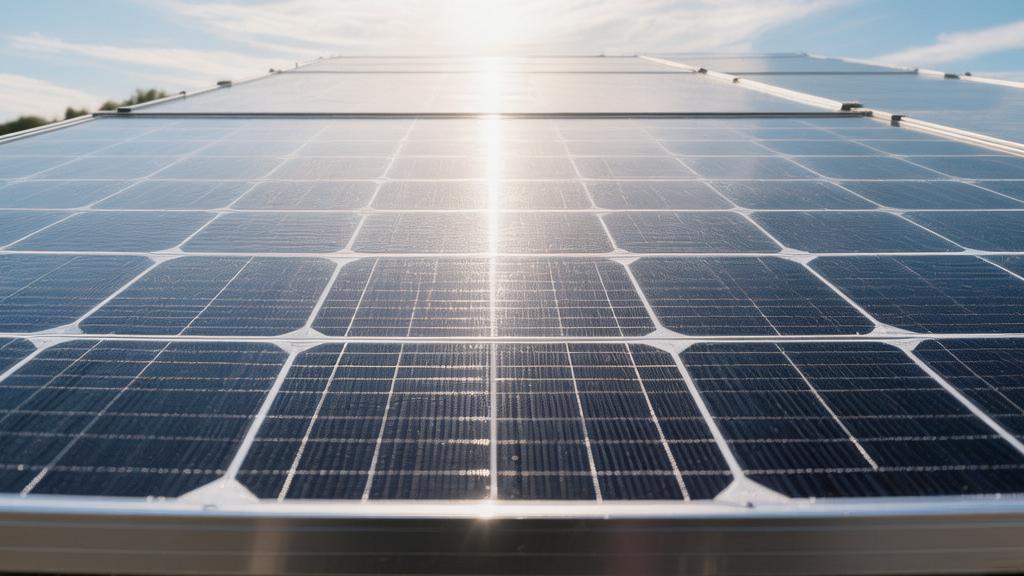
Temperature Performance
During laboratory testing, a 25°C cell temperature is used as the standard condition. When the actual operating temperature rises, the internal voltage of the cell drops, thereby affecting power output.
Common temperature coefficients for monocrystalline modules are about -0.30% to -0.35% per degree Celsius.
This means for every 1°C increase in cell temperature, the output power decreases by an average of about 0.30%–0.35%.
For example, for a 550W module, if the cell temperature rises from 25°C to 45°C, a difference of 20°C, the power reduction ratio is about 6%–7%, and the output power drops to approximately 510–517W.
On a sunny noon when the ambient temperature is 30°C, the module surface temperature usually reaches 45–55°C.
In installation environments with good rooftop ventilation, module temperatures are usually 15–20°C higher than the ambient temperature.
If rooftop ventilation is poor, the temperature difference may reach 25°C. Therefore, at an ambient temperature of 30°C, the module working temperature may reach 50–55°C.
Calculated with a temperature coefficient of -0.34%/°C, the power drops by about 8.5%–10%.
When installed on a rooftop, a gap of 10–20 cm is usually left between the module and the roof. This space allows for airflow, which reduces temperature.
If the module is installed flush against the roof, the temperature may increase by 3–5°C.
In high-temperature summer regions, this temperature difference can cause a power generation gap of about 1%–2%.
Common comparisons are as follows:
Module Type | Temperature Coefficient | Power Drop at 45°C |
Monocrystalline | -0.30% ~ -0.35% | 6%–7% |
Polycrystalline | -0.37% ~ -0.41% | 7%–8% |
Thin Film | -0.20% ~ -0.25% | 4%–5% |
In regions with higher ambient temperatures, such as an urban rooftop averaging 35°C in summer, module temperatures may reach 60°C.
In this case, the temperature difference is 35°C. Calculated at -0.34%/°C, the power drops by about 11.9%.
A 550W module actually outputs about 485W. If the system capacity is 5 kW, the output during high-temperature periods is about 4.4–4.5 kW.
Around 8:00 AM, module temperatures are usually 25–30°C, and the power is close to its rated value.
From 12:00 PM to 2:00 PM, temperatures are usually 45–60°C, and power drops by 6%–12%.
After 4:00 PM, the temperature drops to 35–40°C, and the power loss recovers to 3%–5%.
The temperature and power changes at different times of the day are usually as follows:
Time | Ambient Temp | Module Temp | Power Change |
08:00 | 22°C | 28°C | -1% |
10:00 | 26°C | 38°C | -4% |
12:00 | 30°C | 50°C | -8% |
14:00 | 32°C | 55°C | -10% |
16:00 | 28°C | 40°C | -5% |
Assuming a system capacity of 5 kW and an average annual sunshine of 4.5 hours/day, the theoretical annual generation is about 8,200–9,000 kWh.
The average annual loss caused by temperature is usually about 4%–6%. Therefore, the actual annual generation is about 7,700–8,600 kWh.
The module surface material also affects heat dissipation efficiency. Tempered glass thickness is usually 3.2 mm, with a light transmittance of 91%–93%.
Glass has good thermal conductivity and can dissipate some heat into the air.
Module backsheet materials are usually triple-layer composite structures with a thickness of about 300 microns.
When the wind speed reaches 3 m/s, module temperatures usually drop by 3–4°C.
If the wind speed reaches 5 m/s, the temperature can drop by 5–7°C. This temperature change can increase the output power by about 1.5%–2.5%.
Buildings with higher rooftops or those without surrounding obstructions usually have better heat dissipation conditions.
Module arrangement density also affects temperature. If the spacing between modules is less than 5 cm, heat tends to accumulate, and the temperature may increase by 2–3°C.
A spacing of 10–15 cm is usually maintained during installation to allow air to circulate from the bottom.
A good ventilation structure can typically reduce temperature losses by about 3%.
The operating temperature of the inverter also affects the overall system efficiency. The optimal working temperature for an inverter is usually 25–45°C.
When the inverter temperature reaches 60°C, efficiency may drop by about 1%–2%.
Therefore, inverters are usually installed in shaded locations, such as garage walls or under eaves.
In hot regions, such as cities with an average annual temperature of 28–32°C, the system's annual power generation still remains high.
A 5 kW monocrystalline system in an area with annual sunshine of 1600 kWh/kW will still generate about 7,500 kWh per year, even considering a 6% temperature loss.
If the electricity price is 0.15 USD/kWh, the annual electricity bill value is about 1125 USD.
Module designs typically account for an operating temperature range of -40°C to 85°C.
In experimental tests, after being held at 85°C for 1,000 hours, power changes in modules are usually less than 5%.
This test simulates a long-term thermal cycle environment of about 20 years or more.