Can You Use Salt on Solar Panels
Never use salt! Salt will severely corrode the aluminum frames and destroy the protective coatings.
It is recommended to use warm water below 40°C or a long-handled soft brush for physical snow removal instead. This avoids chemical damage and ensures the panels maintain their 25-year lifespan and maximum power generation efficiency.
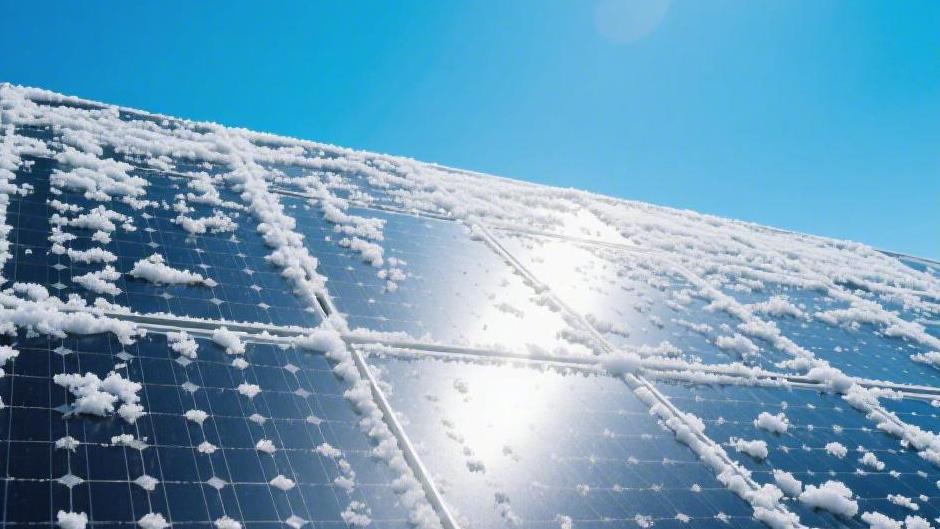
The Risk of Corrosion
Biting Through Aluminum Frames
When a 5% sodium chloride solution flows down a roof with a 20 to 30-degree tilt, the 35-millimeter thick outer aluminum alloy frame of the solar panels will begin to undergo irreversible electrochemical reactions within 48 hours. The standard 15- to 25-micrometer thick anodized protective layer applied at the factory will see its anti-corrosion lifespan plummet from the original 25 years to just 12 to 18 months upon contact with saltwater containing 5,000 milligrams of chloride ions per liter.
l On early winter mornings when the relative environmental humidity exceeds 65% and the temperature hovers between 2°C and 5°C, saltwater droplets clinging to the bottom of the frame will penetrate the interior of the metal at a rate of 0.1 millimeters per hour.
l A phenomenon known in physics as pitting corrosion will create up to 40 to 50 microscopic pits, approximately 0.5 millimeters deep, on every 1 square centimeter of the aluminum surface.
l Once the depth of these pits breaks the critical threshold of 2 millimeters, the tensile strength of the entire 6063-T5 aluminum alloy frame will plummet by 35%. When encountering wind gusts of 30 meters per second, the probability of frame fracture will skyrocket to over 80%.
Rotting Screws
A standard 8-kilowatt capacity residential photovoltaic system typically requires 250 to 300 pieces of 8-millimeter diameter 304 stainless steel or hot-dip galvanized bolts for securing. Spreading 10 kilograms of coarse salt over an array of roughly 40 square meters to melt snow means the resulting highly concentrated saltwater will seep into the fasteners through 0.5-millimeter wide thread gaps.
l After 90 days of saltwater immersion, connection points bearing 15 Newton-meters of torque will see their surface zinc coating thickness peel and diminish at a rate of 12 micrometers per month.
l L-shaped mounting feet designed to withstand a static snow load of 5400 Pascals will have their yield strength reduced from 205 Megapascals to under 120 Megapascals under chloride ion erosion.
l Once the load-bearing capacity of the bolts drops by 40%, the panels will experience a displacement of 5 to 8 centimeters when subjected to an external pushing force greater than 50 kilograms. Reinstalling these 300 rusted screws will require paying $800 to $1,200 in labor and material costs.
Water Seepage and Electrical Leakage
The junction boxes on the back of solar panels typically feature an IP68-rated waterproof design, relying on roughly 2-millimeter thick industrial-grade silicone sealant to block liquid water from the external environment. When a 15% concentrated saltwater solution accumulates at the edges of the junction box, the 0.5 Megapascal physical pressure generated by salt crystal expansion will pry the sealant strips open, creating microscopic gaps of 0.1 to 0.3 millimeters within six months.
l During peak daytime power generation periods, reaching 350 watts, just 0.5 milliliters of saltwater seeping into the junction box will cause the internal insulation resistance to plummet from 100 megaohms to less than 1 megaohm.
l Under a DC system, voltage of 600 volts or 1000 volts, this leakage phenomenon will cause an average of 2 to 3 arc discharges per day, with local temperatures spiking to 300°C within 0.1 seconds.
l The probability of high-temperature electric arcs burning out the internal bypass diodes reaches 75%. This directly trashes a $250 solar module and drags down the total power generation of the entire branch circuit—consisting of 15 panels connected in series—by approximately 30% to 45%.
Destroying the Racking
The load-bearing main body of the rail system installed on asphalt shingle roofs is made of extruded aluminum profiles with a wall thickness of 2.5 millimeters, with a total length generally ranging between 30 and 50 meters. Up to 30 grams per liter of salt residue left in the rail gutters will accelerate the metal corrosion rate by 4.5 times compared to 0°C when average spring and summer temperatures hit 25°C.
l For a racking system designed for a 30-year lifespan, the thickness of its base sections will corrode and thin out from 2.5 millimeters to 1.5 millimeters within five years.
l When the roof tilt exceeds 15 degrees, a rail with a 40% reduction in thickness will bend downward under the weight of a single 22-kilogram panel, resulting in a deformation exceeding the national standard allowance of 15 millimeters.
l Once the racking experiences a permanent deformation of over 20 millimeters, the internal solar cells of the panels will bear a mechanical stress exceeding 30 megapascals, creating micro-cracks between 5 and 10 micrometers wide. This leads to an additional overall conversion efficiency degradation of 1.5% to 2.5% per year.
Voltage Drop
The 10 AWG copper core cables responsible for transmitting direct current in a photovoltaic system are wrapped in a 1.2-millimeter thick cross-linked polyethylene (XLPE) insulation layer. When the saltwater running off from the applied salt contacts the exposed metal terminals of the MC4 connectors, the contact resistance on the copper-zinc alloy surface will increase from 0.5 milliohms to 50 milliohms within 30 days.
l At a working current of 10 amps, each salt-corroded connector will generate 5 watts of heat loss, causing the terminal surface temperature to rise 20 to 35°C higher than the ambient temperature.
l A system containing 60 connectors, under the effect of an additional 3 ohms of total resistance caused by corrosion, will result in a 15 to 20-volt drop in input voltage at the inverter end.
l This voltage attenuation will cause a 5000-watt rated inverter to output 1.5 to 2.5 kilowatt-hours less electricity per day. Calculated at an electricity rate of $0.15 per kilowatt-hour, this will accumulate to a generation revenue loss of $1,200 to $2,000 over the next 15 years.
Micro-Scratches and Efficiency Loss
Abrading the Coating
Standard monocrystalline silicon solar modules are typically covered with a 1.93-square-meter, 3.2-millimeter thick piece of low-iron tempered glass. Before leaving the factory, the glass surface is coated with a porous silicon dioxide anti-reflective layer, ranging between 120 nanometers and 150 nanometers in thickness, using a vacuum magnetron sputtering process. The primary module of industrial snow-melting salt, sodium chloride crystals, maintains a Mohs hardness of 2.5 at a room temperature of 20°C, while quartz sand impurities—which make up about 3% to 5% of cheap salt bags—have a Mohs hardness as high as 7.0.
When an 80-kilogram adult holding a snow removal tool applies over 15 kilograms of downward thrust onto 2 kilograms of mixed salt grains spread flat across a roof with a 25-degree tilt, the rough salt grains and the glass surface will generate a sliding friction coefficient of 0.55 to 0.65. Accompanied by a sweeping motion of 0.5 meters per second, the sharp tips of thousands of irregular salt grains will pierce through that fragile, merely 0.12-micrometer thick coating in 0.1 seconds. Scraping back and forth 10 times on a 410-watt panel will leave behind microscopic physical scratches with a total length exceeding 500 centimeters and depths ranging from 50 to 200 nanometers.
On a panel glass measuring 19,300 square centimeters, for every 10 square centimeters of micro-scratched area added, the surface roughness (Ra value) of the coating will spike from the factory 5 nanometers to 80 nanometers, causing the local diffuse reflectance of light to increase by 3.5% to 4.2%.
Blocking Sunlight
An intact anti-reflective coating can boost the overall light transmittance of the glass from a baseline of 90% to 94.5% when light hits at a 45-degree incidence angle. Dense salt grain scratches ranging from 10 micrometers to 50 micrometers in width will alter the refraction path of photons entering the internal photovoltaic cells, interfering with the penetration of visible and near-infrared light with wavelengths between 400 nanometers and 1100 nanometers through the glass. The optical diffraction phenomenon caused by the scratches will lead to an average 4.8% to 5.5% reduction in the number of photons striking the 160-micrometer thick P-N junction.
Under Standard Test Conditions at 12:00 PM with solar irradiance reaching 1000 watts per square meter, a single panel that originally could receive 1930 watts of solar radiation energy will now only receive 1837 watts due to the 4.8% drop in light transmittance. 85% of the 93 watts of blocked light energy will convert into thermal energy and remain on the glass surface, causing the panel's local temperature to additionally rise by 2°C to 3.5°C within 15 minutes.
Power Output Plunge
For every 1°C increase in panel temperature, the output power of the photovoltaic cells will degrade according to a temperature coefficient of 0.35%. Under the dual physical effects of reduced photon count and elevated temperature, a panel with a nominal maximum output power of 400 watts will see its actual peak power drop drastically from 395 watts to 372 watts. In a 6-kilowatt system composed of 15 panels connected in series, the drop in light transmittance on a single panel will cause the operating current of that module to fall from a normal 10.8 amps to 10.1 amps.
To maintain the stability of the series circuit, the Maximum Power Point Tracking (MPPT) algorithm inside the inverter will forcibly drag the current of the other 14 normal panels on the same branch circuit down to 10.1 amps within 20 milliseconds. A 0.7-amp drop in total input current will cause the total DC output power of that series branch to instantly shrink by 300 watts to 420 watts. During the summer, when there are 5.5 hours of effective daily sunshine, this 300-watt power deficit will result in a daily generation decrease of 1.65 kilowatt-hours to 2.31 kilowatt-hours.
Financial Losses
Calculated at an average residential electricity rate of $0.16 per kilowatt-hour in North America, a daily loss of 1.65 kilowatt-hours of electricity means the user has to pay the grid company an extra $0.26 per day. Over a complete 365-day calendar year cycle, the shrinkage in power generation caused solely by scratches on the panel surface will result in economic losses of $96.40 to $134.90. Assuming this $18,000 photovoltaic system still has 20 years of expected lifespan remaining, without accounting for an average annual inflation rate of 2.5%, the cumulative loss in generation revenue will reach $1,928 to $2,698.
If the user chooses to replace three panels covered in severe scratches, they will need to pay $780 to purchase new modules at a retail price of $0.65 per watt. Transporting three panels with a total weight of 66 kilograms requires paying $120 in logistics fees, while also needing to hire a licensed electrician at an hourly rate of $95 to spend 3.5 hours on roof dismantling and installation work. The total budget for a single repair will immediately swell to over $1,232.
The 120-nanometer coating on the panel surface is cured on the factory assembly line by baking at 700°C while moving at a speed of 2 meters per minute. A $25 third-party nano-repair fluid purchased by the user and smeared onto 1.9 square meters of glass can only restore 0.5% of light transmittance for the first 72 hours, and will completely fail with a 100% peeling rate after enduring 600 hours of intense UV irradiation.
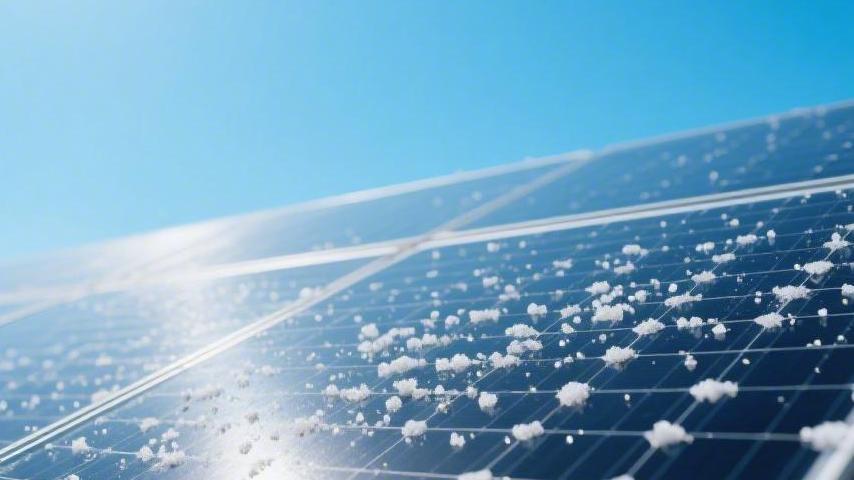
Voiding Your Warranty
In Black and White
When you open a photovoltaic module manufacturer's official website and download that 2.5 MB, typically 30- to 50-page "Limited Warranty Statement," please turn directly to Article 6 or 7 regarding the "Exclusions" details. The top five tier-one module manufacturers globally all explicitly state in their legal documents that any unauthorized chemical exposure, corrosive environment exposure, or improper cleaning methods will immediately terminate both the original 12-year materials and workmanship warranty and the 25-year linear power output warranty.
In the standard IEC 61215 and IEC 61730 certification tests, photovoltaic modules indeed passed a 96-hour Salt Mist Corrosion Testing, but this merely represents that the modules can resist natural salt mist corrosion at a 5% concentration in the atmosphere of coastal areas. It cannot withstand the 20% to 30% highly concentrated granular industrial snow-melting salt that you spread directly onto the glass surface.
Once you sign that $15,000 system contract, this 8000-word warranty agreement carries 100% legal binding force. The manufacturer's after-sales terms usually include a clause stating "the use of abrasive, corrosive, or cleaning agents with a pH outside the range of 6.5 to 8.5 is strictly prohibited." Not only does the pH of the liquid from dissolved industrial salt fluctuate, but its physical abrasive properties directly violate the ban on "abrasive materials."
Detecting the Salt
When you notice a drop in power generation and attempt to initiate a Return Merchandise Authorization (RMA) claim process, the manufacturer will typically require you to first take 5 to 10 high-resolution on-site photos and fill out a 20-question fault declaration form. If it passes the preliminary review, you will need to front $150 to $200 for one-way shipping to send that 22-kilogram problematic module back to a regional testing center that might be over 800 kilometers away.
In a professional laboratory with a constant temperature of 25°C and 40% relative humidity, technicians will use a Scanning Electron Microscope (SEM) coupled with an Energy Dispersive Spectrometer (EDS) to conduct elemental analysis on the corrosion points of the aluminum alloy frame. As long as the mass percentage of chlorine (Cl) detected in a sample area per square centimeter exceeds 0.1%, or sodium chloride crystal residues smaller than 50 micrometers in diameter are found in the gaps of the sealant strips, the laboratory will immediately issue a "Non-Manufacturing Defect Rejection Report."
The precision of this spectral analysis is at the parts per million (ppm) level. Even if you experience 10 heavy rainfalls with over 20 millimeters of precipitation each in the 3 months following the salting, the trace amounts of salt remaining in that 0.5-millimeter wide, 10-millimeter deep groove of the aluminum frame will still be accurately locked onto by the instruments within 15 minutes.
Cost Breakdown Comparison
Expense Item | Under Normal Warranty (USD) | After Salt Damage Rejection (USD) | Notes |
Module Replacement | $0 | $280 - $350 | Retail price of a single 400W module |
Logistics & Shipping | $0 | $150 - $200 | Special freight costs for large items |
On-site labor | $0 | $375 - $500 | Labor fee for two electricians for 3 hours |
Testing fees | $0 | $100 - $150 | Lab testing labor fee |
Dismantling & Disposal | $0 | $50 - $80 | Compliant recycling fee for the old module |
Total Expenses | $0 | $955 - $1280 | Actual loss for a single panel |
The Rejection Notice
The moment you receive the claim rejection email, you must decide within 7 business days whether to repair it at your own expense or let the system run with the faults. If you decide to replace the three damaged panels, in addition to paying the roughly $1,000 in materials and logistics fees listed in the table above, you will also need to book an on-site service with a local licensed electrician.
In North America, the hourly rate for a NABCEP-certified photovoltaic installation technician is between $85 and $125, and there is usually a 4-hour minimum charge. Removing three panels located in the middle of the roof requires first removing five to six originally intact surrounding panels, involving the disassembly and reassembly of about 20 MC4 connectors and 15 meters of copper grounding wire. The entire construction process typically takes 4 to 6 hours.
The 10-year Workmanship Warranty provided by the installer also does not cover problems caused by "improper operation" by the homeowner. When the installation company sees the white salt stains remaining in the roof gutters, they will pull out Article 12 of the contract regarding the "Homeowner's Maintenance Responsibilities," refuse to provide a free on-site visit, and hand you a bill that includes a $150 Truck Roll Fee.
Collateral Failures
Salting behavior doesn't just void the warranty of the photovoltaic modules themselves; it also affects each microinverter or optimizer, priced between $150 and $200. The microinverters installed on the back of the modules typically use cast aluminum housings with an IP67 protection rating, and the spacing between the cooling fins is only 10 to 15 millimeters.
When snowmelt containing highly concentrated chloride ions flows over these cooling fins, it will corrode the serial number labels and grounding marks on the casing within six months. Once the inverter fails (microinverter warranties are usually 25 years) and the manufacturer requires it to be sent back for testing, if obvious signs of chemical corrosion are found on the casing or the labels are illegible, the warranty for the entire inverter system, originally worth $5,000, risks being completely voided.
Furthermore, asphalt roof shingles usually have a 20- to 30-year warranty. When highly concentrated saltwater persistently washes over specific drainage paths on the roof, it will cause the colored mineral granules on the surface of the asphalt shingles to peel off by 40% within 3 years, leading to premature aging and cracking of the shingle base material. During on-site inspections, if roofing material manufacturers discover traces of unnatural chemical erosion, they will also refuse to cover your roof leak damages based on the "unauthorized chemical exposure" clause. This could involve over $10,000 in roof renovation costs.