What is the average output voltage of a silicon solar cell in direct sunlight
Under direct sunlight, the average working voltage of a silicon solar cell monomer is only in the 0.5 to 0.6V range, with an open-circuit voltage limit of about 0.65V.
In actual engineering operations, this voltage bottleneck must be overcome through series connection processes, such as connecting 36 standard monomers in series to output an effective working voltage of 18V, in order to meet the energy storage and drive requirements of conventional 12V systems.
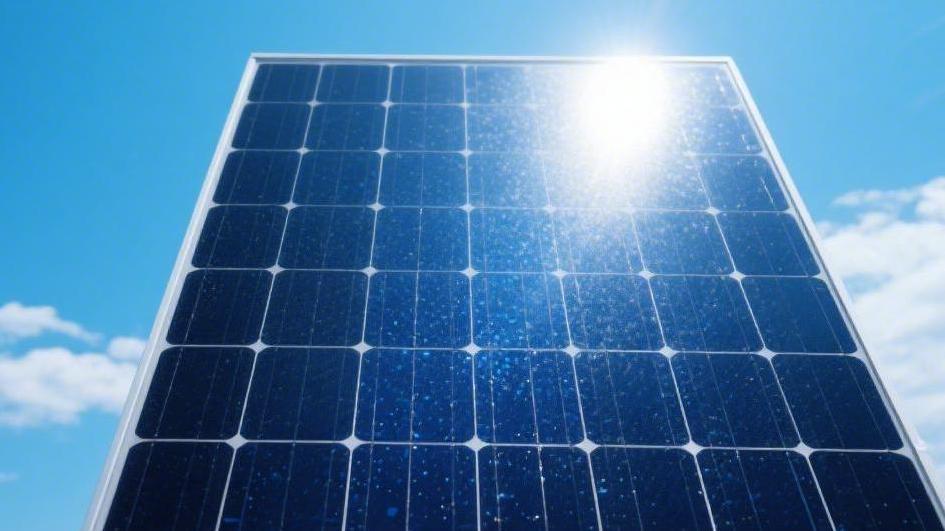
Average Voltage
Basic Voltage Values
Under direct sunlight, the output performance of a single silicon cell is very fixed. You can think of it as a 0.5V regulated power supply. Under standard light intensity of 1,000 W/m², even if the cell size increases from 166 mm to 210 mm, the fluctuation range of the single cell voltage is minimal, usually with a deviation not exceeding 0.05 V.
In practical applications, you need to focus on two core parameters: Open Circuit Voltage (Voc) and Working Voltage (Vmp). Open circuit voltage is the value measured directly with a multimeter when the cell has no load (not connected to appliances), usually between 0.6V and 0.72V. Once connected to a load like a light bulb or motor, the voltage will immediately drop to a working range of 0.48V to 0.55V. This 15% to 20% voltage drop is due to losses caused by the cell's internal resistance (about a few milliohms). For high-efficiency photovoltaic modules, manufacturers control the voltage precision of single cells within an error range of 0.01 V to ensure that after hundreds of cells are connected in series, the total voltage does not suffer from the "bucket effect" (weakest link) due to excessive dispersion of single cells, thereby guaranteeing the overall power output meets rated standards of 300 W or even over 600 W.
Material Sets the Upper Limit
The voltage upper limit of silicon solar cells is constrained by the bandgap of silicon atoms, which is approximately 1.12 electron volts. During the process of photons striking the silicon wafer to generate electron-hole pairs, the potential difference formed inside the PN junction has a theoretical ceiling, roughly between 0.7V and 0.8V. Currently, the open-circuit voltage upper limit of common P-type PERC cells on the market is basically locked at around 0.69V; whereas N-type TopCon cells, representing more advanced technology, can push the voltage up to 0.71V to 0.73V because their passivation contact layers are made thinner and more uniform; higher-tier Heterojunction (HJT) cells can increase the peak voltage to 0.75V through the perfect protection of amorphous silicon layers.
Although the voltage is only increased by about 0.05 V, when translated into the conversion efficiency of the entire module, it represents a leap from 21% to 25%. For a photovoltaic power station occupying 100 acres, this subtle voltage increase can increase annual power generation by more than 5%, directly shortening the investment payback period by about 0.8 years. The purity of the silicon wafer also has a direct impact on voltage; for every additional "9" in purity (e.g., from 99.999% to 99.9999%), the carrier lifetime increases significantly, allowing the output voltage to get closer to the theoretical limit of 0.7V.
Light Intensity Changes Current
Many people mistakenly believe that the stronger the sunlight, the higher the voltage. This is actually a misconception. The effect of light intensity on voltage is logarithmic, meaning that when light intensity increases from 200 W/m² to 1,000W/m² (a 5-fold increase), the voltage rise is usually only about 10%. However, current (Amperes) is strictly linearly proportional to light intensity. Under strong noon light, the current reaches its maximum value; for example, the short-circuit current of a 210 mm cell can exceed 18 A; but by 4 PM, when light intensity weakens by half, the current will also shrink to around 9 A.
This characteristic determines that solar cells can generate a voltage close to 0.5 V even on cloudy days, but because the current is extremely small (perhaps only 0.1 A), the actual output power (voltage multiplied by current) is almost negligible. In photovoltaic system design, engineers must consider this light intensity fluctuation. For instance, in an off-grid lighting system, although 18V board voltage (formed by 36 cells in series) can be measured in the early morning, charging of the cell will not begin until the light intensity exceeds 400 W/m², when the generated current is sufficient to overcome the controller's internal resistance.
Temperature Destroys Voltage
A silicon cell is a semiconductor device with a negative temperature coefficient. For every 1 degree Celsius increase in temperature, the output voltage decreases by about 0.3% to 0.4%. Under direct summer sunlight, the surface temperature of black or dark blue solar panels can easily soar to 65 degrees Celsius. Compared to the standard test condition of 25 degrees Celsius, this 40-degree temperature difference causes the single cell voltage to drop from 0.5V to about 0.42V.
This voltage drop creates a massive chain reaction in large arrays. For example, a DC system nominally rated at 1000V might drop to 850V operating voltage under extreme heat. If the voltage falls below the inverter's startup threshold (usually varying between 200V-500V), system efficiency will slide significantly. To hedge against this temperature risk, a key indicator in high-efficiency cell R&D is reducing the voltage temperature coefficient; every 0.01%/°C reduction can yield about 1% more energy in summer. During installation, it is usually required to leave at least 5 cm of air circulation space behind the module to lower the temperature by 5 to 10 degrees Celsius through natural convection, thereby saving that precious 0.02 V drop.
Series Connection to Accumulate Volts
Since the 0.5 V voltage of a single chip cannot be used directly, dozens of cells must be connected in series via metal busbars. The most common module specifications currently are 60-cell series or 72-cell series. The working voltage of a 60-cell module is about 30V, while a 72-cell module is around 36V, which perfectly matches a 24V energy storage system. To further reduce resistance loss, current cells universally adopt Multi-Busbar (MBB) technology, increasing the number of busbars from 3 to 16 or more. This design shortens the current transmission distance inside the cell by more than 50%, reducing Joule heat loss.
In more advanced half-cut technology, manufacturers cut a complete cell into two halves. This halves the current output of each cell. Based on the principle that resistance loss is proportional to the square of the current, internal loss can be reduced to one-quarter of the original. Although this doubles the number of internally connected units (e.g., from 72 to 144), the overall voltage remains unchanged, while output power can increase by 5W to 10W. This subtle adjustment in the process allows the lifespan of the entire panel to be stably maintained for over 25 years, with the annual power degradation rate controlled within 0.5%.
Two Types of Voltage Differences
When the PV panel is not connected to a load, the measured voltage of 0.6V to 0.7V (single cell) is a key basis for judging whether the cell is damaged. If the measured voltage is lower than 0.4V, it usually indicates hidden cracks inside the silicon wafer that are invisible to the naked eye, or leakage caused by uneven diffusion of the PN junction during production.
In the system operating state, the working voltage should be maintained near the maximum power point voltage. Modern inverters perform hundreds of voltage fine-tunings per second through MPPT algorithms to find that perfect output voltage point (usually about 80% of the open-circuit voltage).
If due to partial shading (such as leaves or bird droppings covering 2% of the area), the voltage of the shaded cell will drop sharply, even becoming a resistor that consumes electrical energy. At this time, the bypass diode will intervene and short-circuit this group of damaged cells. Although the voltage will drop by about 12V (calculated based on a group of 24 units), it avoids the risk of local overheating burning the module and protects the power generation efficiency of the remaining 98% area.
Key Behavior
How Voltage Changes
When you measure a silicon wafer under sunlight with a multimeter without any appliances connected, the reading usually jumps between 0.65 V and 0.72 V, which is called the open-circuit voltage. However, once you connect this cell to a small DC motor or light bulb, the voltage instantly drops, falling to the working range of 0.45V to 0.52V. This voltage drop phenomenon is caused jointly by the cell's internal ohmic resistance and charge recombination losses.
Experimental data shows that when the current increases from 0 A to the maximum working current (e.g., about 13A for a 182mm cell), the magnitude of the voltage drop is approximately between 20% and 25%.
Professional PV controllers utilize Maximum Power Point Tracking (MPPT) technology to constantly fine-tune the resistance load in the circuit multiple times per second, forcing the cell voltage to maintain at about 80% of the open-circuit voltage, thereby ensuring that the product of voltage and current reaches the maximum power value under the current sunlight intensity. For a 182mm specification single cell, it will lock onto operation around 0.54V as much as possible, at which point the output power is approximately 7.5W to 8W.
Under direct sunlight, although slight fluctuations in light intensity affect voltage, their impact is far less than that of current. According to semiconductor physics characteristics, for every 10-fold increase in light intensity, the voltage only increases by about 0.06 V.
Even between environments of noon strong light at 1,100 W/m² and morning light at 300 W/m², the voltage difference of a single cell is often less than 0.1 V. In contrast, the fluctuation of current is massive, potentially dropping directly from 10 A to 3 A. Therefore, when designing PV arrays, engineers usually treat voltage as a relatively stable constant parameter, while treating current as a variable that changes with the weather.
When Encountering Obstacles
When multiple silicon cells are connected in series to form a module (such as the common 72-cell version), the abnormal performance of individual cells creates a chain reaction on the overall voltage. If one cell is obstructed by leaves, bird droppings, or clouds covering more than 10% of its area, the voltage generated by this cell will rapidly drop from 0.5V to close to 0V, or even generate negative voltage under severe shading. Since current must be equal everywhere in a series circuit, this "lagging" cell becomes a giant resistor that not only fails to generate electricity but also consumes energy generated by other cells, converting it into heat and causing the local temperature to rise above 100 degrees Celsius.
To prevent this damage caused by sudden local voltage drops, modern solar panels have 3 to 4 bypass diodes connected in parallel within the junction box on the back.
Once a group of cells (usually 24 per group) deviates significantly from the normal voltage value due to shading, the bypass diode automatically conducts, allowing the current to bypass this group of "faulty" cells. Although doing so causes the instantaneous output voltage of the entire panel to drop by one-third (e.g., from 36V to 24V), it successfully protects the module from being burned out and maintains the continuous power generation capability of the remaining two-thirds of the area. This automatic adjustment mechanism is key to PV systems maintaining a lifespan of over 25 years in complex outdoor environments.
Long-term exposure in the wild also subjects silicon cell voltage output to Potential Induced Degradation (PID). A very high DC potential difference exists between the module frame and the silicon wafer, sometimes as high as 1000 V to 1500 V. This high-voltage environment causes charges like sodium ions to migrate within the tempered glass and encapsulation materials, accumulating on the cell surface and altering the electric field distribution of the PN junction.
If protection is improper, this phenomenon can cause the output voltage of a single cell to drop by more than 30% within just a few months, leading to voltage imbalance in the entire string. Currently, by adopting double-glass encapsulation technology and optimizing the thickness of the silicon nitride anti-reflection layer on the cell surface (usually controlled at 70 nm to 90 nm), this voltage attenuation rate can be reduced to less than 0.5% per year.
External Environmental Influence
Ambient temperature is the most active factor determining the voltage performance of single silicon cells. The bandgap of silicon material shrinks as temperature rises, leading to an accelerated rate of internal charge recombination. In actual measurement, for every degree the ambient temperature deviates from the standard 25 degrees Celsius, the voltage changes by about 0.002 V. On a module with 72 cells, for every 10-degree rise, the total voltage decreases by about 1.5 V.
In hot desert regions, the internal temperature of solar panels at noon in summer may reach over 80 degrees Celsius, at which point the working voltage, originally 37 V, will fall below the 30 V mark.
To optimize voltage performance, high-performance modules use materials with low temperature coefficients. For example, the temperature coefficient of N-type TopCon cells is usually -0.30%/℃, while ordinary P-type PERC cells are -0.35%/℃. Although it looks like a tiny difference of only 0.05%, in a macro environment with a 50-degree temperature difference, N-type cells can retain about 2% more voltage output than ordinary cells. For a multi-megawatt photovoltaic power station, this represents an additional revenue of tens of thousands of kilowatt-hours per year.
In coastal areas, if gaps larger than 0.5 mm appear in the sealing edge of the module, water vapor entry will cause oxidation of the internal series ribbons, increasing contact resistance. For every ohm increase in this resistance, an additional voltage drop of 10 V is generated at a 10 A current.
Pro Tip
Advanced Guide
When designing a PV system or doing a DIY assembly, understanding the advanced logic behind the 0.5V voltage of a single silicon cell can help you avoid at least 30% power loss. Many people, when calculating the number of series cells, only look at the nominal parameters on the back of the cell sheet but ignore line voltage drop.
When current flows from the cell through a busbar only 0.2 mm thick, then to an external 10-meter-long 4 mm² PV DC cable, the voltage drop generated per 10 Amperes of current is approximately between 0.2 V and 0.5 V. If you only connect 10 cells in series (total 5 V) to charge a 5 V lithium cell, due to line loss and the diode's approximately 0.7 V tube voltage drop, the actual voltage reaching the cell terminal may be only 3.8 V, making charging impossible.
Key Empirical Data Reference Table:
Module Type | Cell Quantity | Typical Open Circuit Voltage | Peak Working Voltage | Applicable Scenario |
Small Charging Board | 12 cells | 7.2V - 8.4V | 6.0V - 6.5V | 5V Electronic Device Charging |
12V System Board | 36 cells | 21.6V - 25V | 18V - 19.5V | 12V Cell System |
24V System Board | 72 cells | 43.2V - 50V | Detailed explanation of average output voltage of silicon solar cells under direct sunlight | |
Under standard test environments, the average output voltage of a single monocrystalline or polycrystalline silicon cell stabilizes between 0.5V and 0.6V. Whether it is the early 156.75mm small-size silicon wafer or the current mainstream 182mm or 210mm large-size specifications, the voltage generated is mainly determined by the physical bandgap of the silicon material itself and has no direct linear relationship with the size of the light-receiving area. The open-circuit voltage of mass-produced monocrystalline silicon PERC cells is usually around 0.68V, and when connected to a load and working at the maximum power point, the voltage drops to around 0.52V.
To drive a USB charging device with a rated voltage of 5V, it is physically necessary to connect at least 10 to 12 cell units in series to ensure that after deducting line losses and about 10% power fluctuation, stable voltage output can still be maintained. Currently, the conversion efficiency of mainstream cells is distributed between 22.5% and 24.8%, with a thickness of about 160 microns to 180 microns. This precise physical structure ensures the stability of current flow under strong direct light.
How Experts See It
When building or maintaining a PV system, merely knowing the average value of 0.5 V is not enough. Senior technicians predict the health of the system through subtle voltage jumps. A detail often overlooked is that the voltage stability of a single cell is actually a touchstone for measuring module quality. When you face a 36V panel composed of 72 cells connected in series, if you want to squeeze every bit of voltage potential out of every silicon cell in a real-world environment, you must step out of the theoretical laboratory cognition of 0.5V.
A detail often ignored is the voltage drop caused by connection resistance. Under a large current of 10 amperes, even a standard PV DC cable with a length of only 5 meters and a cross-sectional area of 4 mm², will produce a voltage drop of about 0.22 V. For a single cell with an output base of only 0.5 V, this near 50% voltage loss caused by improper line selection is devastating. Therefore, senior engineers strictly control the DC side voltage drop ratio within 1% when arranging arrays; in a 1000V string system, the total voltage drop cannot exceed 10V.
To more intuitively compare the voltage performance of different technology paths under direct light, we can refer to the mass production data in the table below:
Cell Technology Type | Typical Open Circuit Voltage (Voc) | Typical Working Voltage (Vmp) | Temp Coefficient (Voltage/℃) | Conversion Efficiency Range |
Conventional Polycrystalline | 0.63V - 0.65V | 0.45V - 0.48V | -0.33% | 18% - 20% |
Monocrystalline PERC | 0.67V - 0.69V | 0.50V - 0.54V | -0.31% | 22% - 23.5% |
N-Type TopCon | 0.71V - 0.73V | 0.58V - 0.61V | -0.28% | 24% - 25.5% |
Heterojunction (HJT) | 0.74V - 0.76V | 0.62V - 0.65V | -0.24% | 25% - 26.5% |
From the table, it can be seen that choosing N-type cells or HJT cells is not just for that 1% to 2% efficiency improvement, but more importantly, they possess a higher working voltage base and superior temperature stability. At noon in summer, when the panel temperature reaches 65 degrees Celsius, HJT cells can still maintain a working voltage of about 0.56 V due to their extremely low temperature coefficient, while conventional cells may have fallen below 0.4 V. This voltage retention capability in extreme environments directly determines the cumulative power generation revenue of the system over its full life cycle (usually 25 to 30 years).
At the system integration level, matching the inverter's voltage startup threshold is another advanced technique. Most grid-tied inverters have a startup voltage set between 150V and 200V, while the lower limit of the optimal conversion efficiency range is usually around 500V. If the number of series cells per group is reduced to save on wire material, causing the string voltage to run below 400 V for a long time, the boost circuit inside the inverter will work frequently, generating an additional 3% to 5% energy conversion loss. The ideal strategy is to calculate the lowest value after voltage drop based on the local historical maximum temperature, ensuring it still sits at the peak of the inverter efficiency curve.
Furthermore, regarding this tiny voltage unit of 0.5 V, preventing voltage dispersion caused by "hidden cracks" is the secret to maintaining system longevity. Silicon wafer thickness has been reduced from the early 200 microns to today's 130 microns, significantly reducing mechanical strength.
During installation, if construction personnel step directly on the modules, or if fixing bolts are torqued beyond the prescribed 8Nm to 12Nm, micro-cracks imperceptible to the naked eye will be generated inside the silicon wafer. These cracks will cut off local current paths, causing the working voltage of a single cell to deviate by more than 0.1 V in a short time. This dispersion will trigger a hot spot effect in the entire string circuit, making the temperature of the damaged panel more than 30 degrees Celsius higher than the surrounding ones, eventually leading to scorching of the encapsulation backsheet or even fire.
For small off-grid DIY players, if you need to charge a 3.7V lithium cell, do not blindly believe in so-called 12V nominal voltage panels. Considering the charging controller requires a pressure difference loss of about 1V to 2V, and the 20% voltage drop that may occur on cloudy days, choosing a custom board composed of 10 to 12 cells in series with a working voltage of around 5.5V to 6V is the most cost-effective solution. This not only avoids the efficiency loss brought by expensive buck-boost modules (usually 10% to 15% loss) but also maintains the charging state even in low-light environments with a light intensity of only 200 W/m².