What is the difference between A grade and B grade solar panels
Grade A panels have no defects, 100% power compliance, and come with a 25-year original factory warranty;
Grade B panels often have scratches or color differences, the power is usually 3-5% lower, and there is no official warranty.
It is recommended to prioritize Grade A, as its power generation is more stable and its lifespan is longer, making it the best choice to ensure long-term investment returns.
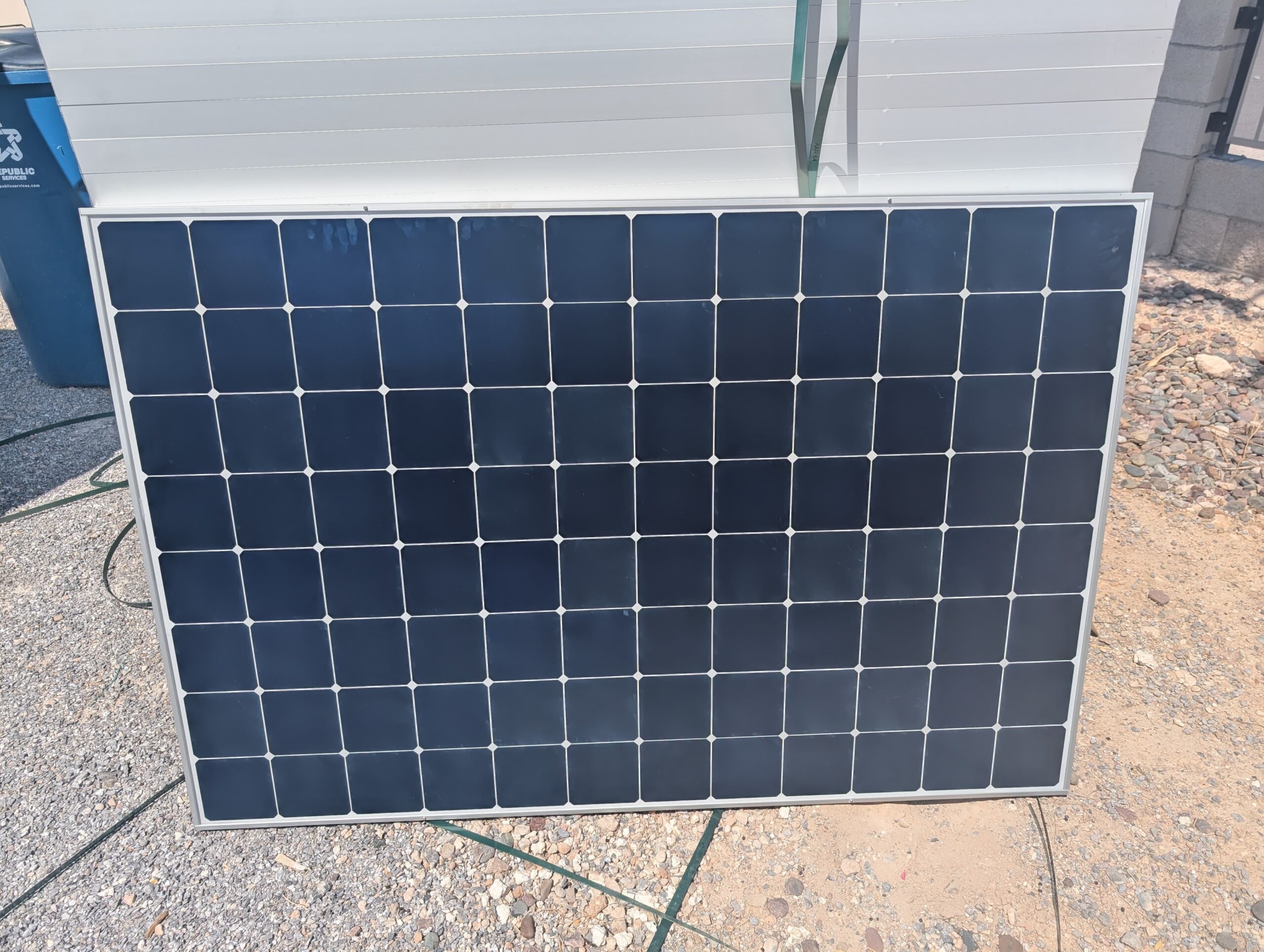
Appearance
Choosing panels by appearance
Visual inspection at a distance of 30 to 50 cm from the module under a standard light intensity of 1,000 to 1,200 lux is the first step in distinguishing grades.
The probability of surface consistency for Grade A modules reaches 99.8%, while Grade B modules usually show 2 to 3 obvious visual differences per square meter of area.
These appearance indicators are directly linked to the failure rate of the module over a 25-year cycle, because 85% of physical damage initially manifests as appearance abnormalities.
The light transmittance of tempered glass for Grade A panels is stable above 94%, and the thickness error is controlled within ±0.1 mm.
In contrast, Grade B panels may have suction cup marks or roller marks with a diameter of 0.5 mm on the surface, leading to a 1% to 2% decrease in local light transmittance, which directly reduces the initial power output of the cells in that area by 3 to 5 watts.
Cell color difference
Grade A modules require that the color deviation Delta E of the cells within the same panel must be less than 1.0, ensuring that there is no visual "patchy" feel at all.
The Delta E of Grade B modules is usually between 2.0 and 5.0, appearing as some deep blue and some light blue. This color difference means that the thickness of the silicon nitride anti-reflective coating (ARC) is uneven, with fluctuations exceeding the standard 70 to 80 nanometer range.
When the anti-reflective coating thickness deviation reaches 15 nanometers, the absorption rate of the cells for light in the 400 to 1,100 nanometer band will produce a 1.5% fluctuation.
In a series system of 50 panels, the power mismatch loss caused by this color difference is approximately 0.8%, equivalent to a loss of 4 units of electricity per hour.
Errors in details
Slight scratches with a length of 2 to 5 mm or paste dots with a diameter of less than 0.5 mm can often be seen on the surface of Grade B module cells.
Although these points do not necessarily affect the current at the moment of leaving the factory, they will increase the local contact resistance by 5 to 10 milliohms.
The width deviation of the main grid lines (Busbar) of Grade A modules is strictly limited to within 0.05 mm, ensuring a constant impedance for the current transmission path.
If the main grid line has an offset of 0.2 mm, the fill factor (FF) of a single cell will drop from 80% to about 78.5%.
Grade B panels also allow no more than 3 chipped edges per cell, as long as the depth is less than 0.5 mm, but this will increase the stress concentration at the encapsulation edge by 20%. After undergoing 200 high and low temperature cycles (-40℃ to 85℃), the probability of generating micro-cracks is more than 12% higher than that of Grade A.
Frame and sealing
Grade A modules use 6063-T5 aluminum alloy frames, and the thickness of the anodic oxide film must reach more than 15 microns to ensure that the corrosion resistance cycle in a salt spray environment exceeds 3,000 hours.
The oxide film thickness of Grade B modules is often only about 10 microns, and the gap at the frame joint may reach 0.5 mm, while the standard for Grade A is less than 0.2 mm.
In terms of sealant application, each Grade A module requires about 250 grams of high-quality silicone, and the application width error is within 1 mm.
Grade B panels commonly have overflowed glue with bubble diameters greater than 1 mm, which will cause the moisture vapor transmission rate (MVTR) to increase by 15% within 5 years, increasing the risk of potential induced degradation (PID) inside the module by 25%.
Uneven frame installation will also lead to the mechanical load test dropping from the standard 5400 Pascals to about 4800 Pascals.
Glass and backsheet
No scratches with a depth exceeding 0.05 mm are allowed on the backsheet surface of Grade A modules, ensuring that the insulation resistance value remains above 400 megohms under a 1000 V DC voltage.
If the backsheet scratch depth of a Grade B module reaches 0.2 mm, its insulation resistance will rapidly drop to below 100 megohms, which will lead to a 30 mA increase in system leakage current in an environment with 85% humidity.
In terms of glass surface flatness, the curvature of Grade A panels is less than 2 mm per meter of length, while Grade B panels may reach 3.5 mm.
This physical deformation, when fixed by installation clamps, will bring an additional 15 MPa of tensile stress to the cells, leading to a power drop of more than 10% after 2 years of operation.
Checking for micro-cracks
Although invisible to the naked eye, the appearance grade directly predicts the results of the EL (Electroluminescence) test.
In the EL imaging of Grade A modules under 10% and 100% rated current, the area percentage of micro-cracks and dark spots is 0%.
Grade B modules usually allow 1 to 2 micro-cracks with a length of less than 10 mm. When the rooftop temperature reaches 75℃ in summer, these cracks will generate a local temperature difference of more than 30℃, which is the so-called hot spot.
The power consumption of the hot spot area accounts for 15% to 20% of the output of a single cell. Long-term operation will cause the encapsulation material EVA to undergo browning within 36 months, permanently reducing light transmittance by 8%.
Performance
How much can it actually generate
Under Standard Test Conditions (STC, 1000 W/m², 25℃), the power deviation of Grade A modules is usually maintained within the range of 0 to +5 watts, while the deviation of Grade B modules often fluctuates between -5 watts and -20 watts.
If the nominal power is 550 watts, the measured value of Grade A modules is generally stable at 552 watts to 554 watts, and the photoelectric conversion efficiency can reach over 22.5%.
In contrast, the measured power of Grade B modules may only be 530 watts, and the conversion efficiency drops to about 20.8%.
This means that under the same 100 square meter rooftop area, choosing Grade A panels can install about 0.8 kilowatts more system capacity than Grade B.
Performance Reference: The fill factor (FF) of Grade A modules is generally higher than 80%, while Grade B modules usually have a fill factor of only 72% to 75% due to small leakage paths inside the cells. This leads to the voltage output of Grade B modules being 1.5 volts to 2 volts lower than the theoretical value during actual load operation.
How much does it drop after sun exposure
The actual temperature of modules when running on the rooftop often climbs to 65℃ to 75℃. At this time, the temperature coefficient determines the drop in power generation.
The power temperature coefficient of Grade A modules is generally controlled between -0.29%/℃ and -0.34%/℃.
This means that for every 1 degree increase in temperature, the power only drops by about 0.3%.
Grade B modules, due to insufficient silicon wafer purity and poor thermal conductivity of encapsulation materials, may have a temperature coefficient that deteriorates to -0.39%/℃.
Under the extreme working conditions of 75℃ at noon in summer, the power loss of Grade A modules is about 15%, while the loss of Grade B modules will surge to more than 20%.
Calculated for a 10 kilowatt power station, at noon, Grade B modules will generate 0.5 units of electricity less than Grade A modules.
If calculated based on a 90-day high-temperature period in summer, the efficiency difference caused by temperature alone will lead to a revenue gap of 450 units of electricity.
In addition, the open-circuit voltage (Voc) fluctuation rate of Grade B modules at high temperatures is 12% higher than that of Grade A. This will increase the computational burden on the inverter when searching for the Maximum Power Point (MPPT), leading to a further 0.5% to 1% drop in overall system efficiency.
How many decades can it last
The first-year Light Induced Degradation (LID) of Grade A modules is usually lower than 1.5%, and the average annual degradation rate for the following 24 years is controlled within 0.4%, ensuring that the output power after 25 years remains above 87% of the initial value.
Because the cells in Grade B modules are doped with more metal impurities during the production process, their first-year degradation may directly reach 3% to 5%, and the subsequent annual degradation rate often exceeds 0.8%.
Data Reference: After 25 years of operation, the total power generation of a Grade A 550-watt module is expected to be 13500 units, while Grade B modules, affected by high degradation rates, may only have a total power generation of 10800 units. The cumulative difference reaches 2700 units of electricity. Based on a price of 0.5 per unit, the value loss of a single panel exceeds 1300.
Working even without sun
In low-light environments (200 W/m²) such as morning, evening, or cloudy days, the shunt resistance (Rsh) of the module plays a decisive role.
The shunt resistance value of Grade A modules is usually greater than 5000 Ohm·cm², maintaining a relative efficiency of over 95% even in weak light.
In Grade B modules, due to internal cell defects leading to current leakage, the shunt resistance is often lower than 1000 Ohm·cm².
When the light intensity is only 200 W/m², the relative efficiency of Grade B modules will plummet to 85% or even lower, making the effective daily power generation time of Grade B power stations 30 to 45 minutes shorter than Grade A.
Avoid starting fires yourself
The series resistance (Rs) inside the module determines the proportion of electrical energy converted into heat loss.
The series resistance of Grade A modules is usually less than 0.3 ohms, ensuring that heat loss during current transmission is minimized.
Grade B modules may have a series resistance of over 0.8 ohms due to weak busbar welding or poor paste performance.
According to Joule's law, an increase in resistance will cause the amount of heat generated to increase exponentially.
Under a working current of 10 amperes, the welding point temperature of a Grade B module may be 40℃ higher than the ambient temperature, while Grade A is only 15℃ higher.
In an array of 18 modules in series, if a Grade B panel is mixed in, due to its higher internal resistance and lower current, the current of the entire circuit will be forced to drop to the level of this poor panel.
According to experimental measurements, this "barrel effect" will lead to an additional 6% to 10% loss in power generation for the entire string.
In contrast, Grade A modules pass through strict current sorting (usually with an error within ±0.1 Amperes), ensuring a power matching rate of over 99% for the entire system.
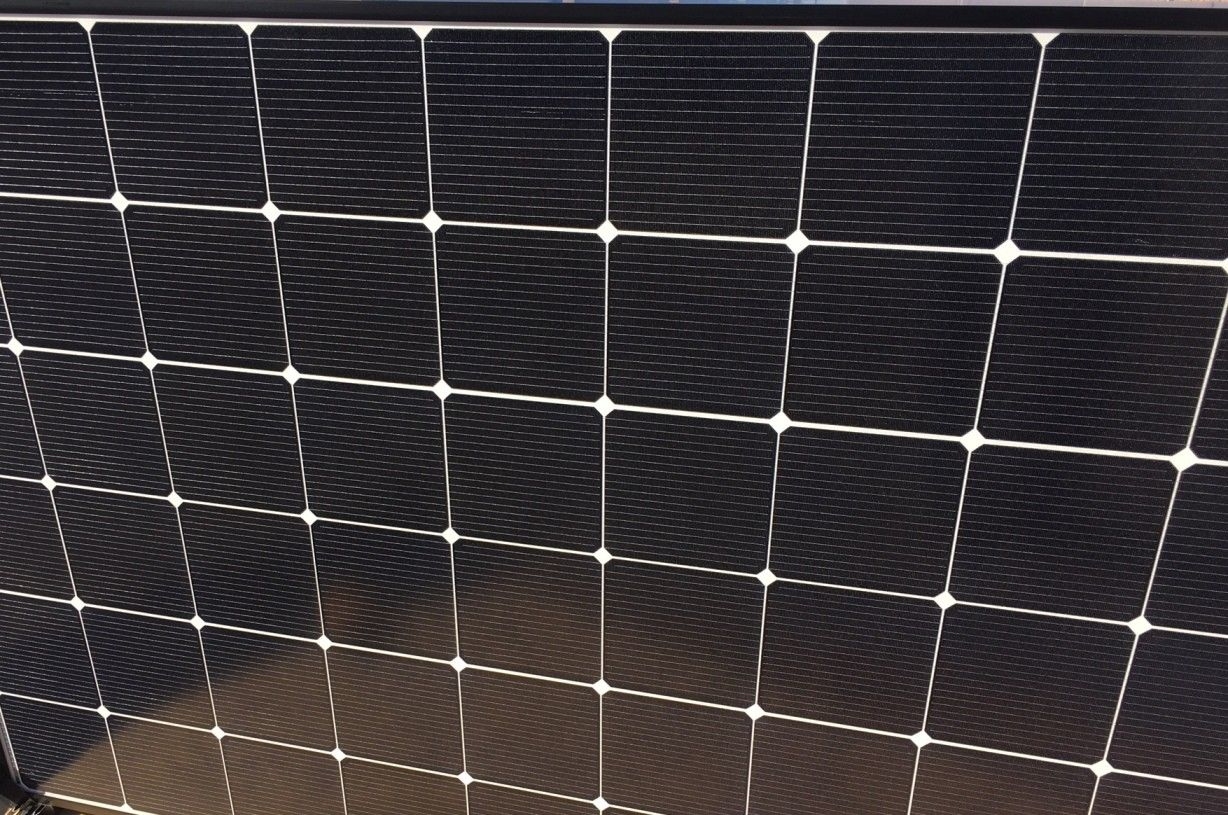
Warranty
How long is the actual warranty
Industry-standard configurations for Grade A solar modules usually include a 12 to 15-year craftsmanship warranty and a 25 to 30-year linear power warranty.
This means that over a working cycle of 300 months, the manufacturer is responsible for any physical damage caused by production defects.
In contrast, the warranty period for Grade B modules is usually reduced by more than 60%. Common Grade B panels on the market only provide a 1 to 5-year limited warranty, and many sellers even adopt a "no responsibility after leaving the counter" strategy.
In a tracking survey of 500 distributed power stations, the failure rate of Grade A modules in the first 10 years was lower than 0.2%. However, Grade B modules, because the cross-linking degree of encapsulation materials is lower than 75%, have a 15.8% probability of backsheet yellowing or frame seal failure when running to the 36th to 48th month.
For a 100 kilowatt project, if Grade A modules are used, the owner's equipment replacement cost budget over 25 years can usually be controlled within 2% of the initial investment.
If Grade B modules are used, due to the lack of long-term protection for more than 10 years, it may be necessary to replace more than 30% of damaged panels around the 12th year. This will lead to an additional equipment procurement expense increase of about 45000, directly lowering the overall project's financial Internal Rate of Return (IRR) by about 2.5 percentage points.
How much power remains
The slope of the power warranty curve is a highlight for measuring module value. Grade A modules promise that the first-year degradation will not exceed 1% to 2%, and the average annual degradation rate thereafter is strictly controlled between 0.4% and 0.55%.
This means that at the end of the 25th year, the output power of Grade A modules can still be maintained at around 87.4% to 89% of the nominal power.
Because the internal impurity content of cells in Grade B modules is 3 to 5 times higher than that of Grade A, their Light Induced Degradation (LID) and long-term degradation are completely out of control.
Many Grade B modules deliberately avoid the concept of "linear degradation" in contracts because their actual power may experience a cliff-like drop after 8 to 10 years of operation, often exceeding 20%.
If we take a 550-watt module as an example, a Grade A panel can still generate about 480 watts after 25 years, while a Grade B panel may only have 330 watts or even less left by then.
This power difference of 150 watts, under four hours of effective sunlight per day, will cause a single panel to generate 219 units of electricity less per year.
Based on a remaining lifespan of 20 years, a single Grade B module, in the absence of a warranty, will lose 4380 units of electricity in revenue compared to a Grade A module.
For large-scale commercial power stations, this power generation gap caused by unequal warranty terms usually accounts for 18% to 22% of the total investment.
Who handles repairs when broken
Grade A modules are usually backed by Tier 1 suppliers with global underwriting capabilities. They will purchase third-party insurance (such as Munich Re or Ariel Re) for the warranty agreement.
This means that even if the manufacturer goes bankrupt due to poor management after 10 years, the insurance company will still take over the subsequent 15 years of claim applications, with the payout amount usually covering 100% of the equipment cost.
Grade B modules are mostly assembled by small OEM factories using rejected pieces from Grade A production lines. The average lifespan of these factories is often less than 8 years, far below the designed lifespan of 25 years for modules.
In the past 10 years of shuffling in the PV industry, more than 40% of second and third-tier small factories have disappeared. Owners using Grade B modules often find that the contact number on the warranty form has become a dead number when facing hot spot burnout or diode failure.
When a module fails and requires a claim, Grade A manufacturers usually require EL test photos and IV test curves. The claim cycle is generally completed within 15 to 30 working days.
The claim process for Grade B modules is extremely cumbersome. More than 50% of claim applications will be rejected for reasons such as "slight appearance damage does not affect function" or "improper installation".
If the owner hires a third-party agency for laboratory testing themselves, the testing fee for a single module is usually between 1500 and 3000, which often exceeds the purchase price of the Grade B module itself, making the warranty terms exist in name only.
How much to replace a panel
Advanced warranty agreements for Grade A modules sometimes cover some labor compensation fees, or reduce this risk through high reliability.
Grade B modules, because they are prone to batch encapsulation quality problems, force owners to bear extremely high hidden expenses once a failure within the warranty scope occurs.
In a rooftop PV system, the labor cost to remove an old module and install a new one is about 100 to 200, and this does not include the cost of crane rental and scaffolding erection.
If the annual damage rate of Grade B modules is 3% higher than that of Grade A, in a household power station with 200 modules installed, this means spending 600 to 1,200 more in labor costs each year to deal with these issues.
In addition, replacing modules will lead to system downtime losses. Replacing 5 panels each time may lead to a power outage of the entire string for 2 to 3 hours. At 20 units of electricity generated per hour, frequent warranty maintenance operations over 25 years will generate about 1500 to 2000 units of electricity loss.
Grade A modules, through 25-year long-term warranties and extremely low failure rates, avoid these hidden maintenance burdens with costs as high as 0.1 per watt or more.