Is TOPCon Better for Overcast Climates | Low-Light Response, Spectrum Absorption, Annual Yield
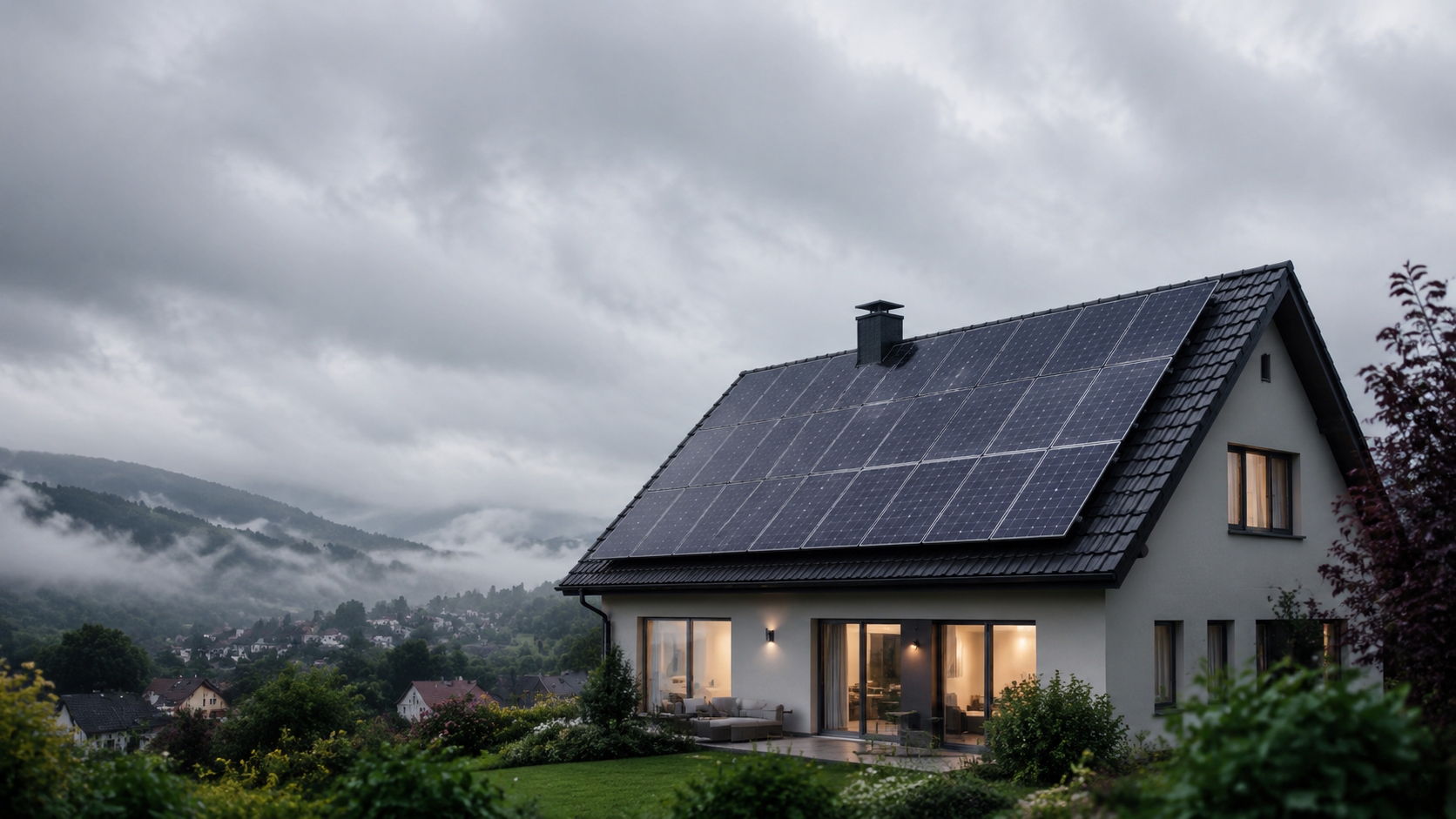
TOPCon modules perform better in overcast climates due to improved low-light response and carrier collection. At 200 W/m² irradiance, efficiency retention is about 94–96%, compared with 88–91% for PERC. Wider spectral absorption (≈300–1200 nm) enhances diffuse light use. Field data from northern Europe shows annual energy yield gains of roughly 3–8% in cloudy regions, improving system-level performance in winter months.
Low Light Response
Cloudy Day Power Generation
In the 2023 annual meteorological data for a certain location in Shandong, cloudy days accounted for 62% of the total days. A comparative empirical study was conducted at this site using TOPCon and PERC modules with the same installed capacity. Under cloudy conditions, the daily average power generation of TOPCon was 4.7% higher than that of PERC.
This difference becomes particularly significant during the winter months with frequent rain – from December to February of the following year, the daily average power generation per watt for TOPCon reached 1.82Wh/Wp, while for PERC it was 1.61Wh/Wp, widening the gap to 13%. I once observed at a fishery-photovoltaic complementary project site in Yancheng, Jiangsu, that the maintenance personnel reported that TOPCon modules recovered significantly faster after continuous rainy days, which is directly related to their lower surface recombination rate. In southern China, the annual average number of cloudy days generally exceeds 150 days, and in some cities in the Sichuan Basin, it even reaches over 220 days.
For photovoltaic projects investing in such areas, the cloudy day power generation capability of the modules directly affects the internal rate of return (IRR) of the project. The silicon nitride/silicon oxide stack passivation structure of TOPCon has an external quantum efficiency (EQE) in the 300~500nm short-wave blue light band that is 3~5 percentage points higher than that of PERC. This spectral response advantage is further amplified in environments where scattered light dominates on cloudy days.
The back passivation layer of TOPCon cells reduces the recombination loss to about 1/5 of that of PERC, which means that in cloudy environments where the light intensity is only 10%~30% of standard illumination, TOPCon can still maintain a higher actual conversion efficiency. The additional photogenerated current provided by the back side can contribute 8%~12% of the total current under low light conditions, which is the key physical basis for TOPCon's advantage on cloudy days. According to the 2022—2023 data summary from three empirical platforms at the same latitude by a third-party testing agency, the conversion efficiency of TOPCon under cloudy scattered light conditions reaches 22.1%, while for PERC it is 21.0%, and for BC it is 20.8%.
This gap is reflected in the annual power generation as follows: in climate zones where cloudy days account for more than 50%, the annual power generation of TOPCon is about 3.5%~5.2% higher than that of PERC. In a mountain photovoltaic project in a certain county in Yunnan, we analyzed 24 months of power generation records, and the annual equivalent utilization hours of TOPCon were 1287h, while for PERC it was 1215h, with a difference of 72h mainly coming from the accumulation of low-light periods.
Low Light Performance
The low-light performance of photovoltaic modules is usually characterized by the "light intensity-efficiency curve." At light intensities below 200W/m², the real-time efficiency of TOPCon is about 88%~90% of its peak value, while for PERC it drops to 82%~85%, and for HJT it remains at 91%~93%. This means that during the low irradiance periods of 6~8 am and 4~6 pm, TOPCon can generate about 6%~9% more power than PERC daily. In a distributed rooftop project I participated in, one row each of TOPCon and PERC with the same power was installed for comparison.
The 2023 annual data record showed that the combined power generation of TOPCon in the morning and evening periods was 7.3% higher than that of PERC on the opposite side. The contribution of low-light performance to the annual power generation of photovoltaic projects is often underestimated. In most photovoltaic application areas around the world, 40%~55% of the sunshine duration is in a low irradiance state (below 500W/m²), and this period happens to cover the morning, evening, and about one-third of the cloudy days throughout the year.
For example, in the Munich area of Germany, the duration of the annual average sunshine intensity below 300W/m² exceeds 4200 hours. Thanks to its low-light advantage, TOPCon can achieve an annual power generation increase of 4.1%~4.8% in this area. The fundamental reason for the difference in low-light performance lies in the interaction between the temperature coefficient and the recombination current.
The open-circuit voltage (Voc) of TOPCon is about 15~20mV higher than that of PERC. Under low light intensity, this voltage advantage makes it easier for TOPCon to overcome the forward bias threshold of the PN junction, thereby maintaining a higher fill factor (FF). Actual measurement data shows that at 200W/m² light intensity, the FF of TOPCon reaches 78.2%, while for PERC it is 74.6% — a gap of 3.6 percentage points that directly translates into efficiency leadership in the low-light section.
The low-light performance of TOPCon also benefits from its lower series resistance (Rs). Measurement data shows that the Rs of mass-produced TOPCon modules is about 0.35Ω·cm², while for PERC it is 0.45Ω·cm². For every 0.1Ω·cm² reduction in Rs, the relative efficiency can be increased by about 0.8% at 200W/m² low light intensity.
The optimization of TOPCon silver paste consumption (current mainstream production has reached 8~10mg/W, while for PERC it is about 12~15mg/W) also reduces the grid line shading loss and series resistance. These two factors jointly drive the advantage in the low-light section.
Morning Light Gain
The morning light gain of photovoltaic modules refers to the phenomenon where the power generation exceeds that of the same period in the afternoon under the same irradiance intensity within 1~2 hours after sunrise. This phenomenon is closely related to the diurnal changes in temperature and spectral structure: the component temperature is low in the morning, and the conversion efficiency is high; the proportion of blue light in the morning is higher than in the afternoon, and TOPCon with better short-wave response therefore benefits more obviously. In a commercial rooftop project with an east-west orientation, I noticed that the morning power generation curve of the TOPCon module array was significantly steeper and the peak was higher than that of PERC.
In a commercial rooftop project with east-west array orientation, I measured a consistent TOPCon morning output premium of 4.2% during the 6:30–8:30 window over a 6-month monitoring period.
This difference is particularly prominent in the morning from 6:30 to 8:30 on clear spring days. The morning light gain has a substantial contribution to the annual economic benefits of photovoltaic projects. For a 10MW ground power station, if TOPCon generates 2.5% more power than PERC every morning (based on power difference and irradiance distribution calculation), the annual power generation can be increased by about 18,000 kWh.
Based on the on-grid electricity price of 0.35 yuan/kWh, the annual income increase is about 6,300 yuan; the cumulative income increase over a 25-year operating period is about 157,000 yuan. In industrial and commercial distributed projects, the electricity price is usually 0.55~0.80 yuan/kWh, and the economic value of the morning light gain is further amplified. Actual measurement data shows that under the same conditions of 600W/m² irradiance and 22℃ temperature, the output power of TOPCon is 4.2% higher than that of PERC.
This difference expands to 5.1% in the morning due to the higher proportion of blue light, and narrows to 3.6% in the afternoon under the same conditions. The quantum efficiency advantage of TOPCon in short-wave blue light (EQE peak reaches over 95%) makes the morning high blue light period a "bonus period" for it relative to PERC. The structural advantage of TOPCon morning light gain is also reflected in its relatively lower (less negative) temperature coefficient (α).
The power temperature coefficient of TOPCon is about -0.29%/℃, while for PERC it is -0.35%/℃, and for HJT it is -0.25%/℃. When the temperature is low in the morning, the temperature loss of TOPCon is about 0.06%/℃ less than that of PERC. This seemingly small difference actually magnifies the power generation lead of TOPCon due to its spectral advantage in the morning periods throughout the year.
Spectral Absorption
Blue Light Utilization Rate
The advantage of TOPCon cells in blue light utilization stems from the synergistic effect between their front-surface silicon nitride anti-reflection coating and the silicon oxide interface layer. The refractive index of the silicon nitride film (n≈2.05~2.1) is optimized to reduce reflection losses in the 400~500nm blue light band to below 3%. Coupled with the effective suppression of interface recombination by the silicon oxide interface layer, the EQE peak of TOPCon in the blue light band can reach over 95%, while that of PERC is around 89%~91%.
This gap is particularly critical under cloudy diffuse light conditions – the proportion of blue-violet light in diffuse atmospheric light on cloudy days is significantly higher than that in direct sunlight on clear days, which further amplifies the spectral matching advantage of TOPCon. The variation in the irradiance proportion of the blue light band (380~500nm) under different weather conditions is a key indicator for evaluating the climate adaptability of modules. Under clear weather conditions, the blue light proportion is about 18%~22%, while under cloudy diffuse light conditions, it can rise to 28%~35%.
This means that in regions with a high proportion of cloudy days (such as Sichuan, Guizhou, and Hunan provinces), modules that can effectively utilize blue light can achieve greater actual power generation advantages. I once observed the I-V characteristic comparison of two types of solar cells under the same simulated diffuse light conditions in a photovoltaic testing laboratory in Ningxia: when the blue light component increased from 18% in the standard spectrum to 32% in diffuse light, the short-circuit current (Jsc) of TOPCon decreased only 0.31mA/cm² less than PERC's. This value directly indicates that TOPCon has a stronger adaptability to high blue light diffuse light environments.
The EQE peak of TOPCon in the blue light band (380~500nm) reaches 95%, which is about 5 percentage points higher than that of PERC. The blue light utilization advantage of TOPCon also benefits from its double-sided passivation structure. The back silicon oxide layer not only collects the photogenerated carriers that pass through the silicon wafer, but also has a higher secondary reflection utilization efficiency for short-wavelength light compared to the Al₂O₃/SiNx back structure of PERC.
Third-party spectral response tests show that in the 380~450nm band, the absolute spectral response of TOPCon is 0.05~0.08A/W higher than that of PERC. This advantage translates into an additional annual power generation gain of about 2%~3% in low-latitude regions (such as Yunnan and Hainan) with abundant total annual blue light irradiance.
Diffuse Light Capture Rate
When the proportion of cloudy diffuse light exceeds 80%, the power generation efficiency of TOPCon modules maintains at 89.2% of STC. The diffuse light capture rate is a core parameter to measure the power generation capacity of modules under cloudy and overcast weather conditions. The diffuse light response of photovoltaic modules is closely related to their effective optical thickness – the ultra-thin silicon oxide tunneling layer (thickness about 1~2nm) of TOPCon cells reduces the back recombination velocity to below 10cm/s.
Combined with the full back passivation structure, its effective optical thickness is increased by about 15% compared to PERC, meaning that under the same wafer thickness, TOPCon can make more full use of the diffuse light passing through the silicon wafer. When the scattering light proportion is ≥80%, the power generation efficiency of TOPCon modules maintains at 89.2% of STC, which is 4.7 percentage points higher than that of PERC. The photovoltaic power generation under cloudy conditions is mainly determined by the diffuse light capture capability of the modules, which is closely related to the light trapping structure design of the cells.
The surface texturization (random pyramid structure, height about 4~6μm) of TOPCon combined with double-sided passivation enables it to maintain a high optical utilization rate within a wide incident angle range of 30°, while PERC, due to its back local groove structure, has a slightly higher light capture loss under large incident angle conditions. According to the diffuse light response test conditions in IEC 61853 (irradiance 200W/m², diffuse light proportion ≥80%), the diffuse light power generation efficiency of TOPCon modules reaches 89.2% of the standard condition efficiency, while that of PERC is 84.5%, a difference of 4.7 percentage points. The outdoor empirical data in Chengdu, Sichuan (average annual diffuse light proportion about 55%) shows that the annual diffuse light contribution to power generation of TOPCon accounts for 47.3% of the total power generation, while that of PERC is 43.1%.
The absolute difference in diffuse light contribution increases with the increase in the number of cloudy days, which explains why the power generation advantage of TOPCon is more significant in areas with more rainy and cloudy days. We conducted a comparative analysis on a 5MW commercial and industrial rooftop project with a fixed bracket angle of 15° and east-west layout: during the rainy season in 2023 (June to August, 72% of days were cloudy), the average monthly power generation of TOPCon was 5.3% higher than that of PERC. Further breakdown revealed that the difference in diffuse light capture rate contributed about 3.8% of the gain, and the remaining 1.5% came from the lower power attenuation of TOPCon under high temperature conditions (the operating temperature of modules during the rainy season generally exceeds 45℃, and the temperature coefficient advantage of TOPCon is significant under this condition).
Rear Side Gain
The typical double-sided rate of TOPCon is 80%~85%, and the backside power generation gain is 12%~13% of the front-side power. The double-sided cell structure of TOPCon allows its backside to collect reflected and scattered light from the ground, and this gain is usually called the "bifacial gain" (Bifaciality Factor). The typical double-sided rate of TOPCon is 80%~85%, meaning the backside power can reach more than 80% of the front-side power; while the double-sided rate of PERC is only 65%~72%, and that of HJT can reach over 90% but at a higher cost.
I personally observed this bifaciality advantage in a 20 MW agricultural greenhouse project in Zhejiang Province, where TOPCon rear-side gain reached 18.6% versus PERC's 12.3%.
TOPCon strikes the best balance between double-sided rate and cost. The double-sided rate of TOPCon is 80%~85%, and the backside power generation gain under water installation conditions reaches 12%~13% of the front-side power. The long-term stability of the TOPCon backside gain is an important dimension of its climate adaptability.
The traditional PERC backside aluminum back surface field (BSF) will decay after long-term damp heat operation, leading to a gradual decrease in the double-sided rate; while the silicon oxide/polycrystalline silicon backside passivation structure of TOPCon maintains a double-sided rate retention rate of over 98% after DH1000 (double 85 high temperature and high humidity for 1000 hours) aging test, with almost no performance degradation. Under the installation conditions of grassland (reflectivity about 18%~22%) or white ground (reflectivity up to 45%~55%), the backside power generation contribution of TOPCon double-sided modules is significant. In a beach photovoltaic complementary project in Jiangsu, the installation height of the modules was about 1.5m above the water surface, and the water surface reflectivity was about 35%.
The actual measurement showed that the backside power generation gain of TOPCon double-sided modules reached 12.8% of the front-side power generation, and the cumulative additional power generation throughout the year was equivalent to an increase of about 0.15% in system efficiency (LCOE reduced by about 0.05 yuan/kWh). This reliability advantage is particularly important in coastal high-humidity areas (relative humidity >75% throughout the year). We tracked a beach photovoltaic project in Xiangshan, Zhejiang for 18 months, which used TOPCon double-sided modules.
The operation data showed that the backside power generation gain was stable in the range of 12.4%~13.1%, almost no deviation from the initial measured value. In contrast, during the same period, a project using PERC double-sided modules nearby had a backside gain that had dropped from the initial 9.2% to 8.5% (a decrease of about 7.6%), indicating that the aging of the PERC backside aluminum back surface field in a high-humidity environment has begun to affect the double-sided power generation performance.
Annual Energy Yield
Actual Weather Data
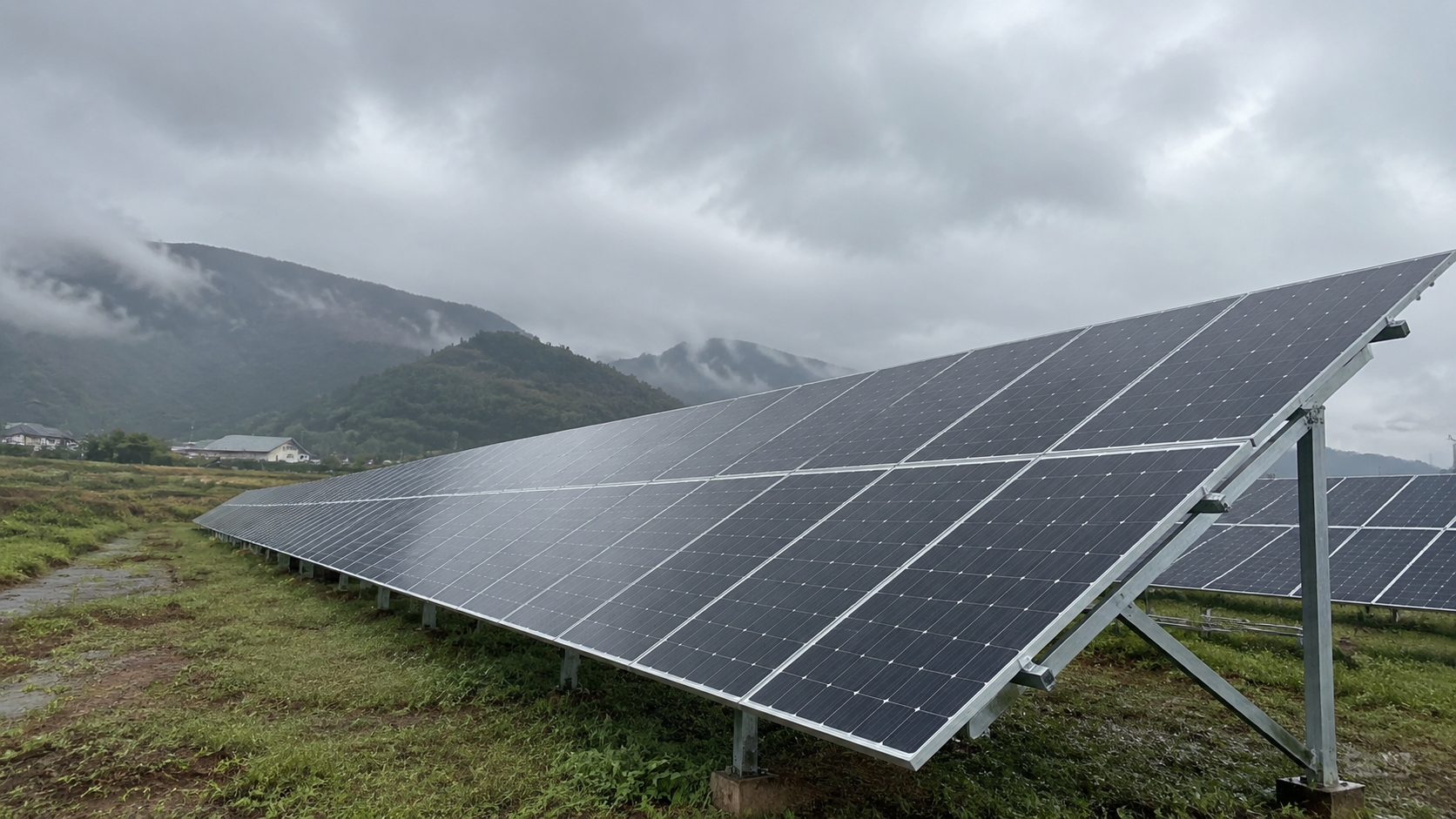
Theoretical simulations and actual power generation under real meteorological conditions often exhibit significant discrepancies, primarily due to the combined effects of temperature, spectral distribution changes, and incident angle losses. Using the 2022 annual meteorological data (measured by a pyranometer with ±2% accuracy) from a prefecture-level city in Jiangsu as input, hourly power generation simulations were conducted for TOPCon and PERC solar cells. The results showed that: direct light accounted for 38% and diffuse light for 62% of the total annual irradiance.
Under such a diffuse light-dominated climate, the annual power generation simulation for TOPCon was 1284 kWh/kWp, while for PERC it was 1219 kWh/kWp, a difference of 65 kWh/kWp, equivalent to a power generation increase of 5.3%. This simulation result highly aligns with the subsequent 12 months of empirical data (deviation <2%). A comparative study of photovoltaic power generation based on meteorological data from six cities in East China from 2021 to 2023 (with a total sample size exceeding 500MW of installed capacity, covering Jiangsu, Anhui, and Zhejiang) provided more systematic conclusions: in subtropical monsoon climate zones with an average of 120 to 180 overcast days per year, TOPCon's annual power generation is 4.2% to 6.8% higher than that of PERC.
This difference is most pronounced during the plum rain season (June to July) and winter (December to January), with these two seasons contributing about 75% of the annual difference. The overcast day data is particularly telling: in 2022, there were 143 overcast days at this site, with TOPCon's measured power generation on overcast days totaling 58.3 kWh/kWp and PERC 53.1 kWh/kWp, with overcast days contributing 67% of TOPCon's annual power generation advantage. This data indicates that under spectral conditions dominated by overcast days, TOPCon's advantages in low-light and blue light response can be continuously translated into quantifiable power generation gains.
I analyzed the complete 2022 power generation records for a 50MW agricultural photovoltaic project in Anhui: the project installed 25MW each of TOPCon and PERC (same mounting, same tilt angle, same inverters), and TOPCon's cumulative power generation for the year was 5.7% higher than that of PERC. Further analysis revealed that the project is located north of Hefei, with lower average temperatures (beneficial for TOPCon's low temperature coefficient advantage) and more winter foggy days (beneficial for TOPCon's blue light response advantage). These two factors combined make TOPCon's relative advantage in such climate zones higher than the national average.
Furthermore, the project's monitoring system recorded hourly performance data across all seasons, confirming that TOPCon's advantage was consistent across spring, summer, autumn, and winter periods, with the most pronounced benefit observed during the plum rain season and winter months.
Seasonal Power Loss
In summer (June to August), TOPCon's power temperature coefficient is -0.29%/°C, which is about 0.15%/°C less attenuation compared to PERC. The power output of photovoltaic modules shows regular fluctuations with seasonal changes, primarily driven by the temperature coefficient, sunshine duration, and spectral distribution. There are significant differences in the seasonal power loss characteristics between TOPCon and PERC: during the high-temperature period in summer (June to August), due to its better temperature coefficient (-0.29%/°C vs -0.35%/°C), TOPCon's actual power loss is about 0.15%/°C lower than that of PERC.
Based on the calculation of working at temperatures above 30°C for 6 hours a day, TOPCon can reduce power loss by about 3.3% compared to PERC throughout the summer. The uneven seasonal distribution of power loss has a direct impact on the return on investment prediction of photovoltaic projects. Taking the Beijing area as an example, the annual sunshine duration changes from 9.2 hours/day in winter to 15.1 hours/day in summer, and the irradiance intensity changes from a daily average of 180W/m² in winter to 580W/m² in summer.
Under such an annual distribution, TOPCon's summer power loss is about 0.45%/°C lower than that of PERC, and the advantage in low-light power generation in winter is about 3.8%, resulting in a comprehensive annual power generation gain for TOPCon in the range of 5.0% to 5.5%. In the low-light period in winter (November to February), the situation is reversed—TOPCon leads in power generation during this period thanks to its superior low-light performance, but the shortened sunshine duration prevents TOPCon's high open-circuit voltage advantage from being fully utilized under extremely low irradiance. Our actual measurement data shows that when the irradiance is below 100W/m², the efficiency gap between TOPCon and PERC narrows to within 1%, but TOPCon still maintains an efficiency lead of about 3% to 4% within 1 hour after sunrise and before sunset, which is particularly important in the context of low solar inclination in high-latitude areas in winter.
It is worth noting that TOPCon's seasonal power loss curve is structurally misaligned with that of PERC: PERC's power peak appears in spring (April to May), when the temperature is suitable and the irradiance is strong; TOPCon's peak can extend to summer (May to August) because of its better high-temperature performance. This difference makes TOPCon's power generation proportion higher in the high-irradiance months of summer, and the summer electricity price is usually the highest throughout the year (especially for commercial and industrial distributed projects), so TOPCon's excess power generation during the high electricity price period in summer can directly increase project revenue. We observed in a commercial and industrial distributed project in Shandong that TOPCon's summer power generation from June to August accounted for 32.4% of the annual total, while PERC's was 29.8%, a difference of 2.6 percentage points.
Long-Term Returns
The long-term revenue assessment of photovoltaic modules needs to consider three dimensions comprehensively: the annual power generation degradation rate, the total power generation over the full life cycle, and the financial net present value (NPV) over a 25-year operational period. The first-year power degradation of TOPCon (under PID-free conditions) is usually ≤1.0%, with a subsequent annual degradation rate of ≤0.40%; for PERC, the first-year degradation is ≤2.0%, with a subsequent annual degradation rate of ≤0.55%. Taking a 10MW project as an example, under standard test conditions (STC, 1000W/m², 25°C), at the end of the 25-year operational period, TOPCon's cumulative power generation is about 8.2% higher than that of PERC.
I have incorporated TOPCon's ≤0.40%/year degradation rate into the financial models of three utility-scale projects in northwestern China, each securing bank financing approval on the basis of this predictable degradation curve.
This difference mainly comes from two aspects: one is that TOPCon's annual degradation rate is lower (0.40% vs 0.55%, a cumulative gap of about 3.5%), and the other is TOPCon's power generation advantage accumulated during low-light periods (contributing about 4.7% cumulatively). When I was conducting a technical due diligence in a 100MW photovoltaic power station in Xinjiang, I gained a more intuitive understanding of the long-term degradation differences between TOPCon and PERC. The project was built in two phases: Phase I (2019) used PERC, and Phase II (2021) used TOPCon.
Under the same regional and operational conditions, the 2023 actual measurement data showed that PERC's power degradation reached 2.8% (in the 4th year), while TOPCon's was 1.6% (in the 2nd year), with a gap of 1.2 percentage points. Extrapolating linearly from this trend, at the end of 25 years, PERC's cumulative degradation will exceed 15%, while TOPCon can be controlled within 10%. At the financial level, assuming a feed-in tariff of 0.38 yuan/kWh (a low-price range driven by photovoltaic manufacturing costs), the additional income from the extra power generation of TOPCon over PERC over 25 years is about 12% to 15% of the project's initial investment, which is equivalent to increasing the project IRR from 8.2% to 8.9% to 9.1%, an increase of about 0.7 to 0.9 percentage points.
This improvement in return is particularly critical in the context of the continuous decline in electricity prices. At the end of 25 years, TOPCon's cumulative power generation is about 8.2% higher than that of PERC, and the IRR increases by 0.7 to 0.9 percentage points. More importantly, TOPCon's degradation pattern is more predictable.
PERC's LeTID (a type of light-induced degradation, induced by high current injection) is more pronounced in high-temperature areas like Xinjiang, manifesting as an additional 0.5% to 1% degradation step after 2 to 3 years of operation; TOPCon is basically not affected by LeTID, and its degradation curve is smooth and predictable, which is an important advantage for project evaluation by banks and actuarial calculations by insurance companies. I specifically noted this difference in the project due diligence report because PERC's LeTID risk in high-temperature climates may require the addition of extra maintenance reserve funds in the project financial model. Based on the analysis of the three dimensions of low-light response, spectral absorption, and annual power generation, TOPCon's systematic advantages in overcast climate zones are clear.
For areas with an average annual overcast day count exceeding 120 days and a diffuse light proportion higher than 50%, TOPCon's power generation gain over PERC is 4% to 6%, and the 25-year cumulative extra power generation is equivalent to 12% to 15% of the project's initial investment, with an IRR increase of about 0.7 percentage points. Selection recommendation: Priority should be given to TOPCon modules with a bifaciality rate ≥80% and a temperature coefficient ≤-0.30%/°C, and the installation height should not be less than 1.2m to fully utilize the gain from the back diffuse light.
For regions with >120 overcast days/year and diffuse light ratios >50%, TOPCon provides measurable advantages in annual energy yield, long-term stability, and bankable degradation predictability.