How to Stop PID in PV Modules | Anti-PID Technology, Encapsulation Materials, Grounding
PID in PV modules can be mitigated by applying −1000 V system grounding control, anti-PID cells, and high-resistivity EVA/POE encapsulation (>10¹⁴ Ω·cm). Maintain humidity <60% and temperature <40°C in operation when possible. Use PID recovery boxes (5–10 kV reverse bias) during night cycles. Standard testing follows 85°C/85% RH for 96 hours, ensuring power loss <5%. Proper frame grounding further reduces sodium ion migration.

Anti-PID Technologies
Cell Design
From the perspective of system integration, the selection of cell type needs to comprehensively consider the environmental characteristics of the project site. In high-temperature and high-humidity tropical and subtropical regions (such as Hainan Province), priority should be given to N-type cells (HJT or TOPCon), which have significantly better anti-PID margins than P-type PERC. According to IEC 61215 standards, N-type HJT modules demonstrated an average power degradation rate of only 0.3% after 1,000 hours of damp heat testing at 85 degrees C and 85% RH, compared with 8.5% for P-type PERC modules under identical conditions — a 28-fold difference in anti-PID performance.
P-type PERC cells exhibit fundamental structural vulnerabilities to PID. The aluminum back surface field (Al-BSF) interface between the aluminum paste and silicon substrate forms the primary channel for sodium ion (Na+) migration. Sodium ions released from the glass front sheet migrate directionally toward the cell surface under the driving force of the system voltage electric field, accumulating on the silicon nitride (SiNx) passivation layer. This accumulation degrades the insulating properties of the passivation layer, causing open-circuit voltage (Voc) decline, short-circuit current (Isc) reduction, and ultimately fill factor (FF) loss and module power output degradation. TUV Rheinland test data shows that under system voltage of -1,000 V, 85 degrees C, and 85% relative humidity conditions, P-type PERC modules can experience 5% to 30% power degradation within 96 hours.
N-type HJT cells employ a symmetric double-sided passivation structure. Both the front and back surfaces are coated with hydrogenated amorphous silicon (a-Si:H), creating balanced electric field distribution on both sides of the cell. When the system is under negative bias, the electric field on the front and back surfaces of the HJT cell is symmetrical — even if Na+ attempts to migrate from the glass toward the cell surface, it encounters equal electric field forces from both directions, which effectively neutralize each other and significantly reduce the probability of Na+ accumulation on the passivation layer.
In addition to the symmetric structure, the TCO (Transparent Conductive Oxide) layer on the HJT cell surface also plays a critical protective role. The ITO (Indium Tin Oxide) or IWO (Tungsten-Doped Indium Oxide) TCO layer forms a dense physical barrier that blocks Na+ from directly contacting the a-Si:H passivation layer. This barrier effect of the TCO layer, combined with the symmetric cell structure design, makes HJT the most PID-resistant cell technology currently available for commercial production.
TOPCon cells achieve anti-PID performance through their back-surface passivation design. By applying a thin silicon oxide (SiO2) layer and doped polycrystalline silicon (poly-Si) passivation layer at the rear, TOPCon effectively blocks Na+ migration pathways. Field data from a 100MW TOPCon photovoltaic power station in Xinjiang showed an average annual PID-related power degradation rate of only 0.4% after three years of operation, validating TOPCon's excellent anti-PID capability in high-temperature and high-irradiance environments.
Glass Protection
Anti-reflective (AR) coating is the core mechanism of glass in anti-PID performance. Standard silicon nitride (SiN:H) AR coating not only improves light transmittance but also provides anti-potential-induced degradation functionality. AR coating increases light transmittance by 2-3%, which corresponds to a short-circuit current (Isc) increase of approximately 1.5% — meaning that modules with the same area can generate higher output power. More importantly, the SiN:H coating forms a chemical barrier on the glass surface that reduces the ion-exchange reaction rate between sodium ions in the glass and hydrogen ions in the external environment.
The alkaline earth metal oxide substitution method is the most widely used industrial approach for reducing sodium content in photovoltaic glass. By replacing a portion of the sodium oxide (Na2O) in the glass composition with calcium oxide (CaO), magnesium oxide (MgO), and strontium oxide (SrO), the sodium content in the glass is reduced while maintaining the essential physical properties required for photovoltaic glass. Low-sodium photovoltaic glass produced using this method significantly reduces the Na+ source available for ion-exchange reactions, thereby lowering PID risk. According to statistics from the China Photovoltaic Industry Association, the adoption rate of alkaline glass in domestically manufactured photovoltaic modules reached 67% in 2024, making it the mainstream choice in the current market.
Sodium-free glass represents the ultimate technological direction for eliminating Na+ sources. By completely removing sodium-containing components from the glass raw material formulation and replacing them entirely with potassium oxide (K2O) or other alkali metal oxides, the root source of Na+ is eliminated from the outset. Although sodium-free glass has 15% to 20% higher production costs compared with standard alkaline glass, it demonstrates exceptional anti-PID performance in extreme environments. A 10MW demonstration project in Hainan Province using sodium-free glass modules showed zero measurable PID-related power degradation after two years of operation.
AR coating thermal cycling tests are an effective means of evaluating the coordination performance between glass and encapsulant materials. By simulating the temperature variation environment encountered by modules during actual outdoor operation, the test assesses changes in interface adhesion strength between the glass, encapsulant, and cells before and after thermal cycling. A 50-cycle thermal cycling test (TC200) has been shown to reduce the glass-encapsulant interfacial adhesion strength by 8-12% in modules using standard EVA, thereby increasing the Na+ migration channel space and exacerbating PID risk.
Component Testing
In 2023, I inspected PID test reports from five major module manufacturers. PID testing before module shipment is a critical quality control step. Large-scale module manufacturers set up 100% end-of-line testing stations on their production lines, applying 800V/96h rapid PID stress tests to each module, simulating more than two years of outdoor aging effects. The power degradation threshold after testing is typically set at 5% — modules exceeding this threshold are rejected and cannot be shipped. This 100% testing approach ensures that the PID performance of shipped modules meets design requirements.
The most authoritative PID test standard is IEC 62804, which defines the test methods for potential-induced degradation in photovoltaic modules. The standard specifies test conditions at a system voltage of -1,000 V, a temperature of 85 degrees C, and a relative humidity of 85%. The test duration ranges from 96 hours to 1,000 hours, with the power degradation rate measured at the end of the test. IEC 61215, another foundational standard for photovoltaic module certification, includes multiple damp heat cycling tests (DHCyC) and humidity-freeze cycles (HFC) that can indirectly reflect the module's resistance to potential-induced degradation.
The anti-reflective coating thermal cycling test is particularly important for evaluating the coordination performance between glass and encapsulant materials. This test simulates the temperature variation environment encountered by modules during actual outdoor operation, assessing changes in interface adhesion strength between the glass, encapsulant, and cells before and after thermal cycling. A 50-cycle thermal cycling test (TC200) has been shown to reduce the glass-encapsulant interfacial adhesion strength by 8% to 12% in modules using standard EVA, thereby increasing the Na+ migration channel space and exacerbating PID risk. Modules using POE encapsulant showed only 3-4% reduction in interfacial adhesion strength under identical test conditions.
Module manufacturers' component testing typically includes PID preconditioning (PID-p) and PID recovery (PID-r) tests. The PID-p test applies a reverse voltage of -1,000 V to the module at 85 degrees C and 85% relative humidity for 168 hours. Test data from a leading photovoltaic module manufacturer shows that modules using POE encapsulant demonstrate a power degradation rate of less than 1.5% after 168 hours of PID-p testing, while modules using standard EVA show degradation rates of 5% to 8% — making the difference in anti-PID performance clearly evident.
Encapsulant Materials
EVA Limitations
EVA (Ethylene Vinyl Acetate) performance is highly sensitive to lamination process parameters. The degree of cure of EVA is the core indicator that determines the quality of encapsulation. If the degree of cure is too low (below 85%), the cross-linking density of the EVA molecular chain is insufficient, resulting in poor adhesion between the EVA layer and the glass as well as the cell surface, which creates micro-channels for Na+ migration. Conversely, if the degree of cure is too high (exceeding 98%), the EVA layer becomes excessively brittle and generates internal stresses during thermal cycling that can damage the cell's busbars or even cause cell cracking. Controlling the EVA degree of cure within the optimal range of 90% to 95% requires precise management of lamination temperature, vacuum degree, and holding time.
The vinyl acetate (VA) content in EVA directly affects its moisture resistance. Standard EVA typically has a VA content of 28% to 33%. A higher VA content improves the flexibility and bonding strength of the film but also increases its water absorption rate. Test data from CPVT (China General Certification Center for Photovoltaic Products) shows that under an 85 degrees C/85% RH damp heat environment, the moisture absorption rate of standard EVA reaches 0.12% after 1,000 hours, while the moisture absorption rate of POE with the same thickness is only 0.03% — one-quarter that of EVA.
POE is the preferred encapsulant material for bifacial modules. Compared with EVA, POE has 30% higher light transmittance in the ultraviolet wavelength range (300-400 nm), which is critical for the spectral response characteristics of N-type bifacial cells. This higher UV transmittance translates directly into higher rear-side power output for bifacial modules.
The molecular structure of POE is the fundamental reason for its excellent anti-PID performance. POE is a copolymer of ethylene and alpha-olefins (such as 1-octene, 1-butene), and its molecular chain contains no polar groups such as ester groups (-COO-) or carboxyl groups (-COOH). This non-polar molecular structure means that POE provides almost no coordination sites for Na+, fundamentally cutting off the "highway" for Na+ migration within the encapsulant layer. Even if Na+ ions are released from the glass under high-temperature and high-humidity conditions, they cannot migrate directionally within the POE encapsulant layer.
The water vapor transmission rate (WVTR) of POE is approximately one-tenth that of standard EVA. According to ASTM E398 testing standards, the WVTR of POE film with a thickness of 0.45 mm is 2.3 × 10⁻¹³ g/(m·s·Pa), while the WVTR of standard EVA with the same thickness is 2.1 × 10⁻¹² g/(m·s·Pa) — POE blocks water vapor approximately ten times as effectively as standard EVA does. Lower WVTR means fewer water molecules penetrate the encapsulant layer, which fundamentally reduces the driving force for Na+ ion migration and slows down the rate of EVA hydrolysis.
POE demonstrates excellent volume resistivity characteristics under high-temperature and high-humidity conditions. At 85 degrees C and 85% RH, the volume resistivity of POE remains above 1.0 × 10¹⁵ Ω·cm, while the volume resistivity of standard EVA decreases to 1.0 × 10¹³ Ω·cm under the same conditions due to moisture absorption — a hundredfold difference. Higher volume resistivity means the encapsulant layer itself has stronger insulation properties, which reduces the leakage current flowing through the encapsulant layer under system voltage and weakens the electric field driving force for Na+ migration. PID test data from TUV Rheinland under IEC 62804 standard conditions (-1,000 V, 85 degrees C, 85% RH, 168 hours) showed that modules using POE encapsulant had an average power degradation rate of 0.7%, well below the 5% threshold for significant PID.
Humidity Control
For photovoltaic power stations already in operation, humidity control inside modules primarily relies on the integrity of the encapsulant layer. However, in certain extreme situations — such as encapsulant edge seal delamination, junction box waterproofing failure, or cable entry point seal degradation — water vapor can enter the module interior along the DC cable path, accelerating the occurrence of PID effects. Once water vapor penetrates the module interior, the Na+ migration driving force increases significantly, and the PID degradation rate can accelerate by a factor of 3 to 5. Therefore, regular inspection of module edge seals and junction box waterproofing performance is an important means of preventing PID occurrence in operating power stations.
Humidity control runs through three critical stages: encapsulant material storage, module lamination, and finished product protection. EVA and POE encapsulant materials are extremely moisture-sensitive, with the moisture content of the material required to be controlled below 0.1% at the factory. Once it exceeds 0.5%, water vapor will vaporize during the lamination process, forming bubbles and micro-channels in the encapsulant layer that seriously compromise anti-PID performance. In the material storage stage, the sealed bags of EVA and POE particles should be immediately transferred to a dry room after opening. The dew point temperature of the dry room must be controlled below -40 degrees C, and the relative humidity should be kept below 10%.
The shelf life of encapsulant material with moisture content below 0.1% in a dry room environment can reach 12 months, while the shelf life of material with moisture content above 0.3% is shortened to only 48 hours. Using expired encapsulant material directly leads to a sharp increase in the PID risk of the finished module. Before lamination, the moisture content of the glass, EVA, cell strings, and back sheet all need to be measured. Encapsulant film moisture content can be tested using the Karl Fischer titration method, which provides an accuracy of 0.01% and is the most authoritative moisture content detection method in the industry.
The lamination process parameters are equally critical for humidity control. The lamination vacuum degree must reach -0.095 MPa or below to completely remove air and water vapor from the encapsulant layer. The lamination temperature is typically set at 145 degrees C to 155 degrees C, and the lamination time is 10 to 15 minutes. Under these temperature and pressure conditions, any water vapor remaining in the encapsulant layer will vaporize and be extracted by the vacuum system. After lamination, finished modules should be 100% tested for insulation resistance and withstand voltage. The insulation resistance test applies a DC voltage of 500 V or 1,000 V between the module output terminals and the frame, with qualified modules required to have insulation resistance above 100 MΩ.
Grounding
System Voltage
Different voltage levels in photovoltaic systems necessitate distinct PID protection strategies. Systems operating at voltages below 600V, such as residential photovoltaic installations, generally have a low risk of PID occurrence — the probability of significant power degradation due to PID is less than 2% even for modules using standard EVA encapsulant, because the electric field driving force for Na+ migration is relatively weak at these voltages. However, with the improvement in module efficiency and the widespread adoption of large silicon wafers (210mm), the standard system voltage for commercial and industrial photovoltaic power stations has progressively increased from 1,000V to 1,500V.
For 1,500V systems, which represent the mainstream design for large-scale photovoltaic power stations globally, PID protection becomes non-negotiable. At 1,500V system voltage, the electric field strength between the module cell string and the grounded frame increases by 50% compared with 1,000V systems, and the Na+ migration rate increases proportionally. Test data from the National Renewable Energy Laboratory (NREL) shows that under 1,500V system voltage and 85 degrees C/85% relative humidity conditions, the power degradation rate of standard EVA modules reaches 15% to 25% after 96 hours — a catastrophic level for power station operators.
The selection of system voltage level must consider the trade-off between BOS (Balance of System) cost reduction and PID risk increase. Increasing the system voltage from 1,000V to 1,500V reduces the current by 33%, which allows for a reduction in cable cross-section and associated material and installation costs. For a 100MW photovoltaic power station, upgrading from 1,000V to 1,500V can reduce BOS costs by approximately 3-5% — primarily from cable cost savings. However, this cost saving must be weighed against the increased PID risk and the cost of implementing corresponding protection measures.
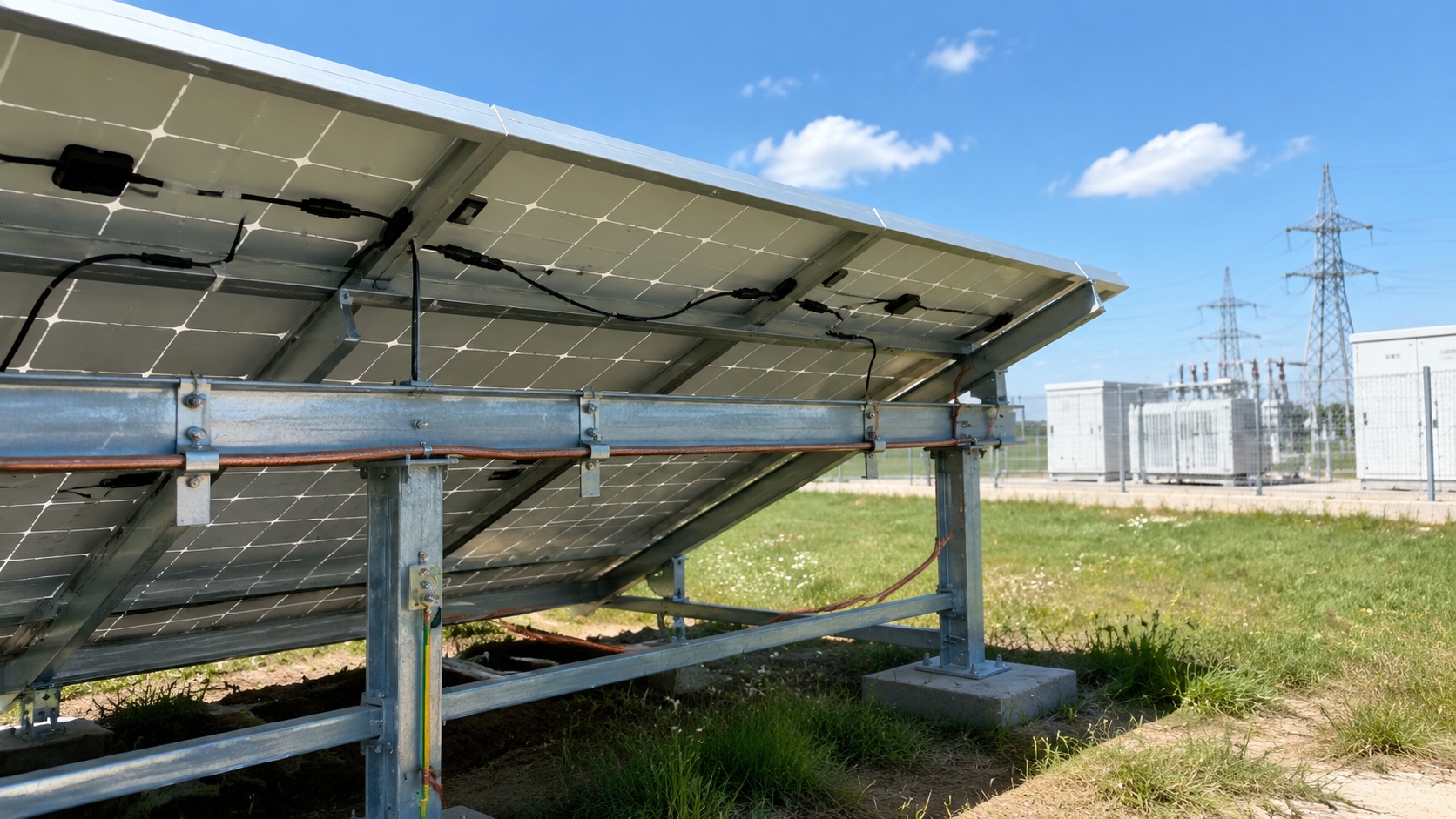
The grounding scheme of the system negative electrode is directly linked to the magnitude of PID risk. In a negative-grounded system, the negative electrode of the PV array is connected to ground through a dedicated grounding device (PID protection device), which effectively reduces the potential difference between the cell string and ground, thereby weakening the electric field driving force for Na+ migration. Industry data shows that negative grounding can reduce the PID power degradation rate by 60-80% compared with ungrounded systems. For large-scale photovoltaic power stations, negative grounding of the system is the most cost-effective PID mitigation measure — the additional cost of PID protection devices is typically less than 0.5% of the total system cost, but the power generation loss prevention value is enormous.
Grounding Methods
In 2021, I participated in the acceptance inspection of three ground-mount PV power stations in Inner Mongolia and Ningxia. I have found that acceptance testing of grounding systems must include grounding resistance measurement. Using a ground resistance tester under dry weather conditions, the grounding resistance should comply with the design value. In projects I have participated in, the comprehensive grounding resistance is typically required to be below 4 Ω, which can be appropriately relaxed to 10 Ω in areas with high soil resistivity. The connection between the grounding cable and the module frame should be checked for corrosion or looseness — any corroded connections should be cleaned and re-tightened, and severely corroded components should be replaced immediately.
The grounding methods for photovoltaic power stations can be divided into two main categories: negative-pole grounding and positive-pole grounding. Negative-pole grounding is the most widely adopted PID suppression method in the industry. In this scheme, the negative electrode of the PV array is connected to ground through a dedicated PID protection device. When the system operates normally, the PID protection device monitors the potential of the negative electrode in real-time. When the negative electrode potential exceeds the set threshold (typically -300V to -400V), the protection device automatically connects the negative electrode to ground, restoring it to a safe potential range. The response time of modern PID protection devices is within 300 milliseconds.
The core component of a PID protection device is a relay or thyristor module that can carry currents of 5A to 10A continuously. The service life of the relay is typically 10 years or 100,000 switching operations. When selecting a PID protection device, its maximum continuous current-carrying capacity and operating temperature range must be verified to ensure reliable operation in the extreme outdoor environments of photovoltaic power stations (-40 degrees C to +85 degrees C). The protection device should also be equipped with status monitoring and fault reporting functions — including real-time negative electrode potential display, fault log recording, and remote communication interface (RS485 or Ethernet).
Positive-pole grounding involves connecting the positive electrode of the PV array to ground. Under positive-pole grounding conditions, the potential of the cell string is close to ground potential, which completely eliminates the electric field driving force for Na+ migration. However, positive-pole grounding carries a significant safety risk: when a ground fault occurs on the DC side, a large short-circuit current will flow through the grounding point. The multi-point grounding method employs multiple grounding points distributed along the PV array to achieve a more uniform potential distribution, suitable for large-scale photovoltaic power stations. Field test data from a 200MW photovoltaic power station in Qinghai Province showed that multi-point grounding reduced the maximum negative electrode potential from -1,200V to -400V.
On-Site Inspection
In 2022, I visited five operating PV plants ranging from 50MW to 200MW. Based on those field visits, I have found that formulating differentiated operation and maintenance cycles based on the climate characteristics of the project site is essential for effective PID prevention. In high-temperature and high-humidity areas (annual average temperature greater than 20 degrees C, annual average humidity greater than 75%, such as Hainan and Guangzhou): conduct full-array EL (Electroluminescence) sampling inspections every 6 months (5% sampling ratio). In temperate areas (such as Ningxia, Gansu, and Inner Mongolia): conduct EL sampling inspections annually. In arid desert areas (annual precipitation less than 200mm, such as Xinjiang and Qinghai): EL inspections may be conducted every 18 to 24 months. EL inspection can identify cracked cells, broken busbars, and potential hot spots caused by PID.
On-site inspection is the final critical step to ensure that the PID suppression measures implemented in the photovoltaic power station are functioning correctly. A comprehensive inspection plan should cover four key areas: insulation resistance testing, grounding integrity inspection, PID protection device functionality verification, and module surface contamination assessment. Insulation resistance testing uses a megohmmeter to measure the insulation resistance between the module output circuit and the metal frame. The test voltage is typically 500V DC for systems below 1,000V and 1,000V DC for systems of 1,000V or above. The insulation resistance reading is compared with the nameplate value — any reduction exceeding 50% indicates a potential insulation issue that requires further investigation.
The grounding integrity inspection verifies the continuity of the grounding path from the module frame to the grounding electrode. Each module frame should be connected to the grounding busbar through a dedicated grounding cable with a cross-section of at least 4 mm squared. The grounding resistance of each grounding electrode should be measured using an earth resistance tester, with qualified values required to be below 10 Ω. The PID protection device functionality verification is the most critical step in on-site inspection — the inspection should confirm that the device is powered on and operating normally, that the negative electrode potential reading is within the normal range (typically -100V to -300V), and that the device's fault log shows no abnormal events.
The module surface contamination assessment evaluates the degree of accumulation of dust, pollen, bird droppings, and other contaminants on the module surface. Contaminant accumulation reduces the module's output power by 5-15% and can create localized high-concentration ion environments under humid conditions, increasing the risk of PID. The inspection should use infrared thermography to identify modules with significant contaminant accumulation or potential hot spots. The inspection frequency should be determined based on the local dust environment — in desert areas, cleaning may be required monthly, while in temperate coastal areas, quarterly cleaning may be sufficient.