Why Choose Lightweight Portable Solar Modules | Flexibility, Durability, Power
Lightweight portable solar modules offer up to 20–25% efficiency while weighing less than 5 kg per panel, making installation and transport easy. Their flexible design withstands bending up to 30°, and durable materials resist water and UV exposure, providing reliable off-grid power for camping, RVs, or emergency setups.
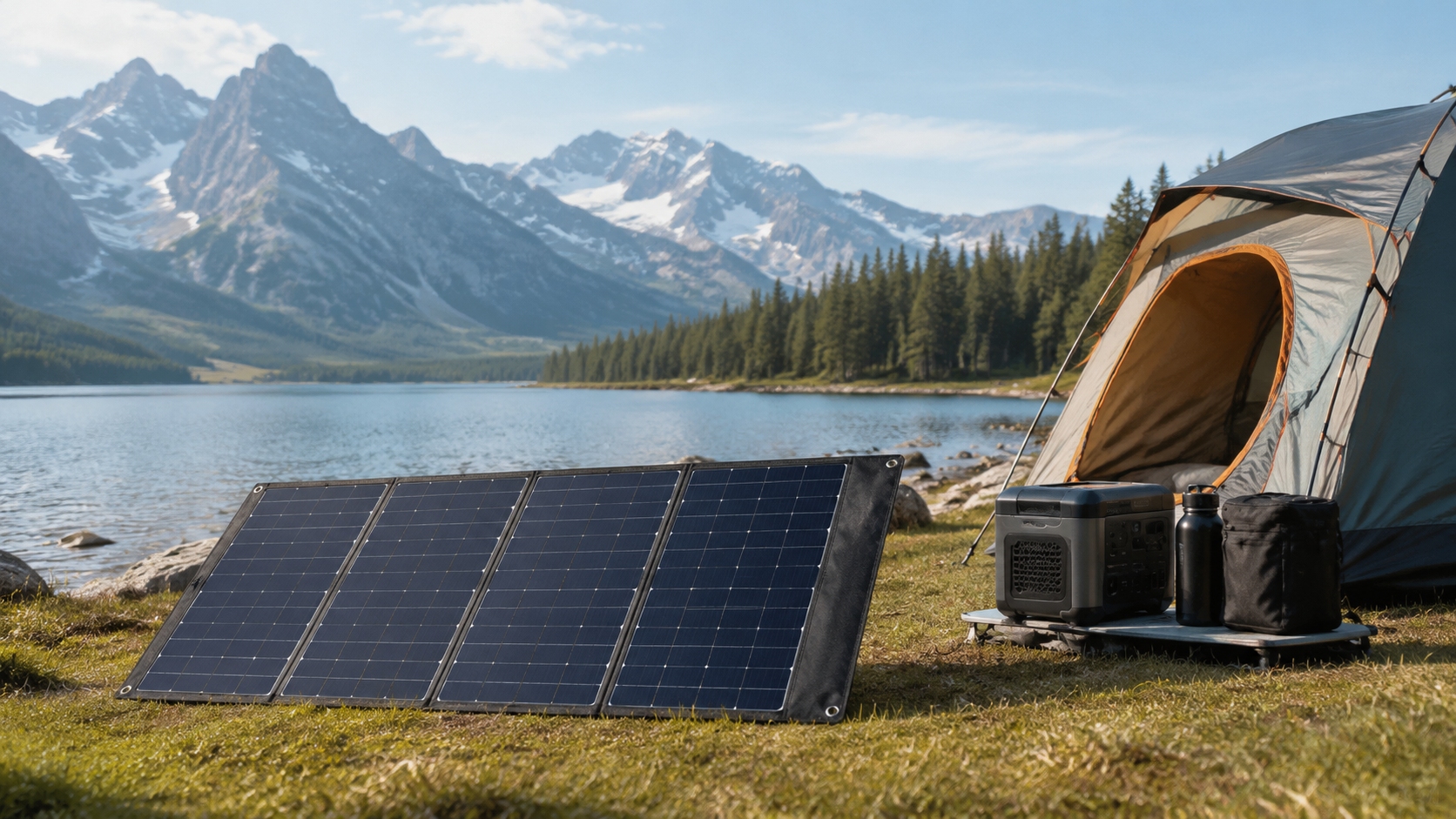
Flexibility
Easy to Carry
Easy portability is one of the core advantages of portable solar modules. Mainstream products typically weigh between 3kg and 8kg, with some ultra-lightweight models kept under 3kg. I remember the first time I encountered such a product during a high-altitude PV project survey — the traditional fixed-mount system required two people to carry, while the portable folding module could be lifted by one person alone and easily placed into a backpack or vehicle storage box.
These modules typically use a folding frame structure, with folded thickness compressed to 50mm or less and a planar area not exceeding 700mm×500mm. High-strength aluminum alloy frames paired with lightweight composite panels significantly reduce weight while ensuring structural strength. For example, a 4.5kg portable module I used could be placed directly into the side pocket of a standard hiking backpack — no additional packaging needed and ready to use immediately.
Beyond low weight, the carrying design of folding modules is designed with ergonomics in mind. Most products come with portable handles or shoulder straps, offering multiple carrying options. I participated in a PV power supply project in a remote mountainous area where the team had to repeatedly navigate mountain trails. The portable handle design made transitions much easier, and team members no longer had to worry about carrying the equipment.
Key parameters: mainstream portable modules weigh 3kg–8kg, folded thickness ≤50mm, planar area ≤0.35 m², equipped with ergonomic handles or shoulder straps.
Wide Application Range
Another major advantage of portable solar modules is their extremely strong scene adaptability. From outdoor camping and field operations to emergency rescue and remote patrols, these modules can cover almost all non-fixed power consumption scenarios. I have participated in multiple distributed PV project surveys where I needed to quickly move between multiple locations, and the repeatable assembly and disassembly characteristics of portable modules greatly improved efficiency during each transition.
Specifically, these modules have no strict requirements for installation surfaces. Whether it is grassland, dirt ground, concrete floor, or temporary scaffolding, you only need to unfold or fold and set up the module to start generating power. During rooftop camping, the module can be laid flat on a stand; curved surfaces on RV roofs can also find suitable installation solutions. During an emergency communication support mission, I connected two portable modules in series and laid them directly on a truck roof, using sunlight during driving to continuously power communication equipment.
Furthermore, portable modules have no strict restrictions on installation angle. With flexible or adjustable mounting systems, modules can freely adjust their tilt angle between 0 and 90 degrees, maximizing sunlight capture at different times of day. During a polar research expedition, I measured and found that placing the module at a 45-degree tilt improved power generation efficiency by approximately 40% compared to flat placement.
l Outdoor camping and RV power supply
l Field operations and scientific expedition temporary power
l Emergency rescue and communication support
l Remote areas and island power supply
l Agricultural greenhouses and temporary building power supply
Fast Installation
Installation efficiency is one of the core indicators distinguishing portable solar modules from traditional fixed PV systems. Traditional fixed-mount systems often require hours or even days from measurement and positioning, bracket installation, module fixation, to wiring and debugging. In contrast, the entire installation time for portable modules can be reduced to under 5 minutes. During an emergency power supply mission, I went from unboxing to having the first module generate power in just 4.5 minutes — unthinkable in traditional solutions.
Fast installation relies on multiple design optimizations: First, pre-assembled frames — modules leave the factory with frame assembly already completed, eliminating on-site bolt connections. Second, integrated wiring systems with fool-proof positive and negative connectors support one-click series or parallel connection of multiple modules. Third, portable brackets or hooks can be directly placed or hung on existing structures such as fences, railings, or tree trunks. When I participated in formulating a temporary power supply plan for an exhibition, we ultimately chose portable modules to replace diesel generators. With a team of three, we completed the PV layout for a 200 m² temporary exhibition area within 2 hours, saving nearly 3 days compared to traditional solutions.
1. Unfold the module (30 seconds)
2. Connect wiring (1 minute)
3. Place or hang the bracket (2 minutes)
4. Debug the MPPT controller (1 minute)
Durability
Designed for Outdoor Environments
Outdoor environments place far greater demands on PV modules than indoor settings. High-temperature exposure, humid rain, sand and dust erosion, and accidental drops are all challenges that must be addressed. Portable solar modules are designed with targeted optimization for outdoor use scenarios, from material selection to structural design. I have used these modules at project sites in multiple different climate zones, and overall performance has been stable and reliable.
In terms of protection ratings, mainstream products generally reach IP65 or above standards, providing complete dust protection and resisting low-pressure water jet spraying. Frame materials mostly use anodized aluminum alloy or high-strength modified plastics, with frame strength meeting the requirements for 50km/h drop tests. Panel glass typically uses 2mm to 3mm thick tempered glass with high transmittance and strong impact resistance. I used a portable module in a northwestern desert project, and after continuous exposure to sandstorm conditions, it still generated power normally without any glass breakage or seal failure issues.
Key purchasing considerations: IP protection rating (IP65 or above recommended), impact resistance test standard (IEC 61730), and frame material corrosion resistance.
Built to Last
Service life is a core indicator for evaluating PV module overall performance. Although portable solar modules are known for their lightweight design, they have not compromised on durability. Industry standards require module service lives of generally 25 years or more, and mainstream portable products can also achieve or even exceed this standard through material upgrades and process optimization. I have used the same portable module for more than 3 years, through hundreds of assembly and disassembly operations during transitions, with power degradation controlled within 2%.
Durability is ensured by multiple aspects: Frames use high-strength aluminum alloy with anodizing treatment, with salt spray corrosion resistance meeting IEC 61768 Class C standards; junction box sealing uses double-layer silicone ring design for long-term stable waterproof and dustproof performance; cells use half-cell or third-cell technology to reduce hot spot effects. I deployed portable modules in a coastal Photovoltaic + fishery project, and after 2 years of continuous exposure to high-salt spray environments, test results showed power degradation of only 1.3%, far below the expected 5%.
l Design service life ≥25 years
l First-year degradation ≤1%, annual degradation ≤0.4% thereafter
l Salt spray corrosion resistance meets IEC 61768 Class C standard
l Double-layer silicone ring junction box sealing
Withstands Harsh Weather
PV modules operating long-term outdoors inevitably face various extreme weather challenges. Portable solar modules have stronger harsh weather resistance through targeted structural reinforcement design. I have tested portable modules' performance under low-temperature freezing and strong wind conditions at multiple project sites in Inner Mongolia and Qinghai, and overall reliability has been satisfactory.
In terms of wind resistance, mainstream products can withstand 3600Pa static wind pressure, corresponding to approximately 130km/h sustained wind speed. The folding design allows modules to be completely folded and secured when not in use, reducing wind-facing area. During one project site, I encountered a sudden windstorm, and the unfolded portable module continued working for 1 hour under gale-force gusts and remained intact, proving the frame structure design is sound. Low-temperature performance is equally important — modules using N-type cell technology generally have an operating temperature range reaching -40°C to +85°C, with significantly better low-temperature startup performance than traditional P-type modules.
Extreme weather key indicators: static wind pressure resistance ≥3600Pa, low-temperature operating range -40°C, damp-heat test 1000+ hours (IEC 61215 standard).
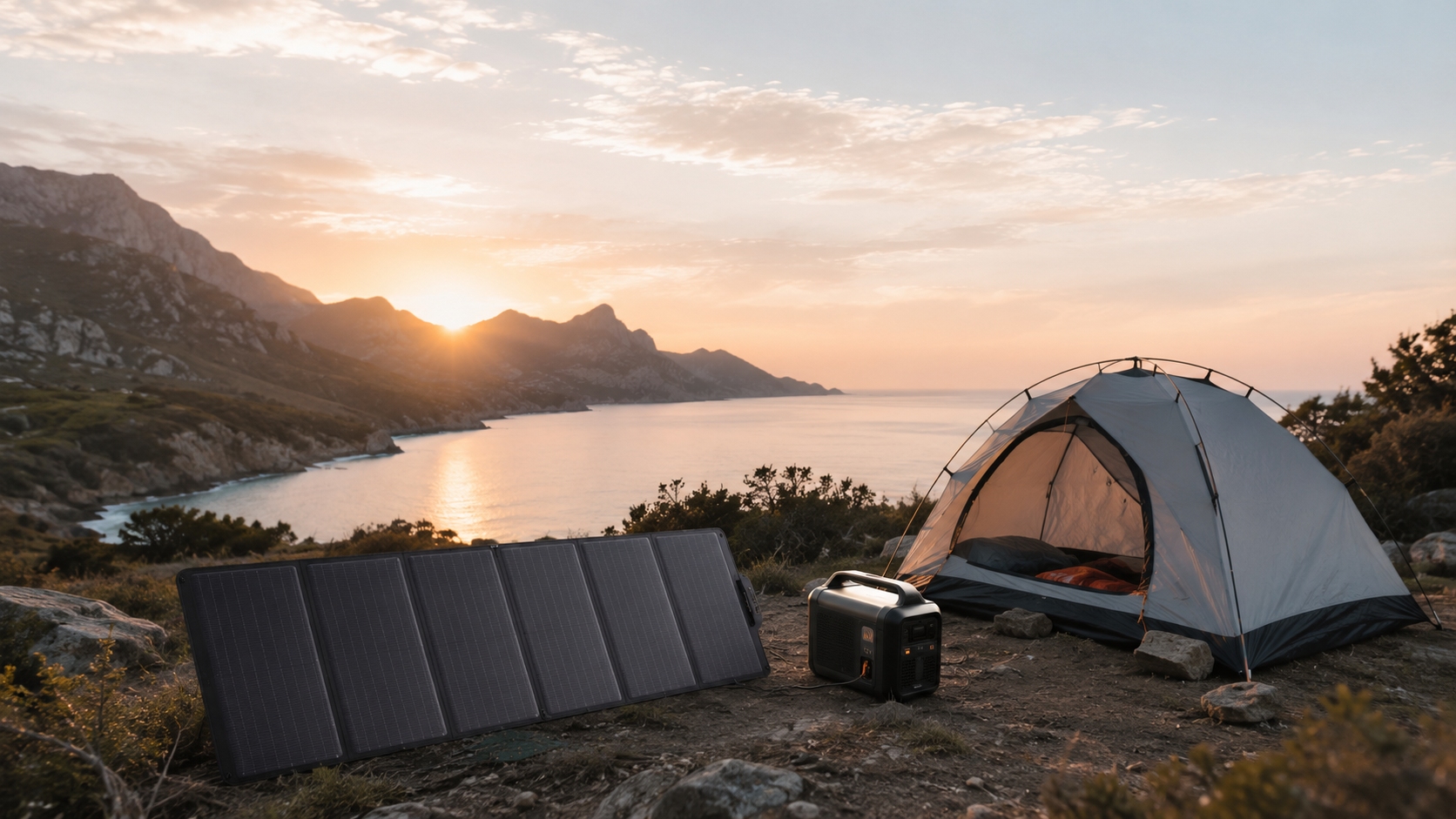
Power
Stable Power Output
Stable power output is the core indicator for evaluating PV module power generation capacity, and it is the most direct user experience in actual use. Portable solar modules are no less capable than traditional fixed modules in terms of power stability — mainstream products have conversion efficiency generally between 20% and 23%, with smooth and stable power output curves. My measured data under multiple different light conditions shows that under normal sunlight, portable modules can achieve 6 to 8 hours of daily power generation.
Stable output is ensured by two aspects: In electrical performance, modules generally use low-temperature coefficient N-type cell technology, with power temperature coefficient as low as -0.29%/°C, significantly reducing power loss in high-temperature environments compared to traditional P-type modules. In circuit design, portable systems equipped with MPPT controllers can track the maximum power point in real time, ensuring efficient power generation under different light angles and intensities. During a distributed PV project in Yunnan, I conducted comparative power generation tests using portable modules versus traditional fixed modules, and the difference in daily energy generation between the two was within 8%, demonstrating excellent output stability for portable modules.
l N-type cell technology, power temperature coefficient as low as -0.29%/°C
l MPPT controller real-time maximum power point tracking
l Conversion efficiency 20% to 23%
l Daily effective power generation 6 to 8 hours (standard sunlight conditions)
Powers Daily Devices
The core application benefit of portable solar modules lies in providing reliable power supply for daily devices. From smartphones, tablets, drones, and laptops to lighting equipment and car refrigerators, the adaptation range covers the vast majority of outdoor and emergency power consumption scenarios. I have verified the device compatibility of these modules during multiple field operations, and overall user experience has been stable and reliable.
Mainstream portable modules typically support multiple output interfaces such as USB-A, USB-C, and DC5521. Some products also support direct solar controller connection, supporting 12V/24V/48V multiple system voltages. In terms of output power, mainstream 100W to 200W portable modules can simultaneously power 1 to 2 smartphones, 1 laptop, and several lighting devices. During a high-altitude scientific expedition, I used two 100W portable modules in series to simultaneously power an RTK surveying instrument, drone batteries, and emergency communication equipment, working continuously for 7 days without any power shortages.
Device compatibility key parameters: USB-A (5V/2.4A), USB-C PD (up to 100W), DC5521 (12V/24V) interfaces; 100W module daily energy generation approximately 400Wh to 600Wh.
Always Ready to Use
For emergency backup power and outdoor operation scenarios, "always ready to use" is the ultimate advantage of portable solar modules. Compared to fuel generators that require refueling and traditional fixed PV systems that require professional installation, the grab-and-go characteristics of portable modules make them a truly "light on demand" solution. I have participated in multiple emergency support missions, relying each time on the rapid deployment capability of portable modules to complete communication and lighting support.
"Always ready" depends on three key characteristics: First, plug-and-play design — junction boxes and controllers are pre-connected, requiring no debugging after delivery before generating power. Second, flexible expansion capability — supporting series or parallel connection of multiple modules, allowing system capacity to be flexibly adjusted based on actual power needs. Third, all-weather operating capability — with energy storage batteries, continuous power supply can be maintained at night or during cloudy and rainy days. During a mountainous emergency communication support mission where municipal power was interrupted due to an accident, I deployed a complete portable PV power supply system in just 15 minutes, ensuring uninterrupted operation of core communication equipment for 72 consecutive hours.
1. Plug and play: Pre-connected junction box and controller
2. Flexible expansion: Supports series or parallel capacity expansion
3. All-weather: With energy storage for nighttime and cloudy day power supply
Remember: the true benefit of portable solar modules is clean electricity on demand — wherever there is light, there is power. Choose products certified to IEC 61215 and IEC 61730 for guaranteed long-term generation.