Lightweight vs. Heavy-Duty Modular Solar Panels | Portability, Installation, Application Scenarios
Lightweight panels weigh only 2.5 kg with a thickness of 3 mm, allowing for direct application onto curved RV surfaces using structural adhesive;
Heavy-duty panels weigh over 18 kg, require aluminum brackets and drilling for installation, can withstand 2400 Pa of wind pressure, and are suitable for fixed power stations requiring strong weather resistance.
Portability
The weight of a 100W unit is controlled between 1.9 and 2.5 kg, with a thickness of only 2-3 mm.
In contrast, heavy-duty rigid panels of the same power, due to the use of 3.2 mm tempered glass and aluminum alloy frames, weigh between 7 and 9 kg, with a thickness reaching 30-40 mm.
Data indicates that the weight of lightweight modules is only 25%-30% of traditional modules.
A single person can easily carry a 200W foldable set with one hand, but it is difficult to safely move a 400W rigid panel weighing over 20 kg, which usually requires two people and specialized vehicle racks for transport.
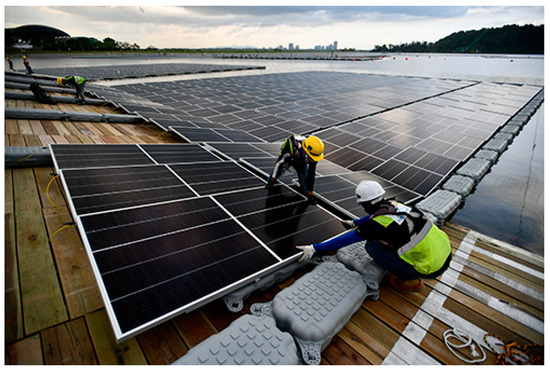
Weight Differences
Glass vs. Polymer
The fundamental weight difference between Heavy-Duty rigid panels and Lightweight panels stems from the physical density of the encapsulation materials.
· The Glass Layer of Rigid Panels
Traditional rigid panels typically use 3.2 mm (0.13 inch) thick low-iron tempered glass as the front encapsulation. The density of glass is approximately 2.5 g/cm³.
o This glass layer alone weighs as much as 8 kg per square meter.
o For a standard 400W residential panel (area approx. 2 square meters), the weight of the glass part alone reaches 16 kg, accounting for over 75% of the total panel weight.
o If bifacial modules use a double-glass structure (2.0-2.5 mm glass on both sides), the weight increases by a further 15%-20%.
· The Polymer of Lightweight Panels
Lightweight panels use ETFE (Ethylene Tetrafluoroethylene) or PET composite materials to replace glass. The thickness of the ETFE film is typically only 0.025 mm to 0.05 mm. Combined with a glass fiber reinforced plastic (GRP) backsheet, the overall thickness is controlled at 2-3 mm.
o The weight of this composite structure is usually between 1.5 kg and 2.5 kg per square meter.
o In comparison, the weight of the polymer encapsulation layer is only about 20% of the weight of glass of the same area.
The Invisible Weight of Frames
Besides the light-transmitting layer, the structural frame is also a major source of weight.
· Aluminum Alloy Frames
Rigid panels must rely on anodized aluminum frames to protect the glass edges and provide mounting holes. A standard aluminum frame (30-40 mm thickness) weighs about 0.5 to 0.8 kg per meter.
o For a panel 2 meters long and 1 meter wide, the frame perimeter is 6 meters, and the frame itself weighs about 3.5 to 4.5 kg.
o In areas with heavy wind and snow loads, manufacturers increase the aluminum wall thickness to prevent frame deformation, further increasing the weight.
· Frameless Design
Lightweight Flexible Panels and portable Foldable panels mostly adopt a frameless design. The edges are usually stitched with heavy-duty fabric or are simply an extension of the polymer layer; the weight of this part is negligible.
Measured Specification Comparison
To visually demonstrate the weight hierarchy, the following compares two common mainstream power specifications available on the market:
Specification | Rigid Glass Panel (Rigid) | Lightweight Flexible/Foldable Panel (Lightweight) | Weight Difference Multiplier |
100W Panel | 6.5 - 8.5 kg | 1.9 - 2.4 kg | 3.5x |
200W Panel | 12 - 14 kg | 4.0 - 5.5 kg | 3x |
400W Panel | 21 - 24 kg | 7.5 - 9.5 kg (Mostly foldable combos) | 2.5x |
Data Interpretation:
If you need to build an 800W off-grid array:
· Using rigid panels: Total net panel weight approaches 100 kg.
· Using lightweight panels: Total net panel weight is only about 25 kg.
This 75 kg difference is equivalent to the weight of an adult male, which is a huge burden for mobile applications.
System Weight Gain from Mounting Hardware
Weight calculation cannot look at the panels alone; the extra weight brought by Mounting Hardware is often overlooked, but it accounts for a high proportion in rigid systems.
1. Rigid Panel Bracket Systems
o Z-Brackets: Each panel needs at least four, plus stainless steel bolts, adding about 0.5 kg per set.
o Tilt Mounts: To adjust angles, aluminum alloy or galvanized steel adjustment rods are usually used; the bracket weight per panel is between 2 and 4 kg.
o Roof Racks/Rails: If installing on a roof without a flat surface, Unistrut channels or Thule crossbars need to be added, which typically adds 10 to 30 kg of base Dead Weight to the system.
2. Lightweight Panel Fixing Systems
o Structural Adhesive: Flexible panels are usually pasted directly using Sika 252 or 3M VHB double-sided tape. The weight of glue used for an entire 800W system does not exceed 1-2 kg.
o Grommets: Foldable panels hang via built-in metal or hard plastic grommets, with virtually zero weight.
o Zippers/Fabric: Some designs are stitched directly onto awnings or backpacks, with no extra hardware weight.
Impact on Mobile Vehicles
For RVs, Camper Vans, or sailboats, the vehicle's Payload Capacity is a hard limit legally and mechanically.
· Fuel Economy
According to EPA (US Environmental Protection Agency) data, for every 45 kg (100 lbs) of weight reduction, fuel efficiency can improve by 1% - 2%. For long-distance overland travel, the 50-80 kg weight saved by a lightweight solar system compared to a heavy-duty one translates into significant fuel cost differences over tens of thousands of kilometers.
· Center of Gravity & Handling
Rigid panels must be installed at the highest point of the vehicle (the roof).
o Adding a 100 kg rigid system (panels + brackets) to the roof will significantly raise the vehicle's Center of Gravity, increasing the risk of rolling during high-speed cornering or in crosswind environments.
o Lightweight panels adhere closely to the roof skin, hardly changing the vehicle's center of gravity distribution, having minimal impact on handling.
Physical Form
Thickness and Air Resistance
Observed from the side, the profiles of the two types of panels are distinctly different, which directly affects aerodynamic performance after installation.
· Frame Height of Rigid Panels
To protect the glass and withstand wind pressure, rigid panels must have aluminum alloy frames. Standard frame thickness is usually 30 mm, 35 mm, or 40 mm.
o When installed on an RV or car roof, counting the 20-30 mm bottom cooling gap brought by Z-brackets, the entire system will protrude 60-80 mm from the roof.
o This height creates a significant wind-blocking face at high speeds, increasing the vehicle's Drag Coefficient and generating noticeable wind noise.
· Ultra-thin Characteristics of Lightweight Panels
Flexible Panels have no aluminum frames; their multi-layer laminated structure is typically only 2 mm to 3 mm thick (about the thickness of a coin).
o Even considering the height of the Junction Box (usually 15-20 mm), the panel body is almost flush with the installation surface.
o This "invisible" profile makes it very suitable for installation on surfaces with high streamline requirements, such as racing boat decks or streamlined Teardrop Trailers, producing almost no interference with airflow.
Degree of Bendability
This is the most intuitive difference in physical form.
1. Rigid Panels: Zero Deformation Tolerance
Tempered glass is a brittle material. While it can withstand vertical pressure (like accumulated snow), it cannot withstand twisting or bending forces.
o If forced installation is attempted on a curved surface (such as the edge of a camper roof), a complex leveling bracket system must be built.
o Once millimeter-level physical deformation occurs, the glass will shatter, causing the panel to be completely scrapped.
2. Flexible Panels: Adapting to Curved Surfaces
Lightweight panels usually use polymer materials as backsheets, allowing a certain degree of elastic bending.
o Crystalline Silicon Flexible Panels: Usually have a maximum bending arc of 30 to 50 degrees. This means that within a 2-meter span, the center of the panel can arch about 10-15 cm. This is enough to fit the rounded roof of an Airstream RV or the hatch of a yacht.
o Thin Film Flexible Panels (e.g., CIGS): Some rolled panels made of special materials can even be rolled up like a yoga mat, but this usually comes at the expense of conversion efficiency.
Folded Dimensions
For portable applications, the variability of form is the solution to "how to fit a large board into a small compartment."
· Fixed Geometry of Rigid Panels
A 400W rigid panel measures approximately 1722mm x 1,134mm.
o This size is larger than the trunk opening width of most sedans and SUVs.
o Transporting it inside the vehicle often requires folding down the rear seats, or it can only be placed at a tilt, greatly occupying passenger space.
· Matrix Form of Foldable Packs
Lightweight Solar Blankets divide a large area of cells into 4, 6, or even 8 small units connected by high-strength fabric.
o A 400W folding system, when unfolded, has an area comparable to a rigid panel, but its folded dimensions are only about 530mm x 530mm.
o Although the thickness stacks up to 40-60 mm, the length and width dimensions are reduced to 1/6 of the original.
o This form allows it to be stuffed like a briefcase into seat gaps, under-bed storage boxes, or car door storage pockets.
Surface Construction
The front contact layers of the two are also completely different in physical touch and functional design.
· Smooth Glass Surface
The surface of rigid panels is smooth low-iron tempered glass.
o Pros: Extremely smooth, has good self-cleaning ability under rain washing, dust does not easily adhere.
o Cons: Extremely slippery when wet. If installed in areas where people need to walk, such as boat decks or roof rack platforms, it poses a serious safety hazard.
· Textured Polymer Surface
The ETFE surface of lightweight panels usually undergoes texturing treatment.
o Honeycomb/Dot Texture: This design is not just for esthetics but to increase diffuse reflection, allowing the panel to capture more light when the angle of sunlight incidence is low in the early morning or evening.
o Anti-slip Function: In Marine Applications, this rough surface allows crew members to step on the panels without slipping.
Storage & Transport
Packaging and Initial Logistics
From the moment the user places an order, the transportation logic of the two completely diverges.
· Heavy-duty Panels: LTL Freight
Because single rigid panels are large in area and contain fragile glass, courier companies usually refuse to transport rigid panels over 100W via standard package services.
o Wood Pallet Bundling: When purchasing large 300W or 400W rigid panels, the shipper will usually use standard-sized (e.g., 1.2m x 1.0m) wooden pallets.
o Logistics Cost: You need to pay for Less Than Truckload (LTL) shipping. Even if you only buy two panels, additional 20-30 kg of wooden pallet weight and strapping waste will be generated.
o Unloading Difficulty: Delivery trucks usually only handle Curbside Delivery. If you don't have a forklift or loading dock, you need to manually dismantle the pallet and move each panel weighing 22 kg into the garage.
· Lightweight Panels: Standard Parcel
o Direct Box Shipping: Folded lightweight panels are usually packed in a thickened cardboard box the size of a laptop or briefcase.
o Low-Cost Shipping: They can be shipped via regular ground services of UPS, FedEx, or DHL.
o No Special Equipment: Packages can be left directly at your doorstep without any special receiving requirements.
The Game of Vehicle Space
In self-driving travel, RV camping, or engineering vehicles, interior space is calculated in "liters" or "cubic centimeters."
1. The "Air Volume" of Rigid Panels
The biggest storage disadvantage of rigid panels lies in the "Dead Space" created by their aluminum frames.
o Although the glass is only 3.2 mm thick, the frame thickness reaches 35 mm.
o When you stack two rigid panels, a 30 mm gap is sealed between the two layers of glass. This space cannot be utilized.
o Transporting four 100W rigid panels inside a vehicle results in a stacking height of 140 mm, and they must be laid flat, occupying about 0.5 cubic meters of regular space.
2. Extreme Compression of Foldable Panels
Lightweight foldable packs are solid in their stored state.
o The fabric layer fits tightly with the cell cells, with no gaps caused by frames.
o The same 400W total power (four 100W foldable packs) can be scattered into the corners and gaps of the vehicle.
o This "break up the whole into parts" storage method does not require clearing a large continuous flat space.
Shock Protection During Movement
The destruction mechanisms of vehicle vibration and impact are different for the two materials.
· Hidden Damage to Glass
Rigid panels rely on tempered glass to protect the cells. During long-distance off-road or bumpy road transport:
o Micro-cracks: Although glass breakage may not be visible to the naked eye, under continuous high-frequency vibration, micro-cracks may occur in the internal silicon wafers.
o Isolation Requirements: During transport, thick cardboard or foam blankets must be placed between rigid panels to prevent aluminum frames from scratching the glass surface of the panel below.
o Vertical Transport Risk: If rigid panels are placed upright to save space, once a sharp turn causes the panels to tip over, it is extremely easy to cause catastrophic breakage.
· Flexible Cushioning of Polymers
Lightweight panels have no glass, and the polymer layer has elasticity.
o Impact Resistance: The ETFE surface layer can absorb mechanical stress caused by road bumps and will not easily break like hard and brittle silicon wafers.
o No Padding Needed: The fabric shell of the foldable pack itself is a natural buffer layer. You can stack them directly like clothes or books without worrying about mutual abrasion.
Installation
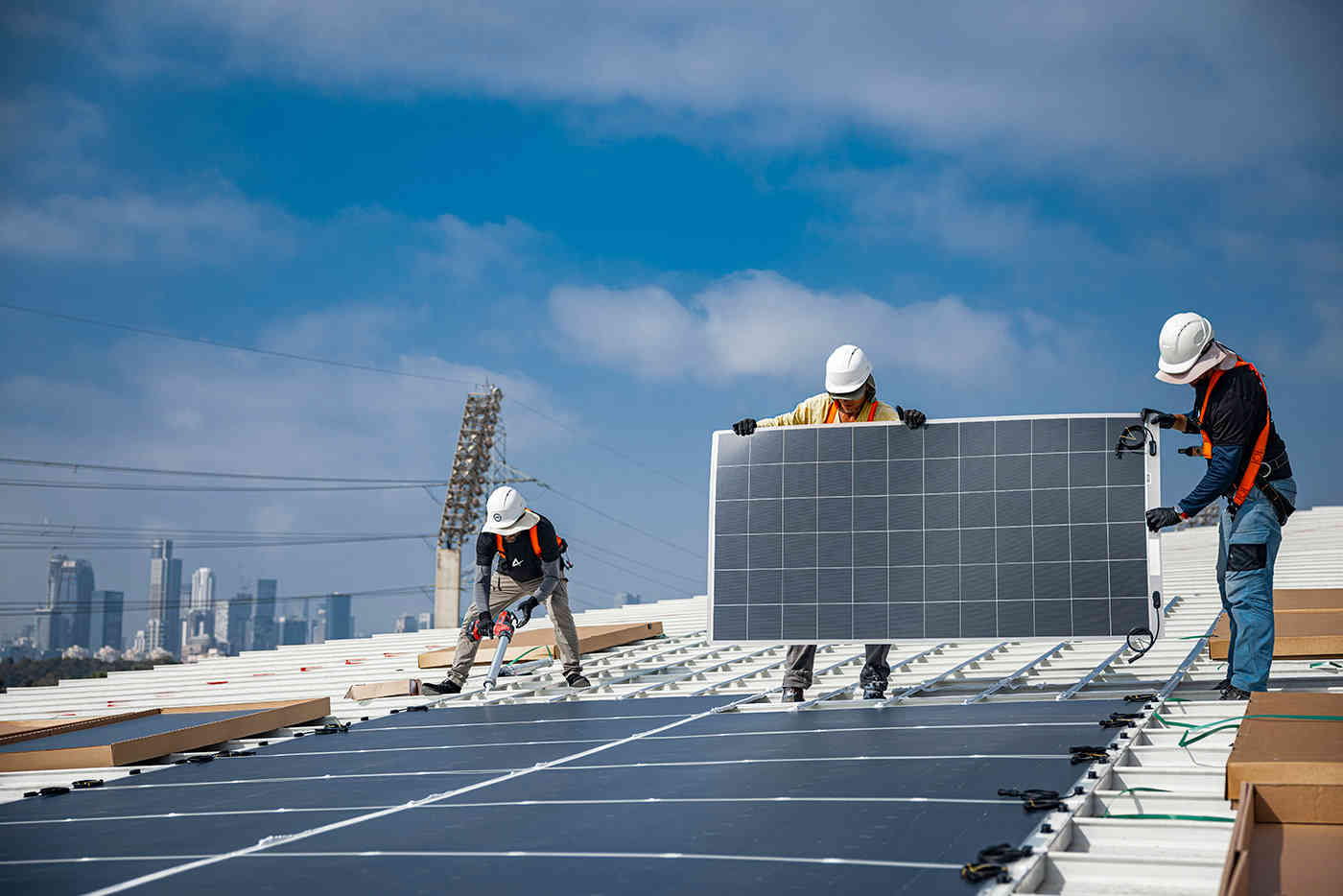
Lightweight modules mainly rely on chemical bonding or physical strapping, typically using Sikaflex 252 structural adhesive or 3M VHB double-sided tape for direct adhesion.
Single panel installation takes only 15-20 minutes and requires no penetration of the mounting surface.
In contrast, heavy-duty rigid modules must use mechanical anchoring, fixed via aluminum Z-brackets or rail systems, requiring electric drills and M6/M8 stainless steel bolts to penetrate the roof or deck.
Heavy-duty module installation must reserve a bottom air layer of 5-10 cm for heat dissipation, and special sealants like Dicor must be used to treat drill holes.
Rigid Panels
Z-Bracket Fixation
A standard installation kit contains four aluminum alloy Z-brackets, stainless steel bolts, and lock nuts.
· Physical Connection: One end of the Z-bracket is fixed to the pre-drilled holes on the back of the panel with M6 or M8 bolts, and the other end is fixed into the roof material using self-tapping screws or Lag Bolts.
· Height Advantage: Z-brackets raise the panel by about 25 mm to 40 mm. This height is not randomly designed; it creates a ventilation channel under the panel. In hot weather, air convection can lower the bottom temperature by about 15 degrees Celsius, directly recovering about 5% to 8% of power loss.
· Quantity Configuration: For panels under 100 watts, four brackets are usually enough. However, if installing large-size panels over 300 watts (length over 1.5 meters), extra brackets must be added in the middle of the long sides, bringing the total to 6 or 8, to prevent the panel center from slight deformation during high winds or vibrations, which could lead to glass shattering.
Rail System Installation
When installing large arrays of more than two panels, independent brackets can look messy and are hard to align. In this case, Mounting Rails are usually used.
· Load Distribution: Rails are two long aluminum strips running through the bottom of the entire array. The rails are first fixed to the roof's support beams (Rafters) or stiffeners, and then the solar panels are laid flat on the rails.
· Mid Clamps and End Clamps: Panels are no longer drilled directly but are clamped into the rail grooves using "T-bolts" and aluminum alloy clamps. Mid Clamps are used between two panels, and End Clamps are used at both ends of the array.
· Spacing Adjustment: The rail system allows you to slide the panels left and right to adjust their position before locking, controlling the gap to within 20 mm, which is visually very neat.
Angle Adjustment Brackets
This type of bracket consists of two triangular arms, allowing the panel to be manually lifted from a flat state to 45 or even 60 degrees.
· Winter vs Summer: In winter, the solar elevation angle is lower. Lifting the panel to be perpendicular to the sunlight direction can increase daily power generation by 25% to 30% compared to flat installation.
· Operation Method: The adjustment mechanism usually uses Wing Nuts or quick-release pins, operable without tools. However, this bracket adds about 2 kg to 4 kg of extra weight, and the bracket must be flattened and locked before driving, otherwise high-speed airflow will rip the bracket out by the roots.
Drilling and Waterproofing
Once the waterproof layer is penetrated, extremely reliable sealing measures are required.
· Butyl Tape: Before screwing in screws, a layer of Butyl Tape must be applied to the bottom of the bracket. When the screw is driven in, the tape is pulled into the thread gaps, forming the first physical barrier.
· Self-Leveling Sealant: After the screws are fixed, special roof sealant (such as Dicor Self-Leveling Lap Sealant) must be used to completely cover the entire bracket base and screw heads. This sealant flows like honey before curing, automatically filling all tiny gaps, and forms a flexible rubber skin after curing that resists UV exposure for at least five years without cracking.
· Cable Entry Cap: Besides fixing brackets, holes also need to be drilled where cables pass through the roof. A double-hole Cable Entry Gland must be used, also fixed with sealant.
Drill-Free Corner Mounts
To avoid drilling, Corner Molds made of ABS engineering plastic are also available on the market.
· Large Area Bonding: This bracket wraps around the four corners of the panel, with a large flat area at the bottom (usually over 100 square centimeters). Installation relies entirely on Sikaflex 252 or equivalent polyurethane structural adhesive bonding to the roof without screws.
· Speed Limitation: Although the theoretical tensile strength of the glue is high, the plastic itself ages and becomes brittle. This method is generally recommended for boat decks or towable RVs that do not travel at high speeds. If it is a self-propelled RV traveling at over 100 km/h, purely glued rigid panels carry a risk of detachment because the wind resistance of rigid panels is far greater than that of flexible panels.
Flexible Panels
Structural Adhesive Bonding
For permanent installation, single-module Polyurethane Adhesive is the standard solution, such as the Sikaflex 252 or 291 series.
· Surface Pre-treatment: The bond strength depends on the contact area at the microscopic level. The installation location must first be sanded with about 400-grit sandpaper to break the smooth gel coat or paint surface layer. Then use 90%+ concentration Isopropyl Alcohol or a specialized cleaner (like Sika Aktivator-205) to wipe and thoroughly remove grease and dust.
· Application Path: It is strictly forbidden to coat the entire backsheet with glue. Unlike rigid panels, flexible panels expand and contract with the installation surface. If fully coated, the shear force generated by the different expansion rates of the two materials will tear the cells apart. The correct practice is to apply multiple strips of glue with a diameter of about 10 mm to 12 mm, keeping the spacing between strips at about 100 mm.
· Curing Cycle: Polyurethane glue relies on absorbing moisture from the air to cure. In an environment of 25 degrees Celsius and 50% humidity, the skin-over time is about 45 minutes, but full curing takes 24 to 48 hours.
Double-Sided Tape Fixation
For extremely smooth RV sidewalls or yacht decks, industrial-grade VHB (Very High Bond) double-sided tape provides faster construction speed.
· Tape Selection: Ordinary foam tape cannot withstand outdoor high temperatures. Acrylic foam tape must be used, such as the 3M 4950 or 5,952 series. These tapes are typically over 1.1 mm thick and can fill tiny irregularities on the installation surface.
· Application Operation: VHB tape is pressure-sensitive; after pasting, a vertical pressure of at least 100 kPa needs to be applied to activate adhesiveness.
· Temperature Limit: Although construction is fast, VHB tape's adhesiveness decreases above 80 degrees Celsius. If the installation surface is a black metal roof, summer exposure temperatures may approach 90 degrees Celsius.
Insulation Layer Backing
Zero-distance adhesion leads to heat accumulation, causing cell temperatures to soar above 85 degrees Celsius, resulting in power degradation of over 20%.
· Polycarbonate Hollow Sheet: To solve this problem, experienced users sandwich a layer of 4 mm to 6 mm thick polycarbonate hollow sheet between the panel and the roof.
· Sandwich Structure: First fix the hollow sheet to the roof with glue, then stick the flexible solar panel onto the hollow sheet. The channels inside the hollow sheet allow air circulation, which can lower the backsheet temperature by 10 to 15 degrees Celsius. Although this adds about 5 mm in height, it effectively prevents Hot Spots from damaging the cell and protects the roof paint below from yellowing due to heat.
Fabric Sewing Installation
On sailboat sunshades (Bimini) or camper canvas tops, glue cannot adhere.
· Zipper System: Many flexible panel manufacturers offer customization services to sew YKK #10 large-tooth resin zippers onto the panel edges. The user needs to find a canvas store to sew the other half of the zipper onto the awning at the corresponding position.
· Velcro Backing: For small power (50W to 100W) panels, industrial-grade Velcro can be used. The back of the panel is fully covered with the loop side, and the hook side is sewn onto the installation fabric. This contact area is huge and enough to resist wind speeds of around 50 knots, but with long-term exposure to seawater, Velcro's grip will decrease as salt crystallizes.
Temporary Mounting Points
For portable needs, use the pre-drilled stainless steel Grommets on the panel for non-permanent fixing.
· Suction Cup Mounting: Use strong vacuum suction cups with a diameter of over 60 mm, passing through the grommets to adhere to car windows or smooth car bodies. The vertical pull of a single industrial suction cup can reach 10 kg; four suction cups are enough to fix a 3 kg 100W flexible panel.
· Bungee Cord Strapping: On tents or irregular objects, use Bungee Cords with ball heads passed through the grommets. The bungee cords can absorb vibrations caused by wind, preventing the grommets from tearing the panel's edge PET encapsulation layer.
Application Scenarios
Only when the load-bearing capacity of the installation surface is less than 15 kg per square meter, or the surface curvature exceeds 15 degrees, should lightweight flexible panels be prioritized.
Heavy-duty rigid panels, with their tempered glass structure, can withstand a snow load of 5400 Pascals (Pa) per square meter under standard tests.
Additionally, the 100 mm cooling gap usually reserved at the bottom can effectively reduce cell temperature, increasing actual power generation efficiency by 5% to 10%, making them the default option for the vast majority of flat roofs and ground mount systems.
Conversely, while polymer-based lightweight panels reduce weight to about 20% of rigid panels of the same size, their main advantage lies in being able to tightly fit the tops of streamlined RVs like Airstreams or the canvas awnings of boats.
RVs and Curved Surfaces
Fitting Streamlined Roofs
The curvature radius of Airstream roofs is usually small. If rigid panels with aluminum alloy frames are forcibly installed, two obvious engineering problems arise:
1. Bracket Height and Wind Noise:
To make flat rigid panels span across a curved surface, the mounting brackets must be raised. Usually, custom Z-brackets or rails exceeding 10 cm in height need to be installed on both sides of the roof.
This structure creates a significant "wind tunnel" under the panels when the vehicle travels at 100 km/h (about 62 mph). The turbulence caused by high-speed airflow not only increases fuel consumption by 1 to 2 liters per 100 km but also generates continuous low-frequency wind noise, which transmits into the vehicle and affects living comfort.
2. Contact Area and Stress:
Rigid panels can only contact the curved roof through four corners or a few points on the edges. During long-distance driving, vibrations from road bumps will be concentrated entirely on these tiny contact points.
Strict Weight Calculation
For self-propelled Class B RVs and small trailers, every kilogram of weight must be carefully calculated.
· Payload Balance:
A Class B RV fully loaded with fresh water, fuel, and camping gear often has a remaining payload of less than 200 kg.
o Rigid Panel Solution: A 400W rigid solar array (4 x 100W panels), plus aluminum brackets, bolts, and combiner boxes, can easily weigh over 50 kg. This directly takes up 25% of the vehicle's remaining payload.
o Flexible Panel Solution: The same 400W flexible array (4 x 100W panels) weighs about 8 to 10 kg and requires no extra metal brackets. The 40 kg saved is equivalent to being able to carry 40 liters more drinking water or two folding bicycles.
· Pop-up Roof Tents:
For camper vans with pop-up roofs, raising and lowering the roof usually relies on Gas Struts. The rated thrust of these hydraulic rods is fixed. If more than 20 kg of load is added to the roof, lifting the roof requires immense human assistance, or may even cause the hydraulic rods to fail, preventing the roof from staying fixed in the raised position.
Glue or Screws
For curved roof installations, due to the lack of a flat surface for locking screws, the choice of adhesive and construction process directly determines the system's lifespan.
· Choice of Structural Adhesive:
Marine-grade or automotive-grade structural adhesive must be used, such as Sikaflex 252 or Sikaflex 221. These glues retain a certain elasticity after curing, capable of absorbing the displacement difference generated by different materials during thermal expansion and contraction.
· 3M VHB Tape:
For users who do not want to wait for glue to cure, 3M VHB 4950 or 5,952 double-sided tape is a common alternative. The bonding strength of VHB tape is extremely high, capable of withstanding pounds of pulling force per square inch.
Heat Dissipation and Hot Spot Risk
This is a physical disadvantage that must be faced when using flexible panels on RVs. Since flexible panels are pasted directly onto the roof without an intermediate air layer, heat is difficult to dissipate.
· Temperature Data:
At noon in summer, the surface temperature of dark flexible panels can reach 70°C or even higher. Since there is no back ventilation, for every 1°C increase in cell cell temperature, output power decreases by about 0.3% to 0.5%. This means a nominally 100W panel may only output about 75W in actual high temperatures.
· Impact on Lifespan:
Long-term heat accumulation accelerates the yellowing of the ETFE surface layer and the aging of the EVA film. More seriously, if the roof material has poor thermal conductivity, heat will accumulate locally in the cells, leading to "Hot Spots," which eventually burn out cell units or cause backsheet blistering.
Off-Grid Cabins
Withstanding Blizzards and Hail
Off-grid cabins are often located in mountainous or high-latitude areas, where winter snow accumulation and sudden hail are the biggest physical threats.
· Mechanical Load Limits:
Standard heavy-duty rigid panels use 6063-T5 or similarly graded anodized aluminum alloy frames, combined with 3.2 mm or even 4.0 mm thick low-iron tempered glass. This combination allows them to pass the IEC 61,215 standard mechanical load test, withstanding up to 5400 Pascals (Pa) of frontal static load.
Translated into intuitive data, this is equivalent to accumulating about 550 kg of wet snow per square meter of panel surface.
· Hail Impact Test:
Rigid panels must pass a test where a 25 mm diameter ice ball impacts at a speed of 23 m/s (about 82 km/h).
In comparison, although the ETFE or PET layer on the surface of lightweight flexible panels has some toughness, it lacks rigid backsheet support. When encountering large hailstones, the roof material below the flexible panel (such as the crest of corrugated iron) forms a hard support point, and the impact force of the hail will instantly puncture the cell cells, causing irreversible Micro-cracks.
Letting the Underside Breathe
In fixed installations, thermal management directly determines how much electricity you can generate. This is the biggest advantage of rigid panels over directly pasted flexible panels.
· Air Convection and Temperature Coefficient:
Monocrystalline silicon cells are very sensitive to temperature. The common power temperature coefficient is about -0.4%/°C. For every 1 degree the cell temperature exceeds the standard test environment (25°C), power generation drops by 0.4%.
When rigid panels are installed, a vertical gap of 10 to 15 cm (4 to 6 inches) is forcibly left between the panel glass and the roof surface via rails or Z-brackets.
· Actual Power Generation Gap:
In summer afternoons, flexible panels directly pasted on asphalt shingles or metal roofs can easily see cell temperatures break through 75°C due to the inability to dissipate heat.
Calculate it: (75°C - 25°C) x 0.4% = 20%.
Whereas rigid panels mounted with an air gap might control the temperature at around 45°C, with a power loss of only 8%. For a 1,000W system, this means rigid panels can generate 120W more electricity per hour, potentially adding 0.6 kWh over a day, enough to light up the LED lights of the whole house.
Propping Up the Angle in Winter
Off-grid living means you rely on the weather, and winter sunlight is particularly precious.
· Need for Tilt Adjustment:
The sun's elevation angle is very low in winter. To capture the most light energy, the tilt angle of solar panels usually needs to be adjusted to local latitude + 15 degrees.
The aluminum alloy frame of rigid panels is like a set of universal Lego blocks. You can easily buy or make adjustable Tilt Mounts and use M8 stainless steel bolts to fix the panels.
· The Awkwardness of Flexible Panels:
Once flexible panels are pasted to the roof with structural adhesive, their angle is forever locked to the roof pitch (usually only 15 to 30 degrees). In areas above 45 degrees north latitude (like Canada or Northern Europe), this shallow angle in winter leads to massive reflection of sunlight, and snow is difficult to slide off.
Calculating Cost per Watt
For off-grid cabins needing several kilowatts of power to run refrigerators, water pumps, and Starlink, cost is an unavoidable calculation.
· Unit Cost Comparison:
In markets with mature supply chains, standard 400W rigid household modules typically have a cost per watt between $0.30 and $0.50.
Whereas flexible panels of equivalent quality (using SunPower cells or high-quality ETFE encapsulation) typically cost over $1.50 per watt, or even higher.
Building a 2kW (2000W) system:
o Rigid Panel Cost: Approx. $600 - $1000.
o Flexible Panel Cost: Approx. $3000.
The $2,000+ saved is enough to buy a set of high-quality LiFePO4 (Lithium Iron Phosphate) batteries (e.g., 48V 100Ah), which is far more important for the stability of an off-grid system than the panels themselves.
Can It Last Twenty Years?
A cabin is a permanent structure; you certainly don't want to climb onto the roof to tear off glue and replace panels every three to five years.
· Lifespan of Encapsulation Materials:
The glass and aluminum frame of rigid panels are inorganic materials, extremely stable under UV irradiation. Most Tier 1 manufacturers offer a 25-year linear power warranty, promising that the output power after 25 years will still be no less than 80% of the initial value.
· Delamination Risk:
Flexible panels are composites of multiple layers of different materials. In areas with large day-night temperature differences, the different Coefficients of Thermal Expansion (CTE) of different materials lead to interlayer peeling (Delamination) after long-term repeated thermal expansion and contraction. Once moisture enters and corrodes the silver paste grid lines, the panel is scrapped. Most flexible panels only have a warranty period of 1 to 5 years.