Small Solar Module Maintenance | Cleaning, Storage
Clean small solar modules monthly with a soft cloth dipped in clean water; dust can cause a 10%-20% efficiency drop which is recoverable;
Store in a dry place at 0-30°C, wrap in anti-static bag to prevent short circuits.
Cleaning
Research by the U.S. Department of Energy (DOE) shows that when surface contamination reaches 5 g/m², efficiency drops by 10%-15%; dust in industrial areas or bird droppings in bird-populated areas can cause losses exceeding 20%;
NREL experiments confirmed that local shading triggers the hot spot effect, and a single cell can heat up to over 150°C, potentially melting through the silicon wafer.
In the Arizona desert, USA, non-cleaned modules had 35% higher annual degradation than regularly maintained ones; in European industrial areas, bird droppings formed acidic etching spots on the glass within 48 hours.
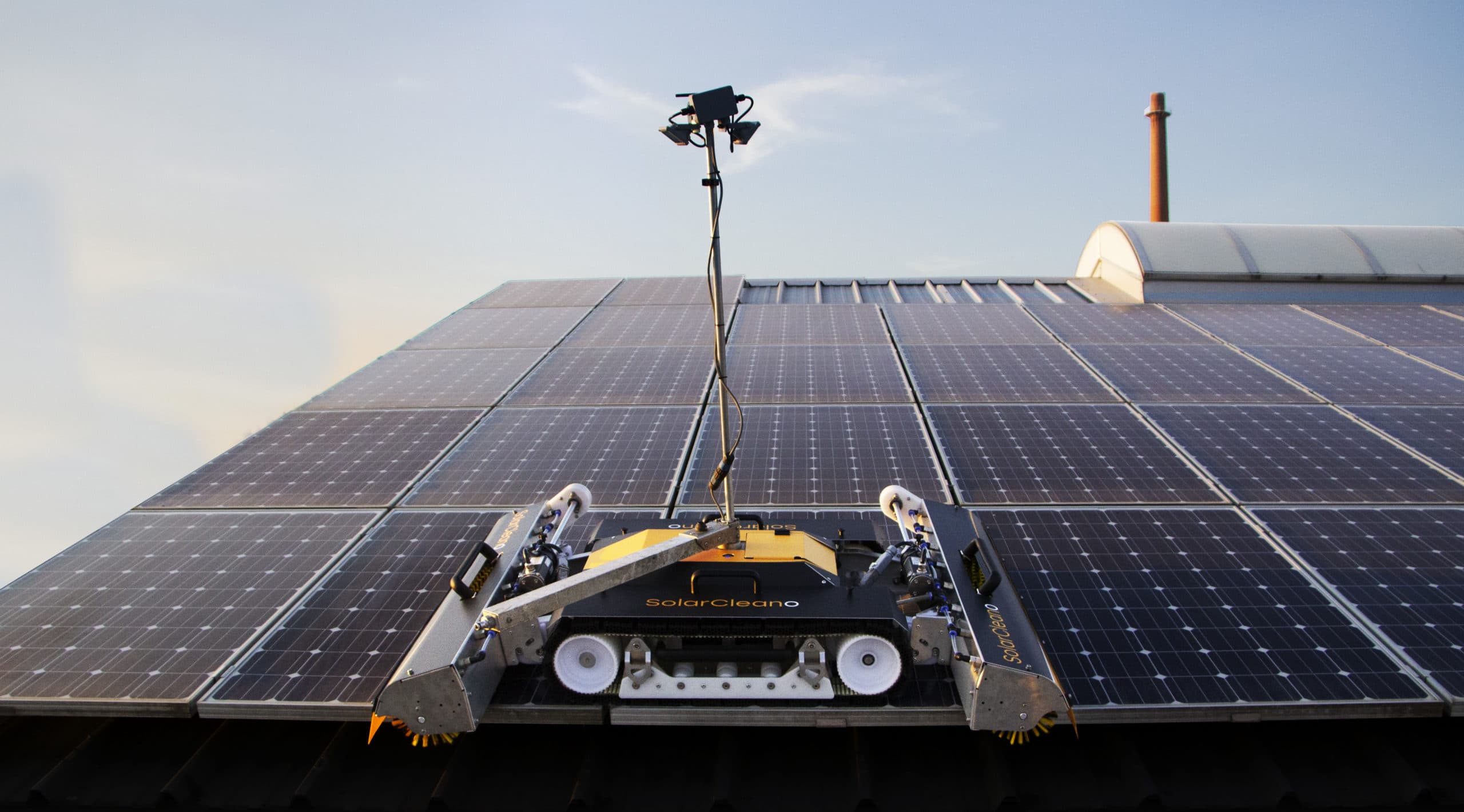
Why Clean
How pollution steals electricity generation
The U.S. Department of Energy (DOE) tracked 12 photovoltaic power plants worldwide for five years and found that the average annual efficiency degradation of non-cleaned modules was 22%-47% higher than regularly cleaned ones, depending on pollution type and degree:
l Light floating dust (e.g., cottonwood fluff, pollen drifting from farmland in the U.S. Midwest): When contamination reaches 5 g/m², light transmittance decreases by 10%-15%, corresponding to a similar drop in power generation. DOE measured a farm power station in Kansas; during the two-week fluff season in spring without cleaning, average daily generation dropped from 180 kWh to 153 kWh (a 15% decrease).
l Moderate sand dust (e.g., at the edge of the desert in southeastern Spain): When contamination reaches 15 g/m², efficiency drops by 18%-25%. NREL's controlled experiment in the Yuma Desert, Arizona, showed that after three weeks of dust accumulation, the non-cleaned group's generation was 21% lower than the cleaned group.
l Severe stubborn stains (e.g., in the Ruhr industrial area of Germany, oil mixed with bird droppings): When contamination exceeds 30 g/m², efficiency loss exceeds 30%. A case from the European Photovoltaic Association (SolarPower Europe): modules on a factory roof in Düsseldorf were not cleaned for half a year, forming a layer of black-brown oily sludge; generation dropped to 65% of original, recovering to 92% after cleaning.
How dangerous is the hot spot effect?
NREL conducted an extreme test: a module with 10% of its area shaded by bird droppings, if not cleaned, the temperature of the shaded cell can skyrocket from 25°C to 158°C, slowly melting through the silicon wafer, causing deformation like a dripping candle.
A California off-grid system suffered losses: a small area of the roof module was covered by pine needles and not cleaned promptly.
After three months, all 12 cells in the string burned out.
Replacing a new module costs 350, which is seven times more expensive than the annual cleaning cost (50).
According to NREL statistics, the repair cost for modules scrapped due to hot spots is 5-8 times the investment in regular cleaning.
Moreover, hot spots are invisible in the early stages; by the time they're discovered, the cells are already brittle.
A user in Florida had bird droppings on a module for half a month; upon cleaning, cracks were found in the underlying cell, causing a permanent 12% drop in generation.
The hidden costs of long-term non-cleaning
DOE analysis of 10-year data: Regularly cleaned modules retain 85%-90% of initial efficiency after 10 years;
Never cleaned ones retain only 70%-75%.
For example, in a desert power plant in Phoenix, Arizona, two groups of identical modules, one cleaned monthly and the other untouched for five years, were tested for power in the 6th year.
The cleaned group averaged 315W, while the non-cleaned group only 260W (a 17.5% drop).
Also, insurance claims become troublesome. Most U.S. home solar insurance policies state: "Performance degradation or damage due to long-term lack of cleaning is not covered."
A user in Texas had modules buried in sand for half a year; after a hot spot burned them out, the insurance claim was denied because surveillance showed no cleaning for 3 years.
Additionally, dirty modules dissipate heat poorly. Under summer sun, surface temperature is 8-10°C higher than clean modules, accelerating backsheet aging.
SolarPower Europe tests showed that for every 5°C temperature increase, backsheet lifespan shortens by 20%, potentially leading to premature failure over 10 years.
Rain is not a universal cleaner
UK Met Office data: In temperate oceanic climate zones (e.g., UK) with annual rainfall of 1,200mm, rain can only wash away 80% of floating dust; the remaining 20% of mud spots and bird droppings adhere more firmly.
A user in suburban London relied on "natural cleaning" by rain, resulting in bird droppings forming a crust on the glass that couldn't be scraped off with a fingernail, eventually requiring a professional with a plastic scraper for two hours.
Dry areas are worse. In Riyadh, Saudi Arabia, with annual rainfall less than 100 mm, sand dust sticks upon arrival. Without manual cleaning, contamination can accumulate to 5 g/m² in one month.
Cleaning Frequency
Arid and dusty areas
NREL set up a monitoring point in the Yuma Desert, Arizona: dust accumulation rate 0.8g/m²/week.
Humid and rainy areas
Places like the UK, South Island of New Zealand, Seattle, USA, with annual rainfall over 1,000mm, rain can wash away most floating dust.
But UK Met Office data shows 1,200mm annual rainfall can only wash away 80% of floating dust; the remaining 20% of mud spots and bird droppings stick to the glass, especially after rain stops and the sun dries them, making mud crusts harder to clean.
Industrial areas or near traffic
SolarPower Europe research found that particulate matter adhesion in such areas is 3 times that of residential areas, accumulating to 15 g/m² in 2 months.
Areas with high bird activity
U.S. Department of Agriculture research: Bird droppings have a pH of 4.5-5.5 (weakly acidic). When fresh, they are soft; after 48 hours they dry hard like plaster, with hardness similar to an HB pencil lead, and direct wiping can scratch the glass.
Snowy areas in winter
NREL experiments show that module efficiency is 0 when covered by snow. If ice residue remains after snowfall, secondary shading can persist for 3-5 days.
Cleaning Frequency Table for Different Environments
Environment Type | Representative Areas | Cleaning Frequency | Data Basis |
Arid and dusty (desert/Gobi) | Arizona, USA; Riyadh, Saudi Arabia | Monthly (plus within 24 h after sandstorms) | Dust accumulation 0.8g/m²/week, reaching ~3.2 g/m² in one month |
Humid and rainy (temperate oceanic) | Devon, UK; South Island, New Zealand | Quarterly (clean mud spots after rain) | Annual rainfall 1,200mm washes 80% of dust; remaining 20% mud/bird droppings require manual cleaning |
Industrial areas/near traffic | Ruhr area, Germany; near highways in New Jersey, USA | Every two months | Particulate adhesion 3 times residential areas, reaching 15 g/m² in 2 months |
Areas with high bird activity (woodland/farm) | Sydney suburbs, Australia; Florida, USA | Clean bird droppings immediately upon sighting | Bird droppings dry hard like plaster in 48 hours (pH 4.5-5.5), dry wiping easily scratches glass |
Snowy areas in winter | Maine, USA; Ontario, Canada | Within 24 hours after snowfall stops | Snow cover efficiency is 0; ice residue secondary shading lasts 3-5 days; ice expansion force exceeds 5 MPa, easily cracks frames |
Mistakes to avoid
DOE experiments show that using a hard-bristle brush to scrub weekly results in 40% scratch damage to the glass anti-reflective coating after 1 year, reducing light transmittance by 8%-12%.
NREL states that following the table frequency results in cleaning costs accounting for 3%-5% of generation revenue over 10 years. Too high or too low frequency is not cost-effective.
For example, a user in Arizona changed from monthly to bimonthly cleaning; after one year, generation was 19% lower than the monthly group.
A user in the UK changed from quarterly to monthly cleaning; after one year, glass scratches tripled, and repair costs exceeded the money saved from cleaning.
Cleaning Steps
What tools to prepare
NREL's recommended tool list is all field-tested; don't improvise:
l Soft-bristle broom: Nylon material, bristle diameter <0.5mm (too thick scratches glass), long handle (over 1.5 m) suitable for roof use, e.g., "Garden Weasel" soft-bristle broom sold at Home Depot USA, bristle density 12 per square centimeter, sweeps sand without splashing.
l Microfiber cleaning cloth: Weight 300-400g/m² (too light poor water absorption, too heavy hard to wipe), choose double-sided velvet cloth (e.g., 3M's "Scotch-Brite" cloth), doesn't shed lint, leaves no water marks after wiping.
l Low-pressure spray bottle: Pressure <0.3MPa (can feel resistance when hand-pumping), capacity 1L, filled with clean water or 1:100 neutral detergent solution.
l Rubber water squeegee: Silicone head width 20 cm, with 1.2 m telescopic pole (e.g., Unger's "ErgoTec" squeegee), apply pressure <5 N when squeegeeing (too much pressure deforms).
l Plastic scraper: Hardness of an old credit card (thickness 0.76 mm), used only for scraping dry, hard bird droppings; don't use metal scrapers (leaves scratches).
l Multimeter: For measuring voltage; off-grid systems require <12V; grid-tied systems first turn off the inverter (e.g., Enphase IQ7+) then disconnect the DC switch.
First, sweep large particles
The first step is not wiping, but sweeping. Use a soft-bristle broom or long-handled dust rake to gently sweep the module surface, only sweeping loose items: leaves, grass, sand, small twigs.
NREL experiments show that wiping without sweeping first causes sand to scratch micro-marks on the glass, reducing light transmittance by 3%-5% after 1 month.
Spray water to soften stains
After sweeping, use a spray bottle to spray water, from a distance of 30 cm from the module (too close high pressure, too far water disperses). Water temperature should be within 20°C difference from the module surface.
Focus on stubborn stains: A factory user in Germany's Ruhr area sprayed and immediately wiped bird droppings, spreading the dry, hard feces and enlarging the contaminated area. Later, waiting two minutes after spraying allowed easy removal.
Wiping and squeegeeing have specifics
When wiping, use a microfiber cloth, wipe in one direction, change cloth surface after each module.
For corners and frame gaps, use a long-handled soft brush (bristle length 2 cm) to reach in, e.g., Weiler's "Mini Brush" in the USA.
After wiping, use a rubber squeegee to scrape water from top to bottom (following rainwater flow direction), directing water to the ground.
NREL says leaving water marks increases light reflection; 1m² of water marks can reflect 5% more light, equivalent to losing 5% generation.
A user in Arizona, USA, tested: after squeegeeing, generation was 8% higher than without.
How to handle stubborn stains
l Dry bird droppings: First, gently scrape the surface layer with a plastic scraper (don't press hard) to expose the soft underneath, then spray with clean water and wipe. U.S. Department of Agriculture research: bird droppings dry hard in 48 hours, pH 4.5-5.5 (weak acid), hardness like plaster when dry; direct wiping can scratch. A user in Florida wiped hard with a cloth, leaving three scratches; later using a plastic scraper + water solved it in five minutes.
l Oil stains (common in industrial areas): Use 1:100 neutral detergent solution (e.g., 10 ml detergent in 1 L water), dip cloth and gently wipe, then spray with clean water to rinse. A case from the European Photovoltaic Association: A user in Düsseldorf, Germany, used gasoline to wipe oil stains, corroding the backsheet, which cracked and failed after 3 months.
l Resin/Tree sap: Use 75% medical alcohol (e.g., CVS's "Isopropyl Alcohol" in USA) on a cloth to gently wipe, then rinse with clean water. Be careful not to let alcohol touch the metal frame.
Storage
Temperature 5°C–35°C (NREL 2022), Humidity 40%–60% RH (PVEL 2023), avoid light and UV.
Physical protection: wrap with soft cloth, avoid compression (stacking pressure <5 kg/m²), electrically disconnect and seal connectors.
Proper storage results in <2% efficiency loss after 1 year; conversely, under damp/high-temperature conditions, it can drop 10%–15% in 6 months.
Storage Environment
Temperature
NREL (National Renewable Energy Laboratory) 2022 report states that 5°C–35°C is the stable operating range for module materials.
Above 35°C, the EVA encapsulant film accelerates cross-linking reactions, the originally soft polymer becomes brittle, and the adhesive strength between glass and cells decreases by about 0.3% per month;
Once exceeding 40°C, yellowing rate is 3 times faster than at 25°C; after half a year, transmittance drops 5%, directly causing short-circuit current loss.
University of California, Berkeley 2021 research found that repeated freeze-thaw cycles below 0°C increase the probability of micro-crack propagation at the glass-cell interface by 25%.
The reason is that EVA film's elastic modulus doubles at low temperatures, unable to buffer glass thermal expansion/contraction, causing cracks to grow from micron to millimeter scale, visible as local hotspots with infrared thermography.
A Florida installer tracked 10 sets of modules in 2023 stored in a garage with a 20°C day-night temperature swing (35°C day, 15°C night); after one year, power dropped by an average of 18%, 12% more than in a constant 25°C environment.
The reason is repeated material expansion/contraction accelerates delamination between the encapsulation layer and frame.
Humidity
PVEL (PV Evolution Labs) 2023 report shows that when relative humidity (RH) exceeds 60%, internal metal parts begin to corrode slowly.
Aluminum frames in RH 70% environment: after 6 months, surface oxide film thickness increases from 50nm to 200nm, detectable by eddy current thickness gauge as decreased conductivity;
At RH 90%, red rust appears on screws connecting frame and junction box, torque loss 30%.
German TÜV 2022 disassembly of modules stored in high humidity found that at RH >80%, PET backsheet polyester molecular chains hydrolyze and break, backsheet peel strength drops from initial 40N/cm to 15N/cm (tensile test), allowing rainwater or condensation to directly seep into cell gaps.
Ribbon (usually tin-plated copper ribbon) stored at RH 75% for 3 months: tin layer oxidation thickness reaches 2μm, white tin oxide crystals visible under SEM, increasing series resistance by 0.1mΩ and lowering fill factor by 2%.
At RH <30%, EVA film may shrink due to water loss, increasing the probability of cell micro-cracks by 10%.
Therefore, 40%–60% RH is the balance point; monitor with an electronic hygrometer, error <±3%.
Light
Arizona State University 2020 experiment placed modules under 50 lux (similar to cloudy day by window), 200 lux (office lighting), 500 lux (bright hallway) respectively.
After one year, power degradation was 8%, 15%, 22%, while the control group in complete darkness degraded only 2%.
UV-A (315–400 nm) constitutes 95% of sunlight UV, can penetrate ordinary plastic packaging.
Lab simulation using UV aging chamber (irradiance 0.5 W/m²): modules exposed to UV-A for 1,000 hours (equivalent to one year outdoors), EVA film's carbonyl index (aging marker) increased 3-fold, detectable by FTIR spectroscopy.
California Solar Association 2023 tested several covers: black polyethylene film resulted in 3% degradation after 1 year storage; aluminum foil composite film resulted in 2% degradation; ordinary cardboard boxes still resulted in 10% degradation.
Note: Do not use transparent plastic bags; even two layers, 30% UV can still penetrate.
The compounding effect of three factors: bad environments combined with double aging speed
PVEL 2023 conducted a cross experiment: modules stored at 35°C + RH 80% + 50 lux light environment degraded 28% after 6 months, more than the sum of single high temperature (15%), single high humidity (18%), and single light exposure (12%).
Control group data is more intuitive: after storing one year, ideal environment (25°C/RH 50%/darkness) degradation 2%; critical environment (30°C/RH 65%/dim light 100 lux) degradation 10%; harsh environment (40°C/RH 85%/light 300 lux) degradation 35%.
Practical tools
Temperature: use Fluke 62 MAX+ infrared thermometer (error ±0.5°C), attach it to the back of the module to measure the center temperature; Humidity: use Testo 605-H1 (with probe, can be placed inside packaging);
Light: use Sper Scientific 840006 (range 0–2000 lux).
Small storage boxes (e.g., Pelican 1510) come with built-in hygrometer, suitable for portable modules;
Large warehouses use Rotronic HC2-AW (accuracy ±2% RH), connected to a computer to record fluctuation curves.
A Norwegian user in 2022 used the above configuration to store modules; after five years, testing showed power remained at 93% of initial value, while the control group without monitoring was only 78%.
Physical Protection
Surface protection
Use anti-static soft cloth or acid-free paper for wrapping; both prevent static dust absorption and won't shed lint like ordinary paper towels.
Prohibit direct contact with rough cardboard boxes or burlap sacks. A California installer's 2022 case showed that modules rubbing against corrugated cardboard for 3 months developed 0.1mm deep scratches; EL imaging detected corresponding cell micro-cracks, power drop 8%.
NREL 2021 test: single module weight 1.5 kg, stacking pressure >5 kg/m² increases probability of glass micro-cracks from 5% to 30%.
Correct practice: add 5mm EVA foam spacers (density 30 kg/m³) between each layer, single stack height ≤3 pieces (total weight <4.5 kg), and align upper and lower layers (offset <2 cm).
A Florida user stacked five pieces (without spacers); after three months, the middle piece's EL image showed "spider lines," power dropped from 120W to 94W (21% decrease).
Use EL imager (e.g., Daystar DS-0.5) to detect micro-cracks, take images before and after storage, compare dark area size.
Frames and connectors
Frame screw torque: 2–3 N·m; If loose, transportation vibrations can cause displacement.
German TÜV 2023 disassembled 10 faulty modules after storage; 6 had gaps >0.5mm between frame and glass due to loose screws (torque <1 N·m), allowing rainwater to penetrate, power drop 15%.
Connector protection focuses on MC4 connectors (industry standard model). Use 3M 2228 waterproof insulating tape (thickness 0.76 mm) to wrap spiral 3 layers, then heat shrink tubing (diameter 2 mm larger than connector), blocking 99% moisture.
A Florida coastal user stored for nine months without sealing; MC4 terminals corroded, contact resistance increased from 0.5mΩ to 2.1mΩ, output current dropped 15%.
Apply a thin layer of Dow Corning 736 silicone grease to junction box cover edges to prevent sealant aging and rainwater leakage.
Pre-storage cleaning
Before storage, must clean with pH7 neutral cleaner, with soft nylon brush for gentle scrubbing, rinse thoroughly and air dry.
Bird droppings are most dangerous, pH 3–4 (acidic). German TÜV 2022 experiment: 50mg bird dropping residue on module, at 70% humidity, after 72 hours the anti-reflective coating was eroded, power drop 5%;
If stored for one month, erosion area expands to 2 cm², power drops 12%.
For sand dust, use an air blower gun (e.g., Metro ED-500, pressure 0.2 MPa) to blow from the side; don't blow with mouth.
For oil stains, use isopropyl alcohol (concentration 70%) to wipe, then absorb with a lint-free cloth; residual oil film reduces light transmittance by 3%.
Special circumstances
Wrap modules with VCI (Vapor Corrosion Inhibitor) paper (e.g., Cortec VpCI-126, contains volatile corrosion inhibitor), then wrapped in aluminum foil bag (thickness 0.08 mm). In salt spray environment (5% NaCl spray), store for 6 months; frame corrosion rate drops from 40% to 5%.
For transportation vibration, use EPE pearl cotton (density 25 kg/m³) as cushioning, fill 3 cm thick around the module, add L-shaped corner protectors (thickness 5 mm) at edges.
California logistics company 2022 data: using EPE + corner protectors, module breakage rate after 2000 km transport was 0.5%; without cushioning packaging, 15%.
Electrical Isolation
Disconnect all wires; don't let small currents sneak
NREL 2022 experiment shows that when static leakage current >10μA, self-discharge over 1 year can reduce module capacity by 5%;
If connected to an old controller (leakage current up to 50μA), drops 10% in half a year.
After disconnecting, use a multimeter to measure open-circuit voltage: 100W monocrystalline silicon module nominal voltage ~18V, actual should be 17V–19V (error ±5%); thin-film modules (e.g., CIGS) nominal 30V, actual 28V–32V. Voltage deviation >10% (e.g., 18V module measures below 16V) may indicate internal cell micro-crack or diode failure, needs investigation. California installer 2023 case: user didn't disconnect before storage, controller standby current 30μA; after 6 months, module voltage dropped from 18V to 15V, power down 20%.
Batteries stored correctly won't fail prematurely
Energy storage batteries paired with modules (lithium, lead-acid) can permanently fail if stored improperly; international standards specify state of charge ranges.
l Lithium batteries (e.g., 18650, LiFePO4): UL 1973 standard requires storage at 50%–60% SOC (State of Charge). Storing fully charged (100% SOC) for 6 months causes lithium plating on anode, capacity degradation 10%, swelling risk triples; storing discharged (20% SOC) for 3 months causes electrode material structure collapse, permanent capacity loss 30%. Recharge with constant current charger (e.g., NOCO Genius 10), every 3 months charge to about 55%; monitor internal resistance with Midtronics EXP-1000 tester, 20% increase indicates aging.
l Lead-acid batteries (AGM, Gel): IEC 61427 requires storage in a fully charged state and monthly recharging. Storing the cell in a discharged state for two months causes plate sulfation, resulting in only 60% of the capacity remaining; storing it for six months without recharging causes plate shedding, rendering the cell completely unusable.
Check bypass diodes; don't let shadows become hot spots
Must test before storage: use multimeter diode mode, red lead to diode anode, black lead to cathode; forward voltage drop should be 0.3V–0.5V (Schottky diode);
Reverse measurement shows "OL" (infinite resistance). If conduction both ways or neither, diode is shorted or open.
A California user in 2021 didn't test diodes before storage; one module had frame shading covering 1 cell (5% shading coverage).
After 3 months storage, the diode burned out, hot spot temperature increased 50°C (measured with infrared camera), corresponding cell burned through, power dropped from 120W to 84W (30% decrease).
NREL data shows that modules with failed diodes have twice the power degradation under shading compared to those without diodes.
Seal connectors tightly, and test for continuity
After disconnecting cables, MC4 and other connectors need 3M 2228 waterproof tape spiral wrapping 3 layers (50% overlap), then heat shrink tubing (diameter 2mm larger than connector), dust-proof and moisture-proof.
After sealing, measure contact resistance with multimeter: normal <0.5 mΩ, can increase 200% after oxidation.
Also check busbars inside the junction box. Open junction box cover (loosen buckle with screwdriver), check for peeling off solder ribbons (inspect with magnifying glass), clean terminal oxides with alcohol swabs.
German TÜV 2023 disassembled 10 faulty stored modules; 3 had oxidized junction box terminals, contact resistance increased 1mΩ, power down 8%.
Electrical Isolation Checklist
Object | Procedure | Data Standard | Tools |
Module Cables | Unplug all connectors, measure open-circuit voltage (±5% of nominal) | Leakage current <10μA (measure with multimeter mA range) | Fluke 117 multimeter |
Lithium Batteries | Charge to 55% SOC, recharge every 3 months | Full charge storage 6 months degrades 10%, discharged storage 3 months fails | NOCO Genius 10 charger, Midtronics EXP-1000 |
Lead-acid Batteries | Fully charged (specific gravity 1.265), recharge monthly | Discharged storage 2 months capacity 60% remaining | Hydrometer |
Bypass Diodes | Multimeter diode mode measures forward voltage drop 0.3–0.5V | Reverse cutoff (shows OL) | Fluke 117 multimeter |
MC4 Connectors | Tape + heat shrink seal, measure contact resistance <0.5mΩ | After oxidation resistance increases >200%, replace terminals | Fluke 289 milliohm range |
Real case: the cost of inadequate electrical isolation
A Norwegian user in 2022 forgot to disconnect the controller cable when storing modules; after one year, the module voltage dropped from 18V to 14V, power down 22%;
Another user stored a lithium cell fully charged for eight months; the cell swelled, capacity remaining 40%.
In contrast, a California installer followed the above steps; after 5 years storage, module open-circuit voltage remained within ±3% of nominal, cell capacity remained 85% of initial. Storage Duration
Storing for a few months without attention?
International measured data shows that during this period, degradation mainly comes from inadequate basic protection. With proper operation, degradation <1% per month.
Environmental requirements are simple: store flat in a dry place,avoid light. California installer 2022 case: 10 modules stored in garage (RH 55%, 25°C), after 2 months average power dropped 0.8%; only 1 module not stored flat (leaning against wall) accumulated dust on edge, degraded 1.5%.
Action is clean then power off: clean surface with pH7 neutral cleaner (Simple Green), unplug all cables, wrap in original packaging or bubble wrap anti-scratch. No active inspection needed, but before storage measure open-circuit voltage with Fluke 117 multimeter (100W module should be 17V–19V); after storage take out retest; deviation >5% requires micro-crack inspection.
Storing for six months to one year?
3–12 months storage is medium-term; risks come from material slow aging and occasional damage, need inspection every 6 months.
Environment upgraded to original anti-shock box + desiccant: place 50g/m² silica gel desiccant inside box, control temperature 15°C–30°C (measure with Fluke 62 MAX+ infrared thermometer attached to box wall). Florida user 2021 stored for six months; using this configuration module degraded 3%; control group without desiccant degraded 12%.
Inspection focused on three points:
l Appearance: Check the frame for deformation (use calipers to measure the diagonal difference; difference should be <2mm), and the backsheet for mold spots;
l Electrical performance: Measure IV curve; fill factor (FF) drop >3% indicates cell aging;
l Connectors: Open junction box cover, check for peeling off solder ribbons, clean terminal oxides with alcohol swabs.
Cell management for medium-term storage: Lithium batteries charged to 50%–60% SOC, recharge every 3 months; lead-acid batteries fully charged, recharge monthly. UL lab 2021 data: Lithium batteries stored medium-term with this operation, capacity degradation <5%; discharged storage 3 months, permanent capacity loss 30%.
Storing over one year?
>1 year storage is long-term; material aging accelerates, need to simulate a "hibernation pod" environment.
The environment uses constant temperature chamber + vacuum sealing: temperature 25°C±5°C, humidity 40%–50% RH, modules vacuum sealed in aluminum foil composite film, with VCI paper inside.
Inspection frequency once per year: power test with electricity, reapply junction box silicone grease, check EL image for new dark areas. Norwegian user 2020 stored for five years; following this operation, module power remained at 92% of initial value; control group without sealing left 78%.
Batteries for long-term storage: Lithium batteries recharge to 55% every 6 months; lead-acid batteries recharge every 3 months.
Degradation Data Comparison for Different Storage Durations
Storage Duration | Ideal Environment Degradation Rate | Harsh Environment Degradation Rate | Main Failure Modes |
<3 months | <1%/month | 3%–5%/month (high humidity) | Surface staining/corrosion, slight self-discharge. |
3–12 months | 2%–3%/year | 10%–15%/year | Backsheet delamination, ribbon oxidation, cell micro-cracks |
>1 year | 3%–5%/year | 20%–30%/year | EVA yellowing, frame corrosion, diode failure |
Data from PVEL 2023 thousand-user follow-up; ideal environment means 25°C/RH 50%/darkness +Standard protection; harsh environment means 35°C/RH 80%/dim light + no protection.
Tool List:
l Short-term: Extech 445,703 hygrometer (measure humidity), Fluke 117 multimeter (measure voltage), aluminum foil bag;
l Medium-term: Testo 605-H1 (temperature/humidity logger), Daystar DS-0.5 EL imager (check micro-cracks), silica gel desiccant (50g/m²);
l Long-term: Rotronic HC2-AW (constant temperature chamber monitor), FoodSaver V4840 (vacuum sealer), Dow Corning 736 silicone grease.