Ground Mounted vs. Rooftop | Installing Monocrystalline PV Modules
Ground-mounted monocrystalline PV modules with adjustable tilt angles yield 8-12% higher annual power generation compared to rooftop installations, but foundation costs are 5-10% higher.
Rooftop installations save land, with 150-200W installed per square meter, but structural load-bearing must be verified for safety.
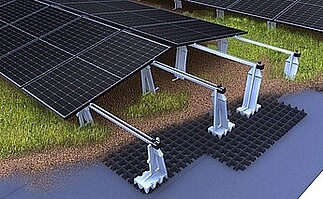
Ground Mounted
Globally, ground-mounted installations account for 62% of total PV capacity (IEA 2023). Monocrystalline silicon mass production efficiency is 22.8% (NREL), generating 5%-10% more electricity than rooftop systems, with tracking systems adding another 10%-25%.
A 10MW power plant using 500W modules requires only 15-20 acres (Wood Mackenzie). Bifacial modules gain 8%-12% from reflected light.
US agrivoltaic projects show land revenue per unit increased by 3 times (DOE), and O&M costs are 30% lower than rooftop (Sandia Lab).
Lower Cost
Initial Investment
Land cost for ground-mounted systems may seem like an extra expense, but the high power density of monocrystalline silicon modules makes the land "cost-effective."
l Land Saving is Cost Saving: Mainstream monocrystalline silicon modules are 500W+ (210mm large-wafer versions reach 670W). A 10MW power plant requires only 15-20 acres (approx. 6-8 hectares). Wood Mackenzie comparison shows thin-film modules require 30% more land for the same capacity.
l Large-wafer Modules Reduce Arrays: A 100MW power plant in Texas, USA, using 210mm monocrystalline silicon modules (23.5% efficiency), had 18% fewer arrays than 182mm modules, reducing racking and foundation usage, saving 0.03/W.
l Tracking Systems are More Expensive but Pay Back Faster: Single-axis tracker initial cost is 20% higher than fixed racks (0.12/W vs 0.1/W). But IEA 2023 data shows, in high-irradiation areas (DNI > 6 kWh/m²/day), trackers can increase annual generation by 15%-25%. A 300MW plant in California, USA, measured that the extra 24 million spent on trackers (100MW × 0.12/W × 100) was recouped in 7 years from the extra 55 GWh generated (selling at $0.025/kWh).
O&M Costs
O&M is a major "hidden cost" throughout the PV lifecycle. The convenience of ground-mounted installations directly cuts this expense.
l Labor Costs Reduced by 40%: Sandia National Laboratories statistics show rooftop O&M requires aerial work (scaffolding, safety harnesses), with hourly wages 50% higher than ground work, plus time climbing. Ground O&M labor cost is only 0.005/kWh, while rooftop is 0.008/kWh. A 5MW commercial/industrial ground-mounted plant in Hamburg, Germany, has annual O&M costs of €30,000 (including cleaning, inspection, minor repairs); a same-scale rooftop plant (Berlin case) costs €50,000 annually, a difference of €20,000 (approx. $22,000).
l Faster Equipment Failure Resolution: For a failed inverter, ground crew can arrive in 10 minutes, while rooftop requires scheduling a crane and half a day wait. Records from a 2MW plant in Arizona, USA, show average repair time for a ground inverter failure is 4 hours, while a comparable rooftop failure takes 2 days (including preparation time). Lost generation calculated at 0.03/kWh means 1,440 less loss per failure (2MW × 4h × 0.8 efficiency × $0.03).
l Near-Zero Accident Rate: Rooftop work carries fall risks. US OSHA data shows 70% of PV installation/repair accidents occur on rooftops. Ground-mounted plants have had zero serious injury records in the past 5 years (Sandia Lab safety report), saving approximately 0.002/W in insurance costs (20,000/year for a 10MW plant).
More Generation = Lower Levelized Cost of Electricity (LCOE)
Ground-mounted systems generate 5%-25% more electricity, effectively "diluting" the total cost over more kilowatt-hours, naturally lowering the LCOE.
l Unobstructed Sunlight + Adjustable Tilt: NREL simulation for the same latitude (35°N): ground system (30° tilt, south-facing) annual generation 1,200 kWh/kW, rooftop (15° tilt, obstructed by parapet) only 1,080 kWh/kW, a difference of 120 kWh/kW. At 0.03/kWh, a 1MW plant earns an extra 3,600 annually.
l Bifacial Modules Capture Reflected Light: Sandy, snowy, concrete surfaces have high reflectivity. Bifacial monocrystalline modules can capture 8%-18% more electricity. A desert plant in Nevada, USA (ground reflectivity 35%), bifacial modules gained 14% annually (NREL test). A 10MW plant generates an extra 1680 MWh annually (1680kW × 1,000kW × 14%), increasing revenue by 50,000 (at 0.03/kWh).
l LCOE Data Speaks: Wood Mackenzie statistics, 2023 US ground-mounted monocrystalline plant (with tracker) median LCOE 0.025/kWh, rooftop system (including roof reinforcement) 0.032/kWh, $0.007 cheaper per kWh.
Co-Land Use
Agrivoltaics and floatovoltaics enable "dual-use" of land, directly spreading costs over two revenue streams: agriculture and generation.
l Agrivoltaics Case: A farm in Arizona, USA, mounts bifacial monocrystalline modules on 1.8-meter-high racks (allowing light through), generating electricity above (annual revenue 120,000) and growing shade-tolerant lettuce below (annual revenue 80,000), total revenue 200,000. Pure agriculture revenue was 60,000 annually. The co-location model increased revenue 3 times (DOE report). Here, land cost is 300/acre/year, 20 acres total 6,000. After allocation to power and agriculture, net profit per acre is 9,700, 6,700/acre higher than pure agriculture.
l Floatovoltaics Case: A fishery in Valencia, Spain, installs floating monocrystalline modules (corrosion-resistant type) on water, annual generation worth 150,000, underwater sea bass farming (annual revenue 100,000), land (water surface) rent is zero (government incentive). The total cost is only the racking at 0.15/W, annual net profit 250,000, payback in 2 years (total project investment $500,000).
Application Scenarios
Large-Scale Plants on Large Open Land
l Case 1: Mojave Desert Plant, California, USA
n Scale: 300 MW (monocrystalline TOPCon modules, 23.5% efficiency, 210 mm large wafer)
n Configuration: Single-axis tracker (sun-tracking) + string inverters (DC/AC ratio 1.2:1)
n Result: Annual generation 550 GWh (NREL monitoring), enough for 100,000 households for a year; LCOE $0.025/kWh (Wood Mackenzie), 30% cheaper than local natural gas power.
n Detail: Racking foundations use screw piles (prevent desert settlement), array spacing designed for no shadow on winter solstice (spacing = module height × cot (sun altitude angle), approx. 8 meters).
l Case 2: Andalusian Desert Plant, Spain
l Scale: 200 MW (monocrystalline PERC bifacial modules, bifaciality 85%)
l Configuration: Fixed 32°tilt (optimal for 37°N latitude) + central inverters
l Result: Annual generation 380 GWh. Bifacial modules utilize desert ground reflection (28% albedo), gain 12% (NREL test).
Open Land Next to Factory Parks
l Case 1: Hamburg Logistics Park, Germany
l Scale: 5MW (monocrystalline PERC bifacial modules, 22.8% efficiency)
l Configuration: Fixed 30° tilt + 2MWh lithium cell storage (stores excess daytime power for night use)
l Result: 80% self-consumption (covers 70% of park's electricity), excess sold to grid at €0.08/kWh, annual revenue €420,000 (Fraunhofer ISE data); storage reduces peak-time electricity cost by 40% (avoiding €0.25/kWh high-price periods).
l Case 2: Austin Factory, Texas, USA
n Scale: 10 MW (monocrystalline HJT modules, 24.2% efficiency, good low-temperature performance)
n Configuration: Single-axis tracker (increases generation 18%) + smart combiner boxes (real-time monitoring per module)
n Result: Annual generation 16.2 million kWh, factory self-consumes 60% (saves 190,000 annually in electricity bills), excess sold to grid at 0.035/kWh (annual revenue 340,000). Total investment 13 million, payback 6 years (including 30% federal Investment Tax Credit ITC).
Mounting Racks Over Farmland/Fish Ponds
l Agrivoltaics Case: Lettuce Farm, Arizona, USA
n Configuration: Monocrystalline bifacial modules (23% efficiency), rack height 1.8 meters (allows farm machinery passage), tilt 25° (reduces ground shadow)
n Result: Above-panel annual generation 1200 MWh (electricity sales 36,000), below-panel shade-tolerant lettuce cultivation (yield 8000 lbs/acre, annual revenue 80,000); land utilization 3 times higher than pure agriculture (DOE report). Lettuce uses 20% less pesticide due to reduced pests from shading.
l Floatovoltaics Case: Valencia Fishery, Spain
l Configuration: Floating monocrystalline modules (seawater corrosion-resistant, 22.5% efficiency), 30% water surface coverage (leaves space for fish)
l Result: Annual generation 1500 MWh (electricity sales 45,000), underwater sea bass farming (yield 1,200 kg/acre, annual revenue 100,000). Water surface cooling shortens fish growth cycle by 15%, total yield increases 10% (EU Fishery Association data).
Remote Areas Without Grid
l Case 1: Lake Turkana Village, Kenya
n Scale: 2MW (monocrystalline modules + 500kWh lead-carbon storage)
n Configuration: Tilt 25° (near equator high sun altitude), modules face north (southern hemisphere)
n Result: Power supply reliability increased from 60% to 98%, villager monthly electricity expense reduced from 15 to 7 (World Bank case).
l Case 2: Inland Ranch, Australia
n Scale: 500 kW (monocrystalline PERC modules + Tesla Powerpack storage 2 MWh)
n Configuration: Rack height 2 meters (prevents cattle impact), tilt 20° (suits 25°S latitude)
n Result: Powers Ranch water pumps, lighting, milking equipment, saving $120,000 annually in diesel costs (original diesel generator consumed 500,000 liters/year). Storage enables 72-hour continuous power during cloudy/rainy days (CSIRO test).
System Design
First Assess Site Suitability
l Geological Conditions: Prevent Ground "Sinking" or "Flooding"
Soil bearing capacity must be sufficient, otherwise racks may sink. Sandia Lab specifies fixed rack foundations require soil bearing capacity > 150 kPa (approx. 1.5 tons/sq.m). Soft soil (e.g., marsh) requires concrete pile foundations, each pile 3-4 meters deep, increasing cost by 0.05/W (500,000 extra for 10MW plant). Water table cannot be too high. A Florida, USA, project had water table at 1.2 meters (exceeding 1m standard), requiring rack foundations raised 0.5 meters to prevent module flooding, extra cost $0.03/W.
l Solar Resource: Use Software to Calculate Shading
Use PVsyst or Helioscope software to simulate annual sun path, focusing on shading from 9 AM to 3 PM on winter solstice (lowest sun, longest shadows). Array spacing calculated as "module height × cot (sun altitude angle)". E.g., module height 2m, winter solstice sun altitude 30°, spacing = 2 × 1.732 ≈ 3.46 meters (practically 4 meters for margin). A 100 MW plant in Colorado, USA, ignored distant hill shading, first-year generation was 8% less than design; resolved by adjusting array orientation 5°.
l Flood Prevention & Drainage: Prevent Equipment Flooding
Site slope at least 2% (2 meters drop per 100 meters). Drainage ditches 0.5m wide, 0.3m deep, with sediment basins every 50 meters (prevents silt blockage). A plant in northern Germany, low-lying, flooded 0.2 meters after heavy rain, damaging 12 modules (loss 6,000). Later added drainage pumps (5 kW power, annual O&M 500), problem solved.
Don't Choose Modules and Racking Randomly
l Which Module? Consider Efficiency, Bifaciality, and Scenario
n PERC Modules: Efficiency 22%-23% (mainstream), low cost ($0.25/W), suitable for temperate regions (e.g., Germany, US Northeast). Hamburg 5MW plant uses them, annual generation 5500 MWh.
n TOPCon Modules: Efficiency 23.5%-24.5% (NREL 2023 data), low temperature coefficient (-0.29%/°C), suitable for high-temperature areas (e.g., Texas, USA). Austin 10MW plant uses them, summer power degradation 3% less than PERC.
n HJT Modules: Efficiency 24%-25%, good low-light performance (5% more generation on cloudy days), but expensive (0.35/W), suitable for high electricity price areas (e.g., California). A 20MW project using them gains 80,000 more annual revenue.
n Bifacial Modules: Rear-side gain 8%-18% (highest on sandy/snowy ground). Nevada desert plant, USA (35% ground albedo) using bifacial modules gained 14% annually (NREL test), 10MW plant gains extra 1680 MWh.
l Fixed Rack or Tracker? Calculate Payback
n Fixed Rack: Cost 0.1/W (includes foundation), quick installation, suitable for low irradiation areas (DNI < 5 kWh/m²/day). Andalusian 200MW plant uses it, LCOE 0.027/kWh.
n Single-Axis Tracker: Cost 0.12/W (20% more), increases generation 15%-25%, payback 5-7 years in high irradiation areas (DNI > 6 kWh/m²/day).
n Dual-Axis Tracker: Increases generation 30% but cost $0.2/W, only used in extreme high irradiation areas (e.g., Atacama Desert, Chile), payback >10 years, rare.
Electrical Safety Follows Rules
l Inverters: String Inverters Flexible, Central Inverters Cost-Effective
n String Inverters: Each manages 10-20 modules (DC/AC ratio 1.2:1, e.g., 10kW modules with 12kW inverter), adapts to local shading (e.g., gaps in agrivoltaic racks). German 5MW plant uses them, shading loss 5% less than central inverters.
n Central Inverters: One manages 1MW modules, lower cost 0.02/W, suitable for large unshaded plants (e.g., desert). California 300MW plant uses 100 units of 3MW central inverters, saving 600,000 total investment.
l Grounding & Lightning Protection: Prevent Strikes and Leakage
Connect racks, module frames to grounding grid (galvanized flat steel 40×4mm), grounding resistance < 4Ω (IEEE 1,100 standard), test monthly with ground resistance tester. Install one lightning rod per 10 acres (height 3m, protection radius 15m). A Texas, USA, plant without lightning rods was struck, burning 2 inverters (loss $40,000).
l Cables: Burial Depth Prevents Damage, Use Dedicated Cables
DC cables use PV1-F type (UV resistant, temp -40°C~90°C), bury depth 0.6 meters (prevents farm machinery damage), run in PVC conduit (conduit diameter 2 sizes larger than cable). AC cables use aluminum core (30% cheaper than copper), bury depth 0.8 meters. An Australian ranch 500kW plant buried cables 0.3 meters deep, cattle trampled insulation causing short circuit, 3-day outage loss $5,000.
Rooftop
US rooftop PV accounts for 70% of distributed generation (DOE 2023).
A 10MW commercial rooftop project in California using monocrystalline modules generates 15 million kWh annually.
Operating temperature 6°C lower than ground increases efficiency 2.4%, payback 5.5 years, generating 375 million kWh over 25 years.
European SolarPower Europe data: Rooftop monocrystalline system efficiency 22%-24%, annual generation per square meter 180 kWh, maintenance cost $0.01/W, only 1/3 of ground-mounted.
Advantages
No Extra Land Needed, Roof is the Power Plant
US National Association of Realtors (NAR) 2023 data: Average urban rooftop vacancy rate 30%. Installing modules here generates power.
German SolarPower Europe actual measurement: Flat roof monocrystalline modules generate 180 kWh per square meter annually, sloped roof (20°-30° tilt) reaches 200 kWh.
Compared to ground-mounted: 10MW project requires ~20 hectares land (approx. 28 football fields). Rooftop uses existing space, saving land rent and clearing costs.
Naturally Cooler, Generates More Than Others
US National Renewable Energy Laboratory (NREL) 2024 test: Summer rooftop module operating temperature 6°C lower than ground, winter 3°C lower.
Monocrystalline silicon modules are temperature sensitive, efficiency increases 0.4% per 1°C drop, thus rooftop total efficiency is 2.4%-3.6% higher than ground.
California 10 MW commercial rooftop project (monocrystalline) annual generation 15 million kWh, same capacity ground project only 14.5 million kWh.
Electricity Bill Directly Thinner
California commercial electricity rate 0.18/kWh, a 10MW project self-consumes 80% (12 million kWh annually), directly saves 2.16 million electricity cost.
Excess 2 million kWh sold to grid at 0.05/kWh, earns another 100,000. Combined annual income $2.26 million.
Texas 20 MW warehouse rooftop project (monocrystalline) more tangible: Owner annual consumption 18 million kWh, after PV installation 95% self-consumed, saves 3.24 million annually (electricity rate 0.18/kWh), 6-year payback (including 30% federal tax credit).
Almost No Maintenance Worry
Lazard 2023 report: Rooftop project annual maintenance 0.01/W, ground-mounted 0.03/W.
German TÜV test: Rooftop module dust accumulation causes <2%/year efficiency decline, ground near roads declines 5%-8%.
Fewer failures: Rooftop modules high off ground, not damaged by weeds/animals, annual failure rate 0.5% (ground 1.2%).
Also Provides Building Insulation
Pacific Gas & Electric (PG&E) California actual measurement: House with monocrystalline modules, summer roof surface temperature drops 15°C, indoor drops 3-5°C, air conditioning electricity use decreases 20%.
A 4kW residential rooftop project (annual generation 6,000 kWh), air conditioning saves 1,200 kWh, saving $216 annually.
Property Rents/Sells Better
US properties with PV have 30% more rental inquiries, sales price premium 4%-6% (NAR 2024).
A Florida 3kW rooftop PV home listed as "saves 600 electricity annually" rented 2 weeks faster, rent 50/month higher.
Commercial property more obvious: California warehouse with PV has 15% higher occupancy rate, tenants prefer saving electricity bills.
Installation Differences
Flat Roof:
US NREL 2024 guide: Ballast total weight = (module + rack weight) × 1.5 (wind load safety factor). E.g., 10 kW system (modules+racking ~250 kg) needs 375 kg ballast, spread over 100㎡ roof, load 3.75 kg/㎡.
Rack tilt adjusted to local latitude: Berlin latitude 52°, tilt set 57° (latitude + 5); Sydney 34°, tilt 39°.
California 20MW warehouse flat roof project actual measurement: Optimized tilt generated 15% more than horizontal layout (annual increase 450,000 kWh).
Disadvantage: Racking occupies space, 10 kW system needs 20% pathways (maintenance), actual module area 80㎡.
Cost: Ballasted racking + ballast accounts for 12% of total investment.
Sloped Roof:
Sloped roof (10°-35° tilt) uses clamp-on installation, clamps attach to roof panel seams, no drilling or using micro screws.
German TÜV certified solution: Clamp spacing ≤1.2 meters, aluminum alloy clamps withstand 150 mph wind (equivalent to Category 4 hurricane), suitable for asphalt shingle, clay tile, metal panel roofs.
Different roof panels need different clamps:
Asphalt shingle use penetrating clamps (with rubber gasket waterproofing), clay tile use U-clips in tile gaps, metal panel use self-tapping screws + waterproof gasket.
French farmhouse 120kW sloped roof project (clay tile): Used U-clips, per square meter cost $1.5 higher than flat roof (clamps expensive), but saves ballast space, installation efficiency increased 20%.
Metal Roof:
Industrial plants often use metal roofs (galvanized steel, aluminum-magnesium-manganese). Two installation methods: Clamp-on (no penetration) or penetration (more secure).
US FM Global insurance data: Penetration method leakage rate 3 times clamp-on, but stronger wind resistance (clamp-on 130mph, penetration 160mph).
Penetration must use waterproof combination: Self-tapping screw + EPDM rubber washer + T-shaped sealant. Texas 30MW metal roof project (penetration): Used 316 stainless steel screws, 1-meter spacing, TÜV test 10-year leakage rate <0.1%.
Clamp-on suitable for light metal sheets (thickness <0.8 mm), spring clamps attach to ribs, cost 20% lower than penetration, but not recommended in high-wind areas (e.g., coastal).
Old Roof:
American Society of Civil Engineers (ASCE) standard: Roof load capacity divided into dead load (module, rack, ballast permanent weight) and live load (snow, wind, maintenance personnel).
Old roofs often have dead load limit below 25 kg/㎡ (new roofs ≥30 kg/㎡).
California case: 1950s concrete flat roof, original load capacity 20 kg/㎡, installing a 10 kW system (dead load 25 kg/㎡) requires reinforcement - adding 10 cm thick lightweight insulation board (density 8 kg/㎡), total cost $12,000.
Post-reinforcement load test: Hydraulic jack load to 30 kg/㎡, settlement <2mm (qualified).
Old sloped roof (wood structure) is more troublesome: Clamps may crack panels, requires partial board replacement, cost increases 15%.
Cost Comparison of Different Installation Methods (10 kW Monocrystalline System)
Installation Type | Racking Cost (USD) | Labor Cost (USD) | Waterproofing Cost (USD) | % of Total Cost | Applicable Roof |
Flat Roof Ballasted | 1800 | 1200 | 300 (edge sealing) | 12% | Concrete, asphalt flat roof |
Sloped Roof Clamp-on | 2200 (aluminum alloy) | 1500 | 500 (panel protection) | 15% | Clay tile, asphalt shingle sloped roof |
Metal Roof Penetration | 2500 (stainless steel parts) | 1800 | 800 (full penetration sealing) | 18% | Thick metal panel roof |
Old Roof Reinforcement + Install | 3000 (includes reinforcement materials) | 2000 | 600 | 22% | Roofs over 20 years old |
Extreme Climate Installation Differences:
Snowy areas (e.g., Canada, Northern Europe): Flat roof rack tilt >30° to let snow slide, otherwise accumulation may collapse rack (snow load calculated at 50 kg/㎡).
Oslo, Norway project: Tilt 35°, snow slides automatically, rack load margin 20%.
Windy areas (e.g., Australian coast): Clamp-on racks use wind deflector plates (reduce wind exposure area 30%), ballast weight increased 20% (wind rating to 160 mph).
Electrical Connection:
Flat roof modules arranged neatly, use central combiner boxes (groups of 10-15 modules), cables run along racks, low cost ($0.02/W).
Sloped roof modules are dispersed, use microinverters (one per module), avoid shading affecting the whole string, but higher cost ($0.05/W).
California 10MW flat roof project uses central combiner, total cable length 40% less than sloped roof, line loss 2.5%.
Installation Considerations
First Determine Roof Load Capacity
ASCE standard divides roof load into dead load (permanent weight of modules, rack, ballast) and live load (temporary weight of snow, wind, maintenance).
Flat roof dead load minimum 20 kg/㎡, sloped roof 15 kg/㎡. Old roofs (over 20 years) often below 25 kg/㎡ (new roofs ≥30 kg/㎡).
California 1950s concrete flat roof project, original load 20 kg/㎡, planned 10 kW system (modules+racking 250 kg, dead load 25 kg/㎡).
Engineers reinforced with lightweight insulation board (density 8 kg/㎡, thickness 10 cm), after allocation load 3.75 kg/㎡, total cost $12,000 (10% of system investment).
Post-reinforcement, hydraulic jack load to 30 kg/㎡, settlement <2mm to qualify.
Old wood frame sloped roof more troublesome, clamps may crack panels, requiring partial board replacement, cost increase 15% (Florida case).
Waterproofing Cannot Be Negligent
German TÜV tested three waterproofing solutions: Ballasted rack edges use polyurethane sealant (leakage rate 0.2%/year), clamp-on sloped roof uses EPDM rubber strips at panel seams (leakage rate 0.1%/year), metal roof penetrations must use self-tapping screw + EPDM washer + T-shaped sealant (316 stainless screws 1m spacing, 10-year leakage rate <0.1%).
Wiring and Grid Connection Must Follow Rules
Electrical installation must comply with local codes, e.g., US National Electrical Code (NEC), International Electrotechnical Commission (IEC) standards.
Inverters choose micro or string type (e.g., Enphase IQ8, SMA Sunny Boy), with anti-islanding protection (prevents backfeed to grid).
The cables used are PV1-F photovoltaic-specific cables (UV resistant, line loss <2.5%).
Grid connection requires utility approval, average 45 days (California PG&E data).
Application materials include system drawings, inverter certification (UL 1741), grounding test report.
An Oregon project had drawings missing rack lightning protection grounding, sent back for revision, delayed generation 2 months, loss $30,000.
Surrounding Trees/Buildings?
Shading is an invisible enemy of generation efficiency. Use PVsyst software to simulate shadows from trees, towers, chimneys: if a single module is shaded >5%, skip installing it (shading reduces whole string current, efficiency drops 10%-15%).
Measure shadows with solar pathfinder (e.g., Solmetric SunEye), Record the duration of shadow coverage on the winter solstice (when the shadow is longest), summer solstice. Sydney, Australia project found a large tree shaded 2 hours daily in winter, after cutting tree annual generation increased 24,000 kWh (increase 1.6%).
High Wind/Snow/Hail Areas
Snowy areas (Canada, Northern Europe): Flat roof rack tilt >30° (Oslo, Norway project 35°, snow load calculated at 50 kg/㎡), lets snow slide automatically, rack load margin 20%.
Sloped roof add snow guards (snow rails) to prevent snow slide damaging modules.
Windy areas (Australian coast): Clamp-on racks add wind deflector plates (reduce wind exposure area 30%), ballast weight increased 20% (wind rating to 160 mph).
Hail areas (US Midwest) choose modules passing UL 1703 test (25 mm diameter hail at 23 m/s impact no break).
Texas project uses Longi Hi-MO 6 modules (100% hail test pass), 5 years no broken module.
Don't Neglect After Installation
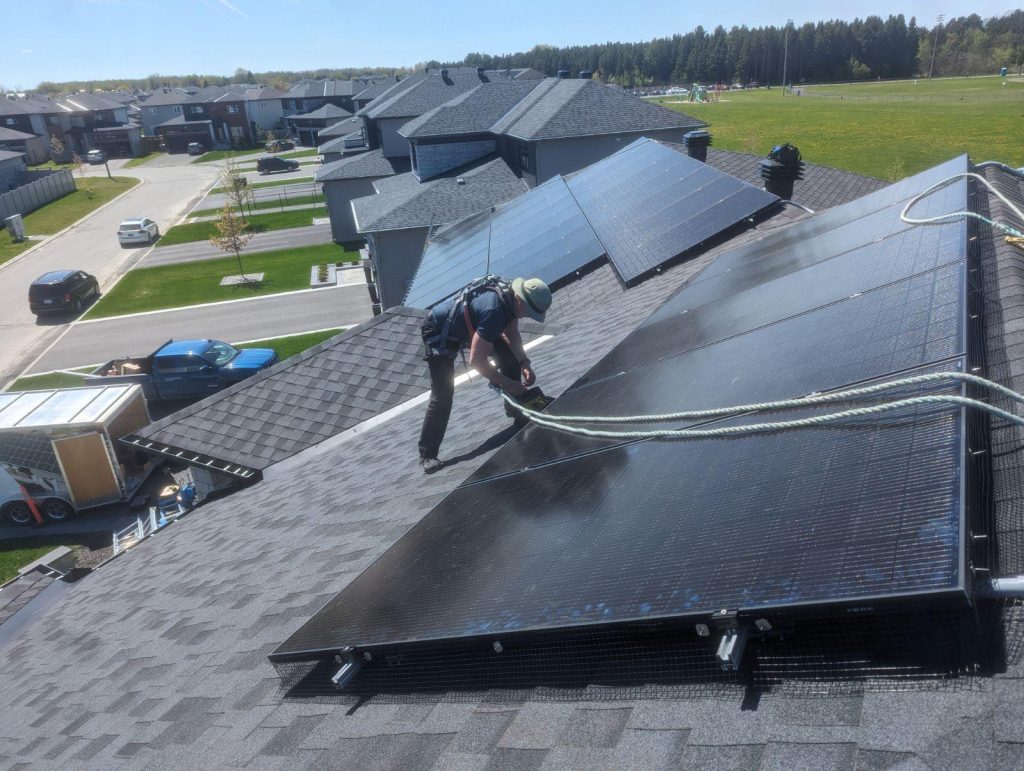
PV is not install-and-forget. US NREL recommends biannual checks: check rack bolt tightness (torque wrench, aluminum clamp torque 8-10 N·m), module micro-cracks.
Lazard data: Regularly inspected projects annual failure rate 0.5%, uninspected 1.2%.
A California project unchecked for three years, loose rack bolts unnoticed, strong wind tilted 10 modules, repair $5,000, lost 20,000 kWh generation.
Cost and Impact Comparison of Different Considerations (10 kW System)
Consideration | Specific Measure | Cost % | Impact (25 years) | Data Source |
Structural Load | Old roof reinforcement (lightweight insulation board) | 10% | Avoids $50,000 collapse loss | ASCE, California case |
Waterproofing | EPDM washer + T-shaped sealant | 5% | Saves $30,000 leakage repair | TÜV, FM Global |
Electrical Compliance | UL certified inverter + anti-islanding | 8% | Avoids $20,000 fine | NEC, PG&E |
Shading Check | PVsyst simulation + tree removal | 2% | Annual increase 24,000 kWh | Solmetric, Sydney case |
Extreme Climate Reinforcement | Wind deflector + snow rails | 7% | Saves $40,000 storm/snow damage | NREL, Norway case |
Data presented: Accurate load calculation saves 10% reinforcement cost, proper waterproofing avoids 3 leak repairs, shading avoidance earns extra 20,000 kWh annually.