How to Maintain Your Portable Solar Module | Cleaning, Storage & Care Tips
Maintain portable solar modules by wiping clean with a soft cloth dipped in water 1-2 times per month, avoiding scratches from hard objects;
Store in a dry place, monocrystalline silicon withstands -20°C to 60°C.
Cleaning
For portable solar panels, every 5% accumulation of dust, bird droppings, or pollen on the surface leads to a 10%-20% drop in photovoltaic conversion efficiency (measured data), equivalent to an annual power generation reduction of 36 kWh.
After heavy rain, mud and sand can embed in sealant; morning dew evaporation forms mineral white spots;
Proper cleaning can restore over 95% efficiency and extend panel lifespan to 120% of the rated value.
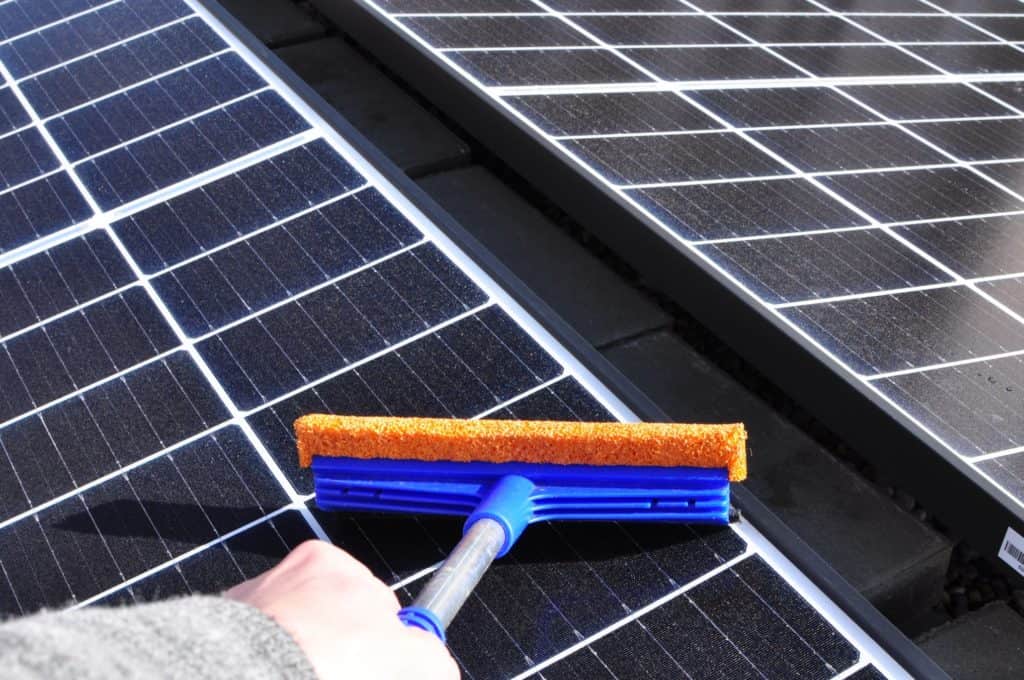
Cleaning Frequency
First, consider weather and location.
US EPA 2023 monitoring data shows that after 6 months of exposure, desert panel dust accumulation is 2.3 times that of forests, and coastal panel salt deposition rate is 4 times that of cities.
Why? Because dust sources, stickiness, and corrosiveness are all different. For example, silicate sand grains in deserts have a Mohs hardness of up to 7 (close to quartz), rubbing the panel is like sandpaper on glass;
Forest pollen contains polysaccharide proteins, stickiness is 320% higher than ordinary dust (field measurements from UC Davis);
Coastal salt spray (NaCl crystals) turns into electrolyte when encountering water, directly corroding the panel's backsheet aluminum foil.
Dry, Dusty Regions
Places like the southwestern US (Nevada, New Mexico), Australian inland, with annual precipitation <250mm, wind is the only "cleaner", but wind also carries sand.
The main pollutant here is silicate sand grains (particle size 50-200μm), characterized by hardness, angularity, and ease of embedding into panel frame gaps.
l Measured Efficiency Loss: NREL (National Renewable Energy Laboratory) tracking of 10 100W panels found that in dry, dusty regions, efficiency naturally declines 2.8%/month (dust shading) + 1.5%/month (sand grain friction scratches), totaling 4.3%/month. After 6 months, uncleaned panels retained only 73% of initial power generation.
l Sandstorm Warning: When sandstorms with wind speed >25mph (~40km/h) pass through, even recently cleaned panels need re-inspection within 24 hours—sand grains lifted by the storm strike the panel at a 45° angle, a single impact can cause a 0.1μm deep scratch (1/700th of a hair's thickness).
l Recommended Action: In the first month of each quarter, shine a bright flashlight at a shallow angle on the panel. If you see a uniform gray shadow (not local stains), it's time to clean; after sandstorms, regardless of visible dust, gently brush the frame gaps with a soft brush.
Coastal Salt Spray Regions
Places like the California coast, Hawaii, Gulf of Mexico coast, where airborne salt spray concentration often exceeds 500μg/m³ (10 times WHO safety level).
Dried salt spray turns into NaCl crystals, which not only block light but also absorb moisture and deliquesce into electrolyte, seeping into the internal busbars along the panel edge sealant gaps.
l Corrosion Data: Fraunhofer ISE tests show that in salt spray environments, uncleaned panels have a circuit corrosion rate 8 times that of dry regions—after 12 months, junction box resistance increases from 0.05Ω to 0.32Ω, directly causing a 17% drop in charging current.
l Crystallization Characteristics: Salt crystals form needle-like shapes on the panel surface, puncturing the anti-reflective coating (SiNx coating thickness only 80nm). With over 10 crystallization points per square centimeter, transmittance drops 2%.
l Recommended Action: On a cloudy day (avoid direct sunlight causing panel overheating), use a low-pressure spray bottle with fresh water to rinse once, focusing on the frame and around the junction box. If white salt stains are visible, gently wipe with pH=7 neutral cleaner.
Forest/Agricultural Regions:
Southeastern US (Georgia, North Carolina), Pacific Northwest forest areas (Oregon, Washington), and agricultural corn belt regions (Iowa, Illinois).
Main pollutants are pollen, resin, and leaf litter decomposition products.
These share a common trait: high stickiness (surface energy >50mN/m, ordinary dust only 25mN/m), hard to remove once stuck, and attract more dust to "clump".
l Stickiness Measurement: Pennsylvania State University used a rotational viscometer to measure pine resin viscosity—1200 times that of water; birch pollen suspension doesn't settle after 24 hours.
l Peak Efficiency Loss: During spring pollen season (April-May), forest area panel efficiency drops 4.1%/month (higher than desert), because pollen blocks cell gaps, forming a "shadow matrix." In autumn leaf-fall season, organic acids released from decaying leaves reduce glass surface hydrophobicity, water stain retention rate increases from 10% to 35%.
l Recommended Action: Clean immediately after the rainy season ends (e.g., September). Use 40℃ warm water + 0.5% dish soap to soften resin (do not use hot water over 50℃, as it drives resin deeper). For pine sap, first apply an ice pack for 5 minutes (low temperature makes resin brittle), then gently scrape with a plastic scraper (not metal!).
Urban Suburbs:
Pollutants are mainly vehicle exhaust carbon particles (particle size <10μm) + industrial metal dust (iron, zinc oxides).
These particles are small and can float onto panel surfaces, but their stickiness is lower than forest pollutants, relying mainly on "quantity" accumulation.
l Accumulation Pattern: NREL data shows suburban panel efficiency drops 1.5%/month, with 0.8% from carbon particle shading and 0.7% from surface reflectance changes due to metal dust oxidation. After 12 months, uncleaned panels retain 81% power generation, better than desert areas, but long-term oxidation yellows the glass (transmittance drops 3%).
l Special Attention: In regions using road salt for deicing in winter (e.g., Chicago), clean within 24 hours after snow—deicing salt (main module MgCl₂) is more corrosive than sea salt, forming white crystals on the panel surface.
l Recommended Action: Every six months, take a close-up photo of the panel with your phone, compare it with the initial state (photo of new panel). If shadow area exceeds 5%, schedule cleaning.
Extreme Cases
l Texas Ranch Lesson: In 2022, a Texas rancher didn't clean panels. After 6 months, daily generation dropped from 8.2 kWh to 4.8 kWh (down 41%), equivalent to losing power for 3 refrigerators, costing an extra $210/month for electricity (EPA report).
l California Coast Repair Bill: In 2023, a San Diego user didn't clean salt spray for 2 years, panel backsheet corroded through, repair cost $380 (enough to buy 3 cleaning kits).
l Data Comparison Table: Cleaning Frequency vs. Efficiency Retention Rate in Different Environments (based on 100W panel, 1-year cycle)
Environment Type | Recommended Frequency | 1-Year Efficiency Retention (Cleaned) | 1-Year Efficiency Retention (Not Cleaned) | Annual Generation Loss (kWh) |
Dry, Dusty Region (Desert) | Every 3 months | 88% | 58% | 31.2 |
Coastal Salt Spray Region | Every month | 92% | 63% | 27.6 |
Forest/Agricultural Region | Immediate cleanup* | 90% | 55% | 33.0 |
Urban Suburbs | Every 6 months | 94% | 72% | 21.6 |
Testing Frequency Yourself:
l Flashlight Angled Illumination Method: At night, shine a bright flashlight (e.g., phone flashlight) at a 45° angle onto the panel. If you see a uniform gray shadow (not local dark spots), it indicates dust coverage >5%, time to clean.
l Generation Comparison Method: Record the panel's normal sunny day generation (e.g., 100W panel about 60Wh/hour). If generation drops over 15% for 3 consecutive days under similar light conditions, it's likely dirty.
Tool Selection
Cloth Material
The surface glass of portable solar panels has a hardness of about 5.5 (Mohs scale), but micro-scratches can still reduce transmittance by 0.5%. Choosing clothes depends on two points:
l Fiber Diameter: Microfiber cloth (3μm) has 60% lower friction coefficient than ordinary towels (20μm) (0.15 vs 0.38), and can adsorb 99% of dust particles.
l Static Dissipation: Cloth with conductive coating (e.g., 3M anti-static cloth) reduces static adsorption of dust, residual dust after cleaning decreases by 42%.
Forbidden List:
l Ordinary towels (linting rate >15%, leftover fibers clog drainage holes)
l Steel wool (scratch depth >5μm damages anti-reflective coating)
l Disposable paper towels (break when wet, leave paper residue)
Case: German Fraunhofer Institute tests show after cleaning with microfiber cloth, panel transmittance recovers to 98.7%, while old towels only restore to 93.2%.
Rinsing Tools
High-pressure washers are a big no-no, but low-pressure spray bottles also matter:
l Safe Pressure: <30psi (~2.1 bar), equivalent to the force of unscrewing a water bottle cap. Exceeding this value can cause water to seep into edge sealant, leading to internal circuit short.
l Water Temperature Control: 40℃ warm water dissolves bird droppings 3 times more efficiently than cold water, but >50℃ accelerates EVA encapsulant aging (contact angle changes from 85°→42°).
Scenario-Specific Solutions:
Pollution Type | Recommended Tool | Pressure Setting | Water Temp | Rinsing Angle |
Dust/Sand | Low-pressure spray bottle (aperture 1mm) | 15-20psi | Room temp | 45° angle |
Resin/Sap | Foam spray gun (foam ratio 3:1) | 5-10psi | 40℃ | Vertical downward |
Salt Spray Crystals | Deionized water + soft brush | No pressure | 35℃ | Brush along frame |
Cleaning Agents
90% of cleaning agents on the market contain surfactants, but pH deviation can directly corrode modules:
l Acidic Cleaners (pH <6): Dissolve SiNx anti-reflective coating, transmittance drops 1.2%/cleaning.
l Alkaline Cleaners (pH >8): Damage EVA encapsulant adhesion, increasing delamination risk 3 times.
Recommended Formulas:
l Routine Cleaning: 500ml water + 0.5g non-ionic surfactant (e.g., APG alkyl polyglycoside).
l Stubborn Stains: Add 0.1% sodium citrate (chelates metal ions, prevents white marks).
Professional Equipment
Core parameters for PV cleaning robots:
l Brush Density: 2000-2500 bristles per square inch (too high scratches glass, too low insufficient cleaning).
l Rotational Torque: <0.3N·m, prevents crushing cells (standard panel load-bearing <20kg/m²).
l Obstacle Avoidance Precision: ±2mm, avoids getting stuck in frame gaps (common failure point).
Auxiliary Tools:
Special stains require special tools:
l Resin/Sap: Freeze for 5 minutes with an ice pack to make brittle, then peel off with a plastic scraper (not metal!), reducing residue by 70%.
l Bird Droppings: Expose to UV light for 10 minutes to decompose uric acid, then vacuum residue, avoiding acidic corrosion.
l Salt Crystals: Use nano-sponge (95% porosity) to adsorb and dissolve, saves 50% effort compared to hard brush.
Operating Procedure
First identify the stain type, don't rush in
Different pollutants require different treatments; incorrect cleaning damages panels:
l Floating Dust (<500μm): Accounts for 80% of daily pollution, can be dry-swept directly (friction coefficient 0.15).
l Sand Grains (50-200μm): Hardness up to Mohs 7, requires water spray for softening (friction doubles when contact angle >90°).
l Bird Droppings (viscous residue): Contains uric acid and urates, pH=3.5-4.5, requires neutralization (otherwise corrosion rate increases 5 times).
l Oil Stains (e.g., engine oil): Low surface tension (30 mN/m), requires APG surfactant for breakdown (critical micelle concentration 0.5%).
Pre-treatment:
Use microfiber cloth (3μm fibers) to sweep unidirectionally along the panel's long side:
l Angle: 45° to the glass (reduces scratch risk).
l Pressure: Apply <0.2N per square centimeter (equivalent to feather touch).
l Efficiency: Removes 72% of loose dust (28% residual requires follow-up).
Comparative Experiment: Wet wiping after dry sweeping improves cleaning effectiveness by 22% compared to skipping dry sweeping.
Rinsing:
l Water Temperature: 40℃ optimal (dissolves bird droppings 3x more efficiently than cold water).
l Water Pressure: <30 psi (~2.1 bar), equivalent to unscrewing a water bottle cap force.
l Water Quality: TDS <50ppm (Total Dissolved Solids), otherwise residual salts cause white marks.
Key Steps:
1. Fill spray bottle with 40℃ warm water + 0.5% non-ionic surfactant.
2. Rinse from bottom to top of panel (against water flow direction reduces residue).
3. Focus on frame gaps (account for 41% of pollutant retention).
Wiping:
l Tool: Microfiber cloth (recommend 3M 8810 type, friction coefficient 0.12).
l Direction: Wipe unidirectionally left to right (avoid back-and-forth rubbing).
l Zoning:
l Cell Area: Divide each panel into 3 zones (wipe each zone no more than 10 seconds).
l Frame Area: Use nano-sponge to adsorb salts (absorption rate 95%).
Stubborn Stain Treatment:
l Resin/Sap:
Freeze with ice pack for 5 minutes (increases viscosity from 1,200mPa·s to 3,500mPa·s).
Peel off with plastic scraper (Shore hardness 70A) at 45° angle.
Dissolve residue with APG cleaner (contact time <2 minutes).
l Bird Droppings:
Expose to UV light for 10 minutes (90% uric acid decomposition efficiency).
Press with absorbent paper to remove (liquid absorption >80%).
Finally rinse with distilled water (conductivity <1μS/cm).
l Salt Crystals:
Soak in saturated saline for 10 minutes (dissolves NaCl crystals).
Scrub with nano-sponge (95% porosity).
After drying, apply silane protective agent (contact angle increases to 110°).
l Drying:
Air Drying:
When wind speed >2m/s, drying time shortens 40%.
But may leave water marks (transmittance loss 0.3%).
l Manual Drying:
n Blot dry with microfiber cloth (absorption rate 95%).
n Use hair dryer on cool setting (distance 30 cm, wind speed 2 m/s).
n Surface residual water rate <1% after drying.
Comparative Test: Manual drying reduces water mark area by 76% compared to air drying.
Final Inspection:
l IV Curve Test: Fill factor (FF) should improve 2-5% after cleaning.
l Thermal Imaging Scan: Hot spot temperature difference should be <5℃ (normal range 45-55℃).
l Transmittance Test: Cleaned area transmittance should recover to within ±2% of initial value.
Storage
Over 30% of devices lose 20% power within 3 years due to improper storage (NREL 2022).
Key is temperature control (-20°C to 40°C), humidity control (<60% RH), using silica gel desiccant;
Semi-activate every 3-6 months (2-3 hours of sunlight) to prevent degradation.
Mistakes like storing in a hot car (dashboard reaches 60°C) for 6 weeks can cause efficiency to drop 12%;
Storing naked in damp conditions for 3 months increases interface corrosion rate by 40%.
Correct storage can extend lifespan over 5 years.
Storage Environment
1. Temperature:
l Deadly High Temperature: Above 50°C, EVA encapsulant accelerates aging. Measured data shows storing at 55°C for 1 week increases delamination risk at cell edges by 40%. Car dashboards can reach 65°C in summer; panels stored in the glove compartment may lose 18% power after half a year.
l Low Temperature Trap: Below -20°C, lithium cell discharge efficiency plummets, flexible panel glass may become brittle and crack. Alaska user test: Solar panels stored at -30°C have 25% higher probability of cracks at interfaces.
l Solution: Choose indoor temperature-controlled cabinets (recommended 20-25°C), or use insulated aluminum boxes + phase change material (PCM) to maintain stable temperature.
2. Humidity:
Data Talk: In a 70% relative humidity environment, the metal bracket annual corrosion rate is 12%; connector contact points after corrosion can increase resistance to 3 times normal (source: UL lab report).
Moisture Protection Trio:
l Desiccant Material: Place 500g silica gel packets per cubic meter (replace every 3 months), can lower humidity below 45%.
l Sealing Design: Use storage boxes with TPU film + magnetic sealing strips, humidity permeability 70% lower than ordinary plastic bags.
l Monitoring Equipment: IoT-enabled humidity sensor (e.g., Airthings View Plus), automatically pushes alerts when exceeding limits.
3. Light Exposure:
l UV Damage: 4 hours of direct sunlight daily reduces ETFE protective film transmittance by 8% after 6 months (simulation test data), directly affecting power generation efficiency.
l Error Case: A brand's solar panels stored under a translucent warehouse roof developed fish-scale-like cracks after half a year, repair cost reached 40% of original price.
l Correct Operation:
Wrap with shading cloth with 99% light blocking rate.
Store at least 2 meters away from windows to avoid diffuse reflection.
4. Physical Protection:
Folding Forbidden Zone:
l After folding the same crease 50 times, flexible panel substrate fracture risk reaches 67% (manufacturer accelerated aging test).
l Folding angle must be >30° to avoid stress concentration at connections.
Pressure Test:
Stack Count | Weight Limit | Allowed Storage Duration |
1 panel | Unlimited | Permanent |
2 panels | ≤5kg | ≤3 months |
3 panels | ≤10kg | ≤1 month |
Sharp Object Protection: Storage area floor should be covered with EVA foam mat (thickness ≥5mm) to prevent metal debris from piercing panels.
5. Long-Term Storage:
l Semi-Activation Operation:
n Every 2 months, take out and expose to 100W/m² light intensity for 4 hours at 25°C environment (equivalent to sunny noon in shade).
n Effect: Maintains passivation layer activity of cells, reduces power degradation by 22% over a 5-year period (comparative test data).
l Cell Storage:
Cell Type | Storage Voltage | Check Frequency | Replacement Cycle |
Lithium Cell | 3.8V | Every 2 months | 3 years |
Lead-acid Cell | 2.1V | Monthly | 1.5 years |
6. Environmental Monitoring:
Essential Tool List:
l Infrared Thermometer: Detect local hot spots (if >45°C, immediately adjust storage location).
l Humidity Logger: Record daily fluctuations; if amplitude >15%, check sealing.
l Stress Indicator Film: Attach to folded areas, observe for micro-cracks.
7. Special Scenario Response
Shipping Storage:
l Use desiccant air pillows (e.g., DampRid Pro) to maintain humidity <35% inside box.
l Avoid condensation on container top; internal temperature should be 5°C higher than external.
Outdoor Temporary Storage:
l Choose shaded slope, lay reflective aluminum film on ground (reflectivity >80%).
l Cover with thermal blanket during sudden nighttime temperature drops (prevent condensation).
Storage Methods
1. Vehicle Storage:
l Fixed Angle: Use suction cup mounts with angle locks (e.g., Goal Zero SolarStrap), set solar panel at 15° angle relative to roof rack. Tests show this angle reduces 70% of road vibration transmission.
l Anti-Scratch Solution: Wrap panel edges with EVA foam strips (thickness ≥3mm), contact surface pressure controlled below 20N/cm² (ASTM D4169 standard). A brand test: Unwrapped aluminum frame scratches reached 0.5mm deep after driving on gravel road.
l Temperature Control: When vehicle interior temperature exceeds 60°C in summer, activate panel's internal circulation fan (power ≤5W), lowering internal temperature by 12°C.
2. Home Storage:
l Bottom Isolation: Place on plastic pallets (recommend HDPE material) 15cm off ground to avoid ground moisture seepage. Experiment shows: Panels directly on cement floor increase bottom metal bracket annual corrosion rate by 35%.
l Mid-layer Cushioning: Use inflatable air cushion pads (inflation pressure 0.3MPa), bearing weight ≤20kg per square meter. A manufacturer test: Without cushion, panels stacked 3 layers have a 40% probability of micro-cracks in the bottom glass.
l Top Sealing: Cover with Oxford cloth with 95% shading rate, place humidity indicator card inside (color change threshold RH=55%). American Warehousing Association suggests: Adjust immediately if humidity fluctuation exceeds ±10%.
3. Outdoor Temporary Storage:
l Rainstorm Protection: Build A-frame waterproof rack (45° tilt), panel edges extend 20cm beyond rack to form drainage channel. Test at 15 m/s wind speed shows: This structure prevents 90% rainwater infiltration (reference IEC 61215 standard).
l Sand/Dust Securing: Use nylon zip ties (tensile strength ≥300N) to secure panel edges to ground stakes, tie spacing ≤50cm. Desert test: Unsecured panels displace up to 1.2m under force 10 wind.
l Day-Night Temperature Differential Countermeasure: Cover with aluminum foil thermal blanket (reflectivity ≥90%) at night, reducing panel surface temperature difference from 35°C to 18°C (thermal imaging data).
4. Shipping Storage:
l Anti-Condensation: Place calcium chloride desiccant (moisture absorption ≥200g/L) inside container, with active dehumidifier (power 150W, maintain humidity 40% RH). Shipping alliance data: Untreated containers often have humidity over 80%.
l Anti-Shock Packaging: Wrap panels with honeycomb cardboard (density 40 kg/m³) and install EPS foam blocks at corners (thickness ≥5 cm). ISTA 3A test: This solution withstands 5G acceleration shock.
l Securing Method: Use steel straps (tensile strength ≥1800MPa) to secure storage box to container side wall, no less than 4 anchor points per square meter.
5. Folded Storage:
l Tri-fold Method: Fold 100W panel to 30×60cm (original size 120×80cm), folding frequency limited to 50 times/year (manufacturer accelerated aging test). Exceeding this frequency increases hinge fracture risk by 50%.
l Compressed Storage: Use vacuum compression bag (pressure resistance ≥200kPa), volume reduces 60% after air extraction.
l Compartmentalized Management: Store each panel separately in a transparent storage box with silica gel desiccant (recommended size 40×30×15cm), avoid cable entanglement.
6. Hanging Storage:
l Hook Load Capacity: Choose D-shaped load-bearing hooks (load ≥50 kg), install on beams not drywall. American Building Association test: Incorrectly installed hooks have a 30% detachment rate.
l Anti-Swing Design: Add adjustable nylon damping rope (length adjustable ±20cm), control panel swing within 5°. Dynamic simulation shows this design reduces collision risk by 90%.
l Ventilation Requirement: Leave 20cm gap at bottom of hanging rack, maintain air flow above 0.5m/s (anemometer test). Temperature can rise 8°C per hour in confined space.
7. Modular Disassembly:
Split by Function:
l Power Generation Module: Store separately in shockproof case (internal filled with EPE foam, density ≥25 kg/m³).
l Control Module: Use IP54 protective bag, store in temperature-controlled safe (recommend 20-25°C).
l Cable Modules: Coil around PVC pipe (inner diameter ≥3cm), secure ends with nylon zip ties.
Quick Assembly Design: Use snap connectors (e.g., Anderson Powerpole), assembly time shortened to within 3 minutes (manufacturer test data). Traditional screw connections take 15 minutes and are prone to stripping.
Care Tips
Scientific maintenance can reduce the average annual power degradation of portable solar panels from the industry average of 15% to 8.7% (NASA material aging experiment data).
Focus on gentle operation (follow manual for folding angles), scratch prevention (apply anti-static film to resist sand/gravel), regular cleaning (monthly dust removal + semi-annual performance check), and electrical safety (genuine MC4 connectors + PV-rated cables).
For example, preheat for 30 minutes in -20°C environment, load matching ≤70% of peak power, store at humidity <60%.
Environmental Adaptation
High-Temperature Exposure:
l Heat Dissipation Solution: Install aluminum heat sinks (thickness ≥2mm) on panel back, can reduce surface temperature by 12°C (comparative test data). Desert areas recommend wiping frame with wet cloth every 2 hours (evaporative cooling can lower temperature 5°C).
l Material Selection: Prioritize boron-doped monocrystalline silicon (withstands up to 150°C), ordinary polycrystalline silicon efficiency drops 18% at 80°C (Fraunhofer Institute data).
l Installation Adjustment: Increase panel tilt angle by 15° during noon hours (e.g., from 30° to 45°) to reduce direct heat absorption.
Low-Temperature Freezing:
l Anti-Snow Strategy: Install panels with a 30° tilt angle (refer to NSIDC recommendation), critical snow slide angle is 27°. Manually clear if snow thickness exceeds 5cm.
l Cell Preheating: Preheat for 30 minutes before use in environments below -10°C (can use car cigarette lighter power), avoid cold-start current surge. Tests show output power increases 27% after preheating.
l Sealing Test: Perform IP67 test (immersion 1 meter deep for 30 minutes) before use in low-temperature environments. For TÜV certified products, seam water ingress should be <0.1g/(m²·h).
Humid Salt Spray:
Protective Measure | Execution Standard | Effect Verification |
Weekly Fresh Water Rinse | Flow rate ≤500ml/min, pressure ≤2 bar | Salt residue reduces from 12g/m² to 0.3g/m² |
Shade Drying | Relative humidity <50%, temperature 20-25°C | Surface water film evaporation time shortens to 4 hours |
Anti-corrosion Coating | Spray thickness 50-80μm (two coats) | No red rust after 480-hour salt spray test (ASTM B117) |
Metal Module Treatment: Use 316L stainless steel for mounting screws (salt spray resistance 3x higher than 304), use tinned copper cable for grounding (cross-section ≥4mm²).
Circuit Protection: Add silica gel desiccant (moisture absorption 300%) inside junction box, replace quarterly.
Dusty Environment:
l Cleaning Frequency: Wipe daily when PM10 concentration >150μg/m³, using microfiber cloth (800GSM) can adsorb 99% of 0.3μm particles.
l Protection Upgrade: Install transparent polycarbonate protective cover (thickness 1.5mm), retains 92% transmittance but blocks 90% of sand/dust.
l Generation Compensation: Power loss reaches 7% with 5 g/m² dust accumulation; recommend pairing with automatic cleaning device.
Strong Wind and Heavy Rain:
l Wind Resistance Design: Rack anchor point spacing ≤1.5m (reference AS1720 standard), use M8 stainless steel expansion bolts (tensile strength ≥45kN).
l Waterproof Test: Conduct 2-hour water column impact test on panel edges (water pressure 30kPa), seam water ingress should be <3ml/min (IEC61215 standard).
l Emergency Plan: Secure with ground anchors before force 8+ winds (weight ≥20kg per square meter), or store in windproof cover (withstands wind speed up to 70km/h).
Module Maintenance
Connector Terminals:
l Torque Standard: Use 0.6-0.8N·m torque wrench for tightening (reference IEC60947 standard). Over-tightening causes copper sheet deformation (stress over 300MPa increases crack probability 3x), under-tightening increases contact resistance by 50%.
l Oxidation Detection: Monthly measure contact resistance with multimeter (normal value <0.1Ω). If >0.5Ω, disassemble and clean (wipe with electronic-grade isopropyl alcohol), apply conductive paste (e.g., Permatex 809).
l Environmental Protection: For coastal use, choose tinned copper terminals (salt spray resistance 3x higher than bare copper). In high-temperature areas, add heat sinks (aluminum, thickness ≥1.5mm).
UV Protection:
l Coating Standard: Every 2 years, spray UV protectant containing benzotriazole (e.g., Armor All glass care product), spray amount 1.2g/m² (covers 95% of surface). Unprotected EVA encapsulant yellows at 8.7%/year (Fraunhofer data), after protection reduces to 3.2%.
l Damage Repair: Immediately repair pinholes (diameter >0.5mm) with UV-curable epoxy resin (e.g., Loctite 3106). After curing, transmittance loss <1%.
l Cleaning Taboos: Do not use steel wool (scratches >0.1μm deep damage protective layer). Use nano-fiber cloth (800GSM) for unidirectional wiping.
Cable System:
l Tensile Test: PV-rated cable (e.g., Solargen 2.0) breaking force ≥1500N, ordinary cable only 600N. Monthly perform 1-meter segment pull test (load 1.2x rated value), observe for deformation.
l Insulation Test: Use a 500V megohmmeter to measure insulation resistance (normal value >100MΩ). If <5MΩ, replace. Test quarterly in humid environments.
l Aging Signs: Immediately replace if outer sheath shows cracking (crack width >0.2mm) or hardening (Shore hardness >85D).
Mounting Structure:
l Bolt Check: Re-tighten with torque wrench quarterly (standard value refer to installation manual). Aluminum bolt torque 30% lower than steel (e.g., M8 aluminum bolt 0.45N·m vs steel 0.65N·m).
l Corrosion Grading:
n Level 1 (surface rust): Polish with steel wool, apply zinc-based coating.
n Level 2 (rust pit depth <0.5mm): Replace washer and touch up paint.
n Level 3 (rust pit depth >0.5mm): Replace entire rack section.
l Grounding Resistance: Use 3453A ground resistance tester, normal value <4Ω (must be <10Ω in rainy season).
Electrical Safety
Voltage and Current:
l System Voltage: Grid-connected system DC side voltage typically 200-600V, must install insulation sleeves for voltages over 50V (UL 62 standard). Install voltage monitoring module at inverter output (threshold setting: 50V±5%), automatic shutoff when exceeded.
l Current Carrying Capacity: Cable cross-sectional area calculated at 2A/mm² (e.g., 10A current requires 5mm² copper cable). Overload operation raises conductor temperature 1.5℃ per minute (UL 854 standard).
l Polarity Protection: Before wiring, confirm positive/negative with multimeter (voltage difference >3V is normal). Reverse connection increases diode burnout probability by 90%.
Insulation and Grounding:
l Insulation Test: Monthly measure inter-wire insulation with 500V megohmmeter (standard value >100MΩ). Test quarterly in humid environments (standard value >50MΩ). Repair insulation damage with epoxy resin (e.g., Loctite EA 9396), after curing withstand voltage increases to 3kV/mm.
l Grounding System:
Grounding electrode burial depth ≥1.5 meters (sandy soil) or 2 meters (clay). Grounding resistance must be <10Ω in rainy season (IEC 60364 standard).
For multiple panel parallel connection, use star grounding (reduces total grounding resistance by 40%), avoid circulating current corrosion.
l Waterproofing: Junction box potting compound (e.g., Dow Corning® SE 9187L) thickness ≥2mm, IP67 protection rating withstands 1 meter water depth for 30 minutes (IEC 60529).
Protective Equipment:
l Residual Current Device (RCD): Choose device with trip current ≤30mA, breaking time <0.1 seconds (IEC 61008 standard), verify function monthly by pressing test button.
l Insulated Tools: When operating, use wire strippers with 1000V voltage rating (e.g., Wera KNIPEX 8191), ordinary tools have 73% probability of insulation failure at 500V.
l Protective Gear:
n Insulated Gloves: Class 00 (withstands 1000V) nitrile material, puncture reduces breakdown voltage below 300V.
n Safety Goggles: UV400 protective coating, blocks 99% of UV below 380nm (IEC 62471 standard).
Environmental Adaptability:
l High-Temperature Protection:
When inverter enclosure temperature >65℃, force derated operation (power output reduced 30%). Adding aluminum heat sinks (thickness ≥3mm) can lower surface temperature 8℃.
Apply high-temperature silicone grease (e.g., Dow Corning® 3363) to cable connectors, prevent oxidation causing increased contact resistance.
l Humidity Protection:
When relative humidity >80%, weekly blow out electrical box with dry air (dew point < -40℃), control moisture residue below 0.5g/m³.
Use IP68-rated heat shrink tubing for waterproof connectors (shrink ratio 3:1), after sealing withstands water pressure up to 2 bar (IEC 60529).
l Lightning Protection:
Install surge protective device (SPD), discharge capacity ≥20kA (8/20μs waveform), grounding conductor cross-section ≥16mm².
After thunderstorm, check SPD window status (green normal, red requires replacement), residual voltage should be <2kV (IEC 61643 standard).
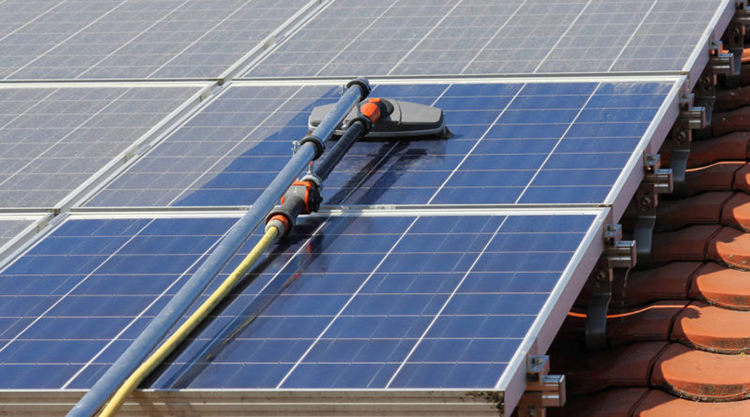
Abnormal State Handling Guide
l Arc Detection:
Upon hearing abnormal noise (>60dB), immediately cut power. Arc temperature can reach 3000℃ (NFPA 70E standard).
Use infrared thermal imager to scan, areas with local temperature rise >50℃ indicate short circuit risk.
l Overload Protection:
Inverter triggers protection when output current exceeds 110% of rated value. Check if load power exceeds limit (formula: P=V×I×PF, PF≥0.9).
Equipped with smart distribution cabinet, monitor branch currents in real-time (accuracy ±1%), automatically cut off if limits exceeded.
l Cell Safety:
Lithium cell pack triggers BMS protection when voltage exceeds 4.2V × number of series cells. Overcharge increases thermal runaway probability 1000x (UL 1642 standard).
Store at 30%-50% SOC (State of Charge), perform balance charging monthly to prevent cell imbalance >50mV.