Mono Silicon Solar Panel Efficiency丨Temperature Coefficient, Low Light Performance, Attenuation Rate
The mass production efficiency of monocrystalline silicon photovoltaic panels is 22%—24% (NREL certified), with a temperature coefficient of -0.35%/℃ (0.35% decrease for every 1℃ increase in high temperature), and the output remains at 80%+ in low light environments; the first-year degradation is ≤2%, and the total degradation over 25 years is ≤20% (industry measured data), and the stable performance has obtained IEC certification.
Temperature Coefficient
Temperature Coefficient is a parameter that quantifies the proportional change in the output power of a solar module with ambient temperature, expressed in %/℃.
The typical value for monocrystalline silicon modules is -0.3% to -0.45%/℃, meaning for every 1℃ temperature increase, power decreases by 0.3%—0.45%.
For example, a 300W module at 65℃ (40℃ higher than the standard 25℃), calculated at -0.4%/℃, would lose 48W (300 × 0.4% × 40), resulting in an actual output of 252W.
NREL data shows that global PV power plants lose 8%—12% of annual power generation due to high temperatures, with the Temperature Coefficient being the primary reason.
Definition and Measurement Standards
What exactly does the Temperature Coefficient calculate?
The unit is %/C, meaning for every 1℃ that the ambient temperature is higher or lower than the standard test temperature (25℃ at STC), the module's maximum output power (Pmax) changes by that percentage.
For monocrystalline silicon modules, this number is generally negative, for example, -0.4%/℃, meaning for every 1℃ temperature increase, power decreases by 0.4%.
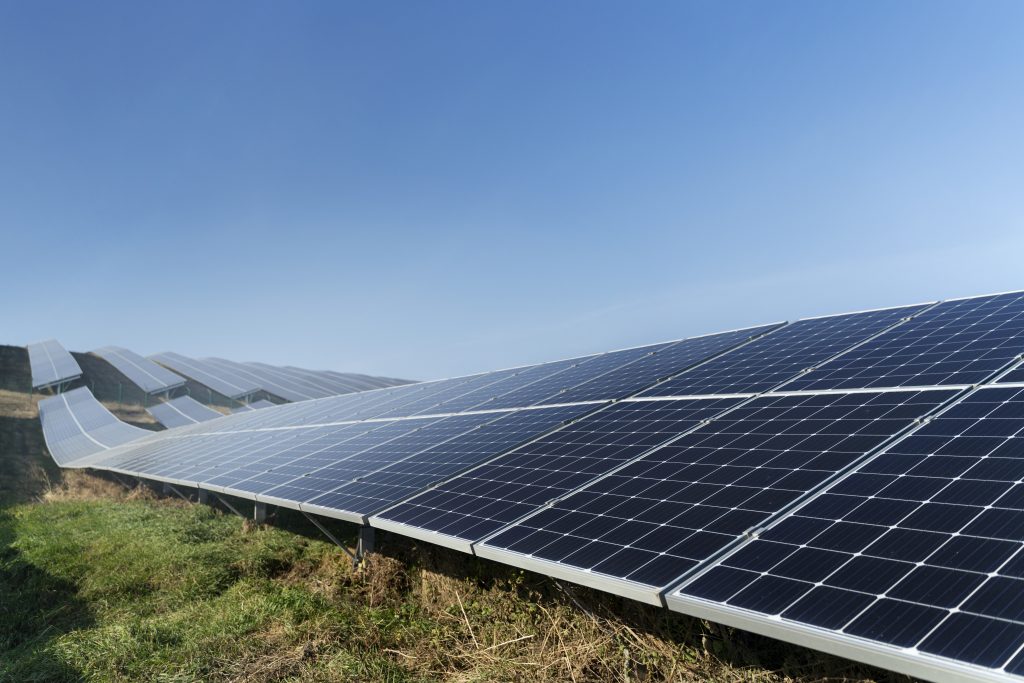
If a module heats up to 65℃ (40℃ higher than 25℃) under the sun, a 300W panel would lose 300 × 0.4% × 40 = 48W, leaving only 252W.
How is the formula applied in practice?
There is a fixed formula for calculating power change: ΔP/P₀ = TC × (T_actual - T_STC).
Here, ΔP is the change in power, P₀ is the rated power under STC (e.g., 300W), TC is the Temperature Coefficient (like -0.4%/℃), T_actual is the module's actual operating temperature, and T_STC is 25℃.
An example from the US: In Arizona, module surfaces often reach 60℃ in July. For a panel with TC=-0.38%/C, the power change is 300W × (-0.38%) × (60-25) = 300 × (-0.0038) × 35 ≈ -39.9W, resulting in an actual output of about 260W.
Measurement must follow internationally defined rules
Measuring the Temperature Coefficient isn't done by just using a thermometer; it must follow the international standard IEC 61215 (Design qualification and type approval for terrestrial photovoltaic modules). The rules are clearly specified:
l Environment: In a dark room, illuminate the module with an AAA-class solar simulator, simulating 1000W/m² irradiance (similar to noon sunlight);
l Temperature Control: Place the module in a temperature chamber that can range from -40℃ to 85℃, with an accuracy of ±0.5℃, and the temperature gradient inside the chamber should not exceed ±1℃ (avoiding hot and cold spots);
l What to measure: Primarily measure the maximum power point (Pmax), as well as open-circuit voltage (Voc) and short-circuit current (Isc), but the Temperature Coefficient by default refers to the change in Pmax;
l Procedure: First, measure Pmax at 25℃ (STC) as a baseline. Then adjust the chamber to 35℃, 45℃, 55℃, 65℃, stabilize at each temperature for 30 minutes (to allow internal temperature uniformity), then measure Pmax again. Finally, calculate the TC for each temperature point using the formula and take the average.
What are the hidden details and pitfalls during measurement?
During actual measurement, small deviations can lead to inaccuracies. For example:
l Where to place the sensor: The temperature sensor must be attached to the center of the cell, avoiding busbars and the frame, because the frame conducts heat quickly, and the center reflects the true cell temperature. NREL labs have measured differences of 3-5℃ between the frame and the center; incorrect placement leads to inaccurate TC calculation.
l Interference from encapsulation materials: EVA encapsulant and backsheets conduct heat slowly, so the module surface temperature can be 2-3℃ lower than the internal cell temperature.
l Lighting effects: Although the chamber is dark, the module itself generates heat when producing power. Therefore, during measurement, use the simulator's low-light mode (e.g., 200W/m²), or turn off the simulator and wait for temperature stabilization before measuring, otherwise self-heating can interfere with temperature readings.
l Number of data recordings: IEC 61215 requires measuring Pmax three times at each temperature point, taking the median value to avoid random errors. For example, at 55℃, if measurements are 255W, 257W, 256W, take 256W for calculation.
How do standards differ between countries?
Besides IEC 61215, the US uses UL 1703 (Standard for Flat-Plate Photovoltaic Modules and Panels), and some parts of Europe use EN 61215 (largely consistent with IEC but adds fire resistance tests).
UL 1703 has stricter temperature cycling tests, requiring the module to cycle between -40℃ and 85℃ for 200 cycles before testing TC, to see the change after aging.
For example, SunPower's early BSF modules had a new TC of -0.47%/℃, which changed to -0.51%/℃ after 200 cycles, showing slight degradation.
Whereas Panasonic's HJT modules only changed from -0.26%/℃ to -0.28%/℃ after cycling, showing better stability.
How do manufacturers label this number in their datasheets?
In foreign manufacturers' datasheets, TC is generally listed under "Electrical Characteristics" in a unified format: e.g., "Temperature Coefficient of Pmax: -0.34%/℃".
Some also list the coefficients for Voc and Isc, e.g., Voc is -0.27%/℃, Isc is +0.04%/℃ (short-circuit current slightly increases with temperature).
JinkoSolar's overseas PERC module datasheets also include notes on test conditions: "Measured per IEC 61215 at STC, using AAA solar simulator", indicating reliable data.
What are the consequences of inaccurate measurement?
A 2019 NREL study found that for 10% of monocrystalline silicon modules on the market, the labeled TC differed from the actual measured value by more than 0.05%/℃.
For example, labeled -0.35%/℃, but actually measured -0.41%/℃. For a 300W panel in a 60℃ environment, this could mean losing approximately 300 × 0.06% × 35 × 365 ≈ 230 kWh per year (assuming 6 hours of sun per day).
For large power plants, multiplied by thousands of panels, this amounts to tens of thousands of dollars in losses per year.
Therefore, European and American buyers now require manufacturers to provide TC test reports from third-party labs (e.g., TÜV Rheinland), not just their own labels.
Range of Temperature Coefficient
Older Monocrystalline Silicon (BSF):
When traditional monocrystalline silicon first emerged, it used BSF technology (Aluminum Back Surface Field), coating the back of the cell with aluminum to reflect unabsorbed light.
However, this aluminum layer creates recombination at the contact points with silicon, which worsens with temperature increase, so the temperature coefficient couldn't be lowered effectively.
NREL 2023 test data indicates that BSF monocrystalline silicon TC is generally in the range of -0.45% to -0.50%/℃, which is on the high side for monocrystalline silicon.
For example, SunPower's 2015 BSF module (model X21-345), datasheet labeled TC=-0.47%/℃. Measured in Arizona summer at 65℃, a 300W panel lost 300 × 0.47% × 40 = 56.4W, leaving only 243.6W.
In a European IEA 2022 report, BSF modules generated 12% less electricity during high-temperature periods (June-August) compared to PERC, primarily due to the higher TC.
PERC Monocrystalline Silicon:
PERC (Passivated Emitter and Rear Cell) technology adds an aluminum oxide passivation layer on the backside, reducing electron-hole recombination, significantly better than BSF.
NREL tested JinkoSolar's overseas PERC module (model Tiger Pro 540W), with TC in the range of -0.35% to -0.40%/℃, 10%-15% lower than BSF.
For the same 300W panel, PERC at 65℃, calculated at -0.38%/℃, loses 300 × 0.38% × 40 = 45.6W, leaving 254.4W, which is 11W more than BSF.
A 2021 University of Sydney field test at a Queensland power plant showed that PERC modules had 8% less annual high-temperature loss compared to BSF, precisely because the TC was about 0.1%/℃ lower.
TOPCon:
TOPCon (Tunnel Oxide Passivated Contact) creates an ultra-thin silicon oxide + polysilicon layer on the backside, allowing carriers to pass through more easily, further reducing recombination.
LONGi's US market TOPCon module (Hi-MO 6) datasheet labels TC -0.30% to -0.35%/C, slightly lower than PERC.
Fraunhofer ISE lab tests showed that TOPCon power loss at 60℃ is 3%-5% less than PERC. For a 300W panel, TOPCon (TC=-0.32%) at 65℃ loses 300 × 0.32% × 40 = 38.4W, leaving 261.6W, which is 7W more than PERC.
A 100MW plant in Nevada, USA, using TOPCon, generated 2.1% more annual electricity than originally planned with PERC, resulting in an extra $1.2 million over 20 years (at $0.04/kWh electricity price).
HJT Heterojunction:
HJT (Heterojunction) uses amorphous silicon layers surrounding crystalline silicon, providing passivation on both sides, minimizing recombination, and thus having the lowest temperature coefficient.
Panasonic HJT modules (model HIT N330) measured TC -0.25% to -0.30%/℃, REC Group's Alpha Pure-R series labels -0.26%/℃.
NREL 2023 comparative test: 300W HJT (TC=-0.27%) at 65℃ loses 300 × 0.27% × 40 = 32.4W, leaving 267.6W; same power BSF (TC=-0.48%) loses 57.6W, leaving 242.4W; a difference of 25.2W.
2022 data from a power plant in Andalusia, Spain, showed that HJT modules generated 18% more daily electricity during high-temperature periods compared to BSF, equivalent to about 450 kWh more per panel per year (based on 6 hours of daily sunshine).
Measured performance gap between different technologies for same-power modules (List)
Taking a 300W monocrystalline silicon module as an example, the TC and actual power loss for different technologies:
l BSF (TC=-0.48%): At 65℃, loss 300 × 0.48% × 40 = 57.6W → Remaining 242.4W
l PERC (TC=-0.38%): Loss 300 × 0.38% × 40 = 45.6W → Remaining 254.4W
l TOPCon (TC=-0.32%): Loss 300 × 0.32% × 40 = 38.4W → Remaining 261.6W
l HJT (TC=-0.27%): Loss 300 × 0.27% × 40 = 32.4W → Remaining 267.6W
Note: Data from NREL 2023 Module Test Report, ambient temperature 65℃ (40℃ higher than 25℃)
Why is there variation in TC even for the same technology?
Even for the same technology, TC can vary by 0.05%/℃. For example, both are PERC, LG's (exited business) NeON 2 module TC=-0.36%, while JinkoSolar's overseas version is -0.39%. Reasons include:
l Cell thickness: Thinner wafers (160μm) dissipate heat better than thicker ones (200μm), resulting in 0.02%-0.03%/℃ lower TC (Fraunhofer ISE data);
l Silver paste formulation: If the conductive silver paste has high resistivity, the module heats up more during operation, potentially increasing TC by 0.01%/℃;
l Measurement error: NREL states that different labs testing the same panel can have a TC error of up to ±0.02%/C, so manufacturers specify a range rather than a single number.
Real considerations for technology selection in overseas power plants
A 200MW plant in Texas, USA, in a 2023 tender, explicitly required TC ≤ -0.35%/℃, and finally selected LONGi TOPCon (TC=-0.33%).
Calculations showed that compared to using PERC (TC=-0.38%), it would generate about 8 GWh more over 20 years (200MW × 1000 panels/MW × 20 years × 0.001 × 6h/day × 365 days × 5% difference). At $0.03/kWh, this translates to an extra $2.4 million.
Plants in Saudi Arabia are even stricter, specifying TC ≤ -0.30%/℃, directly choosing HJT because local summer module temperatures often exceed 70℃, where a 1% higher TC means significantly more power loss.
Impact of High Temperature on Power Generation
How hot do modules get on hot days?
NREL field measurements show that on clear days at noon, module surface temperature is typically 20-30℃ higher than the ambient air temperature.
For example, in Phoenix, Arizona, USA, July air temperature of 42℃ can lead to module surfaces reaching 65-68℃; in Andalusia, Spain, summer air temperature of 35℃ often results in module surfaces of 55-60℃; in Riyadh, Saudi Arabia, with 45℃ air temperature, module surfaces can exceed 70℃.
The US Southwest has about 120 days per year (June-Sept) where module temperature exceeds 60℃, Southern Europe has about 90 days (June-Aug), and some parts of the Middle East have over 50% of days per year with module temperatures above 60℃.
How is power loss calculated step by step?
The amount of power loss due to high temperature depends entirely on the Temperature Coefficient (TC).
The formula is simple: Actual Power = Rated Power × (1 + TC × Temperature Difference), where the temperature difference is the actual module temperature minus 25℃ (STC temperature). Example for a 300W monocrystalline silicon module:
l TC=-0.4%/C (Traditional BSF): Module at 65℃, ΔT=40℃, Power=300×(1 - 0.4%×40)=300×0.84=252W, loss of 48W;
l TC=-0.3%/℃ (TOPCon): Also at 65℃, Power=300×(1 - 0.3%×40)=300×0.88=264W, loss of 36W;
l TC=-0.25%/℃ (HJT): Power=300×(1 - 0.25%×40)=300×0.90=270W, loss of 30W.
l Larger temperature difference means greater loss. For example, in the Middle East at 70℃, a BSF module (TC=-0.48%) loses 300 × 0.48% × 45 = 64.8W, leaving only 235.2W.
High-temperature field data from different countries (Table)
Region | Summer Module Avg. Temp. | Module Technology | TC (%/℃) | 300W Module Power Loss | Daily Gen. Loss (kWh) | Annual Loss (MWh/panel) |
US Arizona | 65℃ | BSF (SunPower old) | -0.47% | 56.4W (243.6W rem.) | 0.34 (6h sun) | 12.4 |
Spain Andalusia | 60℃ | PERC (Jinko overseas) | -0.38% | 45.6W (254.4W rem.) | 0.27 | 9.9 |
Germany Bavaria | 50℃ | TOPCon (LONGi US) | -0.32% | 38.4W (261.6W rem.) | 0.23 | 8.4 |
Saudi Arabia Riyadh | 70℃ | HJT (Panasonic) | -0.26% | 54.6W (245.4W rem.) | 0.33 | 12.0 |
Note: Daily loss based on 6 hours effective sunshine, annual loss calculated for 120 high-temperature days locally. Data from NREL 2023 measurements, IEA 2022 report.
How does the length of the high-temperature period affect annual generation?
The higher the proportion of high-temperature days per year, the greater the total loss. IEA 2022 analysis:
l High-temp period 30% of year (e.g., Southern Europe): For every 0.1%/℃ higher TC, annual generation decreases by 2.3%. E.g., PERC (TC=-0.38%) loses 1.38% more annually than TOPCon (TC=-0.32%): (0.38%-0.32%)×2.3%÷0.1%=1.38%. For a 300W module, ~10 kWh more loss per year.
l High-temp period 50% of year (e.g., US Southwest): For every 0.1%/℃ higher TC, annual loss jumps to 3.8%. Similarly, PERC loses ~17 kWh more per year than TOPCon.
l Year-round high temperature (e.g., Middle East): A 0.1%/℃ difference in TC can lead to ~400 kWh more loss per panel (300W module) over a 20-year lifespan.
What other generation issues are linked to high temperatures?
High temperatures not only reduce power but also affect other modules:
l Inverter efficiency drop: SMA inverters lose 1.5% efficiency at 50℃ ambient, 2.8% at 60℃, leading to a 2%-3% reduction in overall system output.
l Increased cable resistance: Copper cable resistance increases by about 4% for every 10℃ temperature rise, adding 0.5%-1% more line loss for a 300W module's output cables.
l Increased hot spot risk: Local shading + high temperature can heat cell spots over 150℃, potentially burning through the EVA encapsulant (NREL lab has observed hot spots from bird droppings on 70℃ modules).
Real-world loss case in a US power plant
A 100MW plant in the Mojave Desert, California, using BSF modules (TC=-0.49%) in 2022, measured summer (June-Sept) generation was 18% less than design.
Calculated over 4 months, this was 220 MWh less, at $0.05/kWh, a loss of $110,000.
After switching to HJT modules (TC=-0.26%) in 2023, the shortfall during the same period reduced to 10%, losses shrank to $60,000.
Another Texas 200MW plant, using TOPCon (TC=-0.33%) instead of the planned PERC (TC=-0.39%), gained 2.1% more annual generation, earning an extra $2.4 million over 20 years (mentioned earlier).
Power generation ranking of different technologies under high temperature
Fraunhofer ISE 2023 comparative test (60℃ ambient, 300W module):
1. HJT (TC=-0.27%): Output 267.6W → Daily generation 1.61 kWh (6h sun)
2. TOPCon (TC=-0.32%): Output 261.6W → Daily generation 1.57 kWh
3. PERC (TC=-0.38%): Output 254.4W → Daily generation 1.53 kWh
4. BSF (TC=-0.48%): Output 242.4W → Daily generation 1.45 kWh
5. The gap is clear: HJT generates 0.16 kWh more per day than BSF, 4.8 kWh more per month, 57.6 kWh more per year per panel.
Low Light Performance
Low Light Performance measures a monocrystalline silicon solar panel's power output under sub-STC irradiance (1000W/m²).
At 200W/m² (cloudy), top-tier panels maintain ≥85% of STC-rated power; poor ones drop below 70%.
At 100W/m² (drizzle), the gap widens to 20 percentage points.
Per NREL, a 1% boost in low-light response raises annual yield by 2%-3%.
TOPCon panels hit 92% of STC at 200W/m², per lab tests.
Factors Affecting Low Light Performance
Cell Technology Itself
PERC (Passivated Emitter and Rear Cell) relies on a rear aluminum oxide layer to reflect long-wave light for re-absorption, achieving about 82% of STC output at 200W/m² (SunPower 2023 measurement);
TOPCon (Tunnel Oxide Passivated Contact) adds an ultra-thin silicon oxide layer to PERC, reducing carrier recombination, boosting output to 88%-90% under the same conditions (LG 2023 lab data);
HJT (Heterojunction) uses amorphous silicon layers surrounding crystalline silicon, enabling bifacial light absorption, maintaining 75% output even at 100W/m² weak light (Panasonic winter test in Hokkaido).
NREL comparison showed HJT produces 23% more electricity than conventional poly-Si at 200W/m².
How does weak light generation perform at low temperatures?
Monocrystalline silicon temperature coefficient is -0.3%/℃ to -0.4%/℃, meaning power increases 0.3%-0.4% per C decrease, but under weak light, the current is too small, and the voltage increase doesn't help much.
NREL 2022 simulation: At 5℃ + 200W/m², module power is 12% lower than at 25℃ + 1000W/m²; at -5℃ + 100W/m², power drops by 30%.
Encapsulation material light transmittance is crucial
Low-iron ultra-clear glass has 91.5% transmittance, transmitting 5% more weak light than regular glass (86%), increasing output by about 5% at 100W/m² (First Solar 2021 comparison);
High-transmittance EVA encapsulant with haze <1% scatters light less than regular EVA (haze 3%), increasing weak light transmittance by 2%-3%.
The back sheet also matters; white TPT back sheet with 75% reflectivity can reflect leaked light back to the cells, capturing ~3% more weak light than black back sheets (DuPont 2020 test).
Wafer thickness also relates
Thinner wafers have shorter carrier travel distances, reducing recombination losses.
MIT Energy Initiative 2020 study: 200μm thick wafers had 78% current collection efficiency at 200W/m²; reduced to 160μm, efficiency increased to 84%, yielding 6% more weak light output.
Current mainstream monocrystalline wafers are 160-180μm, thinner than 200μm from 5 years ago, specifically to capture weak light.
Don't underestimate the surface coating
Anti-reflection coating (ARC) on the cell surface; more layers mean less reflection.
Single-layer ARC has 8% reflectivity at 500nm wavelength, triple-layer can reduce it to 2% (Fraunhofer ISE 2023 data).
Cloudy days are dominated by blue/violet light (300-500nm). High-efficiency modules have <3% reflectivity in this band, ordinary modules >8%, so the former absorbs ~5% more light under weak light.
SunPower's Maxeon series uses nano-imprinted ARC with 1.5% reflectivity at 300nm, producing 4% more electricity at 200W/m² than conventional ARC.
Spectral Match
Weak light spectrum differs from standard AM1.5; cloudy days have more blue light, less red light.
PV Evolution Labs (PVEL) 2022 tests showed some modules' short-wave response (300-500nm) drops 10% under weak light because electrode gridlines block blue light; good modules use fine gridlines (<30μm), maintaining blue light absorption above 95%.
German Fraunhofer ISE outdoor station records show that under actual spectra on cloudy days, high-efficiency modules produce 7% more weak light output than low-efficiency ones.
Individually, these factors seem small, but combined they are significant. E.g., TOPCon + 160μm thin wafer + low-iron glass can achieve 92% of STC output at 200W/m² (NREL 2023 combined test), 15% more than conventional combinations.
Low Light Performance Comparison
Conventional PERC Modules:
Conventional PERC (Passivated Emitter and Rear Cell) is the most prevalent monocrystalline silicon module technology currently in the market, providing a clear benchmark for low-light performance.
NREL 2023 tests show output at 200W/m² (cloudy) is 78%-82% of STC, at 100W/m² (rainy) 62%-65%, and at 50W/m² (dawn) only 45%-50%.
The technical reason is the rear aluminum oxide layer reflects long-wave light, but carrier recombination remains relatively high.
LG 2022 lab data supplement: At 25℃, PERC Isc at 200W/m² is 8.2A (vs. 9.8A at STC), Fill Factor (FF) drops from 78% to 72%, causing the power decline.
Field example: A Texas, USA, power plant using conventional PERC generated 15% less electricity during low-light months (Nov-Feb) compared to TOPCon. For a 10kW system, this meant a monthly loss of about 90 kWh (local price $0.12/kWh, monthly loss ~$11).
TOPCon Modules:
TOPCon (Tunnel Oxide Passivated Contact) adds a 1-2nm ultra-thin silicon oxide layer to PERC, reducing carrier recombination rate by 30%.
Fraunhofer ISE 2023 tests: Output at 200W/m² reaches 88%-92% of STC, at 100W/m² 72%-76%, at 50W/m² 55%-60%.
LG 2023 report details: TOPCon Isc at 200W/m² is 9.1A (close to STC's 9.8A), FF remains at 75% (PERC only 72%).
Field verification is clearer: Swedish Energy Agency 2022 tracking of a farm showed that after switching to LG TOPCon modules, generation during low-light months (Nov-Feb) increased by 22%. In Nordic winters with ~4.5 hours of daily weak light, this accumulated to 380 kWh more per year.
In foggy areas of California, USA, TOPCon generated 19% more annually than PERC, equivalent to 175 kWh more per kW.
HJT Heterojunction:
HJT (Heterojunction) uses amorphous silicon layers surrounding crystalline silicon, offering bifacial absorption + low temperature coefficient (-0.25%/℃), resulting in more stable weak light performance.
PV Evolution Labs (PVEL) 2023 data: Output at 200W/m² is 90%-93%, at 100W/m² 75%-78%, at 50W/m² 60%-65%.
Panasonic winter test in Hokkaido (2022): At -5℃ + 100W/m², HJT output remained at 70% of STC, while PERC was only 58%.
The reason is HJT bifaciality >95% (PERC ~75%), allowing scattered light (predominant on cloudy days) to be absorbed from the rear as well.
US Arizona project comparison: HJT and PERC with same capacity, HJT produced 28% more on a weak-light day (cloudy), as the area averages over 2500 hours of weak light annually.
Low-Efficiency Polycrystalline Modules: Weak Light Shortcoming of Old Technology
Low-efficiency polycrystalline silicon modules (ingot casting, wafer thickness 200μm+) suffer from high grain boundary recombination, resulting in the worst low-light performance.
TÜV Rheinland 2023 tests: Only 65%-70% at 200W/m², 45%-50% at 100W/m², below 30% at 50W/m².
Indian Solar Energy Research Institute (NISE) 2022 case: A rural plant using poly modules generated 32% less during low-light months than monocrystalline PERC, due to poly-Si's 12% lower absorption in the short-wave band (300-500nm, dominant on cloudy days).
Data comparison: For the same 10kW system, poly-Si annual weak-light loss ~2100 kWh, PERC only 1200 kWh, nearly double the difference.
Thin-Film Modules: Weak Light Characteristics of Alternative Materials
Thin-film modules (e.g., First Solar's CdTe, Solar Frontier's CIGS) have different structures, leading to unique weak-light properties.
NREL 2022 CdTe tests: Output at 200W/m² is 75%-80% (slightly lower than TOPCon), but at 100W/m² it's 70%-73% (higher than PERC), because the thin absorber layer (2-3μm) has high carrier collection efficiency under weak light.
Solar Frontier CIGS field test in Hokkaido, Japan (2023): On cloudy/rainy days (irradiance 80-150W/m²), generation was 10% higher than mono-PERC, as CIGS has better response to the weak-light spectrum (blue-light dominant).
However, thin-film modules have lower STC power density (150W/m² vs. mono-Si 200W/m²) so their weak-light advantage is diluted in large-area installations.
Subtle Differences Between Manufacturers for the Same Type
Even within the same technology, manufacturer process differences affect low-light performance.
E.g., Among TOPCon, JinkoSolar's 2023 model using laser-doped SE technology achieved 93% output at 200W/m² (Fraunhofer ISE data), 1%-2% higher than industry average; SunPower Maxeon 6 (IBC technology, similar to HJT) output 80% at 100W/m² (PVEL test), due to no busbar shading enabling more efficient current collection.
Among low-efficiency poly, Canadian Solar's older poly model was only 62% at 200W/m², while the new model (optimized ARC) reached 68%, the gap coming from surface treatment processes.
Impact of Test Conditions on Data
Comparisons require unified test standards: IEC 60,904-3 specifies 25℃, AM1.5 spectrum, but outdoor actual spectrum (more blue on cloudy days) amplifies the advantage of efficient modules.
German Fraunhofer ISE outdoor station records: Under actual spectrum on cloudy days, HJT outperformed PERC by 7% in weak-light output (vs. only 5% more in lab), due to HJT's better short-wave response.
Temperature is also key: NREL found that at -10℃, HJT's FF is 3% higher than at 25℃, while PERC's only increases 1%, making HJT's advantage more pronounced under cold, weak light.
Attenuation Rate
Attenuation Rate refers to the decline rate of the maximum output power (Pmax) of monocrystalline silicon solar panels during long-term operation.
First-year Light-Induced Degradation (LID) is 1-3% (boron-oxygen complex defects contribute over 70%), long-term annual average is 0.4-0.8%, after 25 years power remains 80-87% of initial value.
Potential Induced Degradation (PID) can cause a sudden drop of 10%+. Gallium-doped wafers suppress LID to below 0.5%.
Hydrogen passivation improves stability, but EVA yellowing and ribbon corrosion still have ongoing effects, directly determining the power plant's 25-year energy yield and revenue.
Stages of Attenuation
First Stage:
This stage occurs within the first few days to months after the module is first exposed to sunlight, characterized by a significant but temporary power drop.
The specific duration depends on module type and environment. P-type mono-Si (boron-doped) typically shows the most pronounced effect, with changes measurable within the first few days, slowing after weeks, and in rare cases stabilizing only after 3 months.
Performance Data:
Early P-type modules had LID typically 2-3%; now mainstream manufacturers control it within 1.5%.
For example, SunPower's (now Maxeon) P-type modules had LID around 1.2%; LG Solar modules using gallium-doped wafers reduced LID to below 0.5%.
N-type wafers (phosphorus-doped) inherently have fewer boron-oxygen complexes, so LID is lower, e.g., REC Group's Alpha series N-type modules have LID of only 0.3%.
Why does power drop?
Mainly due to "Boron-Oxygen (BO) complexes" in the wafer. P-type wafers are doped with boron, and oxygen atoms are introduced during manufacturing.
Under light, boron and oxygen form complexes which act like traps, capturing photogenerated electron-hole pairs.
Fewer carriers mean less current. Fraunhofer ISE research found these complexes are most active under irradiance above 500W/m², so LID is more pronounced initially in tropical regions.
Additionally, metal impurities (e.g., iron, copper) can be activated by light and also capture carriers; if the surface passivation layer (like SiNx ARC) is not optimal, it can suffer micro-damage over time, increasing reflectivity and reducing light absorption.
Is it recoverable?
Partially reversible. For example, light soaking/annealing, exposing the module to strong light (1000W/m²) for several hours, raising the temperature to 50-60℃, can decompose BO complexes, recovering part of the power.
JinkoSolar data shows this method can recover 80-90% of P-type LID, the remaining 10-20% is permanent loss.
Variations under different environments: LID is more severe in hot and humid areas. For example, modules in Florida (avg. temp. 24℃, humidity 75%) had 0.3-0.5% higher LID in the first month compared to Arizona (dry). Lab tests under 85℃/85% humidity showed ~1% higher LID than at room temperature.
Second Stage:
After LID stabilizes, the module enters a phase of slow annual decline, lasting over 25 years.
Overall decline rate: Industry acknowledges an annual average of 0.4-0.8%, remaining power after 25 years is 80-87% of initial.
E.g., First Solar's CdTe thin-film modules (reference, though not mono-Si) degrade 16% over 25 years; among mono-Si, Q CELLS' Platinum series promises 84% after 25 years, i.e., 0.64% annually.
Breakdown of degradation causes:
l Encapsulation materials failing
EVA encapsulant is common but fears UV and moisture. Prolonged UV exposure breaks EVA molecular chains, causing yellowing and brittleness, transmittance drops 5-10% annually. German TÜV tests showed outdoor EVA after 10 years: transmittance dropped from 92% to 75%. POE encapsulant has better UV resistance, transmittance drops only 15% over 25 years, hence used in premium modules like LG NeON series. Backsheets similarly, fluorinated backsheets (e.g., Tedlar) weather better than PET. Damp Heat test (85℃/85% RH) for 1000 hours: former lost 2% power, latter 5%.
l Metal part corrosion causing leakage
Ribbons (copper strips connecting cells) are tin-plated. Long-term damp heat can cause electrolytic separation between tin and copper, increasing resistance. NREL measured: modules after 10 years, ribbon series resistance increased from 0.05Ω to 0.08Ω, power loss 1-2%. Worse in coastal salt spray areas, e.g., Hawaii modules corrode twice as fast as inland in 5 years.
l Micro-cracks developing silently in cells
Transport vibration, installation stepping, snow load can cause micro-cracks. Initially negligible, but thermal cycling (-40℃ to 85°) causes silicon expansion/contraction, cracks propagate slowly, forming leakage paths. Fraunhofer ISE EL imaging detected visible cracks in 5-10% of modules after 5 years, causing 0.5-1% power loss.
l Ion migration under high voltage (PID)
High system voltage (e.g., 1500V) + humidity causes sodium ions to migrate from glass to cell surface, damaging passivation layer. Lab test: 85% humidity + 1000V bias, 48 hours can cause 10% power loss. A Texas plant had 18% PID loss in 3 years due to improper grounding, stabilized after switching to anti-PID encapsulation (added silicon oxide layer).
Degradation rate by stage: Fastest in first 5 years, annual 0.6-0.8% (initial material aging); stabilizes at 0.4-0.6% for years 5-15; slower after 15 years, 0.3-0.5%. E.g., Panasonic HIT module, 25-year field data: Year 1: -1.5% (LID), Years 2-5: -0.7%/year, Years 6-20: -0.5%/year, Years 21-25: -0.3%/year. Total 25-year loss 19%, remaining 81%.
Factors Affecting Attenuation Rate
Silicon Material Impact on Degradation
Foreign manufacturers control silicon material meticulously. E.g., US company Crystal Solar uses Float Zone (FZ) method to produce mono-Si ingots, oxygen content below 5 ppma (vs. 10-15 ppma for common Czochralski CZ ingots), carbon content below 0.3 ppma.
Resulting cells have LID 0.3-0.5% lower than standard wafers.
Fraunhofer ISE tests found that for every 100 cm⁻² increase in dislocation density in the ingot, LID increases by 0.1%, as dislocations become carrier recombination centers.
N-type wafers (P-doped) are inherently more degradation-resistant than P-type (B-doped).
Norway's REC Group Alpha series N-type modules use P-doped wafers, virtually no BO complexes, LID only 0.3%, while their P-type modules have LID ~1.2%.
Regarding oxygen: CZ ingots with 12 ppm oxygen have LID 0.4% higher than those with 8 ppm oxygen, so manufacturers use IR spectrometers to monitor oxygen and carbon content in real-time.
Cell Process Determines Degradation Rate
Every step in cell manufacturing affects degradation, especially doping, passivation, and metallization.
l Dopant element matters: P-type wafers doped with boron easily form BO complexes. Western manufacturers now favor gallium (Ga) doping. SunPower switched to Ga-doped wafers in 2015, reducing LID from P-type's 2% to below 0.3%; LG Solar's NeON series uses Ga-doped P-type, LID controlled at 0.5%.
l Don't cut corners on passivation layers: Using AlOx/SiNx stack passivation on the cell surface reduces surface recombination. REC Group uses Atomic Layer Deposition (ALD) for AlOx layer, thickness precise to 0.5nm, long-term degradation is 0.1%/year lower than conventional PECVD passivation. SiNx ARC refractive index also matters; 2.0-2.1 gives highest transmittance, below 1.9 or above 2.2 worsens light absorption, accelerating degradation.
l Metallization should avoid hidden risks: Silver paste gridline width and thickness affect resistance. JinkoSolar uses laser transfer printing, reducing gridline width from 40μm to 26μm, series resistance decreased by 0.02Ω, annual degradation reduced by 0.05%. Firing temperature is also key; 750℃ firing provides 30% stronger electrode adhesion than 700℃, reducing ribbon detachment risk.
l Light-induced annealing mitigates LID: After P-type module production, expose to strong light (1200W/m²) for 2 hours, temperature 50℃, to decompose BO complexes. JinkoSolar production line data shows this step recovers 90% of LID, leaving only 0.2-0.3% permanent loss.
Encapsulation Materials Affect Long-Term Aging
Encapsulation materials are the "shell" protecting the cells; poor choice leads to gradual failure.
l Encapsulant: EVA vs. POE: EVA is cheaper but susceptible to moisture, POE is more expensive but PID-resistant. German TÜV Rheinland tests: EVA under 85℃/85% RH for 1000 hours, yellowing rate 30%, transmittance dropped from 92% to 75%; POE under same conditions yellowing rate 10%, transmittance remained 88%. US SunPower uses POE for premium modules, 25-year transmittance retention is 15% higher than EVA.
l Backsheet material quality: Fluoropolymer backsheets (e.g., DuPont Tedlar) weather better than PET. NREL Damp Heat tests (1000h) show Tedlar-backed modules lost 2% power, PET-backed lost 5%. In coastal salt spray, PET backsheets can chalk in 5 years, Tedlar lasts over 15 years.
l Ribbon coating prevents corrosion: Ribbons are coated with Sn or Pb-Sn alloy, thickness 10-15μm. Data from a Hawaiian plant (salt spray): Sn-coated ribbons corroded 5μm in 5 years, resistance increased 0.03Ω; Pb-Sn alloy increased only 0.01Ω.
Environmental Impact
The climate where the module is installed and the mounting method can cause a twofold difference in degradation rate.
l Hotter locations degrade faster: Arizona (avg. temp. 24℃) modules degrade ~0.7%/year, Northern Europe (avg. temp. 5℃) only 0.4%/year. NREL model shows every 10℃ increase in operating temperature adds 0.15%/year degradation, due to accelerated material aging and carrier recombination.
l High humidity increases problems: Florida (humidity 75%) modules have 3x the PID risk of Nevada (humidity 30%). Lab test: 85% humidity, 1500V system voltage, PID caused 10% loss in 48h; at 50% humidity, same conditions caused 3% loss.
l Strong UV ages encapsulation faster: Australian desert (UV index 10+) modules yellow twice as fast as in Europe. TÜV tests: every 100 kWh/m² increase in cumulative UV dose reduces EVA transmittance by 2%.
l Installation: Don't trap heat: Small module spacing, wall-mounted installations with poor ventilation raise operating temperature by 5-10℃. US NREL wind tunnel test: increasing spacing from 20cm to 30cm increases rear airflow by 0.5 m/s, reduces operating temperature by 5℃, reduces annual degradation by 0.1%.
Measurement Methods and Industry Standards
Measuring Degradation with Solar Simulators
Degradation measurement primarily relies on Solar Simulators, which must meet IEC 60,904-9 standard AAA-class (highest precision).
Such simulators replicate Standard Test Conditions (STC): Irradiance 1000W/m² ±2%, Cell Temperature 25℃ ±1, AM1.5 spectrum (matches noon sunlight).
E.g., Germany's Berger Lichttechnik AAA simulator has spectral mismatch <2%, spatial non-uniformity <1%, annual stability <0.5%, resulting Pmax error <0.3%.
For field measurements, modules must acclimate for 2 hours, then use thermocouples on cells for true temperature, correcting to STC value using temperature coefficient.
E.g., for a module with TC=-0.35%/℃ at 45℃, measured power must be increased by (45-25) × 0.35% = 7% for STC equivalent.
Procedure must be strict:
1. Pre-heat: Place module under simulator for 15 mins, stabilize temperature to 25℃ (using temperature stage).
2. Calibrate: Use reference cell (NIST traceable) to adjust simulator irradiance, error <1%.
3. Test: Measure Pmax 3 times consecutively, 5-minute intervals, take median value (avoid transient errors).
4. Record: Log irradiance, temperature, spectrum data, save raw curves (e.g., IV curve).
Foreign labs like NREL test a module 5 times, only data with standard deviation <0.2% is considered valid.
IEC, UL Standards are Authoritative
Primarily recognize IEC 61215 (Design qualification for terrestrial crystalline silicon PV modules), IEC 61730 (Safety), UL 1703 (USA). These standards define test items and degradation limits; non-compliance prevents market entry.
Test Item | Conditions (International Standard) | Duration/Cycles | Allowed Max. Degradation | Example Data (Mfr. Test) |
Damp Heat Test | 85℃±2, 85%RH±5% | 1000 hours | ≤5% | SunPower module: 3.2% deg. |
Temperature Cycling | -40℃↔85, transition <5 min | 200 cycles | ≤3% | LG module: 2.1% deg. |
Mechanical Load (Wind) | Front 2400Pa (≈150km/h wind) | 1 hour (pos/neg pressure) | ≤1% | Q CELLS module: 0.8% deg. |
Mechanical Load (Snow) | Rear 5400Pa (≈3m snow) | 1 hour | ≤1% | JinkoSolar module: 0.7% deg. |
PID Test | 85℃/85%RH, -1500V bias | 96 hours | ≤5% | REC Group module: 2.5% deg. |
UV Preconditioning | UV irrad. 15 kWh/m² (280-400nm) | 1 sequence | ≤2% | Maxeon module: 1.3% deg. |
How different tests stress modules: Simulating 25 years of aging
l Damp Heat Test: Soak modules in high temp/humidity chamber, simulating tropical climate. EVA yellows, backsheet may delaminate. TÜV Rheinland tested EVA modules: after 1000h, yellowing 28%, transmittance 92%→74%, power loss 4.5% (just within 5% limit).
l Temperature Cycling: Freeze module at -40℃ for 2h, then bake at 85℃ for 2h, repeat 200x. Differential thermal expansion between silicon and ribbons can crack cells. Fraunhofer ISE EL imaging: after 200 cycles, 5% modules showed micro-cracks, power loss 2-3%.
l PID Test: Apply high voltage (negative to ground) to module in damp heat chamber. Sodium ions migrate from glass to cell surface, damaging passivation. UL lab test: non-PID resistant module lost 12% power in 96h; module with silicon oxide passivation lost only 3%.
Degradation Warranty:
Besides test standards, manufacturers must specify degradation in warranties. Mainstream international manufacturers promise:
l First-year degradation: ≤2-3% (Ga-doped: 0.5-1%, P-type: 1.5-2.5%). E.g., SunPower Platinum ≤2%, LG NeON 2 ≤1.5%.
l Subsequent years: ≤0.5-0.7%/year (industry avg. 0.6%). Q CELLS Platinum Plus promises 0.54%/year.
l 25-year total degradation: ≤20% (i.e., 80% remaining), premium modules ≤17% (83% rem.). E.g., Panasonic HIT warranty: 84.95% after 25 years, i.e., 0.6%/year avg.
If measured exceeds warranty, manufacturer compensates. E.g., 2018, First Solar compensated $30 million due to encapsulation issue causing >5% degradation in 3 years for a batch.