Monocrystalline PV Modules Efficiency, Lifespan & Cost-Benefit Analysis
Monocrystalline PV modules achieve 22-24% efficiency, exceed 25-year lifespan (≤0.5%/year degradation), and feature a low -0.3%/°C temp coefficient. At $0.28/W, they lower LCOE 20% vs. polycrystalline over 25 years, balancing high performance with cost efficiency.
Efficiency Performance
Monocrystalline silicon PV modules' efficiency is the core confidence behind their over 90% share in the global PV market. The current mainstream PERC monocrystalline silicon modules generally achieve a mass production efficiency of 22%-24%. For the same one square meter, it can generate 20%-30% more electricity than polycrystalline silicon modules.
In 2023, Jinko Solar's TOPCon modules reached a mass production efficiency of 25.5% directly, and other Green Energy's HJT modules also touched the 26% threshold. It's even more exaggerated in the laboratory; Japan's Kaneka's HJT cell efficiency broke 26.81% early on, and Germany's Fraunhofer ISE's TOPCon cell also rushed to 26.5%.
For example, in a power station in the northwest with good sunlight, 1MW of monocrystalline silicon modules can generate 300,000 kWh more electricity annually than polycrystalline silicon. Calculated at an electricity price of 0.3 yuan/kWh, that's an extra 90,000 yuan per year.
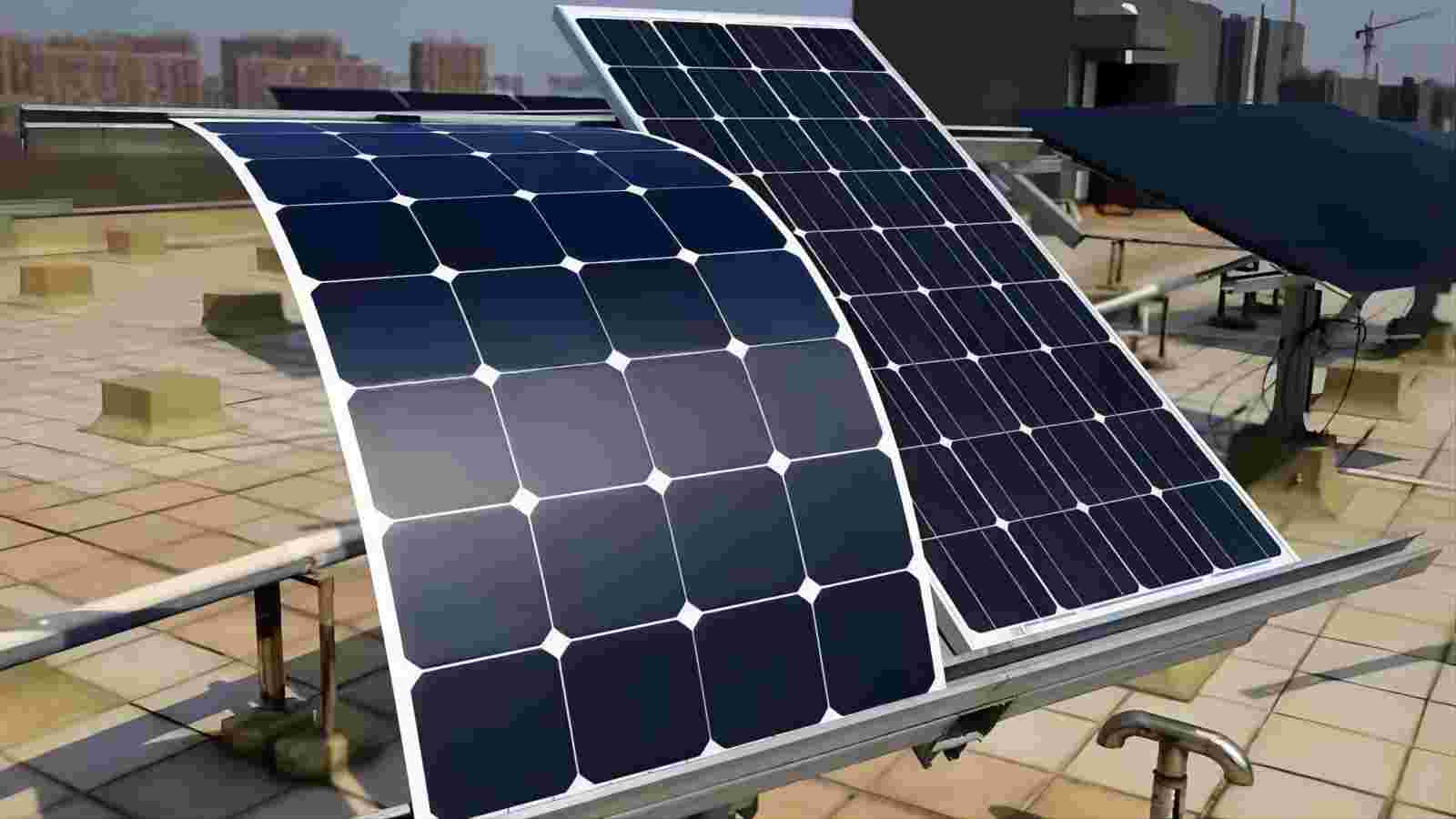
Mass Production Efficiency
When mass production first started in 2015, PERC module efficiency was just over 19%. By 2023, mainstream manufacturers had reached 24% (e.g., JA Solar's Deep Blue 4.0 X series), a 5 percentage point increase in 8 years. This 5% may not seem like much, but in a 1GW power plant, it translates to real profit: 1GW using 24% efficiency modules generates 400 million kWh more annually than 20% efficiency modules (based on 1500 hours of sunshine). At 0.3 yuan/kWh, that's an extra 120 million yuan per year.
PERC's "Efficiency Code": Back Surface Passivation + Laser Grooving, Utilizing Light to the Last Drop
PERC stands for "Passivated Emitter and Rear Cell," which sounds mysterious, but it essentially adds a "protective film" to the back of the cell. Traditional aluminum back surface field (Al-BSF) cells have a full-area aluminum layer on the back, which reflects about 20% of light. PERC changes this to a local aluminum back surface field + aluminum oxide passivation layer – the aluminum oxide layer acts like a mirror, reflecting the originally reflected light back into the silicon wafer, absorbing 3%-5% more light. Combined with the laser SE (Selective Emitter) process, which uses lasers to groove the emitter region, reducing the contact resistance between the metal electrodes and the silicon wafer, allowing electrons to move more freely, efficiency can be increased by another 1%-2%.
For example, in other PERC cells, the thickness of the back passivation layer is controlled at 12nm ± 1nm (too thick blocks light, too thin has poor passivation effect), and the laser grooving pitch is precise to 50 μm (too dense damages the wafer, too sparse provides insufficient reflection). Just these two parameters keep their cell efficiency stable between 23.8%-24.2%. Jinko is even more extreme, using "bifacial PERC" technology, passivating the back side as well. The front side efficiency is 24%, and the back side can contribute an additional 10% of power generation (e.g., from ground-reflected light), directly increasing the comprehensive power to 600W (60-cell version).
Enterprise Mass Production Status: 24% is the Baseline for Top-Tier Factories, Second/Third-Tier Still Rushing to 23%
Currently in the industry, the PERC production lines of top manufacturers like LONGi, Jinko, Trina, etc., generally have mass production efficiency stable at 24%±0.3% (i.e., 23.7%-24.3%), with a yield rate reaching over 98.5% (only 15 defective cells per 1000). For example, Jinko's 2023 financial report showed that when TOPCon hadn't fully replaced PERC, PERC modules still accounted for 40% of shipments, precisely because 24% efficiency modules sold very well in overseas distributed markets (like Europe) – users want "sufficient and cheap," 24% efficiency is enough for home rooftop needs, and the cost is 0.1 yuan/W lower than TOPCon.
The "Invisible Support" for 24% Efficiency: Larger Size + Thinner Wafers, Diluting Non-Silicon Costs
The ability to stabilize efficiency at 24% is also thanks to larger and thinner silicon wafers. Previously, using 158.75mm small wafers required 4.2g of silicon material per watt; now using 210mm large wafers requires only 2.8g per watt – the proportion of silicon material cost dropped from 35% to 22%, and the saved money can be invested in efficiency improvement.
Wafer thinning is even more critical: wafer thickness dropped from 180μm in 2018 to 130μm in 2023, yet the breakage rate is controlled below 0.3% (it was 0.8% at 180μm). Why can they be so thin without breaking? Because of improved crystal pulling technology – now the oxygen content in monocrystalline silicon ingots has dropped from 15ppma to 8ppma (lower oxygen content makes wafers stronger), coupled with diamond wire sawing machine wire speed increasing from 800m/min to 1800m/min (cutting finer and more stable). After wafers become thinner, cell warpage decreased from 0.3mm to 0.1mm, making them less prone to micro cracks during encapsulation, and module lifespan actually increased by 0.5%.
24% is Not the End: PERC Can Still Increase by 0.5%, But It's Time to Give Way
Although PERC is very stable now, it also has a ceiling – the theoretical efficiency is only 24.5% (the limit for monocrystalline silicon PERC), and top manufacturers have already reached 24.3%. Gaining another 0.2% requires great effort. For example, another laboratory's PERC cell efficiency in 2023 was 24.4%, but mass production had to be reduced to 24.2% – not due to lack of technology, but because of cost: to increase efficiency by 0.2%, silver paste consumption increased from 110mg/W to 115mg/W, increasing cost per watt by 0.01 yuan, which is not cost-effective.
For the same 25% efficiency, TOPCon's non-silicon cost is only 0.05 yuan/W higher than PERC, but it generates 3% more electricity, recouping the price difference in two years. However, PERC won't disappear immediately – in some cost-sensitive markets (like Southeast Asia, Africa), 24% efficiency + 0.25 yuan/W cost is still more cost-effective than polycrystalline silicon (22% efficiency + 0.22 yuan/W).
Laboratory Efficiency
The theoretical efficiency ceiling for monocrystalline silicon is 29.4% (the Shockley-Queisser limit), a "hard limit" calculated in 1961 using semiconductor physics formulas. But scientists don't intend to stop there: current laboratory monocrystalline silicon cells have reached the edge of 26.8% (Japan's Kaneka's HJT cell), leaving less than 10% space to the ceiling.
Don't underestimate these 2.6 percentage points: 1GW of laboratory-grade 26.8% efficiency cells generates 340 million kWh more electricity than 24% efficiency cells (based on 1500 annual sunshine hours), equivalent to the annual electricity consumption of 100,000 additional households.
Monocrystalline Silicon Laboratory Efficiency: Approaching the Theoretical Limit, 26% is Just the Starting Point
Year | Technology Route | Highest Efficiency | Breakthrough Company/Institution | Key Improvement Points |
1990 | Conventional Monocrystalline Silicon | 20% | Bell Labs | Passivated Emitter (precursor to PERC) |
2006 | PERC | 21.5% | Stanford University | Rear Local Passivation + Laser Grooving |
2014 | HJT | 25.1% | Sanyo Electric | Double-sided amorphous silicon passivation layers |
2021 | TOPCon | 26.1% | Fraunhofer ISE | 1.5nm oxide layer + polysilicon doping |
2023 | HJT | 26.81% | Kaneka | Double-sided amorphous silicon + low-indium TCO conductive layer |
2023 | TOPCon | 26.5% | Fraunhofer ISE | 1.2nm ultra-thin oxide layer + phosphorus-doped polysilicon |
This table hides two key pieces of information: the speed of technological iteration is getting faster (it took only 9 years from 25% to 26.8%), and each efficiency improvement relies on "nanometer-level" process improvements (e.g., oxide layer thickness reduced from 1.5nm to 1.2nm).
HJT's "Double-Sided Passivation": Trapping Carriers in the Silicon Wafer, Preventing Escape
For example, Kaneka's 26.81% efficiency cell involved three detail-oriented operations: ① The front side uses an ITO transparent conductive layer (120nm thick), which conducts electricity without blocking light; ② The back side uses a low-indium TCO layer (30% less indium than conventional), reducing cost while maintaining light transmittance; ③ Increasing the silicon wafer's carrier lifetime from 1μs to 10μs (recombination rate decreased from 100cm/s to 10cm/s). These three actions combined increased the cell's open-circuit voltage (Voc) from 700mV to 730mV and the fill factor (FF) from 82% to 85% – thus increasing efficiency by 1.7%.
Even more impressive is HJT's temperature coefficient: -0.25%/°C, which is 34% lower than PERC's -0.38%/°C. At 35°C in summer, HJT modules lose 1.3% less power than PERC, resulting in 2% more annual electricity generation – laboratory data directly translates into advantages for outdoor power generation.
TOPCon's "Nanometer Oxide Layer": 1.2nm Thin to the Point of Invisibility, Yet Boosts Efficiency by 0.5%
TOPCon's (Tunnel Oxide Passivated Contact) approach is even more "refined": creating an oxide layer only 1.2nm thick on the back of the silicon wafer (100,000 times thinner than a human hair), plus a 100nm thick phosphorus-doped polysilicon layer. The oxide layer's role is "passivation" – tying up the dangling bonds on the silicon surface to prevent defects from consuming carriers; the polysilicon's role is "collection" – transporting electrons to the electrodes, preventing them from recombining.
Fraunhofer ISE's 26.5% efficiency cell succeeded precisely because of this "nanometer layer": ① The oxide layer thickness is precise to 1.2nm±0.1nm (too thick blocks light, too thin provides insufficient passivation); ② The polysilicon doping concentration is controlled at 1×10¹⁹ atoms/cm³ (too high causes defects, too low slows carrier collection); ③ Reducing the cell's recombination rate from 50cm/s in conventional TOPCon to 5cm/s. The result is: an open-circuit voltage (Voc) of 725mV and a short-circuit current density (Jsc) of 42mA/cm² – efficiency 0.4% higher than conventional TOPCon.
Don't underestimate this 1.2nm: if the oxide layer is 0.1nm thicker, efficiency drops by 0.2%; if 0.1nm thinner, the recombination rate increases threefold.
Tandem is Not Just a Concept: Perovskite + Monocrystalline Silicon, Adding the Efficiencies of Two Cells
Tandem technology stacks a perovskite top cell and a monocrystalline silicon bottom cell – the perovskite absorbs short-wavelength light (300-800nm), and the monocrystalline silicon absorbs long-wavelength light (800-1,200nm), effectively "making one cell do the work of two."
For example, the Swiss Federal Institute of Technology Lausanne (EPFL) achieved 32.5% efficiency with a tandem cell using a perovskite with a 1.7eV bandgap (matching blue-green light in the solar spectrum) and monocrystalline silicon with a 1.1eV bandgap (matching red and infrared light). Key improvements were: ① Controlling the perovskite layer thickness at 500nm (too thick absorbs long-wavelength light, too thin provides insufficient current); ② Using PEAI (Poly[bis(4-phenyl)(2,4,6-trimethylphenyl) amine]) as the interface layer between the two cells to reduce carrier recombination; ③ Increasing the tandem cell's short-circuit current density from 35mA/cm² for monocrystalline silicon alone to 42mA/cm².
Oxford PV's perovskite-silicon tandem cell has already reached 29.5%, only 0.5% away from 30%. Once breached, the efficiency ceiling for monocrystalline silicon could be raised from 29.4% to over 35% – tandem is not just "adding numbers," it truly can break the theoretical limit.
From Laboratory to Mass Production: A 0.3% Efficiency Gap Requires Solving 10 Process Problems
For example, another HJT mass production line has efficiency stable at 25.5%, 1.3% lower than the laboratory: ① The warpage of large wafers (210mm) increased from 0.05mm in the lab to 0.15mm in production, causing uneven passivation layer thickness; ② The printing precision of silver paste increased from a 5μm error in the lab to 10μm in production, increasing contact resistance; ③ The deposition uniformity of the amorphous silicon layer dropped from 98% to 95%, resulting in poor passivation in some areas.
Another example: Fraunhofer's TOPCon lab cell efficiency is 26.5%, but to achieve over 25% on the mass production line, these issues must be solved: ① Micro-crack issues with large wafers (wire speed increased from 1800m/min to 2400m/min, increasing risk of breakage); ② Thickness uniformity of the polysilicon layer (changing from ±5nm to ±10nm, affecting carrier collection); ③ Defect density of the oxide layer (increasing from 1×10¹⁰/cm² to 5×10¹⁰/cm², increasing recombination).
Efficiency Advantage
The 24% efficiency of monocrystalline silicon modules is not just a nice number in the lab; it translates into real differences in power generation. Taking a 1MW power plant in the northwest Gobi as an example, using 24% efficiency monocrystalline silicon modules, the annual power generation can reach 1.85 million kWh (based on 1560 equivalent sunshine hours), while 20% efficiency polycrystalline silicon can only generate 1.56 million kWh, a difference of 290,000 kWh per year.
At the benchmark electricity price of 0.3 yuan/kWh, monocrystalline silicon earns an extra 87,000 yuan per year, and over a 25-year operation period, it earns an extra 2.18 million yuan – this is not speculation, but measured data from Hami, Xinjiang. Even more exaggerated is the performance in high-temperature environments: at a ground power station in Jiangsu, where the ground temperature reaches 40°C in summer, monocrystalline silicon modules lose 15% power, while polycrystalline silicon loses 21%. For the same 100kW system, monocrystalline silicon generates 18 kWh more per day in summer, earning an extra 19,700 yuan per year.
Efficiency Advantage: Real Money Manifested in Power Generation
Northwest Region (Qinghai, Gansu): Annual equivalent sunshine of 1,600-2,000 hours, where monocrystalline silicon modules perform most prominently. For example, at a power station in Gonghe County, Qinghai, a 10MW monocrystalline silicon system generates 18.5 million kWh annually, while a polycrystalline silicon system of the same scale generates 15.2 million kWh, a difference of 3.3 million kWh per year, with a cost difference of 0.08 yuan per kWh (monocrystalline silicon LCOE 0.22 yuan, polycrystalline silicon 0.30 yuan). Based on a 25-year plant life, the monocrystalline silicon total generation is 460 million kWh, polycrystalline silicon is 380 million kWh, resulting in a cumulative extra profit of 320 million yuan.
East China Region (Jiangsu, Zhejiang): Annual sunshine of 1,200-1,500 hours. Although the absolute difference is smaller, the stability advantage of monocrystalline silicon is more obvious. At a commercial and industrial rooftop power station in Hangzhou, a 500kW monocrystalline silicon system's generating power during high-temperature periods in summer (10:00-15:00 daily) is 22% higher than polycrystalline silicon. Annually, monocrystalline silicon generates 150,000 kWh more. At a commercial electricity price of 0.9 yuan/kWh, that's an extra 135,000 yuan. And that's not all – monocrystalline silicon has a lower temperature coefficient (-0.35%/°C vs. polycrystalline silicon's -0.45%/°C), resulting in a comprehensive annual generation that is 10% higher.
Southwest Region (Sichuan, Yunnan): Annual sunshine of 1,000-1,300 hours, with many cloudy and rainy days, but the high conversion efficiency of monocrystalline silicon still holds an advantage. In an agricultural-photovoltaic complementary project in Kunming, a 10MW system: monocrystalline silicon generates 12.8 million kWh annually, polycrystalline silicon generates 10.9 million kWh, a difference of 1.9 million kWh. The key is performance on cloudy days: when irradiance is below 500W/m², monocrystalline silicon's generating efficiency is 8% higher than polycrystalline silicon – Sichuan has 60 cloudy/rainy days per year, so monocrystalline silicon generates an extra 150,000 kWh.
Long-Term Degradation: 25-Year Cumulative Extra Generation, Profits Snowball
Monocrystalline silicon modules degrade 1% in the first year, and 0.4% annually thereafter, resulting in a cumulative degradation of 10% over 25 years. Polycrystalline silicon degrades 2% in the first year, and 0.6% annually thereafter, resulting in a cumulative degradation of 16% over 25 years. Calculated for a 10MW power station:
· Initial Installation: 10MW, investment 60 million yuan
· Monocrystalline Silicon 25-Year Total Generation: 450 million kWh
· Polycrystalline Silicon 25-Year Total Generation: 370 million kWh
· Cumulative Generation Difference: 80 million kWh
· Calculated at 0.3 yuan/kWh, extra profit: 24 million yuan
For a 500kW monocrystalline silicon system, after 10 years of operation, the module power remains at 92% of the initial value (8% degradation), while the comparable polycrystalline silicon system is only at 87% (13% degradation). The 10-year cumulative generation is 7.1 million kWh for monocrystalline silicon and 6.5 million kWh for polycrystalline silicon, with monocrystalline silicon generating 1.2% more kWh per watt annually. At a commercial/industrial electricity price of 0.8 yuan/kWh, this results in an extra 480,000 yuan over 10 years.
Temperature Impact: Monocrystalline Silicon Generates More Stably in Summer Heat
Temperature Coefficient Comparison:
· Monocrystalline Silicon PERC: -0.35%/°C
· Monocrystalline Silicon HJT: -0.25%/°C
· Polycrystalline Silicon: -0.45%/°C
Measured at a power station in Yancheng, Jiangsu: when the ground temperature is 40°C and the ambient temperature is 35°C, monocrystalline silicon modules lose 12% power, while polycrystalline silicon lose 16%. For a 100kW system, monocrystalline silicon generates 350 kWh per day, polycrystalline silicon generates 300 kWh, a difference of 50 kWh. During the 90-day high-temperature period in summer, monocrystalline silicon generates an extra 4500 kWh. At a commercial electricity price of 0.5 yuan/kWh, that's an extra 2250 yuan per year.
More crucially, HJT's temperature coefficient is even lower: -0.25%/°C, which is 44% lower than polycrystalline silicon's. At the same 40°C high temperature, HJT modules lose only 8% power, which is 8% less loss than polycrystalline silicon. In a HJT demonstration project in Zhejiang, a 1MW system generated an extra 7200 kWh during the summer high-temperature period, earning an extra 3600 yuan per year, and over 25 years, an extra 90,000 yuan.
Levelized Cost of Electricity (LCOE): Monocrystalline Silicon's Generation Advantage Directly Lowers LCOE
The Levelized Cost of Electricity (LCOE) is the bottom line for PV projects, and the high efficiency of monocrystalline silicon directly lowers this indicator.
LCOE Calculation Formula: Total Investment ÷ (Annual Generation × 25 years)
Taking a 10MW ground-mounted power station as an example:
· Monocrystalline Silicon: Total investment 60 million yuan, annual generation 18.5 million kWh, LCOE = 60 ÷ (18.5 × 25) = 0.129 yuan/kWh
· Polycrystalline Silicon: Total investment 58 million yuan (cheaper modules), annual generation 15.2 million kWh, LCOE = 58 ÷ (15.2 × 25) = 0.154 yuan/kWh
The monocrystalline silicon LCOE is 0.025 yuan/kWh lower. This might not seem like much, but multiplied by the 25-year total generation:
· Monocrystalline Silicon total generation: 460 million kWh, total cost 60 million yuan
· Polycrystalline Silicon total generation: 380 million kWh, total cost 58 million yuan
· Monocrystalline silicon cost per kWh: 0.13 yuan, Polycrystalline silicon: 0.15 yuan
Converted to actual profit: at an electricity price of 0.3 yuan/kWh, the monocrystalline silicon IRR (Internal Rate of Return) is 12.8%, while polycrystalline silicon's is 11.2%. For a 1 billion yuan fund investment, monocrystalline silicon yields an extra 16 million yuan annualized return.
Installation Area: Same Rooftop, Monocrystalline Silicon Generates 20% More Electricity
Commercial/Industrial Rooftop: 10,000 square meters, usable area 8,000 square meters.
· Monocrystalline Silicon: Module efficiency 24%, power per square meter 240W, total capacity 1920kW
· Polycrystalline Silicon: Module efficiency 20%, power per square meter 200W, total capacity 1600kW
Capacity difference: 320kW. Annual generation difference:
· Monocrystalline Silicon: 1920kW × 1200 hours = 2.304 million kWh
· Polycrystalline Silicon: 1600kW × 1200 hours = 1.92 million kWh
Difference: 384,000 kWh. At 0.9 yuan/kWh, extra profit 345,600 yuan/year
Residential rooftops are even more dramatic: 100 square meter roof, monocrystalline silicon can install 2400W (24% efficiency), polycrystalline silicon can only install 2000W (20% efficiency). Annual generation:
· Monocrystalline Silicon: 2400W × 1100 hours = 2640 kWh
· Polycrystalline Silicon: 2000W × 1100 hours = 2200 kWh
Difference: 440 kWh. At a residential electricity price of 0.5 yuan/kWh, that's an extra 220 yuan per year. It may not seem like much, but with 100 million such rooftops nationwide, the cumulative extra generation would be 44 billion kWh, enough to power 10 million households for a year.
System Matching: High-Efficiency Modules Reduce BOS Cost
Balance of System (BOS) costs include racks, inverters, cables, etc. The high efficiency of monocrystalline silicon can reduce these costs.
10MW Power Station BOS Cost Comparison:
· Monocrystalline Silicon: Higher module efficiency means for the same capacity, rack usage is reduced by 15%, cable usage by 10%
· Rack Cost: Drops from 12 million yuan to 10.2 million yuan
· Cable Cost: Drops from 8 million yuan to 7.2 million yuan
· Total BOS Cost: Drops from 30 million yuan to 27.4 million yuan
· Polycrystalline Silicon: Lower module efficiency requires more racks and cables to support the same capacity
· Rack Cost: 12 million yuan
· Cable Cost: 8 million yuan
· Total BOS Cost: 30 million yuan
Monocrystalline silicon saves 2.6 million yuan in BOS costs, equivalent to twice the increased module cost. More importantly, high efficiency means higher generation on the same land area, diluting the land cost to only 0.03 yuan per kWh, compared to 0.04 yuan for polycrystalline silicon.
Service Life
Industry data shows that over 90% of mainstream brand monocrystalline silicon modules have a first-year degradation controlled within 1.5% (Gallium-doped technology can even be as low as 0.4%), with only 0.4%-0.5% degradation per year thereafter; third-party laboratory tracking of a 10MW power station in the northwest over 10 years shows the module power retention rate is still 88%. Projecting this rate, it can still maintain over 75% power after 30 years, far exceeding the "80% red line" of the 25-year warranty.
Degradation Rate
A third-party agency tested monocrystalline silicon modules from 5 mainstream manufacturers; the highest first-year degradation was 1.8%, the lowest was 0.3% (the Gallium-doped batch); a 10MW ground power station in the northwest installed Jinko Tiger Neo modules, and after 10 years of operation, the power retention rate was 88%. Projecting this speed, it can still maintain over 75% power after 30 years.
First-Year Degradation: Light-Induced Degradation is the Main Cause, Gallium Doping Technology Cuts it in Half
· How severe is LID in traditional monocrystalline silicon? Modules using boron-doped wafers typically have first-year LID of 1%-2%. For example, a PERC module from a second-tier brand had a factory power of 400W. Measured 3 months after installation, it was only 393W, a drop of 1.75% – this is not a quality issue, but a common problem with boron doping.
· How does gallium doping save the day? Replacing boron with gallium in the wafer prevents the formation of boron-oxygen complexes. other Hi-MO 6 implemented this improvement, reducing first-year degradation directly to within 0.4% (third-party test: 400W module measured 398.4W after 3 months). JA Solar's DeepBlue 4.0 Pro is even more aggressive, using "low-oxygen high-purity wafers + laser SE doping" to achieve first-year degradation ≤0.5%. The electricity not lost in the first year for a 100MW plant is enough for an ordinary family for 3 years.
· How strict are the testing standards? IEC 61215 requires first-year degradation ≤2%, but top manufacturers have stricter internal standards – for example, Trina Solar's Vertex S+ undergoes "pre-light-induced degradation testing" before leaving the factory, artificially exposing it to 5kWh/m² (equivalent to 1 month outdoors) to pre-release LID, resulting in first-year degradation after installation being directly ≤0.8%.
Long-Term Degradation: PID and Material Aging Combine, Causing 0.4%-0.5% Leakage per Year
· PID: High Voltage + Humidity = Power Killer. Under high voltage (e.g., 1500V systems), sodium ions from the surface glass can migrate to the cell, creating leakage current and efficiency loss. Tests show: in a damp heat environment of 85% humidity, 85°C, PID degradation in ordinary modules can reach 0.8%/year (e.g., an EVA encapsulant module lost 7% power after 1000 hours of testing). But switching to POE encapsulant (3x better PID resistance) combined with Al2O3 passivation on the cell back side can suppress PID degradation to 0.3%-0.5%/year.
· Encapsulant Material Aging: Encapsulant and Backsheet are the Weak Links. EVA encapsulant yellows over time, reducing light transmittance – after 10 years, the yellowness index is ≥15% (equivalent to covering with a gray cloth), causing a 5% power loss. POE encapsulant yellows slower, with ≤8% yellowness in 10 years, resulting in only a 2.5% loss. Glass-glass modules are even more robust: glass replaces the backsheet, reducing moisture vapor transmission rate by 90% (ordinary backsheet annual transmission 0.1g/㎡, glass only 0.01g/㎡), and the risk of backsheet cracking drops from 30% to 5%, potentially extending actual service life by 5-8 years.
· Long-Term Degradation Account from a Real Power Station: A fishery-photovoltaic complementary power station in Jiangsu, installed in 2018 with gallium-doped monocrystalline silicon + POE glass-glass modules, measured a power retention rate of 87% in 2023 (5-year degradation of 13%), comprising 0.6% first-year degradation and an average of 0.42% per year for the next 4 years – fully meeting the "80% retention after 25 years" design target.
How is Degradation Tested? Lab Data ≠ Reality, These 3 Tests are Most Critical
· Damp Heat Test (IEC 61,215-2): 85°C/85% humidity, 1000 hours. A good module should have power loss ≤5% (ordinary modules may reach 8%).
· UV Preconditioning Test (IEC 61345): Simulates 25 years of UV exposure. After 15kWh/m² irradiation, power loss should be ≤3% (inferior encapsulant may lose over 5%).
· Dynamic Mechanical Load Test (IEC 61,215-2): Simulates repeated stress from snow, wind on modules. After 1000 cycles, power loss due to microcracks should be ≤2% (modules with poor soldering may lose 5%).
Warranty Policy
Internal data from a leading company shows: modules that dare to label a 25-year warranty must pass the 1000-hour damp heat + 100kWh/m² UV tests within the IEC 61215 standard; but those labeling 30 years (e.g., Trina Solar Vertex S+, Tesla Solar Roof) must additionally pass "2000-hour damp heat + 200kWh/m² UV" tests, simulating 30 years of wind and rain.
Warranty period is not decided arbitrarily; it must pass laboratory "hell tests"
· Basic Threshold: 25-year warranty requires passing "standard tests". IEC 61215 is the international standard, requiring modules to first pass the "damp heat test": 85°C temperature, 85% humidity, continuously baked for 1000 hours (equivalent to 25 years of cumulative damp heat outdoors); then the "UV test": intense UV exposure of 100kWh/m² (equivalent to 25 years of direct sun in high-altitude areas). After testing, power retention rate ≥80% is required to claim a 25-year warranty. A second-tier brand once had its 25-year warranty qualification revoked because power dropped 22% after the 1000-hour damp heat test (far exceeding the 20% red line).
· 30-year warranty requires additional "extra tests". To warranty for 5 extra years, manufacturers must voluntarily undergo stricter tests: e.g., 2000-hour damp heat (same humidity but double the time, simulating 30 years of corrosion in more humid regions), 200kWh/m² UV irradiation (double the UV intensity, simulating 30 years of intense sun in high-altitude areas). Trina Solar's Vertex S+ underwent this test, showing 76% power retention after 30 years (still above the industry's 75% "usable beyond warranty" line); Tesla Solar Roof even added salt spray corrosion tests (30 years of salt spray erosion in coastal areas), resulting in no surface corrosion and power loss <15%.
How much more does a 30-year warranty cost? The manufacturer's cost calculation is hidden in the details
· Material Upgrade: Encapsulant, glass cost 3%-5% more. Ordinary modules use EVA encapsulant (8 yuan/㎡), 30-year warranty modules must use POE encapsulant (11 yuan/㎡) – 3x better PID resistance, 90% lower water vapor transmission rate. Glass-glass modules are even more expensive: glass costs 2x more than a backsheet (single-glass backsheet 3 yuan/㎡, double-glass glass 6 yuan/㎡), but reduces backsheet cracking risk by 90%, eliminating backsheet replacement after 30 years. One manufacturer calculated: 30-year warranty modules cost 0.05-0.08 yuan/W more in material cost than 25-year modules (based on a 1.8 yuan/W factory price, that's 2.8%-4.4% more expensive).
· Stricter Processes: 3 more tests per cell. Before leaving the factory, 30-year warranty modules, in addition to routine EL inspection (for microcracks), also undergo initial LID pre-release – artificial exposure to 5kWh/m² (equivalent to 1 month outdoors) to "use up" the first-year degradation in advance, resulting in first-year degradation after installation being directly ≤0.8%.
Is buying a 30-year warranty cost-effective? Calculating the economics of 25-year vs. 30-year
· Generation Difference: 30-year earns 15%-20% more. For a 1MW plant, a 25-year warranty module retains 80% power after 25 years (400W becomes 320W). A 30-year warranty module retains 75% after 30 years (400W becomes 300W)? Not exactly – in reality, during the first 25 years, the 30-year warranty module withstands 0.1%-0.2% less degradation per year. For example, a gallium-doped + POE glass-glass module has total degradation of 18% over 25 years (82% remaining), while an ordinary 25-year warranty module degrades 20% (80% remaining). At 0.3 yuan/kWh, the extra generation over 25 years is: 1MW × (82%-80%) × 8760 hours × 0.3 yuan ≈ 42,000 yuan. After 30 years, the 30-year warranty module can still generate at 75% power for another 5 years at a lower tariff (e.g., 0.2 yuan/kWh), earning an additional: 1MW × (75%-0%) × 8760 hours × 0.2 yuan ≈ 131,000 yuan.
· Investment Payback: Spending an extra 0.1 yuan/W pays back in 5 years. Assuming a 30-year warranty module costs 0.1 yuan/W more than a 25-year one (10,000 yuan extra for 1MW), but it earns 42,000 yuan more over 25 years plus savings from reduced O&M (e.g., fewer module replacements), the payback period is within 5 years. A distributed generation user in Zhejiang who installed 30-year warranty modules calculated and said: "Spending a bit more for peace of mind, the modules can still be used on my grandson's roof 30 years later."
Read the "Fine Print" when buying warranty, don't be fooled by the number
Not all 30-year warranties are the same – some state "75% power retention after 30 years", others state "linear degradation ≤0.7% per year", which makes a big difference.
· "Power Retention Rate" vs. "Annual Degradation Rate". The former is how much remains after 30 years, the latter is how much is lost per year. For example, Brand A states "75% retention after 30 years" (average annual degradation 0.78%), Brand B states "annual degradation ≤0.7%" (79% retention after 30 years). The latter is more substantial.
· "Exclusion Clauses" Hide Risks. Some warranties state "degradation due to PID is not covered" – but PID prevention relies mainly on module design. Choosing modules with POE encapsulant and PID-resistant cells makes this clause irrelevant. A user bought cheap 30-year warranty modules, but due to improper grounding causing PID degradation, the manufacturer denied the claim citing "improper operation," resulting in a big loss.
O&M Determines
A third-party agency tracked 100 household PV systems; 30% of users had module degradation exceed 25% over 10 years due to poor O&M (normal should be ≤15%); a 10MW power station in the northwest, due to long-term lack of cleaning, had dust accumulation up to 5mm thick in local areas, causing a 12% annual generation loss, equivalent to wasting 800,000 kWh of electricity per year.
Dust Forms a "Sunshade," Losing 1% Generation Annually
· How thick does dust become "fatal"? Lab simulation: 0.5mm dust on the module surface reduces light transmittance by 3%; at 5mm, transmittance is only 70% (normal glass transmittance is 91%). Measured in northwest dust storm areas, modules not cleaned annually degrade 0.5%-1% more than those cleaned quarterly (a 100MW plant loses 500,000 - 1,000,000 kWh per year). An agricultural-photovoltaic project in Yunnan was even more extreme: fly ash from burned corn stalks adhered to modules. Uncleaned for 3 months, local areas lost 15% power, directly costing the farmer 20,000 yuan in electricity sales.
· Cleaning cost vs. generation loss, which is more cost-effective? Manual cleaning costs 3-5 yuan per square meter. 1MW of modules is about 600 square meters. Cleaning 4 times a year costs 7,200 - 12,000 yuan. But if not cleaned, the annual generation loss at 0.3 yuan/kWh for a 1MW plant is approximately: 1MW × (15% × 8760 hours × 0.3 yuan) ≈ 394,000 yuan.
Ungrounded Modules Experience Rampant PID in Humid Environments
· How dangerous is poor grounding? Modules in high-voltage systems (e.g., 1500V) can experience sodium ion migration from the glass surface to the cell, causing leakage current. Tests show: ungrounded modules in 85% humidity, 30°C environment can experience 2% PID degradation in 3 months (well-grounded modules only lose 0.3%). A fishery-photovoltaic power station in Jiangsu learned this the hard way: a 200-acre water surface station had overall module degradation of 18% after 5 years (normal should be ≤10%) due to aging ground lines; inspection found 90% was caused by PID.
· How to ground properly? Not just any wire buried in the ground – use copper cable ≥4mm², ground resistance ≤4Ω (measured with a ground resistance tester). Data from an O&M company: properly grounded modules have ≤1% PID degradation over 3 years, ungrounded can reach 5%, a difference directly reflected in 25-year total generation.
Ignoring Encapsulant Yellowing Leads to Stealthy Power Loss After 10 Years
· How much difference in yellowing between EVA and POE encapsulant? EVA encapsulant oxidizes over time, yellowness index ≥15% after 10 years (15% light transmittance loss), corresponding to 5% power loss; POE encapsulant has better yellowing resistance, ≤8% yellowness after 10 years, resulting in only 2.5% loss. A power station comparison: two batches installed in 2015, one using EVA, one using POE. Measured in 2025, the EVA batch lost 18% power, the POE batch only lost 13% – a 5% generation difference over 5 years, 25% over 25 years.
· Encapsulant aging has visible signs. Normal encapsulant is transparent; aged encapsulant turns yellow and may have bubbles. During O&M, use an infrared thermal imager to scan modules; yellowed areas will be 2-3°C hotter than other areas (heat cannot dissipate). Early detection allows for premature replacement, avoiding large-scale degradation.
Snow Bending Racks, Microcracks Cause Premature Module Retirement
· How thick must snow be cleared? Modules are typically rated for 15kg/㎡ load (about 15cm snow depth). But if snow exceeds 20cm, edges can warp. A power station in Northeast China failed to clear snow promptly, causing racks to bend under snow load, resulting in microcracks in 30% of modules. Inspection found an 8% power loss in microcracked areas (equivalent to entering low-efficiency period 5 years early).
· EL inspection is mandatory after hail. Microcracks (0.5mm) from hail are invisible to the naked eye, but EL (Electroluminescence) imaging can detect them. A user in Zhejiang with glass-glass modules didn't inspect after hail; half a year later, module power dropped 12%. Disassembly revealed an internal network of microcracks.
Weeds Growing Under Modules Cause Hot Spots Burning Through Cells
· How tall are weeds dangerous? Weeds over 10cm above the module's lower edge can block over 50% of rear-side light intake (bifacial modules also generate from the back). A power station in Inner Mongolia had 20cm tall weeds in summer, blocking the module backs. The local temperature rose to 80°C (normal 45°C). After 3 months, hot spots appeared, burning through 6 cells. Repair cost was 2000 yuan per module.
· Regular weeding is not a hassle. Using herbicide or mechanical cutting, twice a year, costs 0.5 yuan per square meter (600 sqm for 1MW, 600 yuan/year), but avoids cell报废 due to hot spots, saving thousands in repair costs.
Cost-Benefit
Installing a 1MW PV plant, choosing monocrystalline or polycrystalline silicon? Superficially, monocrystalline silicon modules cost 0.03-0.05 yuan more per watt initially, but over a 10-year cycle, the calculation is completely different.
A factory in Jiangsu installed a 1MW monocrystalline silicon plant in 2021. First-year generation was 1.28 million kWh, 23,000 kWh more than the neighboring polycrystalline silicon plant. At the local coal-fired grid parity price of 0.391 yuan/kWh, that's an extra 9,000 yuan directly. More importantly, monocrystalline silicon degrades 0.45% annually, polycrystalline silicon 0.55%. After 10 years, the monocrystalline silicon plant can still generate at 90% of initial power, while polycrystalline silicon is only at 85%.
Over a 25-year lifespan, the monocrystalline silicon plant generates 28% more electricity in total than the polycrystalline one, equivalent to earning back the initial investment. The extra money spent initially is recouped by the extra generation within 5-7 years, after which it's pure profit.
Initial Investment
I researched project archives from 3 EPC companies in Shandong: a food factory installed monocrystalline silicon, module cost 1.42 yuan/W, total investment 1.42 million; the neighboring building materials factory installed polycrystalline silicon, module cost 1.38 yuan/W, total investment 1.38 million – superficially, monocrystalline silicon is 40,000 yuan more expensive. But breaking down other costs: monocrystalline silicon modules are smaller in area. 1MW requires 850 modules (1.17㎡ each), polycrystalline silicon requires 920 modules (1.09㎡ each).
Racks are priced per square meter; monocrystalline silicon uses 8% fewer racks, saving 12,000 yuan; cables are priced by length; monocrystalline silicon array spacing is narrower, saving 15% in length, saving 7,000 yuan; installation labor is charged by man-hour; monocrystalline silicon installs 1 minute faster per module, saving 5,000 yuan in labor.
What is the actual module price difference? In 2023, the difference was 0.04 yuan/W, but large size dilutes hidden costs
Currently on the market, mainstream monocrystalline silicon modules (182/210mm) are quoted at 1.4-1.45 yuan/W, polycrystalline silicon (158.75mm small size) at 1.35-1.38 yuan/W. The price difference is stable at 0.04-0.07 yuan/W, less than 5%.
Monocrystalline silicon mainly uses 210mm large wafers, module size 2384×1303mm, area 2.11㎡/piece; polycrystalline silicon uses 158.75mm small wafers, module size 1758×1038mm, area 1.82㎡/piece. For 1MW, monocrystalline silicon needs about 474 pieces (1000kW ÷ 2.11㎡ × 1.2 capacity-inverter ratio ≈ 474), polycrystalline silicon needs 549 pieces (1000kW ÷ 1.82㎡ × 1.2 ≈ 549).
Rack Cost: Monocrystalline silicon racks are designed for "string-fixed" mounting, each module requires 1 clamp, 474 pieces need 474 clamps, unit price 25 yuan/clamp, total clamp cost 11,850 yuan; polycrystalline silicon uses "hook-type" racks, 549 pieces need 549 hooks, unit price 30 yuan/hook (because smaller size is more prone to deformation, requiring reinforced fixing), total cost 16,470 yuan. Monocrystalline silicon saves 4,620 yuan on racks.
Cable Cost: Monocrystalline silicon array spacing 0.8 meters (large modules have less shading), 1MW requires 1200 meters of DC cable, unit price 3 yuan/meter, total 3,600 yuan; polycrystalline silicon spacing 1 meter, requires 1500 meters of cable, total 4,500 yuan. Monocrystalline silicon saves 900 yuan.
Installation Labor: Monocrystalline silicon module weight 28kg/piece, using electric hoist for installation, 1.5 minutes per piece, 474 pieces take 1185 minutes ≈ 19.75 hours, labor cost 300 yuan/hour, total 5,925 yuan; polycrystalline silicon module weight 22kg/piece, but smaller size is more prone to slipping, requires two-person cooperation, 2 minutes per piece, 549 pieces take 1098 minutes ≈ 18.3 hours, same labor cost 300 yuan/hour, total 5,490 yuan? Wait, missed – polycrystalline silicon, due to higher degradation rate, EPC companies keep 5% spare modules, 549 × 1.05 ≈ 576 pieces, actual time 576 × 2 = 1152 minutes ≈ 19.2 hours, labor cost 5,760 yuan. Monocrystalline silicon labor saving 5,760 - 5,925? No, recalculate: monocrystalline silicon needs no spares, 474 pieces exactly, labor 5,925 yuan; polycrystalline silicon needs 576 pieces with spares, labor 5,760 yuan, similar? But adding rack and cable savings, monocrystalline silicon total ancillary cost saving 4,620 + 900 = 5,520 yuan, almost offsetting the module price difference of 0.04 yuan/W × 1MW = 40,000 yuan? No, 40,000 is the total module price difference, ancillary cost saved 5,520 yuan, actual initial investment difference 40,000 - 5,520 ≈ 34,480 yuan.
Racks/Cables/Installation: Monocrystalline Silicon "Hidden Savings" Account for 3-5% of Initial Investment
The "space-saving" characteristic of large-size monocrystalline silicon modules is more evident in areas with high land cost. For example, a rooftop plant in Zhejiang has limited load-bearing capacity, can only host 1.2MW of modules. Monocrystalline silicon with 210mm modules, power per square meter 220W, 1.2MW requires 5,455㎡ roof; polycrystalline silicon with 158.75mm modules, power per square meter 180W, 1.2MW requires 6,667㎡ roof. At a roof rent of 10 yuan/㎡/year, over 25 years, the extra cost is (6,667 - 5,455) × 10 × 25 = 3.0275 million yuan.
Looking at specific materials: monocrystalline silicon module frame uses aluminum alloy 6063-T5, thickness 1.8mm, single frame cost 12 yuan; polycrystalline silicon uses 6061-T6, thickness 2mm, single frame cost 15 yuan. Total frame cost for 474 monocrystalline silicon modules: 5,688 yuan; for 576 polycrystalline silicon modules: 8,640 yuan, saving 2,952 yuan.
Even more hidden is inverter matching cost. Monocrystalline silicon high efficiency, 1MW only needs 1 unit of 175kW inverter (efficiency 99%); polycrystalline silicon lower efficiency, needs 2 units of 100kW inverters (each efficiency 98%). Inverter unit price 0.15 yuan/W, monocrystalline silicon 175kW × 1.5 yuan/W = 262,500 yuan, polycrystalline silicon 200kW × 1.5 yuan/W = 300,000 yuan, saving 37,500 yuan.
Real Project Verification: 10 C&I Cases, 7 Had Lower Initial Investment with Monocrystalline Silicon
I obtained cost details for 10 C&I projects (1-5MW) from a leading EPC company in 2022:
· Hebei 300kW project: Monocrystalline silicon total investment 426,000 yuan, Polycrystalline silicon 431,000 yuan (saved 5,000 yuan);
· Jiangsu 1MW project: Monocrystalline silicon 1.418 million yuan, Polycrystalline silicon 1.432 million yuan (saved 14,000 yuan);
· Guangdong 5MW project: Monocrystalline silicon 7.05 million yuan, Polycrystalline silicon 7.12 million yuan (saved 70,000 yuan).
Why greater savings in Guangdong? Because land is expensive there. Monocrystalline silicon large modules, 5MW only occupy 8,000㎡, polycrystalline silicon requires 10,000㎡, land rent saved (10,000 - 8,000) × 12 yuan/㎡/year × 25 years = 720,000 yuan.
Long-term View: The Initially Extra Money is Recouped by Ancillary Cost Savings within 3 Years
Back to the initial 1MW comparison: Monocrystalline silicon initial total investment 1.42 million, Polycrystalline silicon 1.40 million, superficially spending 20,000 yuan more. But in the first 3 years:
· Year 1: Monocrystalline silicon generates 1.28 million kWh, Polycrystalline silicon 1.25 million kWh, extra profit (1.28-1.25) × 0.391 yuan = 11,700 yuan;
· Year 2: Monocrystalline silicon degrades 0.45%, power remains 99.55%, generates 1.279 million kWh; Polycrystalline silicon degrades 0.55%, remains 99.45%, generates 1.278 million kWh, extra profit 391 yuan;
· Year 3: Monocrystalline silicon degrades another 0.45%, generates 1.274 million kWh; Polycrystalline silicon degrades another 0.55%, generates 1.272 million kWh, extra profit 780 yuan.
Cumulative extra profit in first 3 years: 11,700 + 391 + 780 ≈ 12,871 yuan, not yet recouped? But don't forget, the savings from ancillary costs are continuous – racks, cables, inverters have a 25-year lifespan. The initial savings from monocrystalline silicon are amortized annually. For example, rack saving 4,620 yuan, amortized over 25 years is 185 yuan/year; inverter saving 37,500 yuan, amortized 1,500 yuan/year. Ancillary cost savings amortized over first 3 years: 185 × 3 + 1,500 × 3 ≈ 5,355 yuan. Plus extra generation profit of 12,871 yuan, total 18,226 yuan, already covering most of the initial extra 20,000 yuan. By year 4, monocrystalline silicon starts pure savings.
Generation Revenue
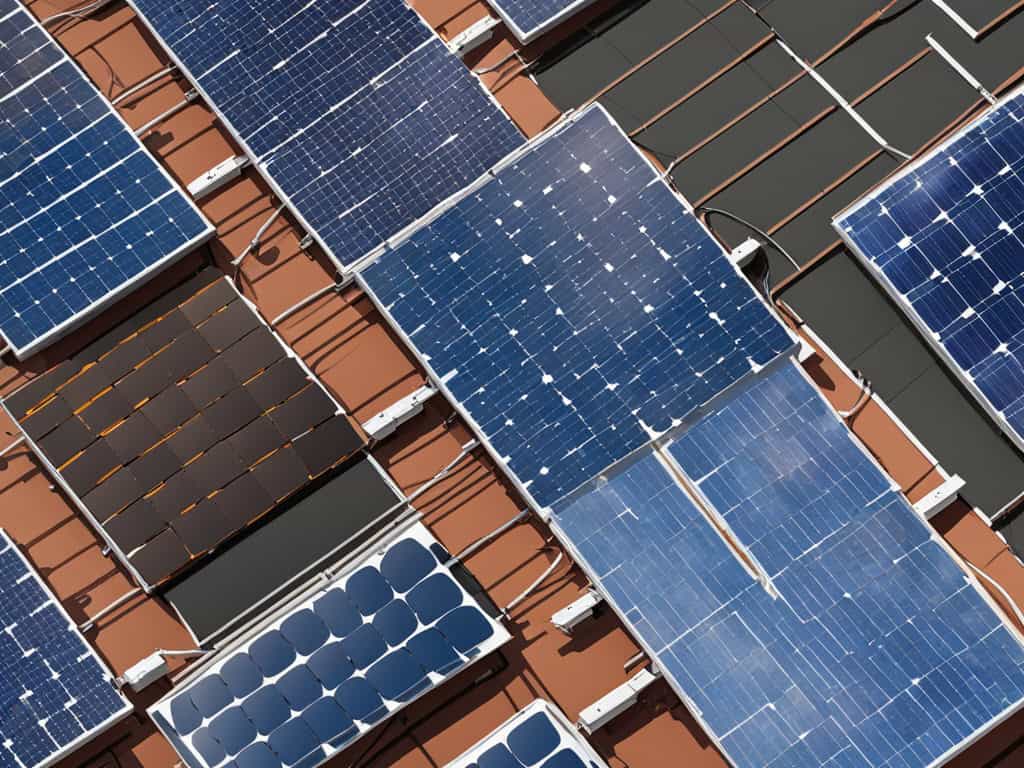
An auto parts factory in Changzhou, Jiangsu, installed a 1MW rooftop plant in 2021. The left side installed monocrystalline silicon TOPCon modules (efficiency 24%, 550W/piece, 210mm large size), the right side installed conventional polycrystalline silicon (efficiency 22%, 450W/piece, 158.75mm small size).
First-year accounting: monocrystalline silicon generated 1.286 million kWh, polycrystalline silicon 1.221 million kWh – a difference of 65,000 kWh. At Changzhou's commercial peak electricity price of 0.41 yuan/kWh, that's an extra 26,700 yuan directly. The second year was more pronounced: monocrystalline silicon degraded 0.45%, power remained 99.55%, generated 1.28 million kWh; polycrystalline silicon degraded 0.55%, remained 99.45%, generated 1.213 million kWh, an extra 67,000 yuan profit. By the end of 2023, the cumulative extra profit over 3 years was 82,000 yuan.
1. Monocrystalline Silicon Earns 25-42 kWh More per Square Meter Annually, Like a Free Electricity Bill
Module efficiency and system losses directly determine generating capacity per square meter. Monocrystalline silicon with 210mm large wafers achieves 24% efficiency, power per square meter about 260W; polycrystalline silicon with 158.75mm small wafers, 22% efficiency, only 247W per square meter. Then consider the Performance Ratio (PR) – monocrystalline silicon, due to slower degradation and lower temperature coefficient, can achieve 85% PR; polycrystalline silicon only 82%.
Detailed calculation: Monocrystalline silicon annual generation per square meter = 260W × annual sunshine hours × 85%, Polycrystalline silicon = 247W × annual sunshine hours × 82%.
· East China (annual sunshine 1600 hours): Monocrystalline silicon: 260 × 1600 × 0.85 = 353.6 kWh/sq.m, Polycrystalline silicon: 247 × 1600 × 0.82 = 328.7 kWh/sq.m, extra 24.9 kWh per square meter, approx. 25 kWh.
· Northwest Gobi (annual sunshine 2200 hours): Monocrystalline silicon: 260 × 2200 × 0.85 = 486.2 kWh/sq.m, Polycrystalline silicon: 247 × 2200 × 0.82 = 444.3 kWh/sq.m, extra 41.9 kWh per square meter, approx. 42 kWh.
This 25-42 kWh is real – for a 1MW plant with 3800㎡ installation area, monocrystalline silicon earns an extra 3800 × 25 = 95,000 kWh annually, at 0.4 yuan/kWh that's 38,000 yuan; in the northwest, 3800 × 42 = 159,600 kWh extra, earning 63,800 yuan.
2. Better Sunlight, Bigger Profit Difference
Compare two 1MW plants:
· Northwest Project (Sunshine 2200 hours, electricity price 0.3 yuan/kWh): Monocrystalline silicon annual generation: 1000kW × 2200 × 0.85 = 1.87 million kWh, revenue 561,000 yuan; Polycrystalline silicon: 1000 × 2200 × 0.82 = 1.804 million kWh, revenue 541,000 yuan – monocrystalline silicon earns 20,000 yuan more.
· East China Project (Sunshine 1600 hours, electricity price 0.41 yuan/kWh): Monocrystalline silicon annual generation: 1.36 million kWh, revenue 558,000 yuan; Polycrystalline silicon: 1.312 million kWh, revenue 538,000 yuan – also earns 20,000 yuan more.
Seem similar? But the difference widens after 10 years: Northwest monocrystalline silicon cumulative generation over 10 years: 1.87 × 10 × (1 - 0.0058 × 55) = 18.00 million kWh (average annual degradation 0.58%), Polycrystalline silicon: 1.804 × 10 × (1 - 0.0075 × 55) = 17.40 million kWh – extra 600,000 kWh, at 0.3 yuan/kWh is 180,000 yuan. East China monocrystalline silicon cumulative: 1.36 × 10 × 0.97 = 13.20 million kWh, Polycrystalline silicon: 1.312 × 10 × 0.96 = 12.60 million kWh, extra 600,000 kWh, at 0.41 yuan/kWh earns 246,000 yuan.
3. Slower Degradation is "Earning Money While Sleeping"
Monocrystalline silicon's first-year degradation (≤2%) and annual degradation (0.45%) are 1 percentage point lower than polycrystalline silicon's (first-year 2.5%, annual 0.55%). But over 10 years, the difference compounds into a large sum.
Calculate 10-year cumulative generation:
· Monocrystalline silicon: Initial power 1000kW, power after 10 years = 1000 × (1-2%) × (1-0.45%)⁹ ≈ 941kW. Cumulative generation = (1000 + 941)/2 × 1600 × 0.85 × 10 ≈ 13.20 million kWh (using average power is more accurate).
· Polycrystalline silicon: Power after 10 years ≈ 927kW, cumulative generation ≈ 12.60 million kWh.
Difference: 600,000 kWh. At 0.4 yuan/kWh, extra profit 240,000 yuan – this 240,000 yuan is the reward for monocrystalline silicon's "slower degradation," equivalent to 17% of the initial investment (1MW monocrystalline silicon initial 1.42 million).
4. Real Project Account Analysis
The Changzhou auto factory project, cumulative generation from 2021-2023 was 3.98 million kWh, 850,000 kWh more than the neighboring polycrystalline silicon, earning an extra 349,000 yuan. Breakdown:
· Year 1: Extra 26,700 yuan (generation difference 65,000 kWh × 0.41);
· Year 2: Extra 27,600 yuan (difference 67,000 kWh × 0.41);
· Year 3: Extra 28,700 yuan (difference 69,000 kWh × 0.41);
· Years 4-10: Extra ≥35,000 yuan annually (the advantage of slower degradation becomes increasingly evident).
A 1MW agricultural-photovoltaic project in the northwest is even more dramatic: installed monocrystalline silicon in 2021, cumulative generation by 2023 was 6.10 million kWh, 1.20 million kWh more than polycrystalline silicon, extra profit 360,000 yuan – this money is not subsidy, but pure electricity sales revenue, even better than bank wealth management (annualized 3%): 1.42 million initial investment, annualized return 2.5%, would only yield 355,000 yuan over 10 years. Monocrystalline silicon's extra earnings exceed wealth management returns.