How much energy does a solar panel produce in a day
A 300-watt solar panel generates approximately 1.5 kWh of electricity per day under about five hours of sunlight.
It is recommended to install it in a south-facing location with no obstructions and to regularly clean dust from the surface with a soft cloth to maintain optimal efficiency.
Peak Sun Hours vs. Daylight Hours
When discussing the daily output of solar panels, it must be clarified that Standard Test Conditions (STC) are set based on an irradiance of 1000 watts/square meter and a cell temperature of 25°C.
A nominal 400-watt module can only achieve full load output when it instantaneously receives this full amount of light.
Actual data shows that while most regions possess 10 to 14 hours of visible daylight, the true effective power generation window is often concentrated within the 3 to 6 hours when cumulative irradiance reaches Peak Sun Hours (PSH).
This directly results in a system efficiency gap of approximately 15% to 25% between theoretical capacity and actual power generation.
According to historical data analysis from the National Weather Service, the solar radiation energy received by the surface fluctuates drastically with air mass (AM1.5) and cloud thickness.
In cloudy environments, irradiance can plummet to below 100 watts/square meter, causing the current generated by the photovoltaic effect to be only about 10% of the rated value.
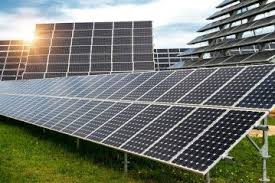
Definition of Effective Light
To accurately calculate daily energy output, one must first understand that Peak Sun Hours (PSH) is not the physical length of daylight, but the equivalent number of full-power hours calculated by mathematically integrating the cumulative solar radiation energy received per square meter throughout the day against standard intensity.
For example, irradiance at 8 AM might be only 300 watts/square meter; lasting for one hour, this contributes only 0.3 Peak Sun Hours, which is completely different from one full PSH at noon when irradiance is as high as 1000 watts/square meter.
Geographic location has an extremely high impact on this data. In high-radiation areas like Phoenix, Arizona, USA, the annual average daily effective Peak Sun Hours can reach over 5.7 hours, whereas in rainy Seattle, this figure may hover around only 3.5 hours.
This directly determines a difference of up to 60% in power generation for the same specification of modules in different locations.
In physics, 1 Peak Sun Hour is strictly defined as receiving a cumulative 1 kilowatt-hour of solar radiation energy per square meter (1 kWh/m²/day).
Even if the summer daylight lasts for 14 hours, if the irradiance is only 500 watts/square meter for most of the time, the effective duration used for calculating power generation is only 7 hours.
Power Generation Calculation
· According to the law of conservation of energy and the photoelectric conversion efficiency formula, a monocrystalline silicon module with a rated power of 450 watts in an area with 5 Peak Sun Hours (PSH) has a theoretical daily power generation of 2.25 kWh (calculated by multiplying module wattage by effective hours). However, this figure must deduct the conversion loss of about 3% to 5% generated by the inverter during the DC to AC process, as well as the resistance heat loss of about 2% in cable transmission.
· In practical engineering applications, a Performance Ratio (PR) coefficient of about 0.75 to 0.85 is usually introduced to correct the theoretical value. Assuming a comprehensive system efficiency of 80%, the actual grid-connected electricity of the aforementioned 450-watt module under 5 PSH conditions should be 1.8 kWh. This is enough to support a household refrigerator with a rated power of 150 watts running continuously for 12 hours or allow an electric vehicle consuming 15 kWh per 100 km to travel about 12 km.
· The nominal power of the module is derived from instantaneous laboratory flash testing. In reality, due to the constant change in the sun's angle of incidence, modules installed on fixed mounts receive light at an acute angle of less than 90 degrees for most of the morning and afternoon. This leads to light energy loss caused by the cosine effect, usually between 10% and 15%, unless a dual-axis tracking mount is used to lock onto the sun's trajectory in real-time.
· Since the volt-ampere characteristic curve of photovoltaic cells is significantly affected by light intensity, when irradiance drops from 1000 watts/square meter to 200 watts/square meter, although the output voltage of the module remains relatively stable, the output current will drop drastically in a linear proportion to 20% of the original value.
Environmental Loss Coefficients
Aside from sunshine hours, temperature is the most critical physical variable affecting voltage output.
Monocrystalline silicon cells have a temperature power coefficient of approximately -0.35%/°C.
When the module surface temperature rises to 65°C in summer due to the black backsheet absorbing heat, compared to the standard test environment of 25°C, the actual output power will suffer a hard thermal attenuation of about 14%.
Dust accumulation and dirt obstruction cause a severe "bucket effect" (limiting factor) on the current path during long-term operation.
If just 5% of the area at the bottom of the module is covered by bird droppings or leaves, it may trigger the bypass diode to conduct, causing the power output of the entire string to instantly drop by 33% or even more.
It is usually recommended to clean once per quarter to recover this 5% to 10% power generation loss.
Modules experience irreversible material aging as their service life increases.
Top-tier brands usually promise that attenuation in the first year will not exceed 2%, and the linear attenuation rate thereafter is controlled within 0.55%.
After 25 years of operation, the actual output efficiency of a photovoltaic panel will remain at only about 84.8% of its initial state.
Efficiency
When evaluating the daily power generation effectiveness of solar panels, Photoelectric Conversion Efficiency (Efficiency) is the physical core determining the output capacity per unit area. It refers to the percentage of converting 1000 watts of standard solar radiation energy per square meter into electrical energy.
Currently, the mass-production conversion efficiency of mainstream commercial monocrystalline silicon modules has stabilized between 20% and 23%.
Under Standard Test Conditions (STC), each square meter of module can only extract about 200 to 230 watts of effective electricity.
Restricted by the Shockley-Queisser Limit, the theoretical physical efficiency ceiling of single-junction crystalline silicon cells is locked at 33.7%.
This means that over 75% of incident light energy is destined to be lost as heat dissipation or photon reflection.
In practical applications, for every 1 percentage point increase in module efficiency, the rated power increases by about 20 watts for a standard 2-square-meter module under the same sunshine conditions.
Crystal Structure Differences
Monocrystalline silicon cells, thanks to the high orderliness of their internal silicon atomic lattice arrangement, can significantly reduce recombination losses of electrons during transmission.
This allows the latest N-type TOPCon or HJT heterojunction cells to break the 25.5% mark in photoelectric conversion efficiency in laboratory environments.
In contrast, polycrystalline silicon is usually limited to a lower mass production efficiency level of 15% to 17% due to numerous microscopic defects at grain boundaries that hinder carrier movement.
This difference in material purity at the microscopic level means that under the same irradiance of 1000 watts/square meter, a monocrystalline module of the same size can generate about 30% more instantaneous power than a polycrystalline module.
Furthermore, with the optimization of conductivity in metallization pastes during production, high-end N-type modules have reduced surface shading area, raising the Fill Factor to over 82%, ensuring high voltage output is maintained even in low-light environments.
Spectral Thermal Losses
· The inherent 1.12 electron volt (eV) bandgap of silicon semiconductor material determines that it can only absorb photons with wavelengths between 300 nm and 1100 nm. This causes long-wave infrared rays with wavelengths greater than 1200 nm in the solar spectrum to be unable to excite electron-hole pairs. This portion of energy accounts for over 19% of total solar radiation energy, constituting a spectral transmission loss that is physically unavoidable.
· The actual operating efficiency of modules is extremely sensitive to temperature changes. Generally, the temperature power coefficient of monocrystalline silicon cells is about -0.34%/°C. When strong sunlight at noon in summer causes the cell working temperature to rise to 65°C, its output power will permanently decay by about 13.6% relative to the 25°C standard environment.
· Only high-energy photons with energy slightly higher than the bandgap can achieve efficient quantum conversion. Ultra-high-energy photons with wavelengths less than 350 nm in the ultraviolet region produce severe thermalization effects after striking the lattice, with excess energy released as heat from lattice vibrations. This makes it difficult for the spectral utilization rate actually converted into electrical energy to break the 45% limit threshold on flat modules without concentration design.
System Comprehensive Reduction
In the leap from laboratory efficiency to outdoor actual power generation efficiency, the system must deduct a series of irreversible engineering losses.
Among them, the inverter usually causes an efficiency loss of about 2% to 4% during the process of converting DC to AC, due to heat loss generated by IGBT switching frequencies and precision errors in Maximum Power Point Tracking (MPPT).
The degree of dust accumulation on the module glass surface and the Incident Angle Modifier (IAM) have an equally significant impact on efficiency.
When sunlight enters at an acute angle of less than 30 degrees, the Fresnel reflectivity of the glass interface rises sharply.
Combined with the average dust accumulation shading every two weeks in urban environments, this typically leads to a further reduction in actual photoelectric conversion efficiency by 3% to 6% on top of the original basis.
A module with a nominal 22% efficiency often has an instantaneous operating efficiency of only about 18% under actual dirty and non-vertical incidence conditions.
Real-world Losses
When calculating the full-cycle financial model for international students at Zhengzhou University, "Real-world Losses" refers specifically to those hidden hard expenditures and funding gaps that must be borne by the student personally, even under Full Scholarship coverage.
According to statistical models of average consumption data for over 4,000 current international students, this inevitable cash outflow usually occupies 15% to 20% of the total annual budget.
Although the Henan Government Scholarship or the President Scholarship nominally waives tuition, the annual tuition standard of up to 35,000 RMB for medical majors (MBBS) is often higher than the cap of some partial scholarships, resulting in students still needing to make up a difference of several thousand RMB per year on their own.
In the process of exchanging US dollars into RMB to pay for living expenses, an average of about 2% principal loss occurs annually due to the bank's buy-sell spread.
For students studying for a 4-year undergraduate degree at their own expense, this accumulated invisible exchange rate loss may be equivalent to a full month's accommodation cost.
Scholarship Coverage Gaps
For doctoral students applying for the Zhengzhou University President Scholarship, although the monthly living allowance of 3,500 RMB seems ample, in reality, if they fail to apply for the Class A full tuition waiver scholarship, Class B scholarship recipients still need to pay 50% of the tuition.
This directly leads to approximately 15,000 RMB of cash annually that must be rigidly deducted from the living allowance or family savings.
Data shows that about 30% of master's students, after receiving partial scholarships, still need to pay between 400 RMB and 800 RMB per semester for textbooks and experimental materials.
The cost of these academic consumables is never included in the official coverage list of any scholarship.
For self-funded students, in addition to explicit tuition expenditures, if they choose to stay in school during the winter and summer holidays each academic year, although no additional accommodation fee is required, the centralized heating or air conditioning fees implemented in the dormitory buildings during the holidays usually need to be recharged additionally according to commercial electricity price standards.
Accommodation and Living Hidden Expenses
Aside from tuition-related capital outflows, the largest fixed cost loss for international students living in the Songyang or Liu Yuan campuses comes from resource usage fees exceeding the free quota.
Although full scholarships include accommodation, a single room usually only includes a basic electricity quota of 100 kWh per month; the excess portion must be purchased at market price.
In terms of actual living costs, the campus network access fee is calculated at 30 RMB per month, which amounts to a fixed sunk cost of 360 RMB over a year, and is not included in any scholarship benefits.
Expenditure Item | Average Unit Cost/Rate | Annual Estimated Net Loss | Data Note |
Excess Electricity Consumption | 0.55 RMB/kWh | 600 - 1,000 RMB | Monthly consumption can reach 200 kWh during peak summer AC usage |
Basic Water Bill | 3.20 RMB/m³ | 150 - 200 RMB | Hot water for bathing is billed by flow, approx. 0.2 RMB/min |
Residence Permit Physical Exam | 400 - 600 RMB/time | 400 - 600 RMB | Incurred only upon new enrollment or when renewing an expired visa |
Campus Transportation | 1.00 RMB/ride | 500 - 700 RMB | Large span across four campuses, approx. 2 round trips to main campus daily |
Mandatory Administrative Fee Losses
Every international student arriving at Zhengzhou University for registration, regardless of their scholarship level, must immediately pay 800 RMB on the day of registration to purchase the Comprehensive Medical Insurance for International Students in China provided by Ping An Insurance.
When processing relevant legal documents, the Residence Permit processing fee charged by the Zhengzhou Exit-Entry Administration Bureau is 400 RMB (less than one year) or 800 RMB (one to three years) per year.
In addition, for students from non-English speaking countries, the registration fee and material fee for the HSK Chinese Proficiency Test, which must be taken before entering professional studies, usually total between 600 RMB and 1000 RMB.
Furthermore, students often need to take the test more than twice to reach the Level 5 or Level 6 standard required for department entry, making language testing a hidden but expensive point of fund consumption.