How Do Modular Panels Enhance Power Flexibility | Scalability, Adaptability, Control
Modular panels enhance the flexibility and scalability of power systems through scalable design.
For example, certain solar module systems can support parallel expansion, increasing up to a maximum of 1000 kilowatts (kW).
Users can flexibly increase or decrease the number of panels according to demand, achieving more precise power control and reducing initial investment costs.

Scalability
Budget is Easy to Calculate
Traditional distribution cabinets usually require a pre-investment budget of 150% to 200% of the rated capacity during initial construction, while modular distribution boards can reduce the first-phase hardware procurement cost by about 30% to 45%. Taking a commercial area with a planned capacity of 1000 kilowatts as an example, the initial actual load is usually only between 300 kilowatts and 400 kilowatts; using standard 50-kilowatt power modules, only 8 units can be installed first, saving about 60% of the idle equipment procurement costs.
· When the electricity demand increases to 70% in the 8th month, the construction team can add 6 50-kilowatt modules within 48 hours; the phased investment mode pulls up the annualized return on investment of funds by 1.5% to 2.8%.
· Compared to purchasing a 2000-ampere overall main distribution cabinet all at once, the solution of purchasing a basic framework equipped with 400-ampere plug-in modules can reduce equipment depreciation costs by 12% to 18% within a 5-year financial cycle.
The unit price of each independent module mostly stays in the 20,000 yuan to 50,000 yuan range; financial personnel convert the one-time fixed asset expenditure into 2 to 3 small annual procurement budgets according to the actual power load growth of each quarter (the fluctuation range is mostly between 5% and 15%).
Area is Saved
In high-rent machine room environments, the annualized cost per square meter of space is often between 3,000 yuan and 8,000 yuan; traditional floor-standing distribution cabinets often occupy 2.5 to 4 square meters of physical area plus a 1.2-meter safe operating distance around them. Modular distribution boards adopt a high-density vertical structure, with standard cabinet sizes mostly 600 mm wide, 1070 mm deep, and 2000 mm high (roughly equal to 42U height), and the floor area is reduced by 40% to 55% compared to old-style equipment.
· In a distribution room with an area of 15 square meters, which originally could hold at most 3 traditional cabinets of 800 kVA, after switching to modular systems, it can hold 5 cabinets of equivalent capacity; the overall space utilization rate increased by about 66%.
· Each power module occupying 3U to 5U height has an output power between 25 kilowatts and 100 kilowatts, pulling the power density per square meter up from the original 20 kilowatts to over 45 kilowatts.
When the load equipment increases at a rate of 20% per year, there is no need to spend extra money to expand the distribution room (expansion costs usually exceed 10,000 yuan per square meter). You only need to plug new modules into the 10 to 15 empty slots of the existing standard cabinet.
Expansion is Really Fast
Expansion and transformation of traditional distribution systems often require a full-site power outage, with an average downtime of as long as 8 hours to 24 hours, causing large amounts of money loss to e-commerce platforms with hourly turnover reaching 100,000 yuan to 500,000 yuan. The contact resistance of modular unit copper bar interfaces is lower than 0.1 milliohms; a single skilled electrician can install a 100-ampere module and complete the power-on test within 15 to 30 minutes.
· The entire expansion process does not require cutting off the main circuit power supply, and the system online operation rate stays above 99.99%, and the power interruption time is strictly pressed into the 0 millisecond to 50 millisecond range.
· To add a new 250-kilowatt power supply circuit, the old method requires laying thick cables with a cross-sectional area of 120 square millimeters and making terminals, which takes 2 workers 5 to 7 hours of continuous work; modular connectors cut labor time consumption by more than 80%.
During the night load trough (usually from 2 AM to 5 AM when electricity consumption drops by 40% to 60%), construction personnel can insert 4 to 6 spare modules all at once, and the labor hourly wage expenditure for a single expansion drops from 3000 yuan to within 500 yuan.
Cooling and Power Saving
When the equipment is running at full load, transformers and circuit breakers generate heat losses accounting for 2% to 4% of total power; a distribution room fully loaded at 1000 kilowatts dissipates heat at 80,000 to 130,000 British Thermal Units (BTU) per hour. Modular boards have layered independent cooling air ducts, keeping the internal environment temperature of the cabinet steadily controlled at 22 degrees Celsius to 26 degrees Celsius, and relative humidity maintained in the 45% to 55% operating range.
· When the overall load rate drops to a trough of 30%, the system automatically lets part of the idle modules enter sleep, pulling the power conversion efficiency up from the conventional 91% and stabilizing it in the high-efficiency range of 96% to 98%.
· The cooling energy consumption of the air conditioning system follows the decrease in heat generation, saving 15% to 25%; in a natural year operation cycle of 8760 hours, a 1-megawatt capacity machine room can pay 120,000 yuan to 180,000 yuan less in electricity bills.
The temperature rise of the copper bars inside the module is limited to within the value of ambient temperature plus 45 Kelvin (K); precise temperature control extends the average lifespan of electronic modules from 50,000 hours to over 80,000 hours.
Flexible Matching
In a production line equipped with 15 automated machine tools, the starting current of a single device often soars to 3 to 5 times the rated current, with the duration fluctuating back and forth between 0.5 seconds and 2 seconds. The modular system can mix-plug circuit breakers with different parameters; for example, 4 16-ampere single-phase modules can be installed in the same cabinet for lighting, plus 6 125-ampere three-phase modules for heavy motors, with voltage levels covering 120 volts to 480 volts.
· When the load current of a certain phase exceeds the standard by 15% to 20% due to the addition of new equipment causing a three-phase imbalance, the electrician can solve it within 10 minutes by pulling out that phase's module and swapping in a new module with an amperage 30% higher.
· The short-circuit breaking capacity (Icu) provides different grades of 35 kA, 50 kA, or 100 kA; differentiated configuration according to the price of back-end equipment can press down the hardware procurement cost by 10% to 15%.
The power quality analyzer equipped with the system has a sampling frequency reaching 128 points to 256 points per cycle, which can capture voltage dip amplitude data with a duration of only 5 milliseconds to 20 milliseconds.
Cables are not messy
The interior of a traditional distribution box with 40 circuits is stuffed with connection wires ranging from 1 meter to 3 meters in length and 4 square millimeters to 70 square millimeters in wire diameter, occupying 30% to 40% of the box's internal volume. The integrated prefabricated busbar of the modular board backplane carries a backbone current of 1000 amperes to 4000 amperes, cutting the number of flying wires inside the box by 85% to 95%.
· External lead-out cables uniformly go through standard cable troughs 150 mm to 300 mm wide at the top or bottom; the threading efficiency of wiring workers is pulled up about 2.5 times.
· During daily temperature measurement inspections, a thermal imager scanning a standard modular cabinet takes only 2 to 3 minutes, whereas finding a heating point higher than 70 degrees Celsius in an old-style cable heap usually takes 15 to 20 minutes.
When the circuit leakage current is greater than 30 mA, indicating that the insulation aging rate exceeds the standard and needs inspection, the independent structure reduces the troubleshooting range to 10% of the overall system, and the fault location time drops from 3 hours to within 10 minutes.
Adaptability
Dismantle and Install at Will
In the past, integrated heavy-duty switch cabinets with a height reaching 2200 mm and a depth exceeding 1200 mm required a corridor reserved at least 2.5 meters wide for transportation; the overall weight was as high as 800 kg to 1200 kg, usually requiring a hydraulic forklift with a load capacity of more than 3 tons and more than 4 moving workers to spend 6 to 8 hours to get in place.
The modular system breaks down the physical structure; the weight of a single basic framework is suppressed in the 150 kg to 200 kg range, and each of the drawer-type distribution modules inside weighs only 15 kg to 25 kg. Two ordinary maintenance personnel, using only one manual pallet truck with a 500 kg load, can move an entire 300-kilowatt system into a standard elevator with a door width of only 850 mm in less than 45 minutes.
· Encountering a basement or transformed machine room with a floor height of only 2.4 meters, operators can choose a low-height framework of 1600 mm, horizontally splicing 4 to 6 narrow-body modules with a width of 400 mm, adjusting the overall floor aspect ratio from 1:1 to 3:1 without changing the total output power.
· The floor bearing limit of old commercial buildings with limited load-bearing is only 350 kg to 500 kg per square meter; splitting the 1-ton equipment originally concentrated within 2 square meters into 5 independent 60-kilowatt units and distributing them above the load-bearing beams over 10 square meters, the local pressure value on the floor drops sharply by 60% to 75%.
Not Afraid of Environment
When the ambient temperature of a conventional distribution box soars above 40 degrees Celsius, the current-carrying capacity of the internal copper bars will attenuate at a rate of 1.5% to 2.5% for every 1 degree rise; when the relative humidity in the air exceeds 85%, it will also trigger the creepage phenomenon of insulation terminals. Modular distribution boards have an extremely wide physical environment adaptation range, with the shell protection level seamlessly switching from IP20 suitable for clean rooms to IP54 or even IP65 that can block water jets. Stuffing a 50-ampere circuit board coated with three-proof paint into a sealed module kit, the system can maintain a stable output with rated voltage fluctuation below 2% in a wide temperature range from minus 15 degrees Celsius to high temperature 55 degrees Celsius.
Environment Related Indicators | Traditional Cabinet Parameters | Modular Board Parameters | Quantification of Data Difference Comparison |
Normal Operation Temp Lower Limit | 0 degrees Celsius | Minus 15 degrees Celsius | Broadened by 15 degrees Celsius |
Full-load Operation Temp Upper Limit | 35 degrees Celsius | 55 degrees Celsius | Increased by 20 degrees Celsius |
Allowed Max Relative Humidity | 80% (Non-condensing) | 95% (Non-condensing) | Tolerance increased by 15% |
High Altitude Derating Start Point | 1000 meters | 2000 meters | Delayed by 1000 meters |
Protection Level Adjustment Time | Needs factory remake (30 days) | Field replacement of seal kit (2 hours) | Time consumption reduced by 99% |
Mixing Old and New
When renovating old factory distribution networks that have been in use for 15 to 20 years, electrical interfaces of different eras and standards often cause engineering progress to stall. Early transformer output ends often adopt a fixed 400 volts AC and old-style aluminum busway, while new digital production lines require the input end to have 380 volts to 415 volts wide-frequency adaptive voltage, and communication protocols must go through Ethernet.
Modular boards act as the physical translator between old and new systems. The main incoming terminals can be compatible with copper-aluminum transition lugs with cross-sectional areas from 50 square millimeters to 240 square millimeters; applying a tightening force of 45 Newton meters with a torque wrench can ensure the contact surface pressure drop is lower than 3 millivolts.
· Plug-in communication gateway modules support simultaneous access to RS485 serial interfaces and RJ45 network cable interfaces, receiving analog signals from old electricity meters at a rate of 9600 bits per second and converting them into 100-megabit bandwidth network signals to be transmitted to the background management terminal.
· When a feeder circuit of the original system has only 200 amperes of residual capacity, and a newly added set of server racks requires 25 kilowatts of peak power, use a smart module with current-limiting protection functions to set an output upper limit of 180 amperes, letting the old transformer steadily carry the new equipment within a safe load rate of 75% to 85%.
Easy to Repair Faults
If a 160-ampere molded case circuit breaker in a traditional distribution circuit experiences contact burning, the electrician needs to spend 20 to 30 minutes putting on insulation protective clothing, cut off the main power supply of the previous level of at least 800 amperes, and spend 1 to 1.5 hours in the dark removing rusted screws and replacing parts.
The average time to repair (MTTR) of modular structures is forcibly compressed to within an incredible few minutes. Each standard module is equipped with an independent mechanical interlocking device; when the internal sensor detects the temperature breaking the alarm threshold of 85 degrees Celsius or the leakage current exceeding 30 mA, the module will automatically trip and open, strictly limiting the power outage range to a single circuit accounting for less than 5% of the total power.
Repair Processing Link | Old-style Fixed Box Time | Modular System Time | Repair Cost Related Quantification |
Fault Point Investigation and Location | 45 to 90 minutes | 1 to 3 minutes (Red light on) | Inspection hourly wage reduced by 90% |
Power Outage Specific Scope | Upper branch full stop (100%) | Only fault module stop (5%) | Business loss reduced by 95% |
Spare Parts Assembly Physical Operation | 60 to 120 minutes | 2 to 5 minutes (Plug-in type) | Labor cost drops by 85% |
System Re-powering Test | 15 to 30 minutes | 0 minutes (Built-in pre-magnetization) | Tester rental fee is zero |
Connect Equipment at Will
Electricity terminals in industrial and commercial scenarios have different temperaments; variable frequency water pumps produce fifth and seventh harmonics accounting for 15% to 25% of the fundamental current when starting, lighting matrices pull down the system's power factor to between 0.7 and 0.8, and high-density computer rooms require extremely pure power where total harmonic distortion must be lower than 3%.
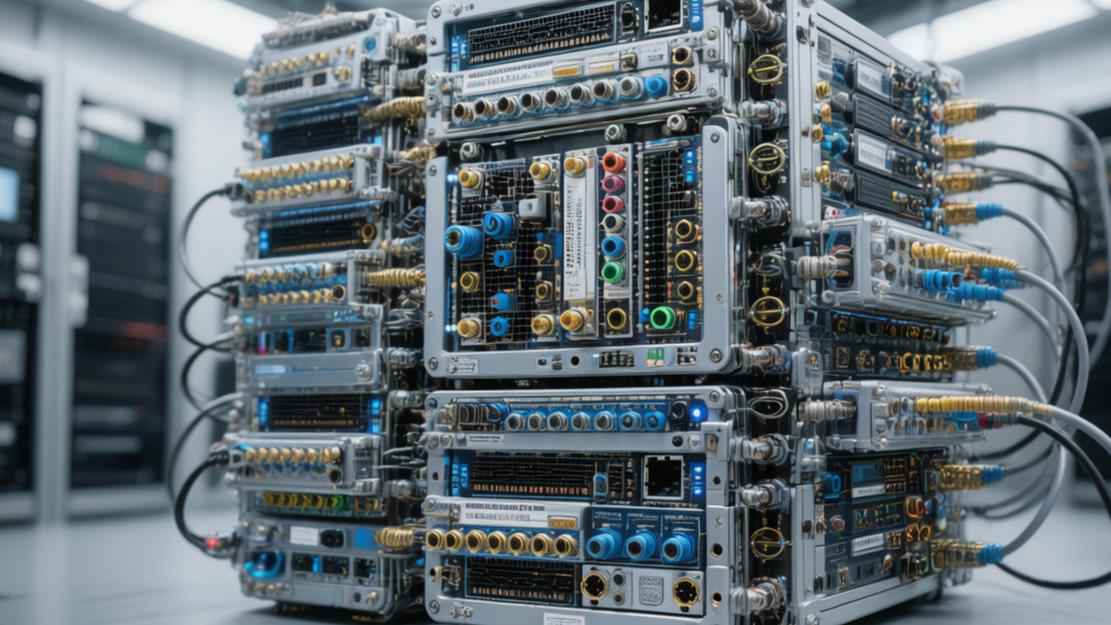
Modular distribution boards reserve abundant expansion slots to deal with all kinds of strange power quality requirements. For a 30-kilowatt standard module originally supplying power to resistive loads, simply push an active filter module and a static var generator module into the idle card slots next to it; they can output compensation current of equal magnitude and opposite direction within 20 milliseconds.
Control
Check Extremely Thoroughly
Meters of traditional distribution cabinets most of the time can only display the total current and total voltage of the entire circuit, with precision error often floating up and down between 2% and 5%, leading to huge deviations of 500 kWh to 2000 kWh often appearing on the end-of-month electricity bill. Modular distribution boards are standardly equipped with each drawer unit, from small 16-ampere to large 630-ampere, with an independent high-precision digital meter. Built-in micro-sensors bit into the current and voltage waveforms for disassembly and analysis at a high-frequency sampling rate of 6400 to 12800 times per second 24 hours a day without interruption.
In the operating range where the rated load climbs all the way from 10% to 120%, the absolute error of active power, reactive power, and overall energy consumption measured by a single module is strictly nailed within the extremely narrow gap of 0.2% to 0.5%, pushing the measurement accuracy of the overall electrical system nearly 10 times higher.
The screen of the operation and maintenance management platform no longer only has a few jumping dry readings. For a computing power center with 400 racks, the duty personnel can view the overall trend of the 4000-ampere current at the main incoming end in the first-level menu, and clicking on the second-level interface can accurately pick out a certain 25-kilowatt blade server in the 3rd cabinet of the 15th row that had a surge spike lasting 45 milliseconds at 3:14 AM.
The system converts hundreds of electrical parameters such as three-phase imbalance, power factor (capturing tiny fluctuations accurate to 0.001), and harmonic distortion (THD) reaching up to 31 times into dynamic line graphs that refresh every 5 seconds, letting the internal structure of the entire power grid turn completely into an easy-to-see transparent white box.
Remote Tripping
To cut off a traditional feeder circuit located in basement level 3 with a live voltage as high as 400 volts, sending a licensed electrician wearing insulation gloves and an arc flash face shield to walk to the scene takes at least 15 to 25 minutes of wearing and physical movement time.
Modular panels have large-scale integrated motorized operating mechanisms with communication interfaces, transferring all control rights for physical closing and opening to the mouse of a control center 10 kilometers or even 1000 kilometers away from the scene. The operator enters a set of secondary confirmation passwords containing 8 to 12 letters and numbers, and the system will, within an extremely short delay of 50 to 100 milliseconds, command the micro DC motor inside the module to complete spring energy storage and instantly release it, cleanly cutting off short-circuit current as high as 50 kA.
After fully rolling out distribution nodes with remote control functions, a large multinational retail enterprise cut its annual traffic reimbursement costs and labor travel budgets caused by field switching operations by 65% to 80%, saving 250,000 to 400,000 yuan in real money on the books every year on average.
For commercial complexes that need to allocate energy by time periods, timing control strategies become extremely easy. At 10:30 PM, the system automatically issues a whole row of preset instructions, collectively cutting off the lighting module groups accounting for 70% of the shopping mall's public areas and 4 central air conditioning host circuits with a rated power of 90 kilowatts; at 6:45 AM, it gradually restores power according to a fixed sequence of starting one circuit every 2 seconds. The peak-shaving control measures perfectly avoid the expensive billing of the peak electricity consumption period as high as 1.5 to 2.0 yuan per kilowatt-hour, and also completely eliminate the startup shock wave that is enough to pull the main busbar voltage down by 10% to 15% instantly when multiple heavy devices start simultaneously.
Prevent Disease in Advance
Burning a transformer with a price tag of 150,000 yuan often only takes a few short seconds, but one to two months before the failure occurs, the temperature, leakage current, and weak vibration frequency of the distribution line have already quietly deviated. Modular systems abandon the lagged response mode of old-style equipment that only trips when the circuit is completely shorted and smoking, instead sticking coin-sized passive wireless temperature measurement probes on every copper bar joint. The temperature probes send an accurate Celsius reading of the current environment to the data gateway every 10 seconds.
When the contact point temperature of a certain phase slowly climbs from a normal 45 degrees Celsius and breaks the first safety red line of 75 degrees Celsius within 24 hours, a yellow alarm with a vibration prompt immediately pops up on the mobile APP and web background, along with 3D positioning coordinates accurate to the specific cabinet and specific slot number.
Predictive data intervention allowed a factory with 8 car assembly lines to violently compress the equipment paralysis time caused by sudden power outages from an annual average of 112 hours to less than 4 hours, completely blocking the capacity evaporation as high as 800,000 yuan per hour caused by unexpected production line shutdowns.
Managers can freely modify the trigger values of the protection logic according to the degree of the back-end connected equipment. For a 100-ampere module supplying power to an MRI device worth 3 million yuan, the alarm threshold for overload protection is strictly set at 85% of the rated current, and an email notification is triggered immediately once it exceeds and lasts for 3 seconds; while for an auxiliary circuit supplying power to an ordinary exhaust fan, the overload rate is relaxed to 115% and allowed to last for 60 seconds without alarming.
Cooperating with the built-in life-decay regression algorithm, the system can calculate that a frequently acting contactor has already consumed 74,000 times out of a total of 100,000 mechanical lifespans, and automatically generates a procurement list containing part numbers, specification parameters, and an estimated unit price of 1200 yuan for the warehouse manager about 3 months before complete scrapping.
Lock Down Permissions
Once the control rights of the distribution network are connected to the Ethernet, stopping external malicious attacks and internal misoperations becomes a daily consumption that must be faced every day. Old-style distribution cabinets only rely on a metal plum blossom lock with an extremely low anti-theft level that can be matched for two yuan on the street to block idle people, while the digital center of the modular distribution system adopts 128-bit to 256-bit Advanced Encryption Standard (AES) reaching the financial transaction level.
The system interior forcibly divides at least 5 to 8 completely different operation permission levels. Ordinary outsourced inspectors can only see real-time voltage and current line graphs after logging in, and any mouse click attempt to disconnect the circuit breaker is ignored by the firewall; the electrical supervisor with the highest authority, after inserting a dedicated physical encryption USB disk and entering a dynamic verification code, can modify up to more than 50 underlying protection parameters involving short-circuit delay time, overload long-delay current, etc.