Are Polycrystalline Panels the Right Choice | Efficiency, Durability, Application
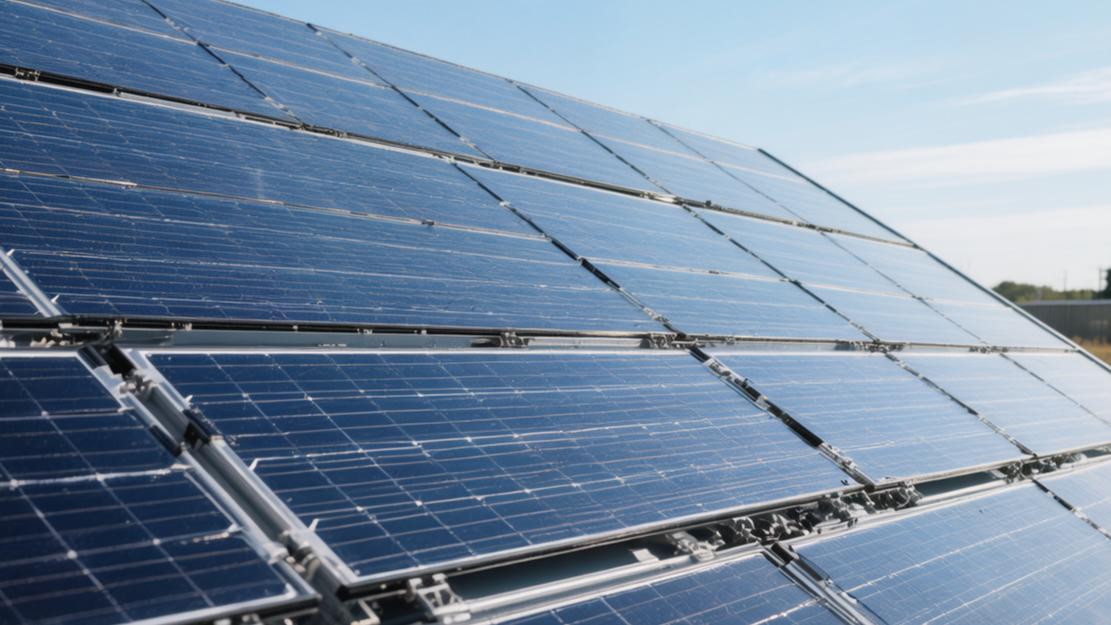
Polycrystalline silicon solar panels have high cost-performance, with efficiency approximately 15%-20%.
Compared to monocrystalline silicon panels, its manufacturing cost is lower, suitable for large-scale applications.
Although the efficiency is slightly lower, in areas with good sunlight conditions, it can still provide stable power generation, and the service life is about 25 years.
Efficiency
Measured
The conversion rate labeled on the panel in the laboratory depends on standard test conditions, with parameters set at light irradiance 1000 W/m², cell temperature 25°C, and air mass AM 1.5. Taking a common 60-cell polycrystalline module as an example, the length is 1.65 meters, the width is 0.99 meters, and the surface area is about 1.63 square meters.
When the nominal power reaches 280W, dividing 280W by 1.63 square meters and then by 1000W/m² of light input, the calculated conversion rate is 17.1%. However, in real outdoor environments, the industry uses nominal operating cell temperature parameters for measurement, where the set irradiance drops to 800 W/m², ambient temperature is set at 20°C, and wind speed is 1 m/s. In such an environment, the actual operating temperature of the panel surface will rise to around 45°C.
· At this real temperature, the actual output power of a module originally rated at 280W will drop to the 205W to 210W range, a decrease of 25%.
· The actual conversion rate of the system will slide from 17.1% to around 15.5%.
· The fill factor of polycrystalline modules is usually between 75% and 78%, and the internal series resistance and parallel resistance of the cells will consume 22% to 25% of the theoretical maximum power.
What to do if afraid of heat
The sensitivity of polycrystalline silicon panels to high temperatures is reflected in the temperature coefficient; its maximum power temperature coefficient is usually -0.40%/°C. The open-circuit voltage temperature coefficient is about -0.32%/°C, and the short-circuit current temperature coefficient will have a slight positive increase of about +0.05%/°C.
When the summer ambient air temperature reaches 38°C, the surface temperature of panels installed on windless roofs can easily climb to 65°C. Subtracting the laboratory standard of 25°C from 65°C, the temperature difference reaches 40°C. Multiplying 40°C by the -0.40%/°C power temperature coefficient, the resulting power loss is as high as 16%.
· A nominal 300W polycrystalline panel at 65°C will have an actual output of only 252W.
· The output current of the panel will stay around 8.5A without much fluctuation, but the operating voltage will drop straight from the standard 31V to around 26V.
· In a DC circuit with 20 panels in series, the total voltage will plummet from 620V to 520V. If the inverter's maximum power point tracking operating voltage lower limit is set at 500V, once the panel temperature continues to rise and causes the input voltage to fall below 500V, the inverter's conversion efficiency will decrease by an additional 1.5% to 2.5%.
Is a cloudy day okay
When encountering cloudy, rainy days or low-light periods such as 7 AM or 5 PM, solar irradiance will drop below 200 W/m². The grain boundary distribution of polycrystalline silicon is extremely irregular, with average grain sizes between 1 mm and 10 mm; a large number of grain boundaries will accelerate the recombination rate of electron-hole pairs.
Under 200 W/m² irradiance, the light intensity is only 20% of standard test conditions, but the panel's output power cannot reach 20% of the nominal power. Because under low light, the proportion of voltage drop from internal series resistance becomes larger, and the overall conversion efficiency of the module will fall below 14%.
· A nominal 280W panel under 200W/m² light intensity often has an actual output of only 45W to 50W.
· The spectral response range of polycrystalline silicon is between 300 nm and 1100 nm, with the absorption peak at the 800 nm infrared band. Thick clouds on cloudy days scatter a large amount of direct light, and the light that penetrates is mainly concentrated in the 400 nm to 500 nm blue light band.
· Since the quantum efficiency of polycrystalline silicon in the blue light band is 3% to 5% lower than that of monocrystalline silicon, the power generation attenuation amplitude in a cloudy environment will be more obvious.
Degradation situation
Within the first 48 to 72 hours after the module is installed and energized, it will experience light-induced degradation. Because the boron and oxygen elements doped during the silicon wafer manufacturing process form boron-oxygen complexes under light, it leads to an irreversible decline in module efficiency.
The light-induced degradation rate of polycrystalline modules is usually between 1.5% and 2.0%. Taking a 300W panel as an example, after a few days of exposure, the actual baseline power will permanently drop to about 294W. In large projects, panels operate in series with system voltages of 1000V or 1500V, facing the risk of potential induced degradation (PID).
· In a high-temperature and high-humidity environment with 85% humidity and 85°C ambient temperature, sodium ions in the 3.2 mm thick tempered glass will be driven by the high-voltage electric field to penetrate the 0.45 mm thick EVA film and migrate to the cell surface.
· The leakage current will reach about 5 microamps, damaging the passivation layer on the cell surface.
· If the module has not passed the anti-PID test of the IEC 62804 standard, after 3 to 5 years of outdoor operation, the power of a single panel will decrease by an additional 5% to 10% due to the leakage effect.
Loss from being blocked
If the installation tilt angle of the panel is lower than 15 degrees, the gravity flush of natural rain cannot effectively take away the mud and dirt on the surface. When the panel surface accumulates 5 grams of dust per square meter, the light transmittance of the glass will drop by 3% to 5%. If it is partial shadow shading, since 60 cells are divided into 3 series sub-units, each sub-unit is equipped with 1 bypass diode connected in parallel in the junction box.
· A leaf or bird dropping with a diameter of only 2 cm covering 50% of one cell's area will turn the shaded cell from a power generation unit into a power-consuming resistor, and the local temperature will rapidly soar to 80°C to 90°C, producing a hot spot effect.
· At this time, the bypass diode will be activated to conduct, forcibly bypassing these 20 series-connected cells.
· The overall output voltage of the panel instantly drops by one-third, about 10V; adding the diode's own 0.6V forward voltage drop, it will cause the real-time output power of this 300W panel to plunge by 35%, only being able to output 195W of power.
Durability
Withstand strong winds
For the 60-cell specification polycrystalline panels on the market, the frame thickness is basically fixed between 30 mm and 35 mm, and the surface anti-oxidation film thickness can reach 15 microns. Simulating a strong wind of 2400 Pascals in a wind tunnel laboratory is equivalent to a level 15 gale with a wind speed of 130 miles per second blowing directly at the front of the panel for 1 hour.
Because the back of the panel is mainly fixed to the C-channel steel bracket by 4 installation holes, when the back bears the negative pressure of the wind load pulling outward, the center point of the long side of the frame will produce an outward deformation of 10 mm to 15 mm. To cope with heavy snow weather in winter, the front of the panel must withstand a 5400 Pascal static snow load test, which is roughly equivalent to the surface being covered with compressed snow with a thickness of 1.2 meters, and pressure must be continuously applied for 24 hours without damage.
· Under the heavy pressure of 5400 Pa, the 3.2 mm thick ultra-white patterned tempered glass will cave downward, with the deformation sinking amount reaching 20 mm to 25 mm, basically touching the bottom line of the 0.5 mm physical gap between the glass and the cells below.
· Testers use a solid ice ball with a diameter of 25 mm and a weight of 7.53 grams, hitting the glass surface vertically 11 times from a distance of 1 meter at a speed of 23 meters per second; the glass breakage rate is limited to within 0.1%, and the light transmittance decrease cannot exceed 0.5%.
· For the corner key connections used in the four corners of the aluminum frame, after undergoing 200 cycles of violent reciprocating vibration with an amplitude of 5 mm and a frequency of 10 Hz, the expansion size of the physical cracks at the joints is strictly regulated to be within 0.2 mm.
Afraid of water or not
The fragile circuits inside the panel rely entirely on the 0.45 mm thick ethylene-vinyl acetate (EVA) film and the 0.3 mm thick polyethylene terephthalate (PET) composite backsheet for sandwich-like sealing. The cross-linking degree of the EVA film must reach the 85% to 90% range after vacuum treatment at a high temperature of 145°C in the laminator to provide a powerful peel strength of greater than 40 Newtons per centimeter.
In a "Double 85" environmental test chamber with temperature set at 85°C and relative humidity maintained at 85%, after 1000 hours of continuous water bath baking, water vapor will slowly penetrate the fluorine-containing coating of the backsheet at a permeation rate of 1.5 grams to 2.0 grams per square meter per day. Once moisture gets in, it will induce a large amount of acetate ions to precipitate in the EVA film, causing the pH value of the internal environment to plummet from neutral to an acidic state of around 4.0, slowly corroding the silver paste main grid lines that are only 10 to 12 microns thick.
· After 96 hours of salt spray exposure in a sodium chloride solution with a salt content of 5%, the increment of the module leakage current is strictly kept within 2 microamps.
· The Shore hardness of the silicone sealant applied to the edges of the module after curing can be maintained at 40A to 50A, with an elongation at break of 400%; even under 15 years of ultraviolet bombardment, the shrinkage rate can remain within 3%.
· The IP68 level junction box located on the back of the panel is filled with two-module potting glue, with a thermal conductivity calibrated at 0.8 W/m·K, which can keep the bypass diodes inside (at a limit junction temperature of 150°C) from having a shell surface temperature higher than 85°C when the external ambient temperature is 60°C.
Encapsulation Material Type | Initial Water Vapor Transmission Rate (g/m²·day) | Yellowing Index Increment after 3000 h UV Aging (ΔYI) | Peel Strength Attenuation Rate (after 1000 h Double 85 Test) | Applicable Environment Relative Humidity Upper Limit |
Standard Transparent EVA Film | 15.0 - 20.0 | 3.5 - 4.5 | 18% - 22% | 75% |
White High-Reflectivity EVA Film | 12.0 - 18.0 | 2.5 - 3.5 | 15% - 20% | 80% |
POE Co-extruded Polyolefin Elastomer | 2.0 - 3.0 | 0.8 - 1.2 | 5% - 8% | 95% |
Composite Fluorinated TPT Backsheet | 1.2 - 1.8 | 1.5 - 2.0 | 8% - 12% | 90% |
Glass Fiber Double-Sided Glass | 0.0 - 0.1 | 0.0 - 0.2 | 1% - 3% | 100% |
How much drops each year
The 25-year linear power warranty terms provided for polycrystalline silicon panels are entirely supported by laboratory aging deduction data; in the first year, due to light-induced degradation caused by boron-oxygen complexes in the polycrystalline silicon material, the drop in power output will be fixed within the range of 2.0% to 2.5%. Starting from the 13th month of grid-connected power generation and lasting until the 300th month, the absolute drop in actual power each year will go down at a steady speed between 0.6% and 0.7%.
When the panel reaches the end of its 25-year physical life, the measured output power of the total system capacity can still be maintained between 80.7% and 82.5% of the factory nominal value. For each polycrystalline cell with a size of 156.75 mm × 156.75 mm, after experiencing the thermal expansion and contraction of materials caused by the temperature difference between day and night, the propagation length of micro-cracks on the surface slowly grows at a speed of 0.1 mm to 0.3 mm per year.
· After completing 200 temperature impact cycles in a high and low temperature alternating cycle box from -40°C to +85°C, with the heating and cooling rate set at 3°C per minute, the series resistance at the contact position between the ribbon and the cell will slowly climb from 0.015 ohms to 0.022 ohms.
· Aggressively applying an ultraviolet radiation dose of 60 kWh per square meter to the panel, with the wavelength stuck in the 280 nm to 400 nm UV band, the thickness of the anti-reflective coating on the surface will peel off about 5 nm from the original 120 nm, resulting in a reverse increase in light reflectivity of 0.2%.
· Using electroluminescence test equipment to input a 9-amp forward current to capture internal images, the area ratio of black cells or broken grids in old panels after 10 years of operation remains on average between 1.5% and 2.8%.
Material aging
The life data of photovoltaic connectors and DC cable insulation layers exposed to wind and sun also determine the survival period of the entire equipment. For a photovoltaic dedicated cable with a tin-plated copper core and a cross-sectional area of 4 square millimeters, the outer layer is wrapped with a cross-linked polyolefin insulation material; under a conventional operating temperature of 90°C, the theoretically calculated thermal aging life can exceed 25 years and 6 months.
After the MC4 standard male and female plugs are manually plugged and unplugged 50 times, the contact resistance of the internal metal terminals slowly rises from the factory state of 0.3 milliohms to 0.8 milliohms. For the polycarbonate plastic junction box shell with a flame retardant rating of UL94 V-0, after 10 years of sun exposure and rain washing, the tensile yield strength of the material will decline from the original 60 MPa to 45 MPa.
· The cross-sectional dimensions of the tin-plated copper conductive ribbons on the back of the panel are mostly 1.2 mm wide and 0.25 mm thick, with a yield strength falling between 40 MPa and 60 MPa; after 15 years of power-on heating and annealing, the elongation at break will plunge from 20% to 12%.
· The initial light transmittance of the 3.2 mm front glass is as high as 93.5%, but after enduring 20 years of wind and sand physical friction erosion, the surface roughness has increased by 0.05 microns, and the light transmittance will drop to 91.8%.
· The brass terminal holes used for the system grounding pole are generally opened to 4 mm or 5 mm; when the torque reaches 1.5 Nm, the resistance at the piercing contact with the frame's oxide layer can be long-term stuck at 0.1 ohms, and the bearing capacity for lightning strike surge current truly reaches 15 kiloamperes.
Application
Spreading on the ground
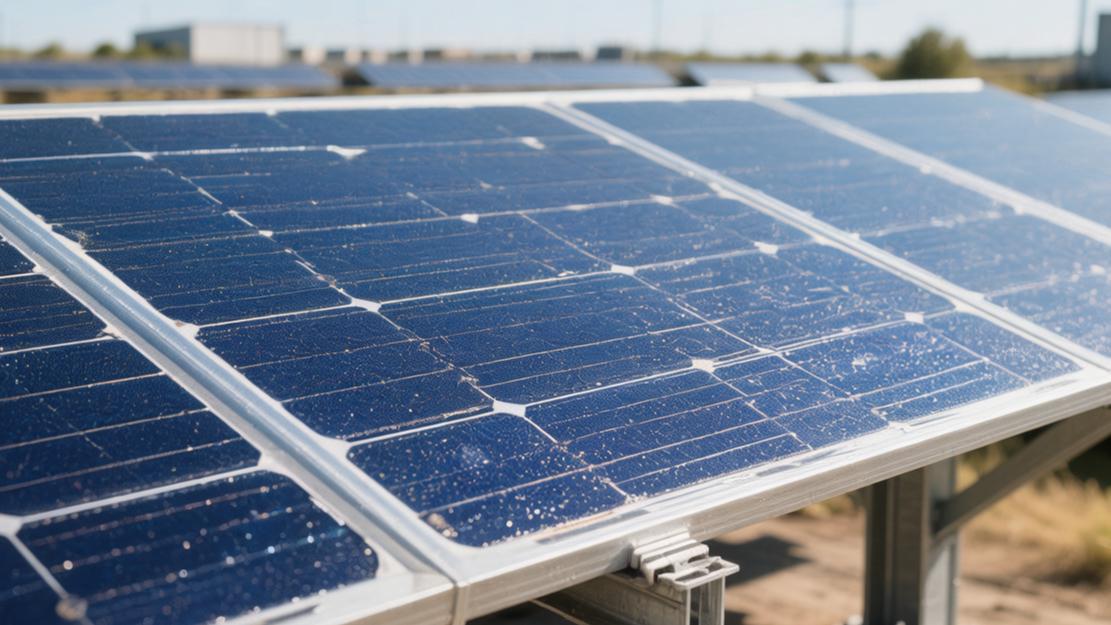
Building 10-megawatt to 50-megawatt level utility-scale photovoltaic power plants on vast deserts or wilderness plains, the unit price of land leasing is significantly suppressed within a narrow range of $800 to $1,200 per acre per year. The extremely low land rent cost removes the need to calculate the extreme power generation density per square meter of panel. In a giant procurement list of up to 100,000 modules, polycrystalline panels with a cost per watt stuck between $0.14 and $0.16 can save about $1.5 million to $2.5 million of initial budget compared to high-conversion-rate panels.
When designing high-current DC circuits, the system adopts the 1500V international general grid-connection standard; an array circuit up to 120 meters long is physically connected in series with 30 polycrystalline modules with a nominal power of 330 watts. The total open-circuit voltage of a single string is precisely limited to a range of about 1350 volts, leaving a full 10% safety redundancy margin from the 1500-volt maximum physical endurance limit of string inverters.
The huge array composed of tens of thousands of panels is firmly fixed by C-channel steel metal brackets with hot-dip galvanized anti-corrosion coating, with the tilt angle locked at a position floating 5 degrees above or below the local latitude; the total length of single-core DC cables with an outer diameter of about 6 mm required for system laying exceeds 180 kilometers, and the total copper weight reaches about 14,000 kg or more.
In large projects equipped with single-axis tracking motor brackets, from 7 AM to 6 PM every day, motors drive the entire row of polycrystalline panel arrays weighing up to 2500 kg to rotate slowly at a rate of 0.5 degrees per minute to track the position of the sun.
Big factories are a good match
Taking a 10,000 square meter standard industrial flat roof as an example, after deducting the 15% geometric area forcibly occupied by HVAC large air-conditioning outdoor machine rooms, giant exhaust ventilation ducts, and lighting skylights, the actual completely clear effective space available for laying solar panels is as high as 8,500 square meters.
Pressing polycrystalline silicon modules with a single area of about 1.96 square meters and a weight of 22.5 kg onto the polyurethane waterproof coating using low-wind-resistance weight-block installation bases, plus the 6 kg to 10 kg precast cement pressure blocks additionally applied to each base, the overall added load per square meter of the photovoltaic roof system is averaged at 18 kg to 22 kg, steadily staying within the load-bearing upper limit red line reserved in the building's original structural drawings.
During high-energy-consumption periods from 8 AM to 6 PM in industrial plants, the real-time electricity load generated by full workshop production lines continues to maintain a high level of 600 kW to 900 kW. An 8,500 square meter roof can easily accommodate about 3,800 polycrystalline panels with a nominal power of 285 watts, with the total DC-side installed capacity soaring to 1.08 megawatts and the total array weight reaching about 85,500 kg.
Remote farms
In arid desert areas or high-altitude mining areas more than 50 kilometers away from the end of the national backbone power grid, there is a total lack of basic high-voltage overhead line coverage. Project owners purchase polycrystalline silicon panels in bulk mostly to drive three-phase AC deep well water pumps with a rated power of 3 HP to 5 HP for daily scheduled and quantitative groundwater extraction, or to maintain 24-hour uninterrupted radio transmission and reception for off-grid Very High Frequency (VHF) communication relay base stations.
The overall installed total capacity of the system lies in the micro range of 5 kW to 20 kW, and the construction party pursues an extremely low procurement unit price per watt and absolutely crude physical hardware fault tolerance.
Electricians divide 24 polycrystalline panels with a measured operating voltage of 31.5 volts into 6 groups in parallel, with 4 panels in each group connected in series head-to-tail, and forcibly connect them into a resin shell combiner box with a waterproof and dustproof rating of IP65 using crimping pliers. The 126V high-voltage DC voltage output on the terminal block will surge toward the MPPT intelligent charging controller mainboard with a maximum current endurance of 80 amperes along multi-strand flame-retardant copper core cables with a cross-sectional area of 16 square millimeters.
For an off-grid storage system equipped with a deep-cycle lead-acid gel cell bank with a total rated capacity of 48V and 1200Ah, it only needs to capture 5.5 hours of peak effective sunshine per day in an unobstructed environment to let the entire polycrystalline matrix produce about 32 kWh to 38 kWh of available electrical energy reserves.
Not suitable for home use
When the perspective shifts to single-family sloped roofs where the available net laying area is strictly limited between 45 square meters and 75 square meters, the physical shortcoming of the lower conversion power per unit area of polycrystalline silicon modules is magnified infinitely. For an 8 kW residential grid-tied system used to meet the daily lighting and air conditioning operation of four rooms, if traditional polycrystalline panels that can only produce 280 watts of electricity each are forced to be used, the homeowner must purchase and arrange as many as 29 large modules measuring 1.65 meters by 0.99 meters, forcibly filling nearly 56 square meters of tilted roof space.
In the private customized residential solar market in developed areas, the labor cost for on-site installation by state-licensed electricians, the grid-connection approval permit fees forcibly charged by the local municipal planning bureau and fire department, and the two-way meter access testing and acceptance fees from the power company combined result in an invoice amount that accounts for a staggering 60% to 70% of the overall project total cost.