Do Monocrystalline Panels Work at Night | Light Conditions, Energy Storage, Backup Systems
Monocrystalline silicon panels cannot generate electricity at night, but can through daytime power generation store to batteries (capacity like 5-10 kWh) or connect to the power grid, realizing night lighting and small home appliance backup; suggest equipping UPS or inverter to optimize energy management.
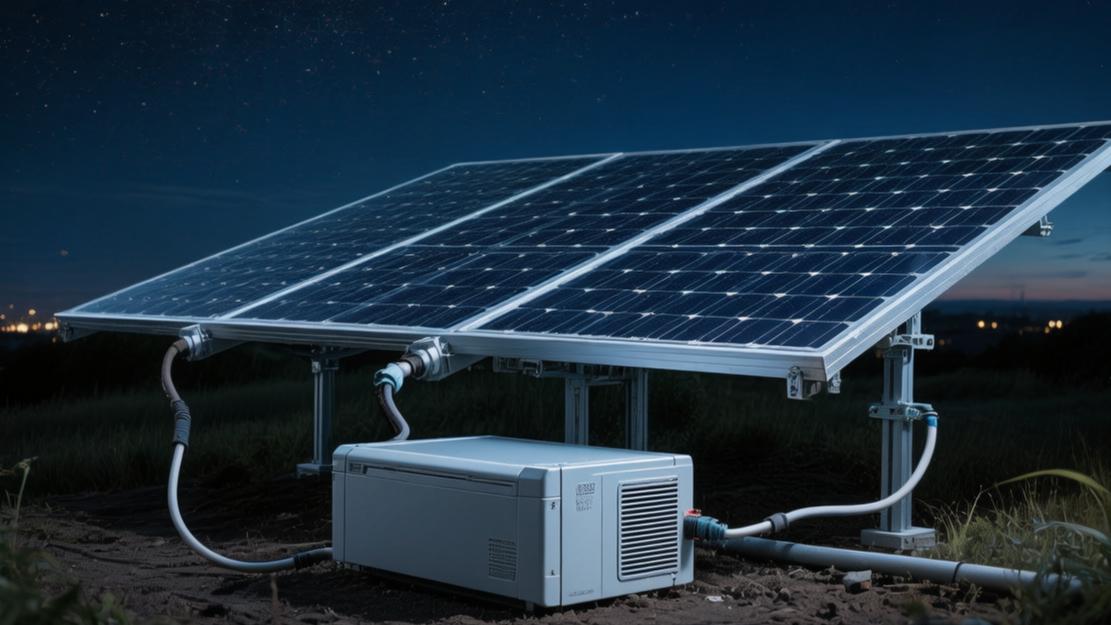
Light Conditions
Measure light
Standard test conditions specified a radiation intensity of 1000 watts per square meter, matching 25 degrees Celsius cell temperature and 1.5 air mass coefficient. 1 piece of 400 watts monocrystalline panel is 1.7 meters long, 1 meter wide, occupying 1.7 square meters of space. At 7 am, when solar radiation drops from 1000 watts peak value to 200 watts per square meter, the panel's output current will drop 80%, falling from standard 10 amperes to about 2 amperes. Its open-circuit voltage fluctuation amplitude is less than 8%, maintained within the interval of 35 volts to 38 volts. Aiming at the physical test of this light intensity, can list 3 hard indicators:
· Installation locations owning 5.5 hours of peak sunshine every day, within a 24-hour cycle, can let each piece of panel output 2.2 degrees of electricity.
· Regions with latitude coordinates exceeding 45 degrees, on winter solstice day, only have 3 to 4 hours of effective radiation exceeding 500 watts per square meter.
· 3.2 millimeters thick tempered glass surface accumulating 0.1 millimeters thick dust layer, will make light transmittance decrease 4% to 7%.
Every 6 months, washing 1 time the array panels, can let the system's whole year average power generation yield rate increase 9.5%.
Cloud shading
Cumulus clouds passing through the 5 kilometers atmospheric boundary layer will reduce sunlight penetration rate from 100% to the highest value down to 30% or even 15% low position. A 5-kilowatt south-facing residential array encountering a thick layer of cumulus clouds covering the solar disk at a 0.5-degree viewing angle, its output power will in a 45-second time difference drop from 4800 watts to 1200 watts. Monocrystalline silicon cell cells are able to absorb spectral energy within the wavelength range of 300 nanometers to 1100 nanometers.
Encountering severe cloudy days where environmental brightness falls below 2000 lux, the number of infrared photons hitting the 156 millimeters by 156 millimeters silicon wafer will reduce by 85%. The inverter's maximum power point tracking algorithm will adjust the direct current bus voltage at a frequency of every 0.2 seconds, when light intensity appears 50% severe fluctuation still maintaining over 96.5% conversion efficiency. In geographical regions having 200 cloudy days records every year, system design will allocate the following 2 kinds of parameter matching ratios to make up for yield loss:
· According to 120% to 130% over-allocation ratio installing direct current panels, to balance 40% annual average light absence rate.
· 10 kilowatts inverter paired with 13 kilowatts panel modules, every year will have 300 hours situated in 100% full load limit operation state.
Adopting 1.3 to 1 unequal capacity specification, can compare to 1 to 1 regular configuration capture 15% more scattered light energy.
Shadow area
A 15-meter-high big tree, even if it only projects a 10% area hard shadow on the panel, will also trigger the whole string circuit's 33% extremely high electricity loss rate. Standard 60 pieces monocrystalline modules internally encapsulated 3 bypass diodes, every single diode is responsible for protecting a series circuit composed of 20 pieces of cell cells. When a chimney's shadow covers 2 of the cells, the corresponding bypass diode will start within 5 milliseconds of time, rapidly dropping the panel's working voltage from 33 volts to 22 volts. The appearance of a 11-volt voltage difference causes this module to lose 33.3% wattage, can prevent the shaded silicon wafer from reaching 150 degrees Celsius reverse bias high temperature. Solutions to solve local mismatch problems usually contain 2 kinds of financial budgets:
· Every 1 to 4 panels install 1 unit of micro inverter, limiting the 100% electricity deficit caused by shadow within the 1.7 square meters damaged unit.
· 30 pieces of panels equipped with direct current optimizers with a unit price of 50 dollars, in a 12-month cycle will output 12% to 25% more degrees than traditional series inverters processing 15 pieces of panels.
Spending 1500 dollars on optimizer early stage hardware cost, according to 0.20 dollars per degree of electricity tariff pricing, at the 6.5th year time node can reach 100% return on investment rate.
Picking angles
A roof with an inclination of 30 degrees and facing due south 180 degrees azimuth, its annual power generation coefficient reached 99% of the theoretical highest value. Azimuth angle deviating to west or to east by 45 degrees will bring an 8% to 12% descending rate on the total kilowatt-hours quantity of a year. Increasing the 40% hardware equipment budget to install dual-axis mechanical tracking brackets can extend the 800 watts per square meter high intensity irradiation time window from 4 hours every day to 7.5 hours. The daily power consumption of the dual-axis tracking system is 0.05 degrees, but can within a 365-day calendar cycle increase the total energy capture rate by 35% to 40%. Inclination angle adjustment aiming at environmental factors involves the following 2 physical parameters:
· Regions with snowfall reaching 30 centimeters, a 45-degree large inclination angle can make 15 kilograms of snow load sliding off from the extremely low friction glass at a speed 50% faster than 20 degrees inclination.
· Panels keeping 0 degrees flat laying angle, because the aluminum border location accumulated 2 millimeters deep dirt, will bear 15% to 20% dirt shading loss.
Thermal degradation
Monocrystalline silicon material possesses a negative 0.35% temperature coefficient per degree Celsius. When the summer environmental air temperature reaches 35 degrees Celsius, the dark blue panel surface absorbs a large amount of thermal radiation, and the internal cell's working temperature will soar to 65 degrees Celsius. The 40-degree temperature difference exceeding the 25-degree standard test baseline forces the system to lose 14% rated power, pressing down the 400-watt panel peak performance to 344 watts.
Leaving a 10 centimeters to 15 centimeters ventilation gap between the 35 millimeters thick aluminum frame and roof tiles can increase the wind's circulation rate by 2 meters per second. Passive convective heat dissipation effect can make the module's working temperature drop 5 to 8 degrees, saving back 1.7% to 2.8% power output loss. Meteorological conditions' interference on thermal efficiency contains 2 common variables:
· 80% roof environmental humidity cooperating with 40 degrees high temperature will form a water vapor barrier, before ultraviolet photons hit the 0.05 millimeters thick anti-reflective coating causing it to happen 3% refraction scattering.
· In desert environments with humidity at 15% and air temperatures up to 45 degrees, special EVA encapsulating film is needed to bear the 85-degree continuous internal high temperature, ensuring that the yellowing degradation rate within 10 years does not cross the 5% red line.
Picking up leaked light
Bifacial monocrystalline modules through absorbing photons reflected back from the 10-meter radius ground, can additionally increase 5% to 30% electricity yield. White TPO commercial coiled roof presents an 0.8 albedo coefficient, 1000 watts per square meter of light irradiating on the roof has 80% that will be bounced back to the transparent glass backplane. Installing one piece of 500-watt bifacial panel at a ground clearance distance of 0.5 meters from the white roof, can increase 125 watts of backside power, making the overall combined output lift to 625 watts. Regular reflective mediums present the following 2 kinds of data differences:
· Grass and soil surface albedo values are only 0.15 to 0.25, only producing 6% to 10% backside gain amplitude.
· 2 millimeters thick double layer glass structure increased the panel weight to 28 kilograms, needing installation guide rails with load-bearing specifications 20% higher.
A 100 megawatts utility-scale photovoltaic farm adopting 200,000 pieces of bifacial panels and a 6-meter row spacing, within 365 days, can generate 140,000 megawatt-hours of electricity. When the backside energy contribution rate crosses the 12% dividing line, this facility's levelized cost of electricity within its 30-year operational lifespan will drop 0.015 dollars.
Energy Storage
Which one to choose
85% of home energy storage systems on the market adopt lithium iron phosphate chemicals, its energy density maintains at the level of 160 watt-hours per kilogram. Lithium nickel manganese cobalt oxide batteries can reach a higher density of 250 watt-hours per kilogram, but its thermal runaway critical temperature is only 210 degrees Celsius, a full 60 degrees lower than lithium iron phosphate. Traditional lead-acid batteries occupy about 12% of the off-grid market share, their round-trip conversion efficiency usually stays in the 75% to 80% interval.
A group of 10 kilowatt-hour lithium iron phosphate module weight is about 115 kilograms, volume is about 0.15 cubic meters. In comparison, deep cycle lead-acid cell packs of the same 10 kilowatt-hours capacity broke through 300 kilograms in weight, needing to occupy 0.4 cubic meters of physical space. Inside a single cabinet adopting 48 volts low voltage design, 15 to 16 pieces of 3.2 volts square aluminum shell cells will be connected in series, finally outputting 51.2 volts of rated direct current voltage.
The internal self-discharge rate of lithium iron phosphate batteries is controlled at a low position of 2% to 3% per month, while traditional lead-acid batteries' monthly power loss rate under a 25-degree Celsius environment is as high as 15%. A 100 ampere-hour single lithium cell tested under a 0.5C multiplier can output 3.2 volts of nominal voltage and 320 watt-hours of absolute energy.
Is it enough to use
An independent residential family consuming 30 degrees of electricity on a daily average, within a 12-hour night period of no light cycle, will usually generate a load demand of 12 degrees to 15 degrees of electricity. Installing a 1 wall-mounted cell pack with a rated capacity of 13.5 kilowatt-hours, calculated according to a 90% maximum usable depth of discharge, is able to release 12.15 kilowatt-hours of actual electricity.
Facing 1 central air conditioner with a starting power of 1500 watts, this fully charged 13.5 kilowatt-hour cell can only maintain 8.1 hours of continuous running time. When the night basic load drops to 300 watts of standby power, the same electricity inventory can provide an endurance time of up to 40.5 hours. A residence equipped with a 200 amperes main distribution panel, usually needs to allocate a 50 amperes independent backup panel, specially carrying an 800 watts refrigerator, 4 pieces of 15 watts LED bulbs as well as a 1200 watts microwave oven.
Superimposing 2 blocks of energy storage modules with 10 kilowatt-hour capacity each, can elevate the total system voltage from 48 volts to 400 volts high voltage level. High voltage direct current coupling architecture reduced the conversion loss from photovoltaic to cell by 4%, pulling up the overall system efficiency to the industry high level of 97.5%.
Charging and discharging
The cell's charging and discharging speed is strictly defined by the C multiplier physical parameter. A 1C discharge rate means a 100 ampere-hour cell can release 100 amperes of current within 1 hour. Mainstream home 5 kilowatt inverters cooperating with 10 kilowatt-hour batteries, their continuous discharge multiplier is limited by the electronic cell management system at the 0.5C safe threshold.
When facing a 50 milliseconds instant surge of starting a 3000-watt water pump, the cell can bear a maximum 1.2C peak discharge current lasting for 10 seconds. Reducing the daily cyclic depth of discharge from 100% full charge and full discharge to the 80% interval can let the internal lithium ions' structural fatigue rate drop about 40%. The constant current and constant voltage charging algorithm when the cell power is situated in the 10% to 80% interval, will apply a maximum charging current of 50 amperes.
In the 2-hour light peak period from 12 noon to 2 pm afternoon, an 8-kilowatt photovoltaic array will use 30 amperes of constant direct current to pour 6 degrees of electricity energy into the cell. The three-stage charging logic will when the power level reaches the 95% critical point, plummet the input current from 30 amperes to 2 amperes to conduct constant voltage trickle supplement.
Afraid of cold, afraid of heat
The optimal electrochemical reaction temperature of lithium batteries is situated within the narrow band of 15 degrees Celsius to 25 degrees Celsius. When outdoor air temperature drops to 0 degrees Celsius, the electrolyte's viscosity increases, causing internal resistance to rise 30%, which will wipe out 15% of the usable capacity of the module. If under minus 10 degrees extreme cold conditions, forcibly charging with a 0.2C multiplier, it will trigger a 100% probability of lithium plating reaction, causing irreversible physical structure damage to the positive electrode material.
When environmental temperature soars breaking through the 45 degrees Celsius red line, the built-in thermal management fan will start at a rate of 3500 revolutions per minute, blowing 100 cubic meters per hour of cooling airflow across the aluminum heat sink fins. Placing the cell on a south-facing exterior wall with direct sunlight, ultraviolet irradiation will make the equipment's surface temperature reach 55 degrees Celsius at 3 pm afternoon, accelerating the encapsulating gasket's 20% aging rate.
Running energy storage equipment in a garage with a room temperature of 35 degrees Celsius, the cell's overall calendar life compared to samples placed in a 22 degrees air-conditioned room will decrease about 25%. A set of silicone heating pads with 200 watts of power can consume 0.5 degrees of electricity in extreme cold weather, heating a 100-kilogram cell module from minus 5 degrees to 10 degrees safe working temperature within 45 minutes.
How long can it be used
High quality lithium iron phosphate cells' testing standard under laboratory 25 degrees Celsius conditions is reaching over 6000 times of full charge and discharge cycles. According to 365 days a year, 1.2 effective cycles happening every day, the average usage frequency, reaching the 6000 times indicator needs to consume a time span of nearly 13.6 years. When the cell's state of health parameter drops to 70% of the factory nominal capacity, the industry will usually judge it has reached the first stage end of service life.
At the end of the 10th year warranty period, a piece of cell with an initial capacity of 15 kilowatt-hours has its retained capacity lower limit value contractually specified at the 10.5 kilowatt-hours absolute numerical value. In coastal zones where environmental humidity is maintained above 85% long-term, the copper contacts of connecting terminals will generate a 0.1-millimeter thick oxidation layer, bringing 0.5 milliohms of extra resistance.
A group of cell packs having experienced 4000 times of 80% depth cycles, its internal resistance numerical value will slowly climb from the brand new 15 milliohms to 28 milliohms. The doubling of internal resistance causes the heating loss during every cyclic charge and discharge process to increase by 2.5%, pulling the round-trip conversion efficiency down from 96% in the first year to 93.5% in the 8th year.
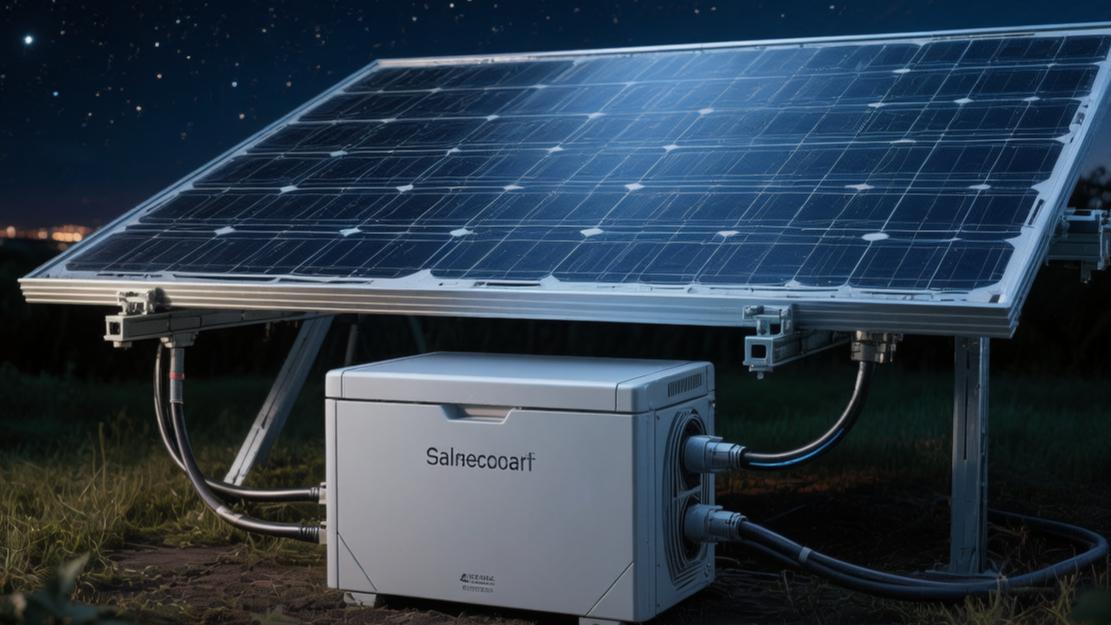
Backup Systems
Power outage switching
When the public power grid's input voltage instantly drops to 0 volts, the automatic transfer switch installed in front of the main distribution panel will within a 10 to 20 milliseconds time limit cut off the 200 amperes external circuit physical connection. A hybrid inverter with a rated power of 7.6 kilowatts will within a 50 milliseconds cycle, switch the working mode from grid-tied output to off-grid voltage source state, outputting 240 volts alternating current with an error within 1%.
In this microsecond level conversion gap, a desktop computer running at 300 watts power its internal capacitors can maintain about 15 milliseconds of discharge time, completely not feeling the 0.02 seconds external current interruption. A backup network adopting alternating current coupling architecture, after grid power loss, needs to force wait the 300 seconds US electrical code specified time, to be able to resend 60.5 hertz frequency shift signals to the 5 kilowatts micro inverter array. Direct current coupling architecture adopting 400 volts direct current bus connection, energy round-trip loss is only 3%, is able to take over all loads under 0 seconds delay with 100% rated power.
· Physical contactors equipped with 100 amperes current flow capacity, after experiencing 10 thousand times of mechanical open and close cycles, their contact surface contact resistance will climb from the initial 2 milliohms to 8 milliohms.
· When the inverter detects grid voltage lower than 105 volts or higher than 132 volts deviation, red line, it will proactively disconnect within 0.16 seconds, preventing the 120-volt home appliances inside the residence from bearing over 15% voltage fluctuation pressure.
Picking to use
Connecting all electrical appliances of an independent residence of 250 square meters into the backup circuit, needs to bear an instant peak power pressure of up to 25 kilowatts, exceeding the regular 10 kilowatts home inverter's 150% overload limit. Engineers will peel out a 50 amperes independent backup panel branch, specially allocated to 10 basic circuits with a total capacity not exceeding 4 kilowatts to use.
A refrigerator compressor with 800 watts power in the initial 3 seconds of starting, will generate up to 2400 watts surge current impact, occupying nearly 48% of the 5 kilowatts inverter's instant load bandwidth. Installing a 4-channel smart load shedding module, can monitor bus current parameters at a frequency of 10 times per second. When the energy storage cell's remaining electricity percentage drops to the 20% preset lower limit, the smart module will within 0.5 seconds cut off the 50 amperes bipolar circuit breaker connecting the 9.6 kilowatts electric vehicle charging pile.
Equipment type | Continuous running power (Watts) | Starting peak load (Watts) | Daily average running duration (Hours) | 24 hours consumption amount (Degrees) |
Deep well water pump | 1500 | 4500 | 1.5 | 2.25 |
Kitchen refrigerator | 800 | 2400 | 8.0 | 6.40 |
LED lighting network | 150 | 150 | 6.0 | 0.90 |
Air source heat pump | 3500 | 7000 | 5.0 | 17.50 |
Communication router | 30 | 30 | 24.0 | 0.72 |
Matching generator
Encountering extreme blizzard weather with 3 continuous days of sunshine intensity lower than 100 watts per square meter, a group of 15 degrees electricity lithium batteries will be completely drained by an 800 watts basic load within 36 hours. Connecting a 12 kilowatt rated power propane backup generator to a photovoltaic inverter containing dry contact control ports can build out a micro power grid possessing three layers of guarantee.
After the cell management system sends a start level signal through a 12-volt direct current control wire, the generator engine will pull up the rotational speed to 3600 revolutions per minute within 10 seconds, outputting 60 hertz alternating current pure sine wave with a frequency error within 0.2 hertz. This generator with a volume of 0.8 cubic meters when bearing 6 kilowatts of 50% half-load output, will consume 1.5 gallons of liquid propane fuel per hour. An underground propane storage tank with a capacity of 250 gallons, under the premise of retaining 20% unusable vaporized bottom amount, is able to support the generator to continuously run 133 hours.
· If the fuel inside a gasoline generator is left standing for over 180 days, its octane number will decrease 15% to 20%, causing the probability of carburetor blockage to climb to 60%.
· The output power of a 12 kilowatt natural gas generator is strictly limited by altitude height. At geographical locations with an altitude exceeding 1000 meters, for every 10% drop in air density, the internal combustion engine's actual output power will shrink by 3.5%.
Topping peak values
The power factor of inductive load equipment usually wanders within the 0.7 to 0.85 interval. An alternating current motor with a nominal apparent power of 2000 volt-amperes can only generate 1600 watts of real active power. The inverter's transformer coils when processing the remaining 400 vars of reactive power, will generate extra thermal radiation loss equivalent to 15% of the total heating amount.
A backup inverter with a nameplate marking 8 kilowatts continuous output, its internal IGBT power tubes can bear 160 amperes short-circuit current, releasing 12 kilowatts of limit power within a brief 10-second window period. The soaring of environmental temperature will trigger the equipment's derating protection mechanism. When the air temperature inside the garage climbs from 25 degrees Celsius to 45 degrees Celsius, the inverter's output ability will decrement at a rate of 1.2% per degree Celsius. The original 8000 watts full load ability will rigidly shrink 24% under 45 degrees high temperature, at maximum only able to maintain a safe output quota of 6080 watts.