How Can You Maximize Output with Monocrystalline Panels | Sunlight, Angle, Maintenance
Choose monocrystalline modules (efficiency above 20%), tilt angle according to latitude ±5° (such as 30°), guarantee sunshine above 6 h;
Every month, clean 1 time, reduce dust loss by about 5%, optimize facing south installation can elevate power generation quantity 10%-20%.
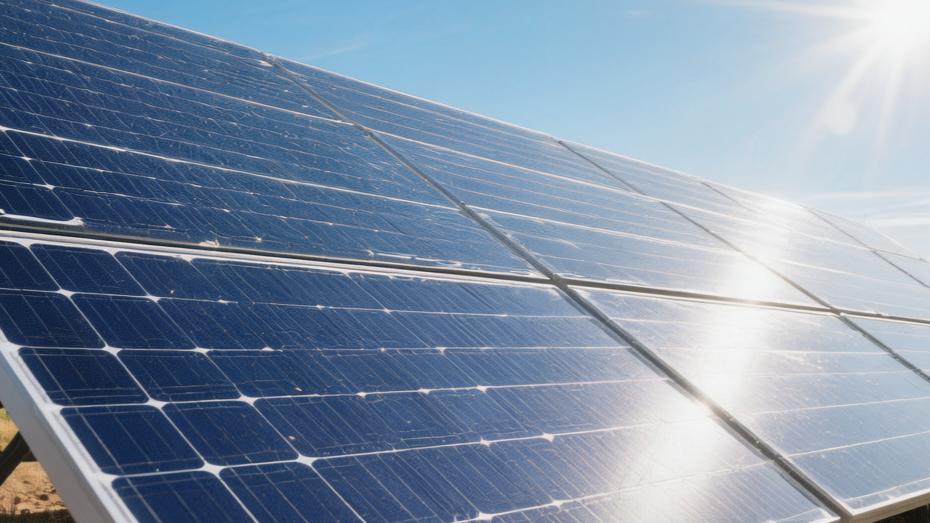
Sunlight
Calculate light illumination degree
Monocrystalline silicon modules' factory nominal power is measured under standard test conditions (STC), this condition requires an input solar spectrum situated at AM1.5 state, and the environment surface receives solar total irradiance strictly reaches 1000 watts per square meter. When the actual roof receives irradiance drops from 1000 watts per square meter to 800 watts per square meter, one piece of module with a nominal power of 500 watts, its actual instantaneous output power will according to a linear proportion decrease to between 395 watts and 405 watts.
In north latitude 45 degrees to 50 degrees high latitude regions, December's daily average peak sunshine time often only has 1.5 hours to 2.2 hours, whereas in June, it can lengthen to 5.5 hours to 6.5 hours. Seasonal irradiance fluctuation will cause summer's single month total power generation quantity to be higher than winter by 200% to 250%.
· Through weather station acquired historical sunshine radiation data, it is divided into direct normal irradiance (DNI) and diffuse horizontal irradiance (DHI). When DNI data full year cumulatively is lower than 1200 kilowatt-hours per square meter, this project's 5-year investment return rate will drop 15% to 20%.
· In the morning from 7 o'clock to 8 o'clock, as well as in the evening from 4 o'clock to 5 o'clock, the sunlight's crossing through the atmosphere layer's path length increased 2 to 3 times, the atmosphere layer's absorption and scattering effect makes the arrived at panel surface's actual irradiance usually only have 200 watts per square meter to 300 watts per square meter, the system's overall conversion efficiency will compared to noon time drop 2% to 4%.
Stare at wavelength
The solar spectrum contains extremely broad frequency bands, monocrystalline silicon materials usually can only absorb and convert photons within the 300 nanometers to 1100 nanometers wavelength range. Ultraviolet light with a wavelength smaller than 400 nanometers occupies total solar energy's 7%, high energy photons when hitting silicon wafers, excess energy cannot be transformed into electrical energy, but is transformed into heat energy, causing module internal temperature within operation's first 45 minutes to rise 5 degrees Celsius to 8 degrees Celsius. Infrared light with a wavelength greater than 1100 nanometers because the photon energy is lower than monocrystalline silicon's 1.12 electron volts band gap, will penetrate 182 millimeters or 210 millimeters size silicon wafers, causing 20% to 25% energy penetration loss.
· Module surface's tempered glass will be plated with one layer of anti-reflection coating (ARC) with thickness precisely controlled between 70 nanometers and 80 nanometers. This coating can reduce light rays' reflectivity from original 4% to 5% to within 1% to 1.5% error range.
· In the visible light to near-infrared waveband with wavelengths of 700 nanometers to 850 nanometers, monocrystalline silicon's spectral responsivity reaches the highest extreme value, generating 1 ampere of current only needs about 0.5 watts to 0.6 watts of this waveband light power input.
Calculate accurately diffuse reflection
Panel surface's overall irradiance will suddenly drop to between 100 watts per square meter and 250 watts per square meter, one set of system with installed capacity of 10 kilowatts, its instantaneous output power will from full power state fall back to 800 watts to 1500 watts interval fluctuation.
· Installation environment's surface albedo parameter has 10% to 15% deviation influence on received photons total quantity. Ordinary dark color asphalt roof's albedo is only 8% to 10%, grass field is 15% to 20%, ground surface albedo of laying white reflective waterproof coiled material can elevate to 70% to 85%.
· When adopting bifacial monocrystalline silicon modules, the back side can through absorbing environment diffuse reflection light, provide 5% to 25% extra power generation gain; when back side irradiance reaches standard test required 135 watts per square meter, one piece of bifacial module with front side power of 550 watts, total output power can climb up to the highest peak value of 600 watts to 620 watts.
Avoid shadows
Monocrystalline silicon module internal is by 60 pieces, 72 pieces, or 144 pieces of half-cut cells connected in series welded and assembled, merely having one piece of cell with an area of 250 square centimeters covered by tree leaves exceeding 70%, the entire series circuit's current will then be restricted at the shaded cell's weak output level.
· One piece of panel with an output voltage of 40 volts internal is configured with 3 bypass diodes, happening partial shading triggering one among them diode to conduct, this panel's output voltage will instantly drop 12 volts to 14 volts, single piece panel's output power lowers 33.3%.
· If not having bypass diode's intervention, the shaded cell will turn into a load consuming electrical energy generated by other normal cells, within 30 seconds to 60 seconds, this partial area's temperature will soar to 100 degrees Celsius to 120 degrees Celsius.
· Winter accumulated snow thickness reaching 2 millimeters to 5 millimeters covering up module lower edge's one row of cells, even if the upper 90% area is exposed to sunlight, the entire piece of panel's power generation quantity will still lose 80% to 95%, until the lower edge's accumulated snow melts and slides off, the area reaching above 80% of cells will system voltage only then recover to standard numerical value.
Prevent light-induced attenuation
Brand new monocrystalline silicon panels when first exposed to strong sunlight operating, will within initial 24 hours to 72 hours happen light-induced attenuation phenomenon. P-type monocrystalline silicon wafer internal doped boron element under light illumination effect will combine with oxygen element to form boron-oxygen complex, consuming internal carrier charges, causing module within operation's first month conversion efficiency permanently lower 1% to 3%.
· Adopting gallium-doped silicon wafer process or upgrading to N-type TOPCon monocrystalline technology, first year light-induced attenuation rate will be controlled within 0.5% to 1% extremely low probability range.
· After passing the first year's initial attenuation period, monocrystalline panels in subsequent 24 years' time, every year's linear attenuation rate will maintain within 0.4% to 0.55% fixed slope, when operating to the 25th year's 300th month, equipment still can provide factory nameplate nominal power 80% to 84.8% output capacity.
Angle
Aim at equator
Panel installation's azimuth angle setting parameter will produce 10% to 25% increase-decrease amplitude deviation on full year's cumulative power generation quantity. In northern hemisphere latitude 30 degrees to 50 degrees regions, taking panel's physical orientation precisely locked in true south direction, which is compass azimuth angle 180 degrees position, can capture 100% theoretical direct photon flux.
When roof structure causes panels must deviate toward east or toward west from true south direction 20 degrees to 30 degrees, within the whole day's 8-hour to 10-hour effective light illumination cycle, panels' total output power will smoothly decline 4% to 7%. If installation orientation completely biases toward true east azimuth angle 90 degrees or true west azimuth angle 270 degrees, morning 7 o'clock to 10 o'clock or afternoon 3 o'clock to 6 o'clock output wave peak will move forward or place backward, full year total power generation quantity will drop away 18% to 22%.
Regions where commercial electricity price adopts time-of-use billing mode, dismantling system with installed total capacity 50 kilowatts into 50% facing east and 50% facing west V-shaped layout, can in morning 8 o'clock and afternoon 5 o'clock electricity usage peak periods additionally generate 15% to 20% instantaneous power output, offsetting power grid peak period 0.3 dollars to 0.5 dollars per kilowatt-hour expensive electricity bill expenditure.
Calculate accurately slope
Monocrystalline silicon surface's glass panel and horizontal plane formed geometric included angle decides light ray incident's refractive index deviation. Setting fixed tilt angle as degrees entirely equal to installation location's latitude numerical value, 1 year 365 days cumulatively received total solar radiation quantity in statistics reaches highest peak value interval.
In a city with latitude 40 degrees, locking fixed bracket's tilt angle at 40 degrees, can within 12 months' cycle press down power loss caused by light ray reflection within 3% to 4.5% extremely small error range. If choosing every 6 months to manually adjust the bracket's telescopic rod, in May to August's summer, lower the tilt angle to a numerical value of latitude minus 15 degrees, which is 25 degrees, in November to next year's February, raise the tilt angle to a numerical value of latitude plus 15 degrees, which is 55 degrees, a single piece module with a rated power of 550 watts can additionally generate 5% to 7% kilowatt-hours of electricity every year.
In high latitude regions with snowfall quantity of 100 millimeters to 300 millimeters every year, when panels' physical tilt angle is set at a gentle level lower than 15 degrees, accumulated snow on panel surface's retention time will prolong from 48 hours to 72 hours, snow load weight borne by panel surface will break through 30 kilograms to 50 kilograms per square meter load limit.
Follow to turn
Photovoltaic tracking bracket systems through stepper motors driving the main shaft to rotate, make panels' normal direction constantly maintain an included angle with sunlight rays smaller than 2 degrees to 3 degrees. Single-axis tracking systems will along north-south running center axis within east deviation 50 degrees to west deviation 50 degrees range conduct all-weather 10 hours to 12 hours' slow turning over, this mechanical device can let overall modules' annual power generation revenue elevate 15% to 25%.
Dual-axis tracking systems then increased east-west running pitch adjustment function, in arid highland environments with altitudes of 2000 meters to 3000 meters, direct radiation proportion as high as 70% to 80%, dual-axis linkage can pull up total output power a step further 35% to 40%.
Driving one unit of single-axis tracking motor bearing 20 pieces of monocrystalline panels, total area about 40 square meters, every day operating 12 hours' self-power consumption quantity only occupies system single day total power generation quantity's 0.5% to 1.2%.
Calculate well row spacing
When laying out panels in multi-row arrays on flat ground or flat roof buildings with tilt angles lower than 5 degrees, the front row modules' top edge projected down shadow length decides the back row panels' array spacing parameter. In the north latitude 45 degrees region, December 22 winter solstice day noon time's solar elevation angle is only about 21.5 degrees. One row of panels with installation height of 1.5 meters, tilt angle of 30 degrees, will directly rear ground project out up to 3.8 meters to 4.2 meters physical shadow.
If the absolute physical distance between the first row panels and the second row panels is reduced from the design standard's 4 meters to 2.5 meters, in November to next year's January's 90 days, back row panels' bottom 20% to 30% area will be covered by shadows for up to 3 hours to 4.5 hours every day. Affected by monocrystalline silicon internal bypass diodes' cut-off protection mechanism, covered single string modules' continuous 3 months cumulative power generation quantity will evaporate away 40% to 55%.
Withstand strong wind
Wind aerodynamic fluid mechanics indicators' change along with tilt angle increase presents a non-linear growth trend. When monocrystalline panels' tilt angle raises from gentle 10 degrees to steep 40 degrees, wind pressure uplift force coefficient borne by module back side will multiply soar 1.5 times to 2.2 times. In coastal open areas where gust wind speed frequently reaches 25 meters to 30 meters per second, one piece of module with an area of 2.5 square meters under a 40-degree tilt angle needs to bear as high as 1800 pascals to 2400 pascals instantaneous wind load pressure.
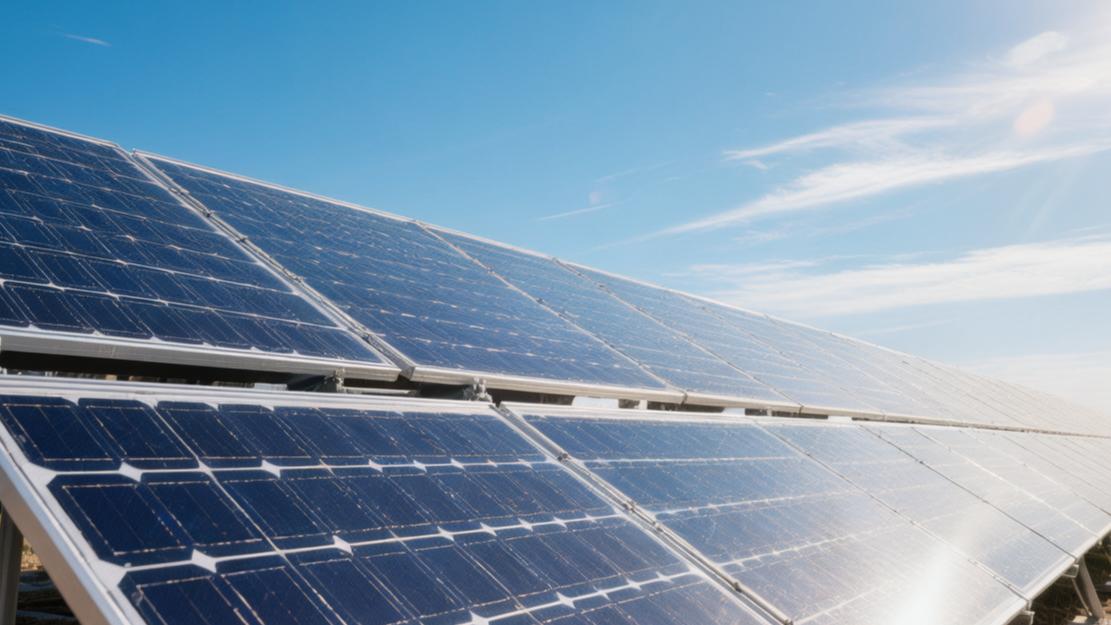
Maintenance
Diligently wash and brush
Panel glass surface accumulating 0.5 millimeters to 1 millimeter thick dust particles, will block 5% to 10% solar photon penetration rate. Situated at arid desert edge zones with rainfall quantity lower than 400 millimeters every year, every 45 days to 60 days carrying out once water washing operation can retrieve 8% to 12% power generation loss. When cleaning, adopt a soft bristle brush coordinating with deionized water with pressure controlled at 0.2 megapascals to 0.3 megapascals, can avoid calcium magnesium ions with content exceeding 200 ppm in water flow leaving behind white water scale crystallization on glass surface.
The temperature difference value between water temperature and panel surface actual temperature must be strictly controlled within 15 degrees Celsius to 20 degrees Celsius safe interval, otherwise violent temperature difference fluctuation above 30 degrees Celsius will cause 3.2 millimeters thick tempered glass to happen micro-crack bursting with a probability of 0.1% to 0.5%.
· Using a metal scraper with hardness exceeding Mohs scale 6 to clean stubborn stains will leave behind 2 millimeters to 5 millimeters long permanent physical scratches on the surface coated with a 75 nanometers thickness anti-reflection film, causing this area's light ray reflectivity to increase 2% to 4%.
· Spending 50 dollars to 80 dollars to hire a professional team to complete the standard 40 pieces modules cleaning process between 6 o'clock in the morning and 7 o'clock, compared to letting dust accumulate for 12 months, full year kilowatt-hour electricity revenue can net increase 150 dollars to 250 dollars.
Measure temperature
Monocrystalline silicon cells' standard operating temperature within the working cycle should maintain at 45 degrees Celsius to 55 degrees Celsius normal mean value interval. Relying on infrared thermal imaging drones in noon 12 o'clock to afternoon 2 o'clock high irradiance period to conduct hovering scanning 10 meters to 15 meters above panels, can keenly capture single cell areas where temperature abnormally rises.
When a certain piece of cell with an area of 244 square centimeters because of internal micro-cracks or external bird feces shading, its surface temperature is higher than the surrounding normal areas by 15 degrees Celsius to 20 degrees Celsius, it will then form a physical hot spot consuming 10 watts to 15 watts of output power. The hot spot effect will within short 48 hours to 72 hours heat up the partial polymer backplane's temperature to 85 degrees Celsius to 105 degrees Celsius melting point edge, causing the entire piece of module with a nominal power of 400 watts output to plummet 30% to 45%.
· Every 180 days to 360 days, executing a full array thermal imaging patrol inspection, single time spending about 200 dollars to 300 dollars, can press down module permanent scrapping probability caused by hot spots from 3% to within 0.2% extremely small variance.
· When discovering a partial temperature difference exceeding 25 degrees Celsius, within 24 hours, arrange manual intervention to clear away caked dirt reaching 3 millimeters to 5 millimeters thickness on the surface, system output voltage will within 15 minutes after cleaning is finished recover to standard 38 volts to 42 volts.
Check electrical wires
Exposed to outdoor environments with ultraviolet ray irradiation and environment temperature violently alternating between minus 20 degrees Celsius to above zero 40 degrees Celsius, direct current cables' cross-linked polyethylene insulation outer skin every passing 12 months will then happen 0.5% to 1% embrittlement shrinkage. Using a megohmmeter capable of outputting 1000 volts direct current voltage to test cables' insulation impedance to ground, when the reading is lower than 50 megohms, warning line, leakage current will at a rate of 0.1 amperes to 0.3 amperes every day flow away into the grounding grid.
Up to 80 to 120 MC4 plugging connectors among arrays due to 0.5 millimeters to 1 millimeter high-frequency physical vibration caused by wind force, after 36 months to 48 months' operation, have a 10% to 15% probability to appear aging phenomenon of contact resistance increasing 0.2 ohms to 0.5 ohms. Contact resistance rising will bring 10 watts to 15 watts parasitic thermal power loss, prompting copper pins internal of connectors' temperature when continuously passing 20 amperes current to climb to 70 degrees Celsius to 90 degrees Celsius, triggering 0.05% accident probability of plastic outer shell melting and catching fire.
· Adjusting multimeter's precision to 0.01 volts, sequentially measuring every string of panel group's open-circuit voltage, absolute value of voltage deviation between any two strings if exceeding standard numerical value's 2% to 3%, then presages existing 15% hidden risk of bypass diode breakdown.
· Replacing one piece of aging direct current cable with a length of 15 meters, cross-sectional area of 4 square millimeters costs only 15 dollars to 20 dollars, yet can retrieve 45 kilowatt-hours to 60 kilowatt-hours of electricity quantity output additionally lost due to line loss every year.
Prevent animals
15 centimeters to 20 centimeters ventilation gap band left between panel bottom and roof, has extremely high probability to attract squirrels or pigeons in spring's March to May carrying 500 grams to 1000 grams of dry grass and withered branches entering inside to build nests. Rodent animals' sharp incisors within 12 hours to 24 hours can then bite through 2.5 millimeters thick cable insulation layer, causing positive and negative pole wires to be bare and causing instantaneous short circuit, triggering instantaneously as high as 30 amperes to 50 amperes fault overload current.
Feces containing high concentration uric acid excreted by birds staying on a glass surface exceeding 14 days not cleaned, acidic substances will at a rate of 0.01 millimeters per day slowly corrode a 75 nanometer thick anti-reflection coating. Around the entire 60 square meter area, panel array edge installing galvanized steel wire protection net with height of 20 centimeters, mesh hole aperture of 12 millimeters by 12 millimeters, materials and manual labor total budget is approximately between 300 dollars and 450 dollars.
· Physical isolation net can provide 99% animal invasion blocking rate, forcefully lowering system shutdown and maintenance times caused by cables being bitten from every year average 1.5 times to 10 years 0 times' theoretical lower limit.
· The frequency of cleaning accumulated tree leaves and sundries on the net piece is set as every year 2 times to 3 times, every time consuming time about 45 minutes to 60 minutes, can guarantee 0.8 meters to 1.2 meters per second bottom air convection speed not receive resistance loss above 5%.
Change equipment
The system's direct current to alternating current inverter internal is covered with hundreds of aluminum electrolytic capacitors with a capacity of 470 microfarads, under load state with continuous working temperature as high as 45 degrees Celsius to 50 degrees Celsius, electrolyte will within 8 years to 12 years' life cycle evaporate away 30% to 40% of volume. When an inverter's conversion efficiency from 98.5% at factory departure slowly glides down to 95% numerical limit, one set of system with installed capacity of 10 kilowatts every year will out of thin air lose 400 kilowatt-hours to 550 kilowatt-hours of alternating current output.
Spending 1200 dollars to 1800 dollars in the 10th year to 12th year's node to conduct once inverter equipment's overall renewal, can let the entire set of system within following 120 months to 144 months continue to maintain a full blood conversion rate above 97%. Surge suppressors configured at alternating current side and direct current side after having withstood 3 times to 5 times thunderstorm weather surge impacts exceeding 10 kilovolts, their internal zinc oxide varistors' leakage current will from 20 microamperes level violently increase to 5 milliamperes to 10 milliamperes' abandoned interval.
· Wiping heat dissipation fins covering the outside inverter once every 180 days, clearing away 0.5 millimeters thick attached dust on the surface, can help equipment internal modules' working temperature drop 3 degrees Celsius to 5 degrees Celsius, thereby prolonging 20% to 25% whole machine operation lifespan.
· Every 60 months, renewing fee once for monitoring data collector's communication module, single time communication fee about 50 dollars to 80 dollars, in order to guarantee system can at fixed frequency of every 5 minutes to 10 minutes continuously transmit back highest precision power generation data stream to cloud server.
Integrating one copy of photovoltaic system maintenance plan table spanning 25 years, controlling all maintenance expenditure's fund proportion within 10% to 15% of system initial investment total amount, can lock final financial return rate as high as 180% to 220% within entire life cycle.
Maintenance item | Cycle frequency | Fee budget | Yield rate estimate |
Clean panel surface | 45 days to 60 days 1 time | 50 dollars to 80 dollars | Elevate total power generation efficiency 8% to 12% |
Infrared thermal imaging scanning | 180 days to 360 days 1 time | 200 dollars to 300 dollars | Lower panel scrapping probability to 0.2% |
Insulation resistance test | 12 months 1 time | 80 dollars to 100 dollars | Reduce line loss from 45 kilowatt-hours to 60 kilowatt-hours |
Inverter hardware replacement | 8 years to 12 years 1 time | 1200 dollars to 1800 dollars | Recover above 97% equipment conversion efficiency |
Protection net sundries cleanup | 6 months 1 time | 0 dollars to 20 dollars manual labor | Maintain 1.2 meters per second air flow speed |