How Do Modular Solar Panels Compare to Traditional Systems | Efficiency, Flexibility, Scalability
Modular photovoltaic efficiency is about 18–22%, slightly lower than traditional centralized's 20–24%;
But supports step-by-step capacity expansion (such as each time adding 1–5kW), installation time is shortened by 30%, suitable for roof partitioned layout and later-stage flexible upgrade.
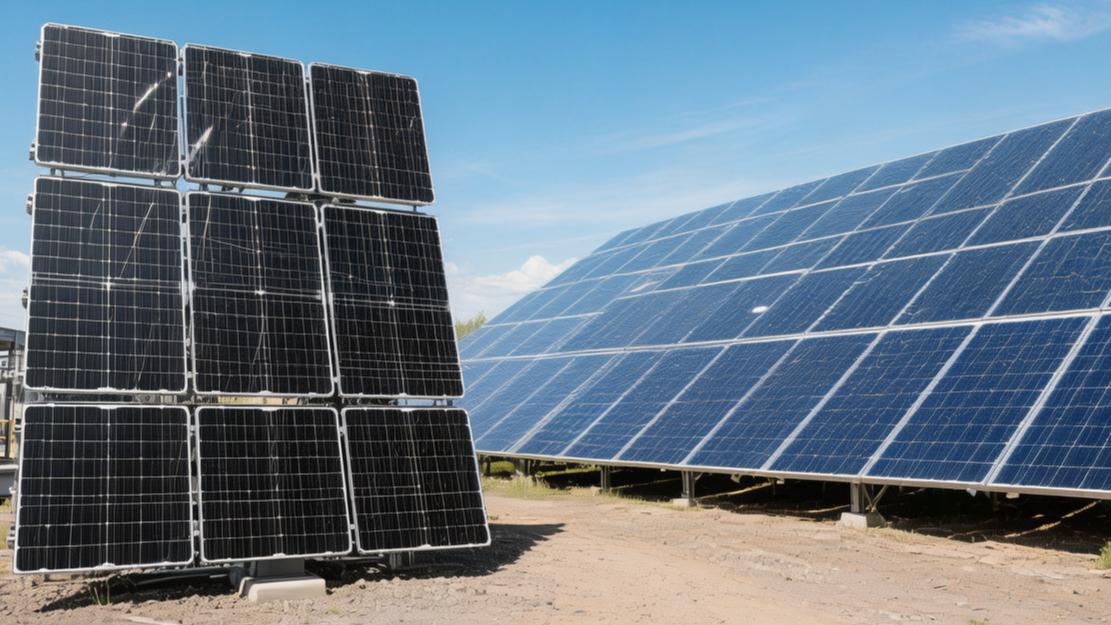
Efficiency
Look at the conversion bill
Under standard testing environment (1000 watts/square meter light intensity, 25 degrees Celsius ambient temperature, 1.5 air mass), currently on the market photovoltaic modules' nominal direct current conversion rate usually stays in the 19% to 22% interval. In the process of converting direct current into household alternating current, traditional centralized inverters' nominal peak conversion efficiency can reach 97.5% to 98.2%. Modular systems because of dispersing the inversion process to various microinverters, a single equipment's physical volume is limited, its nominal peak conversion efficiency is in the 96.5% to 97.3% range.
Separately comparing book parameters, centralized systems in the pure alternating current conversion link possess a 0.5% to 1% data lead. In the up to 30 meters to 50 meters roof to distribution box physical wiring distance, traditional systems adopt 600 volts to 1000 volts high voltage direct current transmission, copper core cables' direct current internal resistance will produce 1.5% to 2.5% line heat loss.
Modular systems at the backplane place locally convert 30 volts to 40 volts low voltage direct current into 110 volts or 220 volts alternating current, relying on alternating current's high efficiency transmission physical characteristics, cable end's voltage attenuation loss is compressed to below 0.5%, through reducing line heating, the inverter's weak disadvantage is made up back.
Calculate the shadow
Daily operation facing's biggest electricity quantity loss originates from extremely tiny partial shading, a piece of 400 watt standard module formed by 60 pieces of cells connected in series inside is usually equipped with 3 bypass diodes, respectively in charge of 20 pieces of cells' current pathway.
· When a piece of leaf or flying bird excrement with an area of only 150 square centimeters completely shades one piece of cell, the shaded area's electrical resistance will rapidly rise, triggering and activating the corresponding bypass diode.
· The module will forcefully cut off one third of the area's circuit, causing the single piece panel's rated power to suddenly drop from 400 watts to 266 watts, single panel single time loss rate reaches as high as 33.5%.
· In the traditional series circuit composed of 15 pieces of panels, restricted by the series circuit's physical laws, the entire 6000-watt system's operating current will be forcefully pulled down to that piece of 266-watt damaged panel's level.
· The entire system's overall output power at this time will drop from 6000 watts to 3990 watts, in just a few short minutes, the whole system's power evaporation amount reaches as high as 2010 watts.
· Modular systems strictly confine the physical impact to the occurring shading that one piece of partial panel with an area of 1.7 square meters, the remaining 14 pieces of panels can still output at 400 watts' full load state. The whole system's real-time total power is maintained at 5866 watts, every hour forcibly retrieving 1876 watts' power generation difference.
Find the best point
Photovoltaic panels' output voltage and current will along with second-level changing cloud layer thickness, wind speed as well as light incident angle produce drastic fluctuations, the system needs to continuously calculate the product peak value of voltage and current, which is also the commonly said Maximum Power Point Tracking (MPPT).
Traditional series systems' equipped centralized inverters usually only have 1 to 2 ways of MPPT tracking channels, the processor every 5 to 10 seconds conducts a global voltage scan on the entire string of up to 15 pieces of panels, calculating out a compromised median value taking into account all panels. Extensive sampling frequency and averaging processing lead to the system under cloudy and other weather with frequently changing light conditions, dynamic tracking accuracy only having 92% to 95%. Modular systems for every one piece of independent panel configured a dedicated MPPT processing chip, sampling frequency is elevated to every 10 milliseconds (0.01 seconds) one time.
Every piece of panel can according to its own real-time light tilt angle independently calculate out the optimal working voltage point, maintaining the static tracking accuracy stably at above 99.8%. Within every day's up to 8 hours' effective light window period, the high-frequency and independent calculation mechanism can take the traditional system's due to sampling delay vainly wasted 4% to 7% instantaneous peak electricity quantity entirely collected into the electricity meter.
Compete in aging
Silicon-based solar panels in a 25-year life cycle, face irreversible physical attenuation. The industry standard's first year light-induced attenuation rate is 2%, from then on, every year's linear attenuation rate is between 0.45% and 0.5%. 15 pieces of panels' production batches, silicon wafer purity and internal microscopic structure errors, will cause the same batch products' aging speed to appear 0.1% to 0.3% dispersion deviation.
· When operating to the 10th year, in the traditional series array, one piece of short board module might appear with a health degree of only 85%, while the other modules' health degree still maintains in the 88% to 90% interval.
· Series architecture's short board effect will force all healthy modules to synchronously downgrade to 85% low efficiency state to operate, causing the system level's overall aging attenuation rate to be magnified by 3% to 5%.
· Modular systems thoroughly cut off the data and current bundling between panels, 88% health degree module independently outputs 352 watts, 85% health degree module independently outputs 340 watts, on the physical level mutually not dragging each other down.
· After experiencing 250 thousand hours of day and night temperature difference and ultraviolet irradiation, modular systems relying on the decoupled operation characteristic can, at the long life cycle's tail end, extract about 6.5% more absolute power generation quantity than traditional systems.
Wake up early and sleep late
One piece of traditional centralized inverter with a nominal power of 6 kilowatts, its internal direct current bus's starting wake-up voltage is usually set between 200 volts and 250 volts. The wake-up condition requires early morning's solar radiation intensity to reach at least 150 watts/square meter, and there must be 7 to 8 pieces of panels simultaneously covered by sunlight and accumulate sufficient open-circuit voltage. The system usually has to wait until 7:30 in the morning to be able to start transmitting the first degree of electricity to the power grid.
Microinverter's internal boost circuit starting threshold is largely probed down to 16 volts to 22 volts. Around early morning 6:15, as long as the single piece panel's received weak scattered light intensity reaches 40 watts/square meter, the microinverter can within millisecond level time wake up and begin generating 5 watts to 10 watts of alternating current.
Morning advancing turn-on by 45 minutes plus evening delaying turn-off by 45 minutes, modular systems every day additionally broadened 1.5 hours of low illuminance power generation interval. Calculated by 20 pieces of panels' system scale, every day in the early morning and dusk periods, additionally collected low power electricity quantity cumulatively can reach 1.2 degrees to 1.5 degrees, put into a 25-year statistical model, cumulatively outputs as high as twelve thousand degrees of additional free electricity quantity.
Flexibility
Piece together fragmented blocks
Europe and America standard detached houses' pitched roofs are usually by 0.8 meters width skylights and 0.3 meters diameter ventilation pipes irregularly divided into fragmented physical blocks with areas ranging between 4 square meters and 8 square meters. Centralized series systems compulsorily require single-sided roofs to provide at least 15 square meters of absolutely continuous laying space, using this to place single pieces of 1.13 meters wide, 1.72 meters long 60 pieces standard cell modules.
Modular systems endowed the installation team with ultimate space domination right, allowing them to break up a total of 12 pieces of panels and layout them on 3 independent roof cut surfaces with areas of only 5 square meters. A single piece of microinverter module weighing about 21.5 kilograms can independently output rated 300 watts of alternating current to the family power grid, in spatial topological structure completely getting rid of the up to 20 meters long series direct current cable restriction.
Facing complex multi-directional multi-layer roofs where actual usable area utilization rate drops to 45%, modular discrete distribution design can forcefully pull up the effective panel quantity that finally successfully gets on the roof by 20% to 35%. Relying on that kind of pin-sticking-into-every-seam layout mode, a residence with a roof total area of 80 square meters, its total installed capacity base number can jump from the conventional 4.5 kilowatts to 6.8 kilowatts.
According to North America's most regions' net metering electricity price repurchase rate of 0.16 dollars per degree of electricity to conduct income conversion, within the 25 years' system operation cycle, that part of additionally increased 2.3 kilowatts installed capacity every year can transform into 380 dollars to 450 dollars' book electricity bill deduction quota. Conventional series systems lost 34% of their potential photovoltaic production capacity due to insufficient continuous area. Under modular panels' parallel architecture, fully transformed into real currency balance inside the family savings account.
Casually determine orientation
Sunlight rays in one day's up to 12 hours' effective sunshine window period's incident azimuth angle will produce huge three-dimensional spatial offset between 0 degrees and 180 degrees. Traditional string inverters' dual-way MPPT design compulsorily stipulates that 10 to 15 pieces of panels connected in series within the same circuit must maintain absolutely consistent roof tilt angles, allowed spatial angle deviation extreme difference is strictly controlled within 3 degrees.
If forcibly connecting 5 pieces of panels facing east tilted 20 degrees and 5 pieces of panels facing south tilted 30 degrees in series into the same direct current bus, morning and evening periods will exist as high as 600 watts/square meter light intensity difference, the whole string circuit's total power generation efficiency will produce 25% to 30% irreversible cliff-like breakage loss. Modular panels back configured independent microprocessors achieved 100% module-level electrical decoupling, from the physical hardware level, thoroughly severing the voltage parameter dragging brought by different orientations.
On-site construction personnel are able to fix 6 pieces of panels facing south at 35 degree angle used for acquiring noon's as high as 1000 watts/square meter peak sunshine radiation, simultaneously laying flat the remaining 4 pieces of panels facing west at 15 degree angle used to capture evening periods that 400 watts/square meter low intensity sunset afterglow.
Every one piece of panel situated within the same family power distribution network all with a high-frequency calculation rate of 100 times per second, independently calculates its own optimal volt-ampere characteristic curve under the current physical coordinate system. When the west-facing panel at 4 o'clock in the afternoon with full load's 380 watts power outputs fully loaded, the same system's east-facing panel with 80 watts' low power maintains the grid-connected standby operating state, the two's electromagnetic waveform interference rate on the 220 volts alternating current bus maintains at absolute 0%.
In the up to 8760 hours' full year meteorological tracking statistical model, multi-orientation mixed installation mode stably lengthened the single family daily average greater than 2 kilowatts high power output period by at least 2.5 hours.
Hide from shadows
Urban residences' surrounding hundred-year-old trees exceeding 12 meters in height or brick-concrete exhaust chimneys 1.5 meters higher than the roof ridge, every day inevitably will project dynamic wandering shadows lasting 3 to 4 hours on the roof surface. Traditional arrays in order to evade the 35% overall circuit power plummeting penalty caused by partial shading, in the drawing pre-examination stage must abandon all high-value sun-facing spaces within a 2.5 meters radius range of the obstacle's projection.
Modular hardware's single-point operation logic strictly blocks the power reduction penalty caused by shading within the physical shadow projection range with an area of only 0.1 square meters. When a utility pole with a diameter of 0.3 meters at 2 o'clock in the afternoon projects the shadow onto the No. 7 panel, this module's internal output current instantly slides down from the normal 9.5 amperes to 3.2 amperes.
The remaining 19 pieces of modules whose physical spacing distance from the shaded panel is only 0.5 meters, are not in the slightest affected by that suddenly dropping 6.3 amperes current gap, still maintaining 9.8 amperes' peak current as well as 100% rated power steadily transmitting electricity to the power grid.
Photovoltaic structural engineers therefore dare to closely attach modular panels to ventilation fans 0.8 meters higher than the roof plane to conduct limit layout. The single piece panel's aluminum alloy frame and the obstacle's physical reserved spacing are drastically compressed to a record-breaking 0.2 meters. According to 36 months' long-term tracking measurement data covering 300 North America's family installation samples, adopting the radical scheme of ignoring partial shadow dead angles to conduct saturated laying makes the complete set of hardware equipment's daily average overall area load rate maintain at 78% of the industry's high position.
Extremely strong shadow immunity layout strategy, lets the inferior slope roof that was originally rated by investment institutions as having photovoltaic installation potential of only D grade (annual full power generation hours below 600 hours), its Internal Rate of Return (IRR) data strongly rebound to above 7.2%, possessing commercial loan feasibility.
Dismantle and change position
North America's common asphalt shingle roofs' average physical material lifespan fluctuates between 15 years and 20 years, completely shorter than silicon-based photovoltaic modules' up to 25 years' official factory warranty red line. A set of photovoltaic systems operating to the 12th year when facing must-be-conducted old roof waterproof layer renovation engineering, traditional systems have no choice but to call 3 technical personnel holding high-voltage electrician licenses, consuming 8 to 10 hours to troubleshoot and dismantle the intricate 600-volt direct current series cables.
Centralized arrays' physical connection characteristic of pulling one hair and moving the whole body, causes their single dismantling and secondary restoration installation's labor fee quotations to be generally high and not dropping, perennially staying in the expensive bill interval of 2500 dollars to 3800 dollars. Modular systems in the factory design stage already adopted 220 volts alternating current waterproof connectors possessing fool-proof plugging and unplugging functions.
After ordinary maintenance workers in the basement cut off the alternating current main air switch with a rated current of 40 amperes, the whole roof's partial operation voltage instantly returns to zero, dismantling 1 set of microinverter system containing 20 pieces of panels only requires 2 non-special operation workers to consume standard working hours of less than 2.5 hours.
Installation workers only need to conduct basic physical docking and fastening on the standard equipped length of 1.2 meters three-core alternating current bus, the system within 300 milliseconds of reconnecting to commercial power can then automatically complete all 20 units of equipment's communication handshake and grid-connection frequency synchronization. Decentralized hardware topological structure cliff-like reduced the secondary moving construction's overall capital expense by 65%, within the 25-year house holding period, saving out about 1850 dollars of maintenance budget surplus for the family account.
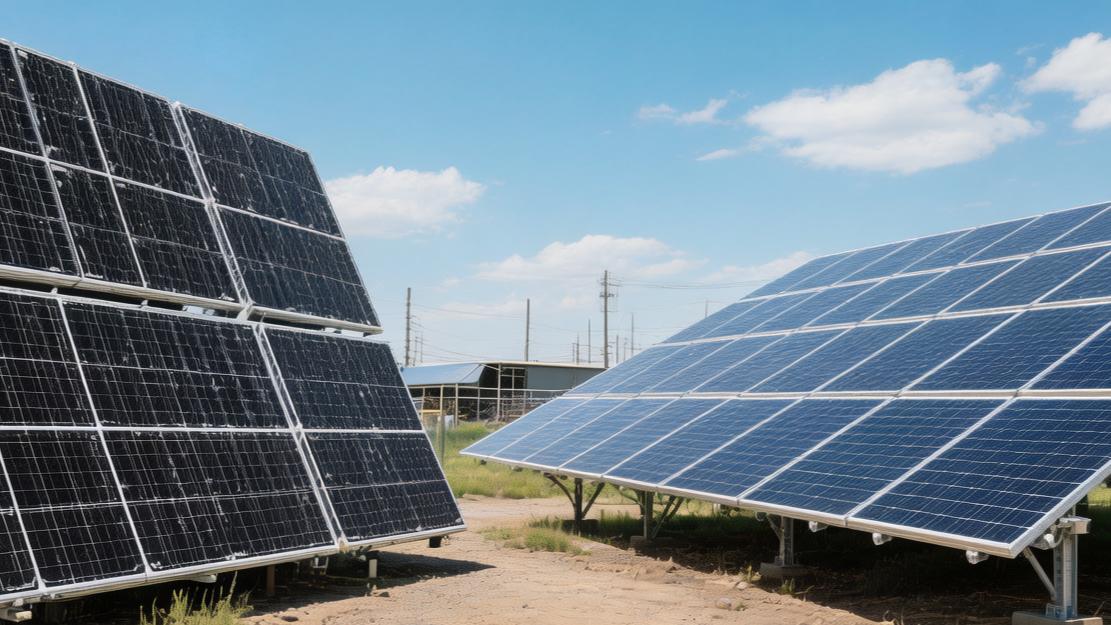
Scalability
Add at any time
Ordinary families within 3 to 5 years after installing photovoltaic arrays will often purchase pure electric vehicles with cell capacities of 65 kilowatt-hours to 85 kilowatt-hours, or replace the gas heating system with air source heat pumps with operating power reaching 3.5 kilowatts, making the monthly family basic electricity consumption load surge by 400 degrees to 600 degrees. Facing the extra energy consumption gap of up to 5000 degrees of electricity every year, traditional centralized systems in the initial capacity planning stage already exist physical limitations difficult to surmount.
One unit of series inverter with a rated output power of 5000 watts, its internal direct current bus's maximum allowed load-bearing peak value is usually rigidly locked at 6000 watts. If wanting to additionally increase 4 pieces of new type solar modules with a nominal power of 450 watts to make up the electricity usage gap, the input end's direct current total power will climb to 6800 watts, the exceeded 800-watt load will trigger the inverter's over-voltage protection mechanism, causing the whole machine hardware to face a 100% burn-down probability.
Modular systems relying on the 240 volts alternating current bus's distributed parallel architecture, endowed owners with extremely high capacity expansion freedom precise to the single piece panel. A standard alternating current branch cable with a rated current of 20 amperes, on physical parameters, allows to connect in parallel up to 13 to 16 independent microinverters with rated output power of 300 watts. When the family needs to supplement the power generation difference of 1500 degrees of electricity per year, the owner only needs to precisely purchase 3 sets of modules and supporting microinverters with physical specifications of 1.7 square meters and rated power of 420 watts.
· The direct current generated by the single piece panel is locally transformed into 1.75 amperes alternating current at the backplane place.
· The 5.25 amperes alternating current brought by the 3 pieces of newly added panels will seamlessly merge into the original alternating current branch circuit's remaining 8 amperes current redundancy interval.
· The original physical lines do not need to bear any overload pressure of direct current high voltage reorganization, the whole power grid's voltage fluctuation frequency is strictly stabilized at the fixed numerical value of 60 Hertz.
Do not pick old panels
Photovoltaic semiconductor technology every 24 to 36 months will experience a production capacity iteration, the market's mainstream residential modules' mass production power calibrated value will rapidly climb from 400 watts to 450 watts and even cross the 500 watts major mark. If mixing 3 pieces of the newest specification's 500 watt modules into a traditional series circuit that has operated for 4 years, silicon-based materials' physical short board effect will bring extremely severe data breakage loss to the overall system power generation quantity. The old-style 400-watt modules, having operated for 48 months, their internal silicon wafers' microscopic impurity oxidation and surface encapsulation glass's light transmittance decline, will cause their nominal working current to irreversibly attenuate from the 10.5 amperes at factory departure to 9.8 amperes.
According to the physical law that current in a series circuit must maintain extreme consistency, those 3 pieces of new type 500 watt panels possessing 13.5 amperes' formidable output ability will be compulsorily suppressed under the 9.8 amperes low current state to conduct compromised operation. The single piece new panel's actual output power will cliff-like drop from 500 watts to 360 watts, up to 28% peak power in the physical series dragging vanishes into thin air turning into heat to dissipate. Modular systems endow every one piece of panel with up to 99.9% electrical independent operation privilege, thoroughly cutting off the volt-ampere characteristic data bundling between new and old modules.
· The originally existing 15 pieces of aged panels in the system have experienced up to 35000 hours of wind and rain erosion, still according to their 9.8 amperes' attenuated current as well as 33 volts' independent working voltage, respectively stably output 323 watts of power.
· The 3 pieces of 500-watt new type panels newly connected to the power grid will have their back-bound microinverters, with a 1-time per 10 milliseconds high sampling frequency, independently lock themselves to be at 13.5 amperes and 37 volts' optimal working point.
· The new panels with fully loaded 500 watt state massively transmit pure electric energy to the alternating current bus, the whole system's overall power achieved an absolute numerical value superposition without any loss.
Calculate the capacity expansion account
For a set of traditional series system that needs to expand from 5 kilowatts to 8 kilowatts, the original one unit of 5 kilowatt inverter is still in the normal life cycle, with a book depreciation residual value of 800 dollars, it must be forcibly dismantled and sent to the recycling station. The owner needs to re-spend at least 1600 dollars of the equipment purchasing budget to order one unit of a new type centralized inverter with a capacity calibrated at 8 kilowatts. At the same time, he also has to re-pay a system topological drawing re-examination fee with an amount between 300 dollars and 500 dollars to the local municipal power approval department.
Adding the 400 dollars material and licensed electrician operation fee produced by re-laying thickened direct current copper cables able to bear 800 volts high voltage, merely for the sake of increasing 3 kilowatts of power generation ability, the traditional system's sunk cost and marginal expansion capital expense will also rapidly inflate.
Capacity expansion project parameter statistics | Traditional centralized series system (5 kW upgraded to 8 kW) | Modular microinverter system (5 kW upgraded to 8 kW) |
Original inverter handling method | Forcibly scrapped and dismantled (residual value loss 800 dollars) | 100% retained to continue operating (zero capital loss) |
Newly added inverter purchasing fee | 1600 dollars (purchasing one unit brand new 8 kW single entity equipment) | 450 dollars (only need to purchase 8 distributed microinverters) |
Newly added photovoltaic panel fee | 1200 dollars (purchasing 8 pieces of modules with unit price 150 dollars) | 1200 dollars (purchasing 8 pieces of modules with unit price 150 dollars) |
Cable and electrical auxiliary material expense | 450 dollars (requires rearranging compliant high voltage direct current cables) | 120 dollars (only purchasing standard alternating current extension connector auxiliary parts) |
Power department re-approval time consumption | 15 days to 21 days (requires submitting a complete set of high voltage topology change drawings) | 0 days to 3 days (low voltage alternating current end expansion does not need high voltage re-examination) |
Single time capacity expansion capital total expenditure | 3250 dollars (converted to per watt single time expansion construction cost 1.08 dollars) | 1770 dollars (converted to per watt single time expansion construction cost 0.59 dollars) |
Finished in two hours
Drastically shortening high altitude roof operation time can multiplyly reduce the special labor bill expenditure, varying from 85 dollars to 120 dollars per hour. Traditional systems when conducting capacity expansion physical construction, two senior technical electricians holding certified licenses must consume up to 6 to 8 hours of standard working hours, carefully cutting off the original direct current series circuit on the roof surface with a tilt angle reaching 25 degrees or above.
They need to be under a multimeter's continuous high-frequency monitoring, to ensure that after connecting the new panels, the whole string circuit's open-circuit voltage will absolutely not break through the inverter's stipulated 1000-volt extremely dangerous upper limit, the subsequent inverter's physical replacement installation and the basement distribution box's rewiring still need to additionally consume at least 4 hours of pure ground wiring operation duration. Modular systems' capacity expansion process drastically compressed the extremely complex electrical reconstruction work into pure physical module assembly.
Workers only need to use a torque wrench on the reserved aluminum alloy track to tighten and fix the newly added 3 pieces of panels with 15 Newton-meters of precise force. Subsequently, pulling out the three-core male-female plug connecting the 240-volt alternating current power grid, with waterproof and dustproof grade as high as IP67, accompanied by a crisp mechanical locking sound, the alternating current physical circuit's splicing working procedure within a short 10 seconds can then declare closed loop.
· On-site construction personnel rapidly start the system debugging APP on the mobile phone end, utilizing low power Bluetooth channel to scan the 16-bit MAC address barcode on the newly added equipment's outer shell.
· The microinverter, after receiving the parameter configuration instruction issued by the power distribution network, only needs to experience a frequency adaptive alignment up to 300 milliseconds long, then can merge into the original system's overall power generation array without any hindrance.
· A total of less than 2 hours of general assembly and joint debugging statistical working hours, ruthlessly smashed the system capacity expansion project's manual dispatch budget from the high 1500 dollars interval down to the extremely low numerical category of less than 400 dollars.