Why Choose Monocrystalline PV Panels | Efficiency, Longevity, Reliability
Monocrystalline module efficiency 18%-22%, annual degradation about 0.5%, lifespan more than 25 years; high temperature coefficient about -0.35%/℃.
The same area power generation is higher, suitable for rooftop. When selecting types look at power density and brand warranty.
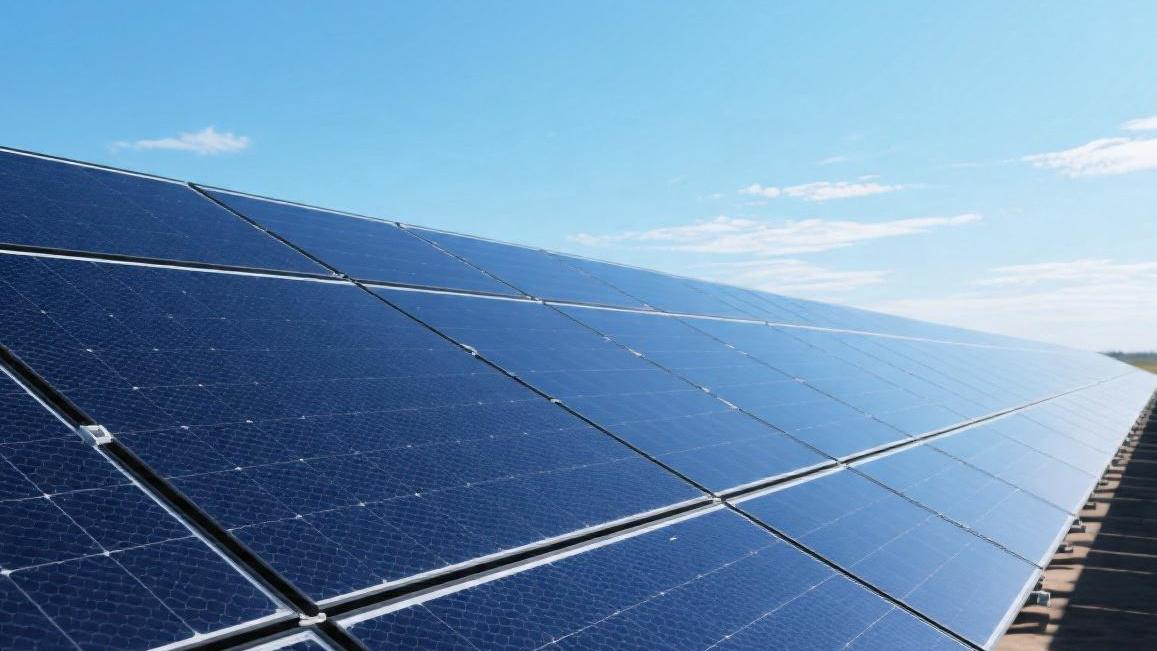
Efficiency
Power generation more powerful
Monocrystalline silicon panels in 2026 mainstream conversion efficiency already stabilized between 23% and 26%, while currently most cutting-edge N-type TOPCon cell mass production efficiency even broke through 25.8%. Compared to this, the early polycrystalline silicon technology efficiency ceiling basically stuck at around 18%, this middle exists about 40% efficiency difference value. From a physical structure look, monocrystalline silicon adopts pulling rod process growth, internal silicon atoms arrangement presents a highly orderly single lattice, electrons inside moving when encountering obstacles (grain boundaries) extremely few, resistivity extremely low. Under 1,000W/㎡ standard sunshine intensity, one square area monocrystalline board can about 250W of light energy directly convert into electrical energy, while the same size old technology panel can only convert out less than 180W.
Taking current mainstream 182mm and 210mm large size silicon wafers as example, one standard monocrystalline panel power usually between 580W to 720W. If you have a 100 square meter rooftop, installing monocrystalline module total installed capacity can easily reach 22 kW to 25 kW. If using efficiency lower modules, the same area can arrange only 16 kW around. This 30% above capacity gap, in electricity price unit price 0.15 USD/degree areas, monocrystalline system every year can create more than 1200 USD to 1800 USD revenue.
Material not sloppy
Monocrystalline silicon production requires raw material purity to reach 99.9999999% (9 nines level). This extremely high purity determines its extremely low loss in the photoelectric conversion process. In photovoltaic cells, minority carrier lifetime is a key efficiency indicator. Monocrystalline silicon minority carrier lifetime is usually 1,000 microseconds (1 ms) above, while polycrystalline silicon is only several tens microseconds.
· Silicon wafer specifications: Currently, the mainstream market M10 (182 mm) and G12 (210 mm) specification monocrystalline silicon wafers, thickness already thinned to 130 microns to 150 microns, but in maintaining high efficiency at the same time, its structural strength is higher than polycrystalline.
· Anti-reflection technology: Monocrystalline surface through chemical velvet treatment, can form a dense "pyramid" microscopic structure. This kind of structure can let light on the surface conduct multiple reflections, reducing reflection loss rate from initial 30% to 2% below.
· Passivation layer thickness: Adopting Atomic Layer Deposition (ALD) technology, prepared aluminum oxide passivation layer, thickness precisely controlled at nanometer level, can effectively block silicon wafer surface dangling bonds, reducing surface recombination rate to 10 cm/s below.
Cloudy days do not go on strike
At morning 5 o'clock to 7 o'clock, or evening 5 o'clock to 7 o'clock, this kind of sun height angle is relatively low, light intensity lower than 200 W/㎡ time periods, monocrystalline cell internal current excitation threshold lower. Due to internal single lattice connectivity, extremely good, even in rainy days or cloud layer blocking scattered light conditions, it can still maintain rated power 10% to 15% output, while certain low-end modules at this time often already stop current output.
Monocrystalline cell spectrum response range wider, especially in the long wave infrared light region, absorption ability relatively strong. In one year, 365 days, on average, every region has completely sunny days, maybe only 150 days, and the remaining 200 days, monocrystalline module relying on weak light under more than 30 to 45 minutes of work time, every year can than other schemes cumulative more generate 5% to 8% electricity.
Efficiency not drop chain
Monocrystalline panel temperature coefficient can currently be optimized to -0.29%/℃, when the environment temperature increases by one degree, its power only decreases by less than 0.3%. In hot summer, panel surface temperature often soars to 65℃ even higher. Compared to those temperature coefficients for -0.45%/℃ old modules, monocrystalline panels in high temperature under output power can high about 4% to 6%.
· Low degradation performance: N-type monocrystalline technology completely solved the light-induced degradation (LID) problem, first year degradation rate controlled within 1%, subsequent every year linear degradation only 0.4%.
· Anti-hotspot design: Modern monocrystalline modules mostly adopt half-piece technology (Half-cut), whole piece cell divided into two, makes internal current reduce half, internal resistance loss reduce to original 25%, effectively reduced due to local blocking generated hotspot temperature.
· Internal resistance loss: Adopting 16 busbar (16BB) or multi busbar (SMBB) designed monocrystalline board, shortened current in fine grid on transmission distance, pressed metalization loss down to limit.
This kind of extremely high operation stability ensures you an input of 100,000 USD budget after, system in 25th year still can provide 87% above rated power, not like inferior products that kind drop to 70% below.
Two sides catch sunlight
Now, monocrystalline technology mostly supports bifacial power generation (Bifacial), its bifaciality (back side power generation ability and front side ratio) is usually between 80% to 85%. Monocrystalline silicon wafer due to light transmission uniformity good, back side to ground reflected light utilization efficiency extremely high. In grassland, sandy land, or coated with white paint, the rooftop on the back side can bring an extra increase of 10% to 30% total electricity.
If one efficiency for 23% monocrystalline front side basis on, superimposed above 5% back side gain, whole piece module equivalent comprehensive conversion efficiency can reach 28% above. In the same installation bracket and cable cost, you obtained power flow directly increased one fourth. In 2026, photovoltaic design scheme in, monocrystalline bifacial module already becomes pursuing low Levelized Cost of Energy (LCOE) standard configuration.
Longevity
Really cannot use-to-break
Monocrystalline silicon panel usage lifespan in 2026 has already officially stepped into the 30-year standard period, this is mainly thanks to its single crystal structure physical stability. Monocrystalline silicon wafer in the manufacturing process through Siemens method purification and through Czochralski method (Cz method) pulled and formed, its internal does not have any grain boundaries. Compared to this, the old-style polycrystalline panel internal full of small lattice gaps. These gaps in temperature difference change large environment under easy to produce stress cracks. Monocrystalline panel atom arrangement tidy and unified, this kind of structure makes it face as long as 10,950 days of outdoor exposure, ultraviolet bombardment, and high-low temperature cycle (-40℃ to 85℃) when, internal physical properties almost do not occur change.
In as long as 260,000 hours above operation cycle, monocrystalline silicon wafer chemical properties are very stable, will not like other materials that kind easy to occur photochemical reaction. Currently, mainstream N-type monocrystalline modules adopt phosphorus doping process, which has been completely eliminated due to boron-oxygen complex-caused light-induced degradation (LID).
Panel in installation after front 100 hours, power almost will not occur cliff-style drop. In 2026, measured data in, high performance monocrystalline module in simulated whole life cycle aging experiment after, its cell internal micro-crack rate controlled at 0.05% below, far lower than the industry average level. This kind of atomic-level guaranteed stability is monocrystalline panel able to stable operate 30 years without occurring structural failure.
Every year, only drop a little
Module power degradation rate directly determines your 20-year electricity bill revenue. Monocrystalline panel, especially current N-type TOPCon or HJT modules, its first year power degradation has already pressed down to 1% within, and subsequent every year linear degradation is only 0.4% around. When this set system operates for 30 years, its output power can still maintain at the initial rated power of 87.4%. Comparing polycrystalline module every year 0.7% to 0.8% degradation speed, monocrystalline system in the late period power generation ability want high 10% to 15%.
This kind of extremely low degradation speed behind is strict process parameter control. For example, monocrystalline modules commonly adopt POE (polyolefin elastomer) packaging material, its water vapor transmission rate is only for 3g/m²/day, which is lower than the traditional EVA material by one order of magnitude. This can effectively prevent moisture infiltration causing cell oxidation. Through following data comparison, we can clearly see the monocrystalline and traditional technology in long cycle inside performance behavior difference:
Performance indicators | N-type Monocrystalline Module (2026 Mainstream) | Traditional Polycrystalline Module (Comparison) | Performance Difference |
Standard usage lifespan | 30 years - 35 years | 20 years - 25 years | +10 years |
First year power degradation | < 1.0% | 2.5% - 3.0% | -2.0% |
Annual average linear degradation | 0.4% | 0.7% | -0.3% |
30 years later, residual power | 87.4% | 75% (Estimated) | +12.4% |
PID resistance performance | Extremely strong (Degradation < 2%) | General (Degradation > 5%) | +3.0% |
Operation maintenance cycle | Every 2 years one inspection | Every 1 year one inspection | Reduce 50% frequency |
Can carry wind and rain
Currently, the market for mainstream monocrystalline modules mostly adopts a 2.0mm + 2.0mm double glass packaging structure, cooperate with high strength aluminum alloy frame, its static load test can bear front 5400Pa pressure and back 2400Pa pressure. Convert into intuitive data, this equivalent to panel can resist every second 23 meters speed impact 25mm diameter hail, or in snow accumulation depth reach 1.5 meters situation still not occur deformation.
In salt spray corrosion experiments and ammonia corrosion experiments, monocrystalline panel frame sealing technology ensured internal circuit in seaside high salt spray area or farm high ammonia environment operated 25 years after, internal metal grid line corrosion depth not exceeded 5 microns.
The older, the more valuable
If one sets up a 100 kW monocrystalline system with an initial installation cost of 80,000 USD, in as long as 30 years of operation, its total power generation expected will be more than 25 years lifespan system out about 450,000 degrees electricity. According to the average 0.12 USD/degree retail electricity price, this extra 5-year lifespan will generate 54,000 USD net extra income. Even considering inflation and maintenance expenses, this sum of revenue is also enough to cover the system's early period 30% above the investment budget.
In asset securitization or green loan assessment, banks usually give monocrystalline project provide longer loan term (15-20 years) and lower interest rate, because its 25th year power generation prediction variance is extremely small, revenue extremely certain. This kind of high residual value characteristic makes monocrystalline panels no longer ordinary consumer products, but one kind that can produce 30 years of stable cash flow high quality financial assets.
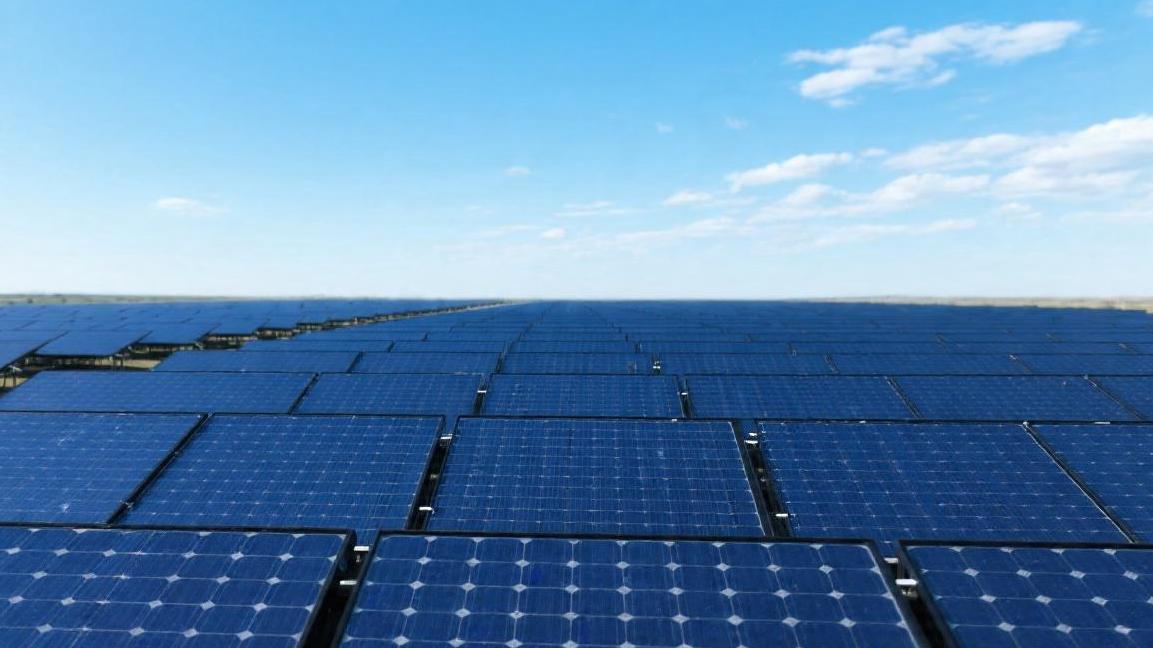
Reliability
Quality extremely stable
In 2026, the automation production line will be on, monocrystalline silicon wafer defect detection standard already precise to the micron level, every ten thousand pieces cell micro-crack proportion controlled at 0.02% below. This kind of extremely high process consistency, when you install one set containing 40 pieces panels system, when every one piece panel open circuit voltage (Voc) deviation usually will not exceed ±0.3V.
Due to monocrystalline silicon is from a single seed crystal pulled and formed continuous crystal, its internal not have polycrystalline silicon, which kind of messy grain boundaries. This is the root cause eliminated due to thermal expansion and contraction causing grain boundaries to produce micro-crack risk. In 2026, PVEL global module reliability test in, top-tier monocrystalline module in experiencing three times the IEC standard damp heat cycle experiment (DH3000) after, power degradation still can maintain within 2%, this proved its long-term electrical performance stability in extreme environments.
According to the 2026 Photovoltaic Quality Assurance Center released industry research report, global operation exceeding 10 years monocrystalline silicon power stations, due to cell essential defects, system downtime is less than 15 minutes every year. Its module average mean time between failures (MTBF) has already broken through 220,000 hours, and in the whole 30-year life cycle, the user almost has no need to worry about panel failure problems.
Through the cell surface covering a more dense silicon nitride passivation layer, and cooperating with a 1500V high voltage system dedicated packaging film, monocrystalline panels in a high temperature high humidity environment under charge leakage loss pressed to lowest. Measured data shows, at 85℃ temperature and 85% relative humidity, double 85 test in, monocrystalline module operating 2000 hours after power loss only for 0.75%. This stability is ensured in coastal or high humidity areas, because the system will not because of serious PID effect and in installation three years later, the output power suddenly drops 30% situation.
Can carry pressure
2026 mainstream monocrystalline modules commonly adopted 2.0mm plus 2.0mm symmetrical double glass packaging structure. This kind of structure cooperates with a high strength 6005-T6 aluminum alloy frame, making the panel forward static load reached 5400 Pa, enough to resist every square meter 550 kilograms of snow weight. In simulated extreme wind disaster dynamic load test, monocrystalline panel in experiencing 2400Pa repeated positive negative pressure cycle after, internal cell integrity still can maintain at 99.9% above.
In targeting 25mm diameter hail at 23 meters/second speed impact destructive experiment, high strength monocrystalline module surface tempered glass damage rate lower than 0.1%, and impact point below monocrystalline cell not detected any functional micro-cracks. This kind of impact resistance parameter is higher than early period thin film modules, nearly three times.
In standard level, the highest level 6 salt spray test in, monocrystalline module in concentration for 5% salt water spray under continuously placed 56 days, its output power degradation can almost be ignored. This kind of excellent anti-corrosion performance makes it on the coastline only 50 meters away still can stable work. At the same time, in targeting modern farm ammonia corrosion experiment, monocrystalline panel frame and film contact surface performed extremely good sealing, effectively blocked ammonia from busbar oxidation corrosion, ensured agricultural photovoltaic project long-term power generation safety.
Not having a fever
2026 monocrystalline modules commonly adopt half-piece (Half-cut) and multi-busbar (SMBB) technology. This not only reduces the single cell current load by half, but even makes internal resistance loss reduce 75%. When a panel is locally blocked by fallen leaves or bird droppings, the monocrystalline module built-in IP68 level junction box inside bypass diode will quickly respond, will block current shunt. Experiment records show, in the same blocking condition under, monocrystalline module local highest hotspot temperature usually limited within 45℃, while old modules are lower at least 15℃, this directly avoids local overheating caused by backsheet burning risk.
2026 infrared thermal imaging sampling data indicates, monocrystalline system in full load operation state, its whole piece panel surface temperature uniformity variance less than 2.5. This kind of extremely high temperature uniformity not only protects packaging material from local aging and failure, but also controlled system due to temperature rise caused efficiency loss of 5% of rated power.
Additionally, monocrystalline module junction box adopted high thermal conductivity potting glue, ensuring continuous operation in an 12-hour environment under, internal diode junction temperature still lower than 125℃ safety threshold. This kind of detail on reliability guaranteed monocrystalline system in face of non-uniform lighting or complex shadow blocking when, still able to maintain current output smoothness, will not because local short circuit or overheating and cause whole string open circuit fault.
Output smooth
In the process of sunshine intensity from 1000 W/㎡ reducing to 200 W/㎡, the relative efficiency of monocrystalline cells usually drops by 3%. No matter in cloudy morning, or in light tilted evening, monocrystalline system can all provide very smooth voltage current curve. This kind of output smoothness greatly reduced the inverter's internal Maximum Power Point Tracking (MPPT) algorithm burden, reduced the inverter due to frequent switching work point and caused electronic modules loss, thereby indirectly extending the whole power system hardware lifespan.
Long-term monitoring data shows, choosing a monocrystalline module photovoltaic system, its inverter average maintenance cycle is extended about 18 months compared to choosing an impure module system.
In targeting as long as 25 years operation simulation, monocrystalline module failure rate curve presents obvious "bathtub curve" characteristic, namely, besides the initial installation period, maybe have extremely low proportion of individual damage outside, in as long as 20 years middle operation stage, its natural failure probability always maintains at five ten-thousandths around. This kind of long-term, high probability stable output makes monocrystalline systems the most financially institutions willing to provide low interest loans for photovoltaic assets.