How to Maximize Solar Efficiency with PV Technology | Cell Design, Innovation, Output
Adopting PERC or TOPCon cells elevates efficiency to 22%-25%, coordinating with MPPT controllers increases 5%-15% output;
Module tilt angle according to local latitude ±5° adjusted, regular cleaning can increase power generation by 3%-8%.
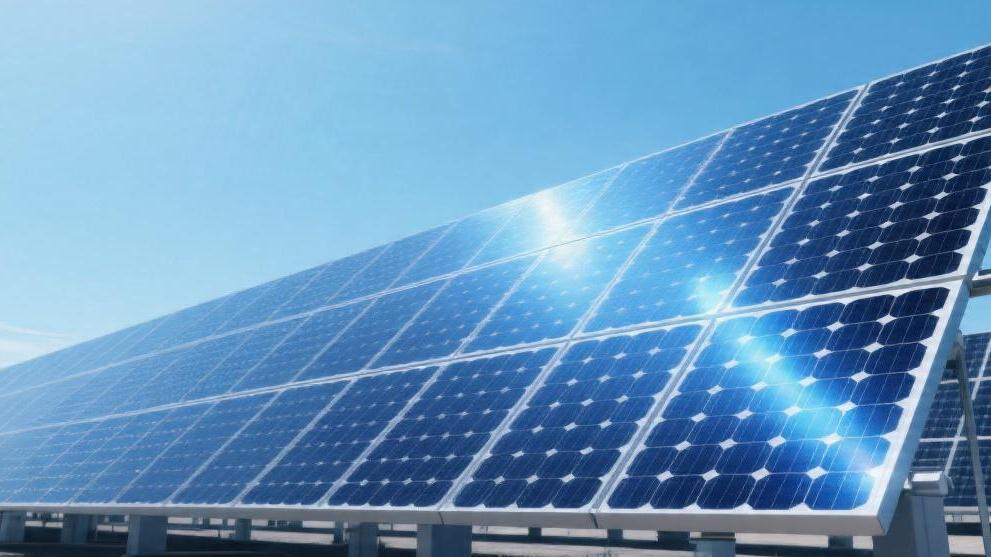
Cell Design
Look closely at cells
Mainstream photovoltaic modules have already turned to N-type cells, because N-type monocrystalline silicon wafer internal minority carrier lifetime can easily exceed 2000 microseconds, compared to traditional P-type silicon wafers, which are high out at least 5 times. This kind of material's oxygen content must be controlled at per cubic centimeter 10 to the 17th power below, thereby thoroughly solving light-induced degradation (LID) brought 1% to 2% power loss.
Currently, N-type cell production yield has already stabilized at 98% above, although silicon wafer cost compared to P-type is high out about 5%, but its conversion efficiency elevation brought system end premium is enough to cover this part of input. Cell piece thickness also is from 170 microns to 130 microns, even 110 microns thinning, every thinning 10 microns can reduce about 3% silicon consumption cost, at the same time cooperating with back polishing process, can let cells absorb more long wave band photons.
· TOPCon cell's core is on the back side, growing one layer thickness only is 1.2 to 1.5 nanometers silicon dioxide tunneling layer. This thickness is approximately only half the human hair's fifty thousandth.
· Above the tunneling layer still needs to cover one layer 150 nanometers around the phosphorus-doped polycrystalline silicon thin film. This kind of structure can reduce the cell's saturation current density to 10fA/cm2 below.
· This kind of design directly increases the cell piece's open-circuit voltage from traditional PERC's 685 millivolts to 730 millivolts, and conversion efficiency also because of this steadily stood on the 25.5% threshold.
· In order to further dig potential, manufacturers start to adopt laser-doped selective emitter (LDSE) technology, at the grid line contact area, conducting heavy doping, making contact resistance reduce 20% above, thereby the fill factor (FF) elevating to 83% above high position.
At the cell's light-receiving surface, the pyramid textured surface size is precisely controlled at 2 to 5 microns between, too large or too small will all lead to reflectance fluctuation exceeding 2%. Through atomic layer deposition (ALD) equipment, one layer of 10 to 15 nanometers aluminum oxide film can be covered, achieving an extremely excellent surface passivation effect, with the surface recombination velocity pressing down to 5 cm/s. This kind of precise coating cooperating with a refractive index of 2.0 around the silicon nitride anti-reflection layer, can let the 400 to 1,100 nanometers wave band inside average reflectance lower than 2%. In actual calculation, optical gain increases by 0.5%, and a single piece cell's short-circuit current can then increase by about 0.2 amperes.
· Silver paste is the highest auxiliary material in cell piece cost proportion. Currently, every piece of 182 cells' silver consumption has already dropped from 100 milligrams to 80 milligrams.
· Adopting multi-busbar (MBB) or super multi-busbar (SMBB) technology, the main busbar quantity increases to 16 roots, even 20 roots, single root busbar's width then shrinks to 25 microns below.
· This kind of fine busbar design reduced about 1.5% shading area, at the same time, the current on the fine busbar transmission path shortened 40%, directly reducing ohmic loss.
· In order to save money, the industry is now popular using silver-coated copper paste, with copper content proportion can reach 30% to 50%, under guaranteeing electrical performance not fall behind premise, letting paste cost directly drop 15% around.
Heterojunction (HJT) cells then walk is another road, it at 200 degrees Celsius below low temperature environment under conducting processing, avoiding high temperature to silicon wafer damage. This kind of cell by 10 nanometers around intrinsic amorphous silicon and doped amorphous silicon compose a "sandwich" structure. Its symmetrical design lets bifaciality easily break through 90%, and the back side can contribute 10% or more electricity to the front side.
HJT cell's temperature coefficient performance is extremely outstanding, usually at -0.26%/degree around, when the summer cell working temperature reaches 75 degrees, it compared to ordinary cells less loss about 6% power. Although current equipment investment costs compared to TOPCon are high, out about 50%, its process steps from 10 steps simplified to 4 steps, for pursuing 25-year-long cycle high output distributed projects extremely has attraction.
· Cell pieces' sizes are currently unified to 182 mm and 210 mm, the two major mainstream specifications, among them 210 specification's single piece area compared to 166 specification is 60% above.
· Large size cell cooperating half-cut technology, will one whole piece cell through laser cut into two 1/2 pieces, working current halved, internal resistance loss drops to original's 1/4.
· This kind of half-cut process can let module power elevate 5 to 10 watts, and effectively reduce shading caused heating amount, hotspot temperature usually can drop 20 degrees around.
· Cell piece edge's cutting damage layer must through chemical acid washing remove 2 to 3 microns, otherwise micro-cracks will gradually evolve into failure faults as long as 30 years usage lifespan.
Through this kind of atomic level coating to decimeter level silicon wafer's layer upon layer optimization, monocrystalline silicon cell's industrialization efficiency is by every year 0.5% speed increasing. Current research and development focus already turned to tandem cells, for example, silicon wafer above again pile one layer perovskite material, theoretically can the conversion efficiency directly pull up to 30% above. This kind of technology, if commercialized, the same 2 square meters of roof area, installed capacity can jump from the current 450 watts directly to 600 watts above, levelized cost of energy (LCOE) has hope again drop 15% to 20%. All design details in the final analysis are for a 25-year warranty period inside, letting every square centimeter of silicon wafer carry 1,000 W/m2 light intensity and not go on strike.
Innovation
Tandem buff
Single-junction crystalline silicon cell piece's physical efficiency limit locked at 29.4%, in order to break this ceiling, tandem technology through at silicon bottom cell above stacking one layer thickness only is 300 to 500 nanometers perovskite thin film, realized to solar spectrum's segmented fine absorption. Perovskite layer possesses 1.5 to 1.8 eV adjustable bandgap, which is specially responsible for capturing energy relatively high blue-violet light, while the bottom layer's silicon cell then focuses on the 1.1 eV infrared long wave band. This kind of double swords combined design lets laboratory efficiency record already rushed to 33.9%. In actual power station application, equal area module can output more than 35W to 50W rated power, system level balance of system (BOS) cost also following it reduced 4.5% above.
· This kind of structure can reduce the photon's energy thermalization loss by 15%, making the open-circuit voltage Voc break through the 1.9V threshold, far higher than a single-junction cell's 730 mV.
· Tunnel recombination layer thickness precisely controlled at 10 to 20 nanometers between, through atomic layer deposition (ALD) process, ensuring charge at two layers cells between transmission efficiency reach 99.8%.
· Compared to traditional single-layer cells, tandem modules to morning evening low color temperature environment's weak light sensitivity elevated 12%, making whole day effective power generation time average extend 20 to 30 minutes.
· Although production working procedures increased by about 25%, it brought a 5% absolute efficiency gain, which can let large-scale ground power station's levelized cost of energy (LCOE) in 25 years' life cycle drop by about 7%.
Front completely empty
BC technology (Back Contact technology) through a complex laser patterning process, will originally shade at cell front's all metal busbars entirely moved to the back side, realizing a front side 100% effective light receiving area. On a 2 square meter module, this is equivalent to directly increasing about 0.05 square meters of photosensitive area, single line conversion efficiency therefore pulled up 1% above. Due to the front completely without metal busbar's physical shading, module's visual appearance is extremely unified, presenting a pure deep black color, very suitable for architectural aesthetics having high requirements for roof scenarios. Its market premium space is usually compared to conventional modules, high out 5% to 10%.
· This kind of design thoroughly eliminated about 3.2% metal shading loss, making short-circuit current density Jsc easily exceed 42 mA/square centimeter.
· The back side's interdigitated electrode design increased the P region and N region's contact perimeter, the cell's internal lateral resistance loss pressed down to 0.5 milliohms.
· At 200 W/square meter's weak light environment, BC cell's output performance compared to traditional PERC cell high out about 10%, in cloudy weather's power generation revenue gain is significant.
· Due to soldering points entirely concentrated on the back side, the module in the lamination process received force is more uniform, making a 210 mm large size silicon wafer to 130 microns after thinning, broken screen rate reduced 1.5%.
Laser ignition
Laser enhanced contact optimization (LECO) is currently the most economical method to elevate TOPCon efficiency. It utilizes an instantaneous high energy laser beam to penetrate the passivation layer, at the silver paste busbar and silicon wafer, between forming micron-level precise ohmic contact points. This kind of treatment process belongs to cold processing, will not damage the surrounding only 5 nanometers thick tunneling oxide layer, but can let contact resistance reduce one order of magnitude. Currently, mature LECO process can contribute 0.2% to 0.5% absolute efficiency elevation for a 10GW annual production factory. This is equivalent to every year's increased value of 20 million US dollars high efficiency module output.
· Laser spot diameter precisely controlled at 20 to 40 microns, scanning speed high reaches 15000 mm/s, ensuring single piece cell's treatment time less than 1 second, perfectly adapting to high speed production line.
· Optimized fill factor FF can from 82% elevate to 83.5% above, significantly improved module's power output stability at 85 degrees Celsius high temperature environment.
· This technology allows the inside's silver content to reduce 10% around, under the current silver price background, single piece production cost can save about 0.05 RMB.
· In 85 degrees Celsius temperature and 85% humidity double high aging test, passed laser optimized cell piece power degradation compared to conventional cell small 0.8%, effectively extended 30 years warranty lifespan.
Silver consumption big drop
In order to cope with precious metal price fluctuations, 0BB (zero busbar) technology cancelled cell piece surface's broad main busbars, changed to use dozens of roots diameter 0.2 millimeters around's circular ribbons directly pressed connecting on fine busbars. This kind of design not only reduced about 40% silver paste usage amount, making per watt cost reduce about 0.015 US dollars, but also utilized circular ribbon's inclined plane secondary reflection effect, increasing about 1.5% light absorption. Due to soldering points being dispersed to thousands of tiny contact spots, even if a module occurs a local micro-crack, the current transmission's impact will also be diluted to ignore not count's degree.
· Adopting a low temperature bonding process, the processing temperature from 200 degrees Celsius dropped to 150 degrees Celsius below, avoided heterojunction (HJT) cell internal amorphous silicon layer's received heat degradation.
· Ribbon quantity from 16 roots increased to 24 roots, even 32 roots, making charge at silicon wafer internal average moving distance shortened 30% above, reduced internal resistance heating.
· This kind of structure under module hotspot temperature peak value compared to traditional structure low 10 to 15 degrees Celsius, drastically reduced due to local shading triggered fire hidden danger.
· Under 5400Pa's extreme snow load test, 0BB module's current fluctuation range is only 0.3%, far lower than traditional 11 main busbar module's 1.2% fluctuation rate.
Long strip shape
Current silicon wafer design is from a small size square piece turning to a rectangular long piece (such as 182mm*210mm specification). This kind of geometric shape's optimization is mainly in order to fill up 40-foot standard container's transport space. Through the module width locking at 1,134 millimeters, length flexibly stretching and shrinking to 2384 millimeters, single unit module power can steadily break through 620W. Compared to square silicon wafers, this kind of rectangular design lets container's loading efficiency elevate 5.4%, per watt cross-border logistics cost therefore saved about 1 to 2 cents.
· Rectangular piece design optimized cell pieces between series resistance Rs distribution, at large current working mode under, module internal power loss reduced about 0.8W.
· This kind of size module can provide every piece with 1.2% extra effective light-sweeping area, making power station's on-site installation efficiency elevate 10% above.
· When matching mainstream single-axis tracking bracket, rectangular piece module can reduce about 15% bracket joint and bolt usage amount, reduced early stage construction budget.
· Module's working current controlled at 17A around, perfectly adapted to the global mainstream string inverter's 20A maximum input limit, avoided summer strong light under curtailment loss.
Mainstream innovation technology route parameters comparison
Technology route | Laboratory efficiency | Mass production conversion efficiency | Temperature coefficient (per degree electricity loss) | Silver paste consumption amount (mg/W) | 30 years power retention rate |
P-type PERC | 24.1% | 23.2% | -0.34% | 12 | 84.8% |
N-type TOPCon | 26.8% | 25.5% | -0.29% | 10 | 87.4% |
Heterojunction (HJT) | 27.5% | 26.1% | -0.26% | 15 | 92.0% |
BC cell | 27.1% | 26.5% | -0.28% | 11 | 90.5% |
Perovskite tandem | 33.9% | 28.0% (Estimated) | -0.15% | Lower than 5 | To be verified |
These technology innovations are pushing global photovoltaic power generation cost to 0.02 US dollars/degree electricity's critical point. Through precisely controlling 130 microns silicon wafer thickness, optimizing 20 microns precision's laser path as well as comprehensively switching to high bifaciality N-type architecture, future photovoltaic output will at existing basis realize 20% above leapfrog growth, letting every square centimeter photosensitive area all release out maximum value.
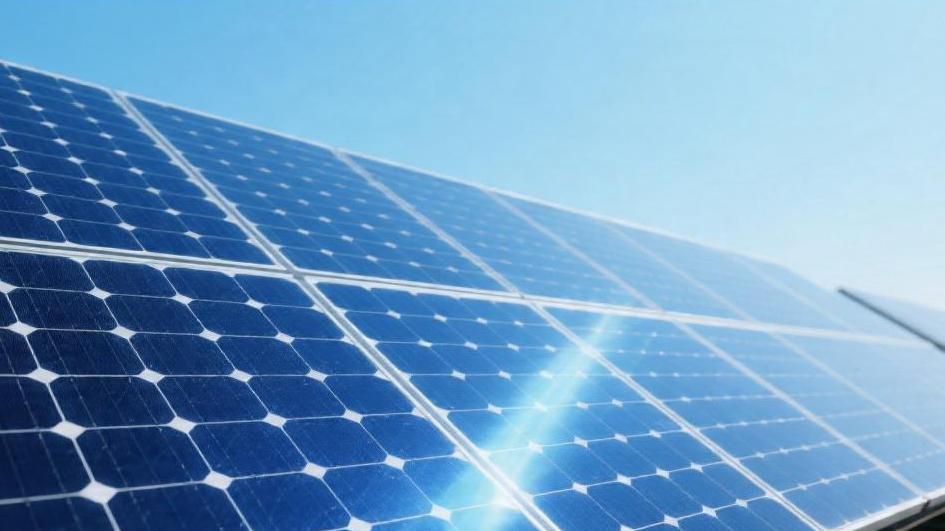
Output
Calculate calculate generate how much
In a standard light resource area, for example, an annual vertical radiation amount reaching 1700 degrees environment under, an excellently designed system every year per kilowatt installed capacity should be able to output 1,350 to 1,550 degrees of electricity. Inside, there is a key indicator called the Performance Ratio (PR value), which is actually generated from electricity and the theoretical light energy convertible electricity's ratio. Currently, the commercial power station's PR value is generally between 80% and 85%, with the remaining 15% to 20% entirely consumed by temperature loss, line resistance, dust shading, and inverter conversion inside.
· One set of 100 kilowatts distributed system, if the PR value can be from 80% to 82%, every year, then can generate about 3,000 degrees of electricity, according to a 0.6 RMB electricity price calculation, 25 years of operation lifespan can earn more than 45000 RMB.
· Solar radiation intensity per square meter increases 100 watts, cell piece's short-circuit current will linearly increase, but voltage will along with temperature rise and drop.
· Module's nominal power is at 25 degrees Celsius, 1000 watts per square meter light under measured, but actual outdoor working temperature often at 50 to 65 degrees Celsius.
· The temperature every elevates 1 degree, output power will drop 0.3% to 0.4%, at noon the system may only remain 85% nominal power working.
Inverter model selection
Inverter as system's command center, its maximum conversion efficiency is usually 98% above, but more need to pay attention to is its weighted efficiency (European efficiency or CEC efficiency), this closer to real power generation working condition.
In order to maximize output, the current design trend is to elevate the DC/AC ratio, usually set at 1.2 to 1.4 between. If you have a 100 kilowatt inverter, you can connect 120 to 140 kilowatt photovoltaic modules. Although at noon, the strongest light time will appear curtailment (Clipping), but in the morning and evening, as well as rainy days, a high ratio can let the inverter reach the starting voltage earlier and maintain at a high efficiency zone operating, whole year total power generation instead can increase 5% to 8%.
· Inverter's starting voltage is usually between 180 volts and 200 volts. If the string voltage is designed too low, every day will start late 15 to 30 minutes, and generate about 2% less electricity.
· Current string inverters usually carry 2 to 10 MPPT tracking routes. Every route can independently look for the voltage and current's best combination point.
· On complex roofs, multi-route MPPT can solve the different orientations module voltage inconsistency problem, reducing about 3% to 5% mismatch loss.
· Inverter's self-consumption electricity is also a data point, high-performance machines at standby mode under power consumption lower than 5 watts, ensuring that the night will not waste the power grid's electricity.
Shadow cannot block
Even if only 5% of the module area is blocked by a utility pole or chimney, if no intervention is added, the whole string cell board's output power may directly halve. This is because photovoltaic cell pieces are series structure, current limited by weakest piece. When a certain piece is shaded, it will from the power generation body become a load, producing a hotspot effect, and the temperature may instantly soar to 100 degrees Celsius above.
In order to solve this problem, the module has integrated 3 bypass diodes. When shading occurs, the diode will automatically conduct, bypassing the shaded 1/3 area. Although voltage will drop to 12 volts around, but guaranteed current can smoothly pass through, retrieved 60% above power loss.
· For shading severe scenarios, adding installing power optimizer can the system output elevate 15% to 25%, it can realize module level's maximum power point tracking.
· Optimizer can every piece of board's output current adjust to consistent, solving due to different boards aging speed not identical produced 1% to 2% mismatch loss.
· In a 25-year cycle, this kind of module-level monitoring can reduce 30% on-site troubleshooting time, because you can directly on screen see which piece of board is lazy.
· Experiment data shows, if module surface's bird droppings are not cleaned, merely 10 square centimeters of stains can let this string module's daily power generation drop 5% above.
Line transmits current
On the DC side, national standards usually require voltage drop controlled at 2%, but in order to pursue extreme efficiency, professional design will control it at 1% within. Selecting 4 square millimeters or 6 square millimeters dedicated outdoor DC cable is crucial. If in order to save money, the 6 square's wire is changed to 4 square, on a 100-meter transmission distance, the current reaching 10 amperes will time, lost power will increase one fold. Additionally, MC4 connector's contact resistance also must be paid attention to. One qualified connector resistance should be 0.5 milliohms below. If crimping is not tight, leading to resistance rising to 5 milliohms, the connector will produce massive amounts of heat, not only losing electrical energy, but also having a melting risk.
· The DC side voltage currently is from 1000 volts to 1500 volts, evolving, voltage higher, current smaller, line loss can be reduced by about 50%.
· On the AC side, the inverter to grid-connection point's distance shorter is better, every increase 10 meters in the line, AC voltage drop loss approximately increases 0.1% to 0.3%.
· Environment humidity to cable insulation also has an impact. If insulation resistance is lower than 1 megaohm, the inverter will protectively shut down, leading to power generation returning to zero.
· Grounding resistance must be smaller than 4 ohms, this is not only a safety requirement, but also in order to reduce high frequency interference to inverter efficiency's impact.
Staring at data looking
A 1 megawatt power station lacks real-time monitoring, every year because of faults leading to power generation loss may reach 5% to 10%. Modern monitoring system provides minute-level data collection frequency, able to real-time compare the same power station's current deviation inside different strings. If the discovery of A string compared to B string current is lower than 0.5 amperes, the system will automatically alarm. Through analyzing the I-V curve, engineers can even not need to go to the site, then can judge whether the panel is cracked, covered in dust, or due to PID effect leading to potential induced degradation. N-type cells, although naturally immune to PID degradation, will still have tiny leakage current under long-term high voltage, regular data physical examination can guarantee power station at 30 years later's output still maintains at initial power's 85% above.
· Module's annual degradation rate is influencing long-term revenue's core indicator. Monocrystalline silicon module first year degradation is about 1% to 2%, afterwards every year degradation is about 0.4% to 0.55%.
· If a power station's annual precipitation is lower than 500 millimeters, manual cleaning frequency suggests every quarter one time, this way can the dust accumulation loss control at 3%.
· When cleaning water's temperature should be close to the module surface temperature, a temperature difference exceeding 30 degrees Celsius may lead to glass bursting or producing micro-cracks.
· Automatic cleaning robot can elevate about 5% annual power generation revenue, its investment return period in light sufficient areas usually only has 3 to 4 years.
Space utilization rate
In the northern hemisphere, panels must face due south, deviation exceeding 20 degrees will lead to annual output drop 2% to 4%. In order to prevent front-back row shading, we must according to geographic latitude calculate shadow length. For example, in the north latitude 30 degrees area, the winter solstice day morning 9 o'clock to afternoon 3 o'clock should not have shading.
If in order to install more boards and shrink row spacing, although installed capacity went up, but because mutual shading produced a "morning evening power staircase effect" will lead to unit power's power generation efficiency drop 10% above. Adopting large power modules (such as 700 watts above specification) can reduce bracket and auxiliary materials usage amount, on the same land area, elevate installed density by about 10%, thereby lowering per watt cost by about 0.1 RMB.
· Bracket's tilt angle every deviate best angle 5 degrees, whole year's radiation receiving amount then will reduce about 1.5%.
· Adopting a dual-axis tracking bracket although increased 10% operation and maintenance cost, but in high radiation areas, the annual utilization hours can be 30% above.
· Ground reflectance (Albedo) to bifacial modules impact huge, on snow land bifacial module's back side gain can reach 25%, while on grass land only has 7%.
· Rural roof's distributed projects, if they can avoid surrounding 5 meters inside's trees shading, their system utilization hours are usually compared to industrial areas high out 100 hours around.