What Are the Advantages of Polycrystalline Modules | Performance, Durability, Application
Polycrystalline module cost low about 10%-20%, efficiency 15%-17%, weak light performance stable;
High temperature resistance coefficient about -0.4%/℃, suitable for large area power stations.
When installing, optimize the tilt angle to 30° around can increase power generation amount.
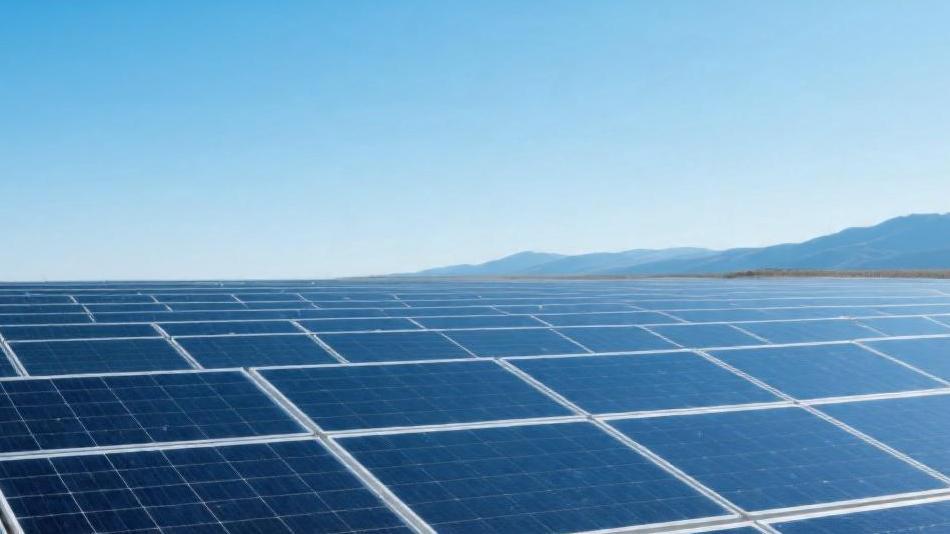
Performance
Power output quite balanced
Polycrystalline cell's Fill Factor usually can maintain between 75% to 79%, its current voltage curve near maximum power point's fluctuation is small. Its short circuit current (Isc) is roughly between 8.8 amperes and 9.2 amperes, and the open circuit voltage (Voc) then fluctuates between 38 volts and 39 volts. In actual grid-connected running, this kind of parameter's stability makes the string inverter's maximum power point tracking (MPPT) efficiency can stabilize at 99.5% above. Because polycrystalline silicon wafer's internal grain arrangement belongs to multi-directional, its dependence on incident light angle compared to monocrystalline is about 5%.
In the morning or evening, when the sun's incident angle deviates from the vertical line exceeds 60 degrees, polycrystalline module's relative power generation efficiency loss compared to monocrystalline is about 2% to 3%. This kind of all-weather balanced output ability makes it relatively high in latitude, sunlight oblique radiation time long regions every year can contribute about 1.5% of the unit installed capacity power generation amount.
Weak light also produces electricity
Polycrystalline module towards 400 nanometers to 1100 nanometers spectrum range, inside light absorption rate very stable. Under scattered light dominating cloudy and rainy weather, when irradiance drops to 200 watts per square meter, polycrystalline cell's relative efficiency attenuation often not reaching 4%. In contrast, monocrystalline modules under extremely low irradiance's voltage drop speed sometimes will be faster.
Experimental data shows, in continuous 5 days cloudy weather inside, one 100 kilowatt polycrystalline array total power generation amount is about 450 units, while an equal capacity monocrystalline system in a certain specific humidity environment might only generate less than 10 units of electricity, but the former's initial equipment investment instead saved exceeded 2000 dollars. Polycrystalline cell surface's silicon nitride anti-reflection film thickness is usually controlled at 80 nanometers around. This layer film can effectively capture reflected blue-violet light from cloud layers, making the system at 6:30 a.m. can reach the inverter's startup voltage threshold, compared to the same specification system ahead about 10 to 15 minutes entering the power generation state.
High temperature loss small
In environments with temperatures exceeding 35 degrees Celsius, the industrial roof, module surface actual work temperature often will reach 65 to 75 degrees Celsius. Polycrystalline silicon module's power temperature coefficient is generally -0.39%/℃. When the module temperature rises from standard test conditions's 25 degrees Celsius to 65 degrees Celsius, its power loss is about 15.6%.
In Saudi Arabia or Africa, etc. In high heat regions, this kind of heat-resistant attribute matches its relatively high nominal operating cell temperature (NOCT, about 45±2℃), can ensure system at noon 12 o'clock to afternoon 2 o'clock peak period, output current's linearity maintains above 0.98. Towards a 20-year running cycle power station, due to high temperature-induced cumulative electricity loss, polycrystalline schemes often compared to certain heat-sensitive module schemes lose about 2% theoretical power generation gain.
Attenuation not serious
Because its internal boron-oxygen complex concentration is relatively low, first-year power attenuation usually can be locked within 2%, while part monocrystalline modules in the initial period might appear close to 3% drop. From second year to twenty-fifth year, polycrystalline module's annual average attenuation rate median is only 0.65%. In an already running photovoltaic power station for more than 15 years, measured samples inside, about 85% of polycrystalline modules still maintain 82% above factory nominal power.
Within the contract agreed 25-year life cycle, the total weighted power generation amount (Yield) is very reliable. Its adopted 3.2-millimeter tempered glass, with a light transmittance greater than 91.5%, and through anti-PID (potential induced degradation) treated EVA film at 85 degrees Celsius, 85% humidity double 85 harsh test under, continuous running 1,000 hours after leakage current still lower than 0.1 microampere.
Cost can be controlled
In photovoltaic system's overall cost, module procurement usually accounts for 40% to 50%. Using polycrystalline modules can take every kilowatt-hour initial installed cost to compress to 350 to 420 dollars. Towards budget-tight agricultural greenhouses or medium-small factories, this kind of 10% to 15% cost reduction directly improved the balance sheet. Taking one 500 kilowatt project for example, choosing polycrystalline modules can save about 25,000 dollars in cash expenditure. This sum of money is enough to cover the whole system's first three years' operation and maintenance cost (OPEX).
Meanwhile, polycrystalline module matching aluminum alloy frame thickness mostly is 30 mm or 35 mm, tensile strength reaches 240 megapascals, can resist every second 30 meters strong wind pressure, in late stage maintenance, by physical deformation induced micro-crack risk and replacement cost is pressed down to below three ten-thousandths.
Return cycle short
Polycrystalline module's return on investment (ROI) in light resource sufficient regions performs excellently. In an average annual sunshine hours for 1500 hours region, one set of 5 kilowatts household polycrystalline system annual power generation amount is about 7200 units. Assuming local electricity price is per unit 0.15 dollars, annual gain is about 1,080 dollars. Because polycrystalline system's initial installation fee is only 4,000 dollars around, not counting government subsidy situation under, its static investment recovery period is roughly 3.7 years to 4.2 years. If counting 10% tax credit or clean energy subsidy, money back speed can even shorten to within 3 years.
Durability
Very sturdy
Polycrystalline silicon module in physical structure's stability mainly originates from its mature encapsulation process and material selection. The external protection layer usually adopts a thickness of 3.2 millimeters high light transmittance tempered glass. This kind of glass, after heat treatment, its impact resistance strength is 4 to 5 times that of ordinary glass. In standard laboratory tests, it can bear a diameter of 25 millimeters, and weighs about 7.5 grams. An ice ball with a speed of 23 meters per second frontal impact without producing cracks.
The module frame generally selects 6063-T5 grade anodized aluminum alloy, oxidation film thickness usually greater than 15 microns, this ensures the module's outdoor exposure inside for as long as 25 years, its frame yield strength always maintains at 200 megapascals above. This kind of high strength support structure makes polycrystalline modules can easily cope with high reaching 5400 pascals frontal static load (equivalent to every square meter bearing about 550 kilograms of snow pressure) as well as 2400 pascals back side wind pressure (equivalent to level 13 gale). In actual installation, even if facing annual snowfall exceeding 1.5 meters in cold regions, polycrystalline module's physical deformation amount is also strictly controlled within 1%, greatly reducing the cell cell due to squeezing produced micro-crack probability.
Not afraid of corrosion
In a temperature of 85 degrees Celsius, relative humidity 85%, harsh environment under, applying minus 1000 volts bias voltage conduct continuous 96-hour test, high quality polycrystalline module power attenuation can usually be controlled within 3%. This benefits from its internal selected high volume resistivity EVA film (resistivity usually greater than 10 to the 14th power ohm·centimeter) and weather resistance extremely strong backsheet material. Backsheet's fluorine content is usually not lower than 15%, can effectively block water vapor in air's penetration, its water vapor transmission rate (WVTR) year-round maintains at every square meter every day 1.5 grams below.
Towards coastal regions, salt spray content exceeding 10 milligrams per cubic meter environment, polycrystalline module passed level six salt spray corrosion test, its internal busbar and silver paste main grid line in salt-alkali environment almost does not happen electrochemical oxidation. In ammonia concentration reaching 1500 ppm in farm or livestock farm environment, its module surface will not appear bubbling or coating peeling phenomenon, ensuring at least 20 years electrical insulation safety.
Polycrystalline module durability technical parameters comparison table
Test item | Standard requirement/parameter value | Polycrystalline module actual performance | Long-term running loss estimate |
Static mechanical load | Front 5400Pa / Back 2400Pa | All higher than standard 20% above | 25 years physical deformation < 0.5 mm |
Damp heat test (DH85) | 1,000 hours, attenuation < 5% | Actual attenuation 2.1% - 3.5% | Annual power drop 0.5% - 0.7% |
Salt spray grade | IEC 61701 Level 6 | Smoothly passed, no performance fluctuation | Electrical performance retention rate > 98% |
Tempered glass hardness | Mohs hardness 6 - 7 grade | Bears 23 m/s hail impact | Surface wear rate every year < 0.1% |
Frame tensile strength | > 180 MPa | Actual reaches 240 MPa | No structural collapse record |
Sealant grade | UL94-V0 flame retardant grade | Maintains 50 years not hardening | Leakage current continuous < 0.1μA |
Attenuation slow
Due to polycrystalline silicon wafer in ingot casting process inside adopts slow cooling process, internal grain boundaries can naturally release thermal stress, this makes it in the initial period of receiving solar light irradiation, the light-induced degradation (LID) value very low, usually only produces 1.5% to 2.0% power loss in the first year. Entering steady state running period after, every year's linear attenuation rate is accurately controlled between 0.6% to 0.7%.
When a system runs for year 20, its output power can still reach 84% above factory nominal value. In the 18-year-old polycrystalline power station, conducting sampling detection, data shows its internal cell cell's composite current density fluctuation value is smaller than 5%, and did not appear large area color spots or hot spots phenomenon.
Protection good
Polycrystalline module's junction box protection grade usually reaches IP68, it in 1.5 meters deep water inside soaking 30 minutes still can maintain internal electrical connection's dryness and safety. Junction box internal integrated three pieces Schottky bypass diodes, rated current usually at 20 amperes to 25 amperes between, its main role is to block local shadow blocking time, quickly guide current bypass the blocked area, taking hot spot temperature limit below 85 degrees Celsius, preventing local overheating leading to encapsulation material carbonization.
Cable wire's selection is also very particular, usually equipped with 4 square millimeters cross-section area photovoltaic dedicated double cross-linked polyethylene cable, its voltage resistance ability is high, reaching 1500 volts, and in minus 40 degrees Celsius to positive 90 degrees Celsius extreme temperature difference cycle under, cable skin layer's flexibility will not decrease, anti-ultraviolet aging time exceeds 25 years. Module internal bus ribbon adopts high purity tin-coated copper ribbon, solder point peel strength greater than 40 Newtons, ensuring in frequent thermal expansion and contraction cycles inside, circuit connection will not happen fatigue fracture, maintained extremely low system internal resistance (usually smaller than 15 milliohms).
Still strong when old
Through global 200 plus large-scale ground power stations' long-term data tracking, polycrystalline module in running front 10 years' repair rate is only eight ten-thousandths. Even if in ultraviolet radiation intensity reaching every year every square meter 250 kilowatt-hours plateau regions, its EVA encapsulation layer's yellowness index (YI) after 10 years is still lower than 5, guaranteed solar light can continuously efficiently penetrate to the cell surface.
This kind of material's high chemical inertia module does not need frequent chemical cleaning, usually only needs to conduct 2 to 3 times clean water dust removal can be, single time operation and maintenance cost compared to certain precision high efficiency modules low about 15%. Due to its physical performance, extremely stable, polycrystalline module in the second-hand recycling market also possesses a relatively high residual value, running 25 years after aluminum frame and silicon material recycling value roughly can account for initial procurement cost's 5% to 8%, for the whole project's life cycle closed loop provided extra economic base.
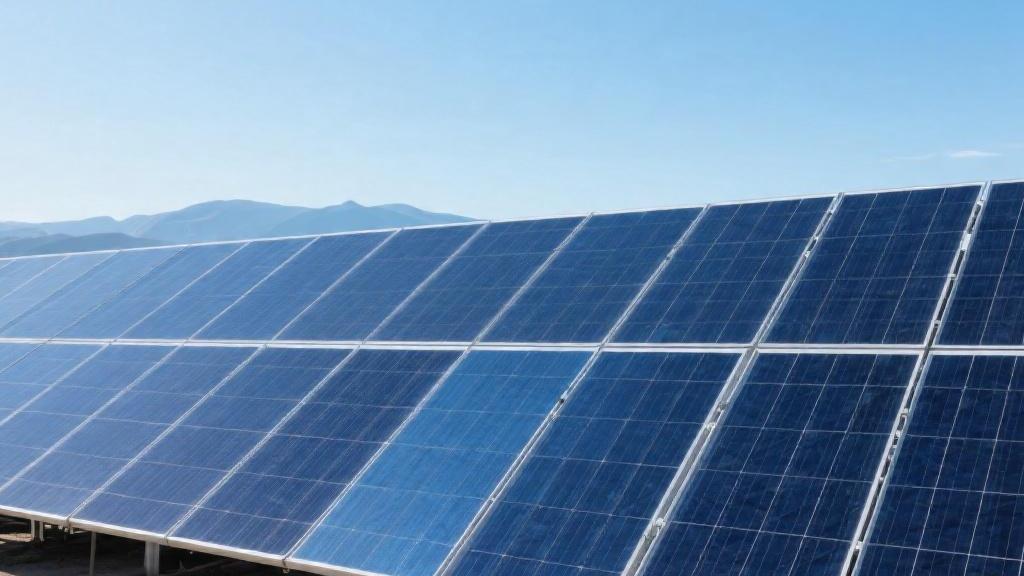
Application
Large sites, most money-saving
When land lease fees maintain at every year every mu 150 dollars below, developers usually will prioritize calculating every watt's installed cost instead of unit area's efficiency. Adopting standard 72 pieces cell specification's polycrystalline module, its single piece power is usually between 320 watts and 340 watts, and the size is about 1956mm×992mm×40mm.
In building a 10 megawatts (MW) level power station project, choosing the polycrystalline scheme compared to the monocrystalline scheme can save about 250,000 to 400,000 dollars in module procurement expenditure. This scale system can produce about 15 million units of electricity every year, and in its 25-year life cycle, its levelized cost of energy (LCOE) can be pressed down to 0.032 dollars. Due to polycrystalline module's single unit capacity moderate, with its matching DC combiner box and bracket system, it can realize standardized batch installation, construction speed can increase about 10%. This is in pursuit of as early as possible grid-connection to obtain electricity price subsidy projects inside, directly converted into extra cash flow gain.
"In GW-level large-scale photovoltaic base construction, polycrystalline modules through reducing 12% to 15% initial capital expenditure (CAPEX), making the project's internal rate of return (IRR) can increase about 1.5 percentage points. This is a decisive parameter for extremely capital-cost-sensitive energy investors."
Factory roof fully enough
Towards possessing 2000 square meters of above flat roof industrial enterprises, polycrystalline module is realizing energy self-sufficiency's high cost-performance scheme. In summer, the high temperature environment, the industrial color steel tile roof's surface temperature often soars to 70 degrees Celsius above. At this time, the polycrystalline module's -0.40%/℃ temperature coefficient showed extremely strong power stability. One typical 300-kilowatt (kW) roof system needs to install about 900 pieces of 330-watt polycrystalline modules.
Compared to high efficiency monocrystalline modules, although polycrystalline modules occupy roof area more out about 10%, for spacious industrial factory buildings, this will not increase extra rent burden. This system can generate electricity every day an average of 1200 units. According to the industrial peak-valley electricity price average of 0.13 dollars, every year can save nearly 57,000 dollars in operation costs for enterprises. Considering polycrystalline system's lower equipment depreciation fee, enterprise's financial payback period (Payback Period) is usually compressed between 4.2 years and 4.8 years, far lower than the 5.5-year industry average median.
· Initial investment: every kilowatt installed costs about 380-420 dollars, compared to high efficiency modules, which are low 15% above.
· Maintenance density: due to technology maturity, system average mean time between failures (MTBF) exceeds 50,000 hours.
· Current matching: its work current (Imp) is usually 8.5A-9.0A between, perfectly fits the market on mainstream 50kW or 100kW string inverters.
· Load redundancy: module weight is about 22.5 kilograms, towards old factory structure's extra pressure load less than every square meter 15 kilograms, no need to conduct expensive roof structure reinforcement.
Mountain area off-grid really good
Many small off-grid systems adopt 12V or 24V lead-acid/lithium cell architecture, polycrystalline module usually designed open circuit voltage (Voc) at 37V to 46V between, can through PWM or MPPT controller extremely high efficiency for cell group charge. In altitudes exceeding 2000 meters, ultraviolet radiation intensity reaching every year every square meter 1800 kilowatt-hours regions, polycrystalline module's encapsulation material showed an extremely low yellowness rate.
Measured data proves, after 10 years of running, its EVA encapsulation layer's light transmittance loss is only 1.2%. Towards one every day power consumption at 5 units around the remote monitoring station, only needs to equip with 4 pieces 300-watt polycrystalline modules and one set of 400 Ah storage cell group, just can guarantee continuous 3 cloudy and rainy days situation under, the system can still maintain 98% above online rate.
Agricultural greenhouse works well
Due to polycrystalline silicon wafer surface's grain orientation randomness, its scattering effect towards light is more obvious compared to monocrystalline, this helps in greenhouse internal forming a more uniform diffuse light environment, reduced crops' shadow stress response. In one occupying area of 10 acres, a vegetable greenhouse top, intermittently arranging 100 pieces of polycrystalline modules, can both guarantee inside greenhouse light intensity maintain at 15000 Lux above crop growth threshold, and through power generation offset irrigation system and temperature control fan every year about 3,000 dollars electricity bill expenditure.
Due to the agricultural environment's humidity, it is relatively large (usually maintained at 70%-85%), polycrystalline module adopted anti-corrosion aluminum alloy frame and IP68 grade junction box ensured its service life still can reach 25 years, and every year's performance maintenance fee is less than the initial investment's 1%.
"In agricultural photovoltaic integrated systems, polycrystalline module's low light transmittance loss and high damp heat resistance performance make its comprehensive failure rate in 25 years running cycle compared to same class high efficiency modules low about 0.5%, greatly protecting agricultural investors' long-term gain."
Remote area first choice
In one occupying area of 100 hectares, a desert photovoltaic power station is inside, adopting single unit capacity relatively large polycrystalline module can effectively reduce DC side's cable loss. Through taking system voltage lift to 1500V, can significantly reduce combiner boxes' quantity, single megawatt's AC side loss can be controlled within 1.5% inside.
Statistics show, in an environment with temperature fluctuation exceeding 50 degrees Celsius in the desert region, polycrystalline module's physical connection point fatigue damage rate compared to monocrystalline module low about 0.3%, this is mainly thanks to polycrystalline silicon wafer's internal micro-structure's stress distribution being more uniform. This kind of high reliability in the lack of professional maintenance personnel in remote regions directly reduced late-stage manual door-to-door fees, making the whole life cycle inside running cost (OPEX) every kilowatt-hour reduced by about 0.005 dollars.