What Is a Modular Solar System | Design Flexibility, Scalability
Modular solar systems are composed of standardized modules (such as 350–600W photovoltaic panels, 5–20kWh energy storage units) spliced together, can expand capacity according to need.
When designing, first calculate the load (kWh/day), then parallel/series connect modules, realizing flexible capacity expansion and fast installation (1–3 days to complete).
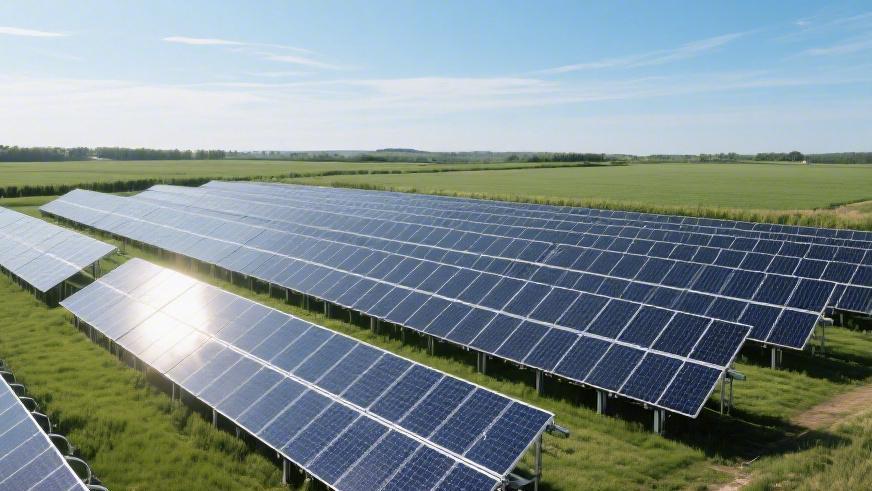
Design Flexibility
How to place all okay
Traditional string systems require all cell boards to maintain a highly consistent tilt angle (usually between 15 degrees and 45 degrees) and exactly the same azimuth. If one part of the board faces south, another part faces west, the whole string circuit's current will be limited by the board with the lowest power generation efficiency, leading to the system's total output dropping by more than 20%. Modular systems completely break this physical limitation.
Each power generation unit is equipped with an independent MPPT (Maximum Power Point Tracking) controller. You can install 8 pieces of 550W cell boards on a south-facing roof, at the same time, install 3 pieces of the same-specification boards on west or east-facing idle roofs. This kind of distributed layout can lift the roof's total installed capacity by about 35%, utilizing the different angles of sunshine between 8 am and 6 pm, making the system's power output curve throughout the day more flat, reducing reliance on expensive energy storage equipment.
· Angle adaptability: Supports 0-degree flat lay to 90-degree facade installation, single board efficiency does not interfere with each other.
· Multi-orientation layout: Allows south, east, west three dimensions mixed installation, total annual power generation can increase by about 15%.
· Irregular arrangement: Aiming at triangle or polygon roofs, can arrange in 1, 2, 3 step-like shapes, space utilization rate reaches above 98%.
Shadow not afraid of block
In traditional photovoltaic arrays, if chimneys, trees, or surrounding buildings produce 10% local shading at 3 pm, the whole string circuit's power generation might instantly drop 50% or even higher. Modular design, by maintaining each module's output voltage at low-voltage direct current (usually below 60 V) and directly performing AC/DC conversion, successfully isolates the shading influence.
Measured data shows, when one of the 500W modules is shaded 30% area by fallen leaves, although that module's output drops, the remaining 10 modules in the system can still maintain 100% rated power output. This anti-interference ability makes modular systems' actual annual power generation about 12% to 25% higher than traditional systems in complex urban environments.
· Independent optimization: Each unit independently adjusts current and voltage, eliminating the "short board effect".
· Shading loss: System total efficiency loss under local shading is controlled within 3%.
· Weak light activation: Single module can start power generation when light intensity reaches 20 W/㎡ after sunrise, 30-50 minutes earlier than string systems.
New and old board mix match
The photovoltaic industry with extremely fast technology iteration often leads to users not being able to find the same model board when wanting to expand capacity after 3 years. If traditional systems mixed connect cell boards with different current parameters (Isc) or voltage parameters (Voc), it will trigger serious power mismatch, leading to about 5% to 15% of electricity being wasted in vain on heating.
Modular system's compatibility solves this difficult problem. It allows you to directly add the latest 580W N-type TOPCon double-sided modules on the basis of existing 330W old systems. The system will automatically match different specification modules' electrical parameters, ensuring each board runs at its own best power point. For long-term investment, hardware replacement cost is reduced by 40%, because you do not need to scrap old inverters and wires to increase 2 kW capacity.
· Parameter compatibility: Supports coexistence of modules with different open-circuit voltages from 30V to 60V.
· Technology cross-generation: Allows P-type modules and N-type high-efficiency modules to run on the same busbar.
· Lossless expansion: When adding modules later, no need to recalculate line voltage drop, hardware depreciation rate is close to 0.
Space not waste
The standard photovoltaic module size is usually 1722 mm x 1,134 mm, because modular systems have no mandatory requirements for installation spacing and arrangement ways, they can enter those areas traditional equipment "dislikes as too small". In the 0.5-meter narrow strip below windowsills, carport tops, or the 2 square meter space above air conditioner outdoor units, single modules can all be deployed.
For 100 square meter complex roofs, modular schemes can, through horizontal and vertical mixed arrangement (Portrait & Landscape), squeeze in 4 more cell boards than traditional schemes, directly increasing about 2.2 kW installed power. At the same time, because there is no need to reserve bulky DC combiner box installation positions, indoor wall space usage efficiency also increases by 60%.
· Space flexibility: Single module minimum installation area only needs 1.95 square meters.
· Module self-weight: Single unit about 21.5 kg, static load pressure on roof structure is evenly distributed, no extra reinforcement needed.
· Ground clearance: Supports 10cm to 15cm low bracket installation, wind resistance ability reaches 2400Pa to 5400Pa.
Safety factor high
Direct current high voltage is a major hidden danger of traditional photovoltaic systems. Series circuits produce DC voltage often as high as 600V to 1000V. Once damage occurs, it easily produces electric arc sparks. Modular systems complete voltage control at the board end, DC side voltage always maintains at human body safety voltage (below 60V). This low-voltage characteristic not only meets the world's most stringent NEC 690.12 rapid shutdown standard, but also reduces fire risk by about 80%.
Under emergency situations, the system can cut off to 0V within 10 seconds. In addition, because each module runs independently, equipment heat dissipation efficiency increases by 15%, micro-inverters usually have IP67 protection grade, and under extreme temperature differences of -40°C to 85°C, system lifespan can stably exceed 25 years.
· Voltage control: Single point DC voltage is always lower than 60V, eliminating high-voltage arc risk.
· Shutdown speed: Supports millisecond-level rapid shutdown, meeting fire safety regulations.
· Heat attenuation: Modular decentralized heat dissipation, compared to high-power inverters, equipment core temperature is reduced by about 10°C.
Maintenance is simpler
Through the mobile phone APP, you can real-time check every 500W cell board's output power, current curve, and historical output data. When the system appears power generation fluctuation, you no longer need to take a multimeter to the roof to troubleshoot one by one. The system will automatically accurately locate the specific fault module, such as "Module on the left side of the No. 3 ridge voltage is low". This maintenance way shortens the mean time to repair (MTTR) from traditional 4.5 hours to less than 15 minutes. For a home system with 20 boards, this transparency can save about 1500 USD in manual inspection costs over a 25-year life cycle.
· Monitoring accuracy: Supports real-time flow statistics per watt and per board, accuracy error less than 1%.
· Warning mechanism: Automatically identifies shading, dust accumulation, or hardware aging, and pushes to terminal.
· Maintenance cost: Single-point replacement maintenance, labor cost is about 65% lower than whole-array inspection.
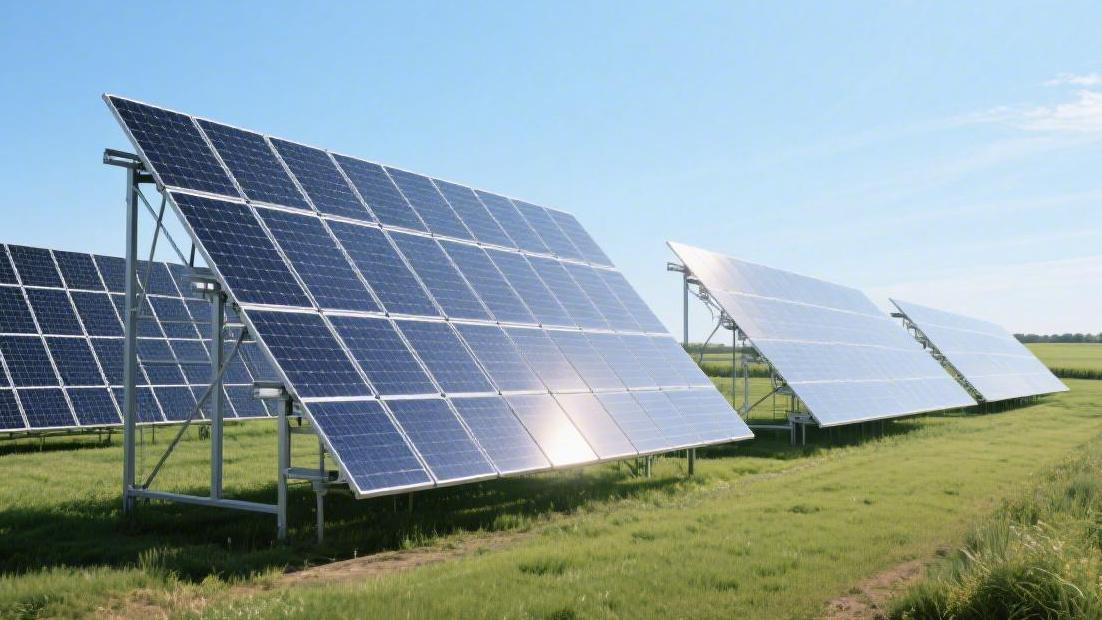
Scalability
Want to add, just add
Modular design supports "on-demand order", the first phase can install only one set of 2kW to 3kW basic system, containing 6 pieces of 415W modules and corresponding micro-inverters. Following family member increase, such as from a 2-person world to a 4-person family, daily average electricity consumption usually will surge from 10 kWh to above 18 kWh.
At this time, you only need to extend 1.2 meters on the original bracket rail, and insert two pieces of 550W high-efficiency modules. That's all. Because each module is parallel connected to the AC bus, the newly added power will automatically stack into the home grid, the whole expansion process does not need to re-design the original distribution box wiring, and also does not need to be forced to replace expensive whole machines because of worrying about inverter power overload like string systems.
· Power starting threshold: Minimum can start from 800W (two boards), suitable for apartment balconies or small RVs.
· Expansion step accuracy: Supports single-module level increase, single expansion cost can be controlled between 350 USD to 600 USD.
· Voltage zero fluctuation: Parallel architecture ensures system main line voltage always maintains at 230V or 120V standard AC, will not because of adding boards lead to DC side voltage exceeding 600V dangerous threshold.
Cells slowly save up
Expansion of energy storage systems is modularity's most attractive part. Currently, mainstream Lithium Iron Phosphate (LiFePO4) modules usually adopt 5kWh as a standard unit. When first installing, if the budget is limited, one 5kWh cell pack can be configured to meet basic lighting and refrigerator running.
Wait until one year later when funds are sufficient, can directly stack the second, third module on top like stacking Arhats. This stacking design automatically completes communication and parallel connection through side blind-plug interfaces, single increase of 2.5kWh or 5kWh electricity only needs less than 10 minutes. For a family with daily electricity consumption of 30 kWh, through gradually expanding to 15 kWh storage capacity, the energy self-sufficiency rate can be lifted from 30% to above 85%.
· Stacking upper limit: A single set of cell towers usually supports 4 to 6 modules in parallel, total capacity can reach 20kWh to 30kWh.
· Charge discharge performance: A single 5kWh module usually supports 0.5C to 1C charge-discharge rate, maximum output current can grow linearly with module increase.
· Cycle life: Each newly added module brings its own independent BMS (Cell Management System), ensuring no circulating current between old and new batteries, whole machine lifespan maintains above 6000 cycles.
Calculate account more cost-effective
Traditional schemes, in order to reserve future scalability, often require users to purchase one 10 kW high-power inverter in the initial stage to match the current only 5 kW cell boards, which leads to about 1200 USD of invalid expenditure, and the inverter running under low load for a long time, conversion efficiency will drop 3% to 5%. Modular schemes' initial investment amount is usually about 25% lower than traditional schemes, because every cent is spent on hardware that can generate electricity right now. The table below shows cost and benefit comparison data for expansion at different stages:
Stage | Hardware configuration | Installed power | Initial budget | Daily average electricity production | ROI period |
Basic period | 8 blocks 400W boards + 5kWh storage | 3.2kW | $4,500 | 12.8kWh | 5.2 years |
Growth period | Add 4 blocks 550W boards + 5kWh storage | 5.4kW | +$2,200 | 21.6kWh | 4.8 years |
All-around period | Total 16 mixed boards + 15kWh storage | 8.2kW | +$3,100 | 32.8 kWh | 4.5 years |
Interface all unified
Whether adopting PLC (Power Line Communication) or Zigbee wireless protocol, newly added modules can be automatically recognized by the system and incorporated into monitoring software within 60 seconds after power is connected. Even in 2030, if you purchase new type cell boards with higher efficiency and different sizes at that time, as long as they meet standard MC4 interfaces and voltage specifications, they can seamlessly access your old system installed in 2024. This "forward compatibility" characteristic extends the whole system's technical lifespan from 10 years to over 25 years, because you can replace the oldest units with the lowest efficiency at any time with a small cost.
· Communication protocol: Supports SunSpec or similar open protocols, ensuring handshake efficiency between cross-brand, cross-generation hardware reaches 99.9%.
· Installation time consumption: Single expansion field work time usually does not exceed 1.5 hours, greatly reducing the electrician's door-to-door service fee.
· Software self-adaptation: APP end will automatically update power limits and discharge logic, no need to manually modify any code or complex inverter parameters.
Broken also not afraid
If some old module in the system attenuates 20% in performance after running for 8 years, it will not drag down the newly joined high-efficiency modules. Each expansion unit has its own "brain", independently responsible for power optimization. For users, this expansion is not only an increase in electricity, but also a kind of redundancy backup. Even if the future expanded system scale reaches 15 kW, composed of 30 independent units, even if 2 of the units stop running because of external impact or hardware aging, the system can still maintain 93% power generation output.
· Fault isolation: Single module shutdown's impact on system total output is only limited to 1/N, system availability reaches 99.99%.
· Hot swap support: Some high-end modular inverters support expansion with power on, physical connection can be completed without shutting down the whole house power.
· Warranty continuity: Newly added modules usually bring independent 10-15 year warranty periods, will not lose protection because the old system's warranty period expires.