Why Choose Monocrystalline Solar Panels for Homes | Performance, Lifespan, Space Efficiency
Monocrystalline silicon module efficiency high up to 18%–23%, same area power generation amount increase about 20%; lifespan 25 years above, annual degradation about 0.3%–0.5%, suitable for roof space limited families, installation tilt angle suggest 30° around to optimize power generation efficiency.
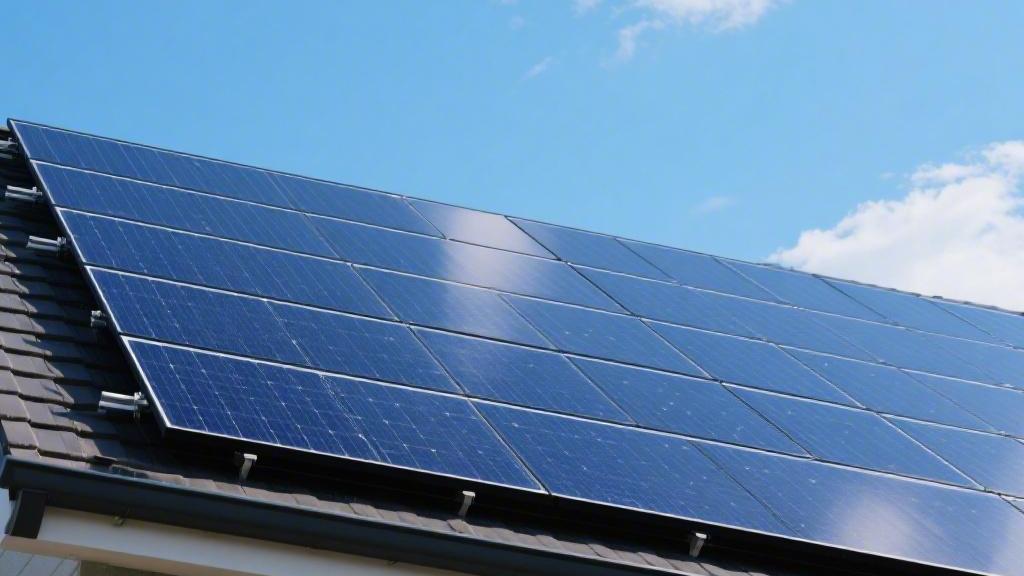
Performance
Read Parameters
On the market, 400 watts rated power's household monocrystalline silicon panel, photoelectric conversion efficiency parameters generally situated at 20.5% to 22.8% distribution interval. Manufacturers provided panel rated data originates from Standard Test Conditions (STC), requiring laboratory light intensity maintained at 1000 watts/square meter, test environment temperature fixed at 25 degrees Celsius, air mass standard AM set as 1.5. Hanging on the roof, actually running time, the panel situated environment tends toward Nominal Operating Cell Temperature (NOCT)'s test standard. NOCT conditions down-adjust light intensity to 800 watts/square meter, environment temperature set as 20 degrees Celsius, and introduce per second 1 meter's surface natural wind speed.
Under NOCT standard, a piece of nominal 400 watts (open-circuit voltage 37.1V, short-circuit current 13.6A)'s monocrystalline silicon panel, actually measured peak output power (Pmax) falls back to the 298 watts to 305 watts range, panel itself operating temperature rises to 45 degrees Celsius, positive negative error controlled within 2 degrees Celsius. The panel's internal adopts purity 99.999% above's single crystal arrangement structure, electrons inside the silicon substrate internal flowing's resistance loss reduced 10% to 15%, photons hitting silicon atoms after exciting out electron-hole pairs' physical probability increases to the theoretical upper limit's 88% around.
Hardware Parameter Item | STC Test Environment | NOCT Actual Work | Numerical Change Rate |
Light Intensity | 1000 W/m² | 800 W/m² | Decrease 20.0% |
Panel Surface Temperature | 25 °C | 45 °C (±2°C) | Rise 20 °C |
Peak Power (Pmax) | 400 W | 302 W | Decrease 24.5% |
Max Power Voltage (Vmp) | 31.2 V | 29.3 V | Decrease 6.1% |
Max Power Current (Imp) | 12.8 A | 10.3 A | Decrease 19.5% |
Afraid of Heat or Not
July environment air temperature reaching 35 degrees Celsius's afternoon, monocrystalline silicon panel absorbing infrared heat radiation after, surface physical temperature rapidly climbs to 60 degrees Celsius to 65 degrees Celsius's peak interval. Power temperature coefficient (Pmax) quantified panel temperature per rising 1 degree Celsius brought absolute output loss proportion.
First-line brand monocrystalline silicon panel's Pmax temperature coefficient distributes at -0.30%/°C to -0.34%/°C between. Calculating temperature load brought power decrease value, use panel actual surface temperature minus 25 degrees Celsius's STC baseline temperature, then multiply by nominal temperature coefficient.
· When the panel surface temperature reaches 65 degrees Celsius, the calculated temperature difference is 40 degrees Celsius.
· According to -0.34%/C's temperature coefficient, the calculated reduction rate of output power is 13.6%.
· A piece of rated 400-watt panel, in a high-temperature direct irradiation environment, under's actual physical power upper limit is limited at 345.6 watts.
· Polycrystalline silicon panel's temperature coefficient is usually -0.40%/°C to -0.45%/°C, same 65 degrees Celsius environment in, power reduction rate reaches 18.0%, rated 400 watts module's current output only remains 328 watts.
Weak Light Power Generation
Autumn morning, evening, or cloudy weather, reaching roof surface's solar radiation flux from peak's 1,000 W/m² largely suddenly drops to 200 W/m² below. Monocrystalline silicon's continuous lattice structure under low illumination's spectral response band is relatively wide, for wavelengths in the 300 nanometers to 1100 nanometers interval, photon capture rate compared to conventional amorphous silicon high out 4% to 6%. Light intensity only has 200 W/m²'s weak light operating environment, panel maintains about 19.5% relative conversion efficiency, direct current output power maintains at rated power's 18% to 20% interval within.
Mainstream monocrystalline silicon panel back side implanted PERC (Passivated Emitter and Rear Cell) dielectric coating. Silicon wafer back side deposited thickness being 150 to 250 nanometers' aluminum oxide and silicon nitride passivation layer. Penetrating silicon wafer front side not being absorbed's long wavelength photons (wavelength greater than 1000 nanometers), contacting back side passivation layer after, possess exceeding 90% probability being mirror-reflected back to internal silicon layer conduct secondary charge extraction. Single piece cell's photoelectric conversion efficiency percentage obtained 1.0% to 1.5% net increase range, single piece specification being 1.8 meters multiplied by 1.04 meters' panel total output power increased 15 watts to 20 watts' extra power generation flux.
Silicon Wafer Cut Half
Size specification being 182 millimeters or 210 millimeters' large area monocrystalline silicon wafer adopting complete full-piece design time, high ampere current output state under's internal silver paste wiring heat loss extremely high. Manufacturing end introduced Half-cut laser non-destructive cutting technology, dividing standard square silicon wafer along centered physical axis line into two pieces equal rectangles.
Single piece silicon cell's operating current (Isc) numerical value halved, bringing into Joule's Law formula (P=I²R) operation, internal series resistance heating brought power loss ratio decreased 75%. A piece of 144 pieces half-cut cells assembled's monocrystalline silicon panel, compared to the same size 72 pieces full-piece panel, surface highest operating temperature average decreased 1.5 degrees Celsius to 2.2 degrees Celsius.
Half-cut panel internal's copper solder ribbon circuit presents upper lower part independent and parallel's matrix layout. When roof fallen leaves or chimney shadow covered panel bottom 10% physical area time, system output parameters present following change rules:
· Full-piece panel internal's 3 series bypass diodes have 1 being voltage mutation activated, forcibly cutting off entire row monocrystalline cells' circuit cycle, entire piece panel's instantaneous output power immediately reduces 33.3%.
· Half-cut panel's independent circuit arrangement makes shading shadow only block bottom part's local physical loop, upper half part 72 cells continuously output 18.5V operating voltage and 10A above current, transmission process not by bottom layer resistance hindered.
· Local physical shading area expanded to 15% under test case, half-cut monocrystalline silicon panel maintains 50.0% to 52.5% rated power output flux, controlling single piece cell unit's highest temperature under 85 degrees Celsius, avoiding hot spot effect triggering panel backsheet material burn-through's hardware damage probability.
Inverter Matching
Monocrystalline silicon array generated direct current (DC) relies on micro-inverters or string-type inverters converting into grid standard frequency's 60 Hertz alternating current (AC). From the panel junction box's positive negative pole lead-out end to the inverter input end's direct current cable transmission physical path, 1.5% to 2.0% voltage line loss happens. Inverter hardware internal's AC-DC conversion efficiency parameters distribute in 96.5% to 98.2% interval.
Surface light-transmitting glass accumulated dust particles trigger transmittance reduction, causing a natural soiling discount ratio of 3.0% to 4.5% per year. Putting physical loss and environment variable's percentages in calculation formula in superimposing, a set of DC side rated power 10 kilowatts' monocrystalline silicon system, under STC standard highest light peak, inputting to distribution box's AC real effective instantaneous power fluctuates between 8.2 kilowatts to 8.6 kilowatts.
Electrical engineers performing topology design time, configure panel's DC total power higher than inverter AC output highest capacity, this numerical ratio setting is called DC/AC ratio. Household monocrystalline silicon system designed DC/AC ratio median parameter limited within 1.15 to 1.25's tolerance band. Connecting one unit's highest AC output limit being 7.6 kilowatts' inverter, connecting rated capacity 9.1 kilowatts (DC/AC ratio 1.19)'s monocrystalline silicon module panels.
Morning 9 o'clock to afternoon 3 o'clock's continuous running time within, inverter load rate maintains in 90% above's best conversion efficiency interval within operating. Light radiation highest value's noon 12 o'clock to afternoon 1 o'clock period, exceeding inverter 7.6 kilowatts processing threshold's redundant DC power peak is by software algorithm clipped, clipping action discarded power numerical value accounting for whole year cumulative total power generation amount's ratio is in 1.5% to 2.2% range.
Through increasing DC/AC ratio parameters, increasing initial panel area, photovoltaic arrays in the morning and evening weak light period as well as winter low solar altitude angle environment under's series total voltage earlier 30 to 45 minutes touches inverter's lowest starting voltage threshold, whole year electricity meter's net power generation record figures reverse increased 6.5% to 8.0% output bonus.
Lifespan
First Year Power Drop
Monocrystalline silicon panel exposed to natural light illumination's initial 1000 operating hours within, silicon wafer internal will happen Light-Induced Degradation (LID) physical chemical reaction. Traditional P-type monocrystalline silicon in the doping stage mixed with trace boron element, in the process of absorbing photons exciting electrons, free boron ions and silicon substrate residual oxygen atoms combine, forming a boron-oxygen complex possessing a high charge capture cross-section. Microscopic level's electron loss in grid-connected running's first 365 days within, causing panel overall output power to appear 1.5% to 2.5% permanent downward drop range. Manufacturers at the manufacturing end introduced N-type silicon wafer phosphorus-doping process to replace boron-doping process, completely clearing boron-oxygen complex's generation path.
· Adopting N-type TOPCon (Tunnel Oxide Passivated Contact) technology's monocrystalline silicon panel, factory STC test records' first year power reduction rate parameter is by rigid compression to 1.0% 's upper limit critical value below.
· A piece of nameplate parameter being 400 watts' N-type monocrystalline module, in experiencing the first year's total 8,760 hours' outdoor sunshine cycle after, test environment under's actual retained peak power stabilizes at 396 watts to 398 watts' statistical distribution interval within.
· Same 400 watts specification's old style P-type monocrystalline module, at first year degradation period ending time's available peak power usually falls back to 390 watts to 394 watts' physical limit range within.
Every year, slowly aging
Wavelength lower than 400 nanometers' high energy ultraviolet light long-term irradiation triggers EVA (Ethylene-Vinyl Acetate copolymer) encapsulation adhesive film produce yellowing physical aging, light transmittance according to a fixed ratio slowly loses, plus silicon wafer internal lattice in thermal expansion and contraction cycles in appear tiny dislocations. Based on the North American solar testing center's past 20-year period cumulative exceeding 5 million household photovoltaic array samples' long-term monitoring data calculation, the first-line brand produced monocrystalline silicon panel annual average degradation parameters distribute in the narrow band fluctuation range of 0.40% to 0.55%.
· In running, reaching the 10th year's time node, panel's rated output flux can maintain factory STC initial parameters' 95.0% to 96.5% between.
· Cumulative serving full 25 natural years after, P-type monocrystalline silicon panel's expected remaining power median is at initial rated value's 84.8%.
· N-type double-glass monocrystalline silicon panel's degradation statistical figures perform better, the 25th year's bottom-line retained power is raised to 87.4% to 89.4%'s high position distribution interval.
· The initial rated load being 10 kilowatts' household monocrystalline silicon system configuration, in the 25th year's annual total output AC power amount still maintains at first year full load power generation figure's 85.0% above, annual power generation amount loss range controlled in 120 kilowatt-hours to 150 kilowatt-hours' interval.
Hail Cannot Break
Long life cycle in's physical wear probability depends on module external protection layer's aging speed and mechanical strength parameters. Household monocrystalline silicon panel front side covers thickness specification being 3.2 millimeters' low-iron ultra-white high-transmittance tempered glass, transmittance parameter high up to 94.0% at the same time, glass surface's anti-tensile strength exceeds 90 megapascals. North American market's hail weather simulation impact test link in, laboratory adopts diameter 25 millimeters, mass 7.53 grams' solid ice ball, with per second 23 meters' gravitational acceleration (equivalent to hourly speed 82.8 kilometers' physical movement speed) vertically impact panel glass surface layer.
· The collision moment generated kinetic energy is absorbed and diffused by the surface tempered stress layer, and the collision point does not produce naked eye visible cracks. The test panel's electrical performance output power deviation is strictly controlled within a 3.0% allowable error range.
· Panel all around fastened with thickness being 1.5 millimeters to 2.0 millimeters, cross-section height in 30 millimeters to 35 millimeters interval's anodic oxidized aluminum alloy frame.
· Entire piece specification approximately 1.95 square meters' panel installed on roof metal bracket on, front side area continuously bears maximum 5400 pascals' static snow pressure load force.
· Backside structure resists 2400 pascals' wind pressure pulling physical stress, high strength's material density guarantees silicon wafer in extreme weather pressure under happening microscopic micro-crack deformation probability lower than 0.5%.
Soaking in Water Also Not Afraid
System in high humidity and high temperature environment superimposed's high voltage DC series loop in running, extremely easy to trigger leakage current and Potential Induced Degradation (PID) phenomenon. Dozens of pieces of panels series-connected generating high up to 600 volts to 1000 volts' system total DC voltage time, in rainy or early morning dew's 85.0% relative humidity physical conditions under, positively charged sodium ions from glass and encapsulation layer massively penetrate migrate to negatively charged cell surface, causing local microscopic PN junction circuit short circuit, triggering output power plunging 10.0% to 30.0%'s quantified failure ratio.
· Manufacturing end utilizes POE (Polyolefin Elastomer) double-layer adhesive film will monocrystalline silicon wafer vacuum heat-press encapsulated, POE material's water vapor transmission rate parameter strictly maintained at lower than 2.0 g/m²·day's extremely small flux, cutting off external moisture infiltrating cell board internal's physical ion channels.
· In an 85°C environment, temperature and relative humidity reaching 85.0% double the 85 extreme environment test cabin within, continuously applying a negative 1000 volts bias voltage running 1000 full load hours, anti-PID monocrystalline panel's final power degradation rate detection numerical value is by force lowered within 5.0% variation ratio.
· Panel back's fluorine-containing polymer multi-layer backsheet (thickness reaching 0.3 millimeters) not only isolates wavelength 300 nanometers' ultraviolet rays to inner layer adhesive film's radiation damage, but also provides an exceeding 1500 volts' electrical insulation barrier medium, continuously running 30 years' time scale within happening chalking, peeling or physical cracking etc. material exhaustion reactions' probability extremely low.
Look at the Warranty Sheet
Photovoltaic hardware manufacturers for monocrystalline silicon modules set's contract protection terms being disassembled into two parts absolute numerical indicators. Product material warranty covers hardware factory existing manufacturing process defect rate, junction box internal 3 bypass diodes' thermal breakdown burning-out probability as well as frame bolt loosening etc. physical structural failures, time span providing 12 years to 25 years' year limit baseline.
Linear power warranty strictly defines every year's rated output lower limit percentage figure, requiring system continuous running 25 years after actual power generation DC power must not be lower than nameplate parameter's 84.0% to 89.0%. Partial adopting double-sided 2.0 millimeters thickness glass encapsulated's N-type modules pull long power protection period to 30 natural years, the 30th year's bottom-line power retention ratio still calibrated at 87.4%'s scale line.
· Warranty performance process's financial accounting system in, manufacturers provide free replacement new hardware panel bodies.
· Top-tier manufacturers' contracts attached bear dismantling bad boards and replacing new boards generated electrician on-site labor fees, North American market this kind of labor billing standard average situated at per hour 150 dollars to 250 dollars' price interval.
· Putting logistics transportation, crane rental (daily about 400 dollars to 600 dollars) and labor hours all included in warranty claim payment range within, consumers' secondary financial maintenance budget cost drops to 0 dollars' absolute lower limit baseline.
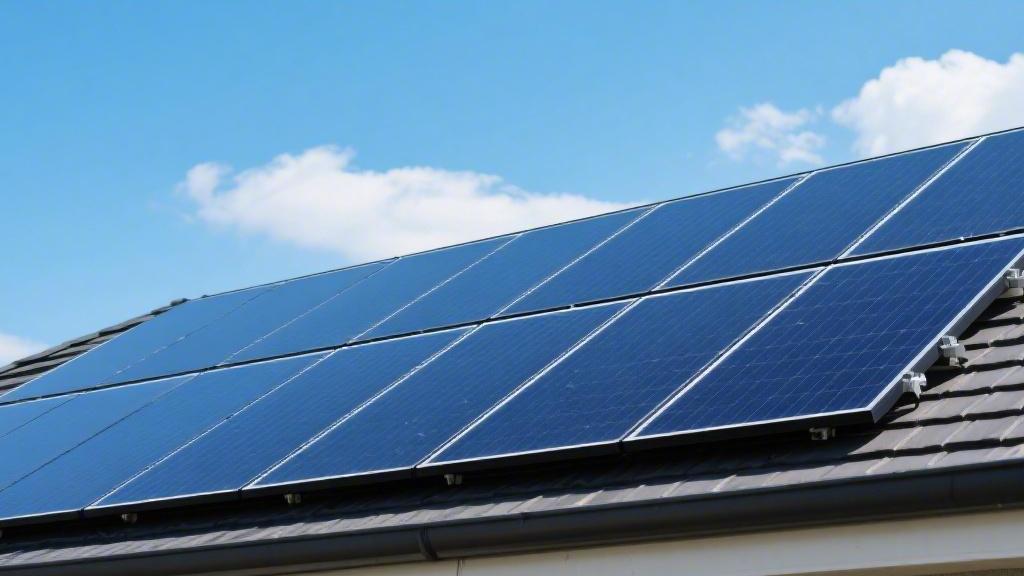
Space Efficiency
Calculate Land Occupation
On the market mainstream household monocrystalline silicon panel physical appearance specifications usually maintain at length 1722 millimeters, width 1134 millimeters' standard range, entire piece module's front side physical coverage area is about 1.95 square meters. The internal silicon wafer arrangement adopts a 108 pieces half-cut cells or 120 pieces half-cut cells' matrix layout, single piece factory rated peak output power set at 400 watts to 425 watts.
Dividing output parameters by physical size, monocrystalline silicon photovoltaic array's surface power density numerical value reaches per square meter 205 watts to 218 watts' high load level. If replacing the control group into photoelectric conversion efficiency only being 17.0% polycrystalline silicon panel, same 1.95 square meters' physical outer frame within can accommodate at most only 320 watts to 330 watts' rated power output, per square meter's power density rapidly drops to 164 watts to 169 watts' low position interval.
In the North American region, detached house roofs on, every lifting 10 watts/square meter's system power density, is equivalent to satisfying the same electricity load demand's premise under, for house owners saving out approximately 0.85 square meters' idle roof physical area.
North American families' average monthly electricity consumption flux is situated between 850 kilowatt-hours and 950 kilowatt-hours. In order to fully offset every month's power grid bill figures, electrical engineers usually will configure a set of total output power being 8.0 kilowatts' roof photovoltaic matrix. Adopting a power parameter of 400 watts' monocrystalline silicon panel, the entire hardware system needs to purchase 20 pieces of standard modules. These 20 pieces panels closely side-by-side installed on metal brackets on the roof occupied an absolute physical area of only 39.0 square meters.
Assuming a change to using rated power being 320 watts' old generation polycrystalline silicon modules to piece together the same 8.0 kilowatt system total capacity, the panels' purchase total quantity will be forced to increase to 25 pieces. System total assembly's physical land occupation area will follow suit expand to 48.75 square meters. Monocrystalline silicon technology on space efficiency's parameter advantage, lets entire set system stiffly save 9.75 square meters' roof occupation area, space saving ratio high up to 20.0%.
Avoid Big Chimneys
Modern North American residences' roof construction structure complex, full of skylights, exhaust pipes, ventilation shafts, as well as large masonry chimneys protruding from the roof ridge line. Local fire building codes (such as NFPA fire standards) forcibly stipulate that photovoltaic panel edges must be at least 0.91 meters (3 feet) away from the roof ridge top for fire protection physical escape passage, and panel all around distance roof edges must also leave out 0.91 meters' fall buffer area. Subtracting forcibly required blank sizes from roof total area after, left for photovoltaic panel installation's complete non-divided rectangular physical blocks usually less than 35 square meters.
Monocrystalline silicon panel possesses high efficiency space compression ratio, capable of in narrow building compliance blocks within stuffing in enough kilowatts numbers. In a length of 5.5 meters, width being 4.5 meters, no-shading complete slope on, physical available area is 24.75 square meters. In this area, at most, can arrange 12 pieces of specification being 1.95 square meters' monocrystalline silicon panels, entire row array output power high up to 4.8 kilowatts.
Due to monocrystalline silicon system only needing extremely few panel quantities, then can reach standard, installation teams can completely avoid chimneys' cast moving physical shadow areas, also no need to take partial panels forcibly split and cross-connect to light intensity decrease 15.0% to 20.0% on north-facing or east-facing's unfavorable roof slopes. guaranteeing system overall light-collecting angle distributed in 180 degrees due south direction's golden radiation belt within.
Drill a Few Fewer Holes
Single piece photovoltaic panel mounting to asphalt shingle roof on, needs at the bottom's wood roof truss beam on drill through and fix at least 4 stainless steel waterproof bracket bases. Installing 20 pieces of monocrystalline silicon panels' 8.0 kilowatt system, the roof surface will be driven into approximately 80 physical penetration holes.
If using volume more massive, quantity more out 5 pieces' polycrystalline silicon array, roof's physical penetration total quantity will soar to 100 above. Increased 20 physical penetration points, makes long up to 25 years' life cycle in roof rainwater seepage's probability on statistical probability rose 25.0%. Every adding one piece panel, also needs to add length approximately 1.15 meters' aluminum alloy guide rail material.
Reducing 5 pieces panels' installation quantity, equivalent to from roof structure's constant static load in removed 105 kilograms' glass and aluminum frame weight, plus 15 kilograms' metal bracket weight, making per square meter wood roof truss's mechanical bearing load decreased 12.0%.
Hardware total quantity's reduction synchronously pulled down electrical accessories' purchase and labor fees. In adopting the micro-inverter topology structure's system budget table, every one piece of solar panel all needs to be independently equipped with one unit-price being 145 dollars to 165 dollars' micro-inverter hardware equipment. Reducing 5 pieces panels at the same time, on the bill, correspondingly cancelled 5 units micro-inverters' purchase expenses, hardware cost directly deducted 725 dollars to 825 dollars' absolute amount.
North American market's licensed solar electricians charge 120 dollars to 180 dollars' high labor fees. Reducing land occupation area workers can spend about 1.5 hours to 2.0 hours on roof less panel alignment, wiring pipe-threading and bolt tightening workload. The entire labor budget item in the monocrystalline silicon system's compact physical layout can extra squeeze out 180 dollars to 360 dollars' money surplus. Two items fees combined calculation, space efficiency's elevation for consumers brought close to 1000 dollars' initial installation cost decrease range.