What Features Define Polycrystalline Solar Panels | Structure, Efficiency, Durability
Polycrystalline silicon cells are composed of polycrystalline particles, grain boundaries are obvious, conversion efficiency is about 15%–18%; high temperature resistance performance is relatively good, degradation rate is about 0.5%–0.8% per year, suitable for large area paving, cost compared to monocrystalline is low about 10%–15%.
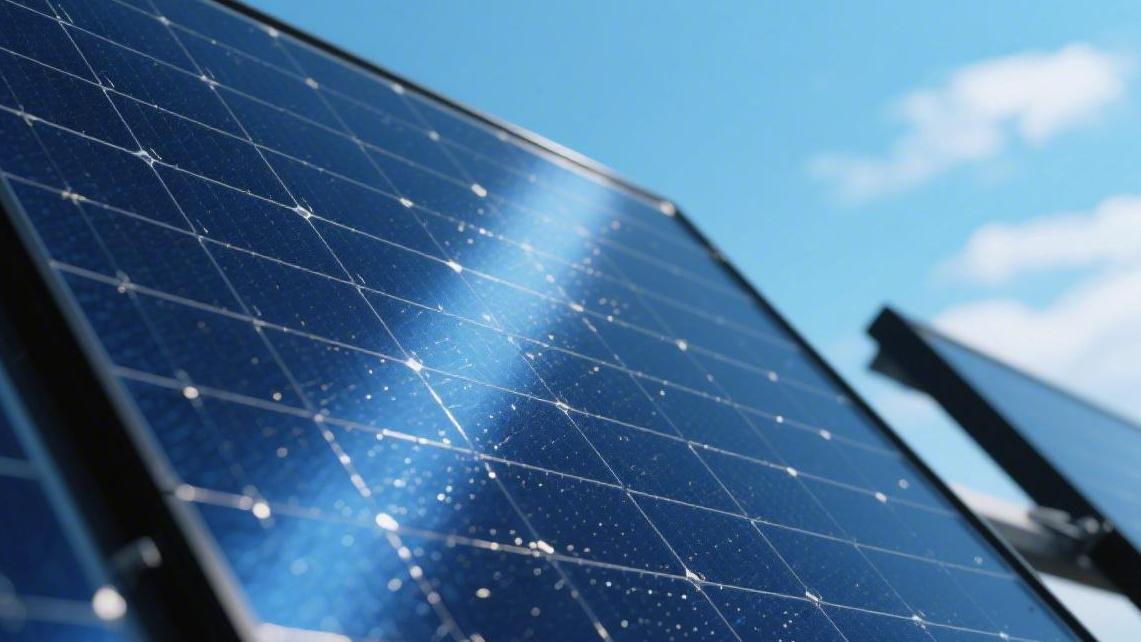
Structure
Glass Plate
Polycrystalline silicon module's outermost layer is a piece of thickness being 3.2 mm low-iron ultra-white rolled tempered glass. In the 380 nanometers to 1100 nanometers effective illumination wavelength range, this kind of glass's light transmittance is between 91.5% to 94%. The factory in the glass liquid melting stage will iron element content strictly control at 120 ppm below, to prevent metal ions from penetrating light and producing absorption loss. The glass surface through the chemical vapor deposition process is coated with one layer thickness of 70 nanometers to 80 nanometers silicon nitride anti-reflection film, making the irradiated light reflectivity drop to 4% to 5% low-level interval.
In mechanical strength indicators, per square meter glass can withstand static distribution mass of 550 kilograms, corresponding to 5400 Pascals snow load parameters, and in forward and reverse alternating tests withstand 2400 Pascals wind load pressure. In anti-impact calibration, it can resist a mass of 7.53 grams, diameter 25 millimeters hail with a speed of 23 meters/second produced physical impact.
Sandwich Adhesive Film
In the lamination process flow before starting, the single-layer EVA adhesive film's thickness is usually set at 0.45 millimeters to 0.60 millimeters. The equipment will laminate machine internal temperature elevate to 140 degrees Celsius to 150 degrees Celsius interval, and maintain a 15-20 minute heating cycle, making EVA material enter the melting cross-linking state. After cooling and curing, the adhesive film's cross-linking degree indicator needs to reach 75% to 85% qualified interval, cross-linking degree lower than 70% will cause subsequent use in produce delamination peeling phenomenon.
Cured EVA and glass as well as backsheet's peeling strength all greater than 60 Newtons/centimeter. Adhesive film material inside added specific ratio of ultraviolet absorbers and antioxidants, in continuously receiving wavelength 280 nanometers to 380 nanometers ultraviolet light irradiation experiments, its within 10 years light transmittance degradation rate is controlled at 0.5% standard deviation within, ensuring cell piece surface obtains stable photon flux.
Silicon Wafer Arrangement
Located at the module's middle layer's polycrystalline silicon cell piece size is fixed at 156.75 millimeters × 156.75 millimeters, single piece slice thickness wanders between 180 micrometers to 200 micrometers. Polycrystalline structure makes a single piece silicon wafer inside contain tens of thousands of diameter at 1 millimeter to 10 millimeters varying crystal grains, grain boundaries at dislocation density reaches per square centimeter 10 to the 4th power to 10 to the 6th power. Silicon wafer surface's conductive network and microscopic process parameters contain the following values:
· Phosphorus diffusion process at 850 degrees Celsius high-temperature furnace tube inside is conducted, formed P-N junction depth precisely controlled at 0.3 micrometers to 0.5 micrometers between, this depth under's minority carrier diffusion length and photo-generated electrons' collection probability on the test curve reach peak overlap.
· Front printed silver paste main busbar quantity according to different specifications divided into 3 strips, 4 strips, or 5 strips, single strip main busbar width is about 0.8 millimeters to 1.2 millimeters, single piece cell piece needs to consume 100 milligrams to 150 milligrams conductive silver paste to construct the current loop.
· Perpendicular to the main busbar's fine grid line width is only 40 micrometers to 60 micrometers, grid line spacing set at 1.5 millimeters to 2.2 millimeters, reducing overall series resistance at the same time will surface shading area ratio compress at 3% to 4% extreme value interval.
Bottom Backsheet
Cell piece series array's bottom is paved one layer thickness at 0.3 millimeters to 0.35 millimeters composite structure thin film. The factory usually adopts polyvinyl fluoride - polyester - polyvinyl fluoride three-layer composite material to constitute the backsheet substrate. Middle layer's polyester thin film thickness is about 250 micrometers, providing exceeding 110 Megapascals transverse tensile strength as well as higher than 1000 volts direct current's insulation withstand voltage value, matching inverter end maximum 1500 volts input voltage parameters.
Both sides' fluorine layer thickness respectively is 25 micrometers to 38 micrometers, in ambient temperature is 38 degrees Celsius and relative humidity reaching 100% constant temperature constant humidity chamber in, backsheet's water vapor transmission rate is lower than 1.5 grams / square meter / day. Backsheet inner surface has exceeding 85% white light reflectivity, penetrating silicon wafer gap's leaked light is by backsheet reflected back to glass and air interface, through secondary refraction again enters silicon wafer, making module's overall short-circuit current elevate about 0.5% to 1.0%.
Outer Framework
The module all around through model is 6063-T5's extruded aluminum alloy profile conducts mechanical fixation and encapsulation protection. Profile surface's anodic oxidation layer thickness is at 15 micrometers to 20 micrometers, in salt spray test chamber after 48 hours continuous spray test, oxidation layer mass loss rate is less than 5%. Frame cross-section size mostly adopts 35 millimeters × 35 millimeters or 40 millimeters × 35 millimeters standard specifications, profile's yield strength is greater than 110 megapascals, tensile strength exceeds 150 megapascals.
Aluminum alloy frame's groove and glass panel's gap between is uniformly filled with neutral silicone sealant. Silicone sealant at normal temperature after 24 hours surface-dry curing, elongation at break reaches 300% above, peeling bonding strength stabilizes at 2.0 megapascals to 2.5 megapascals interval.
Polycrystalline silicon module each physical level's quantitative engineering parameters are summarized as the following table shows:
Structural Module | Physical Size/Specification | Temperature/Mechanical Parameters | Performance Indicator |
Tempered Glass Plate | Thickness 3.2 mm | Bearing Pressure 5400 Pa | Waveband Transmittance 91.5%-94% |
Encapsulation EVA Film | Thickness 0.45-0.60 mm | Lamination Temperature 140℃-150℃ | Curing Cross-linking Degree 75%-85% |
Polycrystalline Silicon Wafer | 156.75×156.75 mm | P-N Junction Depth 0.3-0.5 μm | Grain Diameter 1-10 mm |
Insulation Composite Plate | Thickness 0.30-0.35 mm | Insulation Withstand Voltage >1000 VDC | Water Vapor Transmission Rate <1.5 g/m²·d |
Aluminum Alloy Frame | Cross-section 35×35 mm | Yield Strength >110 MPa | Surface Oxidation Layer 15-20 μm |
Efficiency
Light Absorption Conversion
Polycrystalline silicon panel's rated power calibration is established on internationally common Standard Test Conditions (STC) foundation. Test instruments will ambient temperature lock at 25 degrees Celsius, simulate light source output 1000 watts/square meter irradiance, and adopt air mass AM1.5's spectral distribution curve. In this kind of controlled environment, currently mass-produced polycrystalline silicon cell piece single unit photoelectric conversion rate usually maintains at 18.5% to 19.5%.
Dozens of pieces of cell pieces after series welding and using glass and adhesive film encapsulating into complete module after, module level's overall conversion rate will fall back to 15.5% to 17.5% interval. Converted into physical area, per square meter's polycrystalline silicon panel under peak illumination can output 155 watts to 175 watts of direct current.
A piece of nominal power being 280 watts' 60-piece format module, on the test instrument's curve, open-circuit voltage reading usually at 37.5 volts to 38.5 volts up and down fluctuates, short-circuit current then distributes at 9.0 amperes to 9.5 amperes between. Reflecting internal equivalent series resistance and parallel resistance health degree's Fill Factor (FF) test value, generally falls in the 75% to 78% percentage range.
High Temperature Reduces Load
In real roof or ground power station environments, panel temperature very rarely can maintain at 25 degrees Celsius. The industry usually introduces Nominal Operating Cell Temperature (NOCT) to evaluate its actual heating state. NOCT's test environment simulates 800 watts/square meter sunshine, 20 degrees Celsius ambient air temperature, and 1 meter/second gentle breeze wind speed.
Under these kinds of conditions, polycrystalline silicon panel back's measured temperature usually will climb to 43 degrees Celsius to 47 degrees Celsius. Panel output parameters to temperature fluctuations are extremely sensitive, power temperature coefficient mostly is at -0.40%/℃ to -0.45%/℃ between.
· Ambient air temperature reaching 35 degrees Celsius and situated in a windless summer noon, under sun exposure, the panel's internal operating temperature will easily break through 65 degrees Celsius.
· Compared to the 25 degrees Celsius standard test median value, the 65 degrees Celsius panel produced a 40 degrees Celsius positive temperature difference.
· According to -0.42%/℃'s average power coefficient calculation, overall output power will proportionally slide down 16.8%.
· Open-circuit voltage's temperature coefficient is about -0.30%/℃, high temperature will cause voltage output large-scale reduction, while short-circuit current's temperature coefficient is only a weak positive +0.05%/℃, current's tiny increase completely unable to fill voltage sudden drop caused overall power loss.
Weak Light Test
Illumination intensity dropping to 200 watts/square meter's early morning, evening, or thick cloud layer shielded overcast environment in, polycrystalline module's conversion efficiency curve will happen obvious downward probing. Test data shows, when irradiance from 1000 watts/square meter suddenly drops to 200 watts/square meter, panel's absolute conversion efficiency will reduce 0.6% to 1.0%. Originally, 16% of module efficiency under weak light can only maintain at 15% to 15.4% level.
Polycrystalline silicon wafer internal grain boundaries are densely distributed, under low excitation intensity's weak light state, minority carriers when crossing grain boundaries being recombined away probability largely rises. Light incident angle's deflection similarly will cause incoming light damage, when sun light and panel normal included angle reaches 60 degrees time, glass surface's reflectivity will steeply rise from initial 4% to 8% or even 10%, Incidence Angle Modifier (IAM) test indicates, corresponding time period entering internal's effective photon flux will lose 3% to 5%.
Connection to Grid
Polycrystalline panel generates direct current, needs to pass through cable transmission and be converted into alternating current by inverter to be able to connect to the power grid. The entire physical link is accompanied by intensive energy damage. Dozens of blocks of polycrystalline panels connected in series together constitute a string. Time, panels between output current's tiny variance will cause a wooden barrel effect, string's total output current will be limited to the current lowest one block panel's numerical value on, producing about 1.0% to 1.5% mismatch loss.
· Adopting a cross-sectional area of 4 square millimeters' dedicated photovoltaic direct current cable connecting 100 meters away's inverter, line resistance caused direct current voltage drop usually will consume 1.5% to 2.0% of system power.
· Inverter's Maximum Power Point Tracking (MPPT) algorithm when capturing polycrystalline panel constantly fluctuating voltage peak value time, static tracking accuracy is at 99% to 99.5% between, direct current to alternating current's hardware conversion efficiency maintains at 97.5% to 98.5% interval.
· The panel surface if continuously 30 days lacks effective rainfall washing, accumulated dust particles will reduce surface light transmittance by 3% to 5%.
· Will module conversion rate, temperature damage, cable voltage drop, inverter loss, and dust shading etc. Each item variable's reduction rate multiplied together, one standard polycrystalline silicon power generation system's comprehensive Performance Ratio (PR value) final settlement data stays at 76% to 82% interval.
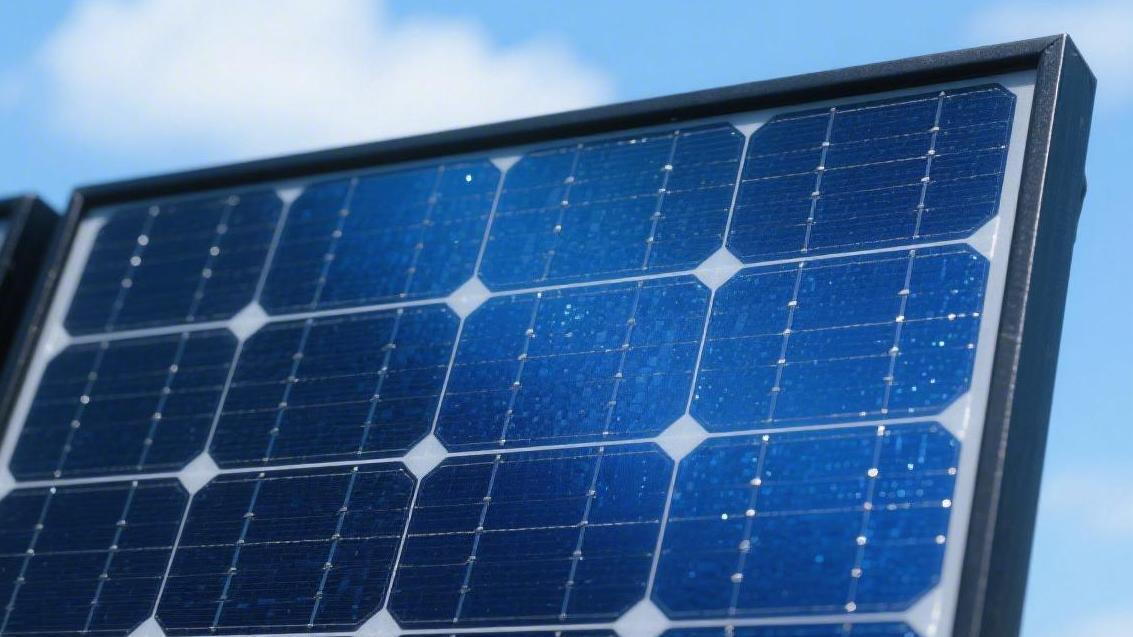
Durability
Slow Degradation
Polycrystalline silicon panel's lifespan calculation cycle is usually set at 25 years. Module grid-connected running's first 12 months, silicon wafer internal boron-oxygen complex will happen Light-Induced Degradation (LID), causing power curve appear 2.0% to 2.5% downward probing. Passing through the initial degradation period, from the 2nd year extending to the 25th year, panel's linear power degradation rate will stabilize at per year 0.5% to 0.7% interval. According to the 0.6% median value, continuously decreasing, running full 25 natural years after, polycrystalline panel's actual output power still maintains at nominal peak value's 80.5% above.
Aiming at high voltage system's Potential Induced Degradation (PID) test, the laboratory will be in relative humidity 85%, ambient temperature 85 degrees Celsius test cabin inside, to panel apply negative 1000 volts or negative 1500 volts direct current bias voltage, and maintain 96 hours continuous power-on. Test completed after, panel internal leakage current must be less than 0.1 microamperes, overall power loss ratio strictly limited within 5% standard deviation, proving insulation adhesive film and backsheet blocked sodium ions' migration path.
Transparent EVA adhesive film after long-time bearing ultraviolet light irradiation, will happen molecular chain degradation and produce yellowing phenomenon. Yellowing index if within 25 years exceeds value 15, will block wavelength at 400 nanometers to 600 nanometers visible light's penetration, causing a short-circuit current to appear 2% to 3% permanent reduction.
Carrying Wind Resisting Snow
In mechanical load fatigue test, the aluminum alloy frame and 3.2 millimeters tempered glass combination can withstand extremely high physical deformation pressure. Front side bearing pressure calibration value is 5400 Pascals, converted into physical mass, equivalent to per square meter glass surface piled up weight being 550 kilograms of snow, and continuously bearing pressure 24 hours after glass deformation displacement amount is lower than specified threshold, revoking pressure after can 100% restore flatness. Back side wind load test through suction cups pulls module, simulating 2400 Pascals negative pressure, corresponding to resisting wind speed reaching 130 kilometers/hour (namely 36 meters/second) gust tearing.
In aiming at extreme weather's hail impact experiment, the launching device will have a mass of 7.53 grams, a diameter of 25 millimeters, and a solid ice ball with a 23 meters/second initial velocity vertically shoot towards a glass surface. Impact test points are as many as 11, covering module edges, four corners as well as cell piece exact center, test completed after conducting Electroluminescence (EL) infrared scanning, internal silicon wafer micro-crack's width needs to maintain within 0.1 millimeters, and not produce any penetrating fragments.
Enduring Damp Heat
Long-term outdoor sun exposure requires materials that possess extremely high weather resistance. In a double 85 damp heat aging cycle, the panel is placed in 85 degrees Celsius and relative humidity being 85% confined space up to 1000 hours, accelerating simulating a 25-year cycle within water vapor penetration to internal silver paste solder ribbon's corrosion probability. Temperature cycling test set 200 extremely high extremely low temperature alternating frequencies, single cycle will cabin internal temperature from minus 40 degrees Celsius pull up to positive 85 degrees Celsius, heating rate controlled at maximum 100 degrees Celsius/hour, single cycle consumes time 4 to 6 hours.
Experiencing 200 times thermal expansion and contraction's physical torture after, panel each layer material's peeling strength decline rate must not exceed baseline value's 10%, open-circuit voltage change rate is less than 5%. Aiming at coastal installation environment's salt spray corrosion test, in a 35 degrees Celsius environment, continuously spraying a 5% sodium chloride solution for up to 720 hours, module junction box and metal frame's contact resistance increment is controlled within 0.1 ohms. The back side backsheet's tensile elongation at break requires experiencing heat aging box test after, still maintaining at 150% above range, to prevent producing physical cracking leading to water vapor driving straight in.
Shading Heating
Tree leaves, bird droppings, or building shadows for a long time shade polycrystalline panel's single piece or multiple pieces cell pieces time, shielded cell pieces will from power generation end transform into power consumption load, forming reverse bias voltage and massively consuming surrounding cell pieces generated current. Module surface local temperature within 10 minutes will sharply soar to 150 degrees Celsius around, triggering backsheet burning through or glass bursting's physical damage.
In order to evade the hot spot effect, 60-piece format's polycrystalline module will have a back junction box inside parallelly embed 3 rated bypass diodes, on average every 20 pieces cell pieces share one diode's protection loop. When the reverse voltage drop reaches 0.6 volts to 0.8 volts, the bypass diode will conduct in microsecond level time, will current bypass guide through, can withstand the highest 15 amperes to 20 amperes continuous forward current.
The junction box itself has protection level set at IP68, capable of immersing in 1.5 meters deep underwater for up to 30 minutes and not happen short circuit. Junction box's design standard requires diode under 15 amperes full load working state, casing junction temperature must not exceed 85 degrees Celsius safety red line, at the same time, needs to pass 200 volts reverse withstand voltage breakdown test, to resist lightning surge sneaking into system produced transient high voltage damage.