Why Choose Vertical Solar Panels for Your Home | Space Use, Design Flexibility, Energy Capture
Vertical photovoltaic can save about 30% roof space, suitable for facade installation; winter power generation elevates 10%–20%. Suggest north-south orientation layout and optimize tilt angle, combine shadow analysis software to elevate annual power generation efficiency.
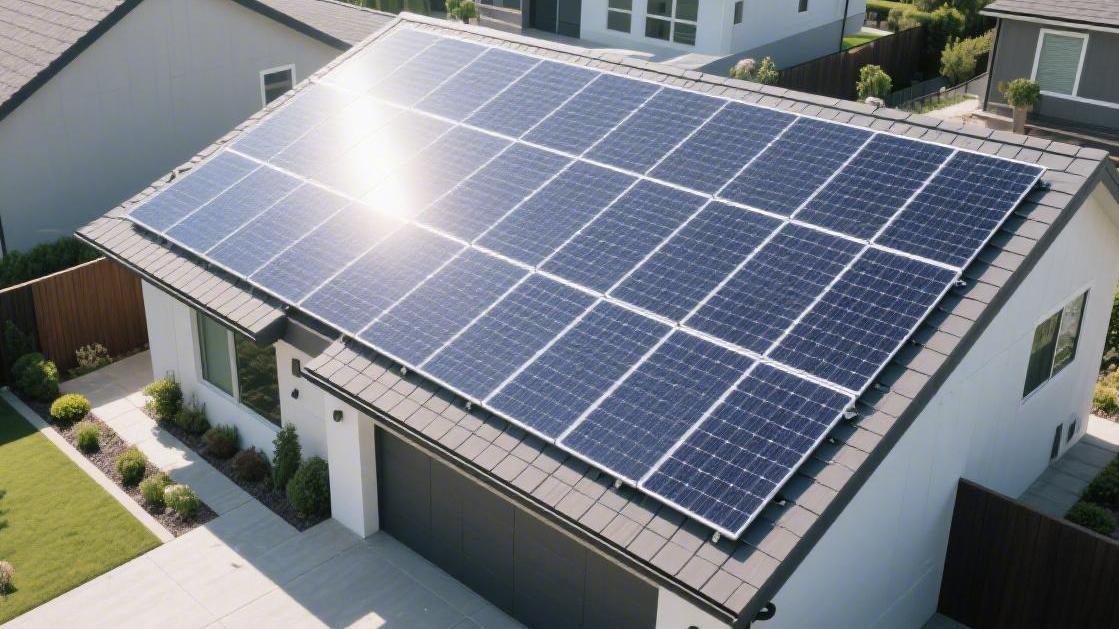
Space Use
Leave out big yard
In order to prevent front row panels when winter solar elevation angle drops to 25 degrees from producing shadow shading to back row, north-south spacing between two rows of photovoltaic brackets must maintain between 1.8 meters to 2.2 meters. Putting the same quantity's 15 pieces, single piece size being 1722 millimeters by 1,134 millimeters, power being 400 watts's solar panels transferred to the house's exterior wall on, ground occupied physical volume immediately becomes 0 cubic meters.
A piece of land being 150 square meters's independent house backyard, after saving this 45 square meters's occupied land, the lawn's available area maintains at 100% of its initial state. Empty space is enough to place a water capacity of 12000 liters, a 4.5-meter-diameter above-ground swimming pool, or pave a piece 5 meters long, 4 meters wide outdoor wooden deck.
Market on's standard vertical installation aluminum alloy guide rail thickness is only 40 millimeters, adding a module itself 30 millimeters's frame, the entire system from the wall surface protruding total depth is strictly controlled between 70 and 85 millimeters. Less than 10 centimeters's protruding size, will not affect the house side yard, which is normally 900 millimeters wide's legal minimum walkway passage requirement, moving width being 600 millimeters's standard trash can passing time, distance to panel surface still has at least 200 millimeters's safe clearance.
Pick wall surface
A building standard's two-story single-family house, facing south or facing west's exterior wall total area averages between 60 to 80 square meters. Deducting two windows size being 1.2 meters by 1.5 meters's living room windows, and a door 0.9 meters by 2 meters's entry door, the exterior wall on capable of being used to install photovoltaic panels's continuous blank area approximately remains 45 to 60 square meters. Installing 10 pieces of vertical photovoltaic panels needs to consume about 19.5 square meters's surface area.
Installation workers will install eaves right below the reserve 150 millimeters to 200 millimeters's buffer zone, to prevent roof drainage gutters from overflowing when rainfall reaches per hour 50 millimeters time from happening. Panel's lower edge distance to ground lawn will keep at least 300 millimeters's ground clearance, to prevent annual snowfall reaching 800 millimeters's regions in winter appearing snow burying bottom cells leading to whole string voltage dropping 20% situation.
· Wall surface on adjacent two windows width being 1.2 meters's windows between, as long as solid brick wall's width reaches 1.3 meters, then can in vertical direction side-by-side fix a piece width being 1.134 meters's panel, left and right two sides respectively reserving 83 millimeters's metal thermal expansion and contraction gap.
· Installed on from ground height exceeding 2.5 meters's second floor wall on's module, encountering baseball or lawn mower flying stone etc. physical impact's probability lowered by 95%, saved buying per square meter 35 US dollars' metal protective net fee.
· Gas meter and smart electric meter box around delineated radius being 900 millimeters's clearance restricted zone, can ensure utility company's meter reader has 1.5 cubic meters's operation space to conduct every 12 months one time's routine maintenance.
· Carrying micro inverter's panel system, junction box thickness is 25 millimeters, matching 40 millimeters's bracket thickness, at module backplane and house insulation layer between formed 65 millimeters's air circulation chimney effect channel, can put air temperature 35 degrees Celsius time's panel working temperature from 65 degrees Celsius lowered to 58 degrees Celsius.
Act as fence
Using bifacial power generation's glass solar panels to replace away yard edge aging rotting's 15 meters long wooden privacy wall, can put property line edge's planar space transformed into a power generation facility. Residential area's boundary fence legal height limit is between 1.8 meters and 2.4 meters. In 15 meters' span, horizontally arranging 14 pieces, the total height is 1.134 meters' modules, the bottom pillar goes deep into the underground 800 millimeters and pours 0.1 cubic meters's concrete, support spacing set as 2.1 meters, can resist wind speed as high as per second 40 meters' lateral wind pressure. Bifacial photovoltaic module adopts a thickness of 2.0 millimeters plus 2.0 millimeters's semi-tempered glass structure, single piece weight increases to 24.5 kilograms, capable of bearing 2400 pascals's mechanical load.
· Module back side distance to neighbor house's white vinyl exterior wall keeps 1.2 meters above setback distance, utilizing light colored wall surface's 30% sunlight reflectance, brings extra 8% to 12% back side power generation gain.
· Panel aluminum frame lower edge distance to dirt surface is raised 200 millimeters, for lawn mower cutting deck left out 150 millimeters's passage height, to prevent shower weather's raindrops splashing mud sand covering panel bottom 5% area's light-transmitting glass.
· Including 100 millimeters by 100 millimeters galvanized steel pillars and fixing clips inside, the whole section photovoltaic fence's thickness is compressed at 120 millimeters within, compared to traditional red brick built's 240 millimeters thick solid wall reduced 50%'s occupied land width.
Hang at balcony outside
For multi-story apartment or townhouse, width being 3 meters, depth being 1.2 meters's facing south semi-open balcony provides 2.5 square meters's vertical hanging space. Removing rusted iron railing, change to 3 pieces customized size being 0.9 meters high, 1 meter wide, single piece weight being 15 kilograms's lightweight frameless solar panels, build out a peak power being 800 watts's micro system.
Panel through torque reaching 45 newton meters's stainless steel U-shaped bolt anchored on balcony's load-bearing concrete base, when encountering per second 25 meters's gust time amplitude smaller than 2 millimeters. Balcony internal 3.6 square meters's standing and activity space consumption amount is 0, can completely place one set containing one 600-millimeter round table and two folding chairs's outdoor furniture.
· Matching this system's micro inverter shell size is 250 millimeters long, 170 millimeters wide, 30 millimeters thick, utilizing 4 screws fixed in the panel's back side's aluminum frame groove inside, not occupying indoor floor or wall surface area.
· Using cell spacing pulled open to 5 millimeters, overall light transmittance reaching 30%, every day can let about 2000 lumens's natural light pass through the balcony glass door into the living room, maintain indoor distance to the window 3 meters place not lower than 300 lux's illuminance.
· The system's power output relies on one wire diameter being 2.5 square millimeters, insulation layer thickness 1.5 millimeters's anti-ultraviolet rubber cable, passing through wall reserved's diameter 20 millimeters's air conditioner hole, inserted into indoor rated current being 15 amperes's wall socket.
Design Flexibility
Color matches wall skin
Exterior wall photovoltaic panel's front glass uses 700 degrees Celsius high temperature sintered ceramic colored glaze technology, providing exceeding 50 kinds conforming to RAL standard color card's color options. In order to match the 150-year-old Victorian style red brick exterior wall, select the color code being RAL 8004's red bronze color panel, from 25 meters outside the sidewalk looking over, panel and original brick's color difference value Delta E is controlled at 3.5 within.
Carrying color coating's 3.2 millimeters thickness tempered glass will put module's light transmittance lowered 12% to 18%, leading to a piece standard area being 1.95 square meters's colored panel peak power from 420 watts descending to 350 watts, photoelectric conversion efficiency from 22.5% falling back to 18.2%. Customized color's panel production cycle normally is 45 days to 60 days, per watt's procurement price approximately is between 1.8 US dollars to 2.2 US dollars, compared to per watt 0.45 US dollars's conventional black aluminum frame module, budget increased nearly 300%.
· All black appearance's panel through cell manufacturing process inside adding black silicon etching process, lets surface wavelength between 380 nanometers and 780 nanometers visible light's reflectance drop to insufficient 2%, completely eliminated aluminum frame and silver conductive busbar brought visual abruptness feeling.
· Imitating natural wood texture's panel adopts resolution reaching 1200 DPI's 3D digital printing film layer, covering on thickness being 2 millimeters's front glass on, capable of with red pine or cedar material's house exterior wall panel producing 90% texture overlap degree.
· Putting panel surface color replaced as reflectance reaching 65% RAL 9,003 signal white, when external air temperature reaches 38 degrees Celsius, white panel back side's working temperature is only 48 degrees Celsius, compared to black panel's 68 degrees Celsius, lower by 20 degrees Celsius, slowed down internal EVA film aging rate under high temperature, putting power attenuation rate controlled at per year 0.35%.
Size casually fixed
The traditional roof photovoltaic system is limited by standardized production, module length fixed at 1722 millimeters or 2,278 millimeters, and hard to fit complex geometric shape's exterior wall. Modern building integrated photovoltaics allows panel's width and length with 10 millimeters as increment unit conducting cutting customization. At two windows, the width being 900 millimeters, the height being 1500 millimeters's daylighting windows between, the factory can customize produce out size being length 1500 millimeters, width 450 millimeters's slender type photovoltaic panel, internal series layout 24 pieces size being 182 millimeters by 182 millimeters's monocrystalline silicon cells, output power precisely reaches 165 watts.
Facing radius being 4.5 meters's arc-shaped house corner, thickness only being 2.5 millimeters's flexible CIGS thin film solar module is able to realize minimum bending radius being 200 millimeters's fitting installation, single piece weight is largely lowered to per square meter 2.8 kilograms, only is traditional glass module weight's 15%.
Wall surface area position | Panel custom size (length × width) | Cell quantity and type | Rated output power | System total weight load |
Narrow wall pier between windows | 1500 mm × 450 mm | 24 pieces (182mm monocrystalline silicon) | 165 W | 11.5 kg |
House arc corner place | 2000 mm × 1,000 mm | Thin film coating (CIGS) | 320 W | 5.6 kg |
Garage door above lintel | 3,200 mm × 400 mm | 36 pieces (half-cut process) | 210 W | 18.2 kg |
French window lower edge wainscot | 1,200 mm × 800 mm | 42 pieces (158mm monocrystalline silicon) | 280 W | 14.8 kg |
Can act as awning
At the exterior wall above installing self-carrying photovoltaic power generation function's sunshade awning, putting planar design transformed into carrying 15 degrees to 30 degrees tilt angle's three-dimensional structure. Using extension length being 1,200 millimeters's customized aluminum alloy cantilever bracket, putting 3 pieces size being 1.7 meters by 1.1 meters's bifacial power generation glass modules with 20 degrees angle hung at facing south's living room French window above
Afternoon 2 o'clock when the solar elevation angle reaches 65 degrees, the awning at the window surface projects out an area reaching 5.6 square meters's shadow, blocking 85% of the sun's direct heat radiation. Indoor temperature sensor data shows, at an external air temperature of 32 degrees Celsius, the environment under the unshaded room temperature reaches 28 degrees Celsius, while carrying a photovoltaic awning's room temperature maintains at 23 degrees Celsius, every day for a unit cooling capacity of 12000 BTU's air conditioner reduced about 3.5 kilowatt-hours's electricity consumption amount.
· Bracket system adopts wall thickness being 4.0 millimeters's 6061-T6 aviation grade aluminum alloy square tube, every interval 1.2 meters sets a support point, can bear per square meter 150 kilograms's vertical snow load.
· Module and wall surface's combination place installs thickness being 1.5 millimeters's EPDM ethylene propylene diene monomer rubber waterproof sealing strip, blocking rainfall being per hour 40 millimeters's moderate to heavy rain penetrating into wall insulation layer.
Select light transmittance
Putting exterior wall's ordinary daylighting glass replaced as photovoltaic power generation glass, capable of ensuring indoor daylighting rate's same time realizing per square meter 75 watts to 120 watts's power output. Light transmittance's selection range from 10% all the way extends to 50%.
A piece of area being 2.5 square meters's customized photovoltaic insulated glass, adopts 5 millimeters tempered outer layer glass, 12 millimeters argon gas insulation layer and 5 millimeters inner layer Low-E glass's structure. When the customer selects a 20% light transmittance specification, the factory will put the internal arranged cell spacing from conventional 2 millimeters to 15 millimeters, leaking out a partial transparent area.
Every day at noon, 12 o'clock, the light-transmitting wall surface is able to let luminous flux of 4500 lumens's natural light penetrate indoors, maintaining desk surface illuminance at 400 lux up and down. Insulated photovoltaic module's heat transfer coefficient U value is low to 1.6 W/(m²·K), compared to ordinary single-layer aluminum alloy window, which lowers 60% of the heat loss rate, at minus 10 degrees's winter night, can for indoor area being 20 square meters's room per hour save about 1.2 kilowatt-hours's natural gas heating heat consumption.
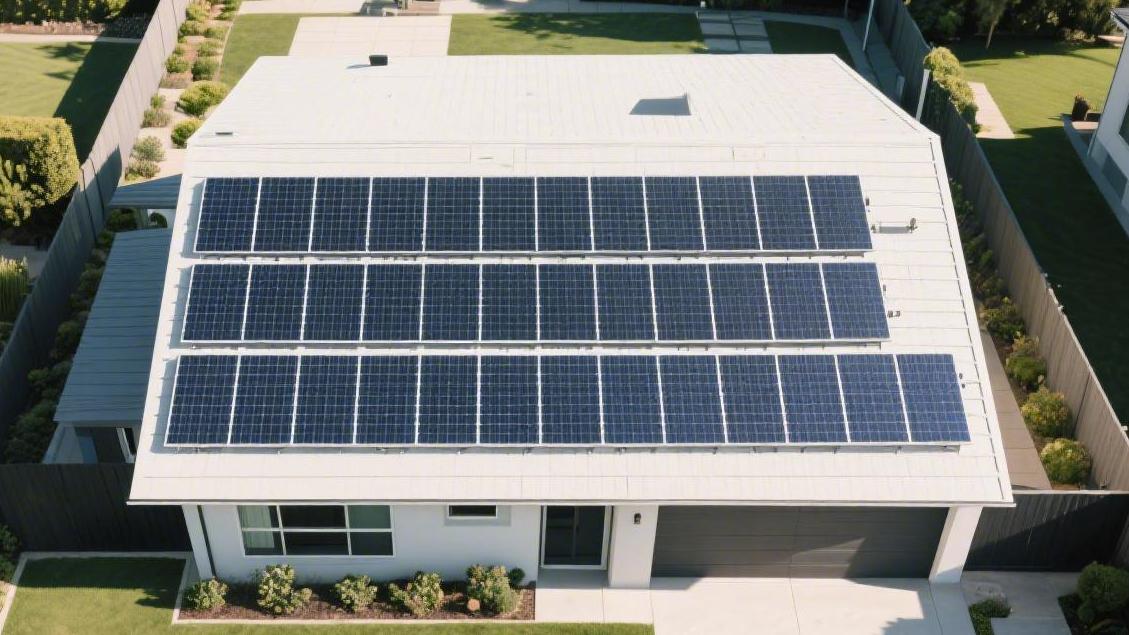
Energy Capture
Catch sunrise sunset
Facing east or facing west vertically installed panels from morning 6:30 to 9:30, and afternoon 4 o'clock to night 7:30's electricity usage peak time period inside, received's solar radiation amount reaches per square meter 650 watts to 800 watts's peak value. Tilted 30 degrees's roof photovoltaic at the same time period inside's radiation received amount only is per square meter 200 watts to 300 watts. The electric company's time-of-use electricity price rate normally is from 5 o'clock in the afternoon to 8 o'clock at night, putting per kilowatt-hour electricity fee from 0.12 US dollars adjusted up to 0.38 US dollars.
Vertical photovoltaic every day at evening peak period capable of outputting 4.5 kilowatt-hours to 6.2 kilowatt-hours's real electricity amount, exactly covers one unit power being 1500 watts's electric oven running 45 minutes, one unit power being 800 watts's dishwasher running 120 minutes, plus whole house 20 lamps 12 watts LED bulbs lighting 4 hours's electricity load. Because the power output curve's highest point towards morning and evening two ends moves, matching used's 13.5 kilowatt-hour household energy storage cell, every day afternoon's depth of discharge from 80% lowered to 45%. Cell internal lithium ions' charge discharge cycle pressure decreases, putting energy storage equipment capacity attenuating to 70%'s lifespan upper limit from 3500 times cycles to 5200 times cycles, delayed spending 8500 US dollars replacing new cell's budget expenditure.
Consulting latitude 40 degrees region's electricity usage statistics data, facing west 90 degrees vertically installed's 4 kilowatts photovoltaic array at before sunset 180 minutes inside's power generation expected value is 3.8 kilowatt-hours, sample data's variance is only 0.15, compared to facing south roof at the same time period only having 0.8 kilowatt-hours output's median, the former put evening from power grid buying high rate electricity's probability lowered 73.5%.
Endure heavy snow days
Every year from November to February's 120 days cycle inside, the northern hemisphere middle high latitude region's solar elevation angle will continuously fluctuate between 22 degrees and 35 degrees. Taking December 21 winter solstice day's data as extreme value reference, noon's sun ray and 90 degrees vertical surface's incident angle shrinks to 18 degrees to 26 degrees between, light passing through 3.2 millimeters thickness anti-glare glass reaching internal silicon wafer surface time's reflection loss rate is insufficient 4%.
A piece rated power being 420 watts's panel at noon time can maintain 350 watts to 380 watts's actual output, conversion efficiency's deviation range controlled at nominal parameter's 10% within. Tilt angle being 20 degrees, traditional roof panel facing's incident angle is as high as 65 degrees, surface light reflectance soars to 35%, single piece panel's output power largely falls back to 150 watts up and down. Snowfall reaching per hour 20 millimeters's weather will let tilted panel's surface be by 50 millimeters thick's snow completely buried, leading to photovoltaic micro inverter because of input voltage lower than 22 volts's startup threshold stopping working.
The vertical exterior wall surface's physical property lets the surface snow thickness year-round constant at 0 millimeters, panel working voltage steadily stays at 38 volts to 42 volts's maximum power point tracking interval inside. The entire first quarter's statistical cycle inside, the vertical photovoltaic system's cumulative power generation amount reaches 950 kilowatt-hours to 1100 kilowatt-hours, compared to the same installed capacity's flat roof system is more by 250 kilowatt-hours to 320 kilowatt-hours, putting winter single-month heating electricity bill's payment amount pressed low 40 US dollars to 55 US dollars.
Eat full reflected light
Ordinary asphalt road surface's albedo is only 12%, but paved area reaching 30 square meters' dry light colored concrete ground can put albedo elevated to 30%. After snow thickness reaching 150 millimeters, the brand new snow cover under the ground albedo peak value will even break 85%. Back side facing house exterior wall or fence internal's module, relying on absorbing ground refracted and diffusely reflected back's shortwave radiation, per square meter capable of extra receiving 180 watts to 250 watts's illumination flow. Bifacial module's back side bifaciality coefficient normally is calibrated at 75% to 80%.
On the back side, absorbing 200 watts of radiation, the environment parameter under, a single piece 500 watts solar panel's output current will climb from 11.5 amperes to 13.8 amperes, extra producing 100 watts to 125 watts's power compensation. System overall's photoelectric conversion efficiency from front side's 21.5% elevated to comprehensive's 24.8%. Because reflected light belongs to multi-angle entering's scattered light, the back side power generation amount's fluctuation rate is extremely low, and the output power's standard deviation is controlled at 2.5 watts within, at cloudy weather under put system overall power generation efficiency lowering rate shrinked 15%.
Meteorological monitoring probe collected's humidity and temperature parameters show, when yard snow maintains at minus 5 degrees Celsius's frozen state, vertical bifacial photovoltaic panel back side's daily average photosynthetically active radiation absorption amount reached per square meter 3.2 moles, putting this panel's single day's power generation return rate extra pushed high 18.4%.
Wind blows not feverish
Monocrystalline silicon solar cells are extremely sensitive to working temperature. The standard test condition (STC) set's reference temperature is 25 degrees Celsius, panel's peak power temperature coefficient normally is negative 0.35%/degree Celsius. In the summer, when the ambient air temperature reaches 38 degrees Celsius, the clinging black asphalt shingles installed on the roof module surface temperature will soar to 72 degrees Celsius.
72 degrees Celsius subtracted from 25 degrees Celsius produced a 47 degrees Celsius temperature difference. Multiplying the negative 0.35% coefficient will lead to the roof panel losing 16.45% of its rated power. Exterior wall vertical photovoltaic panel because back reserved 80 millimeters to 120 millimeters's ventilation gap, up and down going through's physical structure triggered natural convection's chimney effect. The air inside the gap's upward flowing speed reaches per second 1.8 meters to 2.5 meters, taking away backplane surface accumulated's 60% above heat energy.
At same's 38 degrees Celsius outdoor air temperature under, and the vertical panel's working temperature is suppressed at 48 degrees Celsius. Only having 23 degrees Celsius's temperature difference makes power loss rate maintain at 8.05% low position. A unit nominal power being 6000 watts's inverter at connecting to vertical system after, summer noon's actual input power is capable of keeping at 5500 watts above, avoided system at high temperature high load state because of thermal runaway triggering circuit breaker tripping's probability, also put panel EVA encapsulation film under ultraviolet and high temperature double pressure's yellowing speed delayed 30%.