How Can Vertical Solar Panel Efficiency Be Improved | Orientation, Spacing, Technology
Optimize orientation (lean south ±15°) can elevate about 10% power generation; spacing ≥ height 1.2 times reduces shading loss by about 5%–15%; adopting bifacial module and MPPT inverter can again gain 5%–10%.
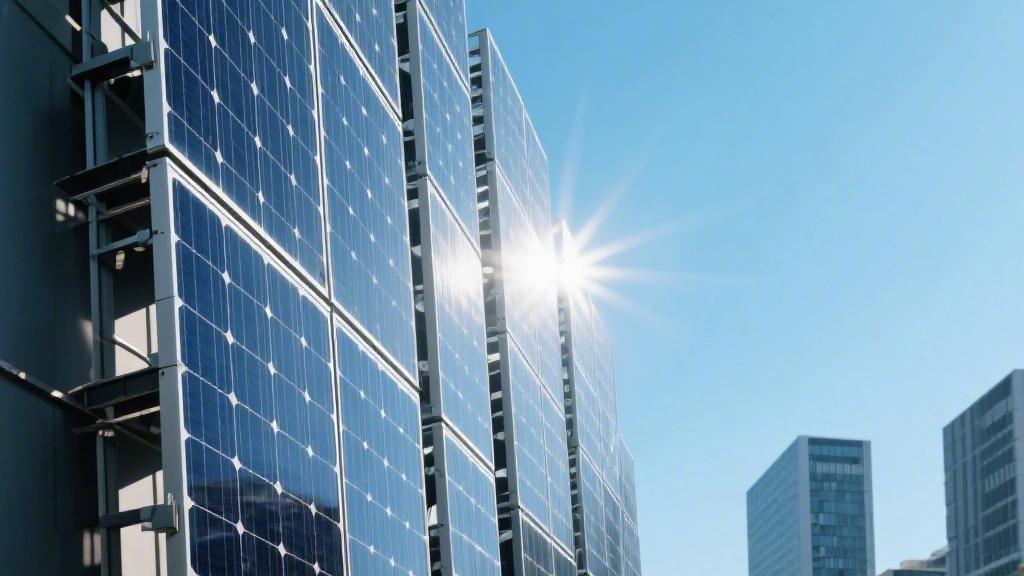
Orientation
Measure south north
Putting a vertical panel facing 180 degrees true south installed, will cause the bifacial module's back side to be in whole day 90% of the time inside only can receive intensity lower than 150 watts/square meter's diffuse reflection light. In the north latitude 50 degrees' region, the winter solstice day's noon sun's highest elevation angle is only 16.5 degrees. At this time, facing south, the vertical panel's front side can vertically receive light, and the photoelectric conversion efficiency can reach the nameplate nominal efficiency of 98%.
On the summer solstice day, the noon sun elevation angle climbs to 63.5 degrees, the sunlight and vertical panel's incident angle is as high as 73.5 degrees, leading to more than 45% of the light being reflected by the glass surface. Compared to east-west orientation, south-north direction vertically installed's 550-watt module, every year per watt's power generation hours will decrease about 180 hours to 240 hours. If in order to make up for the 30% power generation loss and on the array north side pave reflectance reaching 70% white reflective film, per megawatt's initial construction cost needs to increase about 15000 US dollars.
In cloudy weather, the proportion exceeding 120 days region, diffuse light occupying the total radiation amount's ratio is as high as 40%, at this time, facing south vertical panel's power generation amount fluctuation variance compared to east-west direction system is higher by 1.5 times. Because facing south vertical panel at noon 12 o'clock to afternoon 1 o'clock produces single day maximum load, with occupying whole day electricity usage amount 30%'s morning evening household electricity usage peak produces as long as 4 to 6 hours's space-time dislocation.
Look at the latitude difference
Power station located's geographic latitude numerical value every increases 5 degrees, east-west orientation vertical panel's annualized power generation gain rate will produce a 2.3% linear deviation. At the equator nearby (latitude 0 degrees to 15 degrees), the sun's trajectory year-round leans high, east-west direction, and the vertical panel whole day receives the total radiation amount compared to 30 degrees tilt angle installation is less 35% above, investment payback period from 6 years extended to 9.5 years.
When latitude elevates to 40 degrees above the time, the morning and evening time period sun elevation angle is lower than 30 degrees's time every day is as long as 4.5 hours, vertical panel intercepting low angle direct light's cross-sectional area increased 1.8 times. In the north latitude 48 degrees's Munich surrounding agricultural photovoltaic project, actual measured data shows, a single piece 2.2 square meters's east-west direction vertical bifacial panel, every year can output 410 degrees electricity, only compared to the same region optimal tilt angle single-sided panel is less 4.5%.
Targeting winter as long as 4 months and snowfall thickness exceeding 20 centimeters's high latitude zone, vertical panel because surface snow staying time is less than 5 minutes, its winter 3 months' power generation amount compared to tilted panel is higher by 45% to 60%. If latitude is located at 30 degrees to 40 degrees's temperate zone interval, needs to put east-west direction's deviation angle fine-tuned to south leaning east 10 degrees or south leaning west 10 degrees, can make total electricity amount output's hours number every year increase by about 150 hours, standard deviation controlled at 2% within.
Cooling down makes more money
Solar cell's temperature coefficient normally is negative 0.35%/degree Celsius, panel temperature every exceeds 25 degrees Celsius's standard test condition 1 degree, actual output power then drops 0.35%. In summer, the ambient temperature reaches 35 degrees Celsius's afternoon 1 o'clock, traditional 30 degrees tilt angle's facing south panel surface temperature will soar to 65 degrees Celsius above, leading to instantaneous power compromise rate as high as 14%. East-West orientation's vertical panel at noon 12 o'clock to afternoon 2 o'clock's strong radiation time period, surface received's solar radiation flux is lower than 200 watts/square meter, panel average temperature maintains between 38 degrees Celsius to 42 degrees Celsius.
· At 9 o'clock in the morning, the east-facing panel absorbed 800 watts/square meter's radiation, the environment temperature was only 22 degrees Celsius, vertical installation makes the panel both sides have 100% exposed area to conduct air convection, heat dissipation rate compared to the back side clinging to the roof's module is faster by 3 times.
· Panel running temperature lowered 15 degrees Celsius, can make photovoltaic inverter at morning and evening peak time period's direct current input voltage stabilize at 800 volts to 850 volts's optimal MPPT (maximum power point tracking) working interval.
· Continuous low temperature running makes EVA film's aging rate every year slowed down 0.5%, can put module usage lifespan from 25 years physical limit extended to 28 years.
· In the daily average wind speed reaching per second 4 meters's plain region, convection cooling makes east-west direction vertical array's annual average system performance ratio (PR value) keep at 84% above, higher than traditional array's 79%.
Endure wind pressure
The verticality of a 90-degree photovoltaic panel to wind load's drag coefficient (Cd) is as high as 1.2 to 1.5, is tilted 30 degrees panel's 2.5 times. When installation orientation and local winter prevailing wind direction present 90 degrees perpendicular time, per second 25 meters's gust will at single piece area being 2.58 square meters's module surface produce exceeding 800 pascals's static wind pressure.
· If the test region's wind speed exceeds 15 meters per second every year, the number of days is greater than 30, needs to put east-west orientation's azimuth angle conforming to prevailing wind direction rotate 15 degrees to 20 degrees, can put windward side's peak wind pressure lowered 25% to 30%.
· Deflecting 15 degrees's azimuth angle will lead to morning and evening two power generation peaks's time points respectively advanced or delayed by about 45 minutes, overall daily power generation amount's descending proportion is strictly limited to 1.5% error range within.
· To resist high wind pressure, single pillar's underground piling depth needs to increase from conventional 1.5 meters to 2.5 meters, galvanized steel bracket's wall thickness parameter needs to increase from 2.0 millimeters to 2.5 millimeters above.
· Increasing steel specification will make per megawatt's BOS (balance of system) hardware cost increase 20000 US dollars to 25000 US dollars, putting the overall budget high by about 4.5%.
· Wind force penetrating panel array between's 10 meters gap will produce wind tunnel effect, wind speed locally surges 15%, close to array edge outermost 2 rows's module glass thickness needs to upgrade from standard's 2.0 millimeters to 2.5 millimeters's semi-tempered glass.
Spacing
Blocks sunlight right
Shadow length following every day's time axis's passing presents a non-linear parabolic change, from morning 7 o'clock to 9 o'clock as well as afternoon 3 o'clock to 5 o'clock is the shadow shading's high incidence period. Using ray tracing software simulation test shows, row spacing being 8 meters, panel lower half part 1 meter area whole year has 42% time located in absolute shadow area, local temperature compared to upper half part is lower 8 degrees Celsius to 12 degrees Celsius. Hot spot effect happening's probability increased to 15%, not only will lead to cell's aging rate every year increase 0.8%, but also needs to spend per piece 50 US dollars's budget in advance to replace damaged modules.
· When row spacing is adjusted to module height's 4.5 times (about 10 meters), 95% of direct sunlight is able to penetrate array gaps and arrive at the ground.
· At this time, the ground's solar radiation median is per square meter 450 watts, and the shadow shading caused's annual energy loss is compressed to a low variance interval of 1.2% to 1.8%.
· In micro inverter or power optimizer's data statistics inside, spacing 10 meters configuration under's various photovoltaic strings's voltage variance is smaller than 3 volts, current deviation is controlled at 0.5 amperes within.
· Morning evening peak time period's system energy conversion efficiency (PR) stabilizes on 83.5%'s average number level line, inverter at low load state under's startup frequency reduced 30%.
Pass tractor
Agricultural photovoltaic project requires array spacing must match heavy agricultural machinery's physical size and operation trajectory. The Common John Deere 8R series large tractor body width reaches 2.9 meters, plus the suspended's width reaching 6 meters to 8 meters's seeder or sprayer, requires two strips array between's clearance channel not lower than 9.5 meters.
· If putting spacing compressed to 7 meters, agricultural machinery operation time's speed needs to be from per hour 12 kilometers lowered to per hour 4 kilometers, overall agricultural operation cycle extended 200%.
· Driver misoperation leading to machinery colliding panel's probability rises to every 500 hours of operation, happening 2.3 times, every time an accident's average repair fee is as high as 3500 US dollars.
· Keeping a 12-meter spacing can make the agricultural combine harvester's turning radius redundancy degree reach 15%, and the operation speed maintains at per hour 10 kilometers above.
· Soil compaction degree test data shows, 12 meters spacing under agricultural machinery tire's rolling trajectory distribution is more even, deep layer soil bulk density keeps at per cubic centimeter 1.35 grams, porosity stabilizes at 50%'s ideal numerical value.
· Crop yield's variance is only 4.5%, while at 8 meters narrow spacing under local soil compaction leads to wheat yield reduction rate reaching 12% to 15%.
Calculate illuminance
Fifteen meters spacing makes the array's wind speed attenuation rate only be 15%, airflow shuttling took away ground surface evaporated's excess moisture, local relative humidity maintains at 65% to 70% interval. If spacing is smaller than 6 meters, humidity at early morning will soar to 90% above, increasing panel glass surface dew condensation frost condensation's probability, leading to morning 9 o'clock before's light transmittance descending 18%.
Spacing parameter (meters) | Inter-array wind speed (meters/second) | Ground albedo gain (%) | Machinery passage efficiency loss (%) | System performance ratio PR (%) | Land lease cost (US dollars/megawatt) |
6.0 | 1.5 | 3.2 | 85.0 | 72.4 | 12,000 |
9.0 | 3.2 | 8.5 | 25.0 | 79.1 | 18,500 |
12.0 | 4.8 | 14.3 | 2.5 | 83.7 | 24,000 |
15.0 | 5.5 | 18.1 | 0.0 | 84.5 | 31,500 |
Land plot area
In land cost cheap's desert or arid grassland zone, per hectare land annual rent is less than 200 US dollars, putting spacing relaxed to 18 meters is the optimal solution for overall efficiency.
· Eighteen meters spacing under, per megawatt's alternating current cable length from 6500 meters increases to 9200 meters, cable procurement budget increased 14000 US dollars.
· The cable becoming long leads to direct current end voltage drop amplitude rose 0.8%, at transmission distance furthest's string terminal, measured's voltage loss reaches 12 volts.
· In order to make up for long distance transmission brought's line loss, needs to put direct current cable's cross-sectional area from 4 square millimeters to 6 square millimeters, per meter unit price from 0.8 US dollars rises to 1.3 US dollars.
· Although the initial BOS cost increased 5.5%, wide spacing brought's annual power generation amount 2% absolute growth, making this sum extra expenditure's investment payback period only be 3.2 years.
· In land resources scarce and per hectare rent as high as 2500 US dollars's suburban zone, adopting a 10-meter medium spacing strategy can make capital expenditure and power generation revenue's ratio locked at 1:1.15's balance point.
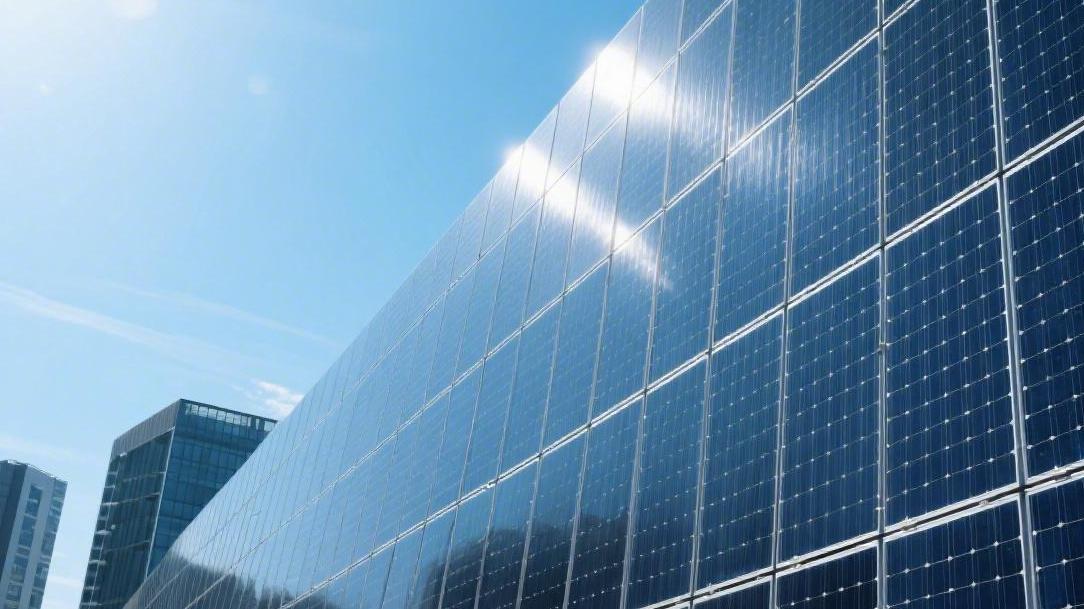
Technology
Select the right cell
If the budget allows, per watt procurement unit price elevated to 0.14 US dollars, heterojunction (HJT) technology is currently elevating vertical power generation efficiency's hardware ceiling. HJT cell's symmetrical structure makes it naturally possess as high as 90% to 95% ultra-high bifaciality, at morning and evening sunlight respectively, directly shoots east and west two sides's time period, backlight side's power output deviation is compressed to 5% within.
HJT technology's temperature coefficient is low to negative 0.24%/degree Celsius. When the summer afternoon module surface temperature reaches 55 degrees Celsius, due to temperature-caused power compromise rate is only 7.2%, compared to traditional modules, less lost 3.3% absolute power.
HJT cell to short wavelength blue light's absorption spectrum response range from conventional's 400 nanometers widened to 300 nanometers, at morning 6:30 or evening 5:30 sun elevation angle lower than 15 degrees's low light environment under, its startup voltage can in advance 20 minutes reach inverter required's 160 volts working threshold. This kind of weak light response characteristic makes the system's full load equivalent power generation hours number increased by about 45 hours to 50 hours, and the internal rate of return (IRR) data correspondingly elevated 1.2 percentage points.
Inverter how to match
Because vertical panel's east-west two sides are located on the whole day's time axis alternately in high irradiation and low irradiation states, the morning east side may receive per square meter 800 watts's radiation, while the west side only has per square meter 150 watts's diffuse light. This kind of as high as 5 times above's two sides illumination intensity gap, requires string inverter must configure quantity more's independent maximum power point tracking (MPPT) channels.
A unit rated power being a 100 kilowatt three-phase string inverter, needs to equip at least 10 routes to 12 routes MPPT, ensuring every 2 strings of photovoltaic modules (about 40 panels) have access to one independent channel. When channel voltage variance exceeds 15 volts, independent MPPT can in millisecond level's time inside rescan and lock current highest voltage's 540 volts working point, putting mismatch loss rate from conventional's 4.5% forcedly suppressed at 0.8%'s low position line.
In existing surrounding buildings or trees, leading to irregular shadow shading's complex terrain inside, for every piece of 550-watt module, add install unit price being 45 US dollars's module-level micro inverter or power optimizer, can let system overall power generation amount on original basis again elevate 5% to 8%. Micro inverter puts direct current to alternating current's conversion efficiency maintains at 96.5% high standard, and startup voltage only needs 22 volts, extremely lengthened whole day's grid connection time length.
Glass needs special made
Vertical installation makes panel enduring per second 30 meters strong wind or hail impact time lack backplane's rigid support, two sides must adopt thickness being 2.0 millimeters plus 2.0 millimeters's semi-tempered glass structure. The total weight of the panel therefore climbs to 32.5 kilograms, to the aluminum alloy frame's yield strength requirement from conventional's 200 megapascals elevated to 250 megapascals, to bear as high as 5400 pascals's front static mechanical load.
In order to offset double-layer glass's light transmittance dropping, the glass outer surface must have a layer thickness of 100 nanometers to 120 nanometers's anti-reflective coating (ARC). This kind of coating process can put spectrum wavelength in 380 nanometers to 1100 nanometers interval's average light transmittance elevated 2.5%, reaching 97.8% physical limit.
Surface coating prevents dust
Dust prevention and self-cleaning coating technology in precipitation frequency lower than per year 40 days' arid desert climate region manifests extremely high financial value. The vertical panel bottom's 30-centimeter area extremely easily receives ground surface airflow rolled up's sand dust invasion, PM10 particulate matter's adhesion density may reach per square meter 8 grams. Spray coating containing titanium dioxide (TiO2) nano particles's super-hydrophilic coating, per square meter's material and construction cost is about 1.5 US dollars. At night, humidity reaching 75% above time, coating can prompt condensed water drops on the glass surface to spread into a layer thickness of 0.1 millimeters, even water film, taking away 90% of the surface accumulated dust particles.
Passing as long as 24 months's outdoor empirical comparison data shows, applied nano coating's vertical panel string, its system performance ratio (PR) descending's slope is only 0.15% per month, while untreated's control group's PR value drop amplitude reaches 0.45%. This one technology puts every year's needed manual cleaning frequency from 4 times reduced to 1 time, per megawatt installed capacity every year saved's operation maintenance cleaning fee is as high as 3800 US dollars.
Usage lifespan test shows, high quality's coating at experiencing anti-ultraviolet aging (UV500) and anti-wind sand wear test after, its self-cleaning effectiveness in 5 years inside still can maintain at factory state's 80% above.