How Do Solar Panel Prices Vary Based on Size and Efficiency
The price of solar panels is directly affected by their size and conversion efficiency.
Under the same standard dimensions, a 300-watt basic panel with 17% efficiency is priced at about $150, while a monocrystalline silicon panel utilizing premium materials and achieving up to 22% efficiency often exceeds $350.
Pursuing high efficiency to save installation space typically results in a premium of about 30% per watt.
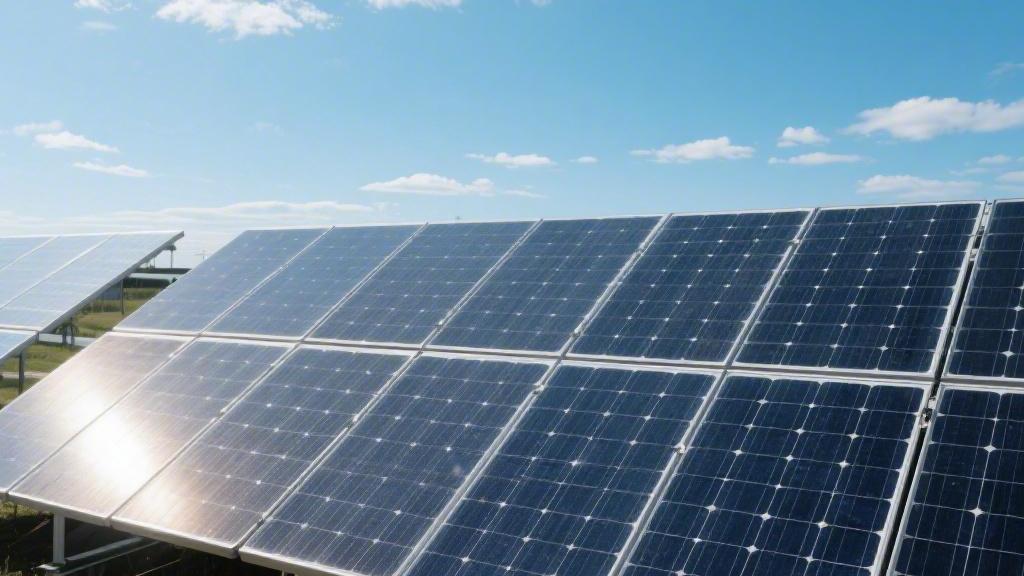
Physical Dimensions vs. Power Output
The physical dimensions of residential rooftop solar panels are 100% strictly limited by the number of encapsulated silicon cells inside. Using 60 full-cell arrays or 120 half-cell arrays of M6 specification 166 mm silicon wafers, the external frame length is maintained at 1.75 meters and the width at 1.04 meters, with a total calibrated surface area of 1.82 square meters. When the number of silicon cells loaded in a single panel increases to 72 cells or 144 half-cells, the length of the individual module extends beyond 2.1 meters, the width remains at 1.04 meters, and the overall physical footprint expands accordingly to 2.18 square meters.
For a residential photovoltaic module with an area of 1.82 square meters, under Standard Test Conditions (STC) of 1,000 W/m² irradiance and 25°C operating temperature, the rated DC output power mainly falls within the numerical range of 350 watts to 420 watts. When replaced with a 2.18-square-meter commercial-grade large-size panel, the single-unit rated power output increases proportionally, and the tested peak data can usually reach 450 watts or even break through the high mark of 500 watts.
l For every 0.36 square meters of spatial increase in the panel's physical surface area, under the same baseline photoelectric conversion efficiency ratio of 19% to 21%, the hardware's theoretical limit output power will correspondingly increase by an increment of 80 to 100 watts.
l Installing a 2.18-square-meter large panel, compared to a 1.82-square-meter standard panel, increases the wind load pressure coefficient on the windward side of the single panel by about 20%, raising the tensile strength parameter requirement for the underlying aluminum alloy mounting brackets by 15 MPa.
l In shading tests, a 1.82-square-meter panel with a 120 half-cell design divides its internal diode circuits into 6 independent working zones, reducing its power loss percentage by 50% compared to the rated loss ratio of a traditional 60 full-cell designed panel.
Calculating Power Generation
There is a strict linear regression probability equation between physical area expansion and output power growth, and the power density parameter per square foot of panel area is a data indicator measuring the per-watt cost of the system.
The power density per square meter of mainstream N-type TOPCon cell technology has stabilized within the numerical range of 220 to 230 watts. When calculating a residential power system with an installed capacity of 8000 watts, purchasing 1.82-square-meter standard-sized modules with a single output power of 400 watts requires a procurement list containing 20 independent panels. If the procurement catalog is changed to 2.18-square-meter large-format modules with a single panel power of 500 watts, achieving the 8000-watt total power target only requires the assembly of 16 modules.
A 20% reduction in the total number of procured panels leads to a shortening of the total connecting wire length by about 30 feet, and the consumption of MC4 DC series connectors decreases synchronously by 8 units. The reduction in module quantity caused by physical dimension changes lowers the individual carrying trips for installation workers from 20 to 16, thereby driving down the per-watt labor installation cost ratio from $0.25 to $0.22.
l The total coverage area of twenty 1.82-square-meter panels reaches 36.4 square meters, whereas the cumulative footprint of sixteen 2.18-square-meter panels is 34.88 square meters, reducing the overall space utilization rate by 4.17%.
l Regarding rated voltage parameters, the open-circuit voltage (Voc) of a 72-cell module usually reaches up to 48 to 50 volts, which is more than 20% higher than the 40-volt open-circuit voltage median of a 60-cell module.
l When connecting a single string to a residential string inverter with a 600-volt maximum input voltage limit, a single physical branch allows a maximum series connection of twelve 2.18-square-meter modules with a 48-volt open-circuit voltage, or fifteen 1.82-square-meter standard modules with a 40-volt open-circuit voltage.
Accounting for Structural Weight
The expansion of the panel's physical volume is accompanied by a 25% positive growth in total mass parameters. The static weight of a single 1.82-square-meter standard-area glass backsheet module is distributed within a standard deviation range of 19 kg to 21 kg.
When upgrading to a 2.18-square-meter large bifacial generation module, due to the coverage of two layers of 2.0 mm thick tempered glass, the single-piece weight data sharply increases to a range of 28 kg to 32 kg. When calculating the static dead load of the roof structure, a 1.82-square-meter panel provides an average surface load of about 11.5 kg/m². After switching to a 2.18-square-meter module, the surface load value rises to 14.6 kg/m², representing a mass increase of 26.9%.
In high-latitude regions of North America where snowfall reaches 40 inches annually, building codes require roofs to have a minimum ultimate load-bearing pressure threshold of 40 lbs/sq ft (approximately 195 kg/m²).
l When installing a 28-kg, 2.18-square-meter panel on a pitched roof with a 30-degree incline, the peak muscle load for a single person lifting it upwards once increases by 47% compared to carrying a 19-kg panel.
l When subjected to a laboratory mechanical frontal snow load pressure test of 5400 Pascals, the maximum downward deflection displacement at the center point of a 2.18-square-meter large panel reaches 35 mm, which is 40% higher than the 25 mm deflection displacement of a 1.82-square-meter panel.
l To suppress the increased deflection deviation brought by a larger area, the thickness of the aluminum frame profile for panels exceeding 2.1 meters in length must be increased from 1.5 mm to 30 mm or 35 mm cross-sectional height, increasing the aluminum manufacturing cost by $2.5 to $3.0 per panel.
Observing Thermal Degradation
The 100% total physical area parameter of the panel not only determines the total received flux of 1000 watts of solar radiation per square meter but also locks in a 1:1 heat dissipation surface area ratio where the back contacts the air.
During peak summer periods when the ambient temperature reaches 35°C, the actual working surface temperature of the panel soars to extreme values of 65°C to 70°C. Currently, the nominal temperature coefficient of power (Pmax) for monocrystalline silicon cells is maintained within a statistical range of -0.34%/°C to -0.38%/°C. For every 1°C the panel's operating temperature rises above the 25°C upper limit of the standard test temperature, the actual output power probabilistically suffers a 0.35% depreciation ratio.
A 2.18-square-meter large-format module integrates more high-power cells on a single piece, with an internal short-circuit current (Isc) as high as 13 to 14 amps, far exceeding the 10 to 11 amps median current parameters of a 1.82-square-meter module.
l When a high current of 13 amps passes through internal busbars, the internal thermal loss power (I²R) generated according to Joule's law is 53.2% higher than that of a 10.5-amp current, correspondingly increasing the probability of localized hot spots in large panels.
l To conduct away the 53.2% extra Joule heat generated, the 2.18-square-meter panel relies on its 20% increased physical rear dissipation area for passive air-cooling convective heat exchange.
l After calculation through a 25-year standard degradation cycle model, a large-area module with an average operating temperature 2°C higher will see its terminal retained power ratio drop to 82.4% in the 25th year, lower than the 84.1% retained median parameter of a standard-area panel.
Maximizing Small Spaces
In townhouses or multi-pitched independent homes with an available installation area of less than 25 square meters, constrained by the 3-foot (about 0.9 meters) mandatory edge setback distance required by fire lane codes, the physical area practically available for laying photovoltaic modules often shrinks to a narrow distribution range of 15 to 18 square meters.
Under this low-capacity spatial sampling, installing polycrystalline silicon or early monocrystalline silicon modules with a conversion rate of 16% to 17% yields a power density of only 170 watts per square meter. A physical coverage of 15 square meters can accommodate a maximum of only eight 1.82-square-meter standard panels, leaving the total rated system power at a minimum value of 2700 watts.
To increase the total output load within a limited geometric volume, N-type heterojunction or back-contact high-efficiency panels with conversion rates of 22.5% to 23% become the parameter variables to break the spatial ceiling. High-efficiency technology elevates the power density per square meter to a high-end range of 225 to 235 watts. For the exact same absolute area of 15 square meters, using modules with a 23% conversion rate can forcibly raise the total system capacity to 3400 watts, achieving an overall power capacity growth rate of 25.9%.
According to calculations from a 25-year full life-cycle generation statistical model, a 2700-watt system under an average lighting cycle of 1600 hours per year has a median annual generation of 4,100 kWh; whereas, upon upgrading to a 3400-watt high-efficiency capacity, the peak electricity output in the first year jumps to 5200 kWh. The additional 1,100 kWh electrical flux generated annually is equivalent to covering the high-frequency operating power demands of a 1.5 kW rated air conditioner for 730 hours a year.
Calculating the High Premium
The purchasing behavior of buying panels with a high conversion rate of over 22.5% is accompanied by a significant expansion in procurement cost variance. Currently, in the North American retail market, the median factory price per watt for 17% efficiency standard panels remains at a low of $0.75, while top-tier back-contact panels with 23% efficiency command unit prices as high as $1.35 to $1.50 per watt, representing a deviation amplitude of over 80% in single-watt hardware costs.
When calculating a 3.4 kW total installation project, if high-conversion-rate panels are adopted exclusively, the procurement budget for the module segment alone will soar from $2,550 to $4,800, generating a monetary premium of $2,250. In highly space-constrained installation scenarios, this $2,250 extra expenditure can probabilistically be fully digested by the long-term payback cycle of retail electricity prices.
Based on a California utility company's tiered electricity rate base of $0.28 per kWh and a natural electricity price growth rate of 4% annually, the extra 1,100 kWh of energy produced by the 3.4 kW high-efficiency system can translate into an absolute electricity bill savings of $308 in the very first year.
Introducing the financial regression analysis formulas of discount rate and net present value (NPV), the $2,250 hardware price difference sunk cost can cross the break-even point in exactly 6.8 years. Over the remaining 18.2 years of the product's life cycle, the extra energy produced will form pure compound interest returns, and the cumulative excess return rate over 25 years will reach a peak data point of 215%.
Pairing with Microinverters
Cramped roof geometric distributions are usually accompanied by complex obstacle shading frequencies. Skylights, ventilation pipes, chimneys, and nearby trees project irregular, dynamic shadows onto the module surfaces during specific morning and evening timeframes every day.
When a traditional string inverter is connected to standard panels that suffer 10% area shading, the current transmission rate of the entire series circuit is constrained by the "wooden barrel effect" (weakest link principle), causing the output power of the entire branch to experience a steep, cliff-like drop of 30% to 40%.
In high-density 15-square-meter installation setups, independently configuring microinverters or DC power optimizers for each high-efficiency panel is the mainstream approach to eliminating power dispersion.
Microinverters can execute maximum power point tracking algorithms at the individual panel level, scanning voltage and current fluctuation correlations at a frequency of hundreds of times per second. This strictly limits the percentage of power loss caused by partial shading to a ratio equivalent to the physical area being shaded.
The procurement unit price per watt for microinverters ranges between $0.15 and $0.20, adding an estimated hardware budget of $600 to a 3.4 kW system. Based on sampling statistics in high-sunlight latitude regions, modular-level power control precision can narrow the total system output generation variance over a 25-year cycle by 12%, elevating the overall energy utilization efficiency by an average of 8.5% to 11%.
Maximizing Marginal Gains
High-conversion-rate modules demonstrate superior standard deviation control when combating natural aging and degradation rates over the dimension of time. After P-type silicon wafers of conventional 17% efficiency panels undergo light-induced degradation in their first year of use, the power reduction rate often fluctuates between 2% and 2.5%, and the median linear degradation ratio over the subsequent 24 years is 0.55% annually. By the time the system reaches its 25-year calibrated end-of-life point, the rated output accuracy drops to approximately 83% of the initial power.
N-type high-efficiency panels reduce the concentration of boron-oxygen complexes at a molecular level, compressing the first-year light-induced degradation probability to a minimum of 0.5%. The subsequent year-over-year power degradation rate is precisely controlled within an extremely low variance range of 0.25%. Under the physical constraint of only 15 square meters of available area, an extremely low degradation percentage possesses immense long-term financial relevance.
Key User Perspectives
Statistical data regarding the available roof area of standalone suburban villas in North America presents a clear normal distribution characteristic. Among a sample pool of 10,000 independent homes, the average available installation area reached 85 square meters, with its median value stabilizing around 82 square meters, showing a relatively small overall area distribution variance.
The equipment procurement budget allocation logic of households boasting expansive roofs over 80 square meters exhibits a strong negative correlation when compared to small urban residences.
Abundant physical space dilutes the area advantage brought by high-efficiency panels. Choosing economical large-format panels with a 17% conversion rate and a rated power of 350 watts per piece can compress hardware procurement costs to the lowest possible value, provided the total power capacity target is met.
Installing 24 low-conversion-rate modules covering 2.18 square meters each results in a total coverage area of 52.32 square meters, which is still far below the 80-square-meter available area ceiling. Under these specific physical volume and mass parameters, the median hardware price per watt is only $0.85.
Compared to a system of equal capacity employing 22% high efficiency with a unit price as high as $1.45, where both total installed capacities are 8400 watts, the economical scheme can reduce initial monetary expenditures by $5,040.
The substantially narrowed dispersion of upfront capital investment lifts the annualized return rate derived from electricity savings by 2.5 percentage points, shortening the financial payback period of the equipment investment to a historical low of 5.8 years.
Focusing on Payback Period
Household users pursuing pure financial ROI will break down the long 25-year system operating lifespan into a cash flow calculation model comprising over 300 calendar months. Throughout this lengthy time cycle, the system's average annual power generation is not a fixed, static number but rather follows a slow, dynamic downward trajectory alongside the aging of the silicon wafers.
When calculating the internal rate of return parameters, the first-year power reduction rate is typically set at 2%, and over the following 24 years, the median linear degradation rate is maintained at 0.5% annually. To resist this long-cycle power slide, actuarial-minded buyers often artificially engineer an inverter load ratio (DC/AC over-sizing) deviation of 110% to 115% during the initial design phase.
By increasing the absolute number of panels or boosting the peak output power of individual panels, the total capacity input on the DC side slightly exceeds the rated load limit of the AC side inverter.
During the four hours of intense solar radiation at noon each day, the system undergoes high-frequency power clipping, where excess DC energy is actively discarded by the inverter to protect the circuits. Although the instantaneous energy flux in the highest-value range is lost, the massive baseline of panels can significantly lift the overall average power generation during the weaker lighting frequency troughs of the morning and evening.
Long-term statistical regression results over 25 years show that this 115% over-sizing ratio can hedge against power errors caused by panel aging, ensuring that in the final 5 years of the system's life, the amount of electricity fed into the grid can still stably cover the 85th percentile of household electricity demand, securing stable commission rebates and monetary balances under net metering pricing policies.
Small Homes Seeking Maximum Capacity
Urban residential users with available space under 30 square meters, restricted by severe geometric dimensional boundaries, must rely on increasing the power density per unit area of the panels to meet extremely high whole-house electrical loads. Buyers are willing to bear hardware prices as steep as $1.5 to $1.8 per watt to acquire N-type monocrystalline silicon products with conversion efficiencies approaching 23%.
In their manufacturing process, these highly efficient modules drastically reduce the concentration of impurities inside the silicon wafer, significantly lowering the resistance when electrons shuttle through the semiconductor layers, thereby pushing the precision and ultimate efficiency of photoelectric conversion to the industry's highest points.
To squeeze out extremely high energy within a minuscule volume, the system must endure higher operating intensities and harsher physical pressures. In hot summer environments, panel surface temperatures often climb above 70°C, amplifying the probability of moisture penetration brought by high humidity. The double-layer 2.0 mm fully tempered glass encapsulation technology used by high-efficiency panels not only increases the absolute weight of a single module to 28 kg but also provides immensely strong mechanical compressive strength for the fragile internal cells.
When tackling frontal wind and snow pressure tests of 5400 Pascals per square meter, the amplitude and deformation error of the glass backsheet are strictly controlled within a range of a few millimeters. The elevation of physical specifications ensures that, even in highly space-constrained, high-density installation scenarios experiencing prolonged weathering, the actual output standard deviation of the modules will not exceed a significant deviation from factory-calibrated parameters.
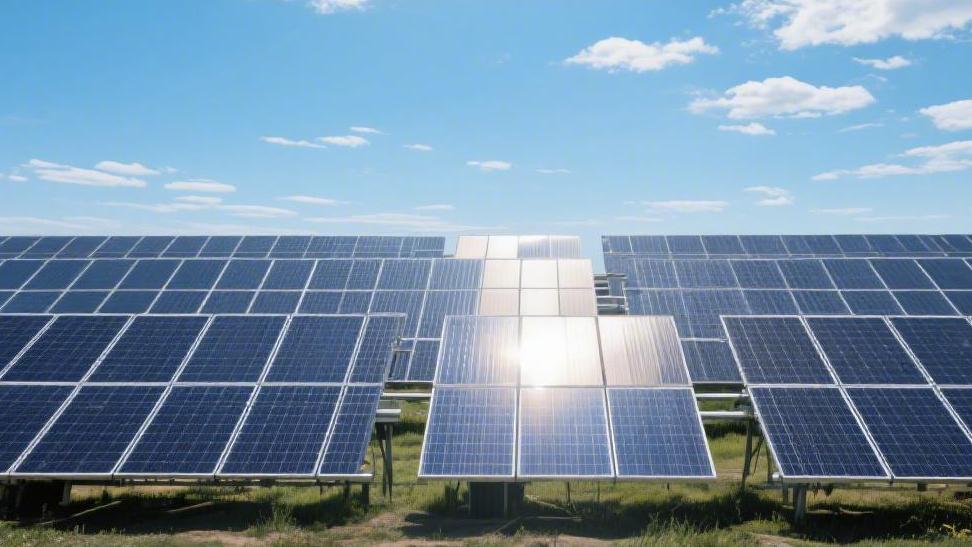
Crunching the Numbers
The trade-offs made by different types of users between size, efficiency, and price will ultimately reflect in specific billing details. The table below extracts the true parameter distributions under two extreme user profiles:
Data & Parameter Items | Broad Roof User Sample | Narrow Space User Sample | Deviations & Ratios |
Available Installation Area Limit | 95 square meters | 25 square meters | Spatial difference of 70 square meters |
Target Total System Load | 8,000 Watts | 8,000 Watts | Rated power is identical |
Selected Panel Conversion Rate | 17% (Poly/Standard Mono) | 22.5% (N-type High-Efficiency) | Efficiency difference of 5.5% |
Panel Physical Specifications | 2.18 sq.m / panel | 1.82 sq.m / panel | Size difference of 0.36 sq.m |
Theoretical Single Panel Output | 350 Watts | 400 Watts | Power difference of 50 Watts |
Required Procurement Quantity | 23 panels | 20 panels | Quantity reduced by 3 panels |
Actual Total Area Occupied | 50.14 square meters | 36.4 square meters | Area shrunk by 27.4% |
Panel Hardware Price per Watt | $0.85/Watt | $1.45/Watt | Unit price surges by 70.5% |
Total Panel Procurement Budget | $6,800 | $11,600 | Cost increase of $4,800 |
First-Year Light-Induced Reduction Rate | 2.5% | 0.5% | Accuracy improved by 2.0% |
25-Year Retained Power Median | 82.5% | 89.4% | End-of-life is 6.9% higher |
Estimated Static Payback Period | 5.5 years | 7.8 years | Time extended by 2.3 years |
Investment NPV Return Rate | 245% | 185% | Long-term yield differs by 60% |
The flow of capital perfectly aligns with statistical probability distributions. The underlying logic of purchasing behavior remains utilizing cheap physical surface area to hedge against expensive semiconductor photoelectric conversion efficiency. When the available physical volume is large enough, minor disadvantages in panel specification parameters are completely overshadowed by a massive quantitative baseline.
Conversely, when the area range is compressed to its absolute limit, the financial budget becomes the only parameter capable of breaking spatial constraints, exchanging steep per-watt costs for long-lasting output in the time dimension and extremely low power degradation volatility.