Which Type of Solar Panel is Best for Home
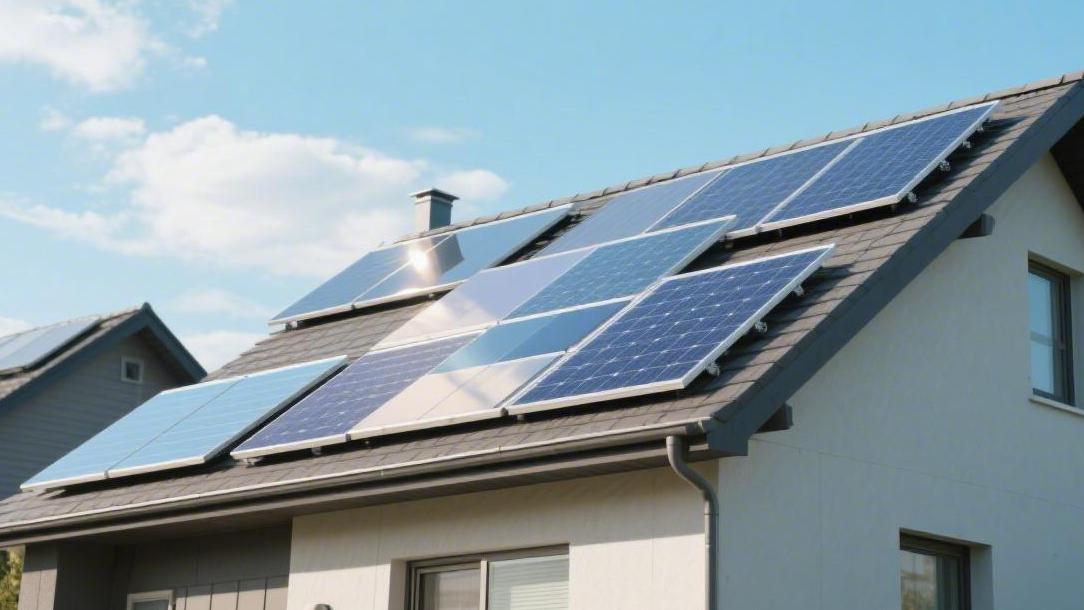
Monocrystalline solar panels are the preferred choice for residential roofs. With a photoelectric conversion efficiency as high as 20% to 22%, they can maximize power generation within a limited space.
Although the cost of about $1.2 per watt is slightly higher than that of polycrystalline silicon, their long lifespan of up to 25 years and low degradation rate can bring the best long-term return on investment.
Monocrystalline Solar Panels
How Wafers are Made
The raw material for monocrystalline solar panels involves melting pure elemental silicon with a purity of 99.999% in a high-temperature furnace. In a temperature environment exceeding 1400 degrees Celsius, the liquid silicon is pulled into a cylindrical crystal ingot, with the thermal margin of error during the physical growth cycle strictly controlled to an accuracy of plus or minus 1 degree Celsius. Subsequently, the factory uses precision cutting machines to slice the cylinder into individual monocrystalline silicon wafers with a thickness of 160 to 170 microns.
Currently, the side length dimensions of silicon wafers intended for residential installation are mainly divided into three specification categories: 166 mm, 182 mm, and 210 mm. When cutting the cylinder into a square, the four corners of the silicon wafer will retain an arc-shaped notch of about 10 mm to 15 mm. After being assembled and arranged on a whole panel, a large number of diamond-shaped white gap spaces will appear on the surface.
The surface of each deep-black monocrystalline silicon wafer is coated with an anti-reflection film with a thickness of 70 to 90 nanometers, responsible for reducing the sunlight reflection ratio to below 5%. Based on the distribution statistics of 1,000 randomly selected factory samples, the purity variance of a single cell is extremely small, and the consistency and accuracy of the product are extremely high.
How much power is generated under the standard test conditions of 1000 watts per square meter of light intensity and an air temperature of 25 degrees Celsius? The physical photoelectric conversion efficiency of mainstream residential monocrystalline solar panels generally falls within the percentage range of 20.5% to 23.5%. When buying residential modules, a monocrystalline solar panel composed of 108 or 144 half-cut cells connected in series mostly has a peak output power in the numerical range of 380 watts to 420 watts.
Calculating based on the average effective daily sunshine time of 5.5 hours in Texas, the daily electricity output of a single 400-watt panel fluctuates around 2.1 to 2.3 kilowatt-hours (kWh). If 15 panels of 400 watts are installed to form a power array with a total installed capacity of 6 kilowatts, in months with clear, cloudless weather, the total monthly power generation quota falls within the production range of 850 kWh to 950 kWh.
Compared to the oblique light in the morning, the solar rays have the smallest vertical angle of incidence between 12 PM and 2 PM, and the panel's real-time current output can reach its highest value of 9.5 to 10.5 amps. According to the full-year operation data, the seasonality of the overall power generation is very obvious, and the yield difference between summer and winter can reach a quantity gap of 40%.
Size and Weight-Bearing Capacity
Measuring a standard 400-watt monocrystalline solar panel with a tape measure, the length, width, and height are usually physical volume measurements of 67.8 inches by 44.6 inches by 1.2 inches, and the net weight of a single product is calibrated in the mass range of 45 to 48 pounds. When conducting a roof pressure test, the added weight pressure per square foot is less than 3 pounds, and almost all conventional wooden-structured pitched roofs can withstand this constant load intensity.
The manufacturer conducts strict mechanical tests on the panels before they leave the factory. The front side can withstand a maximum static snow load pressure of 5400 pascals, and the back side can resist a strong wind pressure load of 2400 pascals.
The periphery of each panel is wrapped with an anodized aluminum alloy frame with a thickness of 30 mm to 35 mm. Paired with 3.2 mm thick high-transmittance tempered glass, it can withstand the impact damage of hailstones with a diameter of 25 mm falling at a rate of 23 meters per second. To ensure light transmittance, maintaining a surface cleaning frequency of twice a year can reduce the surface dust concentration to the minimum value.
Temperature and Degradation
When solar panels encounter high-temperature environments during operation, once the actual surface temperature of the panel exceeds the median value of 25 degrees Celsius, for every 1 degree Celsius increase in temperature, the output power will produce a reduction rate error of 0.25% to 0.35%. When summer temperatures in Arizona reach 110 degrees Fahrenheit, the roof surface temperature often soars to 150 degrees Fahrenheit, causing a downward deviation of roughly 12% to 15% in the peak output of the entire module.
Prolonged exposure to wind and sun outdoors will cause natural performance aging of the panels. The full-power degradation rate of monocrystalline silicon technology in the first year will absolutely not exceed a downward ratio of 2.0%. From the 2nd year extending through the 25-year time span, the annual average decline in power generation is strictly controlled within the percentage of 0.4% to 0.5%.
By the 25th year, when the equipment enters its twilight years, calculating the real-time voltage and current of a product originally rated at 400 watts will still maintain an active power output of more than 340 watts. The degradation dispersion over the entire life cycle is very small.
System Installation Costs
The various expenses of assembling a residential monocrystalline photovoltaic array are precisely split into different hardware and service items. Taking a standard 7-kilowatt power system as an example, below is the categorized billing breakdown of various expenses:
l The procurement cost of panel modules accounts for approximately a 30% to 35% ratio of the total expense amount. Calculated on a baseline price of $0.9 per watt, the pure hardware monetary expenditure for 7 kilowatts of panels fluctuates around $6,300.
l Inverters are responsible for converting direct current into alternating current. The cost budget for a single string inverter is $1,200 to $1,500. If microinverters are used, the entire construction cost will experience a growth rate of 18% to 22%.
l The purchasing expenses for the roof mounting structure, conduit wiring, and cable accessories take up a 10% to 12% share of the total expenditure, costing roughly a monetary figure of $1,500 to $1,800.
l Manual construction commissions, grid connection approval document applications, and municipal permit filing fees occupy the remaining percentage of the bill. In high-wage areas like California, the median for this portion of labor expenditure can reach the price range of $4,500 to $5,500.
Calculating the Return on Investment
When spending money to purchase a monocrystalline system in the United States, after applying and being approved for the 30% Federal Tax Credit deduction, the actual out-of-pocket monetary figure paid by the homeowner is roughly in the price range of $11,500 to $12,600. Assuming the local utility billing rate is $0.18 per kWh, it offsets an average of about $120 to $140 in electricity bill expenses each month.
Using the total cost divided by the monetary amount of $1,500 saved annually to deduce the division result, the median payback time falls within a span of about 8.0 years. If the unit price of grid electricity continues to rise at an inflation probability of 3% per year in the future, after the entire set of equipment operates on the roof for 25 full yearly cycles, deducting the initial investment costs, it will cumulatively bring in over $25,000 in pure paper profit.
Looking purely at the math, the upfront investment for monocrystalline solar panels is 15% higher in the expense budget, but in the latter half of their life cycle, they can yield an excess return on investment of over 10%.
Polycrystalline Solar Panels
How Silicon Blocks are Made
Manufacturing polycrystalline solar panels does not require pulling a perfect cylinder. The factory places crushed silicon material with a purity of 99.99% into a square quartz crucible and melts it completely under a constant high temperature of 1500 degrees Celsius. The cooling and solidification cycle of the liquid silicon in the square mold typically requires a time span of about 40 to 50 hours. Because the distribution of the cooling rate in various regions of the liquid is uneven, it causes crystal structures of varying sizes and random arrangements to grow internally.
A multi-wire saw cuts the giant solidified silicon block, with length, width, and height dimensions of 1,000 mm by 1,000 mm by 400 mm respectively, into square flakes with a thickness specification of 180 to 200 microns.
Because what is cut out is inherently a perfect square physical dimension, the side length specification of a single polycrystalline cell is fixed at the parameter of 156.75 mm. When 60 or 72 cells are arranged on a rectangular area panel, the reduction rate of the gap space between the cells reaches an extremely low level.
Based on surface flatness statistics from 10,000 randomly selected samples of freshly cut factory silicon wafers, the variance of thickness errors generally falls within an extremely high-precision range of plus or minus 10 microns.
What Color is the Surface
The physical surface of polycrystalline silicon slices contains a large number of grain boundaries in various directions. When sunlight shines on them, it produces light refraction and reflection at different angles, causing the panel surface to display blue patches of varying shades to the naked eye.
In order to strictly press the percentage of the overall surface reflectance down below the lower limit of 6%, the factory coats the surface of each thin silicon wafer with an anti-reflection film of silicon nitride approximately 80 nanometers thick. The refractive index parameter of this film is stably maintained within a fixed numerical range of 2.0 to 2.1.
Measuring the dispersion of the surface physical structure under an electron microscope, the microscopic roughness ratio of the polycrystalline silicon surface exceeds a value of 30%, which hinders the shuttling speed of electrons moving internally, causing the internal resistance for photoelectric conversion to increase by an amount of roughly 0.5 ohms.
The irregular grain boundary structure on the surface of polycrystalline solar panels generates an extra 2% to 3% probability of light energy reflection. In a standard illumination environment of 1000 watts per square meter, its power loss ratio of physical internal current transmission averages 1.2 percentage points higher than that of monocrystalline products, thereby suppressing the ultimate photoelectric conversion efficiency upper limit of the entire module at an extreme value of 17.5%.
How Much Power Can It Generate
In a laboratory constant temperature test chamber at 77 degrees Fahrenheit, the average conversion efficiency of a standard residential polycrystalline solar panel falls within the percentage range of 15% to 17%, and the rated active power output specifications of a single panel are concentrated in the quantity range of 275 watts to 320 watts.
If 20 polycrystalline panels rated at 300 watts are installed on a detached house roof in Nevada with a daily effective sunshine time reaching 6.2 hours, bringing the total capacity of the entire hardware system to a power parameter of 6 kilowatts, the peak maximum daily power generation in summer barely touches the quantitative yardstick of 32 kWh.
When the winter solar incidence angle deviates and the total light intensity decline ratio reaches a level of 40%, the lowest value of daily power generation output will plummet sharply to a downward range of 12 kWh to 15 kWh.
Looking at the continuous 12-month inverter electricity flow statistical report, the fluctuation amplitude of the output kilowatt-hours for a polycrystalline system each month reaches a percentage of about 35%. In low-light environment tests during rainy weather, the probability of generating rated current decreases at a rate of approximately 15%.
Footprint and Heat Resistance
Installing a polycrystalline system on a roof to meet a household load that consumes 900 kWh in a single month noticeably drives up the demand for physical footprint area.
To reach a total installed nominal capacity of 7.2 kilowatts, the homeowner needs to purchase and lay 24 polycrystalline modules with a rated power of 300 watts. This will consume a total of about 450 square feet of physical volume space on the roof, and the total area requirement is an extra 25% higher than that of high-conversion modules.
A single polycrystalline panel reaching length, width, and height dimensions of 77 inches by 39 inches by 1.5 inches has its total weight distributed at a mass value of 50 pounds, bringing a static load pressure of about 3.5 pounds per square foot to the roof's wooden trusses.
The operating temperature coefficient on the panel surface is highly undesirable. When the air temperature exceeds the median value of 25 degrees Celsius, for every 1 degree Celsius increase in surface physical temperature, the reduction rate of output power will be as high as a ratio figure of 0.4% to 0.45%.
Under extreme high-heat weather in Arizona summer, where outdoor ambient temperatures soar to 105 degrees Fahrenheit, the real temperature of the polycrystalline panel surface will break through 160 degrees Fahrenheit. Thermodynamic physical losses cause the instantaneous output power at the inverter end to experience a sharp drop of up to 18% to 22%, and the negative deviation rate of the total daily power generation exceeds 15%.
How Much Does It Cost to Buy?
The absolute advantage of polycrystalline panels on paper is reflected in their cheap per-watt procurement costs. Currently, the average factory unit price is strictly maintained within a budget range of $0.5 to $0.65.
If one is to build a residential photovoltaic system with a standard power of 5 kilowatts, the pure hardware purchasing expense of buying 16 polycrystalline panels of 315 watts is only a monetary figure of roughly $2,800 to $3,200.
Adding the $1,500 purchasing cost for microinverters, along with roughly $4,000 for municipal approval filing and manual handling and installation commissions, the total paper price of the entire project is around the price level of $8,500.
By applying to the IRS to deduct the 30% federal tax credit benefit amount, the actual monetary quantity paid out of the homeowner's account is approximately $5,950.
Within a grid billing cycle in Florida, where utility electricity is charged at $0.14 per kWh, the entire system can help a family save about $1,100 on their electricity bill in the first year. Doing a division math problem using the total initial investment, the average chronological time required to recover all monetary costs is a cycle length of about 5.4 years.
How Many Years Can It Last
For polycrystalline panels bought and mounted on the roof exposed to wind and sun, the physical warranty life cycle is generally set by manufacturers within a time span of 25 years.
In the first 12 months just after completing energization and grid connection, the initial light-induced degradation reduction rate of the panels is in a percentage range of about 2.5%. On the long timeline starting from the 2nd year and continuing all the way to the 25th year, the annual power decline degradation rate of the modules is constant within a percentage fluctuation range of 0.6% to 0.7%.
Advancing the calculation year to the finish line of the 25th year, using a professional multimeter instrument to measure a single panel originally nominally rated at a 300-watt parameter, the actual measured maximum output power remains roughly at an absolute value of around 235 watts, exactly maintaining a residual value ratio of 78% to 80% of its initial nominal capacity.
Sampling operating statistics from coastal cities with long-term humidity exceeding 80% and under high-temperature stress, the probability of micro physical delamination occurring at the edge backsheet of polycrystalline panels will increase by about 0.8 percentage points, and the variance of resistance short-circuit failures caused by moisture permeating inside will experience a slight rise of about 2%.
Thin-Film Solar Panels
How Are They Manufactured
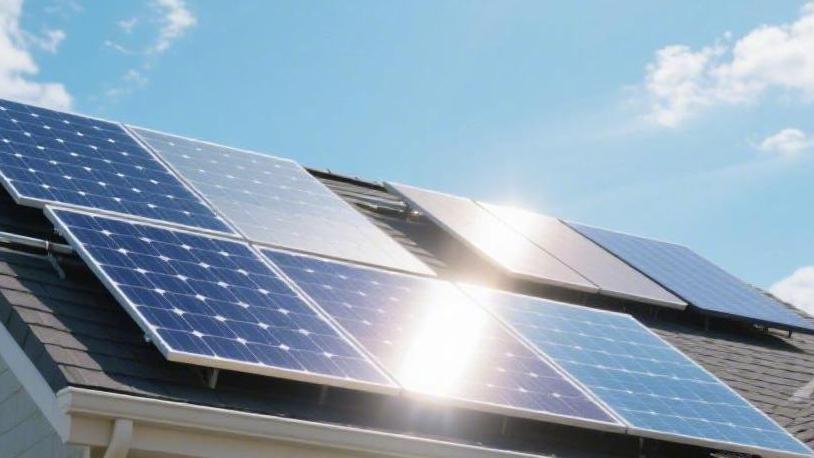
Factories subject chemical materials like cadmium telluride (CdTe) or copper indium gallium selenide (CIGS) to vapor deposition in a high-temperature vacuum reaction chamber at 400 degrees Celsius, directly evaporating and coating them onto glass or flexible plastic substrates with a physical size specification maintained at merely 1 to 2 microns in thickness.
The volumetric mass of this extremely thin layer of photosensitive material only accounts for roughly a 1% to 2.5% percentage of the total weight of the entire panel, reducing the quantitative ratio by about 98% compared to the 180-micron physical thickness of traditional silicon wafers. The manufacturing assembly line strictly controls the margin of error range for coating temperatures to within plus or minus 5 degrees Celsius, and the standard deviation of the film thickness is compressed by robotic arms to an extremely low precision of 0.1 microns.
During a physical deposition production cycle lasting up to 120 minutes, the mixing ratio of chemical gas concentrations is kept at a constant mean of 15%, ensuring that the uniform accuracy of the internal photoelectric material distribution reaches a peak of 99.9% when the panels leave the factory.
How High is the Conversion Rate
In a standard illumination intensity test environment of 1000 watts per square meter, the median photoelectric conversion efficiency of commercial thin-film solar panels usually falls within the percentage range of 10% to 13%. If flexible thin-film modules using CIGS materials are chosen, the extreme value of the maximum rated conversion probability can float up to a ratio of 14% to 15.5%. Laying a thin-film product 115 inches long and 39 inches wide flat on a roof, its peak nominal active power is generally calibrated by manufacturers within the numerical range of 110 watts to 150 watts.
In the autumn months in Ohio, with an average daily effective sunshine time of 4.2 hours, the total daily electricity sum generated by a single 150-watt thin-film panel produces minor fluctuations within roughly the 0.55 kWh to 0.65 kWh yield range. Encountering a scattered light environment where cloud cover increases the light refraction index by 20%, the degradation rate of real-time current output for thin-film panels is only at a ratio of 8% to 10%. Under low-light conditions, the statistical sample average of power generation is about 4.5 percentage points higher than that of silicon-based panels.
Dimensions and Weight
Thin-film solar panels eliminate heavy aluminum alloy frames and 3.2 mm high-transmittance tempered glass on the assembly line. The physical thickness of a single rated 150-watt flexible module is typically less than the 0.15-inch specification. A whole roll of thin-film panels covering an area of 30 square feet yields a mass reading on an electronic scale of merely the 6 to 8 pounds weight range.
When sticking it onto a metal or asphalt shingle roof using adhesive backing, the static load pressure exerted on the roof's load-bearing trusses is diluted to an extremely low intensity of about 0.2 to 0.35 pounds per square foot. In a strong wind airflow wind pressure load test withstanding a wind speed of 35 meters per second, the probability of the thin-film material clinging to the roof surface undergoing physical displacement is less than a minuscule error of 0.1%.
Physical Parameter Test Item | Data Sampling Median Value | Error Standard Deviation Range | Performance Change Increase/Decrease Ratio |
Area Power Density Ratio | 5 watts per square foot | Range of plus/minus 0.4 watts | Decreased by 60% compared to silicon panels |
Single Panel Weight Value | Single module 7.5 lbs | Fluctuation of plus/minus 0.5 lbs | Reduced by 85% compared to silicon panels |
Roof Load-bearing Pressure Value | 0.25 lbs per square foot | Dispersion of plus/minus 0.02 lbs | Load torque weakened by 90% |
Physical Thickness Specification Value | Average thickness 2.5 mm | Precision of plus/minus 0.1 mm | Volumetric space reduced by 80% |
Temperature and Lifespan
During scorching summers in Texas, where temperatures soar, when the roof surface temperature breaches the high-temperature environment of 140 degrees Fahrenheit, the thermodynamic operational parameters of thin-film panels demonstrate an extremely low power loss ratio. For every 1 degree Celsius the panel surface physical temperature exceeds the 25 degrees Celsius baseline, the output power reduction rate is merely a percentage figure of 0.18% to 0.20%.
Compared to the degradation rate of easily 0.4% for other materials at high temperatures, the positive deviation rate of the total full-day power generation for thin-film panels in a 100-degree Fahrenheit environment reaches an excess degree of 8% to 10.5%.
Because amorphous silicon materials suffer from physical light-induced degradation effects during the initial period of production and energization, in the 1st chronological year of grid-connected operation for the panels, the decline ratio of maximum power will sharply reach a percentage of 15% to 20%. After crossing the 12-month initial test cycle line, during the long operation time from the 2nd year to the 15th year, the annual average degradation rate rapidly converges and stabilizes at a constant ratio of 0.5% to 0.65%.
Calculating the Cost
The per-watt hardware expenditure to purchase thin-film panels in the hardware retail market is roughly within the price range of $0.4 to $0.55. However, building a power generation array with a total capacity of 5 kilowatts on a residential roof with limited available physical area requires consuming more than 1,000 square feet of roof layout space. Purchasing 35 thin-film panels rated at 150 watts will generate a monetary procurement bill of roughly $2,100 to $2,500.
To connect dozens of independent modules distributed across a huge roof area in series, the purchased length of DC cables and the usage of wiring auxiliary materials increase by an extra ratio of about 45%, generating system accessory costs of $800 to $1,100. After paying the local average hourly wage commission of $65 for electrician installation in California, the total paper price of the entire project is pushed up to an overall expense amount of $11,000 to $12,500.
After filing the 30% federal tax credit amount with the IRS, the median monetary cost actually paid by the homeowner's account falls onto a quantitative baseline of $8,200. Assuming the local utility grid's billing unit price is $0.15 per kWh, calculating the time length for this pure monetary investment to generate a positive cash return rate, the chronological span for capital payback is significantly prolonged to a time distribution range of 10.5 years to 12.5 years.