What Should You Consider Before Installing Solar on Historic Buildings | Regulations, Roof Structure, Visual Impact
The roof must bear a load of 20 kg/㎡.
It is recommended to choose 18% efficiency black photovoltaic tiles, maintain the original slope and conceal wiring, achieving about 30% electricity self-sufficiency while protecting the historic facade.
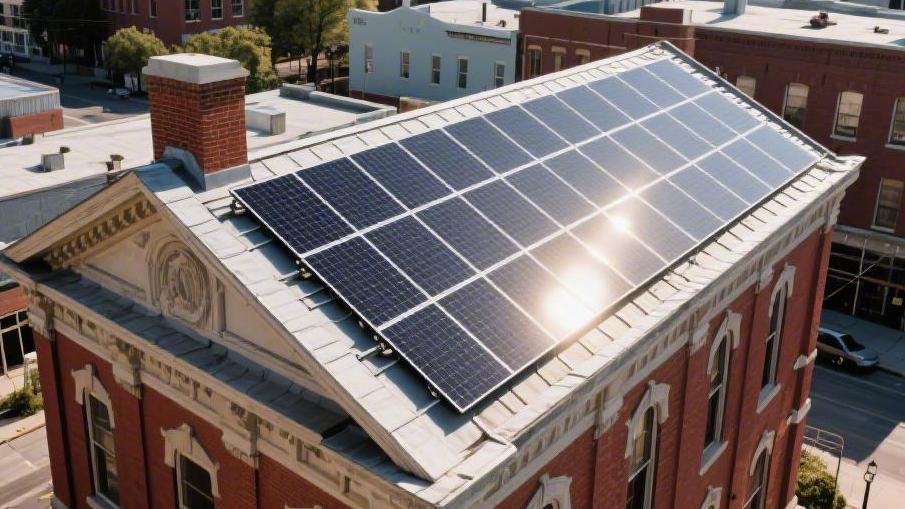
Regulations
In the United States, the Secretary of the Interior's Standards for Rehabilitation, items 9 and 10, restrict the scope of solar installations on 8.5 million old houses within 90,000 municipal historic districts nationwide. When you submit an application form to the local historic preservation commission, you need to pay a non-refundable municipal review fee ranging from $250 to $800. Once the property was built before 1975, the municipal building safety bureau will transfer the file to a special review panel composed of 3 to 5 members, and this preliminary review process will consume 45 to 60 calendar days.
If the photovoltaic array involves a large system exceeding 10 kilowatts, or covers more than 40% of the original roof area, the applicant needs to face a three-level in-depth review lasting up to 90 to 120 days, and additionally pay $1,200 to $1,500 for an environmental visual assessment report. In this review stage, about 35% of the initial applications are rejected because height or angle parameters do not meet standards, and the homeowner must modify 15 to 20 specific design details within the following 30 days and re-enter the queue.
What to prepare
The engineering proposal submitted to city hall is usually 30 to 50 pages thick, and must include a roof plan drawn at a 1:50 scale and elevation drawings from four different perspectives.
l A registered structural engineer must issue an 8-page static load analysis report to prove that the old 2x6-inch wooden rafters in the attic can bear an additional dead load of 3.5 to 5 pounds per square foot.
l The application dossier must include 3 solar shadow analysis diagrams for different seasonal sunlight conditions, demonstrating that the newly added photovoltaic array with a height of 6 to 8 inches will not reduce the daily sunlight time of neighboring roofs within 20 feet by more than 45 minutes.
l The manufacturer must issue a 2-page specification sheet, clearly marking that the surface glass reflectivity of the selected modules is controlled within 2% to 4%, and that the anodized black aluminum coating thickness of the frame reaches 15 to 20 microns.
To assemble this application package containing 12 documents, the homeowner needs to hire a professional designer with more than 5 years of experience in historic districts, which will incur an upfront design service fee of $1,500 to $2,500. If the house is listed on the National Register of Historic Places, one additional 10-page historic structure impact assessment will be added to the materials, extending the preparation period by 20 to 30 days.
Red lines
In all historic district planning regulations, a strict exposure rate limit of 0% is set for equipment visibility. If the house faces the street, municipal regulations require the minimum edge setback of the photovoltaic array from the street-facing eave to be 36 to 48 inches. For common pitched roofs with slopes of 4/12 to 8/12, the installation angle deviation between the solar panels and the original roof slope is limited to 1 to 2 degrees.
l When arranging panels on the side roof, the highest point of the array must be 12 to 18 inches below the ridge line, ensuring that when observed from a sidewalk 60 feet away from the central axis of the house, the visible area of the equipment does not exceed 5% of the total volume.
l Wall-mounted energy storage batteries with a capacity of 10 to 13 kilowatt-hours are 100% prohibited from being installed on the front facade or the front third of the side facade; they must be hidden in the backyard at least 25 feet away from street sightlines or in the basement.
l The metal conduit with an outer diameter of 1.5 inches connecting the roof and the basement, if exposed outdoors, must be painted with a custom coating with a color difference value less than 3 compared to the original brick wall, and the price of special paint per gallon is usually $80 to $120.
To meet these precise dimensional control parameters, installation workers need to spend an additional 10 to 15 labor hours on the roof for millimeter-level positioning measurements, which increases the labor cost per tile by $0.3 to $0.5.
Hearing
If the design plan triggers more than two exemption clauses, such as the installable area being less than 200 square feet and thus unable to meet the minimum 3 kilowatt power generation requirement, the homeowner must attend a public hearing held once a month. Fourteen days before the meeting, the applicant sends registered letters to 50 to 100 neighbors within a 300-foot radius, informing them of the specific time and location of the hearing, with mailing costs of about $400 to $600.
During the 15 to 20-minute presentation session, the applicant uses 3 to 5 3D simulation images with specific quantitative indicators to demonstrate to the 7 committee members that the plan complies with regulatory requirements. The members score the plan based on up to 25 evaluation criteria, and only when more than 5 votes are in favor can the homeowner obtain the construction permit valid for 180 days. If more than 3 substantive objections are raised by neighbors at the hearing, there is an 85% probability that the case will be postponed to the next month for re-review, delaying the grid connection time of the entire project by 30 to 45 days.
Calculate tax credits
The federal and state governments provide 6 levels of financial incentives to subsidize the additional compliance costs. As long as the system is fully connected to the grid before December 31, 2032, the 30% federal investment tax credit can be applied without limit to equipment purchases and customized installation costs.
l If a building with a history of 60 years is recognized as an income-generating commercial property, in addition to the 30% base credit, the owner can also apply for a 20% federal historic rehabilitation tax credit, and the two combined cover up to 50% of the initial total investment.
l In Massachusetts or New York State, the state government provides an additional rebate of up to $5,000, provided that the equipment commits to a service life of more than 20 years, and the electricity fed back to the grid annually does not exceed 120% of the system's total consumption.
l To obtain this combined tax credit with an average value of $8,000 to $15,000, the homeowner submits a 12-page Form 3468 to the tax authority, along with an audit report containing 50 cost breakdown items issued by a certified cost engineer, and the cost of issuing this report is $800 to $1,200.
By utilizing these stacked financial incentives, the initial installation budget for solar in historic buildings, originally 30% to 40% higher than ordinary residences, sees its final investment payback period reduced to 7.5 to 8.5 years.
Roof Structure
Measure old wood
A registered structural engineer needs to spend 1.5 to 2.5 hours in the hot attic, lying on insulation, measuring the deflection of each wooden rafter one by one. They hold a probe-type wood moisture meter and insert it into the beams at 10 to 15 different positions located three feet, six feet, and nine feet from the ridge line to test moisture content. Once the instrument shows the internal moisture content of the wood exceeds 18%, or termite damage exceeds 5% of the cross-sectional area, the damaged load-bearing beam must be replaced entirely.
The engineer calculates bending stress using formulas, and a deflection ratio greater than L/240 means that a beam 10 feet long has sagged more than 0.5 inches at its midpoint. A deformed wood frame cannot pass the 2021 International Residential Code solar retrofit acceptance standard. To issue an 8-page stamped static load analysis report, the employer needs to pay the engineering company $600 to $950, plus wait 5 to 7 working days for the report generation.
Calculate load
A common 400-watt monocrystalline photovoltaic panel on the market has physical dimensions of about 65 inches long and 39 inches wide, weighing 46 to 48 pounds, producing a static load of 2.5 to 3 pounds per square foot. Aluminum mounting rails, stainless steel L-brackets, and microinverters together add another 0.5 to 0.8 pounds per square foot of additional load.
In northern regions such as Massachusetts or New York State, the roof structure must not only bear the original weight of tiles but also withstand 30 to 40 pounds per square foot of winter snow load, as well as resist dynamic uplift forces caused by gusts of 110 to 120 miles per hour. A 3-inch ventilation gap between the solar panels and the roof deck creates a wind tunnel effect, increasing the uplift force on the fastening bolts by 15% to 20% compared to a flush state.
Reinforcement methods
Workers cut kiln-dried 2x6 or 2x8 Douglas fir lumber to appropriate lengths and place them parallel against the 80-year-old beam. They use 5/16-inch diameter, 4-inch long structural wood screws, driving one fastener every 12 to 16 inches along a 12 to 16-foot beam span.
Implementing a complete roof framing reinforcement project typically consumes 200 to 400 linear feet of new lumber and requires two carpenters working 16 to 24 labor hours. Material procurement plus labor wages increase the total solar project budget by $3,500 to $5,500 and delay panel installation by 3 to 5 days.
Check roofing material
Historic buildings have a wide variety of outer covering materials, and different materials cause significant differences in photovoltaic system fastening methods, construction time, and procurement costs.
Roof covering material | Required remaining lifespan | Installation premium per watt | Additional construction time | Special accessory cost |
Natural slate | More than 25 years | $1.20 - $1.80 | 12 - 16 hours | $800 - $1,200 |
Fired clay tiles | More than 20 years | $0.80 - $1.50 | 8 - 12 hours | $600 - $900 |
Copper standing seam | More than 30 years | $0.50 - $0.90 | 4 - 6 hours | $400 - $700 |
Asphalt fiberglass | More than 15 years | $0.00 - $0.20 | 0 - 2 hours | $100 - $200 |
Select fasteners
Installation workers use a drill to penetrate plywood roof decking thicker than 15/32 inches, drilling 5/16-inch guide holes, and precisely screw 5/16-inch thick, 4-inch long stainless steel lag bolts into the middle third of the wooden rafters below. Building codes require that the thread embedment depth into solid wood must not be less than 2.5 inches, achieving a pull-out resistance of 400 to 600 pounds per bolt.
In a system with 20 panels, workers need to create 40 to 45 independent penetration points on the old roof surface. To seal the holes, they use a three-layer flashing system: the bottom layer is a 12x12-inch anodized aluminum base plate, the middle layer has raised water-blocking ridges, and the outermost layer tightly wraps an EPDM rubber collar resistant to ultraviolet exposure. All metal modules must be upgraded to 304 or 316 stainless steel to prevent electrochemical corrosion when contacting copper or zinc roofing elements left from 80 years ago, adding $250 to $400 in material costs per system.
Prevent leaks
Before installing photovoltaic arrays on old roofs, the existing roofing material must have a certification issued by a licensed roofer confirming a remaining service life of more than 15 years, to match the 25-year generation warranty of solar panels. Installing a 5-kilowatt system on an asphalt roof with only 8 years of life remaining will lead to $2,500 to $3,500 in labor costs just to remove and reinstall the panels during future roof replacement.
During sealing, installers apply large amounts of polyether or polyurethane structural sealants, which can maintain 50% joint movement flexibility under temperature swings from 10°F to 140°F. Cheap silicone seals commonly on the market dry and crack after 5 to 7 years of intense UV exposure, causing water intrusion into historic building walls and resulting in thousands of dollars in secondary damage.
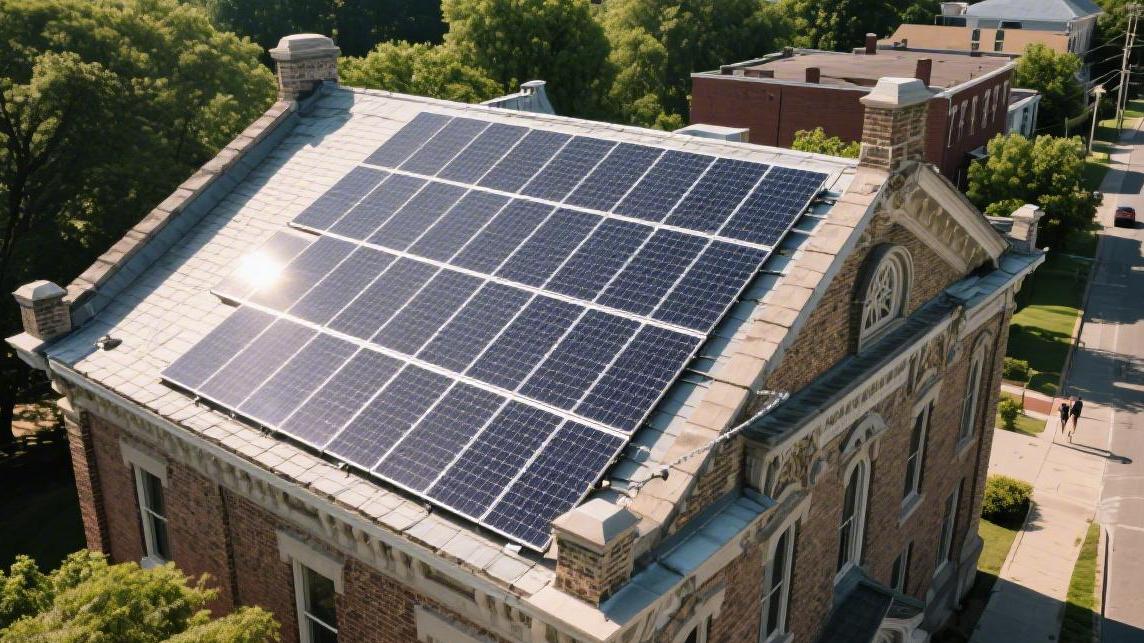
Visual Impact
Hide it to the back
When viewed from a sidewalk 60 feet away from the front facade, the highest point of the solar array must be at least 12 to 18 inches below the ridge line.
"Planning regulations clearly state that for rooftop photovoltaic systems above 10 kilowatts installed on south-facing main street facades, the rejection rate is as high as 98%, forcing more than 90% of homeowners to relocate a total of 25 to 30 panels, each measuring 65 by 39 inches, to the rear or side roof."
Relocating installation reduces daily direct sunlight exposure by 1.5 to 2 hours, decreasing annual energy production by 15% to 22%. To compensate for a 20% efficiency loss, homeowners need to purchase an additional 3 to 5 panels priced at $250 to $350 each, increasing equipment costs by $1,500 to $2,000. If the usable rear roof area is less than 400 square feet, engineers must select high-efficiency panels with 22% to 23% conversion rates, raising the per-watt price from $2.8 to $3.5.
Buy all-black panels
Traditional panels with silver aluminum frames produce glare reflectivity of 15% to 20% under sunlight, facing a 100% rejection rate in historic district approvals. Installers custom order all-black photovoltaic modules with anodized black coatings, with surface glass reflectivity set at a very low 2% to 3%.
"To maintain the visual integrity of 19th-century Victorian-style buildings, all-black panels composed of 60 cells remove silver grid lines, with color difference controlled within ΔE less than 2 at industrial precision."
Custom all-black panels increase the price of each panel by $30 to $50, raising hardware costs for an 8 kW system by $900 to $1,500. In summer temperatures of 100°F, all-black panels run 10°F to 15°F hotter than standard panels, reducing peak power output by 2% to 3%, resulting in about 4500 kWh less electricity over 25 years. To mitigate the 0.4% temperature coefficient loss, installers increase the ventilation gap from 3 inches to 4.5 inches, boosting airflow by 30%.
Flush and unobtrusive
Suspending 1.5-inch thick panels above old tiles disrupts the original 30- to 45-foot roofline of historic homes.
"Using frameless or thin-film solar technology reduces total system thickness from 6 inches to less than 2 inches, with zero angle deviation from the original roof slope."
CIGS flexible thin-film solar panels, only 0.12 inches thick and weighing 2.5 to 3 kg per square meter, are 80% lighter than traditional glass panels. Flush installation requires two specialized technicians working 18 to 24 hours, attaching over 20 panels using 1 mm thick industrial butyl tape onto a flat metal roof.
This visually invisible solution comes at the cost of lower efficiency at 15% to 17%, compared to 22% for monocrystalline panels, extending payback by 1.5 to 2.5 years. Replacing 1500 square feet of aging asphalt shingles with integrated solar tiles raises total renovation costs to $35,000 to $45,000, about 60% to 80% higher than standard systems.
Paint to hide conduits
Metal conduits carrying 600V DC electricity, typically 0.75 to 1 inch in diameter, must not be exposed in shiny metallic form on exterior walls up to 20 feet long. Electricians spend 2 to 3 hours routing 30 to 40 feet of PVC or galvanized conduit along 3-inch-wide gutter edges or shaded corners of the house.
"If conduits must cross more than 50 square feet of exposed wall area, inspectors require custom paint costing $80 to $110 per gallon for precise concealment."
Paint matching achieves over 95% color similarity with 90-year-old brick or wood siding, applied in two 0.05 mm UV-resistant layers. Materials and labor cost $300 to $500. Moving a 12x10x6-inch breaker box and a 4-square-foot inverter indoors requires 4 to 6 extra labor hours, drilling through 10-inch basement stone foundations, costing $600 to $800.
Calculate sightlines
In the 45-page application dossier, visual analysis drawings account for 20%.
"Designers use BIM software to generate 5 high-resolution 3D renderings from different street angles, calculating that the visible area does not exceed 2% of the total volume."
Drone surveying teams collect over 2 million point cloud data points in 45 minutes at 400 feet altitude, costing $450 to $700. Drafting technicians spend 6 to 8 hours producing 1:100 scale visual impact reports. If 70% of neighbors oppose installations within 30 feet of their windows, permit issuance may be frozen for 30 to 60 days, with 3 to 4 redesign cycles costing $1,200 to $1,800.