How Can Businesses Use Solar Energy | Offices, Warehouses, Outdoor Operations
Warehouse laying monocrystalline panels conversion rate 22%, 5 years return capital.
Office equipped with energy storage reduces fees by 30%.
Outdoor select IP67 modules.
Suggest adopting the "Surplus electricity to grid" mode, and layout according to 150W power density per square meter.
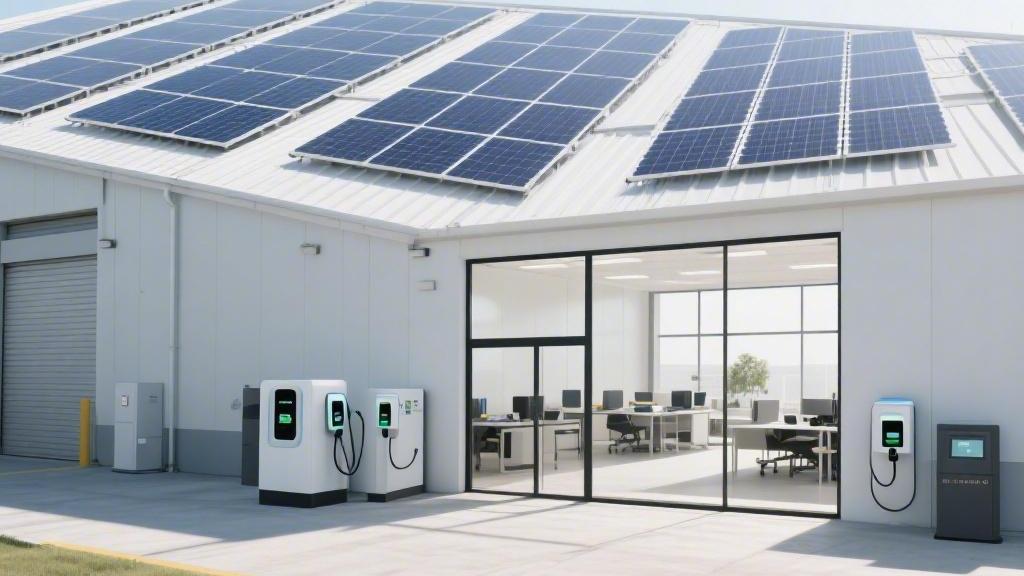
Offices
How to lay on the rooftop
For 10 to 20-story commercial buildings, the usable rooftop area usually only accounts for 4% to 7.5% of the total building area. Standard commercial HVAC units, cooling towers, and ventilation ducts will occupy 18% to 26% of the rooftop physical space. The static load-bearing margin of conventional office building rooftops is designed between 5 pounds to 8.5 pounds per square foot. The average weight distribution of aluminum alloy PV mounts combined with monocrystalline silicon panels reaches 3.4 pounds to 4.3 pounds per square foot. Adopting a ballast mounting system that does not require piercing the rooftop waterproof layer, in order to resist wind gusts up to 115 miles per hour, the addition of concrete counterweights will push the overall weight density to 5.8 pounds to 6.5 pounds per square foot.
A set of rooftop PV arrays with an installed capacity of 150 kW, the first year's expected electricity output is maintained in the range of 212,000 kWh to 225,000 kWh. For an office building with a total area of 100,000 square feet, the median annual electricity consumption is 1,850,000 kWh. The PV system running at full load can only cover 11.4% to 12.1% of the total electricity demand, with the standard deviation of power generation fluctuation controlled within 2.8%. The expenses for structural stress calculation and 3D wind load simulation reports issued by the engineering team before starting construction float between $2,800 and $4,500.
Avoiding shadows
Urban office buildings are usually located in high-density building clusters; once the building spacing is less than 150 feet, when the winter sun trajectory lowers and the altitude angle is lower than 35 degrees, the probability of physical shadow shading caused by adjacent high-rise buildings will climb to over 68.5%. Traditional large centralized inverters encounter partial shading in series circuits, the resistance of a single shaded panel becomes larger, and the current output of the entire string array will be forced to drop to the minimum value, triggering a cliff-like drop of 22% to 37% in the overall system power output.
l A single-phase micro-inverter is configured on the back of each solar panel with a nominal output power of 420 watts, dispersing the action of converting DC to AC to the panel level. Hardware procurement costs calculated per watt will increase by $0.16 to $0.21, compressing the monthly electricity loss rate caused by shadows back to a reasonable error range of 3% to 5%. The peak AC/DC conversion efficiency of the equipment is stable at 97.6%, and the factory-calibrated mean time between failures exceeds 2,500,000 hours.
l While maintaining the centralized inverter architecture, add DC power optimizers. The spot price of a single panel adapter is maintained in the $58 to $78 range. The device executes Maximum Power Point Tracking (MPPT) algorithms at a frequency of dozens of times per second, making the output voltage of a single group dynamically adjust at high frequency between 8 volts and 60 volts, pulling up the internal rate of return within the project's 25-year life cycle by 1.6 to 2.1 percentage points.
l 72-cell standard module modules are equipped with 3 sets of bypass diode arrays at the factory. When the shaded area of leaves or dust on the panel surface exceeds the 33% threshold, the forward voltage drop of the diode when conducting is measured at 0.45 volts. The surface temperature rise in the area affected by shadows is strictly limited to within 12 to 15 degrees Celsius, preventing the physical damage risk of the hot spot effect burning through the backplane polymer.
Cutting electricity bills
In the billing structure of commercial power companies, demand charge items often occupy 32% to 52% of a company's total electricity budget. The billing logic is to capture the building's highest average load kilowatts during any continuous 15-minute period within the billing cycle, and bill at a multiplier rate of $14 to $28 per kilowatt. The peak electricity usage period for office buildings is highly concentrated between 2:30 PM and 5:45 PM, during which a large number of cooling devices are in 100% full-load operation state, and the outdoor ambient temperature soars to the maximum range of 88 degrees Fahrenheit to 96 degrees Fahrenheit.
l An industrial-grade lithium iron phosphate cell cabinet with a total capacity of 250 kWh and a calibrated charge-discharge rate of 0.5C is added to the grid-connected side of the system. The comprehensive procurement cost for cells and the cell management system is $460 to $580 per kWh. The charge-discharge cycle life design value of the energy storage matrix breaks through 6,500 times, and the total capacity attenuation rate under high-intensity use in the first 5 years is guaranteed to be lower than 14.5%.
l The edge computing gateway captures building bus current parameters at a high frequency of once every 100 milliseconds. When it detects the total load breaking through the preset threshold of 320 kW, the inverter triggers the cell pack discharge within a 50-millisecond delay. The system continuously releases a constant power of 60 kW to 120 kW to offset the power taken from the grid, forcibly suppressing the actual load curve passing through the meter below the baseline.
l Importing historical electricity usage data from the past 36 months for Monte Carlo model simulation calculations, after introducing the energy storage scheduling strategy, the absolute expenditure of the office building's monthly demand charges decreases by an average of 29.4% to 36.8%. Considering equipment depreciation and capital costs, the internal rate of return for the PV-storage integrated project jumped from 11.3% for standalone PV to 14.7%.
Changing curtain walls
After the rooftop area of the office building is exhausted, the vertical glass curtain wall provides a huge space for secondary development. Cadmium telluride (CdTe) semiconductor thin-film modules used in Building Integrated Photovoltaics (BIPV) can have their average visible light transmittance customized to float within the range of 30% to 55%. The total solar radiation energy received per square meter per year by a south-facing facade glass is about 1,150 kWh. Limited by the incident angle reflection loss caused by the 90-degree vertical installation angle, the actual photoelectric conversion efficiency of the facade system is 33.5% to 41.2% lower than that of a rooftop array with a 30-degree tilt angle.
The power temperature coefficient of thin-film batteries is only -0.24% per degree Celsius. When the exterior wall surface temperature climbs to 68 degrees Celsius in summer, its actual output power has an extra 4.8% margin compared to traditional monocrystalline silicon panels. The market procurement unit price of power-generating glass falls in the $360 to $520 per square meter range. When accounting for costs, this material equivalently replaces the ordinary hollow low-E glass budget of $160 to $220 per square meter in the original design scheme. After deducting the overlapping costs of building materials, the net incremental capital expenditure range of the project is compressed to between 52% and 58%.
Weekend curve
During the 5 working days from Monday to Friday, the electricity consumption of the office building accounts for 79% to 86% of the total weekly energy consumption. After employees leave on the two weekend days, the building automatically enters a low-energy standby mode. The basic load to maintain server room operations, emergency passage lighting, and 24-hour security monitoring accounts for 16% to 21.5% of the building's peak working power. From 12:15 PM to 2:30 PM on Saturdays and Sundays, the atmospheric shortwave solar radiation reaches the full zenith condition of 1,000 W/m², and the real-time AC output power of the PV array significantly overflows the building's local consumption.
l In states where net metering policies are mandated, the meter operates in bidirectional measurement mode. The overflow electricity is credited to the bill at a 1:1 retail electricity price, i.e., a unit price of $0.15 to $0.19 per kWh to offset next month's nighttime electricity costs.
l In utility service areas that only apply wholesale electricity buyback agreements, the buyback rate for excess power sent back to the grid drops to $0.025 to $0.045 per kWh. The compensation paid by the power company sometimes cannot cover the electrical loss depreciation of a single piece of equipment run.
l The building automation system reads the cloud cover percentage from weather forecasts via a data interface. Under the condition of sunny weekends and full-load PV output, the system pre-adjusts the HVAC set temperature of specific areas in the building downward by 3.5 to 5.5 degrees Fahrenheit. Utilizing the huge specific heat capacity characteristics of thousands of tons of building concrete structures, 65 kWh to 95 kWh of redundant energy that would have been output to the grid is intercepted inside the building in the physical form of cold storage.
Warehouses
How to calculate load-bearing
Single-story logistics centers with an area of 100,000 square feet to 500,000 square feet usually use TPO flexible waterproof membrane or trapezoidal color steel tiles as the rooftop surface layer.
In the original design drawings of such large-span steel structure buildings, the reserved dead load margin is usually strictly compressed within a very narrow range of 3 pounds to 5 pounds per square foot.
A solar panel with standard dimensions of 2,278 mm by 1,134 mm, using 2.0 mm dual-glass encapsulation technology, has a single-piece physical weight of 32.5 kg.
Combined with aluminum alloy guide rails set at a tilt angle of 10 to 15 degrees, stainless steel clamps, and concrete counterweight blocks used for wind resistance, traditional mount installation methods will push the local pressure on rooftop stress points to 6.5 pounds to 8.2 pounds per square foot.
The overload range of 30% to 64% exceeding the original building structure permit forces the engineering side to intervene with structural reinforcement before construction.
Horizontal welding of Q345B high-strength carbon steel supports with a thickness of 8 mm to 12 mm below the main load-bearing beams, the cost of this transformation, spread over the construction area, generates an additional $1.8 to $3.2 in capital expenditure per square foot.
For old warehouses that cannot undergo secondary welding reinforcement, glass-free high-polymer flexible PV modules with a thickness of only 2.5 mm become a physical alternative option.
Dedicated butyl silicone structural adhesive is applied to the back of the module, flat-pasted onto the TPO rooftop membrane with a peel strength of 25 Newtons per square centimeter.
After completely abandoning metal mounts and ballast, the weight density of the power generation equipment drops sharply to 0.7 pounds to 1.1 pounds per square foot.
In an extreme wind tunnel test environment of 130 miles per hour, the upward lift generated by wind load is evenly dispersed by the 1.12-meter wide flexible panels to the rooftop base layer, completely avoiding the risk of local tearing brought by point-like stress.
Cooling to save electricity fees
Metal rooftops lacking effective insulation layers, during the high radiation period from 1 PM to 3 PM in July, absorb a shortwave solar radiation amount of 850 W to 1,050 W per square meter.
The measured peak temperature on the steel plate surface will quickly soar to a dangerous range of 145 degrees Fahrenheit to 168 degrees Fahrenheit.
Heat penetrates the rooftop panels through two physical paths: heat conduction and heat radiation, leading to an ambient temperature of over 105 degrees Fahrenheit in the top space of the warehouse 3 meters away from the rooftop.
PV panels densely covering 75% to 85% of the total rooftop area act as a physical insulation barrier with built-in forced air cooling.
The equipment not only converts 21.5% to 22.8% of light energy into DC electricity, but the 15 cm to 25 cm air circulation layer reserved between its backplane and the warehouse rooftop utilizes the stack effect to take away 45% to 55% of waste heat.
Measurement Parameter | Exposed Rooftop without PV | Rooftop with PV Equipment | Absolute Deviation |
Average outer surface temperature of rooftop in July afternoon | 158.5 °F | 112.4 °F | Decrease 46.1 °F |
Temperature 5 feet from the top inside warehouse | 108.2 °F | 94.6 °F | Decrease 13.6 °F |
Daily average consumption of 1500-ton chiller unit | 18,450 kWh | 15,310 kWh | Reduce 3,140 kWh |
Compressor peak operation duty cycle | 88.5% | 71.2% | Lower 17.3% |
Monthly electricity expenditure mean for cooling system | $78,500 | $65,140 | Save $13,360 |
Cold chain logistics and fresh storage enterprises have extremely low tolerance for temperature fluctuations; the alarm threshold set by temperature probes is usually plus or minus 1.5 degrees Celsius.
The cliff-like drop in outdoor heat load causes the startup frequency of large industrial dehumidifiers and fluorine evaporators indoors to decrease from 6.5 times per hour to 3.8 times per hour.
The life cycle loss rate of cooling equipment running 24/7 subsequently decreases by 14% to 19%, and the average overhaul interval of the machines is extended from 45,000 hours to 53,500 hours.
How landlords collect money
65.8% of commercial warehouse real estate in the US is held by Real Estate Investment Trusts (REITs) or institutional investors, leased to third-party logistics companies or e-commerce platforms using a Triple Net Lease (NNN) model.
Under this financial structure, tenants fully bear the monthly electricity bills as high as tens of thousands of dollars, while landlords own the physical property rights of the rooftop but have no motivation to invest $1,500,000 to $3,500,000 to build a PV power station.
The Green Power Purchase Agreement (Green PPA) signed between owners and tenants breaks the barrier of revenue distribution.
The landlord wholly owns a rooftop PV system with an installed capacity of 2.5 MW, with annual power generation estimated to fall in the range of 3,450,000 kWh to 3,620,000 kWh.
The average retail commercial electricity price from utility companies is $0.165 per kWh, and it maintains an annual inflation adjustment rate of about 3.8% to 4.2%.
Through internal meters, the landlord sells solar power to the tenant downstairs at a fixed discount rate of $0.125 per kWh.
The tenant consumes 150,000 kWh of solar power every month, equivalent to an immediate reduction of $6,000 in operating expenses on the current bill.
On the landlord's side, in addition to obtaining $1,050,000 in cash flow recovery from the 30% Investment Tax Credit (ITC) provided by the federal government, they can also stably collect $431,250 in annual gross electricity sales revenue.
Accounting for system cleaning and inverter maintenance fees of $14,500 per MW per year, the Cash-on-Cash Return (CoC) of this asset is stable at 11.4% to 13.8%.
For green warehouse properties attached with long-term power purchase contracts, in Wall Street capital market asset valuation models, the Capitalization Rate (Cap Rate) will be compressed by 0.35 to 0.55 basis points compared to traditional warehouses in the same location, corresponding to a property valuation premium increase of 6.5% to 9.2%.
Ultra-high voltage series connection
For extra-large warehouse center projects with an installation scale breaking through 3 MW, the total voltage architecture on the PV DC side is comprehensively upgraded from the 1000V standard to the 1500V standard system.
For a single module with a nominal open-circuit voltage of 48.5 V, under the 1500 V system, the number of panels in a single physical series string is significantly relaxed from the conventional 19 pieces to 28 to 32 pieces.
The total laying length of DC cables is forcedly cut by 28.5% to 34.2%, and the cable procurement budget per megawatt of installed capacity decreases by about $18,500.
The voltage platform is raised by 50%; under the premise of transmitting equal absolute power, the physical current value in the cables decreases proportionally by 33.3%.
According to Joule's Law measurements, the heating line loss rate of XLPE insulated DC cables during full-load power transmission is compressed from 2.6% to between 1.15% and 1.4%.
The single-unit rated power of inverters jumped from the conventional 60 kW or 100 kW to heavy-duty specifications of 250 kW to 350 kW.
The maximum conversion efficiency of IGBT power modules inside the machine in a 1500V high-voltage environment reached 99.02%, and the weighted European efficiency parameter is stable above 98.5%.
The entire 5 MW power station system only needs to be configured with 16 to 20 string inverters, reducing the number of hardware nodes by 45% compared to the 1000 V architecture.
The deployment density of AC circuit breakers, lightning surge arresters, and data collection sticks in the grid-connection cabinet drops significantly, and the labor hours for the construction team to complete equipment wiring and insulation withstand voltage testing decreased from 280 man-hours per MW to 195 man-hours.
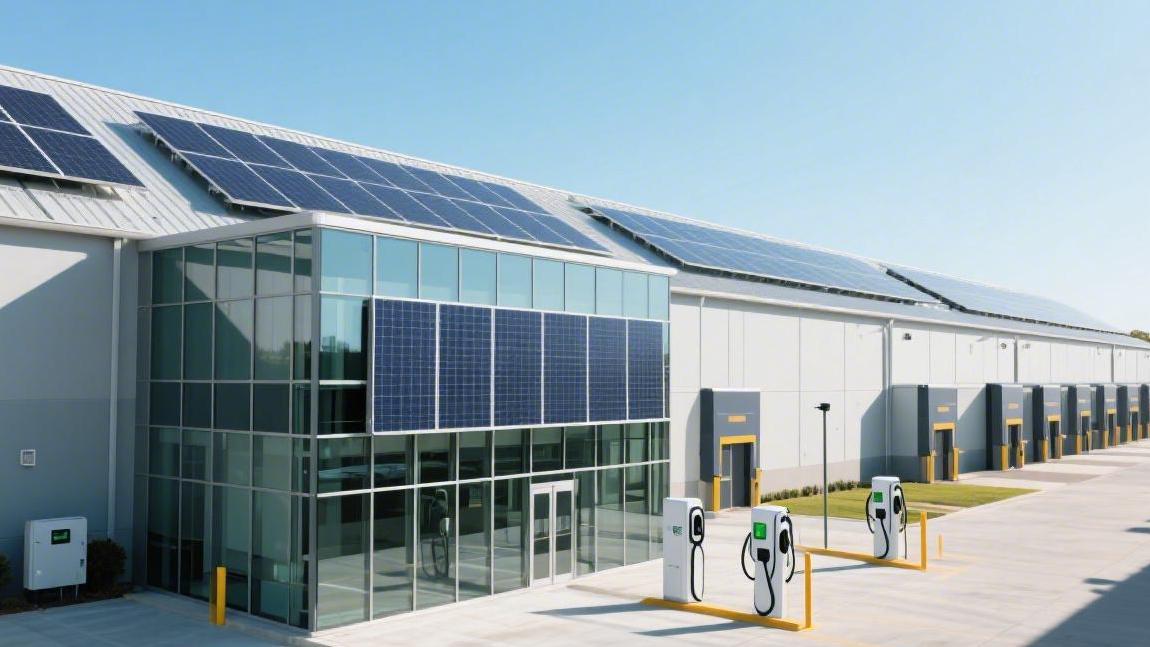
Outdoor Operations
How to use electricity in the wilderness
For open-pit mines or large survey bases with a span of more than 30 miles from the main power grid transmission lines, the initial quote for laying 35 kV high-voltage extension cables usually maintains between $45 to $68 per foot. The mining camp relies on two 1.5 MW heavy-duty diesel generators with a displacement of 38 liters for 24-hour main-standby alternating operation. The fuel consumption per hour at 75% rated load reaches 85 gallons to 92 gallons. According to the industrial diesel wholesale price of $4.15 per gallon, and adding a remote area tanker truck delivery surcharge of $1.10 per gallon, the comprehensive physical cost per kWh output by the generator set is pushed to the range of $0.58 to $0.65.
Mining companies spend up to $2,850,000 on fuel procurement and transportation every year. Introducing a 2.2 MW ground PV array combined with a 4.5 MWh lithium iron phosphate liquid-cooled energy storage container, the total cost for equipment procurement and on-site civil construction of the entire off-grid microgrid system floats between $3,500,000 and $4,200,000.
After the system is put into operation, during the 7.5-hour effective sunlight period in the daytime, the 400V DC power generated by PV is converted into 480V three-phase AC power through high-power converters, bearing 100% of the camp's real-time work load, and forcibly pouring 12,500 kWh of surplus electricity into the cell clusters. When the ambient temperature drops to 42 degrees Fahrenheit at night, the cell management system monitors the depth of discharge at a frequency of 50 times per second, ensuring the energy storage cabinet supports the operation of mine washing and selection equipment at night with a constant power of 850 kW, and the Levelized Cost of Electricity (LCOE) of the entire system is forcedly compressed to $0.14.
In the actual operation data of mines over the past 36 months, after the PV-storage microgrid was switched in, the average annual running time of diesel generators dropped cliff-like from 8,500 hours to within 850 hours, the replacement frequency of equipment lubricants and filters was extended from once every 250 hours to once every 3,000 hours, the hardware depreciation amortization cost per single machine decreased by 78.4%, and the measured investment payback period for the project as a whole is locked between 2.8 years and 3.4 years.
Moving containers
For outdoor work teams such as geological exploration or road infrastructure that have physical displacement needs, the project cycle often changes frequently between 8 months and 14 months. The galvanized steel pipe mounts of traditional pile-driven ground PV power stations need to be driven 1.5 meters to 2.5 meters deep into the ground, the relocation budget for a single disassembly and transfer and re-pouring of the foundation is as high as $18,500 to $24,000 per megawatt, and the ecological restoration cost for the abandoned site requires an additional $9,500.
A 40-foot Gauss standard shipping container is 12.19 meters long, 2.44 meters wide, and 2.89 meters high, with a 120 kW foldable solar wing pre-installed inside. The system uses 12 mm thick aviation-grade aluminum alloy hydraulic linkage mechanisms, and 240 units of dual-glass modules with a nominal power of 500 watts have already completed the series-locking operation of 1500V DC cables before leaving the factory. After the carrier truck drives into uneven mud with a slope not exceeding 15 degrees, 2 workers without professional electrical training only need to operate the hydraulic control panel carried on the vehicle, and can complete the full-size unfolding of the PV array with a total area of 580 square meters within 14 minutes to 18 minutes.
The chassis weight after unfolding reaches 14,500 kg, and combined with telescopic mechanical parking outriggers, the aerodynamic structure of the system is physically calibrated for wind resistance capacity of 85 miles per hour to 105 miles per hour in a bare-placed state without driving any anchor bolts.
Farm water pump wells
A 75 kW three-phase AC water pump, with a head set at 450 feet, requires an instantaneous water flow output reaching 850 gallons to 1,100 gallons per minute. Utility companies have established extremely high demand capacity electricity billing tiers for agricultural irrigation; during the crop growing season from July to September, the single-month electricity bill is as high as $12,500 to $18,000. Using a PV direct-drive water lifting system with a total power of 110 kW, completely abandons the expensive chemical cell packs that have 15% round-trip energy loss.
The system's core hardware, the Variable Frequency Drive (VFD), runs at 98.2% AC/DC conversion efficiency. At 7:15 AM, when the open-circuit voltage at both ends of the panels climbs across the 120 V startup threshold, the inverter outputs 15 Hz low-frequency AC power, driving the water pump impeller to run at a low speed of 450 revolutions per minute, generating a basic water flow of 150 gallons per minute. At 12 noon, when the sun's altitude angle reaches 68 degrees, the DC output voltage of the PV array soars into the 680 V full-load range, the inverter frequency is simultaneously pulled up to 60 Hz, the motor speed breaks through 3,450 revolutions per minute, and the water flow reaches the peak calibration of 1,050 gallons.
The total procurement and installation cost of the agricultural PV water lifting equipment is $85,000, and the system life cycle is as long as 25 years. Under the peak sunshine condition of 5.5 hours daily in California's Central Valley, the water pump pumps 450,000 gallons of groundwater into a 2,500,000-gallon high-level reservoir every day, utilizing physical potential energy to complete gravity drip irrigation. After eliminating high monthly agricultural peak-valley electricity fees, the irrigation cost per acre of the farm dropped sharply from $480 to $15.
Cleaning panels and calculating the bill
The dust deposition rate in the local air is measured at 0.8 mg to 1.2 mg per square centimeter per month. Within a dry cycle of 45 consecutive days without precipitation, the dust thickness on the glass surface reaches 0.4 mm, leading to a decrease in light transmittance, and the hot spot effect generated by the shading on the panel surface makes the local temperature 22 degrees Celsius higher than the ambient temperature, causing a serious attenuation of 14.5% to 18.2% in the overall power generation output of the system.
Hiring labor to use high-pressure water guns to clean a 5 MW array, each cleaning cycle requires consuming 15,000 liters to 18,000 liters of reverse osmosis pure water, and the labor wage plus water resource procurement cost for a single operation reaches $3,200 to $4,500. A track-based smart waterless cleaning robot's weight is controlled at 12.5 kg, and the equipment is equipped with a 24V 40Ah high-rate lithium-ion cell supporting it to work continuously for 6.5 hours in extreme temperatures from minus 10 degrees Fahrenheit to 135 degrees Fahrenheit.
The robot's high-speed spiral nylon brushes peel off attachments from the glass surface at a physical speed of 850 revolutions per minute, and the track travel speed is set at 15 meters per minute. In the time period from 10 PM to 4 AM, a single machine can complete the cleaning of 1.2 MW of array area, with a cleaning coverage rate reaching 99.2%.