How Can Solar Storage Challenges Be Solved in Historic Areas | Space Limits, Regulations, System Design
For limited space choose a 15 cm thick 5 kWh ultra-thin cell, the energy density must reach 150 Wh/kg.
It is recommended to conceal installation in a fireproof box and tightly attach to a non-wood wall surface, storing 10 kWh per day can offset 40% peak load, solving space and regulatory difficulties through modular layout without damaging the historic building appearance.
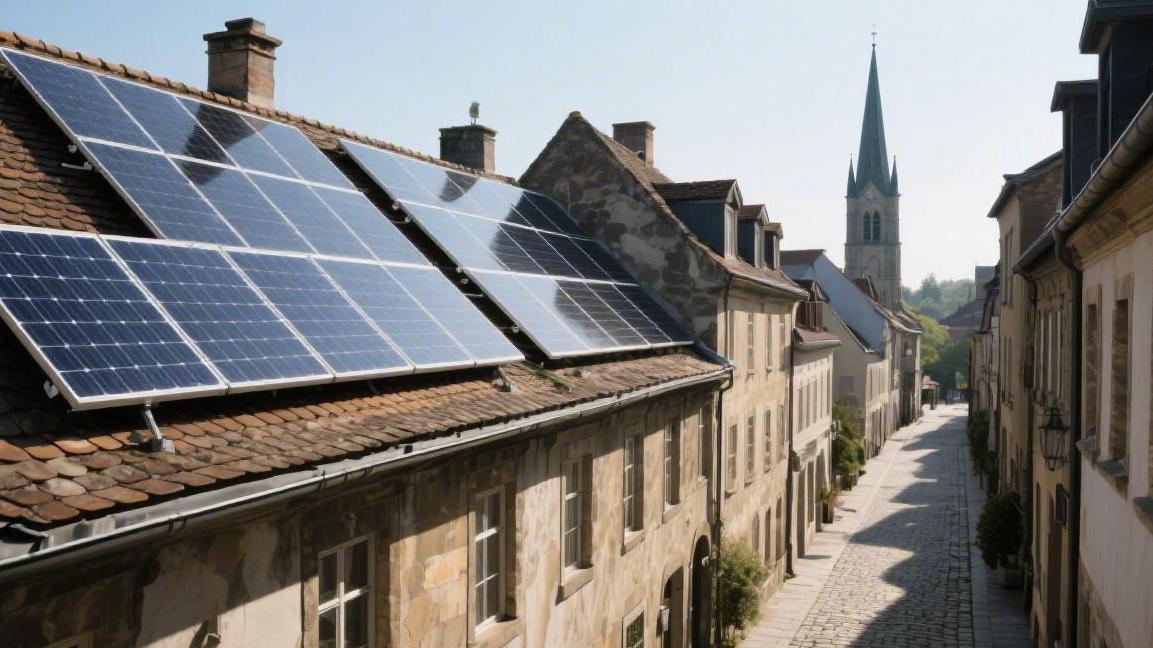
Space Limits
Choose location
Old buildings constructed between 1880 and 1930, the average width of the side yard between adjacent houses is usually only 0.9 meters to 1.5 meters. A standard household energy storage cabinet with a capacity of 13.5 kWh has measured physical dimensions of 1,150 mm height, 753 mm width, and 147 mm thickness. Because building regulations mandate that the equipment enclosure must maintain a 0.9 meter setback distance from the property boundary line, more than 90% of side yards cannot meet the size requirement for ground installation. In a small backyard with an area of less than 15 square meters, mounting the storage system tightly against the rear wall can reduce ground occupancy from the conventional 12% to below 0.3%.
To leave an airflow channel for the cooling fan, at least 150 mm clearance must be reserved on both sides of the cabinet, and the vertical distance from the top to the eaves must not be less than 300 mm. Installation engineers usually carry a laser distance meter with accuracy within 2 mm, scanning 3 to 5 candidate positions on an exterior wall about 4 meters long and 3 meters high. Placing the system within 5 meters of the main distribution panel can reduce the usage of 4 AWG copper wire by about 40%, thereby compressing the cable procurement cost of $12 per meter by about 60%.
When installing on a south-facing wall with more than 8 hours of sunlight per day, the surface temperature of the metal enclosure can rise above 65°C at 2 pm in summer, therefore an aluminum alloy shading panel of about 1.2 square meters with light transmittance less than 5% needs to be added, reducing the operating ambient temperature of the device by 10 to 15°C.
l The site plan submitted to municipal authorities must use a scale accurate to 1:20, and the drawing must clearly mark that the distance from the equipment edge to the gas meter outer diameter is at least 1.5 meters.
l If the slope of the backyard lawn exceeds 5 degrees, a C25 concrete base with an area of 1 square meter and a thickness of 150 mm must be poured, taking about 48 hours to fully cure.
l To avoid burial by heavy snow, in regions where snow depth exceeds 300 mm annually, the installation height of the equipment base must be raised to more than 450 mm above ground.
Mount on wall
For brick-wood exterior walls older than 80 years, the point load-bearing capacity naturally decays at a rate of about 0.5% per year. An integrated cell cabinet with built-in inverter typically weighs 114 kg to 125 kg. Old red brick walls without reinforcement can bear at most 45 kg static load per square meter, forced hanging will cause structural cracks wider than 4 mm between bricks. The construction team must use handheld radar to scan internal wooden studs spaced at 406 mm or 610 mm.
The Z-shaped galvanized steel bracket for fixing equipment requires 8 hex anchor bolts with a diameter of 12 mm and a length of 100 mm. Each bolt must reach a pull-out force of above 2500 N. Drilling uses a non-impact variable speed drill below 800 rpm, reducing brick cracking probability to below 2%. When two units are mounted side by side, the horizontal spacing must be at least 900 mm, expanding the load distribution area by 1.5 times.
The exterior walls of old buildings often have vertical deviation. When installing brackets, a 1,200 mm level must be used to calibrate, ensuring the tilt angle of the cabinet does not exceed 1.5 degrees. To reduce low-frequency resonance during operation, an 8 mm thick EPDM rubber damping pad with Shore hardness 50 must be attached behind the bracket, reducing transmitted vibration noise frequency by about 30 Hz.
l For single-layer brick walls thinner than 150 mm, an OSB board of 0.8 square meters area and 18 mm thickness must be added on the interior side to distribute stress.
l Perform torque testing once a year, using a torque wrench to ensure all load-bearing bolts maintain tightening torque between 45 Nm and 55 Nm.
l Transferring 70% of the equipment weight to a floor-standing metal subframe attached to the wall can reduce wall deformation probability to one in one hundred thousand.
Fire code
The International Residential Code requires that the maximum rated energy of a single outdoor energy storage system must not exceed 20 kWh, and the total capacity of multiple units must be strictly limited to 80 kWh. For cell systems installed on exterior walls, the straight-line distance from the enclosure to any operable window or wooden door must be greater than 0.9 meters. When the equipment is less than 1.5 meters from building vents or HVAC units, the permit approval rate drops to 0% instantly.
To achieve a 90-minute fire separation standard, walls within 1.2 meters of the equipment must be covered with at least 15 mm thick Type X fire-rated gypsum board. Replacing original wooden siding with non-combustible fiber cement board costs about $25 per square meter in materials and about $65 per hour in labor. Electrical conduit must have an inner diameter of 35 mm and a wall thickness not less than 1.2 mm, capable of withstanding temperatures above 800°C for 45 minutes. Once the internal thermistor detects an abnormal temperature rise of more than 15°C within 10 seconds, the built-in DC contactor will automatically cut off the 1000 V circuit within 0.2 seconds.
l When installed in a garage, the bottom of the equipment must be at least 450 mm above the concrete floor, or a steel bollard with a diameter of 100 mm must be installed in front to prevent vehicle collision at 10 km/h.
l The cell management system must read voltage data 50 times per second, triggering 0.5 amp passive balancing current when cell voltage deviation exceeds 0.05 V.
l Smoke detectors and carbon monoxide alarms must be installed within 1.5 to 3 meters from the cell cabinet, with sensor service life typically 10 years.
Place underground
Moving equipment to the basement can free 100% of outdoor space, but basement stair widths are usually only 700 mm to 800 mm, and clearance height at turns is often less than 1.9 meters. Transporting a 0.15 cubic meter device weighing over 100 kg requires 3 workers with a stair-climbing machine rated at 300 kg, taking about 45 minutes. Basement relative humidity at 75% to 90% accelerates metal enclosure corrosion by 3 times. A dehumidifier with a capacity of 25 liters per day must run 24 hours, maintaining humidity at 45% to 55%, adding about 15 kWh monthly consumption.
Basements of old buildings usually lack insulation, winter temperatures can drop to -5°C, reducing lithium iron phosphate cell efficiency from 95% to below 70%. Installing 5 square meters of XPS insulation board with R-value 15 costs about $120, maintaining indoor temperature above 15°C. The basement must have a ventilation duct with a diameter not less than 150 mm connected outdoors, with airflow of 100 cubic meters per hour, ensuring harmful gases are exhausted within 5 minutes during thermal runaway.
l Concrete floor flatness deviation within 2 meters must not exceed 3 mm, otherwise 15 kg self-leveling cement must be used.
l AC grid cable runs from basement through first floor to outdoor meter box, average length 12 to 18 meters, line loss must be controlled within 1.5%.
l If the basement has a flooding history, a brick waterproof platform 200 mm high with an IP68 rating must be built, costing about $250.
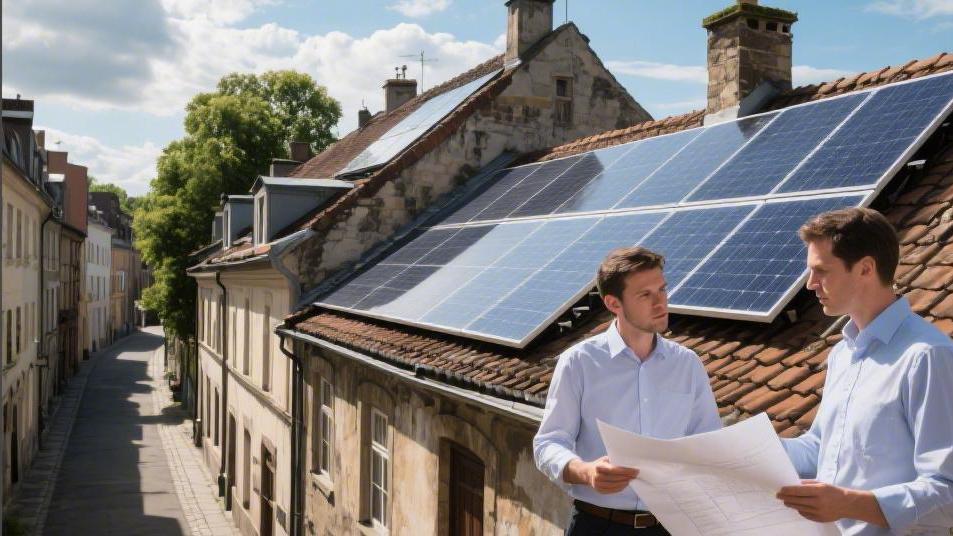
Regulations
Fill forms and pay
For protected buildings aged 75 to 120 years, submitting an initial application for photovoltaic and storage installation to the local planning department usually requires paying administrative review fees from $350 to $850. The document preparation phase takes about 14 to 21 working days, requiring upload of over 50 MB and up to 25 pages of PDF engineering drawings. The drawing scale is mandated as 1:100 or 1:50, including 3 elevation views and roof survey data accurate to 2 mm.
If the project budget exceeds $15,000, the municipality requires contractors to provide a commercial general liability insurance policy with coverage of at least $2 million. Missing one document extends approval time by 15 to 30 days, increasing delay penalties by about $50 per day. Online submission has an approval rate of about 68%, about 40% faster than paper submission.
District rules
The historic preservation committee limits visibility of solar panels, requiring that when viewed from the center of the street 15 meters from the front door, exposed area must not exceed 1.5% of total roof area. To meet the 1.5% standard, installation must lay panels flush with a thickness of 40 mm, reducing angle deviation with the original roof slope to within 0.5 degrees. The cell cabinet must be set back at least 1,200 mm from the property line, and the top height must not exceed 1.8 meters reference wall line.
When PVC conduit longer than 8 meters is installed on an exterior wall, regulations require painting with custom waterproof paint with Delta E less than 2.0 matching 90-year-old wood siding. Paint costs $65 per gallon, applied in two coats, drying takes 48 hours, reducing fading rate to below 3% annually. If more than 3 written objections are submitted during the 21-day notice period, a hearing is required, adding about $1,200 in legal consultation fees.
Review category | Processing time | Estimated budget | Quantitative standard and parameters | First pass rate |
Appearance and planning approval | 45 to 90 working days | $350 to $850 | Visible area from street must be less than 1.5% | 68% |
Load and structural approval | 14 to 21 working days | $800 to $1500 | Reserve load capacity must exceed 30 kg/m² | 85% |
Fire and electrical inspection | 14 to 28 working days | $200 to $500 | Warning label letter height must exceed 9.5 mm | 42% |
Calculate load
A double-slope roof built around 1920 often has wooden truss capacity reduced by 18% to 25%. Structural engineers charge $800 to $1,500, using ultrasonic testing at 12 nodes to detect internal void ratio. When permanent loads exceed 25 kg per square meter, engineers require reinforcement using treated fir lumber of 50 mm by 100 mm section, costing about $4.5 per meter.
Reinforcement requires 2 carpenters working 16 hours continuously, labor cost $75 per hour, increasing budget by about $2,400. Bolt penetration depth must exceed 75 mm to withstand uplift force over 1500 N/m² caused by wind speeds up to 180 km/h. Structural calculation reports are about 15 pages, including stress distribution models under 4 wind directions, with safety factor between 1.5 and 2.0.
Pass fire inspection
The fire department imposes strict setback requirements for lithium cell systems of 13.5 kWh, prohibiting storage of any material with an ignition point below 200°C within 900 mm radius. The AC breaker box must be installed within 10 meters of the main street, unobstructed, at a height between 1.2 and 1.7 meters for firefighters to cut power within 10 seconds. Red reflective warning labels on inverter and cell must have letter height not less than 9.5 mm and reflectivity above 70%.
During inspection, inspectors use grounding resistance testers with 0.1 ohm accuracy to ensure total resistance is below 25 ohms. The inspection process lasts 45 to 60 minutes, with a first pass rate of about 42%, and reinspection requires waiting 14 to 28 days. Installing UL 9540A certified thermal runaway venting accessory costs about $180, reducing fire spread probability by 85%.
System Design
Calculate energy use
For old buildings built between 1920 and 1940, the first step in photovoltaic and storage design is to calculate hourly load curves. An 85-year-old wood house often lacks R-13 insulation, causing 35% hourly heat loss in winter. A 110 m² house consumes about 42 kWh per day in January, and up to 55 kWh when using 3,500 W air conditioning in July.
Using 400 W N-type bifacial monocrystalline panels with 22.5% efficiency, installing 15 panels requires about 28 m² of roof area. The system peak power is 6,000 W, generating about 8,400 kWh annually under 1400 sunlight hours.
With a 13.5 kWh lithium iron phosphate cell, discharging at 4.5 kW from 6 pm to 2 am covers 80% of lighting and cooling needs. At $0.28/kWh electricity price, monthly savings reach about $200, with payback period 7.5 to 8.2 years.
The depth of charge and discharge must be limited to 10% to 90%, with daily cycles below 1.2, allowing 83% capacity retention after 5000 cycles, achieving service life of 15 to 20 years.
Choose equipment
In narrow side yards of historic districts, equipment dimensions must be strictly matched. The standard size is 1,150 mm height, 753 mm width, 147 mm thickness, weighing 114 kg, with lithium iron phosphate cells of 160 Wh/kg energy density. Built-in hybrid inverter efficiency is about 97.5%, and switches to island mode within 20 ms during outage, ensuring continuous operation of an 800 W refrigerator and a 150 W router.
The enclosure uses 2 mm die-cast aluminum alloy with IP65 protection, resisting 12.5 L/min water spray for 3 minutes, and dust accumulation below 0.1 g over 10 years. Noise level with liquid cooling is only 38 dB at 1 meter, about 15 dB lower than air cooling, meeting residential limit of 45 dB.
Paint conduit
To match century-old brick walls, conduits must be color-treated. 600 V DC cables run through 32 mm galvanized steel conduit, with bending radius at least 6 times the diameter (192 mm). Color data is collected and custom paint with Delta E less than 1.5 is applied.
Spraying uses a 1.5 mm nozzle, applying a 0.05 mm primer and two coats at 200 mm distance. Paint costs $45 per gallon. Conduit clamps are fixed every 1,200 mm with 40 mm expansion bolts, using a 6 mm drill to reduce wall damage to below 3%.
The cable penetration hole must be angled 5 degrees outward for drainage, sealed with 20-year weatherproof silicone, ensuring zero water infiltration under -30°C to 80°C conditions.
Ventilation and cooling
Installing on an east or south wall exposes the unit to sunlight, raising surface temperature above 60°C within 20 minutes. When the internal temperature reaches 45°C, power is reduced from 5 kW to below 2 kW. Adding a 900 mm wide, 400 mm deep aluminum shade above reduces temperature by 8 to 12°C.
A 35 mm airflow gap behind the unit removes about 150 W heat per hour. With a 0.8 m² heat sink and a 2500 rpm fan, at 3000 W load, the temperature stays below 38°C, limiting efficiency loss to 1.5%.